
10 Effective Alternative to Alcohol Options for a Healthier 2026
The search for an effective alternative to alcohol is about more than just finding a different drink to hold at a party. It's about fundamentally upgrading your approach to managing stress, celebrating achievements, and fostering social connections. Whether you're sober-curious, actively reducing your intake, or simply exploring healthier coping mechanisms, the landscape of available options has never been more diverse or rewarding. This modern approach moves beyond simple substitution, offering a holistic toolkit that addresses the "why" behind the urge to drink, not just the "what."
This guide is designed as a comprehensive roundup of powerful, evidence-backed alternatives that support your physical, mental, and social well-being. We will explore 10 distinct categories, each filled with actionable strategies and practical insights. You'll discover how functional beverages can help calm your nervous system, how specific behavioral techniques can build lasting resilience, and how creative outlets can provide a fulfilling sense of release and accomplishment.
From mindfulness apps and community-building strategies to simple, delicious non-alcoholic recipes, these options empower you to create a lifestyle where alcohol is no longer a default but a conscious choice. We'll also provide specific implementation details for each item, including when to seek professional guidance and how innovative tools like Superbloom can help you track triggers, monitor cravings, and measure your progress. This turns passive curiosity into intentional, sustainable change, giving you a clear path toward redefining your relationship with alcohol on your own terms.
1. Mindfulness and Meditation Apps
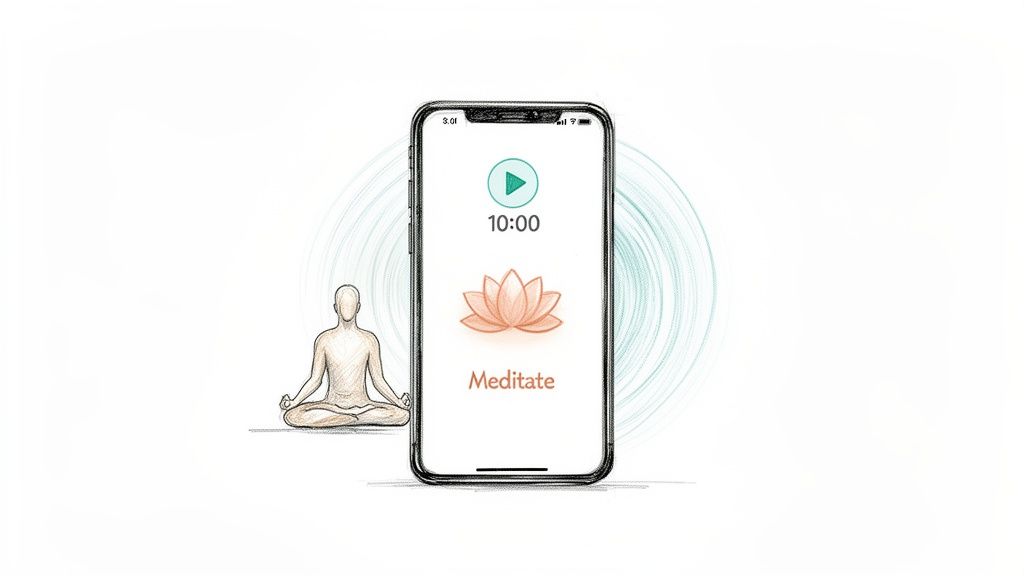
Mindfulness and meditation apps offer a powerful, accessible alternative to alcohol by directly addressing the underlying reasons many people drink: stress, anxiety, and the desire to unwind. Platforms like Headspace, Calm, and Insight Timer provide guided practices that teach you how to sit with difficult emotions, observe cravings without acting on them, and calm your nervous system. By creating a mental pause between a trigger and your response, these tools empower you to make more conscious choices rather than falling into automatic habits.
The core principle is rooted in mindfulness-based stress reduction (MBSR), an evidence-based approach that helps regulate the body's stress response. Regular practice can lower cortisol levels, the primary stress hormone, which often drives the urge to drink. Instead of reaching for a glass of wine to decompress, you can use a 10-minute guided meditation to achieve a similar, yet healthier, state of relaxation and mental clarity.
How to Implement This Practice
Integrating mindfulness doesn't require a huge time commitment. The key is consistency.
- Start Small: Begin with just 5-10 minutes each day. The goal is to build a sustainable habit, not to achieve a perfect, hour-long session immediately.
- Anchor the Habit: Link your meditation to an existing daily routine, such as right after you brush your teeth in the morning or just before you start your workday.
- Use It Proactively: Don't wait for a craving to strike. Use a short body scan meditation or a breathing exercise during a moment of high stress, like after a difficult meeting, to proactively manage your emotional state.
- Explore Different Styles: Experiment with various types of meditation to find what resonates with you. Try guided visualizations, loving-kindness meditations, body scans, or simple breathing exercises.
Key Insight: This practice isn't about eliminating cravings or stress; it's about changing your relationship with them. By observing these feelings without judgment, you weaken their power over your actions, making it easier to choose a non-alcoholic alternative.
2. Functional Beverages and Adaptogens
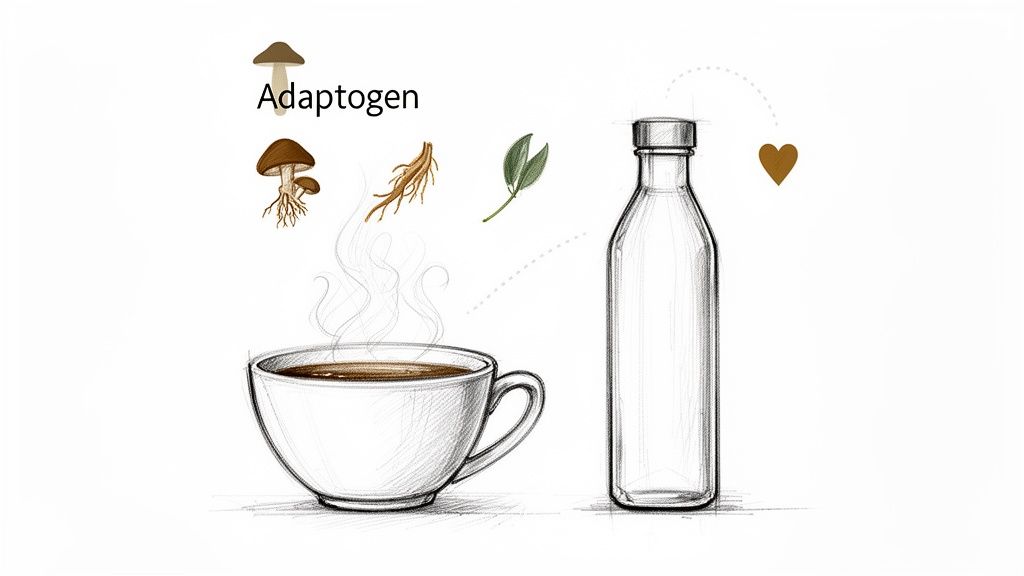
Functional beverages and adaptogens provide a sophisticated alternative to alcohol by targeting the same physiological needs many people seek to fulfill with a drink: stress reduction, mood elevation, and ritualistic relaxation. These drinks are crafted with plant-based ingredients like adaptogens (ashwagandha, reishi) and nootropics (L-theanine, lion's mane) that help the body manage stress and enhance cognitive function. Instead of masking anxiety with alcohol, these ingredients work to regulate your body's hormonal response to stress over time.
Brands like Four Sigmatic and Remedy Kombucha offer ready-made options that can seamlessly replace an evening glass of wine or a post-work beer. The core concept is to swap a substance that depletes your system for one that supports it. For example, consistent use of ashwagandha has been shown to lower cortisol levels, while the probiotics in kombucha support gut health, which is closely linked to mood and cravings.
How to Implement This Practice
Integrating functional beverages is about creating new, healthier rituals that are just as satisfying as old ones.
- Create a New Ritual: Replace your evening cocktail with a specific functional drink. Try a warm reishi mushroom latte before bed to promote relaxation or a chilled kombucha in a wine glass to mark the end of the workday.
- Be Patient and Consistent: Adaptogens work cumulatively. Commit to trying one type of beverage consistently for at least 4-6 weeks to notice a discernible effect on your stress levels and mood.
- Verify Quality: Look for products with third-party testing certifications like NSF or USP Verified. This ensures you are getting a pure and potent product without unwanted additives.
- Experiment with DIY Options: For a cost-effective approach, try making your own functional drinks. Simple recipes like golden milk (turmeric, ginger, black pepper) or a strong herbal tea with rhodiola can be highly effective.
Key Insight: This alternative isn't just about avoiding alcohol; it's about actively supporting your body's stress-management system. By nourishing your body with beneficial compounds, you build resilience from the inside out, reducing the perceived need for alcohol as a coping mechanism.
3. Social Connection and Community Groups
Social connection offers a powerful alternative to alcohol by fulfilling the fundamental human need for belonging that drinking often imitates. Alcohol is deeply intertwined with social rituals, but communities built around shared interests or mutual support provide genuine connection without it. Groups like sober social clubs, fitness communities, or structured support programs replace the bar scene with a sense of purpose, accountability, and shared identity. They address the core desire for connection that can otherwise lead to drinking out of loneliness or social pressure.
This approach works by creating new social norms and rituals where sobriety is the default. In these environments, you build relationships based on authentic shared experiences rather than a shared substance. Joining a running club like Couch to 5K or a secular support group like SMART Recovery rewires the brain’s association between socializing and alcohol. It provides a healthy, reinforcing feedback loop where positive social interactions and personal growth become the new reward.
How to Implement This Practice
Finding the right community can transform your relationship with alcohol. The goal is to find a space where you feel supported and understood.
- Start with One Group: Commit to attending one group, whether online or in-person, for 4-6 weeks before deciding if it’s the right fit for you. Consistency is key to building connections.
- Explore Different Formats: Try both digital and in-person options. A Reddit community like r/stopdrinking provides 24/7 anonymous support, while a local hiking club offers scheduled, face-to-face interaction.
- Align with Your Values: Seek groups that match your personal philosophy. Options range from secular, evidence-based programs like SMART Recovery to spiritual frameworks like AA or mindfulness-based communities like Refuge Recovery.
- Initiate Sober Activities: Take the lead in your existing social circles by suggesting alcohol-free activities. Propose coffee dates, board game nights, or weekend hikes to build new, healthier social rituals with friends.
Key Insight: This strategy isn't just about avoiding alcohol; it's about actively building a rich, supportive social life that makes drinking irrelevant. Meaningful connection provides the emotional fulfillment that many people mistakenly seek in a bottle.
4. Exercise and Movement Practices
Physical activity is a powerful, evidence-backed alternative to alcohol for managing stress and emotional triggers. Exercise works by reducing cortisol (the primary stress hormone) while simultaneously boosting mood-lifting endorphins. This creates a natural "high" and sense of well-being that directly counters the desire to drink for emotional relief. Unlike alcohol, which often leads to poor judgment, movement enhances body awareness and self-efficacy.
The benefits are both physiological and psychological. Engaging in activities like a brisk walk, a high-intensity workout, or a calming yoga session provides a constructive outlet for pent-up energy and anxiety. This process helps rewire your brain to seek movement instead of alcohol when stress arises, building a healthier and more sustainable coping mechanism.
How to Implement This Practice
Integrating movement into your routine is about finding what you enjoy and making it a consistent habit.
- Start with Accessibility: You don't need a gym membership. A 15-minute walk, a free YouTube yoga session with Adriene Mishler, or dancing in your living room are all effective starting points.
- Time it Strategically: Schedule your movement before high-risk periods. A workout after a stressful workday can prevent the automatic urge to reach for a drink. For some, the invigorating start provided by early morning exercise routines sets a positive tone for the entire day.
- Join a Community: Accountability is key. Consider joining a running club like parkrun, a local fitness class, or an online challenge to stay motivated and connected.
- Find Your Joy: The best exercise is the one you'll actually do. If you hate running, don't force it. Explore different activities like hiking, swimming, tai chi, or team sports until you find something that feels less like a chore and more like a reward.
Key Insight: Exercise changes your body's chemistry in a way that directly competes with alcohol's effects. It provides the same stress relief and mood boost but leaves you feeling stronger and more in control, not depleted.
5. Journaling and Reflective Writing
Journaling and reflective writing provide a tangible alternative to alcohol by creating a structured space to process the very emotions that often lead to drinking. This practice externalizes thoughts, anxieties, and cravings, moving them from your mind onto paper. By doing so, you create psychological distance, which allows for greater clarity and less impulsive decision-making. Researchers like James Pennebaker have shown that this kind of expressive writing can significantly reduce stress and help regulate emotional responses.
The core principle is that by articulating your feelings, you can understand and manage them without needing an external substance. Instead of pouring a drink to cope with a tough day, you can pour your thoughts into a journal. This process helps you identify patterns and triggers, revealing the "why" behind your urge to drink. It builds self-awareness, turning an automatic reaction into a conscious moment of reflection and choice.
How to Implement This Practice
Getting started with journaling is simple, but consistency is what unlocks its benefits.
- Start with Prompts: If free-writing feels intimidating, use guided prompts. Ask yourself, "What stressed me out today and how did it feel in my body?" or "What am I grateful for right now?"
- Try Morning Pages: Popularized by Julia Cameron, this involves writing three pages of stream-of-consciousness thoughts first thing in the morning. It helps clear mental clutter before your day begins, reducing the likelihood of accumulated stress.
- Write Without Judgment: Your journal is a private space. Don't worry about grammar, spelling, or how it sounds. The goal is honest expression, not perfect prose.
- Connect Feelings to Cravings: When you feel an urge to drink, take five minutes to write about the feeling behind it. Are you bored, lonely, anxious, or celebrating? This helps you address the root cause directly.
Key Insight: Journaling transforms the abstract urge to drink into concrete words. Once you can see and name the feeling driving the craving, you gain the power to address it with a healthier, more intentional response.
6. Therapy and Behavioral Coaching
Engaging with therapy or behavioral coaching provides a structured, professional alternative to alcohol by targeting the root psychological drivers behind drinking. For many, alcohol is a tool to cope with underlying issues like anxiety, depression, trauma, or chronic stress. Modalities like Cognitive Behavioral Therapy (CBT) and Dialectical Behavior Therapy (DBT) offer expert guidance to untangle these complex emotional patterns and build healthier coping mechanisms. This approach moves beyond simple substitution, creating sustainable change by addressing the "why" behind the habit.
Unlike self-guided methods, therapy offers a personalized framework for identifying triggers, challenging distorted thought patterns that lead to drinking, and developing robust emotional regulation skills. For example, DBT teaches distress tolerance techniques that provide immediate, healthy responses to overwhelming emotions, replacing the impulse to drink. Research shows CBT can be highly effective in modifying habitual behaviors, helping you build resilience and self-awareness to navigate life's challenges without relying on alcohol.
How to Implement This Practice
Finding the right professional support is a key step toward lasting change. Modern platforms have made it more accessible than ever.
- Explore Telehealth Options: Services like BetterHelp and Talkspace offer convenient and affordable access to licensed therapists, making it easier to fit sessions into a busy schedule.
- Seek Specialization: Look for a therapist or coach who specializes in areas relevant to you, such as emotion regulation, substance use, or anxiety management. This ensures you get targeted, effective support.
- Set Clear Goals: Work with your therapist to define specific, measurable goals for your sessions. This could be anything from reducing weekly drinks to learning two new coping skills for social anxiety.
- Be Open and Honest: Therapy is a judgment-free zone. The more open you are about your struggles and triggers, the more effectively your therapist can help you build a personalized strategy for change.
Key Insight: Therapy isn't just about fixing a problem; it's an investment in your long-term mental and emotional toolkit. It equips you with the skills to manage not only the urge to drink but also the underlying stressors that drive it, leading to more profound and lasting well-being.
7. Nutrition-Focused Apps and Digital Coaching
Nutrition-focused apps offer a sophisticated alternative to alcohol by addressing the intricate connection between mood, food, and cravings. Unlike traditional calorie trackers, platforms like Superbloom use AI and behavioral psychology to help you understand why you reach for certain things, whether it's a sugary snack or a drink. By tracking patterns between your emotional state and your consumption habits, these apps provide personalized insights that empower you to manage triggers without relying on willpower alone.
This approach is rooted in the understanding that many cravings, including those for alcohol, are driven by emotional needs rather than physical hunger. These apps often include features for journaling, mood logging, and photo-based meal tracking, which reduce the burden of manual entry and reveal subconscious patterns. For example, you might discover that your desire for a beer is consistently linked to post-work stress, prompting you to find a healthier coping mechanism like a short walk or a breathing exercise.
How to Implement This Practice
Integrating a nutrition coaching app is about building awareness, not achieving perfection. Consistency is the goal.
- Choose the Right Tool: Opt for an app grounded in behavioral psychology, like Superbloom or Noom, rather than one that solely focuses on calorie counting.
- Commit to Daily Check-ins: Log your meals and moods consistently for at least four weeks. This provides enough data for the app to identify meaningful patterns in your behavior.
- Connect Feelings to Food: Make a conscious effort to use the emotion-tracking features alongside your food logs. This is crucial for uncovering the triggers behind your cravings.
- Apply Insights in Real-Time: When the app highlights a pattern (e.g., you crave sugar when tired), use that awareness to pause and make a more intentional choice in the moment.
- Pair with Other Practices: Combine insights from your app with other alternatives on this list, such as meditation or exercise, for a powerful synergistic effect.
Key Insight: This method transforms your relationship with food and drink from one of restriction to one of curiosity and self-awareness. By understanding the "why" behind your cravings, you can address the root cause, making it far easier to choose alternatives that truly nourish you.
8. Herbal Teas and Non-Caffeinated Alternatives
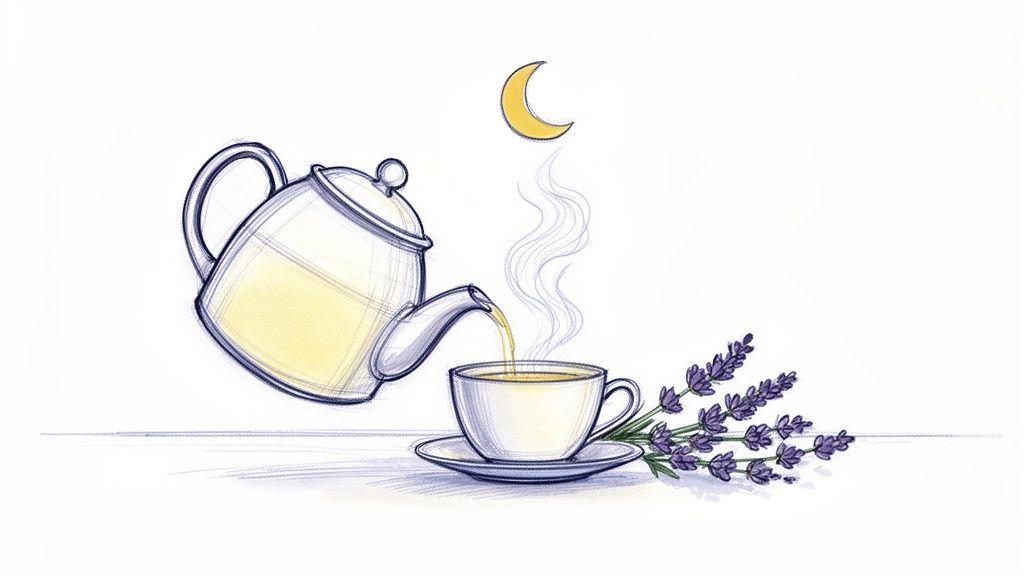
Herbal teas serve as a simple yet profound alternative to alcohol by satisfying the need for ritual, comfort, and sensory engagement without any of the downsides. The simple act of boiling water, steeping leaves, and slowly sipping a warm beverage creates a mindful pause that effectively replaces an evening cocktail or beer. Specific blends containing ingredients like chamomile, passionflower, or valerian root possess mild calming properties that naturally soothe the nervous system, helping to de-stress after a long day.
This practice replaces the habit of drinking with a healthier, hydrating ritual that supports both mental and physical well-being. It directly addresses the desire for a "wind-down" activity, offering a warm, flavorful experience that can improve sleep quality, aid digestion, and provide comfort without empty calories or impaired judgment. For those interested in specific non-caffeinated options, you can explore the history and economic aspects of beverages like matcha by reading about trends in Japanese matcha.
How to Implement This Practice
Integrating herbal tea into your routine is about creating a deliberate, comforting ritual.
- Build a Tea Collection: Start with 3-5 different herbal teas to match your moods. Consider chamomile or lavender for relaxation, peppermint for digestion, and ginger for a warming, spicy kick.
- Anchor the Ritual: Link your tea time to a specific event, like finishing work for the day or getting ready for bed. Use the same mug in the same quiet spot to reinforce the habit.
- Elevate the Experience: Use high-quality loose-leaf tea and a nice infuser. The process of preparing it becomes more intentional and enjoyable, making the ritual more powerful than simply using a tea bag.
- Practice Mindful Sipping: For the first five minutes of your tea, put away your phone and other distractions. Focus entirely on the warmth of the mug, the aroma, and the flavor of the tea.
Key Insight: The power of tea lies in the ritual, not just the liquid. By replacing the action of preparing and consuming an alcoholic drink with the healthier action of brewing tea, you rewire the brain’s association between a specific time of day and the need for a comforting beverage.
9. Creative and Expressive Practices
Engaging in creative and expressive practices serves as a deeply effective alternative to alcohol by offering a productive outlet for emotional processing and stress relief. Activities like painting, writing, playing an instrument, or crafting can induce a "flow state," a state of deep immersion where time seems to fade and anxieties diminish. This provides a healthy, constructive way to manage the same feelings that often lead people to drink, such as boredom, stress, or the need for an escape.
The core benefit lies in its ability to transform emotional energy into something tangible and meaningful. Instead of suppressing feelings with alcohol, creative work allows you to explore and express them. This process not only relieves immediate stress but also builds self-esteem and a sense of accomplishment, strengthening your identity outside of drinking culture. Whether you're journaling, learning guitar, or taking up photography, you are actively creating a positive experience rather than passively consuming a substance.
How to Implement This Practice
You don't need to be a professional artist to reap the benefits. The focus is on the process, not the final product.
- Choose with Curiosity: Pick an activity you've always been interested in, even if you feel you have no "talent." Curiosity is a powerful motivator.
- Start Small and Simple: Begin with a low-pressure activity like free-writing in a journal for 10 minutes, sketching simple objects, or using an adult coloring book. Avoid a large initial investment in supplies.
- Schedule Creative Time: Dedicate a specific, recurring time slot for your practice, just as you would for exercise. This helps build a consistent habit.
- Join a Community: Enroll in a local workshop, find an online writing group, or join a crafting circle. Social connection and accountability can make the practice more enjoyable and sustainable.
- Embrace Being a Beginner: Give yourself permission to be imperfect. The goal is emotional expression and enjoyment, not creating a masterpiece on your first try.
Key Insight: Creative practices shift your focus from consumption to creation. By channeling your energy into making something, you actively build resilience and find fulfillment, replacing the temporary relief from alcohol with a lasting sense of purpose and self-expression.
10. Sleep Optimization and Sleep Hygiene
Improving sleep hygiene offers a foundational alternative to alcohol by tackling a core driver of cravings and emotional dysregulation. Poor sleep elevates cortisol, impairs judgment, and intensifies the desire for quick-fix comforts like alcohol. By optimizing your sleep, you directly reduce your body's physiological need for an external substance to manage stress or exhaustion. This approach isn't glamorous, but it is one of the most powerful interventions for stabilizing mood and weakening the pull of evening drinking.
The science is clear: lack of quality sleep compromises the prefrontal cortex, the part of your brain responsible for impulse control and decision-making. When you're sleep-deprived, your ability to resist a craving plummets. Prioritizing consistent, restorative sleep rebuilds your neurological defenses, making it far easier to regulate emotions and stick to your goals. Instead of using alcohol as a sedative to force relaxation, you can achieve genuine rest that restores your physical and mental resilience.
How to Implement This Practice
Building better sleep habits requires consistency and a focus on your pre-bed environment and routines.
- Set a Fixed Wake Time: The most crucial step is to wake up at the same time every day, even on weekends. This anchors your circadian rhythm, making it easier to feel sleepy at a consistent time each night.
- Create a Wind-Down Ritual: Dedicate the last 30-60 minutes before bed to screen-free, calming activities. Dim the lights and try reading a physical book, light stretching, or journaling. This signals to your brain that it's time to prepare for sleep.
- Optimize Your Bedroom: Your sleep environment should be cool, dark, and quiet. Invest in blackout curtains and consider using a white noise machine or earplugs to block out disruptions.
- Be Mindful of Evenings: Avoid heavy meals, caffeine, and especially alcohol within 2-3 hours of bedtime. While alcohol may make you feel drowsy initially, it severely disrupts sleep quality in the second half of the night.
Key Insight: Better sleep doesn't just make you feel less tired; it fundamentally re-wires your brain's ability to manage stress and resist impulses. It’s a proactive strategy that reduces the need for alcohol by addressing the physiological and emotional imbalances that drive cravings in the first place.
Top 10 Alternatives to Alcohol — Comparison
.tbl-scroll{contain:inline-size;overflow-x:auto;-webkit-overflow-scrolling:touch}.tbl-scroll table{min-width:600px;width:100%;border-collapse:collapse;margin-bottom:20px}.tbl-scroll th{border:1px solid #ddd;padding:8px;text-align:left;background-color:#f2f2f2;white-space:nowrap}.tbl-scroll td{border:1px solid #ddd;padding:8px;text-align:left}Option🔄 Implementation complexity⚡ Resource requirements & speed📊 Expected outcomes / impact💡 Ideal use cases / tips⭐ Key advantagesMindfulness and Meditation AppsModerate — requires daily habit formationLow cost (free/premium); minutes/day; moderate time-to-impact (weeks)Reduces stress and emotional eating; improves awareness (evidence-backed)Use 5–10 min before meals; start small and be consistentAccessible, scalable, complements coachingFunctional Beverages & AdaptogensLow — simple to adopt by routineModerate cost; ready-to-drink options; effects tend to build over weeksSupports stress reduction, gut health; effects are subtle but supportiveTry 1 product consistently 4+ weeks; choose third-party tested brandsRitual replacement with physiological supportSocial Connection & Community GroupsModerate — requires engagement and vulnerabilityLow cost (many free); time to build relationships (weeks)Lowers isolation and relapse risk; improves accountability and reduces emotional eatingTry 1 group 4–6 weeks; combine online + in-person optionsStrong accountability and belongingExercise & Movement PracticesModerate–High — needs scheduled commitmentVariable cost (free to premium); immediate mood benefits; long-term gains over monthsReduces cravings/stress, improves sleep and self-efficacy (robust evidence)Start 10–15 min/day; exercise before high-risk timesPowerful stress relief + physical health benefitsJournaling & Reflective WritingLow — simple practice but needs consistencyMinimal cost; immediate clarity; measurable behavior change within weeksReduces impulsive eating and anxiety; improves trigger recognitionUse prompts; journal before/after meals; review weeklyPortable, low-cost, strong pattern recognitionTherapy & Behavioral CoachingHigh — professional involvement and tailored plansHigher cost/time; telehealth increases access; effects over 8+ weeksAddresses root causes; large reductions in disordered eating/drinkingChoose specialists for eating/substance issues; set measurable goalsEvidence-based, personalized, durable changeNutrition-Focused Apps & Digital CoachingModerate — daily engagement requiredSubscription costs; instant data insights; measurable change in 4–8 weeksImproves awareness and behavior; better outcomes vs. standard apps (research-backed)Commit to daily check-ins; pair with meditation/therapyPersonalized, data-driven, 24/7 accountabilityHerbal Teas & Non-Caffeinated AlternativesLow — easy ritual to adoptVery low cost; immediate ritual effect; subtle physiological impactMild calming and hydration benefits; reduces false-hunger signalsBuild a tea ritual (3–5 favorites); drink mindfully before eveningAffordable, safe ritual that aids sleep/hydrationCreative & Expressive PracticesModerate — requires practice to reach flowLow–moderate cost; flow can provide immediate relief; skill builds over timeReduces stress, builds identity and purpose; lowers cravingsStart low-pressure (sketch, free write); join groups for accountabilityEmotional outlet + meaning; breaks habitual patternsSleep Optimization & Sleep HygieneModerate — behavior and environment changesLow cost (behavioral); wearables optional; rapid benefits in daysHigh-impact: reduces cravings, improves emotional regulation and hormonesFix wake time; 30–60 min wind-down; optimize bedroom environmentFoundational, fast improvements, broad systemic benefits
Your Next Chapter: Embracing Intentional Living
The journey to find a fulfilling alternative to alcohol is not about restriction; it's a powerful act of expansion and self-discovery. Throughout this guide, we've explored a rich landscape of options, moving far beyond simply replacing one drink with another. We've seen how true, lasting change comes from building a comprehensive toolkit that addresses the "why" behind your habits, not just the "what."
From the calming ritual of brewing herbal tea to the cognitive clarity gained from journaling, each alternative offers a unique pathway to a more intentional life. The key takeaway is that these are not isolated fixes but interconnected pieces of a larger wellness puzzle. A consistent meditation practice can reduce the stress that triggers cravings, just as joining a vibrant community group can fulfill the need for social connection once sought in bars.
From Awareness to Action: Your Personal Toolkit
The most significant shift happens when you move from passively seeking an alcohol alternative to actively building a life where alcohol becomes less relevant. This is about creating new neural pathways and positive feedback loops that genuinely nourish you.
Think of the tools we've discussed as ingredients for your unique recipe for well-being:
- For Stress & Anxiety: Mindfulness apps, exercise, and adaptogenic drinks provide in-the-moment relief and long-term resilience.
- For Social Connection: Community groups and new hobbies offer authentic engagement without the pressure of a drinking-centric culture.
- For Self-Understanding: Journaling, therapy, and coaching platforms like Superbloom empower you to uncover your triggers and motivations.
- For Physical Health: Optimizing sleep and exploring functional beverages directly impacts your energy levels and mood, reducing the perceived need for an external "boost" or "wind-down" agent.
The true value of mastering these approaches lies in their cumulative effect. Better sleep leads to better decision-making. Deeper self-awareness from journaling helps you navigate social situations with confidence. Consistent movement naturally elevates your mood. Each small, intentional choice builds on the last, creating powerful momentum toward a life that feels more aligned, vibrant, and in your control.
The Power of Small, Consistent Steps
Embarking on this path doesn't require a dramatic, overnight overhaul. The most sustainable transformations are built on small, consistent actions. Your next step isn't to implement all ten strategies at once. It's to choose just one.
Perhaps it's downloading a meditation app and committing to five minutes each morning. Maybe it's trying a new kombucha brand this week or dedicating a notebook to a simple journaling practice. By focusing on one small change, you make the process manageable and build the confidence needed to integrate another, and then another.
This journey is ultimately about reclaiming your evenings, your energy, and your clarity. It's about discovering what truly helps you unwind, connect, and celebrate. By choosing an alternative to alcohol, you are not giving something up; you are making space for something more. You are choosing a future defined by presence, purpose, and profound well-being.
Ready to turn insight into action? Start building your personalized toolkit with Superbloom. Our psychology-based digital coaching helps you track cravings, understand your triggers, and implement new habits, providing the support you need to create a life you don't want to escape from. Explore Superbloom today and begin your journey toward intentional living.