
Bloating after eating causes: causes, triggers, and practical fixes
That tight, full, and uncomfortably swollen feeling after a meal is something most of us know all too well. When you’re dealing with post-meal bloating, the cause usually comes down to one of three things: what you're eating, how you're eating, or the overall state of your gut.
At its core, that pressurized sensation is caused by trapped gas and fluid building up in your digestive system.
Decoding Your Post-Meal Discomfort
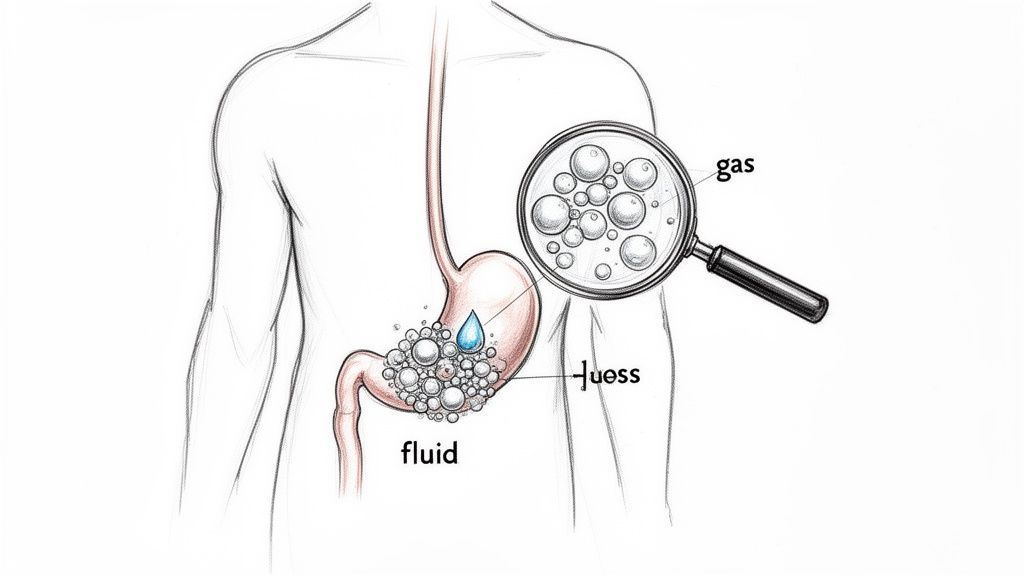
If you’ve ever had to unbutton your pants after dinner, you're definitely not alone. Think of that discomfort as a signal from your body—a temporary traffic jam in your digestive tract where gas or fluid gets stuck, creating pressure and that familiar puffy feeling.
This isn’t just a random occurrence. It's a direct response to specific triggers, and learning to spot them is the key to feeling better. It's a surprisingly common issue, too. Nearly 18% of people around the globe deal with bloating on a weekly basis, and it affects women about twice as often as men. These aren't just statistics; they show how many people are looking for the same answers you are. You can discover more insights about global bloating prevalence in recent studies.
The Three Main Bloating Culprits
To really get to the bottom of what's causing your bloating, it helps to break down the investigation into three main categories. Each one holds important clues about what’s going on inside your gut.
Dietary Triggers: This is all about the food itself. Certain ingredients can be tough for your system to break down, leading to fermentation and excess gas. Think hard-to-digest carbs (like FODMAPs), lactose in dairy, or even gluten for some people.
Behavioral Habits: Sometimes it's not what you eat, but how you eat it. Scarfing down your food too quickly, not chewing enough, or eating massive meals can overwhelm your stomach and cause you to swallow a lot of air.
Underlying Gut Health: The overall condition of your digestive system is a huge factor. Things like an imbalance in your gut microbiome (the good and bad bacteria), sluggish digestion, or hidden food sensitivities can make you much more prone to bloating.
Think of these three categories as your personal detective kit. By paying attention to your diet, habits, and how you feel day-to-day, you can start connecting the dots and turn that frustrating confusion into real clarity.
To get you started, this table breaks down the main categories of bloating causes, offering clear examples to help you start connecting the dots.
Your Quick Guide to Bloating Triggers
Looking at your own experiences through this lens can be the first step in figuring out your personal "why" and finding lasting relief.
The Foods Most Likely to Cause Bloating
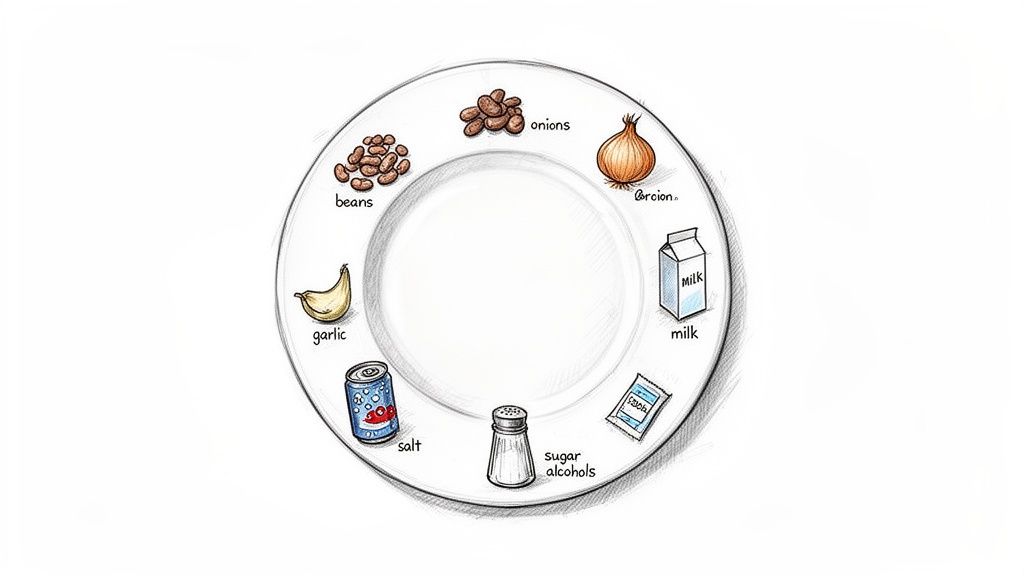
While lots of things can contribute to that uncomfortable post-meal puffiness, what's on your plate is usually the main offender. Some foods just contain compounds that are tougher for our bodies to digest, which leads to fermentation and gas production deep in the gut. Learning about these usual suspects is your first real step toward figuring out your personal bloating patterns.
This isn’t about creating a "do not eat" list. Think of it more as a lineup of common culprits—knowledge you can use to become a detective for your own digestive system.
The FODMAP Connection
A huge piece of the bloating puzzle involves a group of short-chain carbs called FODMAPs. It’s an acronym for Fermentable Oligosaccharides, Disaccharides, Monosaccharides, and Polyols. It's a bit of a mouthful, but the core idea is actually pretty simple.
Think of these specific carbs as fast food for your gut bacteria. They can be difficult to absorb in your small intestine, so they continue their journey to the large intestine. Once there, your gut microbes have a feast, fermenting them and producing gas as a byproduct. For many of us, that gas is what leads to bloating, cramping, and general discomfort.
Common high-FODMAP foods include:
- Onions and Garlic: These are staples in so many kitchens, but they're also potent sources of fructans (a type of FODMAP).
- Beans and Lentils: Famous for being gas-producers, and for good reason—they're packed with galactans.
- Wheat and Rye: These grains contain fructans, which can cause issues for some people, completely separate from gluten.
- Certain Fruits: Apples, pears, and mangoes, for example, are high in fructose, another FODMAP.
Dairy and Gluten Sensitivities
Beyond the world of FODMAPs, two other well-known ingredients are frequent bloating triggers. First up is lactose, the natural sugar in dairy products like milk, yogurt, and soft cheeses. If your body doesn't produce enough of the enzyme lactase, it can't break down lactose properly, leading to a whole lot of gas and bloating.
Gluten—a protein found in wheat, barley, and rye—is another big one. Celiac disease is a serious autoimmune condition, but many people experience what's called non-celiac gluten sensitivity. This can still cause bloating and other digestive troubles after eating bread, pasta, or certain cereals.
It’s important to distinguish between an intolerance and an allergy. An intolerance causes digestive distress, while a true food allergy involves an immune system response that can be life-threatening.
Other Common Bloating Causes
Even if you manage to dodge FODMAPs, lactose, and gluten, other dietary choices can still leave you feeling uncomfortable.
Salty foods, for one, make your body hold on to water, which can easily translate to feeling puffy and bloated. Carbonated drinks pump excess gas right into your stomach, and the sugar alcohols (like sorbitol and xylitol) used in many "sugar-free" products are notorious for causing digestive upset.
Even your healthiest habits can sometimes backfire. A diet rich in fiber is fantastic for long-term gut health, but it can cause significant bloating in about 20% of U.S. adults. The issue is often amplified when high fiber is combined with high protein, as both can ferment and produce gas. You can learn more about the fiber-protein bloating link and find strategies for a better balance.
How Your Eating Habits Can Trigger Bloating
We tend to blame what we eat for bloating, but often, the real culprit is how we eat. Your digestive system isn't just a passive container; it's an intricate process that's highly sensitive to your habits and state of mind. Rushing through meals or eating while you're stressed out can be huge triggers for post-meal bloating, no matter what’s on your plate.
It's a simple mechanical issue, really. When you eat too fast, talk a lot while chewing, or even sip from a straw, you're swallowing a surprising amount of air. This is called aerophagia, and it's one of the most direct routes to feeling gassy and uncomfortably full.
The Problem with Speed and Distraction
Eating quickly delivers a one-two punch to your gut. First, as we mentioned, you swallow excess air. Second, you aren't giving yourself enough time to chew properly. Chewing is the very first step of digestion, and when you skip it, you're basically dumping a pile of extra work on your stomach. This forces it to churn harder and longer, slowing everything down and creating a perfect environment for gas to build up.
Did you know it takes about 20 minutes for your stomach to tell your brain, "Hey, I'm full"? When you eat too fast, you blow right past that signal, making it incredibly easy to overeat. That overstuffed feeling isn't just in your head—it physically stretches your stomach, leading to that heavy, bloated sensation.
Eating while distracted is just as bad. Scrolling through your phone, answering emails, or watching TV during a meal keeps your body in a state of alert. Your nervous system can't fully shift into "rest-and-digest" mode, which means the whole digestive process gets sluggish. Food ends up sitting in your gut for longer than it should, fermenting and producing gas.
Stress and Your Gut Connection
The connection between your brain and your gut is no joke. When you feel stressed, your body pumps out cortisol, the primary stress hormone. This effectively tells your body to divert energy away from "non-essential" tasks like digestion to deal with the perceived threat. So, eating a meal during a stressful moment can directly translate into bloating, cramping, and discomfort.
This is especially true with habits like stress eating, which often combines eating too quickly with foods that are harder to digest in the first place. It's a perfect storm for an unhappy gut. Getting a handle on that response can be a game-changer.
Here are a few simple ways to make your eating habits work for you instead of against you:
- Put your fork down between bites. It sounds almost too simple, but this one little trick forces you to slow down, chew more, and be present.
- Create a mealtime ritual. Even if it's just for five minutes, step away from your computer. Sit at a table. Turn off the TV. This sends a powerful signal to your body that it's time to focus on nourishment.
- Serve smaller portions. A heaping plate can overwhelm your stomach. It’s always better to start with less and check in with your hunger cues before going back for more.
Bringing a little more awareness to the act of eating can dramatically cut down on bloating. It’s all about making small, sustainable tweaks that give your digestive system the calm, focused environment it needs to do its job well.
When Your Bloating Might Be Something More
A little bit of bloating now and then is just part of being human. Our digestive systems are complex, and sometimes they get a bit backed up. But what if that "little bit" starts to feel like an all-the-time thing?
If bloating has become a constant, unwelcome guest at your table, it might be your body's way of sending up a flare. It's a signal that there could be something more going on under the surface. This is actually more common than you'd think—in the U.S., nearly 1 in 7 adults deal with bloating every single week, and it’s often tied to conditions like Irritable Bowel Syndrome (IBS) or chronic constipation. You can see the full research on bloating prevalence and health conditions to get a bigger picture.
The key is learning to tell the difference between normal digestive hiccups and a pattern that points to a bigger issue. It’s all about looking for clues beyond just a swollen tummy.
Common Culprits Behind Chronic Bloating
When bloating sticks around day after day, it's often linked to a handful of specific digestive conditions. These issues throw a wrench in the works of your gut's normal operations, leading to that all-too-familiar gas, pressure, and distension.
Here are a few of the most common underlying causes:
Irritable Bowel Syndrome (IBS): This is a disorder of gut-brain interaction, meaning the communication between your brain and your gut is off. It shows up as a frustrating mix of symptoms like abdominal pain, cramping, and a total shift in your bathroom habits (think constipation, diarrhea, or a mix of both). For many people with IBS, bloating is the most dominant and disruptive symptom.
Small Intestinal Bacterial Overgrowth (SIBO): The name says it all. SIBO happens when bacteria set up camp where they don't belong—in your small intestine. These misplaced microbes start fermenting the food you eat way too early in the digestive line, producing a ton of gas that leads directly to significant bloating.
Celiac Disease: This isn't an allergy or intolerance; it's an autoimmune disorder. When someone with Celiac disease eats gluten (a protein in wheat, barley, and rye), their immune system attacks and damages the lining of the small intestine. Chronic bloating is a classic sign, often coming along with other clues like diarrhea, fatigue, and weight loss you can't explain.
It's so important to see this information as a guide for awareness, not a tool for self-diagnosis. The only way to get a real answer and a clear path forward is to get a proper evaluation from a healthcare professional.
Knowing when to make that call is everything. If your bloating comes with persistent pain, unexplained weight loss, blood in your stool, or drastic changes in your bowel habits, it’s time to book an appointment. Think of these as red flags from your body, telling you that simple food swaps might not be enough to solve the puzzle.
A Simple Method to Find Your Personal Triggers
Knowing the common culprits behind post-meal bloating is a great start, but figuring out your specific triggers requires a little detective work. The single most effective way to connect the dots between what you eat and how you feel is to keep a detailed log. And thankfully, this doesn't have to be a chore—modern tools have made it incredibly simple.
Think of it as creating a personalized map of your own digestive landscape. When you track what you eat, when you eat, and how your body responds, patterns that are completely unique to you start to pop out. Was it really the lentil soup you had for lunch, or was it the stressful meeting that came right after? A journal helps you untangle what’s a coincidence from what’s a genuine cause.
This whole process turns vague guesswork into solid, actionable evidence, putting you back in the driver's seat.
Start a Simple Food and Symptom Journal
The key here is to gather useful information without adding more stress to your plate. You can forget about complicated spreadsheets or carrying a notebook everywhere. A much easier approach, like the one we use in the Superbloom app, boils it down to just two simple steps after each meal:
- Snap a Photo of Your Meal: This is a fantastic visual shortcut. Instead of trying to remember and type out every single ingredient, a quick picture captures it all—the portion size, the specific foods, and even how it was cooked. It's fast and surprisingly accurate.
- Add a Quick Note on How You Feel: About an hour or two after you eat, check in with yourself. How do you feel? Bloated, energized, gassy, or totally fine? You can even rate the severity on a simple scale, like 1 to 5.
Stick with this for a little while, and you'll build an incredibly powerful library of your body's unique responses.
Keeping a food diary isn't about judgment or restriction. It’s about building awareness. The goal is to identify patterns, not to label foods as "good" or "bad." This mindful approach helps you understand your body’s signals with curiosity instead of criticism.
For so many people, this kind of visual diary reveals connections they never would have guessed. You might find out it’s not all high-fiber foods that cause trouble, but specifically large portions of raw vegetables. Or maybe you'll notice your bloating is always worse on days packed with back-to-back meetings, shining a bright light on the role stress plays.
When to Seek Professional Guidance
While tracking your habits is a powerful tool for spotting dietary and lifestyle triggers, it’s just as important to recognize when your symptoms need a professional eye.
The chart below outlines a clear path for what to do when bloating becomes persistent or severe.
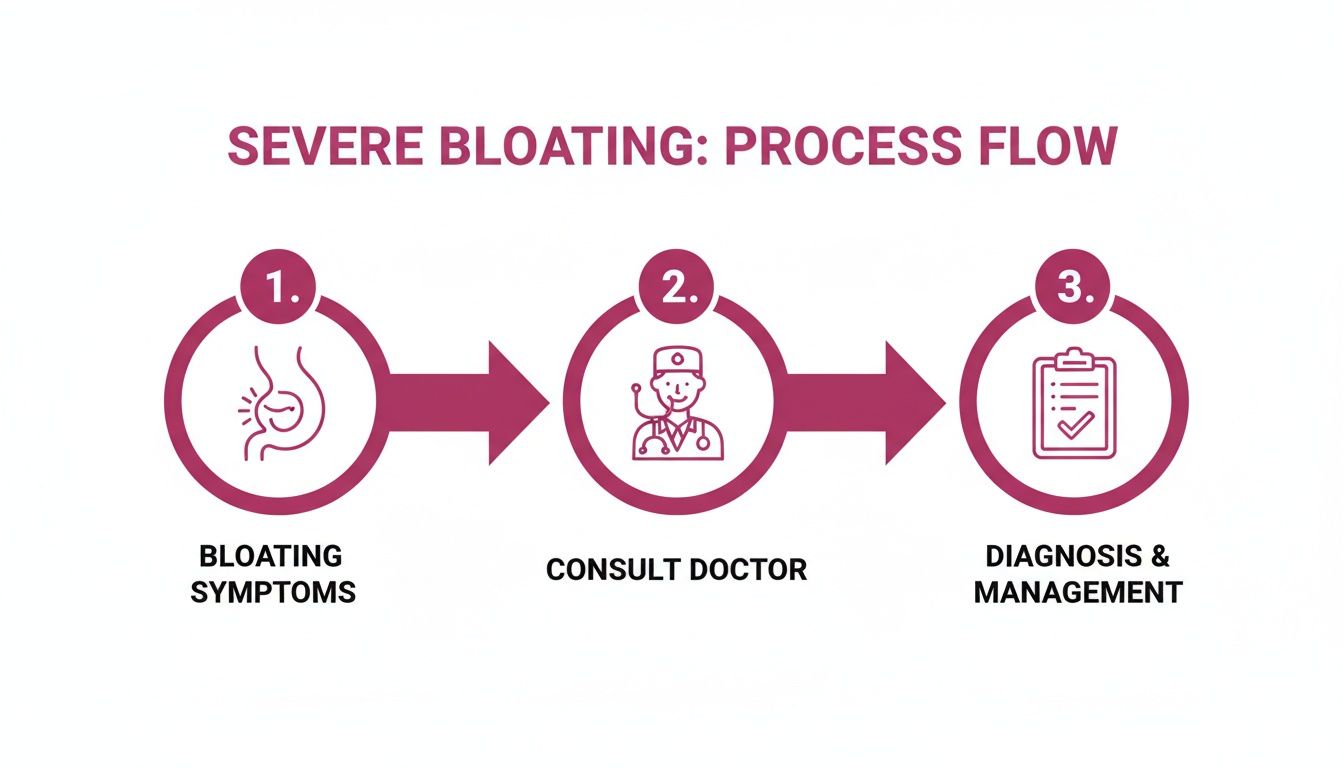
The takeaway is simple: if your bloating is chronic, painful, or shows up with other "red flag" symptoms, your very first step should be talking to a doctor to get a proper diagnosis. Once you do, that food journal you’ve been keeping becomes an invaluable asset you can share with your doctor or a registered dietitian. It gives them the detailed insight they need to help you build a management plan that actually works for you.
Actionable Steps to Reduce Bloating Today
Figuring out what's behind your bloating is half the battle, but now it's time to actually do something about it. Finding real, lasting relief isn’t about some magic-bullet fix; it's about building small, sustainable habits that your body can count on day in and day out.
Think of the following tips as your first-aid kit for an unhappy gut. These are simple, science-backed strategies you can start using right away to help calm things down and get some much-needed comfort.
Gentle Movement and Mindful Hydration
One of the best—and simplest—things you can do when you feel that familiar swell is to just get moving. A gentle walk after eating is a fantastic way to wake up your digestive system. It helps nudge trapped gas along its path, preventing that stuck, balloon-like feeling.
You don't need to gear up for a full-blown workout. Just 10-15 minutes of light walking is often all it takes to make a noticeable difference.
And it’s not just what you drink, but how you drink. Gulping down a huge glass of water right with your meal can actually dilute your stomach acid, making it harder to break down food. Instead, try sipping water steadily throughout the day. This keeps you hydrated and your system humming along without putting it under pressure.
Soothing Teas and Smart Swaps
Don't underestimate the power of a good cup of herbal tea. For centuries, people have turned to certain herbs to soothe an upset stomach, and for good reason.
- Peppermint Tea: A classic for a reason. Peppermint helps relax the stomach muscles, which can calm spasms and ease that tight, bloated feeling.
- Ginger Tea: Famous for its digestive benefits, ginger can help your stomach empty a little faster and quiet down general discomfort.
- Chamomile Tea: With its natural anti-inflammatory properties, chamomile is great for reducing the internal swelling and pressure that comes with bloating.
The warmth from a cup of tea does more than just soothe your gut; it also helps relax your entire body, which can be incredibly beneficial for digestion, especially if stress is one of your triggers.
Beyond what you drink, a few simple food swaps can work wonders. If you know raw veggies give you trouble, try steaming or roasting them instead. Cooking breaks down some of the tough fibers, making them much easier on your digestive system.
Likewise, if fatty foods leave you feeling heavy and bloated, try swapping them for leaner proteins like grilled chicken or fish. It’s these small, consistent adjustments that really add up to feeling better after you eat.
Common Questions We Hear About Bloating
When you're trying to figure out why you're bloating after meals, it's natural to have a lot of questions. Let's tackle some of the most common ones.
How Long is Too Long for Bloating to Last?
A little bit of bloating that disappears within a few hours? That's usually just your digestive system working through a big or high-fiber meal. Think of it like a temporary traffic jam that clears up on its own.
But if that bloated feeling hangs around for days, comes with serious pain, or shows up after almost everything you eat, that's a different story. That’s your body sending a clear signal that it’s time to talk to a doctor. You don't have to just "live with" constant discomfort.
Can I Really Be Bloated Just From Stress?
Yes, 100%. Your brain and your gut are in constant communication, and it's a very powerful link. When you're stressed out, your body goes into "fight or flight" mode and pulls energy away from things it considers non-essential at that moment—and digestion is one of them.
This slowdown means food and gas hang around in your gut longer, leading to that familiar bloated feeling, even if you’re eating "safe" foods. This is exactly why noticing your mood and stress levels when you track your meals can be a game-changer for connecting the dots.
Your state of mind has a direct, physical effect on your digestion. A calmer mind can genuinely lead to a calmer, happier gut.
Speaking of things that can cause digestive issues, people often have questions about supplements. For instance, Does creatine make you bloated? It's a common concern, and getting clear answers helps you make better choices for your body.
Ready to move past the guesswork and finally understand what your body is trying to tell you? Superbloom makes it simple. With easy meal photos and quick check-ins, you can start pinpointing your personal bloating triggers—no calorie counting required. Download the app and start your journey to a happier gut today!