
Cottage Cheese Macros A Guide to This Protein Powerhouse
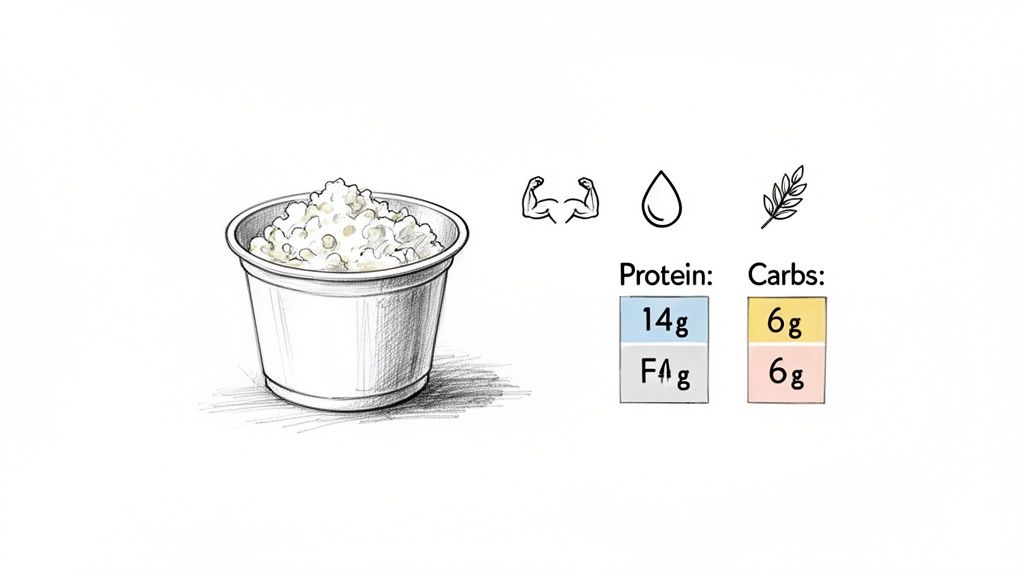
Let's get right into the numbers. A standard 1-cup serving of creamed, full-fat cottage cheese usually gives you about 25 grams of protein, 10 grams of fat, and 8 grams of carbohydrates. That high-protein punch is what makes it such a powerhouse for keeping you full and supporting muscle.
Your Quick Guide to Cottage Cheese Macros
Think of cottage cheese as more than just a snack; it's a strategic tool for your nutrition goals. Its impressive protein content is the star of the show, providing the building blocks for muscle repair and a slow, steady release of energy. If you're tired of snacks that leave you hungry an hour later, this is your answer.
This visual gives you a great at-a-glance breakdown for a typical full-fat cottage cheese.
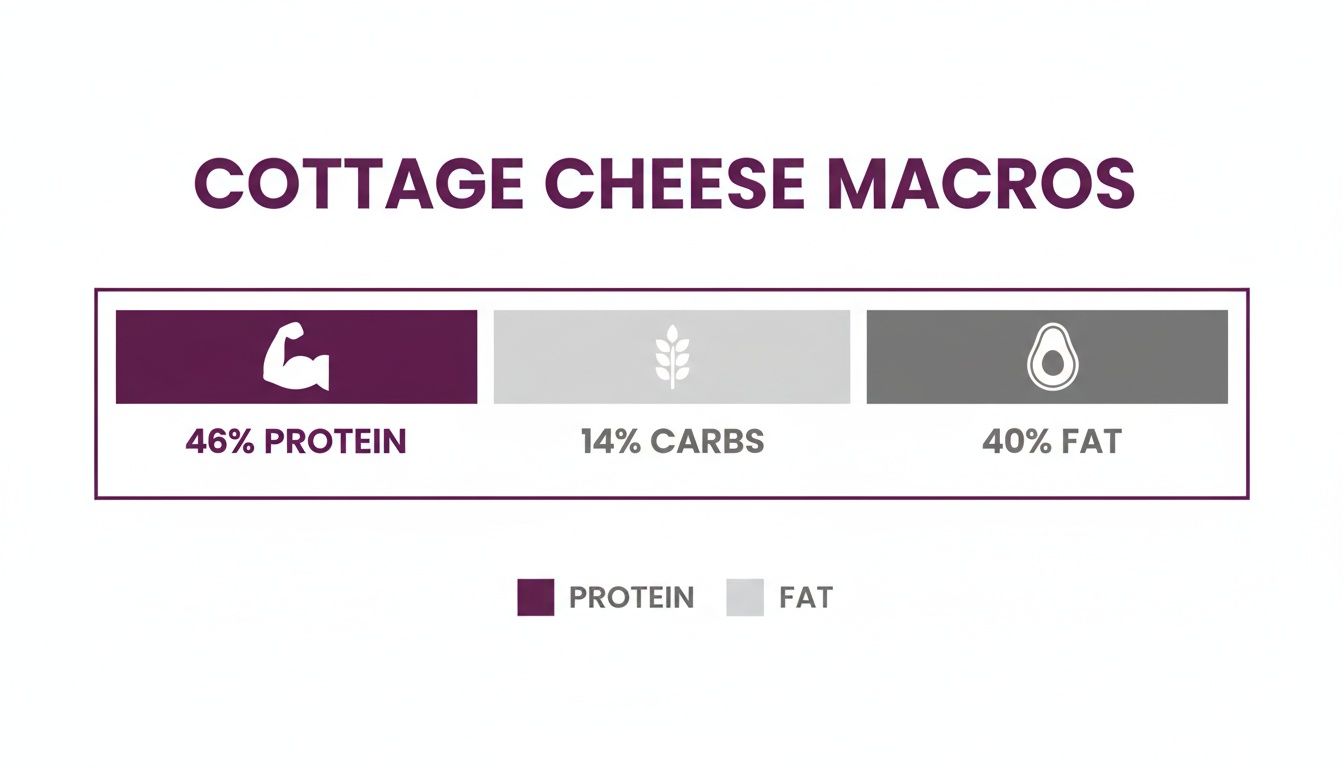
As you can see, protein and fat are the main players here, with carbohydrates taking a backseat.
A Closer Look at the Numbers
So, what does that chart really mean on your plate? In a typical 1-cup serving of small curd, creamed cottage cheese, that protein accounts for a massive 46% of its macronutrient profile. Carbs are just 14% and fat is 40%, all for around 221 calories.
Better yet, it’s a complete protein, meaning it has all nine essential amino acids your body needs. It also digests slowly, which is the key to its incredible ability to keep you feeling satisfied. You can dive even deeper into the nutritional specifics of cottage cheese on EatThisMuch.com.
But not all cottage cheese is created equal. The main difference you'll find at the store is the milkfat percentage, which changes the macro and calorie count pretty significantly.
Cottage Cheese Macros at a Glance (Per 1-Cup Serving)
Here’s a simple table to help you see how the most common types of cottage cheese stack up. It makes it easy to pick the right one for your goals, whether that’s more protein, less fat, or fewer calories.
| Cottage Cheese Type | Protein (g) | Fat (g) | Carbs (g) | Approx. Calories |
|---|---|---|---|---|
| Full-Fat (4%) | 25g | 10g | 8g | 220 |
| Low-Fat (2%) | 26g | 5g | 9g | 180 |
| Non-Fat (0%) | 28g | 0g | 7g | 160 |
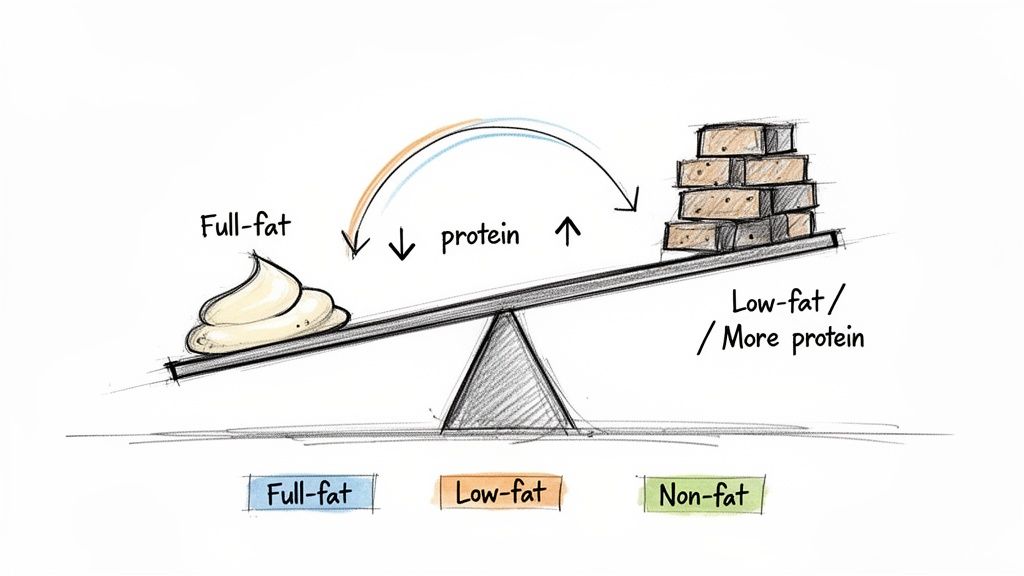
As you can see, dropping the fat content actually nudges the protein up slightly per serving.
This isn’t about getting bogged down in numbers. It's about knowing what you're eating so you can make choices that feel good and get you closer to your goals. Understanding these basic macros is the first step, and it all starts with your next trip to the grocery store.
Why Protein Is the Star of the Show
When you look at the macros for cottage cheese, one thing immediately stands out: the protein. The numbers are impressive on their own, but the kind of protein it contains is what really makes it a powerhouse for sustained energy and health.
First off, it’s a complete protein. This means it packs all nine essential amino acids that your body can't make on its own. These are the literal building blocks for everything from repairing muscle tissue to creating hormones, so you're getting a lot of nutritional bang for your buck.
The Power of Slow-Release Fuel
The secret weapon in cottage cheese's protein blend is casein. Think of it as a slow-burning log for your metabolic fire. While other proteins (like whey) or simple carbs give you a quick spike of energy and then fizzle out, casein digests very slowly over several hours.
This slow-drip effect on digestion is a game-changer for feeling full. It keeps hunger signals at bay for much longer, which is incredibly helpful for managing cravings and sticking to your goals. Here’s what that looks like in practice:
- Lasting Fullness: You can finally sidestep those energy crashes that lead to mindless snacking between meals.
- Muscle Maintenance: It delivers a steady supply of amino acids to your muscles. This is perfect for helping them recover after a workout or preventing breakdown while you sleep.
- Appetite Control: By keeping you satisfied, it helps you build a more natural, intuitive approach to eating, free from the drama of sudden, intense hunger.
The slow-digesting casein protein is what turns cottage cheese from just another snack into a strategic tool for managing your appetite and supporting recovery long after you've put the spoon down.
At the end of the day, this single component is what makes cottage cheese so incredibly effective. It’s not just about hitting a certain protein target; it's about fueling your body with a high-quality, slow-release source that supports your muscles and helps you feel in control of your hunger.
How Fat Percentage Shapes Your Macros
The fat percentage on a tub of cottage cheese tells you a lot more than just the fat content. It's a quick guide to its entire nutritional profile. Think of it as a simple trade-off: as the fat goes down, the protein content, relative to the calories, goes up.
This is why lower-fat options are often called more "protein-dense." It's not that one is automatically better than the other—it all comes down to what you need and what you enjoy eating.
Take a typical half-cup of 2% low-fat cottage cheese. You’re looking at about 90 calories, 5g of carbs, and a solid 12g of protein for just 2.5g of fat. This kind of macro-friendly profile, which cuts fat by 60-70% compared to whole milk versions, has helped drive cottage cheese sales to $2.5 billion a year. Studies have even shown that snacks with these macros can boost satiety-related hormones by up to 25%. You can dig into more of the science behind the benefits of different cottage cheese types on AmericanDairy.com.
When to Choose Different Fat Levels
So, which one should you actually buy? Let your goals and your taste buds lead the way.
Choose Full-Fat (4%+) For Satiety and Flavor: The extra fat makes for a much richer, creamier experience that keeps you feeling full longer. This is a great choice if you’re looking for a more satisfying snack or need the extra calories to fuel your workouts.
Choose Low-Fat (1-2%) For a Protein Boost: If getting more protein is your main focus without piling on extra calories or fat, this is your sweet spot. It delivers a serious protein punch while staying light and versatile.
The best cottage cheese is simply the one that fits your needs at that moment. Are you fueling up after a tough gym session, or just looking for a light snack to get you to your next meal? Your answer will point you to the right tub.
Understanding the Low Carb Advantage
We've talked a lot about protein, but one of the biggest wins for cottage cheese is what it doesn't have: a ton of carbs. This low-carb profile is your secret weapon for keeping your energy levels steady all day long.
The few carbs it does contain come from lactose (milk sugar), which affects your blood sugar much more gently than other sugars. Think of it as a smooth, rolling wave of energy instead of the sharp spike and inevitable crash that comes with a candy bar. This helps you dodge that dreaded afternoon slump and the intense cravings that usually follow.
When you look at the cottage cheese macros, the numbers speak for themselves. A full cup of 2% low-fat cottage cheese only has about 8.2g of carbs, which is a tiny 3% of your daily value. This protein-first, low-carb setup makes it so much easier to build consistent, healthy habits. If you want to dive deeper, you can explore the nutritional breakdown of low-fat foods from the University of Rochester Medical Center.
A Blank Canvas for Nutrients
Because it's so low in carbs and fiber, cottage cheese acts as the perfect "blank canvas." Its mild, neutral flavor is an ideal backdrop for nutrient-rich toppings that you can tailor to whatever your body needs.
- For a Low-Carb Meal: Go savory. Think fresh herbs, chopped cucumber, and a generous sprinkle of everything bagel seasoning.
- For a Balanced Snack: Mix in high-fiber berries for antioxidants and a small handful of nuts for a dose of healthy fats.
- For Post-Workout Recovery: Pair it with a banana. The fruit helps restock your energy (glycogen) stores while the protein gets to work repairing muscle.
This incredible versatility puts you in the driver's seat. You can customize your meal to fit your exact needs, whether you’re strictly low-carb or just want a satisfying snack that won't send you on a blood sugar rollercoaster. It's all about giving you more control over your energy and appetite.
Cottage Cheese vs. Greek Yogurt Showdown
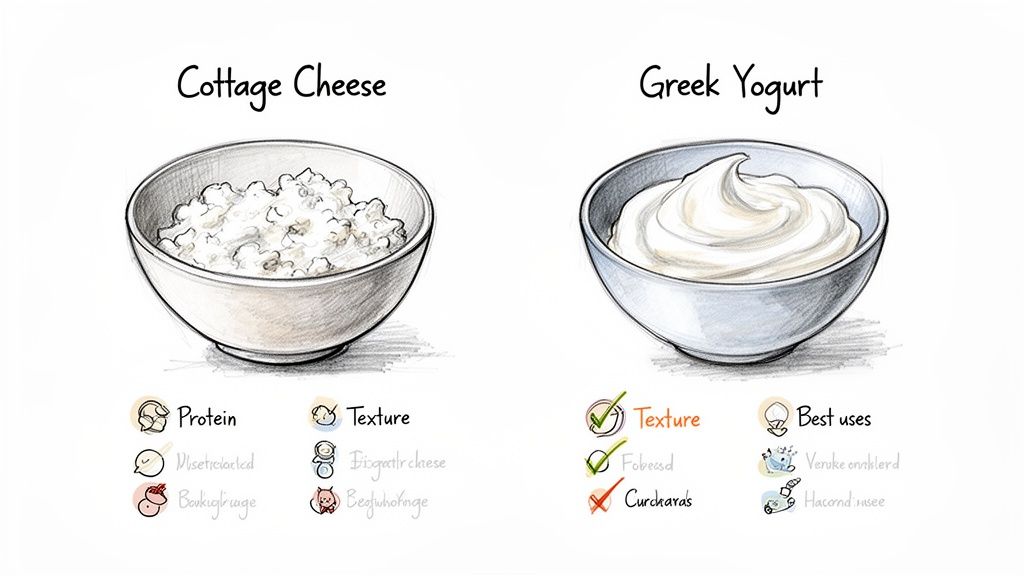
Walk down the dairy aisle, and you'll see two heavy hitters staring back at you: cottage cheese and Greek yogurt. Both are fantastic high-protein options, but they aren't interchangeable. Think of them as different players on your team, each with a unique skill set.
Your choice often boils down to texture, taste, and what you’re trying to accomplish with your meal. Cottage cheese, with its lumpy curds and mild, slightly savory flavor, is an incredible base for hearty bowls, creamy dips, or even blended into sauces for a hidden protein boost.
Greek yogurt, on the other hand, is famous for its thick, smooth consistency and signature tangy kick. This makes it a perfect partner for fruit-filled breakfast bowls, a creamy element in smoothies, or a healthier swap for sour cream. It’s all about picking the right tool for the job.
The Macro Head-to-Head
So how do they really stack up when you look at the numbers? The differences are subtle, but they can help you decide which one aligns better with your goals for a specific meal, whether that's maxing out protein or keeping carbs in check.
Let's compare the typical macros for a one-cup serving of the popular low-fat (2%) versions of each.
Cottage Cheese vs. Greek Yogurt (Typical Macros Per 1 Cup)
This table breaks down the macronutrient profiles of plain, low-fat cottage cheese and plain, low-fat Greek yogurt, helping you see the small but important differences.
| Nutrient | Low-Fat Cottage Cheese (2%) | Low-Fat Greek Yogurt (2%) |
|---|---|---|
| Protein | ~26g | ~23g |
| Carbs | ~9g | ~8g |
| Fat | ~5g | ~5g |
| Calories | ~180 | ~170 |
As you can see, cottage cheese pulls slightly ahead on the protein front. That small difference of a few grams can be the deciding factor if you're focused on muscle repair after a workout or just trying to hit a specific protein target for the day.
To make the right call, just ask yourself: "What do I need from this meal?" If the answer is a savory, protein-packed foundation, grab the cottage cheese. If you're looking for a smooth, tangy addition to something sweet, Greek yogurt is your winner.
There's no single "best" option here. The smartest move? Keep both in your fridge. Having both on hand gives you the flexibility to build satisfying meals and snacks that never get boring, all while supporting your health goals.
How to Make Cottage Cheese Macros Work For You
Knowing the numbers on the label is great, but the real magic happens when you start using that information to build better meals. Let's get practical and talk about how to make cottage cheese fit your specific goals.
Its real strength is its incredible versatility. You can easily tweak it to support muscle growth, help with weight management, or just whip up a quick low-carb meal that keeps you feeling full for hours. It all comes down to what you pair it with.
Goal-Oriented Meal and Snack Ideas
Think of cottage cheese as your blank canvas. Your goals are the inspiration, and the toppings are your tools. With the right additions, a simple bowl of cottage cheese becomes a powerhouse meal perfectly tuned to what your body needs.
For Muscle Recovery: Coming off a tough workout? Your muscles are hungry for protein and carbs. A scoop of cottage cheese gives you that slow-digesting casein protein for repair. Add some sliced banana or a swirl of honey for the quick-release carbs to restock your energy.
For Lasting Satiety: If you need to stay full and focused until your next meal, you’ll want to add fiber and healthy fats. Try mixing in some chia seeds, a handful of almonds, and a few berries. This combo slows everything down, giving you steady, sustained energy.
For a Quick Low-Carb Meal: Go savory. A bowl of cottage cheese with chopped cucumber, diced bell peppers, and a generous dash of everything bagel seasoning makes an amazing light lunch or dinner. It's high in protein and satisfying without the carb load.
When you start thinking in terms of what you’re trying to achieve, you shift from just eating to fueling with intent. This is the first step toward building an intuitive sense of what your body needs—a key habit you can track and develop with tools like the Superbloom app.
On top of being a fantastic everyday food, cottage cheese is a real winner for post-workout nutrition. To see how it stacks up against other recovery foods, check out this list of the best foods for what to eat after strength training.
Common Questions About Cottage Cheese
Even with the macros laid out, you might still have a few questions about how cottage cheese fits into your life. Let's tackle some of the most common ones we hear.
Can I Eat Cottage Cheese Every Day?
For most people, absolutely. Making cottage cheese a daily habit is a fantastic way to consistently hit your protein targets. It’s a well-rounded food that can easily become a staple.
The one thing to keep an eye on is the sodium content, which can creep up depending on the brand. If you're watching your sodium intake, either look for a low-sodium version or try this simple trick: just give the cottage cheese a quick rinse in a fine-mesh strainer. It washes away some of the extra salt without changing the texture too much.
Is Cottage Cheese a Good Fit for a Keto Diet?
It's a perfect match. Cottage cheese fits beautifully into a ketogenic diet because it’s high in protein, has a moderate amount of fat, and is exceptionally low in carbohydrates.
A typical serving has just a few grams of net carbs, so you can easily add it to a meal or have it as a snack without worrying about getting kicked out of ketosis. The full-fat (4%) versions are especially great here, as they help you hit your fat macros and keep you feeling full longer.
What About the Lactose in Cottage Cheese?
Cottage cheese does have lactose, but the amount is often much lower than what you’d find in a glass of milk. During the cheesemaking process, a good portion of the lactose is naturally broken down and drained away.
Many people with mild lactose intolerance discover they can handle cottage cheese just fine, especially in smaller servings. If you're more sensitive, you're in luck—brands like Lactaid and Good Culture now make some excellent lactose-free options that taste just as good.
Ready to stop counting calories and start understanding your eating patterns? Superbloom uses AI and behavioral psychology to help you build sustainable habits. Log meals with a photo, get personalized insights, and feel more in control of your health journey. Start your journey with Superbloom today.