
8 Sustainable Diabetic Meal Prep Ideas to Simplify Your Week in 2026
Managing diabetes can feel like a constant balancing act of monitoring blood sugar, tracking carbs, and ensuring every meal aligns with your health goals. This daily pressure often leads to decision fatigue, pushing you toward last-minute, less-than-ideal food choices. This is where strategic meal prep becomes more than just a time-saver; it’s a powerful tool for creating consistency, reducing stress, and putting you back in control of your nutrition.
The old approach of eating the same bland chicken and broccoli for five straight days is neither inspiring nor sustainable. This guide is different. It provides a comprehensive roundup of modern, flexible, and practical diabetic meal prep ideas designed for the realities of a busy life. We'll move beyond generic advice and dive into actionable systems that empower you to build mindful eating habits, understand your body’s unique responses, and make healthy eating feel effortless, not like a chore.
You will discover how to implement techniques that are both portion-conscious and psychologically sound, helping you avoid burnout while maintaining stable blood sugar levels. From container-based systems to minimal-cleanup sheet pan meals, these methods are designed for practical application. Whether you're a busy professional, new to managing your diet, or simply tired of the daily 'what's for dinner?' dilemma, the following strategies will provide the structure you need to create a foundation for lasting well-being and reclaim your time.
1. Balanced Plate Method with Macro-Awareness
The Balanced Plate Method is a powerful, visual framework for building blood-sugar-friendly meals without complicated calorie counting. It's an intuitive strategy that makes crafting diabetic meal prep ideas simple and sustainable. The core principle involves mentally dividing your plate or meal prep container into three distinct sections, each dedicated to a specific macronutrient group.
This approach prioritizes nutrient density and helps manage carbohydrate intake, which is crucial for preventing sharp spikes in blood glucose. By focusing on the composition of your plate rather than just calories, you ensure each meal is satisfying, nutrient-rich, and supportive of stable energy levels.
How It Works
The method simplifies portion control into a visual guide, making it easy to apply to any meal you prepare.
- Fill Half Your Plate (50%) with Non-Starchy Vegetables: These are low in carbohydrates and high in fiber, vitamins, and minerals. Think leafy greens, broccoli, cauliflower, bell peppers, zucchini, and asparagus. Fiber slows digestion, promoting a gradual release of glucose into the bloodstream.
- Fill One Quarter (25%) with Lean Protein: Protein is essential for satiety, helping you feel full and satisfied long after your meal. It has a minimal impact on blood sugar. Excellent choices include grilled chicken breast, baked fish like salmon or cod, lean ground turkey, tofu, and legumes.
- Fill One Quarter (25%) with Complex Carbohydrates: Choose high-fiber, whole-grain carbohydrates that break down slowly. This prevents the rapid blood sugar rise associated with refined carbs. Examples include quinoa, brown rice, sweet potatoes, whole-wheat pasta, and oats.
Key Insight: This method trains your eye to recognize balanced portions, turning a complex nutritional concept into a simple, repeatable daily habit. It shifts the focus from restriction to intentional inclusion of beneficial food groups.
Practical Meal Prep Examples
- Monday Prep: Portion out containers with grilled chicken breast, a generous serving of roasted Brussels sprouts and red bell peppers, and a scoop of quinoa.
- Wednesday Prep: Prepare baked salmon fillets alongside steamed green beans and a side of cubed, roasted sweet potato.
- Friday Prep: Cook lean ground turkey to pair with a large mixed greens salad (with a light vinaigrette) and a serving of brown rice.
Actionable Tips for Success
- Prep Components Separately: Batch cook your protein, carbohydrates, and vegetables separately. This allows you to mix and match them throughout the week for variety, preventing meal fatigue.
- Color Your Veggies: Aim for a rainbow of colors in your vegetable choices (e.g., red peppers, green broccoli, orange carrots). This not only makes meals visually appealing but also ensures a wider range of micronutrients and antioxidants.
- Use Visual Cues: Use your hand to estimate portions when you're not using measuring cups. A palm-sized portion is about 3 ounces of protein, a cupped hand is about a half-cup of carbs, and two cupped hands represent a good portion of vegetables.
2. Container-Based Overnight Prep with Portion Control
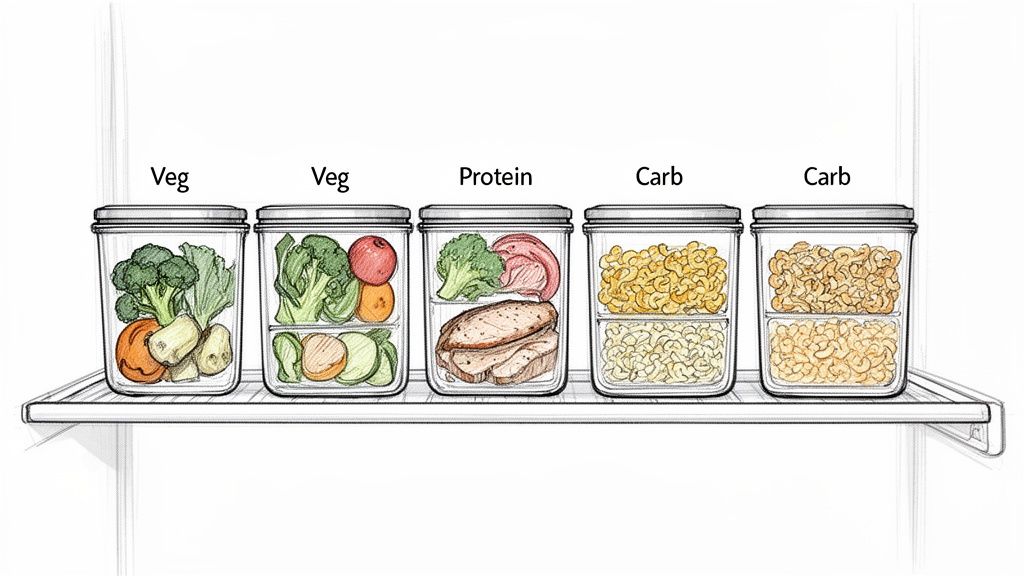
This method is a time-efficient system where entire, balanced meals are pre-assembled into individual containers and refrigerated for the week. Each container is pre-portioned according to diabetes-friendly macronutrient guidelines, allowing you to simply grab a ready-made meal from the fridge. This strategy removes the daily friction of deciding what to eat, making healthier choices the easiest option.
By preparing meals in advance, you eliminate guesswork and the temptation to opt for less healthy convenience foods when you're busy or tired. This approach to diabetic meal prep ideas leverages behavioral psychology; by making the right choice the most accessible one, you build consistent, blood-sugar-friendly eating habits with minimal in-the-moment effort.
How It Works
The system revolves around batch-cooking components and assembling them into grab-and-go containers for the days ahead. You dedicate a specific block of time, like Sunday afternoon, to cook, cool, and portion everything.
- Design Your Meals: Plan 3-5 days of lunches or dinners. Each meal should include a lean protein, a complex carbohydrate, and plenty of non-starchy vegetables, just like the Balanced Plate Method.
- Batch Cook Components: Cook each element in bulk. For example, bake a tray of chicken breasts, roast a large pan of broccoli and bell peppers, and cook a pot of quinoa.
- Assemble and Store: Once cooled, assemble each meal in an individual container. A cornerstone of effective meal prep is knowing how to store food safely, ensuring your prepped meals remain fresh and prevent spoilage.
Key Insight: This method automates healthy eating by front-loading the decision-making and preparation. When a perfectly portioned, blood-sugar-friendly meal is the most convenient option, you are more likely to stay on track.
Practical Meal Prep Examples
- Sunday Prep (Lunch): Assemble five containers, each with baked cod, roasted cauliflower florets, and a measured portion of lentils.
- Wednesday Prep (Dinner): Prepare four containers with lean turkey meatballs, a generous bed of zucchini noodles, and a side of no-sugar-added marinara sauce.
- Breakfast Prep: Create six containers of Greek yogurt parfaits layered with mixed berries and a sprinkle of chopped almonds for a quick morning meal.
Actionable Tips for Success
- Use Glass Containers: Opt for glass containers with secure locking lids. They don't absorb odors or stains, allow for easy reheating, and help you visually confirm portion sizes.
- Create Variety Packs: Instead of making five identical meals, prepare two or three different types of meals for the week. This prevents flavor fatigue and keeps you engaged with your food.
- Separate Components: For meals with sauces or dressings, store them in a small, separate container to prevent sogginess. Add them just before eating to maintain texture.
- Set a Prep Reminder: Use your phone to set a recurring appointment for your meal prep session. Treating it like any other important commitment helps build the habit into your weekly routine.
3. Vegetable-Centric Prep Bowls with Protein Options
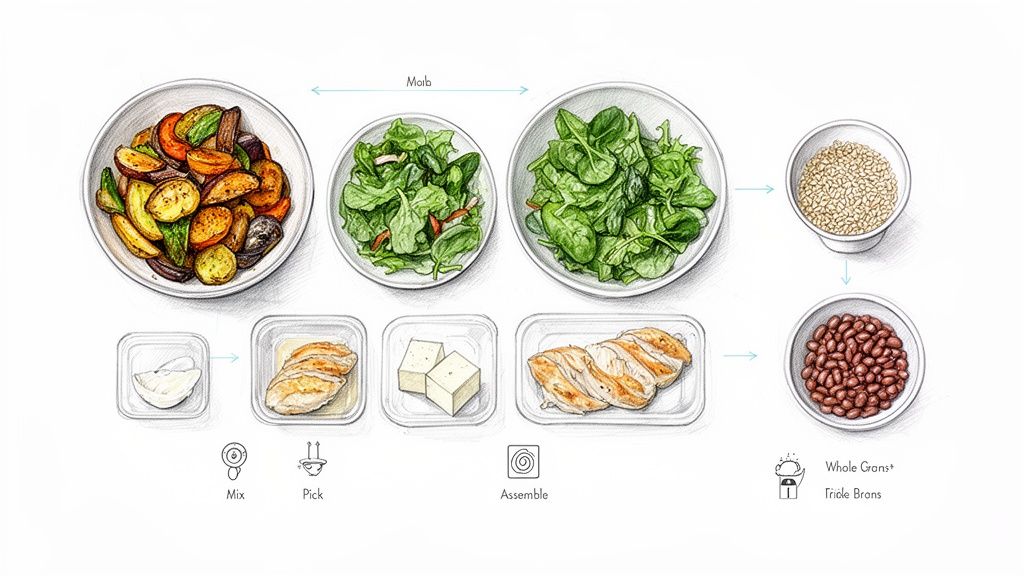
This flexible meal prep approach prioritizes vegetables as the foundation of every meal, shifting the focus from carb counting to nutrient density and fiber. By preparing large quantities of vegetables, lean proteins, and complex grains as separate components, you create a modular system for building blood-sugar-friendly bowls. This method allows for daily customization based on hunger levels and personal preference, making it one of the most sustainable diabetic meal prep ideas.
This strategy empowers you to assemble meals in minutes while ensuring a high intake of fiber, which is critical for slowing glucose absorption and promoting satiety. It encourages mindful portioning and helps you identify which food combinations best support stable energy levels throughout your day.
How It Works
The core concept is to batch-cook individual ingredients and store them separately, turning your fridge into a personal "bowl bar" for quick, healthy meals.
- Make Vegetables the Star: Dedicate most of your prep time to washing, chopping, and cooking a variety of non-starchy vegetables. Prepare them in different ways (roasted, steamed, raw) to add texture and flavor diversity to your meals.
- Prepare Lean Proteins: Cook several servings of lean protein sources. This ensures you can easily add a satisfying, blood-sugar-stabilizing element to every bowl you build.
- Cook Complex Carbs: Batch-cook one or two types of high-fiber, whole-grain carbohydrates. Storing these separately allows for precise portion control, which is key for managing blood glucose.
Key Insight: This "component prep" style prevents meal fatigue and supports intuitive eating. You can adjust your bowl's composition daily based on your body's needs, rather than being locked into identical pre-portioned meals all week.
Practical Meal Prep Examples
- Component Set 1: Prep roasted Brussels sprouts, steamed broccoli, and raw shredded carrots. Pair with pre-cooked grilled chicken strips and a container of brown rice.
- Component Set 2: Prepare a large container of mixed greens, a tray of roasted cauliflower, and steamed green beans. Store alongside baked salmon fillets and cooked wild rice.
- Component Set 3: Batch-cook roasted sweet potato cubes, steamed spinach, and sliced cucumbers. Have lean ground turkey and quinoa ready for assembly.
Actionable Tips for Success
- Tier Your Storage: Organize your fridge by component. Keep prepped vegetables on one shelf, proteins on another, and grains on a third for easy visual access and quick assembly.
- Prep Dressings Separately: Make a simple vinaigrette or yogurt-based dressing and store it in a jar or small, portion-friendly containers. This prevents salads from getting soggy and helps control added fats and sugars.
- Track Your Favorite Combos: Take a quick photo or make a note of the bowl combinations that left you feeling most energized and satisfied. Over time, this helps you recognize patterns in what works best for your body.
4. Snack Box Prepping with Protein and Fiber Focus
Systematically preparing diabetes-friendly snack boxes is a proactive strategy to stabilize blood sugar between meals and curb impulsive, high-carb choices. This approach goes beyond just having healthy food available; it's about designing your environment to make the right decision the easiest one, especially when hunger or stress hits.
This method tackles the common challenge of afternoon energy crashes and emotional eating. By having pre-portioned, balanced snacks ready, you prevent the blood sugar dips that trigger cravings and create a reliable buffer against poor food choices. It’s a key component of diabetic meal prep ideas that supports consistent energy and mindful consumption.
How It Works
This technique involves assembling grab-and-go containers that combine protein, fiber, and healthy fats. This powerful trio works together to slow digestion, promote satiety, and ensure a gentle glucose release.
- Prioritize Protein: Protein is crucial for satisfaction and has a minimal impact on blood sugar. Including a protein source in every snack helps prevent the hunger that leads to overeating later.
- Incorporate Fiber: Fiber, found in fruits, vegetables, and whole grains, slows the absorption of sugar and helps you feel full longer. It's a non-negotiable for blood sugar management.
- Add Healthy Fats: Fats from sources like nuts, seeds, and cheese contribute to satiety and can help moderate the glycemic response of a meal or snack.
Key Insight: This method leverages behavioral psychology by pre-making decisions in a calm state. When you're hungry or stressed, your brain seeks quick energy (often sugar). A pre-made snack box removes the decision-making process, making the healthy choice effortless.
Practical Meal Prep Examples
- The Classic Crunch Box: A handful of almonds, one low-fat string cheese, and crisp apple slices.
- The Savory Power Box: Two hard-boiled eggs, a small portion of whole-grain crackers, and sliced cucumber.
- The Creamy & Sweet Box: A single-serving container of plain Greek yogurt with a small handful of berries and walnuts mixed in.
- The Mediterranean Dip Box: Pre-portioned hummus with celery sticks and red bell pepper strips for dipping.
Actionable Tips for Success
- Build with the "PFF" Formula: When assembling your snack boxes, always aim for a combination of Protein, Fiber, and healthy Fat. This ensures the snack is both satisfying and blood-sugar friendly.
- Portion Before Hunger Strikes: Prepare 3-4 days' worth of snack boxes at once. Use small, individual containers to enforce portion control and make them easy to grab on the go.
- Schedule Your Snacks: Plan to have your snack at your most vulnerable times, like the common 3 p.m. energy slump or during your commute home, to prevent blood sugar from dropping too low.
- Rotate for Variety: Keep a running list of 4-5 different snack box combinations and rotate them weekly. This prevents "snack fatigue" and ensures you're getting a diverse range of nutrients.
5. Plant-Based and Legume-Forward Protein Prep
A legume-forward approach to meal prep centers on beans, lentils, and chickpeas as the primary protein and fiber sources. This strategy is highly effective for managing blood sugar due to the exceptional fiber content in legumes, which significantly slows carbohydrate digestion and absorption, promoting stable glucose levels. It is also a cost-effective and environmentally sustainable way to build satisfying meals.
This method offers a powerful alternative to traditional animal-based protein prep, aligning with growing preferences for plant-centric eating. By making legumes the star of your containers, you create nutrient-dense diabetic meal prep ideas that support both metabolic health and long-term wellness without sacrificing flavor or satiety.
How It Works
This prep style involves batch-cooking various legumes and building meals around them, leveraging their unique combination of protein, complex carbohydrates, and soluble fiber.
- Foundation of Fiber and Protein: Legumes provide a dual benefit. The protein helps you feel full and satisfied, while the high fiber content acts as a brake on blood sugar absorption, preventing sharp spikes after meals.
- Nutrient-Dense and Low Glycemic: Most legumes have a very low glycemic index, meaning they have a minimal impact on blood glucose. They are also packed with essential minerals like iron, magnesium, and potassium.
- Versatile Flavor Canvas: Cooked legumes readily absorb spices and flavors, making them adaptable to a wide range of global cuisines, from Mexican and Indian to Mediterranean and Asian.
Key Insight: Shifting your protein focus to legumes is a strategic way to dramatically increase your daily fiber intake. This single change can improve glycemic control, enhance gut health, and keep you feeling fuller for longer.
Practical Meal Prep Examples
- Monday Prep: Create a large batch of lentil bolognese to serve over zucchini noodles, paired with a side of roasted broccoli and carrots.
- Wednesday Prep: Prepare a hearty chickpea and spinach curry using coconut milk for creaminess, portioned out with cauliflower rice.
- Friday Prep: Assemble black bean and sweet potato Buddha bowls, adding compartments for shredded cabbage, sliced avocado, and a tahini-based dressing.
Actionable Tips for Success
- Boost Iron Absorption: Pair your legumes with a source of vitamin C, such as bell peppers, tomatoes, or a squeeze of lemon juice. This simple trick significantly enhances your body's ability to absorb plant-based iron.
- Improve Digestibility: To minimize bloating, soak dried beans overnight and discard the water before cooking. Adding digestive-friendly spices like ginger, cumin, or fennel during the cooking process can also help.
- Create Complete Proteins: While not always necessary in a single meal, you can ensure a complete amino acid profile by pairing legumes with whole grains like quinoa, brown rice, or whole-wheat bread throughout your day.
6. Sheet Pan and One-Pot Minimal Cleanup Meals
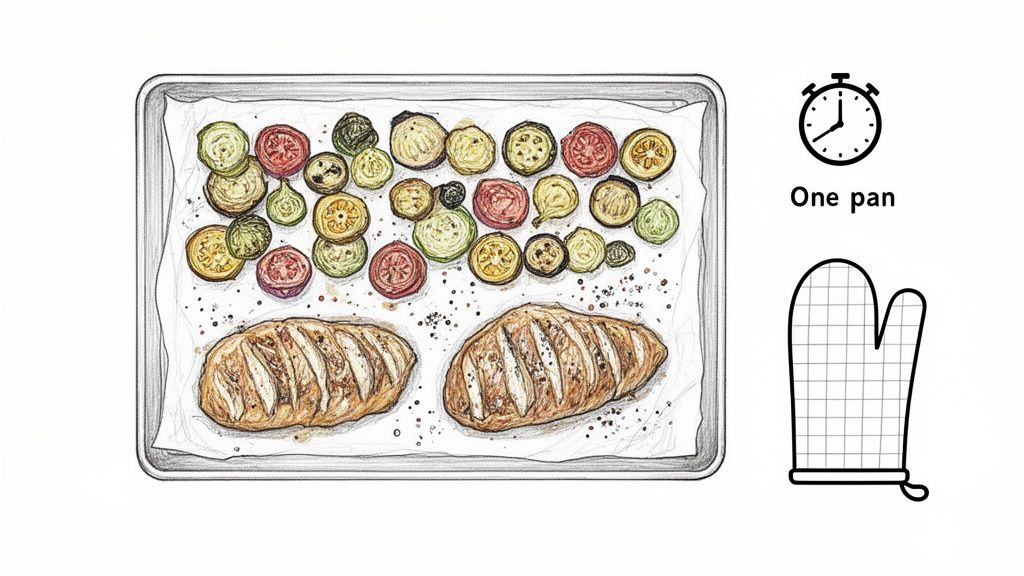
One of the biggest obstacles to consistent meal prep is the cleanup. This method directly tackles that barrier by consolidating your cooking into a single vessel, like a sheet pan or a Dutch oven. It's a highly efficient strategy where proteins and vegetables roast or simmer together, streamlining the entire process from cooking to cleanup.
This approach is perfect for busy individuals who find their healthy eating goals derailed by a lack of time and energy. By minimizing the steps and the mess, you reduce the friction associated with cooking, making it a more sustainable habit. This is one of the most practical diabetic meal prep ideas for maintaining consistency on hectic weeknights.
How It Works
The concept is simple: combine your chosen lean protein, non-starchy vegetables, and healthy fats onto one pan or into one pot. Season everything well and cook until done. This technique ensures flavors meld together beautifully while keeping your active cooking time and subsequent cleanup to an absolute minimum.
- Sheet Pan Method: Toss your ingredients with oil and seasonings, spread them in a single layer on a baking sheet, and roast at a high temperature (typically 400-425°F).
- One-Pot Method: Layer ingredients in a Dutch oven or large pot to simmer or stew. This works wonderfully for chili, soups, and pasta dishes where ingredients cook sequentially in the same pot.
Key Insight: This strategy addresses the behavioral and psychological hurdles of meal prep. When cooking feels less like a chore and more like a simple, streamlined activity, you are significantly more likely to stick with it long-term.
Practical Meal Prep Examples
- Chicken & Veggie Roast: Toss chicken breasts, broccoli florets, and sliced bell peppers with olive oil and herbs. Roast at 425°F until the chicken is cooked through and the vegetables are tender-crisp.
- Salmon & Asparagus Bake: Place salmon fillets on a sheet pan surrounded by asparagus spears and cherry tomatoes. Drizzle with lemon juice and sprinkle with dill before baking.
- Turkey Skillet: In a large pot, brown lean ground turkey, then add chopped onions, garlic, low-sugar marinara sauce, and a variety of mixed vegetables. Simmer and serve with a side of whole-wheat pasta.
Actionable Tips for Success
- Uniform Cutting: Cut all your vegetables into similar-sized pieces to ensure they cook evenly. This small step prevents some items from becoming mushy while others remain raw.
- Use Parchment Paper: Line your sheet pan with parchment paper for the ultimate minimal cleanup. Once you're done, simply slide the food off and discard the paper.
- Prep Before Heating: Chop all vegetables and measure seasonings before you even turn on the oven. This "mise en place" technique reduces stress and makes the active cooking phase feel calm and organized.
- Arrange Strategically: Place proteins that need longer cooking times in the center of the pan and quicker-cooking vegetables around the edges. You can also add delicate vegetables partway through the cooking process.
7. Customizable Grain and Greens Salad Prep with Dressing Separation
This strategy elevates the simple salad into a powerful tool for blood sugar management and mindful eating. Instead of making individual salads, you create large, versatile salad bases combining leafy greens, whole grains, and various toppings. By keeping the dressing separate, you ensure maximum freshness and crunch, transforming a potential soggy lunch into a crisp, satisfying meal.
This method is one of the most effective diabetic meal prep ideas because it supports intuitive portioning while maintaining nutritional consistency. It empowers you to adjust your meal size based on daily hunger cues rather than a rigid pre-portioned container, fostering a better connection with your body’s satisfaction signals. The fiber from greens and grains, combined with healthy fats and proteins, promotes stable glucose levels.
How It Works
The core concept is to prep salad components that can be mixed and matched, keeping wet and dry ingredients separate until you're ready to eat.
- Build Your Base: Start with a hearty foundation of leafy greens like spinach, arugula, or mixed greens in a large container.
- Add Whole Grains: Incorporate a serving of a complex carbohydrate like quinoa, farro, wild rice, or barley. These grains add fiber and substance, contributing to a slower release of energy.
- Layer with Vegetables and Toppings: Add a mix of raw and roasted vegetables, such as roasted beets, sweet potatoes, or cauliflower. Include sources of healthy fats and a little protein, like nuts, seeds, or cheese crumbles.
- Store Dressing Separately: Prepare one or two simple, low-sugar dressings (like a vinaigrette) and store them in small, leak-proof containers. This is the crucial step to prevent wilting.
Key Insight: Separating the dressing preserves the texture and integrity of your ingredients, making your prepped meal feel fresh and appealing every time. This approach turns meal prep from a chore into an act of creating future delicious, blood-sugar-friendly meals.
Practical Meal Prep Examples
- Salad Base 1: Mixed greens, quinoa, roasted beets, walnuts, and goat cheese crumbles. Paired with a simple balsamic vinaigrette.
- Salad Base 2: Spinach, farro, roasted sweet potato cubes, dried cranberries, and pumpkin seeds. Paired with an apple cider vinegar-Dijon dressing.
- Salad Base 3: Arugula, wild rice, roasted cauliflower, sliced almonds, and a few dried apricots. Paired with a lemon-tahini dressing.
Actionable Tips for Success
- Layer Strategically: When packing your container, place heartier ingredients like grains and roasted vegetables at the bottom and delicate greens on top to prevent them from being crushed.
- Keep Toppings Separate: To maintain maximum crunch, store nuts, seeds, and crispy toppings in a small separate bag or container until you're ready to eat.
- Prep Grains with Flavor: Cook your grains in broth instead of water or add herbs and spices to infuse them with flavor, preventing a bland salad base.
- Add Freshness Daily: For the best texture, add highly perishable items like sliced avocado, tomatoes, or cucumber the morning you plan to eat the salad.
8. Freezer-Friendly Breakfast and Smoothie Component Prep
Breakfast sets the metabolic tone for the entire day, yet mornings are often too rushed for thoughtful meal preparation. This systematic approach to prepping freezer-friendly breakfast components eliminates morning decision fatigue, ensuring you start your day with a blood-sugar-stabilizing meal instead of skipping it or reaching for high-carb convenience foods.
By preparing items like smoothie packs, egg muffins, and breakfast burritos in advance, you create a grab-and-go system that supports consistent energy levels. This strategy is one of the most effective diabetic meal prep ideas because it addresses a critical behavioral challenge: managing glucose when time and willpower are at their lowest.
How It Works
This method involves batch-prepping individual breakfast components or complete meals that can be frozen or refrigerated for quick assembly during the week.
- Smoothie Packs: Combine pre-portioned, blood-sugar-friendly ingredients into freezer bags. A typical pack might include a handful of spinach, ½ cup of mixed berries, a scoop of protein powder, and a tablespoon of almond butter. In the morning, just empty the bag into a blender with your choice of liquid (like unsweetened almond milk) and blend.
- Egg-Based Portions: Bake high-protein egg muffins or mini frittatas in silicone muffin tins. Fill them with non-starchy vegetables like bell peppers and spinach, lean protein like turkey sausage, and a sprinkle of cheese. Once cooled, they can be frozen and quickly reheated.
- Overnight Oats Jars: While not frozen, these are a key component of this prep-ahead strategy. Layer rolled oats, Greek yogurt, chia seeds, and berries in mason jars. They will be ready to eat from the fridge for up to five days.
Key Insight: A pre-made, balanced breakfast prevents the mid-morning energy crash and subsequent cravings for sugar and refined carbs. This proactive step helps stabilize blood sugar and improve emotional regulation for the rest of the day.
Practical Meal Prep Examples
- Smoothie Packs: Create 5-7 individual freezer bags with frozen spinach, ½ cup frozen strawberries, 1 scoop of vanilla protein powder, and 1 tablespoon of chia seeds.
- Egg Muffins: Bake a dozen egg muffins with diced ham, broccoli, and cheddar cheese. Freeze them in a large freezer bag for a quick protein source.
- Breakfast Burritos: Scramble eggs with black beans and sautéed onions. Wrap the mixture in low-carb, whole-grain tortillas, then wrap each burrito in foil and freeze.
Actionable Tips for Success
- Flatten for Storage: When making smoothie packs, lay the freezer bags flat to freeze. This saves significant freezer space and helps the ingredients blend more easily.
- Incorporate Healthy Fats: Add sources of healthy fat like avocado, nut butter, or seeds to your breakfast components. Fat promotes satiety and further slows the absorption of glucose.
- Label Everything: Use a permanent marker to label every container or bag with its contents and the date it was prepared. This helps you track freshness and stay organized.
- Vary Your Options: To prevent boredom, try prepping two or three different types of breakfasts for the week. For even quicker components, learning how to toast a perfect bagel in air fryer can add a speedy, satisfying element to pair with your pre-made eggs.
8-Way Comparison of Diabetic Meal Prep Ideas
From Planning to Lasting Patterns: Your Next Steps
Navigating the world of nutrition with diabetes can often feel like a complex puzzle, but as we've explored, mastering a few key strategies can transform this challenge into a empowering routine. You've just walked through a comprehensive toolkit of eight distinct diabetic meal prep ideas, each designed to simplify your life, stabilize your blood sugar, and put you firmly in control of your health journey. From the visual simplicity of the Balanced Plate Method to the grab-and-go convenience of pre-portioned Snack Boxes, the common thread is clear: preparation is the cornerstone of progress.
We’ve seen how batch-cooking plant-based proteins, assembling freezer-friendly breakfast kits, and mastering the one-pan dinner not only saves you precious time during a busy week but also eliminates the guesswork that can lead to less-than-ideal food choices. These aren't just recipes; they are systems designed to reduce decision fatigue and create a supportive environment for your well-being. By front-loading the effort, you gift your future self with easy, nourishing, and blood-sugar-friendly meals.
Key Takeaways for Sustainable Success
To truly integrate these concepts, let's distill the most critical takeaways. Moving forward, anchor your efforts in these core principles:
- Consistency Over Complexity: The goal is not to execute every single idea perfectly from day one. The most effective approach is to choose one or two strategies that resonate with your current lifestyle and schedule. Perhaps you start with just the Snack Box Prepping method or commit to a single Sheet Pan Meal this week. Small, consistent actions build momentum and create lasting habits far more effectively than an overwhelming, all-or-nothing approach.
- Fiber and Protein are Your Allies: A recurring theme across all these meal prep ideas is the strategic pairing of fiber and protein. Whether it’s adding chickpeas to a salad, packing Greek yogurt in a snack box, or ensuring every plate has a hearty portion of non-starchy vegetables, this combination is your most powerful tool for promoting satiety and mitigating blood sugar spikes.
- Portion Awareness, Not Obsession: The Container-Based Prep and Balanced Plate methods are excellent examples of building portion awareness without a scale. By using visual cues and standardized containers, you can manage carbohydrate intake and ensure macronutrient balance intuitively. This fosters a healthier relationship with food, moving away from rigid counting and toward mindful eating.
Your Actionable Next Steps
Knowledge is only powerful when it's put into action. Don't let this inspiration fade. Here is a simple, three-step plan to get started this week:
- Choose Your Focus: Review the eight methods and select the one that feels most achievable and appealing right now. Is it the Freezer-Friendly Breakfast Prep to simplify your mornings? Or the Vegetable-Centric Prep Bowls to boost your midday energy? Commit to trying just one.
- Build a Smart Grocery List: Based on your chosen method, create a specific grocery list. Focus on whole-food ingredients: lean proteins, a rainbow of non-starchy vegetables, healthy fats like avocado and nuts, and complex carbohydrates like quinoa or sweet potatoes. A well-planned list is your first defense against impulse buys.
- Schedule Your Prep Time: Block out a 60-90 minute window in your calendar. Treat this appointment with yourself as seriously as you would any other commitment. Put on some music, listen to a podcast, and reframe the activity from a chore into a calming act of self-care. This ritual is an investment in your health for the entire week ahead.
By embracing these diabetic meal prep ideas, you are doing more than just organizing your meals. You are proactively managing your energy, supporting your metabolic health, and building a foundation of resilience. This journey is about creating a system where the healthy choice becomes the easy choice, allowing you to thrive with confidence and ease.
Ready to build a more intuitive and sustainable relationship with your food? If you're looking for personalized guidance to turn these ideas into lasting habits, Superbloom offers psychology-backed coaching to help you understand your unique triggers and nutritional needs. Discover how to manage your health without restrictive dieting by visiting Superbloom today.