
Do You Need Carbs to Survive? The Real Science of Fueling Your Body

So, let's get straight to the big question: do you need carbs to survive? Technically, the answer is no. Your body is an incredible survival machine with some pretty clever backup systems.
But that’s the wrong question to be asking. The real question is, can you thrive without carbs? For the vast majority of us, the answer to that is also a firm no.
Thriving Is Different Than Surviving
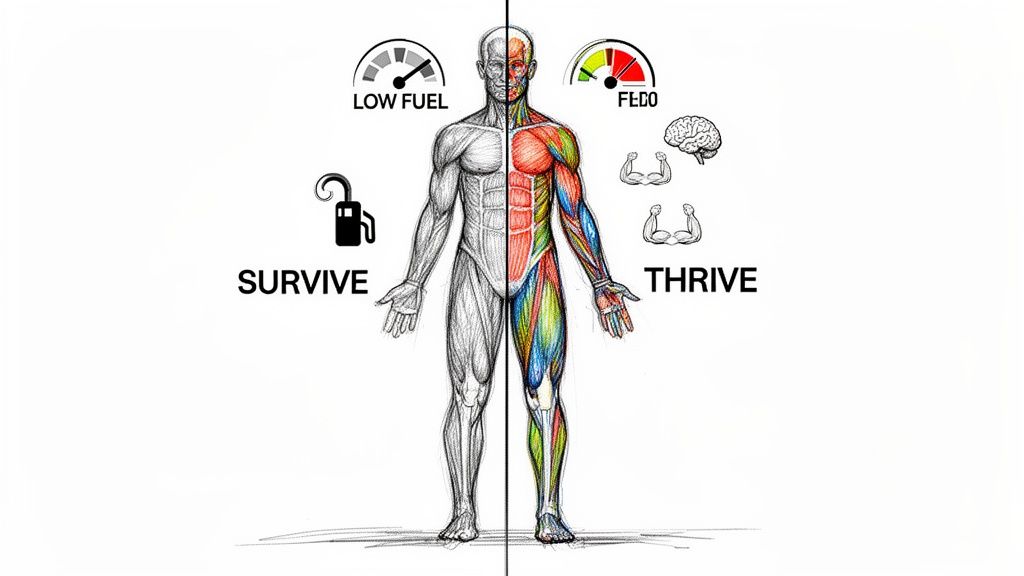
Surviving and thriving are worlds apart. Our bodies evolved to endure tough times, like periods of famine, by finding ways to keep the lights on even when food is scarce. When you take away carbohydrates, the body can cleverly convert fats and even protein into usable fuel to power your vital organs. It’s a remarkable survival strategy.
However, just because your body can do something doesn’t mean it’s a good long-term plan. Think of it like running a high-performance car on cheap, low-grade fuel. Sure, the car will run, but it’s not going to perform at its best. You'll get sputtering acceleration, poor efficiency, and over time, you risk damaging the engine.
Beyond the Simple Yes or No
It’s time to move past the black-and-white thinking of "carbs are good" or "carbs are bad." Instead, we're going to dig into the nuances of how your body actually uses carbohydrates and what really happens when they aren't around. The goal here isn't just to survive, but to build a foundation for sustainable energy and well-being.
The real conversation isn't about whether you can live without carbs, but about discovering the right amount and type of carbs that allow your body to perform at its peak.
To get there, we’ll walk through how your body’s energy systems work, helping you understand:
- Your Body’s A-List Fuel: We'll look at how your body efficiently turns carbohydrates into glucose, the premium fuel source that powers your brain and muscles.
- The Survival Backup Generators: You’ll learn what happens during processes like gluconeogenesis and ketosis when carb intake drops dramatically.
- The Real-World Trade-Offs: We’ll explore the practical pros and cons of both low-carb and high-carb approaches in the context of your daily life.
- Finding Your Personal Sweet Spot: We'll show you how to build sustainable habits to match your unique energy needs—no strict rules or obsessive counting required.
Let’s start by looking at a side-by-side comparison of what "surviving" on no carbs looks like versus "thriving" with an optimal intake.
Carbohydrates Survival vs Optimal Health
| Scenario | Body's Primary Energy Source | Key Metabolic Process | Potential Long-Term Outcome |
|---|---|---|---|
| Survival (No Carbs) | Fats and Protein | Gluconeogenesis & Ketosis | Reduced performance, metabolic stress, nutrient deficiencies, fatigue |
| Optimal Health (Quality Carbs) | Glucose (from Carbohydrates) | Glycolysis | Sustained energy, muscle preservation, better cognitive function, hormonal balance |
As you can see, the body’s strategy shifts dramatically. One path is a short-term emergency route, while the other is a superhighway built for long-term, high-level performance.
Ultimately, understanding these core concepts is what empowers you to make informed, personalized decisions. It's about moving from a state of just getting by to one where you truly feel your best.
How Your Body Turns Carbs into High-Octane Fuel
Think of carbohydrates as your body’s favorite, quick-burning fuel. When you eat carbs—whether it's from a bowl of oatmeal, a handful of berries, or a slice of sourdough—your digestive system gets right to work breaking them down into their simplest form: glucose.
This glucose is pure, accessible energy. It enters your bloodstream and becomes immediately available to power every single cell in your body, from the muscles that carry you up a flight of stairs to the brain cells firing while you read this sentence.
Your brain, in particular, is a huge energy hog. It demands an incredible 20-40% of the total energy your body gets from carbohydrates just to keep your thoughts, memories, and basic bodily functions running smoothly. It’s why you might feel sharper and more focused after a balanced meal; you’ve just given your brain the fuel it loves.
From Immediate Energy to Smart Storage
But what happens when you have more glucose than you need at that exact moment? Your body is smart and resourceful—it doesn't let good energy go to waste. Any leftover glucose gets converted and stored as glycogen.
Think of it like this: your body keeps a small, ready-to-use fuel can (glucose in the blood) and also has larger reserve tanks for later. Your liver and muscles are the primary storage depots for glycogen.
- Muscle Glycogen: This is fuel stored directly in your muscles, earmarked specifically for physical activity. It's the energy that powers you through a workout or helps you chase a toddler around the park.
- Liver Glycogen: This is your body's central energy reserve. Your liver can release glucose from these stores back into the bloodstream to keep your blood sugar stable. This ensures your brain and other organs get a steady drip of fuel, especially between meals or overnight.
This entire process is your body's default pathway for managing energy because it’s incredibly efficient.
The conversion of carbs to glucose for immediate use and to glycogen for storage is your body's most streamlined and preferred method for fueling daily life.
Knowing how this system works is foundational, especially for anyone managing blood sugar levels. For instance, individuals looking to stabilize their glucose might explore an evidence-based prediabetic diet plan that focuses on carb quality and timing.
So, even though you can technically survive without carbs, their role as the body's primary and most efficient fuel source is clear. The more interesting question is how we can best use this fuel to not just survive, but truly thrive.
Your Body's Survival Mode Without Carbs
When your body’s preferred, high-octane fuel—carbohydrates—isn't available, it doesn't just grind to a halt. Your system is incredibly resourceful. It simply shifts gears into a sophisticated survival mode, a bit like a hybrid car switching from its gas engine to its backup battery. Things still run, but it’s a very different operational state.
Two key processes kick in when you stop eating carbs: gluconeogenesis and ketosis. These are your body's backup generators, cleverly designed to keep your brain and essential organs fueled when glucose from your diet is off the menu.
Your Internal Recycling Plant: Gluconeogenesis
The first backup system is called gluconeogenesis, which literally translates to "making new glucose." Think of it as your body’s own internal recycling and manufacturing plant. When glucose isn't coming in through your food, your body can actually create its own by breaking down other materials.
Your liver is the main hub for this operation. It takes non-carbohydrate materials, primarily amino acids from protein (which can come from your own muscle tissue) and glycerol from fats, and converts them into the glucose your brain needs to function.
This process is absolutely vital. Under normal circumstances, your brain is a massive glucose hog. But gluconeogenesis can't quite keep up with the brain's huge energy demands on its own. That's why your body has an even more powerful backup plan waiting in the wings.
Switching to Battery Power: Ketosis
After just a few days of very low carb intake (typically under 50 grams per day), your body makes its second, more dramatic adaptation: entering ketosis. This is where the hybrid car analogy really clicks. Your body stops trying to manufacture its own gasoline (glucose) and switches to an entirely different power source—ketones.
During ketosis, your liver starts breaking down fats into molecules called ketone bodies. These ketones can travel through your bloodstream and serve as a highly efficient alternative fuel for your brain, heart, and muscles.
Ketosis is a powerful metabolic adaptation that allows the body to run efficiently on fat when carbohydrates are unavailable. It’s a testament to our evolutionary design for surviving periods of food scarcity.
While this system is an incredible survival tool, it's important to see it for what it is: an adaptive state, not necessarily the body's preferred gear for everyday peak performance.
The diagram below shows the body's primary, and much more direct, fuel pathway when carbs are on the table.

As you can see, your body has a streamlined process it prefers: turn carbs into glucose for immediate fuel, and store any extra as easy-to-access glycogen.
This brings up a critical point about not just surviving, but thriving. While you don't strictly need carbs to stay alive, global health guidelines consistently point to their role in long-term health. The World Health Organization's 2023 update on dietary guidelines emphasizes that the quality of carbohydrates is what truly matters. They recommend adults source their carbs from whole grains, vegetables, fruits, and pulses, and aim for at least 400 grams of fruits and vegetables daily to help ward off chronic diseases. For a deeper dive, you can explore the updated WHO guidelines on fats and carbohydrates.
The Real-World Impact of Low-Carb vs High-Carb Diets
So, we’ve covered the science. But how does the carb debate actually play out on our plates? Passionate arguments exist on both sides, but the truth is, both low-carb and high-carb approaches come with their own set of real-world trade-offs. The right path isn't about finding a universally "better" diet, but about figuring out what works for your body, your lifestyle, and your goals for the long haul.
Low-carb diets, especially popular ones like keto, get a lot of attention for one main reason: they can deliver surprisingly fast initial weight loss. By pushing your body into ketosis to burn fat for fuel, many people see the number on the scale drop quickly. For some, this style of eating can also dramatically improve blood sugar control.
But here’s the catch. Making that switch to a very low-carb lifestyle isn't always smooth sailing. The transition period is often marked by the infamous “keto flu”—a miserable mix of fatigue, headaches, and brain fog as your body scrambles to adapt. More importantly, drastically cutting an entire food group puts you at risk for nutrient gaps, especially in fiber, potassium, and certain vitamins you’d normally get from fruits and whole grains.
The Low-Carb Experience: Pros and Cons
Going low-carb can be a powerful tool, but it demands careful management to be healthy and sustainable.
- Potential Benefits: The biggest draws are rapid initial weight loss, better blood sugar regulation, and for some, a noticeable drop in appetite.
- Potential Downsides: You might face the "keto flu," nutrient deficiencies (especially a lack of fiber), a higher risk of constipation, and find it socially tricky to eat out or share meals with family.
The sheer strictness of very low-carb plans is often their undoing. Research shows that while they work well for short-term weight loss, sticking with them is incredibly difficult for most people, which often leads to regaining weight once carbs are reintroduced.
High-Carb Diets: A Tale of Two Qualities
Now, let’s look at the other side of the coin: high-carb diets. It’s a huge mistake to lump all of them into one category. A diet high in processed carbs is a world away from one built on whole-food carbohydrates.
A diet filled with refined grains, sugary sodas, and processed snacks is a recipe for weight gain, wild blood sugar swings, and a higher risk of chronic disease. These simple carbs hit your system like a flash flood, spiking your blood sugar and leaving you hungry and crashing soon after.
In stark contrast, a diet centered on high-quality, complex carbohydrates from vegetables, fruits, legumes, and whole grains tells a completely different story. These foods are loaded with fiber, which slows everything down. It promotes stable blood sugar, keeps you feeling full, and nourishes the good bacteria in your gut. This is exactly why many of the world's healthiest populations thrive on diets that are primarily based on carbohydrates. The secret isn't avoiding carbs; it's the quality of the carbs you choose.
Choosing how to eat isn't about picking an extreme. As we've seen, while you don't technically need carbs to survive, cutting them out completely comes with some serious practical and physiological costs. By the same token, a high-carb diet is only as healthy as the foods you put on your plate. For most people, the most sustainable and healthy approach lies somewhere in the middle, with a focus on nutrient-dense, whole-food sources of all your macronutrients.
Finding Your Personal Carb Sweet Spot
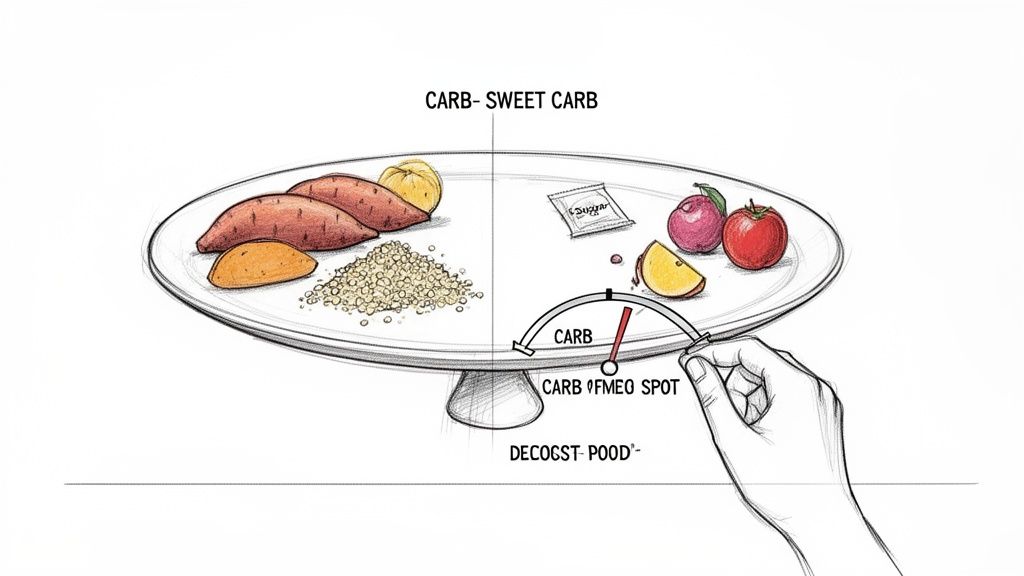
The endless debate over carbohydrates tends to box us into rigid, all-or-nothing rules. But your body isn't a textbook, and there's no single magic number for your ideal carb intake. The most effective—and sane—approach is to move beyond obsessive counting and learn to read your own body.
Ultimately, finding your carb “sweet spot” is about connecting the dots between what you eat and how you feel. It’s a bit like becoming your own personal health detective. So, instead of asking "do you need carbs to survive," a much better question is, "which carbs, and in what amounts, help me thrive?"
Listen to Your Body’s Feedback
Your body is constantly sending you feedback. The trick is learning to listen. Paying close attention is the only way to figure out how different amounts and types of carbs truly affect you.
Here are a few key signals to start tracking:
- Energy Levels: Do you have steady, reliable energy, or are you fighting off that dreaded afternoon slump every day?
- Mood and Focus: How’s your concentration? Are you feeling mentally sharp and clear, or is brain fog a constant companion?
- Workout Performance: Can you power through your exercise sessions and feel like you're recovering well afterward?
- Cravings and Hunger: Are you constantly battling intense cravings, or do you feel satisfied and in control of your hunger?
Developing this kind of self-awareness is the foundation of a flexible, intelligent relationship with food. It’s also a cornerstone of the Superbloom coaching philosophy. For a deeper dive into this personalized approach, check out this great podcast episode on how many carbs should you be eating.
The goal is to shift from following external rules to trusting your internal cues. This is how you build a nutrition plan that adapts to your life, not the other way around.
Start with Quality Over Quantity
Before you even think about cutting carbs, try upgrading them. This single shift can make a world of difference. Start by swapping refined, processed carbs for whole, nutrient-packed sources.
Think about it: plenty of healthy populations around the globe eat a lot of carbohydrates. In Nordic and Baltic countries, for instance, adults get 37-47% of their total energy from carbs, proving that a high-quality, carb-rich diet can be a blueprint for good health.
Here’s a practical way to begin. Just make one small change at a time. Maybe you add a serving of sweet potato, quinoa, or black beans to one of your meals. Then, just observe. How does it affect your energy and hunger over the next few hours? This simple habit of "add and observe" helps you make real progress without feeling deprived, setting you up for lasting success.
Your Questions About Carbohydrates Answered
Alright, let's get practical. The science behind carbohydrates is one thing, but figuring out how to apply it to your own life is what really matters. Here are some of the most common questions we hear, answered in a way you can actually use.
How Many Carbs Do I Need To Stay Out Of Ketosis?
This is a big one, and the exact number can be different for everyone. As a general rule, most people will enter ketosis—the state where your body starts burning fat for fuel—once their carb intake dips below 50 grams per day.
If your goal is to avoid ketosis, a good starting point is aiming for at least 100-130 grams of carbohydrates daily. This provides enough glucose to fuel your brain (it's the brain's favorite food!) and helps protect your hard-earned muscle from being broken down for energy. Think of it as keeping the primary power on so your body doesn’t have to switch to its backup generators.
The real key is listening to your body. You can start around the 100-gram mark with quality carbs and see how you feel. Pay attention to your energy, focus, and overall well-being, then adjust from there.
Is It Possible To Build Muscle On A Low-Carb Diet?
You can, but you’re definitely playing on hard mode. Building muscle is an energy-intensive process, and carbs are the body’s go-to source for the quick fuel needed for a tough workout. They also trigger an insulin response, which acts like a key, unlocking your muscle cells to let protein and other nutrients in to start the repair and growth process.
When carbs are scarce, your performance in the gym can take a hit. Your body might also start turning to protein for energy through a process called gluconeogenesis, meaning the protein you’re eating is being used for fuel instead of for building muscle. If you are set on a low-carb approach to muscle gain, you'll have to be incredibly strategic with a very high protein intake and careful nutrient timing around your training sessions.
Are The Sugars In Fruit Unhealthy?
This is a classic point of confusion, but the answer is pretty clear: the sugar in whole fruit is packaged completely differently than the added sugar in a soda or candy bar. When you eat an apple, you're not just getting sugar; you're getting a bundle of fiber, water, vitamins, and antioxidants along with it.
That fiber is the hero of the story. It forces your body to work harder to digest the fruit, which dramatically slows down how quickly the sugar hits your bloodstream. This means you avoid the sharp blood sugar spikes and subsequent crashes that come from processed sweets.
It’s no surprise that health organizations worldwide, like the WHO, champion whole fruits as a vital part of a healthy diet. For the vast majority of people, the powerful nutritional benefits of whole fruit easily trump any concerns about its natural sugar. Just be sure to prioritize the whole fruit itself over juices or dried versions to get the full effect.
What Are The Best Types Of Carbs For Gut Health?
For a happy gut, the best carbs are the ones loaded with prebiotic fiber. You can think of prebiotics as fertilizer for the trillions of good bacteria living in your digestive tract. When you feed them well, they flourish, which has a ripple effect on everything from your immune system to your mental health.
Some fantastic sources of these gut-friendly carbs include:
- Garlic, onions, and leeks
- Asparagus
- Slightly green (less ripe) bananas
- Oats and barley
- Legumes like chickpeas, lentils, and black beans
Instead of thinking about cutting carbs, focusing on incorporating a wide variety of these fiber-rich foods is one of the best things you can do for your long-term health. You're not just eating for one—you're eating for trillions.
If you're tired of confusing diet rules and want to build sustainable habits that work for your body, Superbloom can help. Our AI-powered nutrition coach provides personalized guidance to help you understand your unique patterns and feel more in control of your food choices—without any strict counting. Learn more and start your journey.