
Understanding does kombucha make you poop: A quick guide

Let's get straight to it: for a lot of people, kombucha can help you poop. It’s not a harsh laxative, but rather a gentle nudge to your digestive system, encouraging things to move along more regularly.
If you’ve ever felt backed up and frustrated, the idea of a natural, fizzy drink helping out is definitely appealing. So, if you're wondering whether that daily kombucha is the key to a happier gut, you're not alone. It's one of the main reasons people start drinking it in the first place.
This isn’t just wishful thinking, either. The digestive boost so many people feel comes from the unique mix of compounds created during fermentation. When you take a sip, you're getting a whole team of ingredients that work together to support your system.
How Kombucha Gets Things Moving
So, what’s the secret? It really comes down to a few key players that each play a different role in your digestive tract.
- Probiotics: These are the "good" bacteria that everyone's talking about. They help bring balance to your gut microbiome, and a well-balanced gut is crucial for efficient digestion and predictable bowel movements.
- Organic Acids: Fermentation creates beneficial acids, like acetic acid. These compounds can help kickstart gut motility—the muscle contractions that push waste through your intestines.
- Hydration: At its core, kombucha is mostly water. Staying hydrated is one of the most basic but important ways to prevent constipation, as it helps keep stool soft and easy to pass.
The real magic is how these elements work in concert. It's not just one thing; it's the combination of beneficial bacteria, stimulating acids, and simple hydration that often produces a noticeable effect.
To make it even clearer, here's a quick breakdown of how each component contributes to keeping you regular.
How Kombucha Supports Regularity at a Glance
Think of these components as a team working together to get your digestive system back on track.
Now that we've covered the basics, we can dive deeper into the science behind it all. We’ll look at what the research says and how you can use kombucha to support your own digestive health.
6 Key Ingredients That Can Get Things Moving
To understand why kombucha might have you making a beeline for the bathroom, we have to look at what’s actually inside the bottle. This fizzy, fermented tea is more than just a trendy drink—it’s a living brew packed with compounds that can have a real effect on your digestion.
Think of it less as a single ingredient and more as a team effort. Each component plays a specific role, and together, they can help encourage smoother, more regular bowel movements.
The Gut-Friendly Microbes
First and foremost are the probiotics. These are the "good" live bacteria and yeasts that are the superstars of any fermented food. Your gut is like a complex garden, and these probiotics are the helpful gardeners. They work to balance your gut flora, which is essential for breaking down food efficiently.
When your gut microbiome is in good shape, your entire digestive system just runs better.
The Power Players: Acids and Enzymes
But it doesn't stop there. The fermentation process creates powerful byproducts, namely organic acids like acetic and gluconic acid. These acids can gently stimulate the muscles in your intestinal walls—a process called peristalsis—which is the wave-like action that pushes waste through your system.
Essentially, they help keep traffic moving along smoothly.
Working right alongside them are enzymes. These are the unsung heroes that help break down fats, proteins, and carbohydrates from your food into smaller, more manageable pieces. When food is broken down more effectively, your digestive system doesn't have to work as hard, which can mean less bloating and more efficient waste elimination.
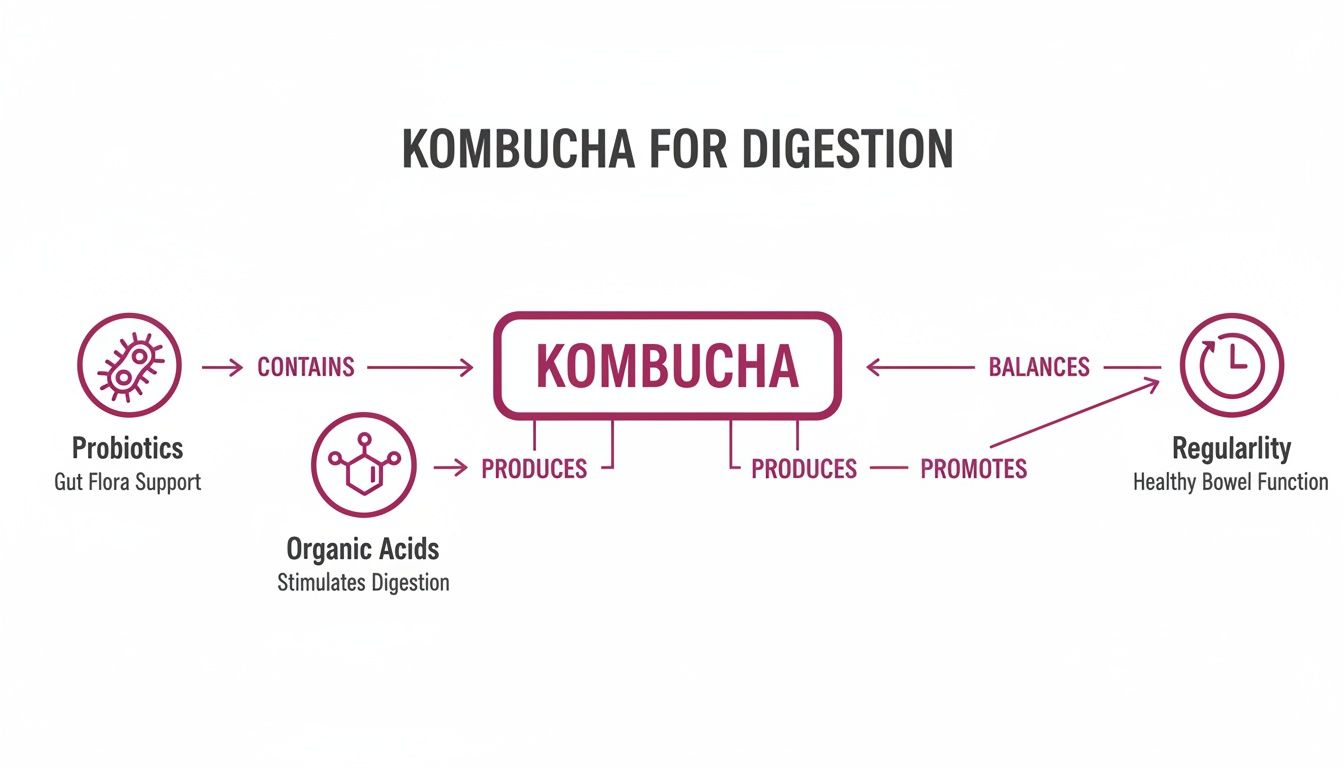
As you can see, the probiotics first help create a balanced gut environment. This sets the stage for the organic acids to effectively promote movement, leading to improved regularity.
The Supporting Cast
While probiotics and acids do most of the heavy lifting, a few other components in kombucha can contribute to its bathroom-boosting effects.
Caffeine: Since kombucha is brewed from tea (usually black or green), it naturally contains some caffeine. It’s not nearly as much as a cup of coffee, but for people sensitive to caffeine, even this small amount can act as a mild stimulant for the colon.
Sugar Alcohols: Some commercial kombuchas use low-calorie sweeteners to keep the sugar content down. Certain sweeteners, along with naturally occurring sugar alcohols, can have a mild laxative effect by drawing water into the intestines. This helps soften stool, making it easier to pass.
Carbonation: Don't underestimate the fizz! The carbonation in kombucha isn't just for texture. For some people, carbonated drinks can help relieve indigestion and constipation by getting things moving.
So, when you're wondering if kombucha can make you poop, the answer often lies in this unique combination of ingredients. It’s not just one thing, but the synergy of all of them—the probiotics, acids, enzymes, and even the subtle pushes from caffeine and carbonation—that can get your digestive system humming.
What New Research Reveals About Kombucha and Bowel Function
For years, people have sworn by kombucha for keeping them regular, but most of the evidence was just personal stories. The question "does kombucha make you poop?" was usually answered with a "it works for me!" Now, we're finally starting to see clinical research that gives us a much clearer, data-backed answer.
This move from anecdotes to actual science is a huge deal. It helps us understand the how and why behind kombucha's digestive benefits, moving beyond guesswork to see what's really happening inside the body.
A Breakthrough Study on IBS-C
A 2023 clinical trial, in particular, really caught my attention. It’s one of the first high-quality human studies to directly test kombucha's effects on constipation, and the results were pretty remarkable.
Researchers worked with 40 women who had constipation-predominant irritable bowel syndrome (IBS-C). They gave each participant a daily 220 mL serving of kombucha. After just 10 days, their average stool frequency shot up from 0.60 to 0.85 times per day. That's a 42% increase in bowel movements. You can dig into more of the findings over at Safeway.com.
This wasn't just a small blip on the radar; it was a significant improvement for people who live with chronic constipation every day.
The big takeaway here is that for people with diagnosed constipation issues like IBS-C, a daily glass of kombucha can lead to a substantial and surprisingly fast increase in how often they go.
What This Evidence Means for You
Now, before you run out and buy a case, it’s important to look at the details. The study was focused on a very specific group—women with IBS-C. Plus, the kombucha they used was fortified with inulin (a prebiotic fiber) and B vitamins, which almost certainly played a role in the results.
This doesn't take away from the findings at all. In fact, it reinforces a key idea: a targeted approach can deliver powerful results. It suggests that certain types of kombucha might be better suited for specific digestive goals.
So, how do you apply this? Think of yourself as your own health detective. The same way researchers tracked symptoms, you can pay attention to your body's response.
Here’s how you can track your own experience:
- Log your intake: Make a quick note of how much kombucha you're drinking.
- Record how you feel: Keep a simple journal of your bowel frequency and consistency.
- Look for patterns: After a week or two, see if you can connect the dots between your kombucha habit and any digestive changes.
This simple process puts you in the driver’s seat, helping you figure out what works for your unique system.
How Kombucha Can Reshape Your Gut Microbiome
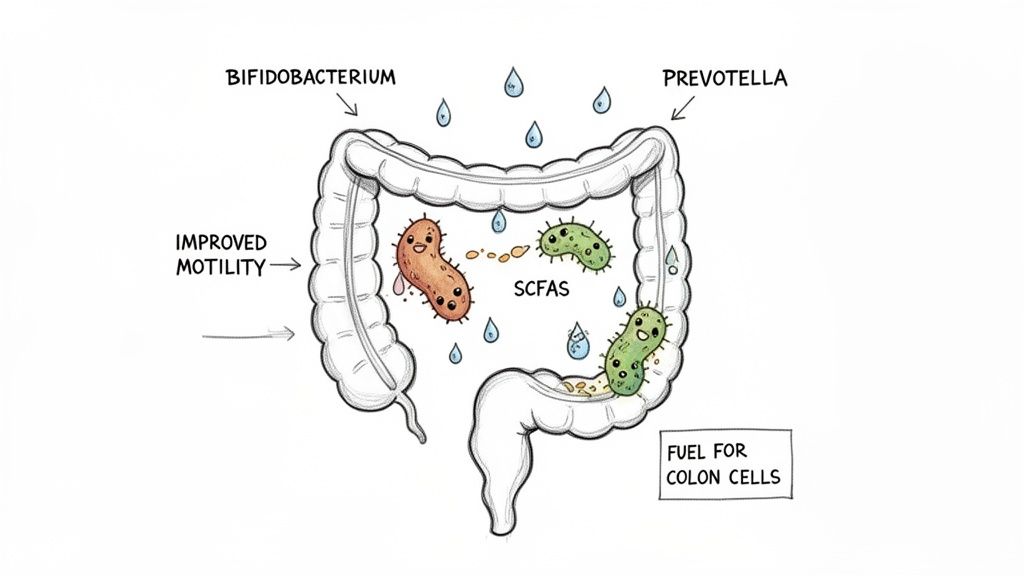
The question "does kombucha make you poop?" has a short-term answer, but the long-term one is far more interesting. When you drink kombucha regularly, you're not just giving your digestive system a temporary nudge. You’re actually helping to remodel the entire ecosystem in your gut, making it better at handling waste on its own.
Think of it as hiring and training a new, more efficient clean-up crew for your insides. This isn't just a theory. A recent study followed healthy adults for four weeks, and the group drinking kombucha daily saw a major shift in their gut microbes. They had more beneficial bacteria known for producing something called short-chain fatty acids (SCFAs). You can read the full study about kombucha's influence on gut bacteria for a deeper dive.
The Role of Good Bacteria and SCFAs
So, what are these short-chain fatty acids (SCFAs), and what do they have to do with your bathroom schedule? The best way to think of them is as a high-quality fuel source that your own gut bacteria produce. When the probiotics in kombucha—like helpful species of Bifidobacterium and Prevotella—start to thrive in your gut, they get to work fermenting the fiber you eat and churn out these incredible compounds.
These SCFAs pull double duty in your digestive tract:
- They feed your colon cells. The cells that line your large intestine rely on SCFAs for energy, which helps keep the gut wall strong and healthy. A well-nourished colon is a colon that works properly.
- They improve gut motility. SCFAs also help pull water into the colon and can stimulate the muscle contractions needed to move stool along. This helps make bowel movements softer, bulkier, and more regular.
This creates a fantastic, self-sustaining cycle. You drink kombucha, which introduces good bacteria. Those bacteria produce SCFAs, which then make your entire digestive exit strategy run more smoothly.
Key Insight: Kombucha does more than just pass through you. It actively helps cultivate a gut environment that’s naturally better at promoting regularity, turning a short-term fix into a long-term upgrade.
Listening to Your Body’s Signals
Of course, this kind of internal renovation can come with a brief adjustment period. The same study that saw the rise in beneficial bacteria also noted that some participants felt a bit of temporary bloating. This is a totally normal response as your gut gets used to the new microbial residents.
It really highlights the importance of paying attention to how you feel. Everyone's gut microbiome is unique, and your body's reaction to kombucha will be, too. If you’re curious about what’s happening with your own digestive health, some gut tests can offer a clearer picture. Ultimately, listening to your body is the best way to find the right balance and enjoy kombucha’s benefits without any discomfort.
A Practical Guide to Drinking Kombucha for Better Digestion
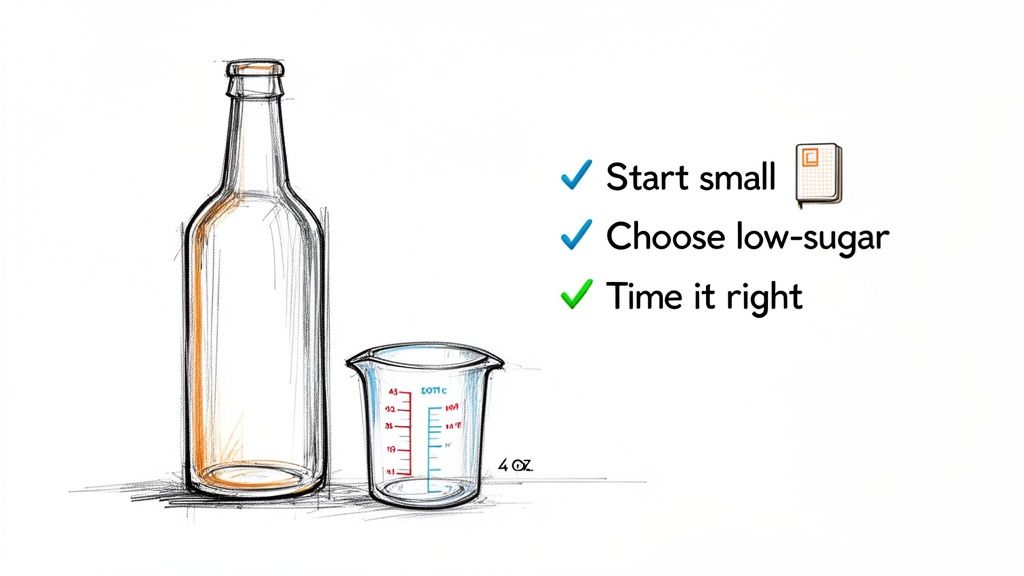
Alright, with the science out of the way, you might be curious to see what kombucha can do for you. The trick is to be mindful about how you start. If you jump in and chug a whole bottle, you might get hit with some uncomfortable gas or bloating, which is the exact opposite of what you’re looking for.
A slow and steady approach gives your gut time to get used to the influx of new probiotics and organic acids. By starting small and paying close attention, you can discover the right amount that helps your digestion without causing any unwanted side effects.
Start Small and Go Slow
Think of your first few sips of kombucha as a test drive. You wouldn't take a brand-new car on a cross-country trip without driving it around the block a few times, and the same idea applies here.
Kick things off with a small serving—about 4 ounces (120 mL) a day is perfect. This gives your digestive system a chance to acclimate to the live cultures without getting overwhelmed. Stick with that amount for several days and just see how you feel.
Choose Your Kombucha Wisely
Not all kombucha is created equal, and the bottle you grab can make all the difference. To really get those digestive benefits, you’ll need to become a bit of a label detective.
Here's what to keep an eye out for when you're at the store:
- Low Sugar: Sugar can feed the less-than-friendly bacteria in your gut and even fuel inflammation. Look for brands that contain less than 10 grams of sugar per serving.
- Unpasteurized: Pasteurization is a heat process that kills off bacteria—including all the good probiotics you're drinking kombucha for! Make sure the label says "raw," "live," or "unpasteurized."
- No Artificial Sweeteners: Some companies use artificial sweeteners to keep the calorie count down, but these can sometimes disrupt your gut microbiome or cause digestive issues for sensitive people.
Pro Tip: Consider the timing. Many people find that drinking kombucha with a meal, rather than on an empty stomach, helps them avoid any initial discomfort as their system adjusts.
Find Your Personal Sweet Spot
Ultimately, the best tool you have is your own body's feedback. Your job is to simply listen. The goal is to find your personal "sweet spot"—the perfect amount of kombucha that helps you feel great without going overboard.
The most effective way to do this is to keep a simple log. This doesn't have to be some complex journal; a few quick notes on your phone or in a notebook will do the trick.
For a week or two, track these two things daily:
- Your Intake: How many ounces of kombucha did you drink today?
- Your Symptoms: How did you feel? Make a note of any changes in your bowel movements (frequency, consistency), bloating, or even your energy levels.
After a week or so, you'll start to notice patterns. This data is your personal roadmap. It gives you the power to see how kombucha is really affecting you, so you can tweak your intake and find what works for your unique system—especially if you're trying to figure out if it can help you become more regular.
Your Kombucha Questions, Answered
Alright, we’ve covered the science behind how kombucha can get things moving. But let's be real—you probably have some practical questions about what to expect when you actually start drinking it. The way our bodies react to new foods is deeply personal, so let’s get into the nitty-gritty.
We’ll cover everything from how fast you might see results to whether it's a good idea for someone with IBS. Think of this as the final, practical chat you need before deciding if kombucha is right for you.
How Long Does It Take for Kombucha to Work?
This is the big question, and the honest answer is: it varies. Some people feel a gentle digestive nudge within a few hours of their first glass. For many others, it takes a few days of consistent sipping to notice a real change in their bathroom habits.
It’s less of an instant fix and more of a gradual process, like tending to a garden. The benefits build over time. For instance, that 2023 study on people with IBS-C found significant improvements in stool frequency after just 10 days of daily drinking. This really drives home that consistency is the key to seeing a difference.
Can Drinking Kombucha Cause Diarrhea?
Yes, it absolutely can. This is a common pitfall for newcomers who go from zero to a full bottle overnight. Flooding your system with a ton of new probiotics and organic acids can sometimes be a shock to the system, leading to loose stools or diarrhea as your gut microbiome adjusts.
This is precisely why the "start low and go slow" mantra is so important.
To sidestep this issue, begin with a small serving—just 4 ounces (about half a cup) a day. This gives your gut time to adapt. If you still find yourself running to the bathroom, that’s a clear signal to cut back or take a break and talk to a healthcare professional.
Is Kombucha or Yogurt Better for Constipation?
It’s a classic gut-health showdown: kombucha vs. yogurt. Both are excellent probiotic sources, but they work in slightly different ways. Yogurt usually contains well-known bacterial strains like Lactobacillus and Bifidobacterium. Kombucha, on the other hand, brings a whole party of diverse bacteria and beneficial yeasts to your gut, thanks to the SCOBY. Plus, it has those organic acids and enzymes that yogurt lacks.
For some, kombucha’s unique, multi-faceted composition gives it an edge for relieving constipation. But there's no single "better" option—it all comes down to what your individual body responds to. You could even try having both in your diet on different days to get a wider array of benefits.
Should I Drink Kombucha if I Have IBS?
This is where you need to be especially careful, as the answer really depends on your type of Irritable Bowel Syndrome. For those with constipation-predominant IBS (IBS-C), the research looks quite promising. As we saw, one study showed it can significantly improve regularity.
However, for someone with diarrhea-predominant IBS (IBS-D), kombucha's stimulating effects could make symptoms worse. On top of that, kombucha contains FODMAPs—fermentable carbs that can be a major trigger for gas and bloating in sensitive people.
If you have IBS, my advice is to proceed with caution. Start with a tiny amount, maybe just a couple of ounces, and choose a brand with the lowest sugar content you can find. Pay close attention to how your body feels. Most importantly, have a chat with your doctor or a registered dietitian before making it a regular part of your routine.
Figuring out how your diet impacts your digestion can feel like a journey of trial and error. If you’re tired of the guesswork and want a smarter way to connect the dots between your meals, mood, and gut health, Superbloom can help. Our AI-powered nutrition coach helps you spot patterns and build healthier habits, one small step at a time. Learn how you can feel more in control of your health.