
Emotional Eating Help: Practical Guide to Regain Control and Confidence

The first real step toward getting help for emotional eating is learning to tell the difference between physical hunger and emotional hunger. It sounds simple, but it's a game-changer.
Physical hunger is your body’s genuine signal that it needs fuel. Emotional hunger, on the other hand, is your mind's attempt to soothe feelings like stress, boredom, or sadness with food. Getting good at telling them apart is the foundation for everything that comes next.
Understanding the Roots of Comfort Eating
Let's be clear: emotional eating isn't a character flaw. It’s a deeply ingrained coping mechanism. It happens when our brains create a strong link between food—especially sugary or fatty stuff—and a feeling of comfort. This connection is both psychological and biological, which is why the cycle can feel so tough to break.
Think about a rough day at the office. You have a tense meeting or a deadline is breathing down your neck. This kicks off the release of stress hormones like cortisol. While a sudden shock might kill your appetite, that nagging, everyday stress keeps cortisol levels high, which actually ramps up your appetite and makes you crave those "comfort" foods. Your brain is just looking for a quick fix to make the bad feelings go away.
The Science Behind the Cravings
On a biological level, those delicious, highly palatable foods light up the reward centers in your brain, releasing a feel-good chemical called dopamine. This gives you a temporary sense of relief and reinforces the learned behavior: "When I feel bad, food makes me feel better." Over time, that neural pathway gets stronger and becomes your go-to response.
The result? You find yourself reaching for chips after a draining phone call, not because you’re actually hungry, but because your brain is screaming for that dopamine hit to calm your nerves. For a deeper dive into breaking this cycle, this comprehensive guide on stopping emotional eating is an excellent resource.
From Awareness to Action
The goal here isn't to judge yourself but to build awareness. And you're not alone in this. Research from the American Psychological Association found that 38% of adults said they overate or ate unhealthy foods in the past month because of stress. Nearly half of those people did it on a weekly basis, which shows just how common this is.
To start building that awareness, you need a quick way to check in with yourself. This table breaks down the core differences between hunger that starts in your stomach versus hunger that starts in your head.
Emotional vs Physical Hunger: How to Spot the Difference
This quick reference can help you start distinguishing between genuine physical hunger and emotionally driven cravings in the moment.
Keep this table in mind. The simple act of pausing and asking, "Is this emotional or physical?" can be incredibly powerful.
This next diagram gives you a great visual summary of these key differences.
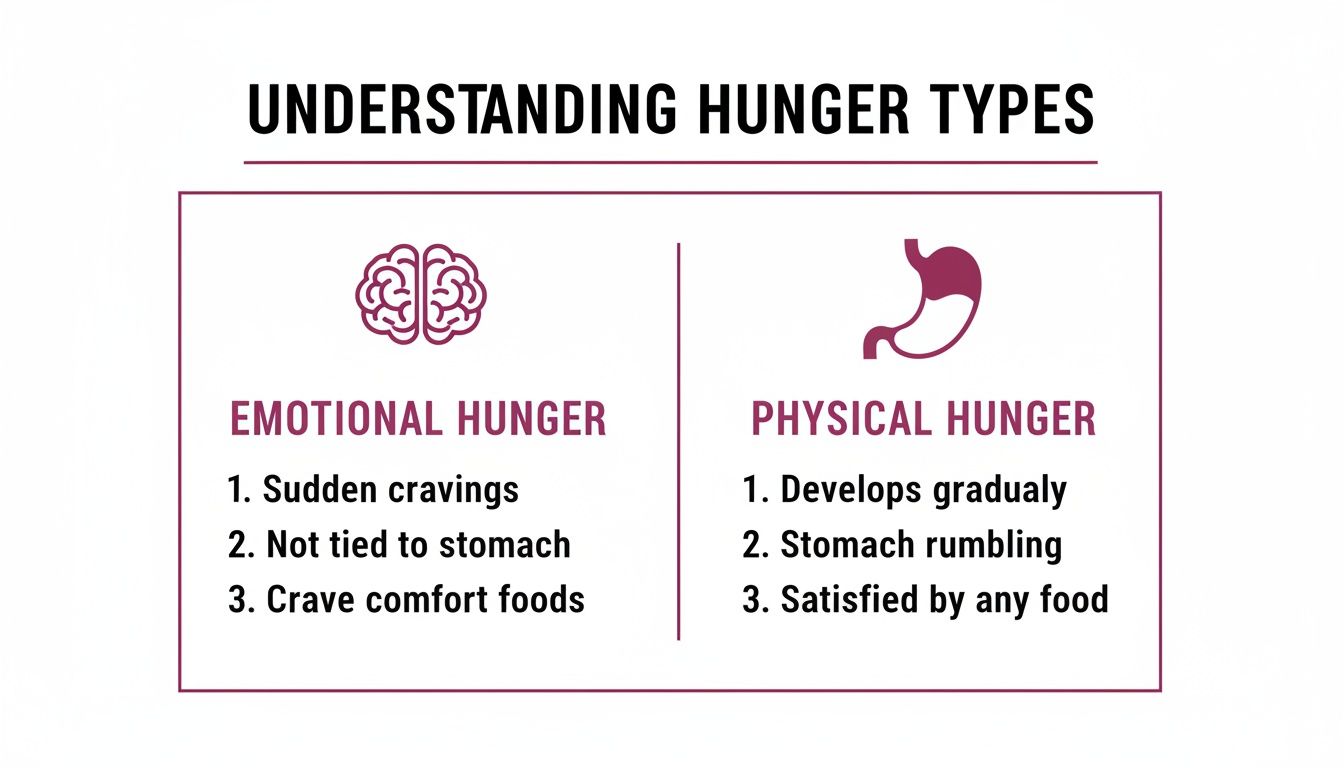
Spotting these distinctions in real-time is how you begin to reclaim your power of choice. Emotional hunger usually feels sudden and demands a specific food, while physical hunger is more patient and flexible. That pause is where the change happens.
How to Pinpoint Your Personal Eating Triggers
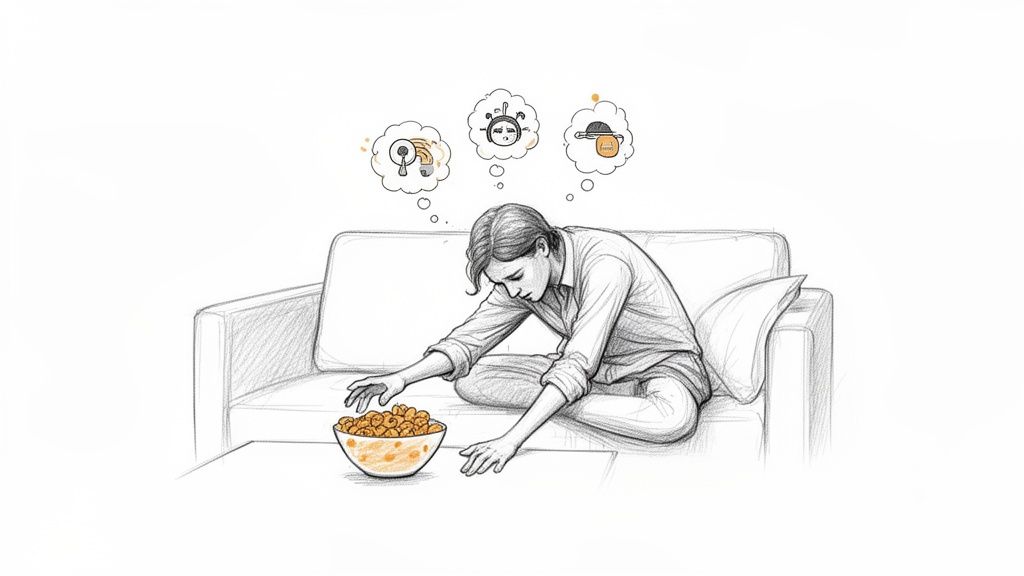
Alright, let's get practical. Moving from simply understanding emotional eating to actually doing something about it is where the magic happens. The first real step is to pinpoint your personal triggers. Think of yourself as a detective investigating your own habits. You're looking for the specific connections between an event, the feeling it sparks, and the sudden urge to eat that follows.
This whole process is about turning a vague sense of frustration into solid, usable information. Instead of just feeling crummy about eating a pint of ice cream, you'll start to realize, "Ah, that urge hit right after that quiet weekend made me feel lonely." This kind of awareness is the bedrock for getting meaningful emotional eating help.
Become a Habit Detective with a Trigger Log
The single most powerful tool I've seen for this kind of self-investigation is a simple Trigger Log. Forget about counting calories or tracking macros for now. This is purely about observing what’s happening inside and around you right before the urge to eat strikes.
You can use a classic notebook, a notes app on your phone, or an app like Superbloom that helps you connect the dots with photo logging and personalized prompts.
The most important part? Be consistent. For the next week or two, just make a quick note every time you find yourself eating for reasons that aren't physical hunger. The goal here is observation, not judgment.
Here’s what you should jot down each time you notice that familiar urge:
- What was the situation? Get specific. Were you doom-scrolling on Instagram? Did you just hang up from a tense call with a client? Or maybe you were just settling in to watch your favorite show.
- What was the feeling? Try to name the emotion. Boredom? Anxiety? Sadness? Stress? It could even be a positive one, like excitement or a desire to celebrate.
- What did you eat (or crave)? Write down the exact food. Was it something crunchy and salty, or was it sweet and creamy?
- How did you feel afterward? Be honest about the aftermath. Did you get a quick hit of relief, only to be followed by guilt? Or did the stress just get a little quieter for a moment?
After just a handful of days doing this, you'll be surprised at how quickly clear patterns begin to emerge.
From Vague Feelings to Specific Patterns
Let's look at how this plays out in the real world. A Trigger Log helps you graduate from a generic statement like "I just eat when I'm stressed" to a much more precise—and solvable—understanding.
Scenario One: The Workday Overwhelm
- Situation: That passive-aggressive email from a coworker lands in your inbox around 3 PM.
- Feeling: A hot mix of frustration and anxiety.
- Action: You find yourself walking to the office vending machine for a bag of chips.
- Aftermath: You get a momentary distraction, but the frustration is still there, now with a side of regret.
Scenario Two: The Sunday Scaries
- Situation: It’s Sunday evening. Thoughts about the looming workweek start to crowd your mind.
- Feeling: A low-level dread, a feeling of being trapped.
- Action: You order a large pizza for dinner, even though you aren't really hungry.
- Aftermath: Now you just feel uncomfortably full, making you feel even less ready for Monday.
These examples show how a Trigger Log transforms abstract feelings into concrete problems you can actually tackle. The pattern isn't just "stress"—it's a very specific kind of work anxiety that spikes in the mid-afternoon.
A key insight from this process is realizing that the food is rarely about hunger. It’s a tool you're using to change your emotional state, even if only for a few minutes. Recognizing this is a massive step toward finding more effective tools.
By meticulously logging these moments, you’re essentially creating a personalized map of your emotional landscape. This map shows you exactly where the potholes are, which gives you the power to anticipate them and choose a different path. You’re no longer just reacting blindly; you’re responding with awareness and a growing sense of control. This self-knowledge is the foundation for every other strategy you'll build.
Building Your Toolkit for In-the-Moment Relief
When a powerful, emotionally driven craving hits, it can feel like you’re on autopilot, heading straight for the pantry. The real secret to getting a handle on emotional eating isn’t about brute willpower; it’s about having a better plan. You need an immediate alternative to food that gives you genuine comfort and relief.
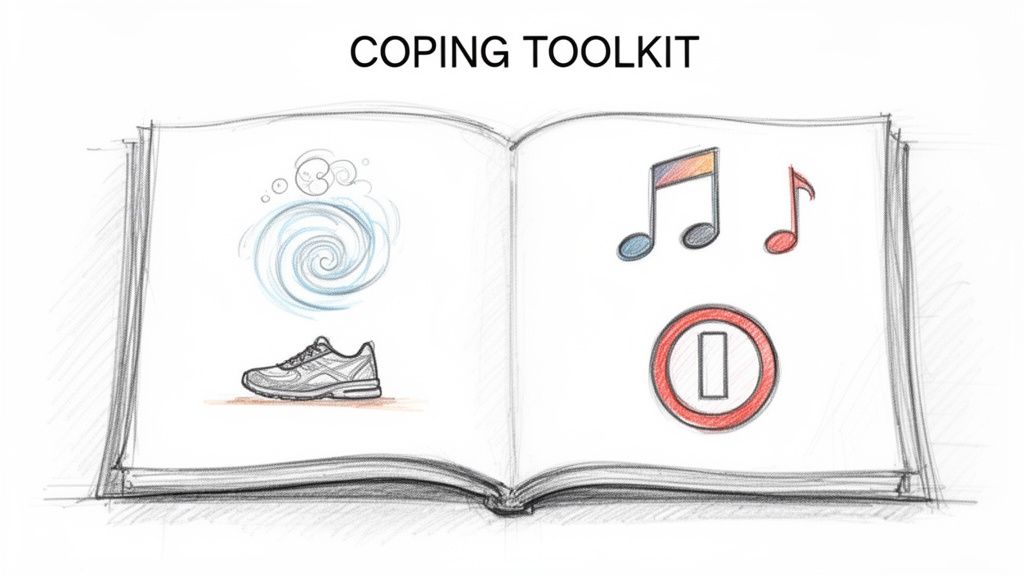
This is where your personal “coping toolkit” comes in—a set of simple, non-food strategies you can use in five minutes or less. These aren’t just distractions. They’re deliberate actions designed to calm your nervous system, create some much-needed mental space, and give you back a sense of control when you feel most vulnerable.
The Power of the Mindful Pause
The first and most important tool is the Mindful Pause. It's the simple act of stopping for just a moment before you act on an urge. This tiny gap between feeling an emotion and reaching for food is where your power lies. It breaks that automatic chain of reaction and gives you a chance to actually check in with yourself.
Let's say you’ve just finished a brutal meeting, and the urge for something sweet is overwhelming. Before you move, just stop. Close your eyes for 60 seconds. Ask yourself, "What am I really feeling right now?" Is it stress? Frustration? Sheer exhaustion? Just naming the feeling can take the edge off its intensity.
This isn't about denying the urge; it's about understanding it. By pausing, you acknowledge the feeling without immediately trying to numb it with food. This is a cornerstone of self-awareness and learning how to manage your feelings in a healthy way. In fact, there's a lot to explore about what emotional regulation is and how to master it.
Craft a Mood-Shift Playlist
Music has a direct and almost instant impact on our emotional state. Creating a "Mood-Shift Playlist" is a practical—and honestly, enjoyable—way to change your emotional channel without turning to food. This isn't just a random collection of your favorite songs; it’s a list curated for specific emotional emergencies.
Try building a few different playlists:
- The Energizer: Perfect for when you feel bored or lethargic. Think upbeat, high-tempo songs that make you want to tap your feet.
- The Calming Zone: For those moments of anxiety or overwhelm. This playlist should feature gentle, soothing music. Instrumental tracks or nature sounds can work wonders.
- The Confidence Boost: For when you're feeling down or insecure. Fill this one with powerful anthems that make you feel like you can take on the world.
When an emotion hits hard, instead of opening the fridge, open your music app. Putting on your headphones and letting a specific playlist wash over you can literally shift your brain chemistry and provide the emotional release you were seeking from food.
The goal of a coping tool isn't to make the difficult feeling vanish forever. It’s to provide a healthy, immediate way to process that feeling so that food doesn't have to do the job.
Master a Simple Breathing Exercise
When you’re stressed, your breathing becomes shallow and rapid, which kicks your body's "fight or flight" response into high gear. A simple breathing exercise can reverse this process, calming your nervous system almost instantly.
One of the most effective techniques is box breathing. It's incredibly simple to do anywhere, anytime.
- Breathe in slowly through your nose for a count of four.
- Hold your breath for a count of four.
- Breathe out slowly through your mouth for a count of four.
- Hold your breath again for a count of four.
Repeat this cycle three to five times. The rhythmic, predictable nature of this exercise gives your mind something concrete to focus on besides the craving. More importantly, it physically lowers your heart rate and cortisol levels, providing a tangible sense of calm.
These tools—the Mindful Pause, a Mood-Shift Playlist, and box breathing—are small but mighty. They work because they address the underlying emotional need directly. By practicing them consistently, you begin building new neural pathways, making these healthier responses your new automatic habit over time.
Designing a Day That Nurtures and Supports You
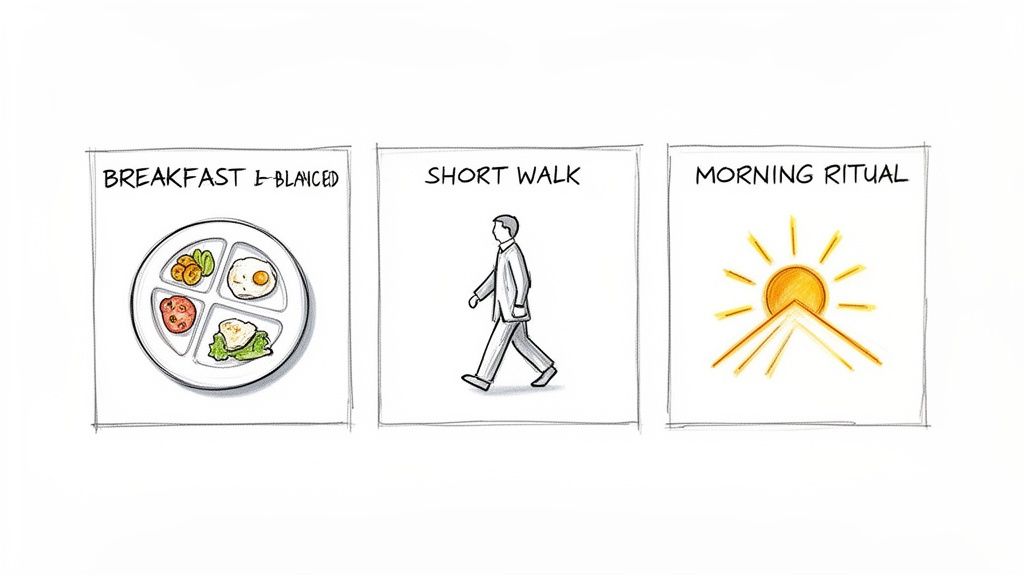
Reacting to triggers in the heat of the moment is a critical skill, but the real win is building a life where those triggers don't have so much power in the first place. Lasting change comes from proactively designing a daily environment that supports you, making you less vulnerable to emotional eating from the get-go.
It’s about shifting from a reactive stance to a proactive one. Instead of waiting for stress or boredom to hit, you can build small, consistent routines that act as a buffer. By focusing on how you structure your meals, anchor your day, and move your body, you create a powerful defense system against the emotional storms that used to send you straight to the kitchen.
Structure Your Meals to Stabilize Your Mood
One of the sneakiest culprits behind emotional eating is a physical one: unstable blood sugar. When your blood sugar crashes, your mood plummets, and your brain screams for a quick fix—usually something sugary or full of refined carbs. This physical vulnerability makes you an easy target for any emotional trigger that comes your way.
The way off this roller coaster is to structure your meals for stability. The formula is simple: include protein, healthy fats, and fiber in every meal. This powerhouse combination slows digestion, prevents those dramatic energy spikes and crashes, and keeps you feeling physically full and satisfied for much longer.
- Protein Power: Think chicken, fish, beans, lentils, or tofu. It’s the foundation of the meal and tells your brain you’re full.
- Healthy Fats: Avocado, nuts, seeds, and olive oil give you sustained energy and are key for satiety.
- Fiber First: Load up on vegetables, whole grains, and fruits. Fiber adds bulk and, crucially, slows down sugar absorption, which is a game-changer for mood stability.
This isn't about a restrictive diet. It’s a framework for building resilience from the inside out. When your body is on an even keel, your emotions are less likely to be hijacked by a sudden energy dip, giving you more mental space to handle stress effectively.
Create a Grounding Morning or Evening Ritual
How you start and end your day really sets the tone for everything in between. A simple, grounding ritual—even just five or ten minutes—can anchor you in a sense of calm and intention. It’s a quiet way of telling yourself, "My well-being matters," before the day’s chaos takes over or as you’re trying to wind down from it.
This doesn't have to be complicated. Your ritual could be as simple as enjoying a cup of tea without scrolling on your phone, doing a few gentle stretches, or jotting down three things you’re grateful for. The goal is just to carve out a small pocket of peace that is entirely yours.
This small, consistent act of self-care builds emotional muscle. It reminds you that you have the tools to soothe yourself without food, reinforcing a sense of capability and self-reliance.
By starting your day from a place of calm, you're far less likely to be emotionally reactive later. An evening ritual works the same way, helping you process the day’s stresses so they don’t follow you into a late-night pantry raid.
Incorporate Gentle Movement to Regulate Mood
Movement is one of the most direct and effective ways to get emotional eating help. Physical activity is a powerful mood regulator, releasing feel-good endorphins and tamping down stress hormones. And I'm not talking about punishing workouts here; gentle, consistent movement is often far more effective.
A simple 10-minute walk after a meal can work wonders. It helps stabilize your blood sugar, aids digestion, and gives you a natural mental break to clear your head. This one habit has a huge impact, especially when you consider the strong connection between emotional eating and health. A comprehensive review found that a staggering 75.7% of individuals with obesity identified as emotional eaters, a pattern often linked to consuming more fast food and energy-dense snacks. You can learn more about the physical consequences of using food for emotional management from recent studies.
By weaving these three pillars—structured meals, grounding rituals, and gentle movement—into your daily rhythm, you stop just fighting urges. You start fundamentally changing your environment to one that nourishes you, making emotional eating a much less necessary and less frequent visitor in your life.
When to Seek Professional Support
While the strategies we've discussed are incredibly effective, knowing when to call in a professional is a sign of true strength, not a step backward. Building new habits is hard work. Sometimes, the patterns of emotional eating are tangled up with issues that are just too deep to unravel on your own.
Reaching out for help is a brave and powerful move toward lasting well-being. It can be tough, especially with all the noise and stigma around mental health and eating behaviors, but you don't have to go it alone.
Signs It’s Time for More Support
Have you been trying these techniques, but still feel like you’re spinning your wheels? If the cycle of emotional eating is causing serious distress in your life, it might be time to bring in a professional.
A big indicator is a feeling of being totally out of control. It’s that sense of being on autopilot, eating without even wanting to, and feeling powerless to stop. Another sign is the emotional toll it takes afterward. If you’re regularly swamped with intense guilt, shame, or self-hatred that disrupts your days, a professional can offer a safe, non-judgmental space to unpack those feelings.
Keep an eye out for these specific red flags:
- Significant Impact on Health: Your eating patterns are causing noticeable physical issues, like unwanted weight changes, digestive problems, or wild swings in your energy.
- Constant Preoccupation: Thoughts about food, your weight, or your body are taking over, crowding out your ability to focus on work, relationships, or things you used to enjoy.
- Secretive Behaviors: You find yourself hiding what or how much you're eating from friends and family because you feel ashamed.
- Worsening Mental Health: Emotional eating seems to be fueling your anxiety or depression, trapping you in a cycle that feels impossible to break.
Understanding Who to Turn To
Finding the right kind of help can feel overwhelming, but different professionals offer specialized support. Knowing who does what can help you build the right team for your needs.
- Therapist or Counselor: A mental health professional is your go-to for digging into the why behind your eating. Look for someone who specializes in cognitive-behavioral therapy (CBT) or eating disorders to help you identify triggers and build healthier coping skills.
- Registered Dietitian (RD): An RD can help you mend your relationship with food from a nutritional standpoint. They’ll work with you to create balanced eating patterns that support your mood and energy, all without restrictive dieting.
- Medical Doctor: It’s always a good idea to check in with your primary care doctor. They can rule out any underlying medical issues that could be affecting your cravings or moods and can provide referrals to the right specialists.
The decision to seek professional emotional eating help is a powerful act of self-care. It’s an acknowledgment that you deserve to feel in control and at peace with your body and your emotions.
It's important to recognize that you're not alone in this. Globally, the prevalence of eating disorders more than doubled from 3.5% to 7.8% between 2000 and 2018. In the US, an estimated 30 million people will struggle with an eating disorder at some point. These numbers show that what feels like a personal struggle is a widespread issue, and what starts as emotional eating can sometimes signal a more serious condition that needs dedicated care.
For a deeper dive, you can explore the research on why stress eating occurs and its broader impact.
A Few Common Questions About Emotional Eating
When you start digging into emotional eating, a lot of questions pop up. That’s a good thing—it means you’re getting curious and ready to understand what’s really going on. Let's walk through some of the most common ones I hear.
How Long Does It Take to Stop Emotional Eating?
This is usually the first question people ask, and the honest answer is there's no set timeline. It’s less about "stopping" a behavior cold turkey and more about learning a new way to relate to your feelings and your body.
Think of it like learning a new skill. You wouldn't expect to be fluent in a new language after a week, right? In the first few weeks of paying attention, you'll likely start having small "aha!" moments. Maybe you'll catch yourself reaching for chips because you're bored, not hungry. Or you might pause long enough to ask, "What do I really need right now?"
Those moments are huge wins. Building on them, week after week, is what leads to real change. For these new responses to become your automatic go-to, it often takes several months. The goal isn't perfection; it's progress. Every time you choose a walk over a cookie when you're stressed, you're strengthening a new, healthier neural pathway.
Can Emotional Eating Be a Sign of Something More Serious?
Yes, it absolutely can be. While almost everyone eats for emotional reasons now and then, it's a matter of degree. When emotional eating starts to feel compulsive, out of control, or like it's your only way to cope, it might be a sign of something deeper.
For some, it can be a symptom of a clinical eating disorder, such as Binge Eating Disorder (BED) or Bulimia Nervosa. It's also often intertwined with other mental health challenges like depression, anxiety, or unresolved trauma, where food becomes a way to numb difficult feelings.
Pay attention to the red flags. Are you eating in secret? Do you feel intense shame or guilt after eating? Is it negatively impacting your health, your work, or your relationships? If the answer is yes, it's a clear signal that it's time to seek support from a professional.
What Are the Best Foods to Reduce Cravings?
This might sound counterintuitive, but the best approach isn't about finding a magic "craving-killer" food. Instead, it’s about building your meals to keep your body and mind stable throughout the day. When your blood sugar is on a rollercoaster, your emotions are much more likely to follow.
The trick is to build balanced, satisfying meals that prevent you from getting into that desperate, "I need to eat now!" state. Make sure each meal has a good mix of:
- Lean Protein: Think chicken, fish, beans, or tofu. It keeps you feeling full and satisfied.
- Healthy Fats: Avocado, nuts, seeds, and olive oil provide steady, long-lasting energy.
- High-Fiber Carbs: Vegetables, fruits, and whole grains slow down digestion and prevent the energy crashes that often lead to cravings.
And don't forget water! Dehydration is often mistaken for hunger. By focusing on consistently nourishing your body, you create a stable foundation that makes you far less vulnerable to emotional triggers.
It’s a shift from asking "What food will stop this feeling?" to "How can I nourish my body so I'm better equipped to handle this feeling?" This proactive approach puts you back in the driver's seat.
Is It Okay to Sometimes Eat for Comfort?
One hundred percent yes. Let's be clear: the goal is not to become a robot who never associates food with comfort. Food is deeply tied to celebration, culture, and connection. Enjoying a warm cookie on a tough day or a slice of cake at a birthday party is a perfectly normal part of being human.
The problem comes when food is your only coping mechanism. That's when it becomes a crutch. A healthy relationship with food means you have a whole toolbox of strategies for dealing with stress or sadness.
So, if you mindfully decide that what you really want is a bowl of your favorite ice cream, and you sit down and savor it without guilt—that's a conscious choice. But if you find yourself automatically reaching for that same bowl every single time you feel stressed, it's a sign that you might need to practice reaching for a different tool in your kit, like calling a friend or going for a run. The power is in having the choice.
Ready to turn awareness into consistent action? Superbloom provides the personalized guidance and tools you need to understand your unique patterns and build healthier habits that last. Start your journey toward a better relationship with food today at https://superbloomapp.com.