
Fish Mediterranean Diet: Your Guide to 2026 Health
A 21-year study of over 105,000 women found that those with the highest adherence to a Mediterranean diet had an 18% lower risk of all strokes and a 25% lower risk of hemorrhagic stroke, with higher fish intake as a key part of the scoring system, according to this report on the study.
That number changes the conversation.
The fish mediterranean diet is not just about adding salmon to your plate once in a while. It is a bigger eating pattern built around plants, olive oil, simple meals, and regular fish. For many people, that sounds good in theory but confusing in real life. What kind of fish counts? Does canned tuna help? What if fish is expensive? What if you do not know how to cook it?
Those are normal questions. Healthy eating gets hard when advice stays abstract.
A better approach is to treat this as a habit-building process, not a perfection challenge. You do not need a full kitchen makeover. You need a few clear choices, a few easy meal patterns, and a way to notice what works in your life.
The Proven Power of a Fish-Rich Diet
Most nutrition trends promise a lot and explain very little. The fish mediterranean diet stands out because the core idea is simple and the evidence is strong.
In the long-running study above, women who followed a Mediterranean pattern most closely had lower stroke risk. That matters because stroke prevention is not a cosmetic benefit. It is about protecting day-to-day function, independence, and long-term quality of life.
More than a list of foods
This way of eating works because it is a pattern, not a single “superfood” trick. Fish matters, but fish works best inside a bigger routine that includes vegetables, legumes, whole grains, nuts, fruit, and olive oil.
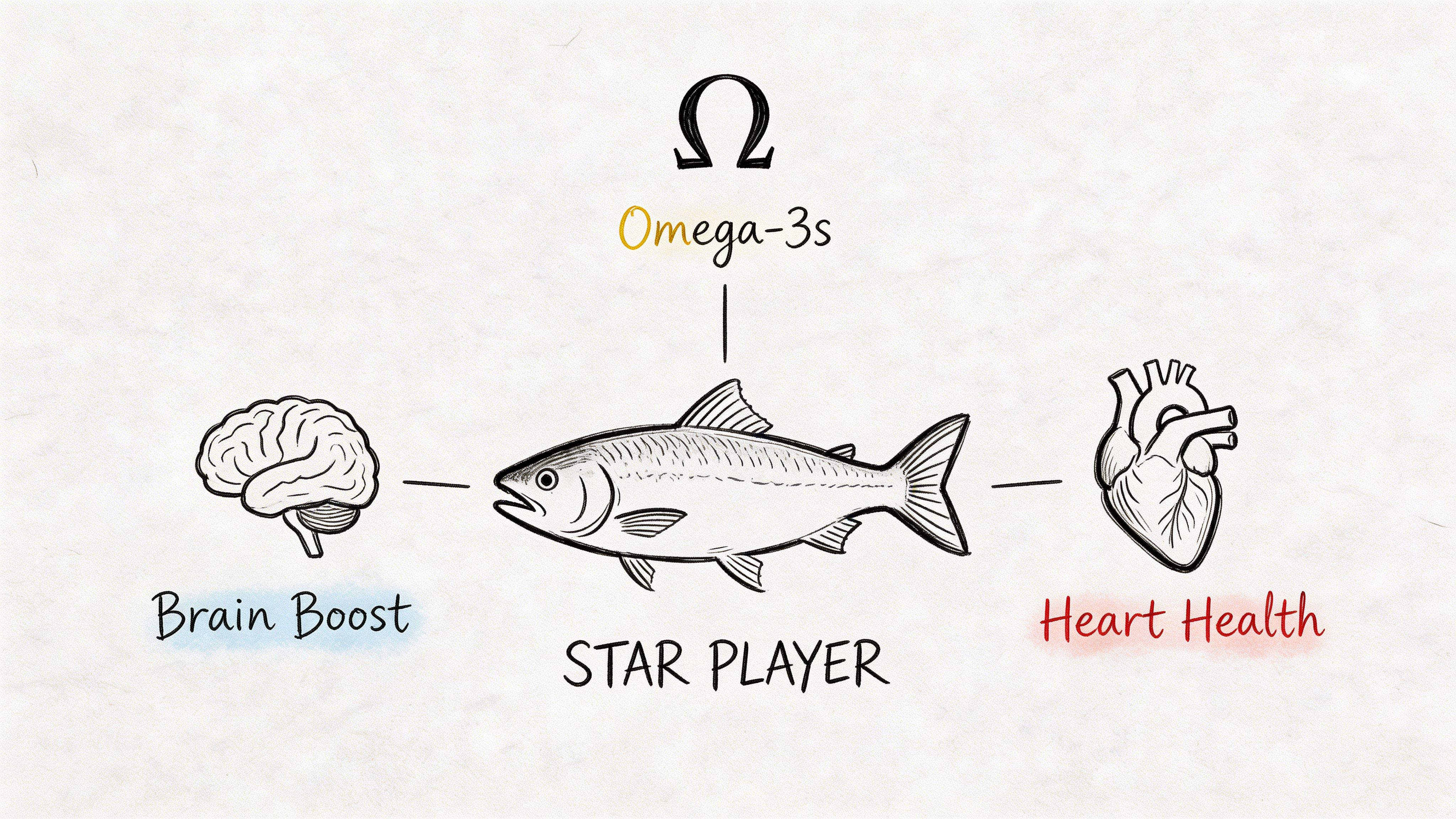
Consider it similar to a good team. One strong player helps, but the full lineup creates the result.
People often get stuck because they expect one perfect rule. Eat this. Avoid that. Never touch this other thing again. The Mediterranean approach is steadier than that. It asks you to build meals that support your body more often than not.
Why this feels easier to stick with
Unlike rigid diet plans, the fish mediterranean diet leaves room for real life.
You can:
- Cook with ease: baked fish, olive oil, lemon, and vegetables.
- Use convenience foods: frozen fillets, canned sardines, canned salmon.
- Adjust to your taste: mild white fish if you dislike stronger flavors.
- Start small: one fish meal this week is still progress.
A useful mindset shift is this. Do not ask, “Can I follow this diet perfectly?” Ask, “What is the easiest version of this pattern I can repeat?”
That question leads to habits. Habits lead to results.
Understanding the Mediterranean Diet Ecosystem
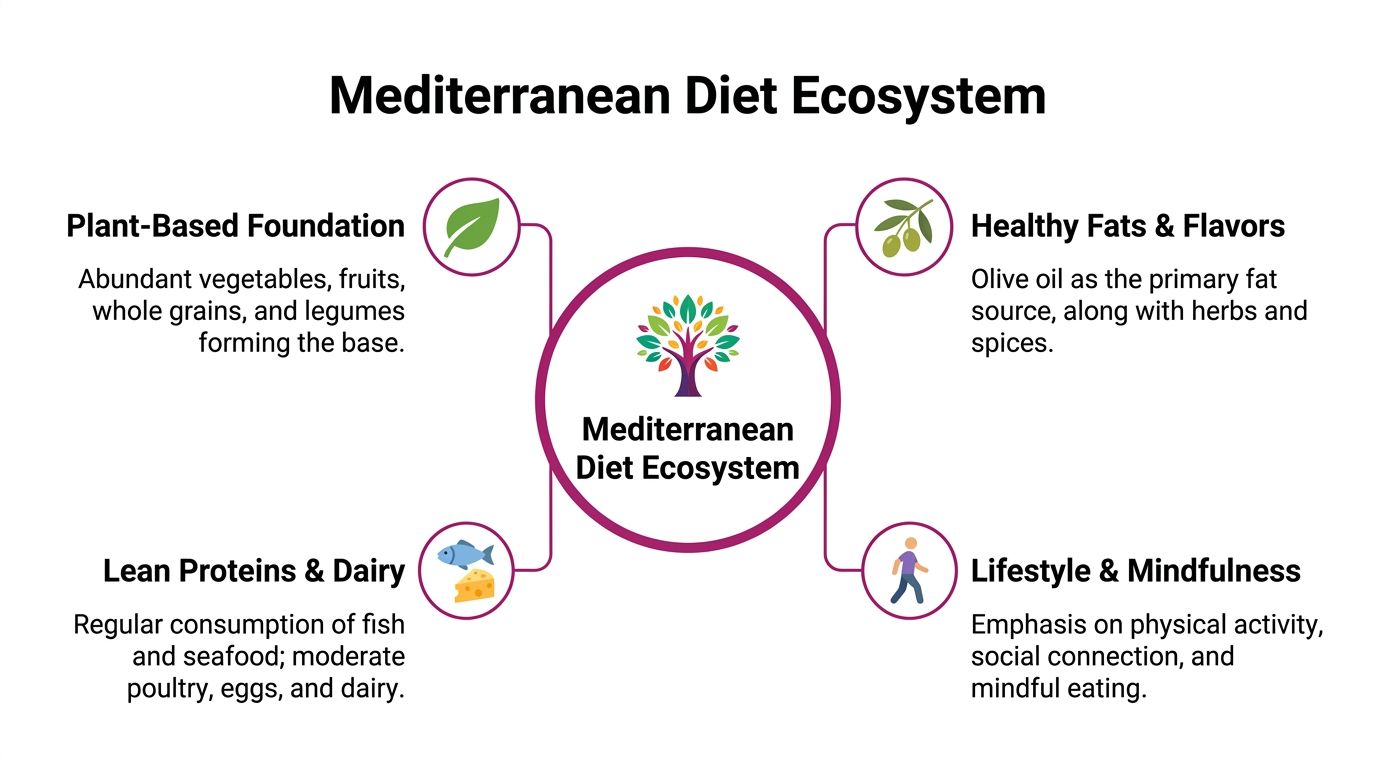
The Mediterranean diet makes more sense when you stop seeing it as a menu and start seeing it as an ecosystem.
In a healthy ecosystem, each part supports the others. Trees hold soil in place. Rain feeds roots. Insects pollinate plants. Remove one important part and the whole system gets weaker. Food works in a similar way.
The plant foundation
At the base are foods that show up often and in generous amounts:
- Vegetables: salads, roasted vegetables, soups, stews.
- Fruits: fresh fruit for snacks or dessert.
- Whole grains: oats, brown rice, barley, whole-grain bread.
- Legumes: lentils, beans, chickpeas.
These foods bring fiber, texture, and staying power to meals. They make fish more satisfying because fish is not meant to sit alone in the middle of a plate.
Fats and flavor
The next layer is about how Mediterranean meals taste so good without relying on heavy sauces or ultra-processed shortcuts.
Olive oil often does the work that butter or cream does in other eating patterns. Herbs, garlic, lemon, vinegar, and spices add brightness. This matters for habit change. Food you enjoy is food you repeat.
Where fish fits
Fish is a keystone protein in this ecosystem. It is regular, not rare. It often takes the place of red meat. It pairs naturally with beans, vegetables, grains, and olive oil.
That is one reason the fish mediterranean diet feels balanced instead of restrictive. Fish is not there to make the meal feel “diet-friendly.” It is there because it fits the whole pattern.
The lifestyle piece
Mediterranean eating has always been about more than nutrients.
Meals tend to work better when you also bring in:
- Movement: walking, daily activity, not just gym sessions.
- Connection: eating with other people when possible.
- Mindfulness: noticing hunger, fullness, and satisfaction.
If you struggle with overeating or stress eating, this ecosystem view can help. Add support before you subtract comfort. A meal with fish, olive oil, grains, and vegetables usually feels more grounding than a plate built around restriction.
That is why this pattern lasts. It nourishes instead of punishes.
Why Fish is the Star Player for Health
Fish earns its place in the Mediterranean pattern because it delivers several important things at once. It provides protein, useful fats, and key micronutrients in a form many people find lighter and easier to digest than heavier meat-based meals.
Many are aware that “fish contains omega-3s,” yet this phrase can feel vague. The easier way to think about it is this: omega-3 fats help your body stay more flexible and less inflamed, especially in systems tied to heart health.
The heart-health connection
The strongest practical reason to include fish is cardiovascular support. Randomized controlled trials summarized by Johns Hopkins note that Mediterranean diets emphasizing fish can reduce cardiovascular disease incidence by 30%, and fish omega-3s can lower triglycerides by 20-50% while also reducing inflammation.
Those numbers help explain why nutrition professionals keep coming back to fish. It is not hype. It is one food that can support several risk factors at the same time.
What omega-3s do
Omega-3s, especially EPA and DHA from fatty fish, act a bit like oil for a machine. They help systems run more smoothly.
In plain language, they support:
- Heart function: by helping improve blood fat patterns.
- Inflammation balance: important for long-term metabolic health.
- Brain support: because the brain relies on fats for structure and signaling.
- Recovery and resilience: especially when your routine includes stress, poor sleep, or irregular meals.
You do not need to memorize the acronyms. Just remember that fatty fish gives your body materials it can use in many places.
Protein that satisfies without feeling heavy
Fish is also a high biological value protein. That means it supplies protein your body can use efficiently. Many people find fish meals filling without the “food coma” feeling that can follow a very heavy lunch.
This can be useful if you are trying to build steadier eating habits. A balanced fish meal may help you feel satisfied enough to avoid the late-afternoon snack spiral that starts when lunch was too small, too processed, or low in protein.
Small nutrients with a big role
Fish also provides nutrients that matter even if they do not get much social media attention.
Depending on the fish, you may get:
- Vitamin D
- Vitamin A
- Selenium
- Iodine
- Calcium in some fish forms
- B12 in fish and seafood patterns
These nutrients support energy, thyroid function, immune function, and overall nourishment.
A simple way to remember fish’s value is this. It is not just protein. It is protein plus fats plus micronutrients, all in one food.
That combination is why fish often feels like a high-return addition to the plate.
Your Guide to Choosing the Right Fish
The fish counter can make smart people feel lost.
One label says wild-caught. Another says farm-raised. One fillet is expensive. Another is cheap but unfamiliar. Then there is canned fish, frozen fish, smoked fish, salted fish. Many people walk away and buy chicken because it feels easier.
A simple framework helps.
Start with this question
Ask, “What matters most for this meal?”
Sometimes the answer is flavor. Sometimes it is budget. Sometimes it is convenience. Sometimes you want a fish that is richer in omega-3s. There is no single perfect fish for every person and every week.
A practical comparison table
| Fish | Category (Omega-3 Richness) | Mercury Level | Best For |
|---|---|---|---|
| Sardines | Omega-3 rich | Lower mercury choice | Budget meals, canned pantry options, strong flavor fans |
| Salmon | Omega-3 rich | Often chosen as a lower-mercury fatty fish option | Beginners, sheet-pan dinners, meal prep |
| Mackerel | Omega-3 rich | Varies by type, so check the label and source | Rich flavor, Mediterranean-style meals |
| Herring | Omega-3 rich | Often used by people wanting oily fish | Stronger taste, pickled or fillet formats |
| Anchovies | Omega-3 rich | Small portions usually used for flavor | Sauces, dressings, pasta, toast |
| Trout | Omega-3 rich | Mentioned as a fatty fish option | Mild flavor, easy home cooking |
| Cod | Leaner fish | Depends on source and product | Mild flavor, fish beginners, soups and baking |
| Tilapia | Leaner fish | Common mild option | Budget-friendly, quick skillet meals |
| Tuna, canned | Varies | Check type and product details | Sandwiches, salads, convenience meals |
| Canned salmon | Omega-3 rich | Convenient option | Fish cakes, bowls, quick lunches |
The easiest shortcut
A lot of people like the SMASH idea because it is easy to remember: Sardines, Mackerel, Anchovies, Salmon, Herring.
These fish are commonly discussed as strong omega-3 choices. If you feel overwhelmed, starting with one item from that list is often simpler than trying to compare everything at once.
Fresh, frozen, canned, or preserved
Not every healthy fish choice needs to come from the fresh seafood case.
Use this rule of thumb:
- Fresh fish: great if you can use it soon.
- Frozen fish: often one of the best options for cost, convenience, and less food waste.
- Canned fish: useful for quick lunches and backup meals.
- Salted or heavily preserved fish: flavorful, but worth using more carefully if sodium is a concern.
Many people find this aspect challenging. A fish mediterranean diet is not just “eat any fish product.” The form matters. Fresh and frozen options often make it easier to keep the meal simple. Preserved choices can still fit, but they may need a more mindful role.
Reading labels without overthinking
Focus on a few basics:
- Species name: know what fish you are buying.
- Ingredients: fewer ingredients usually means a simpler product.
- Sodium: especially important for canned, smoked, or salted fish.
- Preparation style: packed in olive oil, water, brine, or sauces changes the final meal.
Good fish choices are the ones you will buy, cook, and enjoy. A modestly priced frozen salmon fillet that you eat beats an idealized fresh whole fish you never learn to prepare.
How to Prepare Fish the Mediterranean Way
Cooking fish does not need to feel delicate or fancy. Mediterranean-style fish cooking is usually straightforward. Heat, olive oil, acid, herbs, and a few sides do most of the work.
One practical target is to eat fish regularly enough that it becomes familiar. Nutritional guidelines recommend 2-3 fish servings weekly, each about 3-5 ounces for an adult, and the same report notes a 34% reduction in coronary artery disease mortality for pescatarians while over 30% of the Spanish population still does not meet this target. In other words, even in places where this eating pattern is well known, many people still need easier habits.
Portion size without weighing
A serving of fish for an adult is typically a moderate portion. A helpful visual is a deck of cards.
You do not need to measure every fillet. Just learn the look of a reasonable portion, then build the rest of the meal around it with vegetables, beans, or whole grains.
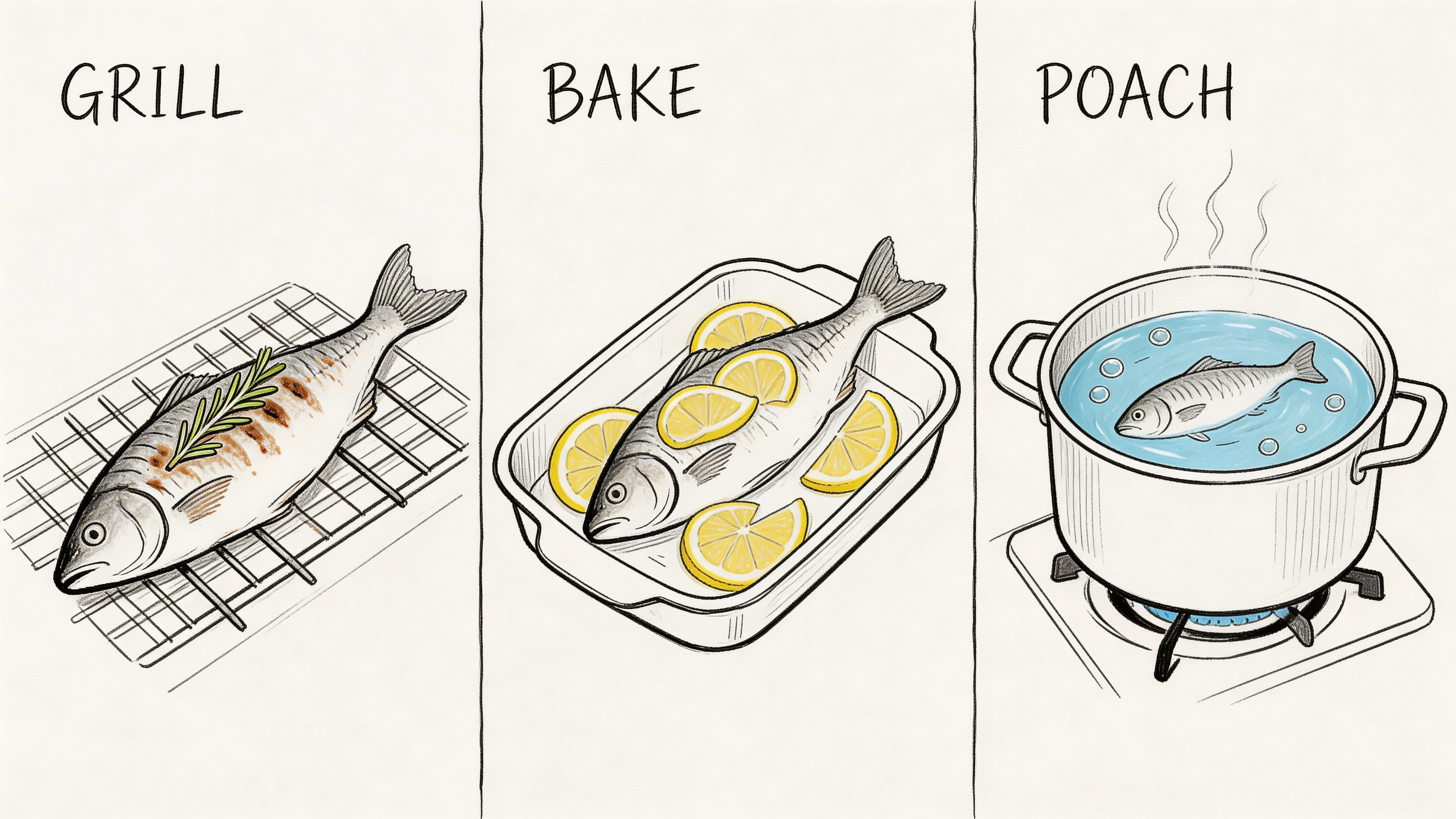
Best Mediterranean-style methods
The healthiest methods tend to be the simplest.
- Baking: good for salmon, cod, trout, and white fish fillets.
- Grilling: adds flavor fast and works well for firmer fish.
- Poaching: gentle and great for delicate fish.
- Pan-searing: useful when you want crisp edges and a short cook time.
Deep-frying can make fish tasty, but it changes the overall pattern. Mediterranean cooking usually relies more on olive oil, herbs, lemon, tomato, garlic, and vegetables than on heavy breading.
Use meal templates, not rigid recipes
Templates make fish feel easier because you stop needing a new recipe every time.
Try these:
- Fish fillet + olive oil + lemon + roasted vegetables + brown rice
- Canned sardines + whole-grain toast + tomato + cucumber + herbs
- Baked salmon + white beans + greens + garlic
- Poached cod + potatoes + olive oil + parsley
- Pan-seared trout + lentils + sautéed spinach
A template is forgiving. Swap the grain. Change the vegetable. Use dill instead of oregano. The structure stays stable even when ingredients change.
If fish still feels intimidating, start with a “sauce first” strategy. Lemon, olive oil, garlic, and herbs make many fish dishes taste familiar and balanced.
Flavor without heaviness
Mediterranean fish meals often use:
- Lemon
- Garlic
- Olive oil
- Parsley
- Oregano
- Capers
- Tomatoes
These ingredients wake fish up without covering it up.
If you enjoy making meals feel more intentional, even your drink pairing can support the experience. A practical resource on pairing fresh seafood with South Australian white wines can help if you want ideas for a relaxed dinner at home.
A quick visual demo can also help if you learn best by watching.
A low-stress weekly rhythm
Instead of planning a perfect menu, try a simple rhythm:
- One quick fish lunch: canned salmon or sardines.
- One cooked fish dinner: baked salmon, cod, or trout.
- One backup freezer option: frozen fillets for busy nights.
That structure turns fish from an occasional event into a repeatable habit.
Personalizing Your Fish Habit Mindfully
A fish mediterranean diet only works if it works in your life.
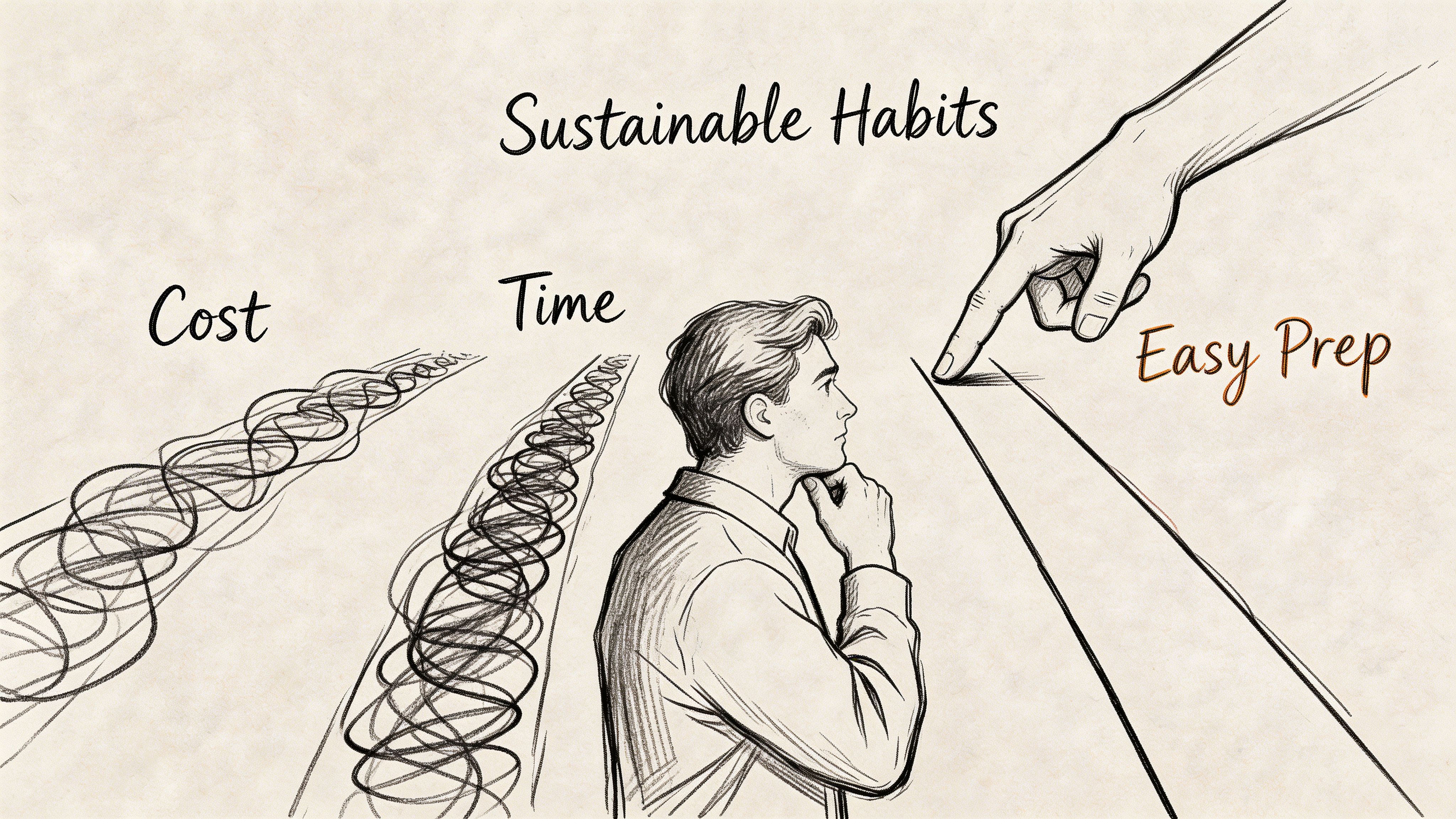
That means your budget matters. Your time matters. Your taste matters. Your stress patterns matter too. People rarely fail because they do not know fish is healthy. They struggle because healthy choices do not match the way their week really unfolds.
Solve the main barrier first
If fish feels expensive, start with:
- Frozen fillets
- Canned sardines
- Canned salmon
- Store-brand options
If time is your issue, choose fish that cooks quickly. Thin fillets, canned fish, and thaw-and-bake products often fit busy routines better than elaborate seafood recipes.
If taste is the barrier, begin with milder fish and stronger supporting flavors like lemon, garlic, tomatoes, or herbs.
Fresh versus preserved matters
This point deserves more attention than it usually gets. A review notes that many Mediterranean diet adherence scores do not distinguish between fresh and preserved fish, even though people outside coastal areas may rely more on salted or canned forms, and the higher sodium content can raise concerns such as hypertension.
That does not mean canned fish is “bad.” It means context matters.
Consider this approach:
- Fresh fish: great when available and practical.
- Frozen fish: often the best middle ground.
- Canned fish: convenient and useful, especially when you check sodium and ingredients.
- Salted or heavily preserved fish: better used intentionally, not automatically.
Track patterns, not perfection
Mindful tracking can make this habit much easier.
You do not need to count calories. Just notice:
- When you eat fish
- How you prepared it
- Whether you felt satisfied after
- What happened later, such as cravings, energy dips, or overeating
That kind of reflection helps you build your own nutrition map.
For example, you might notice:
- baked salmon at lunch keeps you full through the afternoon
- canned fish with crackers is too small and leaves you snacky
- salted fish tastes great but leaves you feeling puffy
- fish dinners are easiest on nights when vegetables are prepped already
The goal is not to become strict. The goal is to become observant. When you see your own patterns clearly, better choices start to feel easier.
That is how sustainable eating habits form. Not from pressure. From feedback.
Your First Step to a Healthier Lifestyle
The fish mediterranean diet works best when you keep it simple.
The big idea is not “eat perfectly.” It is to build a repeating pattern. Choose fish more often. Pair it with plants, olive oil, grains, or legumes. Cook it in ways that fit your life. Notice what helps you feel satisfied and steady.
If you do not eat fish, you still have options. Plant sources like walnuts and chia seeds can provide omega-3s, fortified foods can help with B12 and vitamin D, and legumes can support protein needs. The goal is nourishment, not forcing a food that does not fit your needs or preferences.
Start with one action this week.
Buy one fish option that feels realistic, not aspirational. That could be a salmon fillet, frozen cod, or a can of sardines. Build one meal around it using olive oil, lemon, and a vegetable you already like.
That one meal is enough to start. Repeat it next week. Then adjust from there.
If you want support building habits without calorie counting, Superbloom can help you notice patterns in your meals, cravings, and routines so healthy choices feel more consistent and less overwhelming.