
Your Guide to the GLP-1 Diet for Sustainable Weight Loss
The term "GLP-1 diet" has been popping up a lot lately, but it's not another fad diet like keto or paleo. There are no strict rules or forbidden foods. Instead, think of it as a strategic eating plan designed specifically for people taking GLP-1 medications. It's a way of eating that syncs up with how the medicine works, helping you get the best results, feel better, and build healthy habits that actually stick.
What Is a GLP-1 Diet and Why Does It Matter?
If you've started taking a GLP-1 medication like Ozempic, Wegovy, or Mounjaro, you already know that things have changed. A lot. Your appetite, your digestion, even how you think about food feels different. It’s like your body's operating system just got a major upgrade, and now you need a new user manual for how to fuel it properly. That's exactly what the "GLP-1 diet" is.
It’s less about counting calories and more about being smart with your food choices. The goal is to focus on nutrient-dense foods that support your body through this transition. This approach helps you nail three key things:
- Get the Most from Your Medication: Eating the right stuff helps you hold onto lean muscle while you lose weight. This is crucial—you want to lose fat, not strength.
- Dodge Unpleasant Side Effects: Let's be real, the side effects can be a challenge. Making smart food choices can make a huge difference in managing common issues like nausea, constipation, and that wiped-out feeling.
- Heal Your Relationship with Food: For the first time, you might not be constantly battling hunger cues. This quiet space is a golden opportunity to learn how to eat more mindfully and intuitively, tuning into what your body truly needs.
The New Rules of Fueling Your Body
GLP-1 medications are changing the entire conversation around weight management. It's a huge cultural moment, and if you want to dive deeper into the public discussion, you can explore the Ozempic prescription weight loss drug craze. This shift is backed by staggering market growth, with demand for these drugs skyrocketing.
Why? Because they work. On average, people naturally eat 20-30% fewer calories without even trying. This completely changes the game. The focus is no longer on how much you eat, but on what you eat. That's the heart of the GLP-1 diet: making every single bite count.
The core idea is simple: You're no longer fighting against constant hunger. The medication provides the control, so your job is to provide the nourishment. This changes the entire dynamic of eating from a battle of willpower to an act of self-care and support.
This mindset is about strategic addition, not restriction. You'll learn to prioritize what you put on your plate—especially protein, fiber, and fluids—to keep your energy up, feel satisfied, and support your health from the inside out. It's not a short-term fix; it's the nutritional foundation that helps your medication work for you.
GLP-1 Diet Key Principles at a Glance
To truly understand this new way of eating, it helps to see how it stacks up against old-school dieting. The table below breaks down the fundamental mindset shift required when you're on a GLP-1 therapy.
As you can see, this is a profound change. It's moving away from a battle against your body and toward a partnership with your body, supported by the medication.
How GLP-1 Medications Reshape Your Relationship with Food
Starting a GLP-1 medication is more than a simple step toward weight loss; it fundamentally re-wires the biological systems that dictate hunger and our eating habits. Getting a handle on these changes is the secret to building a supportive "GLP-1 diet" that works with your body's new reality, not against it. It's a powerful shift that can take you from constantly fighting cravings to mindfully fueling your body.
The whole process kicks off in your stomach. These medications put the brakes on gastric emptying, which is just the technical term for how fast food moves from your stomach into your small intestine.
Think of your stomach like a bathtub. Before the medication, the drain was wide open, emptying quickly and signaling your brain that it was time to "refill." On a GLP-1, it’s like a slow-drain has been installed. You stay fuller, longer, after every meal.
The Science of Feeling Full and Quieting Cravings
But that delayed digestion is only half the picture. GLP-1 medications also act directly on the hunger centers in your brain, sending strong signals that you’re satisfied. This is what turns down the volume on the constant "food noise"—that nagging inner voice about your next meal or snack that so many people find exhausting.
This newfound biological calm opens up a huge opportunity. Food is no longer a source of conflict or a go-to coping mechanism; it can simply be about nourishment and energy.
The clinical results speak for themselves. Studies show GLP-1 receptor agonists can lead to 15-20% body weight loss—that’s a 30 to 40-pound loss for someone starting at 200 pounds—all while helping to keep blood sugar stable. For those who wrestle with stress eating, the impact on brain signaling can slash cravings by 50-70%, making it much easier to manage emotional triggers. You can dig into the research on GLP-1 market dynamics to see the broader impact.
This is precisely why a 'GLP-1 diet' is all about nutrient quality. The medication takes care of the appetite suppression, which frees you up to focus on giving your body the high-quality fuel it needs to feel its best.
By dialing down the urgency of hunger and cravings, these medications help you reconnect with your body’s true satiety cues. You finally get the space to learn the difference between actual physical hunger and the emotional or habitual urges that used to drive you to eat.
A New Framework for Eating
With this new internal landscape, your approach to nutrition has to evolve. The core principles of a GLP-1 diet are designed specifically to support these physiological shifts.
This simple map breaks down the three pillars: prioritizing protein, focusing on fiber, and staying hydrated.
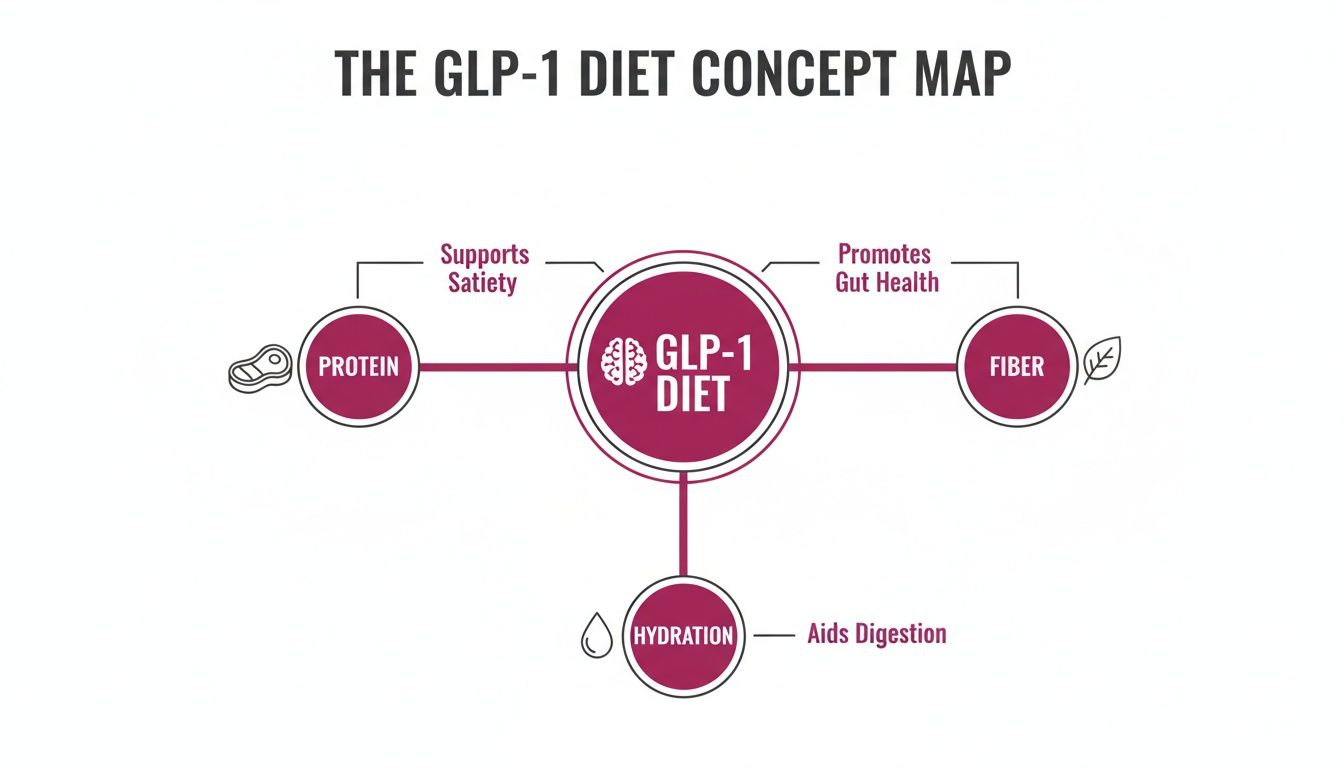
Each of these pillars works together to help you get the most out of the medication while helping you sidestep some of the common side effects.
Your relationship with food is no longer a constant battle of willpower. It becomes a partnership between what the medication is doing and the intentional choices you make.
Here's how this often plays out in daily life:
- Smaller Portions Feel Natural: You get full much faster and that feeling lasts, so a smaller plate feels genuinely satisfying, not like a punishment.
- High-Fat Foods Lose Their Appeal: Because your digestion is so much slower, greasy or heavy meals can sit uncomfortably in your stomach, which naturally steers you toward lighter, leaner options.
- Mindful Choices Become Easier: Without the relentless distraction of cravings, you have the mental clarity to choose foods that will actually make you feel good in the long run.
Ultimately, GLP-1 medications offer a biological reset. They create the breathing room you need to build healthier eating habits that are based on listening to your body, not on restricting it. This is the real foundation for lasting success.
Building Your Plate: What to Eat on a GLP-1 Diet
Okay, so you get the science behind how GLP-1 medications work. Now for the really practical part: what should you actually be eating? The goal here isn't about harsh restrictions—it's about eating smarter to feel energized and strong.
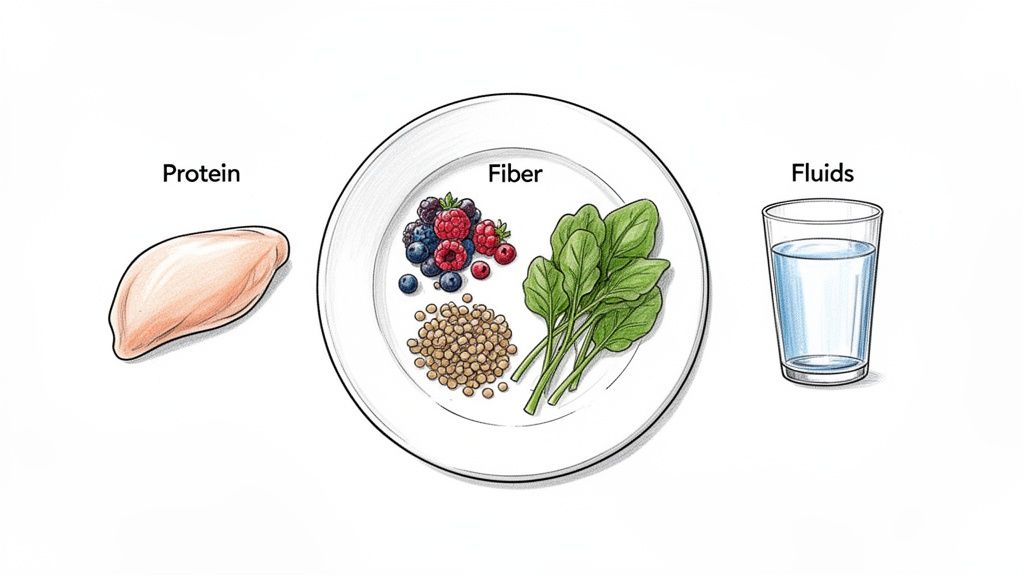
With a smaller appetite, every bite counts more than ever. This means focusing on nutrient-dense foods that work with your medication, not against it. Think of it as a new nutritional blueprint built on three essentials: lean protein, high-quality fiber, and plenty of fluids. Get this trio right, and you'll be well on your way to preserving muscle, managing side effects, and feeling fantastic.
Prioritize Protein to Protect Muscle and Stay Full
On this journey, protein is your absolute best friend. When you lose weight, your body can shed both fat and muscle. Making protein a priority helps you target fat loss while holding onto that metabolically active muscle.
Protein is also a powerhouse for satiety. It makes you feel full and satisfied with smaller portions, which is exactly what you need when your medication is already curbing your appetite. A great goal is to aim for 20-30 grams of protein at each meal. This helps trigger muscle protein synthesis and keeps nagging hunger from creeping back in.
Here are some excellent lean protein sources to add to your shopping list:
- Poultry: Skinless chicken or turkey breast.
- Fish: Salmon, tuna, and cod—bonus points for the healthy omega-3s.
- Lean Meats: Sirloin or pork loin, with any visible fat trimmed off.
- Dairy: Greek yogurt, cottage cheese, and low-fat milk.
- Eggs: A versatile and budget-friendly protein champ.
- Plant-Based Options: Lentils, chickpeas, tofu, and edamame.
A common pitfall is undereating because your appetite is so low, which can unfortunately speed up muscle loss. The single best thing you can do is make protein the star of every meal. It's the anchor that keeps your metabolism fired up and your body strong.
Fill Up on Fiber for Digestive Health
Fiber is the unsung hero when you're on a GLP-1 medication. Since these drugs slow down digestion, constipation can become a real—and really uncomfortable—side effect. High-fiber foods are your best defense, keeping your digestive system moving along smoothly.
Beyond that, fiber helps keep your blood sugar stable and adds to that feeling of fullness, working hand-in-hand with your medication. It also nourishes the good bacteria in your gut, which we're learning is incredibly important for overall health.
Try to weave a variety of these high-fiber foods into your day:
- Legumes: Lentils, black beans, and chickpeas are fiber superstars.
- Whole Grains: Oats, quinoa, and brown rice deliver slow-burning energy.
- Berries: Raspberries and blackberries are delicious and loaded with fiber.
- Vegetables: Broccoli, Brussels sprouts, and leafy greens like spinach and kale.
- Nuts and Seeds: Chia seeds, flaxseeds, and almonds are easy to toss into yogurt or on a salad.
If you're looking for more specific guidance, resources on what to eat on Mounjaro offer targeted suggestions that fit perfectly with this eating approach.
Stay Hydrated to Feel Your Best
I can't stress this enough: hydration is absolutely critical, but so easy to forget. GLP-1 medications can sometimes lead to dehydration, which makes side effects like fatigue, dizziness, and constipation feel even worse. Staying on top of your fluids is one of the simplest things you can do to support your body.
Water is always your best bet. That said, other fluids count, too! Herbal teas and bone broth can be wonderfully soothing, especially if you're battling a bit of nausea. The key is to sip consistently throughout the day. Chugging a huge amount of water at once can feel really uncomfortable when your stomach is emptying more slowly.
A quick and easy way to check your status? Look at the color of your urine—a pale yellow usually means you're in a good spot. If you find it hard to remember, set a few reminders on your phone or keep a water bottle glued to your side as a constant visual cue.
By building your meals around these three pillars—protein, fiber, and fluids—you're not just following a "diet." You're creating a sustainable eating style that provides your body with the high-quality fuel it needs to thrive through this change.
Managing Common Side Effects with Smart Nutrition
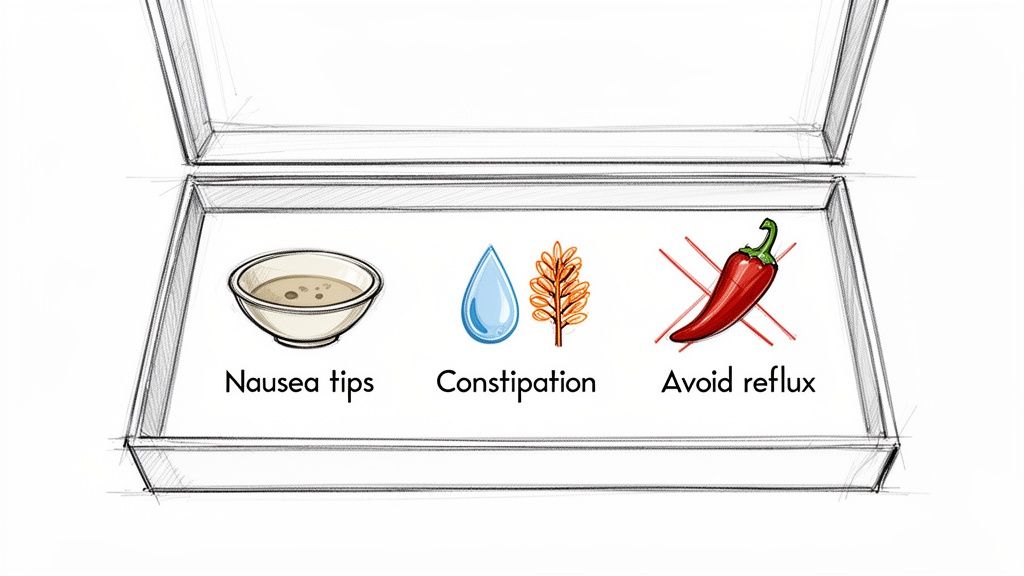
While GLP-1 medications are incredible tools, they can bring a few unwelcome guests to the party—especially when you’re just starting out. Nausea, constipation, and acid reflux are some of the most common hurdles, but here’s the good news: you have a surprising amount of control over them with a few smart nutritional tweaks.
Think of these symptoms as your body sending you signals. It’s telling you that it needs a different approach to fuel now. By listening and adjusting what and how you eat, you can make a huge difference, turning discomfort from a roadblock into a manageable part of your journey.
This isn't just an individual experience; it's a trend so powerful it’s changing the food industry. As more people use GLP-1s, the collective reduction in appetite is causing a major shift in demand. We’re seeing a natural pivot away from high-fat, processed foods because they just don't feel good anymore. For example, the market for savory meat snacks is projected to grow +6.6% in 2025 sales as people prioritize protein and smaller portions. It's a real-world sign that managing these side effects is at the heart of the "GLP-1 diet." You can find more insights on how GLP-1 use is changing food markets on foodnavigator.com.
Taming Nausea with Gentle Foods
Nausea is usually the first side effect to show up, and it’s a direct result of the medication slowing down your digestion. When food hangs out in your stomach longer, anything too heavy or greasy can trigger that queasy feeling. The key is to be gentle with your stomach.
Instead of three large meals, try eating smaller amounts more frequently. This approach keeps your stomach from getting overwhelmed. Focus on bland, easy-to-digest foods that don’t require a ton of work to break down.
Foods that Help Soothe Nausea:
- Simple Starches: There's a reason we reach for plain crackers, toast, rice, and baked potatoes when our stomach is upset. They just work.
- Cool or Cold Foods: The smell of hot food can sometimes make nausea worse. Try chilled Greek yogurt, cottage cheese, or a simple protein smoothie instead.
- Ginger and Peppermint: Both are famous for their stomach-soothing abilities. Sipping on ginger or peppermint tea can be a huge help.
At the same time, try to avoid greasy, fried, or super-sweet foods—they are notorious for making nausea worse.
Combating Constipation with Fiber and Fluids
Since GLP-1 medications slow down your entire digestive tract, not just your stomach, constipation is another common challenge. Your best defense is a simple, two-pronged attack: boost your fiber and drink plenty of fluids.
Fiber adds bulk to your stool, which helps it move along, while water keeps things soft and mobile. They’re a team—you really can’t have one without the other for them to be effective.
It’s a classic mistake to load up on fiber without also upping your water intake. This can actually make constipation worse. Just think of fiber as a sponge; it needs water to do its job.
Try to get a steady intake of both throughout your day.
Your Go-To Toolkit for Regularity:
- Hydrate First: Start your day with a big glass of water and keep a bottle handy all day.
- Incorporate Soluble Fiber: Foods like oats, chia seeds, apples, and beans create a gel-like consistency in your gut that helps soften stool. Even a spoonful of chia seeds in yogurt can make a difference.
- Add Insoluble Fiber: Leafy greens, broccoli, and whole grains act like a broom, adding bulk and helping to sweep everything through your system.
- Consider Gentle Movement: You'd be surprised what a simple walk can do to stimulate your bowels and get things moving.
Preventing Acid Reflux by Identifying Triggers
With food staying in your stomach for longer, stomach acid has more time to potentially irritate your esophagus, leading to heartburn or acid reflux. The solution here is often a bit of detective work: identifying and avoiding your personal trigger foods.
Common culprits are usually high-fat, spicy, or highly acidic foods. Keeping a simple food and symptom journal for a week or two is a great way to connect the dots between what you eat and when you feel that burning sensation.
It's not just what you eat, but when. Lying down right after a meal can make reflux much worse. Try to finish your last meal at least two or three hours before you go to bed. This gives your stomach time to start emptying, significantly cutting down the risk of overnight discomfort.
To make it even easier, here’s a quick-reference table that connects these common side effects with actionable dietary adjustments you can make today.
Common GLP-1 Side Effects and Nutritional Solutions
Remember, these strategies are your first line of defense. By proactively managing your nutrition, you can often minimize these side effects and make your experience with GLP-1s much smoother.
Adopting Mindful Eating for Long-Term Success
GLP-1 medications are doing much more than just helping you lose weight. They’re giving you a rare opportunity to completely reset your relationship with food. For what might be the first time ever, the constant biological "noise"—those intense cravings and nagging hunger pangs—has been turned way down. This creates a unique calm around eating.
This new, quiet space is your chance to pivot. You can finally shift the focus from what you're eating to how you're eating. Instead of fighting your own body, you can actually learn to listen to it and build a healthier, more sustainable approach to food that will stick with you for life.
From Autopilot to Awareness
Let’s be honest, so much of our eating happens on autopilot. We eat in front of the TV, while scrolling through our phones, or just because we're stressed out. Mindful eating is simply the practice of bringing your full attention to the experience of eating and drinking, paying attention to what’s happening both inside and outside your body.
This isn’t about adding more rules or restrictions; it's about pure observation. It’s about noticing the real flavors, textures, and smells of your food. It’s also about checking in with yourself and asking: Am I actually hungry, or am I just bored, stressed, or sad?
By slowing down and paying attention, you begin to untangle the emotional knots tied to food. You empower yourself to make conscious choices based on nourishment and enjoyment, rather than reacting to old habits and external triggers.
This shift is a game-changer for anyone on a GLP-1 diet. The medication takes care of the physical appetite, which frees up the mental space you need to work on the behavioral side of eating.
Practical Steps to Start Eating Mindfully
Getting started with mindful eating isn't complicated. It’s all about weaving small, simple practices into your daily life that add up to a huge impact over time.
Here are a few easy techniques to try:
- The One-Bite Check-In: Before taking that first bite, just pause. Take one deep breath. Ask yourself, "On a scale of 1 to 10, how hungry am I right now?" This simple act reconnects your brain to what your body is actually feeling.
- Put Your Fork Down Between Bites: This is one of the easiest and most effective ways to slow yourself down. It makes you chew more thoroughly, savor the taste, and gives your stomach time to send fullness signals to your brain—signals that are now stronger than ever thanks to your medication.
- Minimize Distractions: When you eat, try to just eat. Turn off the TV, put your phone away, and step away from your work computer. You'll be amazed at how much more satisfying a smaller portion feels when you give it your full attention.
Recognizing Your New Fullness Cues
Your body’s signals for hunger and fullness are different now. On a GLP-1 medication, the feeling of being "full" often shows up more subtly and can quickly tip into discomfort if you ignore it.
Mindful eating is the key to learning this new stopping point. It’s no longer about cleaning your plate out of habit. It's about eating until you feel comfortably satisfied—a feeling many people describe as simply "not being hungry anymore" instead of feeling "stuffed."
Developing this skill is probably the single most important thing you can do for your long-term success. By learning to trust and respond to your body's new cues while the medication has your back, you're building the exact habits that will help you maintain your health for good. It turns the medication from a temporary tool into a permanent bridge to lasting wellness.
Putting It All Together: Your GLP-1 Support Plan
Starting a GLP-1 medication is a major commitment to your health, but it's not something you should do alone. Real, lasting success isn’t just about the medication; it’s about building a solid support system around you. Think of it as creating an action plan to turn this period of change into a lifestyle that actually sticks.
The basic principles of eating on a GLP-1 are simple but incredibly effective. They create the foundation for feeling great while the medication helps your body reset.
- Make Protein and Fiber Your Foundation: Build every meal around lean protein and high-fiber foods. This approach is crucial for maintaining muscle, feeling satisfied on less food, and keeping your digestive system running smoothly.
- Hydrate, Hydrate, Hydrate: Get in the habit of sipping water or other unsweetened drinks all day long. Staying hydrated is one of the best ways to head off common side effects like constipation and fatigue.
- Tune In to Your New Cues: Your body is sending you completely new signals about hunger and fullness. The key is to listen. Eat slowly, pay attention, and stop when you feel pleasantly satisfied—not stuffed.
Building Your A-Team
While the medication is working internally, the most powerful strategies often come from outside support. You wouldn't try to climb a mountain without a guide, and navigating this new territory is much easier with a team in your corner.
Your doctor or endocrinologist is the captain of that team. They're managing your prescription, monitoring your health, and making sure the medication is a safe and effective tool for you.
A registered dietitian is another indispensable teammate. With a smaller appetite, it's easy to miss out on key nutrients. A dietitian can help you create a personalized plan to make sure every bite counts, fine-tuning your GLP-1 diet so it meets your unique needs.
Using the Right Tools for the Job
Expert advice gives you the game plan, but daily tools are what help you execute it day in and day out. This is where a little bit of smart tech can make a world of difference. You need a simple way to connect the dots between what you're eating and how you're feeling, without adding more stress to your life.
This journey isn't just about a diet; it’s a chance to build a whole new framework for your health. The goal is to create habits that will serve you well for the rest of your life, long after the medication is part of the picture.
This is exactly what tools like Superbloom are designed for. Instead of getting bogged down in calorie counting, you can use simple journaling and AI coaching to see the bigger picture. Logging a meal might show you’re not getting enough protein, or tracking your energy levels might reveal how much better you feel when you’re hydrated. That kind of awareness is what turns information into real, lasting change.
You have the knowledge and the opportunity to make a profound shift in your health. By pairing professional guidance with the right daily support, you’re creating a powerful system that doesn't just help you succeed now—it empowers you to keep that progress for years to come.
Common Questions About Eating on GLP-1s
It’s completely normal to have questions when you’re changing how you eat, especially when your body is adjusting to a new medication like a GLP-1. Let's tackle some of the most frequent ones we hear.
Do I Still Need to Count Calories?
Honestly, probably not. The beauty of GLP-1 medications is how effectively they dial down your appetite. You’ll naturally find yourself eating less without the constant mental gymnastics of calorie counting.
The real shift here is from focusing on quantity to focusing on quality. Think of it this way: since you're eating less overall, you want to make every bite count. Your priority becomes loading up on nutrient-dense foods—lean proteins to protect your muscle mass, high-fiber foods to keep your digestion smooth, and whole foods packed with vitamins and minerals. It's a much more sustainable and positive way to approach food.
Is It Okay to Drink Alcohol?
I’d advise caution here. Alcohol can mess with your blood sugar levels, which is one of the main things these medications are helping to stabilize. For many people, it can also amplify common side effects like nausea and indigestion, which is the last thing you want.
Plus, alcoholic drinks are often full of "empty" calories, meaning they don't offer much in the way of nutrition. When your appetite is reduced, you want to use your daily intake for foods that actually fuel your body. If you do decide to have a drink, moderation is key, and it’s a good idea to have a chat with your doctor first to make sure it’s safe for you.
What Happens if I Stop the Medication?
This is a big one. It's important to understand that your appetite will likely bounce back to what it was before once you stop the medication. That’s precisely why the time you spend on a GLP-1 is so valuable.
Think of the medication as a tool that gives you the space to build new, healthier habits without fighting constant hunger. The goal is to learn how to listen to your body, prioritize nourishing foods, and manage cravings in a way that sticks for the long haul.
The eating patterns you establish now—focusing on protein, recognizing fullness cues, and finding non-food ways to cope with stress—are the skills that will help you maintain your results long after the medication is finished.
Your time on a GLP-1 is a powerful window of opportunity to reset your relationship with food. With Superbloom, you get an AI coach that helps you make sense of your body’s signals without the tediousness of calorie tracking. Get started with Superbloom today and turn this experience into lasting change.