
A Sustainable GLP 1 Diet Plan to Maximize Results
A good GLP-1 diet plan isn't just a "nice-to-have"—it's an essential part of making your medication work for you. Think of it as a partnership. The plan is designed to help you get the absolute most out of your treatment, focusing on whole foods packed with protein and fiber.
This approach not only boosts the medication's effectiveness but also helps you sidestep common side effects like nausea while building healthy habits that will stick around long after you reach your goals.
Why Your Diet Is So Important on GLP-1s
It’s easy to think of GLP-1 medications as a magic wand for weight loss, but that's a common misunderstanding. While these drugs are powerful tools, their success is completely intertwined with what you eat every day. They work by slowing down how quickly your stomach empties and sending "I'm full" signals to your brain, which changes your whole experience with food.
This is precisely why a smart diet plan is a non-negotiable. If you don't adjust your eating habits, you can easily work against the medication and even amplify the side effects. For example, a big, greasy meal that used to be fine can now sit in your stomach for hours, leading to some serious nausea and discomfort.
The Science-Backed Partnership: Food Meets Medication
The whole point of a GLP-1-friendly diet is to work with your body's new chemistry, not against it. By focusing on the right nutrients, you can make the medication work even better and keep your body strong and healthy.
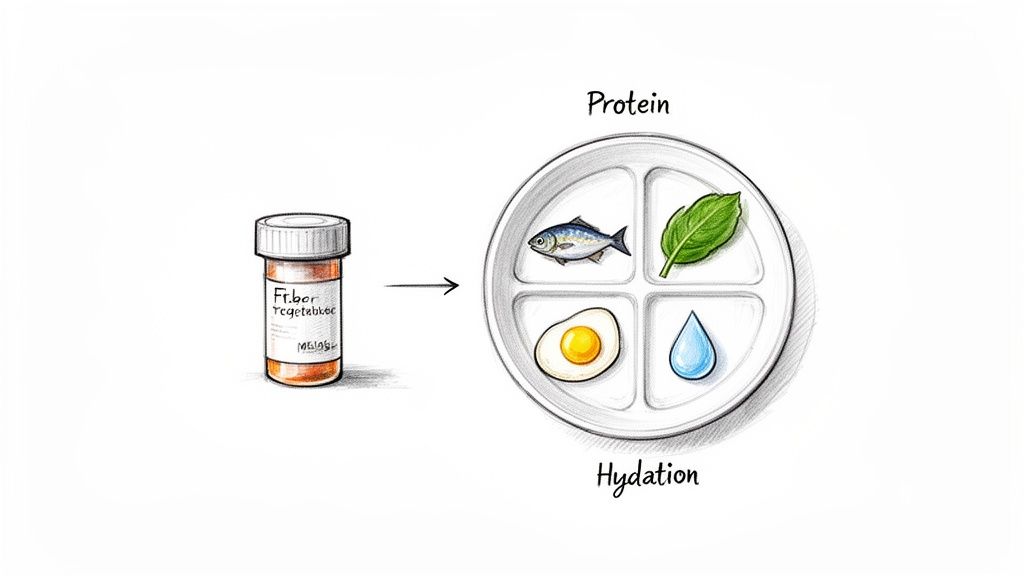
Here’s a quick summary of what we're aiming for. Think of these as your nutritional pillars while you're on this journey.
Your GLP-1 Diet Pillars at a Glance
These pillars aren't about harsh rules; they're about giving your body the support it needs to thrive.
The goal isn't restriction; it's optimization. Your food choices become the support system that allows the medication to work effectively while ensuring your body gets the nourishment it needs to thrive.
Prescriptions for these medications have exploded, and for those on drugs like Wegovy, following a supportive diet is key to seeing the best results. With more people than ever turning to GLP-1s, a solid diet plan is the best way to manage side effects and make sure the investment in your health pays off for the long haul.
Building Your Plate: The Foundational Meal Template
When you're taking a GLP-1 medication, your appetite naturally dials down. This is great for weight loss, but it also means what you do eat becomes incredibly important. Forget complicated calorie counting or endless "don't eat" lists. The most effective approach starts with a simple, visual guide: the plate method.
This isn't about dieting in the old-school, restrictive sense. It's a smarter way to structure your meals to get the most nutritional bang for your buck. Every bite should work with your medication to keep you full, energized, and properly nourished. Think of it as a sustainable blueprint for building balanced meals, minus the stress.
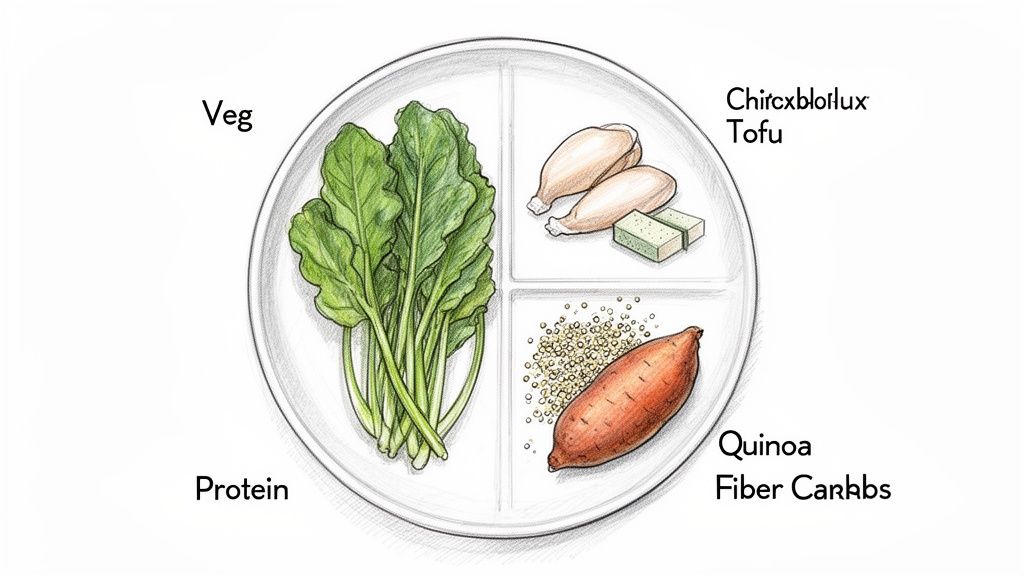
The concept is beautifully simple and focuses on proportions, making it easy to use whether you're cooking at home, grabbing lunch at work, or eating out. Just imagine your plate divided into three sections.
Half Your Plate: Non-Starchy Vegetables
First things first: fill the largest portion of your plate—a full half—with non-starchy vegetables. Why start here? Because these foods are low in calories but packed with fiber, vitamins, minerals, and water. This combination is a perfect partner for your GLP-1 journey, as it helps you feel full and supports healthy digestion without weighing you down.
Making this your first step is a simple hack for a massive nutritional payoff.
- Leafy Greens: Spinach, kale, arugula, and Swiss chard make a fantastic base for a salad or can be quickly sautéed as a side.
- Cruciferous Veggies: Broccoli, cauliflower, Brussels sprouts, and cabbage are true fiber powerhouses. Roasting them brings out a wonderful, natural sweetness.
- Other Go-Tos: Asparagus, bell peppers, zucchini, mushrooms, and green beans are all versatile options that add vibrant color and texture to any meal.
A great rule of thumb I always share is to "eat the rainbow." The more colors you have on your plate from different vegetables, the wider the variety of antioxidants and phytonutrients you're getting.
By filling half your plate with veggies first, you automatically help control the portions of the other food groups. It's a small shift in habit that makes a huge difference.
A Quarter of Your Plate: Lean Protein
Next up is the most critical player on your plate: lean protein. This section should take up about a quarter of the space. I can't stress this enough—protein is absolutely essential for protecting your muscle mass, which is often at risk during rapid weight loss. In fact, studies show that without enough protein and resistance training, people on GLP-1s can lose 20-35% of their weight from lean tissue alone.
Beyond preserving muscle, getting enough protein significantly boosts satiety. It works hand-in-hand with your medication to keep hunger signals quiet for hours. A good target to aim for is 20-30 grams of protein with each meal.
Excellent Lean Protein Sources:
- Poultry: Skinless chicken or turkey breast.
- Fish: Salmon, cod, or tuna, which also deliver healthy omega-3 fatty acids.
- Plant-Based: Tofu, tempeh, edamame, lentils, and chickpeas are fantastic options.
- Dairy & Eggs: Greek yogurt, cottage cheese, and whole eggs.
Here’s a practical tip to help manage potential side effects: bake, grill, or poach your proteins instead of frying them. This cuts down on added fats that can slow digestion even more and cause discomfort. A grilled chicken breast, for instance, will be much gentler on your system than a fried one.
The Final Quarter: High-Fiber Carbohydrates
The last quarter of your plate is for high-fiber carbohydrates. And no, I'm not talking about the refined, sugary carbs that send your energy levels on a rollercoaster. We're focusing on complex carbohydrates that are loaded with fiber, which helps with digestion, supports stable blood sugar, and adds to that feeling of fullness.
These smart carbs provide slow-release, sustained energy, which is key for preventing the fatigue that can sometimes crop up when your appetite is lower.
Smart High-Fiber Carb Choices:
- Whole Grains: Quinoa, brown rice, oats, and farro.
- Starchy Vegetables: Sweet potatoes, butternut squash, and corn.
- Legumes: Black beans and kidney beans (which give you a bonus of plant-based protein, too).
Putting these three components together—veggies, protein, and high-fiber carbs—creates a complete, satisfying meal that fuels your body steadily. This balanced plate is the true foundation of a successful and sustainable GLP-1 diet plan.
Your Sample 7-Day GLP-1 Friendly Meal Plan
Knowing the principles of a balanced plate is one thing, but seeing it all come together is what really makes it click. Think of this sample 7-day plan as a flexible roadmap, not a set of rigid rules. It’s here to show you just how simple, delicious, and satisfying a GLP-1 diet plan can be.
The idea is to give you some inspiration and structure, especially during those first few weeks when your body is still adjusting. Feel free to mix and match meals, swap out proteins for whatever you have on hand, and choose vegetables based on what’s in season. The real key here is consistency, not perfection.
This entire plan is built around protein-rich, high-fiber foods that work with your medication to keep you feeling full and energized. You'll also notice the meal sizes are manageable, which is a huge help for minimizing common side effects like nausea.
Day 1: Kickstarting Your Week
Let's begin the week strong with balanced, whole foods that are incredibly easy to prepare.
- Breakfast: A protein-packed Greek yogurt bowl is a perfect start. Just combine ¾ cup of plain, low-fat Greek yogurt with ½ cup of mixed berries and a tablespoon of chia seeds for a boost of fiber and healthy fats.
- Lunch: A big salad is on the menu. Top a bed of leafy greens with 4 ounces of grilled chicken breast, cucumber, tomatoes, and a light vinaigrette. I like to add ¼ cup of chickpeas for an extra fiber punch.
- Dinner: Keep it simple and satisfying with 4 ounces of baked salmon seasoned with herbs. Serve it alongside a cup of steamed asparagus and ½ cup of quinoa.
- Snack Idea: A small apple with one tablespoon of almond butter. It's the perfect mix of fiber, protein, and healthy fat to hold you over.
Day 2: Building on Momentum
Now that you've got one day down, we'll continue with nutrient-dense meals that are easy on your digestive system.
- Breakfast: You can't go wrong with two scrambled eggs with a handful of spinach and one slice of whole-grain toast. This classic combo delivers high-quality protein and fiber.
- Lunch: A hearty and flavorful lentil soup is an amazing lunch option. A 1.5-cup serving gives you excellent plant-based protein and fiber that keeps you satisfied for hours.
- Dinner: A simple turkey stir-fry is next. Use 4 ounces of lean ground turkey, broccoli, bell peppers, and snap peas with a splash of low-sodium soy sauce or coconut aminos.
- Snack Idea: A single-serving container of cottage cheese. It’s an easy, high-protein snack that requires zero prep.
Day 3: Midweek Consistency
By now, you're probably noticing that your appetite is more regulated. This is the perfect time to really focus on listening to your body’s hunger and fullness cues.
- Breakfast: A protein smoothie is a fantastic choice when you're short on time. I usually blend one scoop of protein powder, a cup of unsweetened almond milk, a big handful of spinach, and ½ a banana.
- Lunch: Use that leftover turkey stir-fry from last night for a quick and easy lunch. This saves time and cuts down on food waste.
- Dinner: How about some grilled shrimp skewers? Aim for about 4 ounces of shrimp with a colorful side of roasted zucchini and bell peppers.
- Snack Idea: A handful of almonds (about 20) and a few baby carrots provide a satisfying crunch and a great mix of protein, fiber, and healthy fats.
Remember, this plan is a template. If you find yourself feeling full halfway through a meal, it's perfectly fine to save the rest for later. Your medication is doing its job, so honor those fullness signals.
Day 4: Plant-Powered Choices
Tossing in some plant-based meals is a great way to boost your fiber intake and add more variety to your diet.
- Breakfast: A warm bowl of oatmeal (½ cup dry, cooked) topped with a sprinkle of cinnamon and a tablespoon of chopped walnuts for healthy fats and a little protein.
- Lunch: A vibrant quinoa salad with black beans, corn, and chopped red onion, all dressed with a squeeze of lime juice and fresh cilantro. It's packed with fiber and plant-based protein.
- Dinner: A large baked sweet potato is the star here. Top it with 4 ounces of shredded chicken and a dollop of Greek yogurt instead of sour cream.
- Snack Idea: A hard-boiled egg. It's one of the most convenient and nutrient-dense snacks you can have ready to go.
Day 5: Prepping for the Weekend
As the week winds down, let's focus on simple meals that don't require a ton of effort but still deliver on nutrition.
- Breakfast: Let's go back to a favorite—the Greek yogurt bowl with berries. Sticking with what works helps build lasting habits.
- Lunch: Leftover quinoa salad from Day 4 makes for another effortless and delicious midday meal.
- Dinner: A lean 4-ounce turkey burger (no bun) served on a bed of mixed greens with a side of sliced avocado and tomato.
- Snack Idea: Celery sticks with a tablespoon of peanut butter. It’s hydrating, satisfying, and has that great crunch.
Day 6: Weekend Flexibility
Weekends often come with a different rhythm, so flexibility is your best friend. This day is all about simple, satisfying choices that fit into your plans.
- Breakfast: A two-egg omelet filled with chopped mushrooms and bell peppers, with a side of sliced melon.
- Lunch: A can of tuna mixed with a little Greek yogurt and herbs, served with whole-grain crackers and cucumber slices for dipping.
- Dinner: Chicken and vegetable skewers are fun and easy. Cube 4 ounces of chicken breast and thread it onto skewers with cherry tomatoes, zucchini, and onion, then grill or bake.
- Snack Idea: A small pear and a slice of low-fat cheese.
Day 7: Rest and Reflect
Let's end the week with some comforting, healthy meals as you get ready for the week ahead. This is also a great time to think about which meals you really enjoyed.
- Breakfast: The protein smoothie from Day 3 is a quick and easy start to your Sunday.
- Lunch: Enjoy the leftover chicken and vegetable skewers from Saturday's dinner. Easy and delicious.
- Dinner: A cozy bowl of chili made with lean ground beef or turkey, plus plenty of beans and tomatoes. Keep your portion to about 1.5 cups.
- Snack Idea: A handful of edamame (steamed and lightly salted) is an excellent source of plant-based protein.
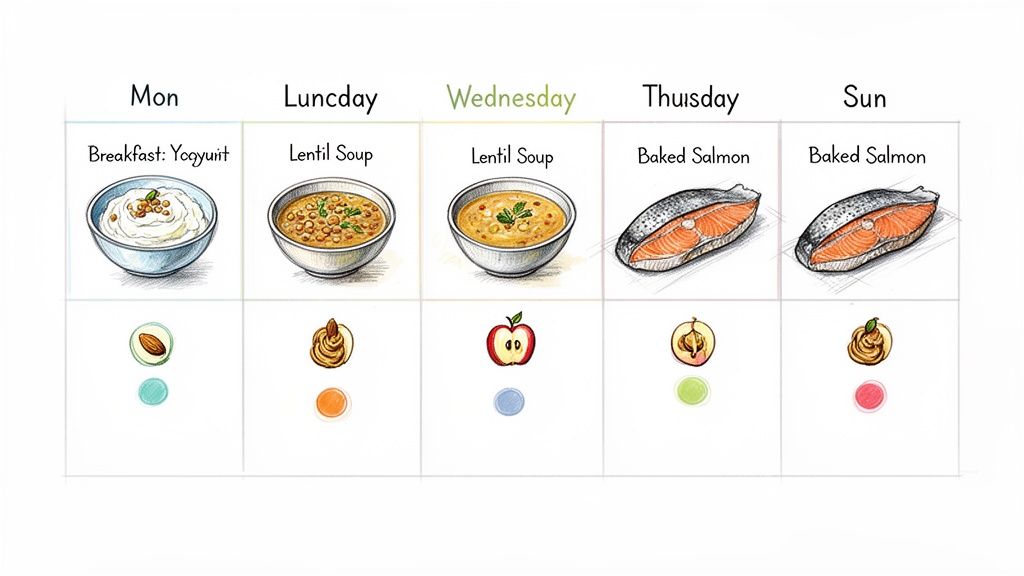
Sample Week Meal and Snack Matrix
To make planning even easier, here's a visual matrix of the week's meals. You can print this out or save it to your phone as a quick reference when you're at the grocery store or figuring out what to make next.
Remember, this is just a starting point. The best plan is the one you can stick with, so use this as a foundation to build meals you genuinely look forward to eating.
Navigating Side Effects and Plateaus with Smart Nutrition
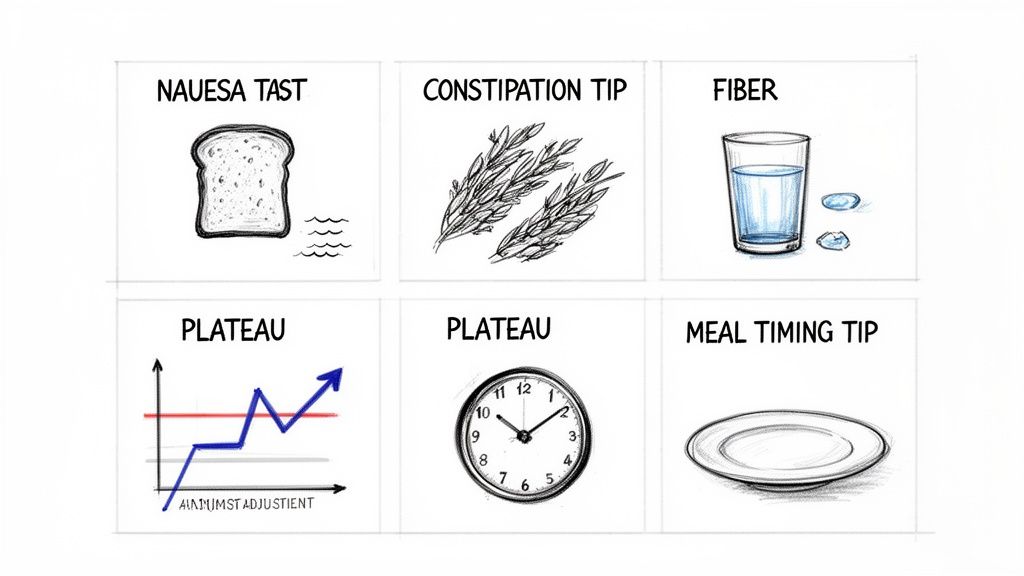
Even with the perfect plan, the road with GLP-1 medications isn't always smooth. Your body is going through some major changes, and hitting a few bumps is completely normal. The most common hurdles I see people face are GI side effects and the dreaded weight loss plateau.
The good news? Your GLP-1 diet plan is your secret weapon for troubleshooting these issues. By making smart, targeted tweaks to what you eat, you can soothe discomfort and get the scale moving again without feeling like you've failed. This is all about listening to your body's signals, not just sticking to a rigid plan.
Taming Nausea and Digestive Discomfort
Nausea is probably the number one side effect people report, especially when they first start their medication or go up in dose. It makes sense when you think about it—the medication is literally slowing down how quickly your stomach empties. A big, fatty meal that you used to handle just fine can now sit there for hours, leading to that queasy, uncomfortable feeling.
The key is to be gentle with your digestive system.
- Go for Smaller, More Frequent Meals: Instead of three big meals a day, think about five or six "mini-meals." This simple change prevents your stomach from getting too full at any one time.
- Stick to Bland, Easy-to-Digest Foods: On days when you're feeling off, turn to simple comforts like toast, rice, bananas, or a warm broth. It's best to steer clear of anything too greasy, spicy, or drenched in a heavy sauce.
- Separate Liquids from Solids: This is a big one. Try to avoid drinking a lot of fluid with your meals. Instead, sip on water between meals to stay hydrated without adding extra volume to your stomach.
Overcoming Constipation with Fiber and Fluids
While some people deal with loose stools, others find that the slowed digestion leads to constipation. This is where two pillars of your diet plan—fiber and hydration—become absolutely crucial.
Think of it this way: fiber adds the necessary bulk, and water helps everything move smoothly through your system.
Boosting Fiber Intake:
- Start with gentle, soluble fiber sources like oatmeal, barley, apples, and carrots.
- Slowly work in insoluble fiber from things like leafy greens, broccoli, and whole grains.
- Don't forget foods with a natural laxative effect, like prunes, pears, or kiwi.
One thing to remember: upping your fiber without also upping your water can actually make constipation worse. The two have to work together. Fiber is like a sponge; it needs water to do its job.
Breaking Through a Weight Loss Plateau
It happens to almost everyone. After weeks of steady progress, the scale just stops moving. That's a weight loss plateau. It's a sign that your body is adapting—your metabolism naturally slows a bit as you lose weight. The trick is not to panic, but to make a few strategic adjustments.
It’s worth noting that real-world weight loss on these medications is often less than what’s reported in clinical trials. In fact, about half of all users stop taking them within the first year because of side effects or cost, which often leads to regaining the weight. This just underscores why having a sustainable, long-term diet plan is so critical. You can learn more about this by looking into the long-term use data of GLP-1 agonists.
Here’s how to nudge the scale in the right direction again:
- Re-evaluate Your Protein: Are you really hitting your protein goals every day? Protein is essential for keeping the muscle mass that fuels your metabolism. If you're stuck in a chicken-and-rice rut, try swapping in some different sources, like fish, Greek yogurt, or lentils.
- Experiment with Meal Timing: Try shifting your largest meal of the day. Some people find that a protein-packed lunch and a lighter dinner works wonders for their energy and digestion.
- Hunt for Hidden Calories: Are you mindlessly grabbing snacks or dousing your salads in high-calorie dressings? Sometimes the culprits are things we don't even think about. Using a tool like the Superbloom app to track your meals for just a few days can bring these patterns to light, helping you make small changes that have a big impact.
Beyond the Scale: Tracking Progress and Adjusting Your Plan
While the number on the scale is one way to check in, it hardly tells the whole story. Real, lasting success on a GLP-1 diet plan shows up in your daily life, in little wins that have nothing to do with pounds or kilos. These are the changes that really prove you’re building sustainable health.
When you shift your focus to these "non-scale victories," you tap into a much more powerful source of motivation. It’s about celebrating the genuine, real-world improvements that make you feel better, which keeps you going long after the initial thrill of a smaller number on the scale wears off.
What to Track Besides Weight
Instead of getting hyper-focused on the scale, let's look at more meaningful signs of progress. These are often the first clues that your new habits are making a serious difference in how you feel every single day.
- The Fit of Your Clothes: Is that old pair of jeans feeling a little looser in the waist? Can you finally button that one shirt without it pulling? This is tangible proof that your body composition is changing.
- Your Daily Energy: Are you still hitting that dreaded 3 p.m. wall, or are you sailing through your afternoons? A well-designed eating plan gives you steady, sustained energy, making you feel more vibrant from morning to night.
- Power Over Cravings: How easy is it to walk past the breakroom donuts? Feeling like you're in the driver's seat, rather than being controlled by food cues, is a massive win for both your mental and physical health.
- Smoother Digestion: Feeling less bloated and more "regular" is a crystal-clear sign that your efforts to get enough fiber and water are paying off big time.
Tracking these wins is all about recognizing your forward momentum. It reframes the question from, "What did I lose?" to "What did I gain?" The answer is usually more energy, more confidence, and a feeling of being back in control.
Listen to Your Body and Make Smart Adjustments
The best health plan is one that adapts as you do. Rather than clinging to a rigid set of rules, the goal is to get better at listening to your body’s unique feedback. This skill is sometimes called interoceptive awareness—it’s simply the practice of noticing and responding to your internal cues like hunger, fullness, and fatigue.
This is absolutely crucial for making your results last. A significant number of people stop taking GLP-1s within the first year, and weight regain can happen if new habits aren't in place. The ability to maintain your progress really comes down to the routines you build now. Using psychology-driven tools and tracking these non-scale victories helps turn what you notice about your body into consistent action—a vital skill if you ever stop the medication. You can learn more about sustainable habit-building on GLP-1s.
Turn Your Observations into Action
Once you start tuning in, you’ll begin to see patterns. From there, you can make small, powerful tweaks to your plan. This habit-based approach is so much more effective than thinking you have to do everything perfectly.
Here’s a real-world example:
- Observation: You feel wiped out and ravenous around 3 p.m. every afternoon, even though you had a "healthy" lunch.
- Pattern Recognition: Looking back, you realize that on those days, your lunch was just a big salad with grilled chicken—not many carbs in sight.
- Small Adjustment: You decide to add a small serving (about ½ cup) of quinoa or a few slices of baked sweet potato to your lunch.
- Outcome: The extra fiber and complex carbs give you more sustained energy, completely wiping out that afternoon slump and the frantic search for a sugary snack.
This cycle—observe, recognize, adjust—is how you create a plan that’s truly yours. It’s not about being perfect; it’s about learning and refining as you go. By focusing on how you feel, you empower yourself to make smarter choices that will support your health for years to come.
Your GLP-1 Diet Plan Questions Answered
Starting a new way of eating is bound to bring up some questions. And when you're working with a powerful medication like a GLP-1, it's completely normal to want clear, confident answers. This section is all about tackling the most common questions that arise as you get started.
Think of this as your go-to guide for fine-tuning your plan. We'll cover simple, actionable answers that build on the strategies we've already discussed, helping you move forward without the guesswork.
What Foods Should I Absolutely Avoid?
I find it’s more helpful to think in terms of what might trigger side effects, rather than creating a long list of "forbidden" foods. The biggest culprits are usually highly processed, greasy, and sugary items. Things like fried chicken, heavy cream sauces, or fast-food burgers can really amplify nausea, mainly because GLP-1s are already slowing down your digestion.
Likewise, sugary drinks and candies don't offer much in the way of nutrition and won't help you feel satisfied, which kind of defeats the purpose. The goal is always to lean into whole, nutrient-rich foods. If a craving for something less-than-ideal pops up, try a small portion first and just pay attention to how your body feels afterward.
How Much Protein Do I Really Need Per Day?
A fantastic rule of thumb is to build every meal around a solid source of lean protein. Aiming for 20-30 grams per meal is a tried-and-true strategy that helps you hold onto valuable muscle mass as you lose weight. This steady protein intake also does wonders for satiety, working hand-in-hand with the appetite-suppressing effects of your medication.
To hit that target, focus on high-quality sources like:
- Chicken breast and fish
- Eggs and Greek yogurt
- Tofu and lentils
This simple habit will help you feel fuller for much longer, even when you're eating smaller portions.
Can I Drink Alcohol on a GLP-1 Medication?
It's wise to be cautious with alcohol. Alcohol can lower your blood sugar on its own, and since GLP-1s also have this effect, the combination can increase the risk of hypoglycemia (when blood sugar drops too low). On top of that, it can irritate your stomach, which might make side effects like nausea feel even worse.
If you choose to have a drink, moderation is key. Never drink on an empty stomach, and really pay attention to how you feel. The best advice is always to chat with your doctor about alcohol use before starting any new medication so you understand your personal risks.
What if I Have No Appetite at All?
A rock-bottom appetite is a very common side effect, but your body still needs fuel to function properly. On days like these, the trick is to shift your focus to nutrient-dense foods in small, frequent portions. It’s all about quality over quantity.
A protein shake, a cup of bone broth, a container of Greek yogurt, or even just a hard-boiled egg can provide essential nutrients without feeling like a heavy, overwhelming meal.
Try planning for 5-6 of these "mini-meals" or snacks throughout the day instead of trying to force three large meals you can't finish. Hydration is also a huge piece of the puzzle here, so keep sipping on water or herbal tea.
For more in-depth information and answers to other questions you might have, you can explore these additional GLP-1 resources to build on what you've learned.
Ready to stop guessing and start understanding your body's unique patterns? Superbloom is an AI-powered nutrition coach that helps you build sustainable habits without the stress of calorie counting. Get personalized feedback on your meals, connect with your body’s cues, and create a healthier relationship with food. Discover how to make changes that last at https://superbloomapp.com.