
8 Sustainable GLP 1 Diet Plans That Actually Work in 2026
Starting a GLP-1 medication like Ozempic, Wegovy, or Mounjaro marks a significant shift in your relationship with food. The medication's power to reduce hunger and enhance satiety is transformative, but it also raises a crucial question: What's the best way to eat now? The goal isn't just weight loss; it's about building lifelong, healthy habits that support your well-being long after the initial changes. Forget restrictive, short-term diets. The most effective GLP 1 diet plans are not rigid rules but flexible, sustainable frameworks that work with your body's new signals.
These plans prioritize nutrient density to nourish your body on fewer calories, support muscle mass which is vital during weight loss, and address the behavioral side of eating. Since GLP-1s can also impact blood sugar, understanding how to fuel your body is key. For individuals managing diabetes with GLP-1s, selecting the best low carb snacks for diabetics is crucial for stabilizing blood sugar and supporting weight loss. This guide explores eight powerful, evidence-based approaches to help you find a plan that feels less like a diet and more like a natural, intuitive way of eating for your new reality.
We will explore a variety of sustainable eating frameworks, including:
- Protein-First Eating Pattern
- Nutrient-Density Focused Meal Planning
- Anti-Inflammatory Mediterranean-Style Eating
- Mindful Eating with Emotional Awareness
Each option is presented with actionable tips, sample meals, and strategies to manage common side effects, empowering you to build a personalized approach that aligns with your goals and lifestyle.
1. Protein-First Eating Pattern
The Protein-First Eating Pattern is a strategic approach to meal planning that prioritizes protein as the central component of every meal and snack. This method isn't a restrictive diet with complicated rules; instead, it’s a simple, powerful principle designed to work synergistically with GLP-1 medications. By front-loading your meals with protein, you leverage the nutrient’s natural ability to promote satiety, which is then amplified by the appetite-suppressing effects of the medication. This combination helps preserve lean muscle mass during weight loss and stabilize blood sugar levels, preventing energy crashes that can lead to cravings.
This approach is particularly effective as part of GLP-1 diet plans because it directly addresses the reduced appetite many users experience. When you can only eat smaller portions, making every bite count becomes crucial. Prioritizing a high-quality protein source ensures you meet your body’s needs for muscle repair, hormone production, and overall function before you feel full.
How It Works in Practice
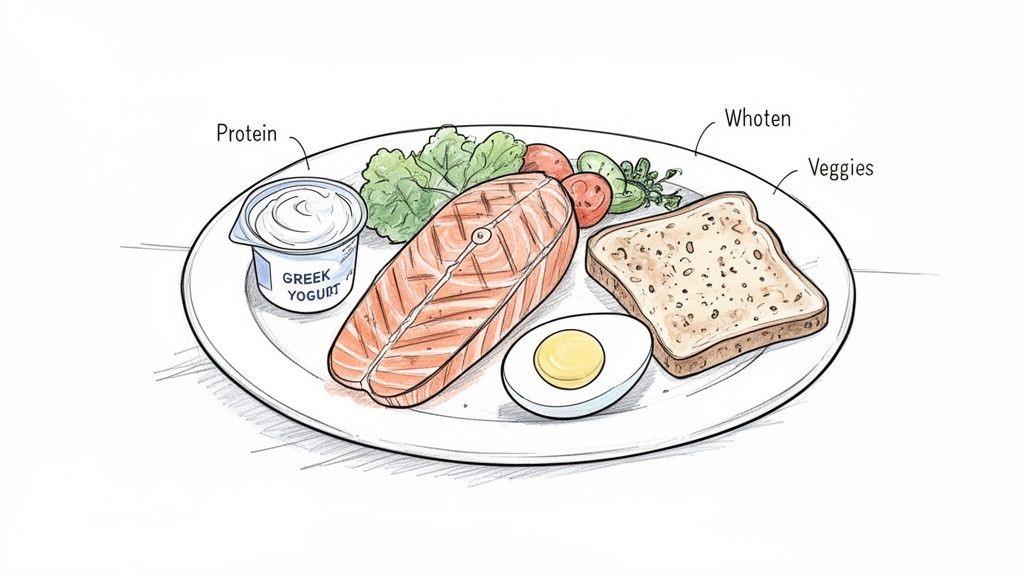
Implementing a protein-first strategy is straightforward. Before you eat, simply ask: "Where is my protein?" Build your meal around that element first, then add fiber-rich vegetables and complex carbohydrates.
- Breakfast: Instead of a carbohydrate-heavy pastry, choose a three-egg omelet filled with spinach and a side of whole-grain toast.
- Lunch: Center your meal around 4-6 ounces of grilled salmon or chicken, accompanied by a large serving of roasted broccoli and a small portion of quinoa.
- Dinner: Feature lean steak or tofu as the star, with a side of steamed green beans and a sweet potato.
- Snacks: Swap out chips or crackers for a cup of Greek yogurt with berries or a handful of almonds.
Key Insight: The goal is not to eliminate other macronutrients but to establish a nutritional hierarchy. Protein first, followed by fiber (vegetables), then complex carbs and healthy fats. This sequence maximizes fullness and nutrient absorption.
Actionable Tips for Success
To seamlessly integrate this pattern, focus on preparation and mindfulness.
- Batch-Prep Proteins: Cook a large batch of chicken breasts, hard-boil eggs, or prepare portions of lentils at the beginning of the week. This makes assembling protein-centric meals quick and easy.
- Track Patterns, Not Grams: Use a tool like Superbloom’s photo food log to visually track your meals. This helps you notice how different protein sources and amounts affect your satiety and energy levels without the tedious task of counting macros.
- Listen to Your Body: Pay attention to your hunger cues. You may find that a protein-rich breakfast keeps you full until lunch, reducing the need for mid-morning snacks and making your GLP-1 diet plan more sustainable.
2. Intuitive Eating with GLP-1 Awareness
Intuitive Eating with GLP-1 Awareness is a psychology-based approach that adapts the core principles of intuitive eating for individuals using GLP-1 medications. Traditional intuitive eating teaches you to honor your body's natural hunger and fullness cues. This adapted method recognizes that GLP-1 agonists fundamentally alter those signals, creating a new "normal" for appetite. Instead of fighting the medication's effects, this approach empowers you to listen to, understand, and trust your new satiety signals, fostering a healthier relationship with food based on internal cues rather than external diet rules.
This philosophy is a game-changer within GLP-1 diet plans because it addresses the mental and emotional aspects of eating. GLP-1s reduce "food noise" and cravings, creating a unique opportunity to heal from patterns like emotional eating or bingeing. By learning to navigate your reduced appetite with curiosity instead of restriction, you can build sustainable habits that last, making peace with food while the medication supports your physiological changes.
How It Works in Practice
The focus is on awareness and non-judgment. It involves tuning into your body’s modified signals and differentiating between physical hunger, emotional triggers, and habit.
- At a Celebration: You decide you truly want a piece of cake. You eat it slowly, savoring each bite, and notice you feel satisfied after only a few mouthfuls, so you stop without guilt.
- During a Stressful Workday: You feel an urge to snack. Instead of automatically reaching for chips, you pause and ask: "Am I hungry, or am I stressed?" You realize it's stress and decide to take a five-minute walk instead.
- At Dinnertime: You serve yourself a typical portion but find you are comfortably full halfway through the meal. You honor that signal and save the rest for later, rather than feeling obligated to clean your plate.
- Recognizing New Patterns: You observe that while you used to crave sweets in the afternoon, your GLP-1 medication has quieted that urge, and now a handful of nuts feels more satisfying.
Key Insight: This isn't about eating whatever you want, whenever you want. It's about building interoceptive awareness, learning to distinguish true physical hunger from emotional or habitual urges, and respecting your body's new, quieter signals for fullness.
Actionable Tips for Success
Developing this skill requires practice and compassionate self-observation.
- Practice the "Pause": Before eating, take three deep breaths and ask yourself, "What is my body telling me right now?" This simple habit helps separate mindless eating from mindful choices.
- Journal with Context: Use a tool like Superbloom’s photo food log to note your emotional state or situation when you eat. This reveals patterns, helping you identify triggers for non-hunger eating.
- Map Your New Cues: Actively observe how your hunger and fullness have changed. Does your stomach still rumble? Do you get a headache? Or is the first sign of hunger now a slight dip in energy? Knowing your new cues is critical for success with this GLP-1 diet plan.
3. Nutrient-Density Focused Meal Planning
Nutrient-Density Focused Meal Planning is an approach centered on maximizing the nutritional value of every calorie consumed. Instead of focusing on restriction, this strategy prioritizes whole, unprocessed foods packed with vitamins, minerals, fiber, and antioxidants. For individuals on GLP-1 medications, who often experience a significant reduction in appetite and portion sizes, this method ensures the body receives the essential micronutrients it needs to thrive, even with a lower overall food intake. This helps prevent potential nutritional deficiencies and supports energy levels, mood, and metabolic health.
This strategy is a cornerstone of effective GLP-1 diet plans because it shifts the focus from "eating less" to "eating better." When your capacity for food is limited, making each bite count is paramount. Choosing nutrient-dense foods over processed, "empty-calorie" options provides the building blocks for cellular repair, immune function, and overall vitality, helping you feel your best as you lose weight. It naturally promotes satiety and stable blood sugar, complementing the action of the medication.
How It Works in Practice
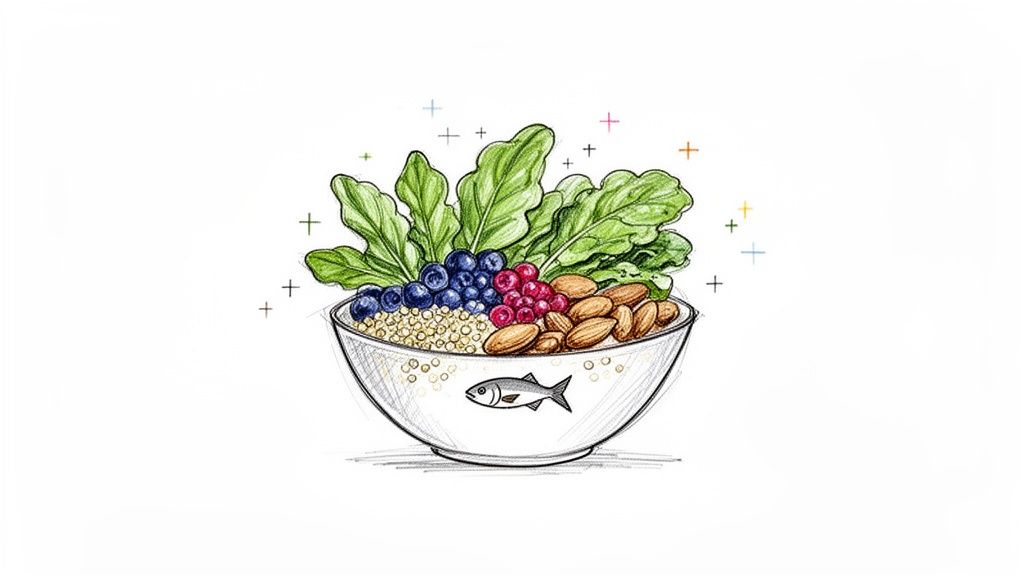
Implementing a nutrient-dense approach means building your meals around a colorful variety of whole foods. The goal is to fill your plate with foods that offer the most nutritional bang for their buck.
- Breakfast: Start with two scrambled eggs cooked with spinach and mushrooms, served with a side of mixed berries and a slice of whole-grain toast.
- Lunch: Assemble a vibrant quinoa bowl with roasted broccoli, chickpeas, and a lemon-tahini dressing, topped with pomegranate seeds for an antioxidant boost.
- Dinner: Feature a fillet of wild-caught salmon alongside steamed asparagus and a small baked sweet potato.
- Snacks: Opt for an apple with a handful of almonds or a small bowl of plain Greek yogurt with walnuts.
Key Insight: The foundation of this approach is variety and color. Aim to "eat the rainbow" by including foods from different color groups each day to ensure you're getting a wide spectrum of phytonutrients and vitamins.
Actionable Tips for Success
To make nutrient-dense eating a sustainable habit, focus on smart preparation and mindful observation.
- Prep Veggies in Batches: Wash, chop, and store a variety of vegetables like bell peppers, broccoli, and carrots at the start of the week. This makes it easy to add them to any meal.
- Identify Nutrient Gaps: Pay attention to nutrients that can be harder to get, such as iron, vitamin B12, and calcium. Intentionally include sources like lean red meat, leafy greens, fortified foods, and dairy or dairy alternatives.
- Log and Learn with Photos: Use a tool like Superbloom’s photo food log to visually track your intake. You can then connect how you feel (energy, digestion, mood) to your food choices, identifying which nutrient-dense meals help you feel your best without counting a single calorie.
4. Structured Meal Timing with Flexibility Windows
Structured Meal Timing with Flexibility Windows is a dietary approach that establishes a consistent daily eating window but allows for flexible meal timing within that period. This strategy moves away from rigid "eat every three hours" rules and instead encourages you to align meals with your body's actual hunger signals, which are often altered by GLP-1 medications. By creating a predictable framework, you help regulate your circadian rhythm and stabilize blood sugar, while the built-in flexibility respects your body’s changing needs.
This method is highly effective for GLP-1 diet plans because it acknowledges that appetite suppression isn't constant. Some days you might need three meals, while on others, two meals might feel more than sufficient. This structure provides a reliable container for your eating habits, preventing mindless grazing or reactive late-night eating, without forcing you to eat when you are not genuinely hungry. It offers predictability without the pressure of a strict schedule.
How It Works in Practice
The core principle is to define your eating window, typically 10-12 hours, and then listen to your body to decide when to eat within it. This helps you reconnect with your natural hunger and satiety cues.
- Weekday Window (e.g., 7 AM to 7 PM): You might eat a protein-rich breakfast around 8 AM. On a busy day with strong GLP-1 effects, you may not feel true hunger again until 2 PM for lunch. You'd then have dinner around 6:30 PM, comfortably within your window.
- Weekend Adjustment (e.g., 10 AM to 9 PM): Social plans might shift your schedule. You can adjust your window to start later, perhaps with a brunch around 11 AM and a later dinner, without feeling like you've gone "off track."
- Symptom-Driven Flexibility: If you experience nausea in the morning, your first meal might be later in the day. The structure allows this adaptation without guilt.
Key Insight: This is not intermittent fasting; the focus isn't on calorie restriction or fasting duration. The goal is to create a consistent daily rhythm that supports your metabolism while honoring the appetite signals your GLP-1 medication helps regulate.
Actionable Tips for Success
Success with this approach comes from tuning into your body and planning ahead.
- Establish Your Anchor Window: Start with a 12-hour window that fits your lifestyle, like 8 AM to 8 PM. Stick to it for a week to create consistency.
- Use Check-Ins, Not Clocks: Instead of eating because it's "lunchtime," use a tool like Superbloom to set reminders to check in with your hunger levels. This helps differentiate true hunger from habit or boredom.
- Prep for Your Window: Have healthy, easy-to-prepare meal components ready. This ensures that when hunger does strike, you can make a nourishing choice quickly instead of reaching for convenience foods.
- Track Energy Patterns: Notice how your energy levels correspond to your meal timing. You might discover that a later first meal or a smaller dinner improves your sleep and next-day energy, helping you refine your personal schedule.
5. Anti-Inflammatory Mediterranean-Style Eating
The Anti-Inflammatory Mediterranean-Style Eating approach is a flavor-forward, pleasure-based way of eating inspired by the traditional dietary patterns of regions like Greece and Italy. Instead of focusing on restriction, it emphasizes whole foods rich in healthy fats, lean proteins, fiber, and powerful phytonutrients that help combat systemic inflammation. This is a critical benefit for many GLP-1 users, as conditions like insulin resistance and obesity are often linked to chronic low-grade inflammation.
This approach is highly compatible with GLP-1 diet plans because it naturally supports satiety and stable blood sugar through its balanced composition. The emphasis on healthy fats from olive oil, nuts, and fish, combined with fiber from vegetables and legumes, complements the medication’s effects by slowing digestion and promoting a prolonged feeling of fullness. It shifts the focus from what to avoid to what to enjoy, making healthy eating a sustainable and satisfying lifestyle.
How It Works in Practice
Adopting a Mediterranean-style plan involves building meals around a foundation of plant-based foods and healthy fats, with moderate amounts of lean protein. A cornerstone of this approach is integrating healthy fats, and you can learn more about the benefits of the Olive Oil Mediterranean Diet.
- Breakfast: Start with Greek yogurt topped with fresh berries, a handful of walnuts, and a drizzle of honey.
- Lunch: Assemble a large salad with mixed greens, chickpeas, cucumbers, tomatoes, and feta cheese, dressed with extra virgin olive oil and lemon juice.
- Dinner: Enjoy a fillet of baked salmon seasoned with herbs, served alongside roasted asparagus and a small portion of farro.
- Snacks: Opt for a handful of olives, a few almonds, or a piece of fresh fruit like an orange or pear.
Key Insight: This is not a diet of deprivation but one of abundance. The goal is to crowd out highly processed, pro-inflammatory foods by filling your plate with delicious, nutrient-dense, and satisfying alternatives.
Actionable Tips for Success
Integrating this lifestyle is about building your pantry and your palate.
- Stock Your Staples: Keep your kitchen supplied with high-quality extra virgin olive oil, canned legumes (like chickpeas and lentils), whole grains, and a variety of herbs and spices.
- Embrace Simple Cooking: Focus on simple preparation methods like grilling, roasting, and sautéing with olive oil. These techniques enhance the natural flavors of whole foods without adding unhealthy fats.
- Track Your Well-being: Use a tool like Superbloom’s photo food log to observe how your body responds. Note changes in energy levels, digestion, and mood as you incorporate more anti-inflammatory foods, helping you identify what makes you feel best.
6. Gut-Health Optimized Eating (Microbiome-Focused)
Gut-Health Optimized Eating is a dietary approach centered on nourishing the trillions of microbes in your digestive tract. This isn't a restrictive diet but rather a strategy to promote gut flora diversity through fiber, prebiotics, and probiotics. For individuals on GLP-1 medications, who sometimes experience gastrointestinal side effects like nausea or changes in bowel regularity, focusing on gut health can be particularly beneficial. A healthy microbiome is linked to improved digestion, stronger immunity, better mood, and more efficient metabolism, creating a supportive internal environment for your weight loss journey.
This strategy is one of the most personalized GLP-1 diet plans because it acknowledges that everyone’s gut is unique. By prioritizing foods that feed beneficial bacteria, you can mitigate common medication side effects and enhance overall well-being. The goal is to build a resilient digestive system that works in harmony with the effects of your GLP-1 medication, not against them.
How It Works in Practice
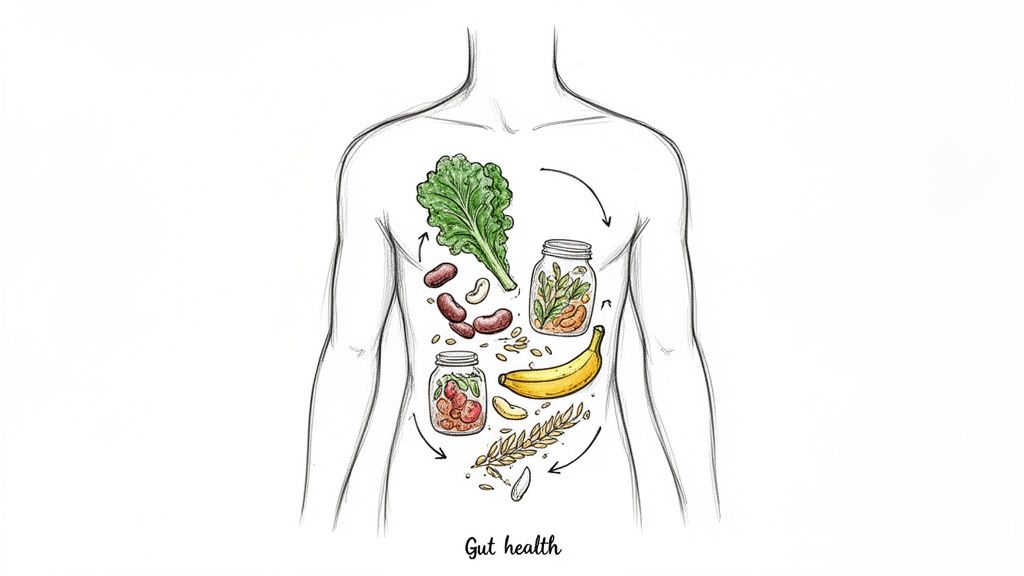
Implementing a gut-focused plan means intentionally incorporating a wide variety of plant-based and fermented foods into your daily meals. The aim is diversity to feed a wider range of beneficial microbes.
- Breakfast: Start with overnight oats made with kefir, topped with berries, chia seeds, and a sprinkle of ground flaxseed.
- Lunch: Prepare a colorful lentil salad with roasted root vegetables, leafy greens, and a tablespoon of sauerkraut on the side.
- Dinner: Enjoy a tempeh stir-fry packed with a mix of vegetables like broccoli, bell peppers, and bok choy, served with a side of kimchi.
- Snacks: Opt for an apple with almond butter or a small cup of plain yogurt with a drizzle of honey.
Key Insight: The foundation of this approach is plant diversity. Aim to eat 30+ different plant foods per week. This includes vegetables, fruits, whole grains, legumes, nuts, and seeds, each feeding different beneficial gut bacteria.
Actionable Tips for Success
To adopt this eating style effectively, focus on gradual introduction and mindful observation.
- Introduce Fiber Slowly: If you're not used to a high-fiber diet, increase your intake gradually to allow your digestive system to adapt and avoid bloating or discomfort.
- Experiment with Fermented Foods: Try different sources of probiotics like yogurt, kefir, kombucha, sauerkraut, and miso to see which ones you enjoy and tolerate best.
- Track Your Body's Response: Use a tool like Superbloom’s photo food journal to log your meals and make notes on digestive symptoms like bloating, energy levels, and regularity. This helps you identify which specific foods make you feel your best and which might be personal triggers.
7. Flexible Whole-Food Swaps and Substitution Method
The Flexible Whole-Food Swaps method is a practical approach focused on upgrading your current meals rather than overhauling your entire diet. This strategy emphasizes gradual, sustainable changes by identifying opportunities to substitute processed ingredients with more nutrient-dense, whole-food alternatives. It’s a non-restrictive framework that respects your existing food preferences and routines, making it exceptionally effective for those who find traditional diet plans too rigid.
This method works in harmony with GLP-1 medications because it allows for incremental adjustments that don’t feel overwhelming, which is crucial when your appetite and energy levels may be fluctuating. By making simple, high-impact swaps, you can enhance the nutritional quality of your favorite meals, increasing protein and fiber content to maximize satiety and support stable blood sugar levels. This makes your GLP-1 diet plan feel less like a diet and more like a natural evolution of your eating habits.
How It Works in Practice
Implementing this strategy starts with identifying one or two simple swaps within meals you already enjoy. The goal is to boost nutrition without sacrificing the familiarity or satisfaction of your go-to dishes.
- Breakfast: Swap your usual sweetened yogurt for plain Greek yogurt and add fresh berries for natural sweetness and fiber.
- Lunch: Instead of a sandwich on white bread, use whole-grain bread and add a handful of spinach for extra nutrients.
- Dinner: When making a pasta dish, replace half the white pasta with chickpea or lentil pasta to increase protein and fiber.
- Snacks: Instead of grabbing pretzels, choose a small apple with a tablespoon of almond butter for a more balanced option.
Key Insight: This method is about progress, not perfection. A single smart swap in an otherwise unchanged meal still moves you toward your goals, making healthy eating feel achievable and less disruptive to your lifestyle.
Actionable Tips for Success
To integrate this method effectively, focus on observation and gradual implementation.
- Identify Your Candidates: Use a tool like Superbloom’s photo food log to review your typical meals. Pinpoint the easiest, highest-impact swaps you can make, such as switching from a sugary soda to sparkling water.
- Start with One Swap per Meal: Don’t try to change everything at once. Introduce one new swap for breakfast, one for lunch, and one for dinner. Once those feel natural, you can look for new opportunities.
- Prioritize Texture and Taste: Choose substitutions that mimic the texture and satisfaction of the original ingredient. For example, using mashed cauliflower mixed with mashed potatoes can be more appealing than a complete replacement.
8. Mindful Eating with Emotional Awareness and Trigger Identification
Mindful Eating with Emotional Awareness is a behavioral approach that goes beyond what you eat and delves into why you eat. This strategy recognizes that for many, food is intertwined with emotions, stress, and ingrained habits. It’s not a diet in the traditional sense, but a practice of paying full attention to your eating experience, an invaluable tool for those on GLP-1 medications who are creating new relationships with food. By identifying emotional triggers, you can untangle eating from its role as a coping mechanism and build healthier responses.
This method is crucial within GLP-1 diet plans because the medication physically reduces appetite, but it doesn't erase the emotional or psychological cues that previously led to eating. GLP-1 therapy creates a unique window of opportunity; with hunger signals quieted, you can more clearly observe and address the underlying reasons for eating, such as boredom, stress, or a need for comfort. This shifts the focus from battling cravings to understanding them, leading to more sustainable, long-term change.
How It Works in Practice
Implementing this approach involves becoming a detective of your own eating habits. The goal is to create a pause between an urge and an action, allowing you to make a conscious choice.
- Work Stress: You notice an intense craving for a sugary snack around 3 p.m. Instead of automatically reaching for it, you pause and realize it’s linked to a stressful deadline. You decide to take a five-minute walk to clear your head instead.
- Evening Boredom: You find yourself mindlessly grazing after dinner while watching TV. You identify this pattern as a response to boredom and decide to take up an engaging hobby like knitting or listening to a podcast.
- Celebration Cues: Social gatherings often trigger overeating. Instead of focusing solely on food, you plan a specific celebratory activity, like playing a game or going for a walk with friends, to make that the central point of the event.
- Post-Work Ritual: You used to decompress after work with a large, quick meal. Now, you transform this into a mindful ritual by sitting at a table without distractions and savoring a smaller, nutrient-dense meal.
Key Insight: This practice is not about restriction or judgment. It's about building awareness and self-compassion. The goal is to understand your triggers so you can create new, more supportive habits that align with your health goals.
Actionable Tips for Success
To integrate emotional awareness into your routine, focus on observation and developing alternative strategies.
- Log with Context: Use a tool like Superbloom’s daily check-ins to note your mood, stress level, and the events preceding a meal or snack. This helps you connect the dots between your feelings and your food choices.
- Pause and Ask: Before eating, take a deep breath and ask yourself, "Am I physically hungry or emotionally hungry?" Physical hunger is gradual and open to various foods, while emotional hunger is often sudden and craves something specific.
- Develop a Coping Toolkit: Create a list of 3-5 non-food activities to turn to when you feel an emotional eating urge. This could include calling a friend, journaling, stretching, or listening to a favorite song.
- Track Your Patterns: Pay close attention to what emotions precede your eating urges and which coping strategies are most effective. This self-knowledge is key to breaking old cycles and making your GLP-1 diet plan work for you long-term.
GLP-1 Diet Plans: 8-Point Comparison
Building Your Personal Blueprint for Long-Term Success
The journey with GLP-1 medication is more than just a prescription; it's a profound opportunity to redefine your relationship with food and build a foundation for lasting health. We’ve explored eight powerful, non-restrictive GLP-1 diet plans designed not as rigid rules, but as flexible frameworks. Moving forward, the goal is not to perfectly adhere to a single plan but to intelligently combine elements from each to create a personalized strategy that works for your body, your lifestyle, and your unique goals.
The common thread woven through the Protein-First approach, the Anti-Inflammatory Mediterranean style, and the Gut-Health Optimized plan is the emphasis on nutrient quality over calorie quantity. Your body's signals are changing, and this is your chance to tune into its new needs. Prioritizing lean proteins, fiber-rich vegetables, and healthy fats isn't just about managing side effects; it's about providing the essential building blocks your body needs to thrive as it re-calibrates.
From Framework to Daily Practice
The most significant takeaway is that these frameworks are not mutually exclusive. Think of them as tools in a toolbox, ready to be used as needed.
- You can start with structure and transition to intuition. Many people find success by beginning with a more structured approach, like the Protein-First or Nutrient-Density Focused plans, to establish a reliable routine. As you become more attuned to your body's new hunger and fullness cues, you can naturally layer in the principles of Intuitive Eating.
- Behavioral strategies amplify nutritional choices. A perfect meal plan can be derailed by old habits. This is where Mindful Eating and the Flexible Swaps method become invaluable. Recognizing emotional triggers or using simple substitution techniques transforms your plan from a list of foods into a sustainable set of skills.
- Adaptation is the key to consistency. Your body's needs may change. One week, focusing on anti-inflammatory foods might be critical to manage joint pain. The next, structured meal timing might be essential to navigate a busy work schedule. The best GLP-1 diet plan is the one that evolves with you.
Key Insight: True success isn't found in a static diet plan, but in developing the self-awareness to adapt your nutritional strategy based on your body's real-time feedback. This is the shift from "dieting" to creating a sustainable, nourishing lifestyle.
Your Actionable Path Forward
Instead of feeling overwhelmed by choices, start small and build momentum. Your immediate next step isn’t to overhaul your entire life overnight. It is to choose one strategy from this guide that resonates most with your current challenges and focus on implementing it for the next week.
- Select Your Starting Point: Do you struggle most with satiety? Begin with the Protein-First Eating Pattern. Are you battling bloating and digestive discomfort? Start with the Gut-Health Optimized Eating plan.
- Observe Without Judgment: The most powerful tool at your disposal is observation. Notice how you feel 30 minutes after a meal. What was your energy level like? Your mood? Your digestive comfort? This data is crucial for making informed adjustments.
- Journal Your Journey: This process of observation is amplified through journaling. Documenting your choices, your body’s responses, and your emotional state creates a feedback loop that accelerates learning. It helps you connect the dots between what you eat and how you feel, turning abstract concepts into concrete, personal insights.
Ultimately, navigating nutrition on a GLP-1 medication is a unique chance to hit the reset button. By moving beyond the restrictive mindset of traditional diets and embracing a flexible, nutrient-focused, and self-aware approach, you are not just managing a medication; you are building a resilient, intuitive, and enjoyable relationship with food that will serve your health for years to come. This is your personal blueprint for success.
Ready to stop guessing and start understanding what truly works for your body? The Superbloom app is designed to help you connect the dots between your meals, mood, and symptoms, making it the perfect companion for crafting your personalized GLP-1 diet plan without the stress of calorie counting. Discover your unique patterns and build sustainable habits by visiting Superbloom today.