
A Guide to glp 1 tracking: Optimize Your Journey
Starting a GLP-1 often comes with two very different feelings at once. There’s hope that your appetite might finally feel quieter, and there’s uncertainty about what your body will do once the medication is on board.
Individuals don’t need more hype. They need a way to tell the difference between “normal adjustment” and “something I should pay attention to.” They need to know whether low appetite is helping or setting them up to under-eat, whether nausea is random or linked to a meal pattern, and whether cravings are disappearing or changing shape.
That’s where glp 1 tracking becomes useful. Not as a perfection project. Not as another spreadsheet to maintain. As a practical way to notice what’s changing in your body, your eating, and your emotional patterns while the medication is changing the volume on hunger and reward.
Why Consistent GLP-1 Tracking is Your Secret Weapon
GLP-1s can be effective, but they don’t run your daily decisions for you. They can reduce appetite, slow gastric emptying, and change how rewarding certain foods feel. They can’t tell you why you skipped protein all day, why your nausea hits after restaurant meals, or why stress still pulls you toward grazing at night.
That’s why tracking matters so much.
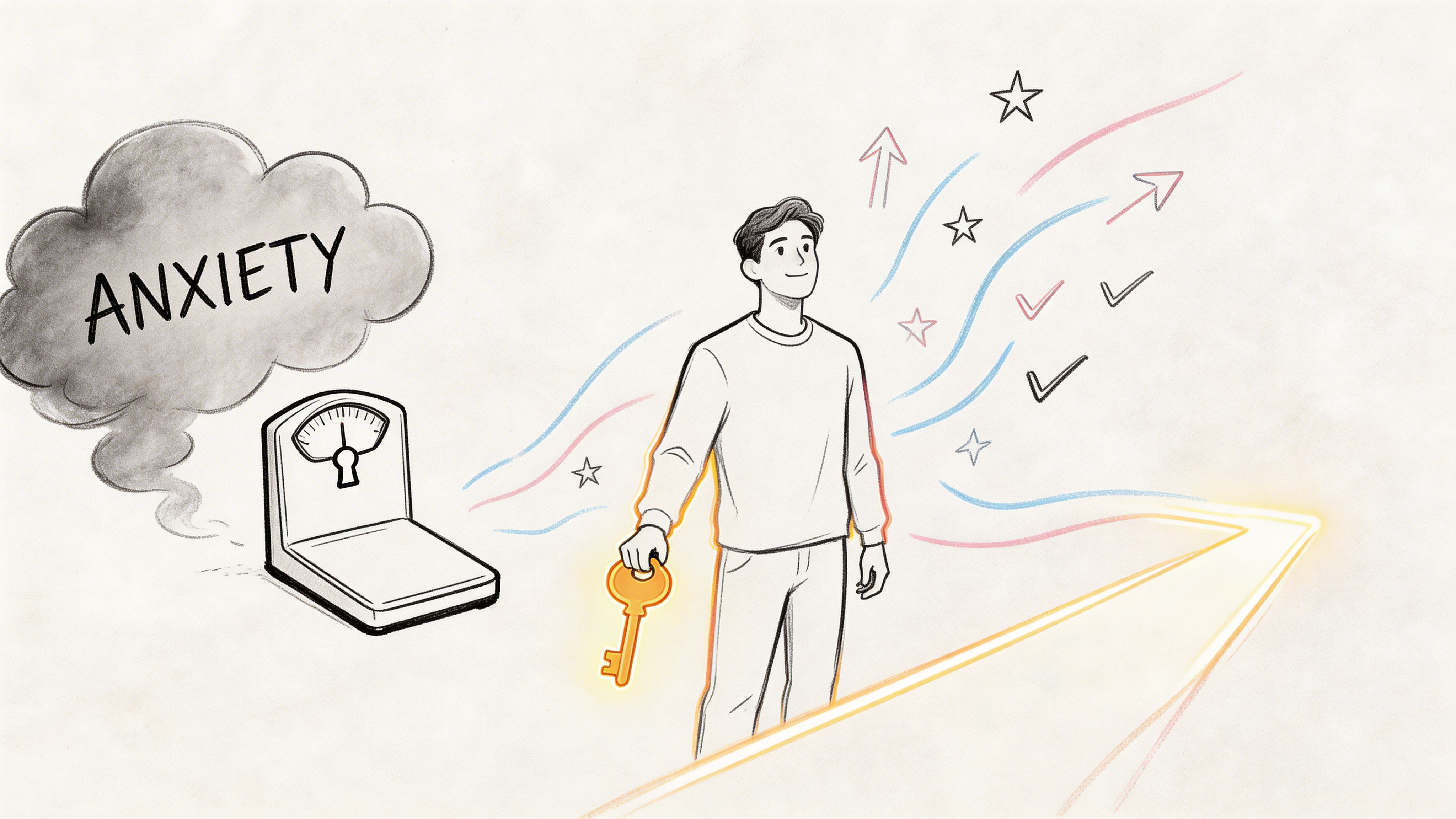
Tracking protects your follow-through
A lot of people start strong and then get knocked off course by side effects, cost, or confusion about what’s happening. Real-world data shows that about half of patients on GLP-1s discontinue within one year, while persistence improved to 63% at one year for certain new starters in early 2024. The same analysis points to side effects and cost as top reasons people stop (HealthVerity real-world GLP-1 trends).
Tracking won’t fix cost. It can reduce the chaos that often makes people feel the medication “isn’t working” or “isn’t worth it.”
When you log symptoms, appetite, hydration, meals, and dose timing, you give yourself something most frustrated patients don’t have. A record. That record helps you spot whether nausea happened after long gaps without food, whether fatigue showed up on low-intake days, and whether your hardest hours are physiological, emotional, or both.
Practical rule: If you’re going to invest time, money, and energy into a GLP-1, collect enough information to understand how your body responds to it.
Good tracking makes medical appointments better
Many people arrive at follow-ups with a vague summary. “I’ve been kind of nauseous.” “My appetite is weird.” “Some days I eat almost nothing.” That’s understandable, but it doesn’t give your clinician much to work with.
A better summary sounds like this:
- Dose pattern: “Symptoms increased the day after my injection.”
- Food pattern: “High-fat meals seem to trigger more nausea.”
- Hydration pattern: “I feel lightheaded on days I barely drink.”
- Function pattern: “I’m less hungry, but my energy drops by late afternoon.”
That kind of pattern recognition can make medication adjustments, food changes, and symptom management much more precise. If you’re also monitoring labs or thinking about how to discuss them with your provider, this guide to blood test monitoring for GLP-1 medications like Ozempic and Wegovy is a useful companion to symptom and habit tracking.
Tracking shifts you from passive to active
The most successful GLP-1 users usually aren’t the ones who chase the fastest scale change. They’re the ones who learn their own response pattern early.
They notice things like:
- Fullness arrives faster
- Certain foods feel harder to tolerate
- Stress eating may persist even when hunger drops
- Undereating can create a rebound later
That’s the key value of glp 1 tracking. It turns the medication from something that happens to you into something you work with.
Building Your Comprehensive Tracking Dashboard
Many individuals only track one thing. Usually weight. That’s better than nothing, but it misses the bigger story.
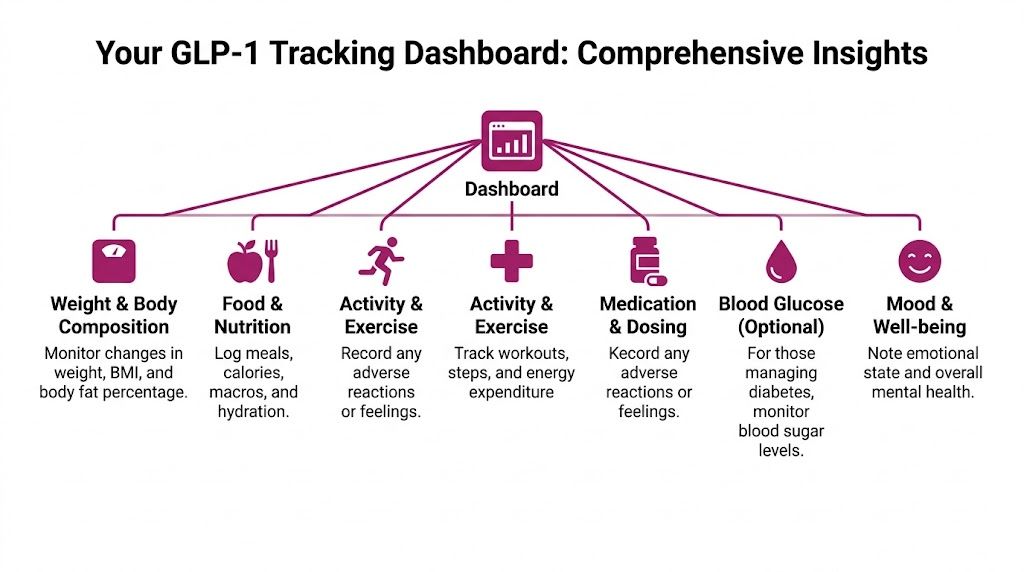
A strong dashboard includes physical response, nutrition and appetite signals, and emotional or behavioral cues. You don’t need to track every detail forever. You do need a clear enough picture to connect your symptoms and your choices.
Physical metrics worth logging
Start with the basics your body is already telling you.
Medication timing and dose
Write down when you took your injection and any dose change. This helps you match symptom patterns to the day of the week and to titration phases.Side effects
Nausea, constipation, reflux, bloating, headache, burping, low energy, and early fullness are all useful to record. What matters most is context. What did you eat? How long had it been since your last meal? Did symptoms hit right after the dose or later?Weight and body trend
Weight can be one marker, but it shouldn’t be the only marker. A flat week doesn’t automatically mean the medication failed. Appetite changes, meal regularity, energy, and symptom control often tell you more about whether the process is working.Energy and physical function
Note whether you feel steady, drained, alert, or foggy. People sometimes assume fatigue is “just the medication” when the cause is low intake, low fluids, or disrupted sleep.
Nutrition and appetite signals that matter
Many people then discover why their results feel inconsistent.
A GLP-1 may make you less hungry, but it doesn’t automatically make your eating pattern balanced. You can still eat too little protein, too little fiber, or rely on foods that sit poorly.
Consider logging:
| What to track | Why it matters |
|---|---|
| Hunger before meals | Helps you tell true hunger from habit eating |
| Fullness after meals | Shows whether portions need to shrink or slow down |
| Protein-rich foods | Helps protect nourishment when appetite is low |
| Fiber-rich foods | Can support digestion and meal quality |
| Hydration | Low fluids often make side effects feel worse |
| Food aversions | Helps you stop forcing foods your body currently resists |
| Cravings | Reveals whether the pull is physical, emotional, or situational |
One often overlooked area is non-food reward behavior. GLP-1s have shown benefits beyond weight loss, including reduced alcohol consumption, and researchers note that these drugs can affect reward pathways in the brain (Pharmacy Times on unexpected benefits and limits of GLP-1 research). If alcohol, late-night snacking, or repetitive grazing changes after starting treatment, that belongs in your tracker too.
Track cravings with context, not shame. “Wanted sugar at 4 p.m. after a stressful meeting” is more useful than “bad eating day.”
Emotional and behavioral patterns
This category often explains the part medication alone can’t solve.
Mood and stress
If your appetite is lower but you still find yourself reaching for food when overwhelmed, lonely, bored, or overstimulated, that’s important information. The medication may soften hunger. It may not erase coping habits.
Sleep quality
Poor sleep can make appetite cues feel noisier, lower frustration tolerance, and reduce your ability to plan meals. A simple “slept well” or “woke up often” note is enough.
Emotional eating triggers
Notice when eating happens without much physical hunger. Was there conflict? Work pressure? Social pressure? A chaotic schedule? These patterns are often more consistent than people expect.
A Practical Guide to Daily and Weekly Tracking
The best tracking routine is the one you’ll consistently follow. That usually means a quick daily check-in and a short weekly review. Not an all-day logging project.
A simple rhythm works well. Spend about two minutes in the morning and three minutes in the evening. Then set aside one brief weekly review to look for patterns.
What to check daily
The daily goal isn’t perfection. It’s recall. You want to catch details while they’re still fresh.
Morning is for setup.
Log your dose day if relevant, note how you slept, and set one eating intention. That might be “eat protein early,” “sip fluids regularly,” or “don’t wait until I’m nauseous to eat.”
Evening is for reflection.
Look at what happened. Did you have side effects? Did you eat enough to feel steady? Did cravings hit at a predictable time or after a specific emotion?
Clinical guidance also matters here. GLP-1 dosing is typically titrated by escalating every 4 weeks, and insufficient protein intake below 1.6g/kg body weight and hydration below 3L/day can limit effectiveness, which is why those habits are worth tracking alongside symptoms (PrivateDoc guidance on GLP-1 results and common mistakes). If you need a plain-language reference for discussing dosing structure with your medical team, this GLP-1 dosing guide can help you understand the schedule you’re following.
Sample GLP-1 Daily Tracking Journal
| Category | Morning Prompt (2 min) | Evening Prompt (3 min) |
|---|---|---|
| Medication | Is today an injection day or dose-change period? | Did I notice any symptoms that may relate to timing or dose? |
| Physical symptoms | How does my stomach feel this morning? | When did nausea, bloating, reflux, or constipation show up today? |
| Energy | What’s my starting energy level? | When did my energy dip or improve? |
| Appetite | Do I feel hungry, neutral, or full on waking? | When did I feel true hunger today, if at all? |
| Meals | What’s one meal I want to make easier on digestion? | Which meal sat well, and which one didn’t? |
| Protein and hydration | What’s my plan for protein and fluids today? | Did I get enough protein-rich food and steady hydration? |
| Mood and stress | What’s my emotional baseline this morning? | Did stress, boredom, or overwhelm affect my eating? |
| Cravings | Am I anticipating any tough time of day? | What cravings came up, and what was happening around them? |
What to review weekly
Your weekly review is where glp 1 tracking becomes useful instead of merely detailed.
Look back and ask:
What repeated itself?
A single bad day can be random. Three similar days usually mean something.What helped?
Which meals sat well? Which routines reduced symptoms? Which timing made your day easier?What needs adjustment?
This could be meal size, meal timing, hydration, food texture, or how you handle stressful parts of the day.
You’re not grading yourself. You’re collecting clues.
A weekly review is also the right time to prepare for your clinician. Bring patterns, not just impressions.
Turning Observations into Actionable Insights
Raw tracking data can become noisy fast. The skill is learning how to read it without overreacting to every symptom or every weigh-in.
That matters even more now that GLP-1 use is common enough that many adults are navigating it alongside work, family life, and other health issues. In 2024, 26.5% of U.S. adults with diagnosed diabetes used GLP-1 injectables, and use peaked at 33.3% among adults ages 50 to 64, according to the CDC’s NHANES data brief on GLP-1 injectable use. People in that age range are often managing multiple variables at once, which makes personalized tracking more valuable, not less.
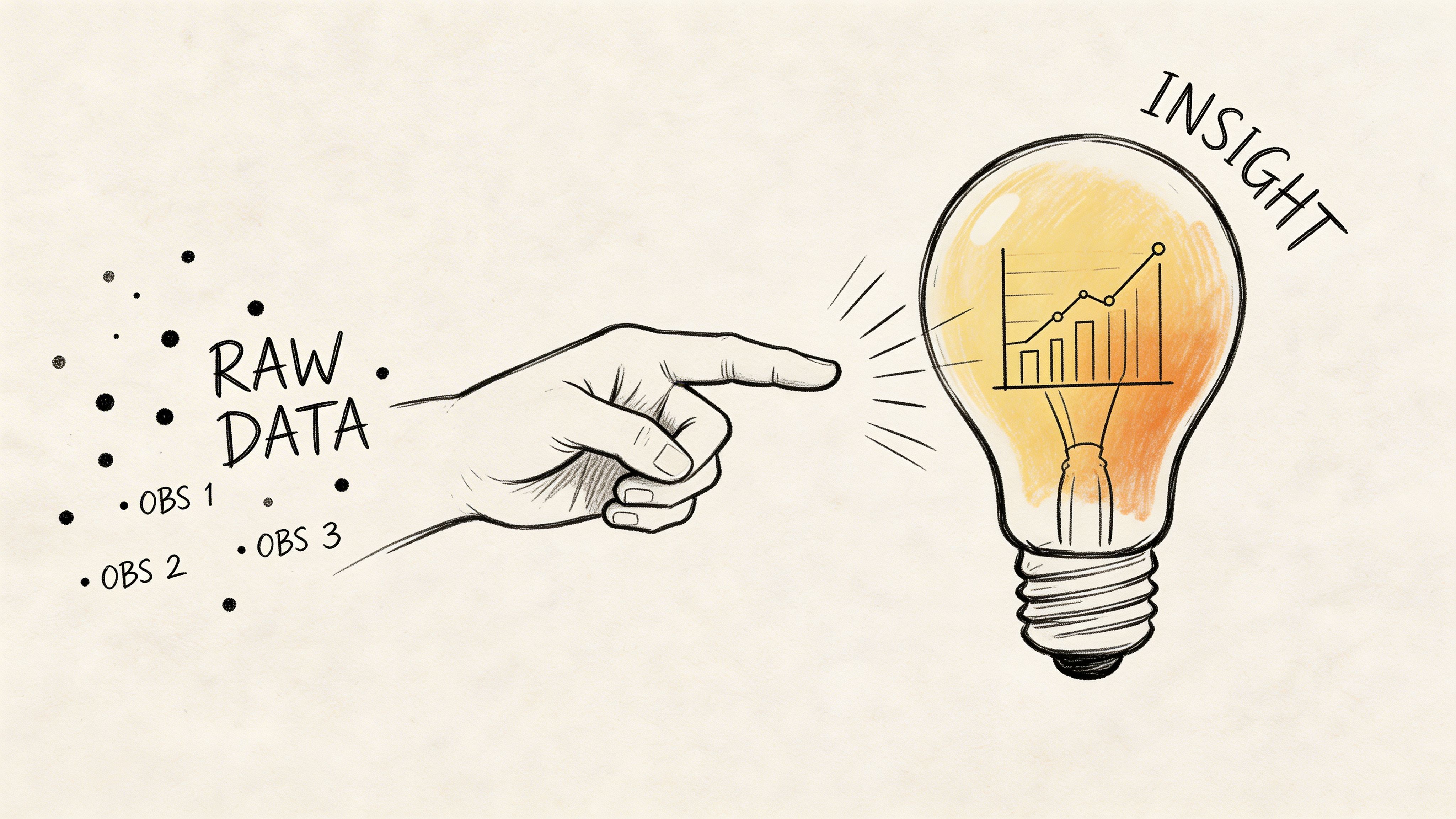
Look for clusters, not isolated events
A useful pattern usually includes more than one signal.
For example:
- Symptom plus food choice
- Craving plus time of day
- Fatigue plus low intake
- Reflux plus meal size or speed
- Constipation plus low fluids and disrupted routine
One symptom on one day rarely tells the full story. A cluster does.
Pattern one
You notice nausea is worse on days when you eat very little early, then try to catch up with a heavier dinner.
Possible insight: long gaps without eating may be making your stomach feel less settled, and large evening meals may be hitting too hard.
Possible action: try smaller, simpler meals earlier in the day and reduce the pressure to “make up” calories at night.
Pattern two
You keep craving sweets in the afternoon, but your notes show those cravings mostly happen on stressful workdays.
Possible insight: the trigger may be emotional activation, not an energy need alone.
Possible action: plan a specific interruption before the usual craving window. A short walk, tea break, breathing reset, or structured snack can work better than relying on willpower at the exact moment you’re stressed.
When a craving follows the same emotion or schedule, treat it like a pattern to plan for, not a personal flaw.
Ask better questions
A lot of people ask, “Why am I not doing better?”
Better questions are more practical:
- What tends to happen before the symptom starts?
- Which foods feel easiest to tolerate right now?
- When do I accidentally under-eat?
- Which situations still trigger eating when hunger is low?
- What changed on my best days?
That’s where insight starts.
Here’s a useful overview if you want to hear more about pattern-based thinking in practice:
Translate insight into one change at a time
People get stuck when they identify five issues and try to fix all five at once.
Choose one adjustment for the next few days.
A few examples:
| If you notice | It may mean | Try this next |
|---|---|---|
| Nausea after rich meals | Fat or meal size may be hard to tolerate | Choose smaller, simpler meals with leaner protein |
| Evening overeating after “good” restraint all day | You may be under-fueling earlier | Add a more intentional lunch or afternoon snack |
| Low energy with low appetite | Intake may be too low | Prioritize easy protein and fluids earlier |
| Repetitive snacking while working | The cue may be mental fatigue or habit | Add a planned break before the usual snacking period |
| Constipation during busy weeks | Routine, fluids, and meal quality may be off | Rebuild regular meals and fluid intake |
The most effective trackers don’t just help you remember what happened. They help you decide what to do next.
Supercharge Your Journey with Superbloom
Manual tracking works. It also breaks down for a lot of people the moment life gets busy.
Paper notes get scattered. Phone notes become a pile of disconnected observations. By the time your week is over, it’s hard to remember whether your low-energy day happened after poor sleep, low fluids, a stressful meeting, or a hard-to-digest lunch.
That’s why many people need support between appointments, not only during them.
Why support between visits matters
A major gap in GLP-1 care is what happens in the space between clinical check-ins. A Blue Cross Blue Shield issue brief notes that more than 97% of eligible U.S. obesity patients are not currently using these prescriptions, and it highlights the need for virtual, app-based tools that track behavioral triggers to improve persistence and help bridge disparities (BCBS issue brief on GLP-1 trends).
That gap doesn’t only affect access. It affects follow-through.
When someone has a rough week, they often need help with questions like:
- Is this symptom pattern worth flagging to my doctor?
- Am I eating too little protein because I’m not hungry?
- Are my cravings improving, or just changing shape?
- What am I missing about my stress pattern?
What a better tracking tool should actually do
A good GLP-1 tracking tool shouldn’t just store information. It should help interpret it.
That means it should make it easier to:
- Log meals quickly without turning every bite into a math assignment
- Track mood, cravings, and stress in the same place as food and symptoms
- Review trends visually so patterns stand out
- Get specific nudges based on what keeps repeating
- Prepare cleaner notes for your clinician when something important changes

Superbloom fits that role well because it’s built around daily check-ins, meal photo logging, pattern recognition, and psychology-based insight rather than rigid dieting. That matters for GLP-1 users because the challenge usually isn’t just “What did I eat?” It’s also “Why did that meal work better?” “Why did I stop eating too early?” “Why did stress still hijack me at 5 p.m.?”
Good GLP-1 support doesn’t pressure you to be perfect. It helps you become easier to coach, by yourself and by your clinician.
Keep safety in the loop
No app should replace medical guidance.
If your tracking shows persistent vomiting, worsening intolerance, major difficulty eating, or a pattern that concerns you, bring it to your prescriber. If you’re noticing big changes in how alcohol, cravings, digestion, or mood feel, that’s also worth discussing. The point of tracking is to improve decisions, not to self-manage in isolation.
Privacy matters too. Health tracking only works when people feel safe being honest. That’s one reason secure design and private reflection tools matter so much for behavior change.
GLP-1s can change appetite quickly. Sustainable progress usually comes from something slower and steadier. Better awareness. Better interpretation. Better next steps.
If you want a simpler way to track meals, symptoms, cravings, stress, and patterns in one place, try Superbloom. It’s designed to help you understand how you eat, why certain moments are harder, and what small adjustments can make your GLP-1 journey feel more stable, informed, and sustainable.