
Healthiest Food at Panera: Smart & Tasty Picks

You walk into Panera because it feels like the easier choice. The menu sounds fresh. The bakery cases look comforting. The words around you suggest you are about to make a wholesome decision.
Then the question hits. What is the healthiest food at Panera?
That moment confuses a lot of people. A salad can be a solid meal, or it can leave you hungry an hour later. A sandwich can support your goals, or pack more sodium and refined carbs than you expected. Even the word “clean” can make it harder to think clearly if you are tired, rushed, or stressed.
The good news is that you do not need a perfect order. You need a way to evaluate your options with more confidence.
Introduction The Panera Paradox of Healthy Eating
A lot of us have had the same Panera experience. You stand in line after a long morning, tell yourself you want something light, then stare at a menu filled with sandwiches, soups, salads, pastries, and drinks that all seem healthier than typical fast food.

That is the Panera paradox. The brand signals freshness, but freshness alone does not tell you whether a meal will keep you full, support your energy, work for your digestion, or fit your long-term habits.
Some readers come in thinking the answer must be “just get a salad.” Others assume bread means nothing here can fit a healthy routine. Both ideas miss the bigger picture.
Healthy eating at Panera is less about finding one perfect item and more about learning how to read a menu with your own goals in mind. If you want sustained energy, you will choose differently than someone focused on lowering sodium. If gut comfort matters most, your best order may look different from a high-protein order.
A healthy Panera meal is not the one with the most virtuous name. It is the one that matches what your body and your day need.
That shift matters. Once you know what to look for, Panera becomes less of a test and more of a practice round for every restaurant, airport cafe, or busy work lunch you face.
What Healthiest Really Means at Panera
People searching for the healthiest food at Panera usually mean one of three things. They want a meal that supports fat loss, a meal that keeps them full for hours, or a meal that helps them feel clear and steady instead of tired and hungry an hour later.
Those goals can point to different orders. A lower-calorie pick may help one person. A higher-protein option may serve another better. The useful question is, "Healthy for which goal?"

Start with your real goal
Before you look at labels like salad, bowl, or sandwich, pause and name what you need from this meal. Are you trying to stay focused through a long afternoon? Do you need something filling because dinner will be late? Are you choosing more carefully because sodium or digestion is on your mind?
That small pause changes everything.
Many common diet myths teach us to judge food by one number, usually calories. Real-life meals work more like a dashboard than a single score. Protein, fiber, sodium, added sugar, and portion all shape how you feel after you eat.
Six things to scan before you order
A Panera menu gets easier to read when you use a short checklist instead of hunting for one perfect item.
Calories that fit the situation. Lunch should match the rest of your day. If you are running on coffee and half a breakfast, a very light meal may leave you raiding the snack drawer later. If dinner is likely to be large, a simpler lunch may feel better.
Protein for staying satisfied. Protein helps many people stay full longer and makes a meal feel more substantial. That matters if your pattern is eating something that sounds healthy, then feeling hungry again before the afternoon is over.
Fiber for fullness and gut comfort. Greens, beans, fruit, nuts, seeds, and whole grains help slow a meal down in your system. Fiber supports satiety, and it often helps digestion feel more predictable too.
Sodium awareness. Soup, bread, dressings, cheese, and sauces can push sodium up fast. If bloating, blood pressure, or thirst are concerns for you, this part of the menu matters.
Sugar in context. Fruit can absolutely belong in a healthy meal. The bigger question is whether the meal is built around sweet drinks, pastries, or sugary dressings without enough protein or fiber to balance them.
Ingredient simplicity. Cleaner-sounding ingredients can be a plus, but they do not automatically make a meal balanced. We still want the full picture.
A practical way to judge a meal
A helpful Panera meal usually works like a sturdy table. It stands better when it has more than one leg supporting it.
Look for:
- A protein anchor, such as chicken, eggs, turkey, or Greek yogurt
- A fiber source, such as vegetables, fruit, beans, avocado, nuts, or whole grains
- A portion that matches your hunger and schedule
- Fewer extras that add a lot of sodium, sugar, or heaviness without adding much staying power
This is the skill we want to build. You are not memorizing one safe order. You are learning how to size up any menu and ask, "Will this keep me full, support my energy, and fit my bigger health goal?"
Where people get tripped up
"Light" and "healthy" are not the same thing. A small salad can still be underpowered. A soup can sound wholesome and still be very salty. A pastry made with recognizable ingredients is still a pastry, not a balanced meal.
The Superbloom mindset helps here. Instead of judging your order as good or bad, reflect on what happened after you ate it. Did you feel satisfied? Did your energy stay steady? Did your stomach feel settled? That kind of feedback turns a Panera run into practice. Over time, you learn your own patterns, and that matters more than following a single rule.
The Best Panera Meals for Your Health Goals
You walk into Panera wanting something “healthy,” then the menu pulls you in three directions at once. One option looks light, another looks filling, and a third sounds wholesome because it has avocado or greens in the name. This is the point where a simple framework helps. We are matching the meal to the job you need it to do.
A Panera order works like a toolkit. The best choice depends on whether you need staying power, a gentler breakfast, more produce, or a meal that keeps refined carbs lower. Once you start ordering this way, the menu gets much easier to read.
For high protein and steady energy
The Green Goddess Chicken Cobb Salad is one of the clearest examples of a protein-forward Panera meal. According to Cozymeal’s review of healthier Panera items, it has 480 calories, 40g protein, 22g carbs, 6g saturated fat, and 1,160mg sodium.
That protein amount matters because protein often does a lot of the heavy lifting for fullness. If lunch usually looks good on paper but leaves you prowling for snacks at 3 p.m., this is the kind of meal that can help break that cycle. The mix of chicken, egg, greens, and avocado also gives the meal more structure than a carb-heavy lunch that digests quickly.
This is a strong fit if your goal is:
- A meal that keeps you full longer
- More protein without needing a shake or extra side
- A lunch built around greens instead of bread
- A lower-carb option by Panera standards
For a balanced breakfast
Breakfast is where Panera can turn into a pastry stop. If you want a meal that gives you more support, the Garden Avocado & Egg White Sandwich is one of the better ways to start.
According to Eat This, Not That’s breakdown of healthy Panera options, it offers 340 calories, 20g of protein, and 610mg of sodium. That makes it a more balanced breakfast choice than many bakery items if your goal is satiety and steadier energy through the morning.
A helpful way to read this choice is to ask what the sandwich gives you that a pastry usually does not. You get protein from egg whites, some fat from avocado, and a more meal-like structure. For many people, that combination feels more stable than starting the day with mostly refined carbs.
For fiber, fruit, and a lighter feel
The Strawberry Poppyseed Chicken Salad can work well when you want a meal that feels fresh and lighter but still includes meaningful protein. As noted earlier in the article, its nutrition profile makes it one of the more appealing salad choices for people who want produce and protein in the same bowl.
This option is especially useful if you want:
- Fruit built into the meal
- A lunch that feels less heavy
- Protein without a dense or rich texture
- A salad that has enough substance to hold you over
There is a good menu-reading lesson here. A salad with chicken does a different job than a greens-only salad. It is closer to a complete meal, which is exactly what many people need during a busy workday.
Panera’s healthiest hits at a glance
| Meal Name | Best For | Approx. Calories | Approx. Protein | Key Benefit |
|---|---|---|---|---|
| Garden Avocado & Egg White Sandwich | Balanced breakfast | 340 | 20g | Protein plus avocado in a moderate-calorie breakfast |
| Strawberry Poppyseed Chicken Salad | Lighter lunch with protein | 170-340 | 32g | Fruit, greens, and strong protein support |
| Green Goddess Chicken Cobb Salad | High protein and lower carb eating | 480 | 40g | Very high protein with lower carbs than many Panera meals |
For lower-carb preferences
If you feel better with fewer refined carbs at lunch, the Green Goddess Chicken Cobb Salad is the clearest fit among the options verified here. Its 22g carbs put it in a different category from bread-based meals.
That does not make it the “best” choice for everyone. It means the balance of the meal is different. Some people find that a lunch centered on protein, fat, and vegetables helps them stay focused and satisfied longer.
For lower-sodium awareness
Sodium is where Panera choices need a closer look. Even items that sound fresh can still be fairly salty.
Among the meals listed here, the Garden Avocado & Egg White Sandwich at 610mg sodium is a more moderate option. The Strawberry Poppyseed Chicken Salad at 710mg sodium may still fit, depending on the rest of your day. The Green Goddess Chicken Cobb Salad brings a lot of protein, but its 1,160mg sodium makes it less ideal if sodium is the main issue you are trying to manage.
A coaching lens for decision-making
Here is the skill-building part. Instead of asking, “What is the single healthiest thing at Panera?” ask, “What does my body need from this meal today?”
Use these questions:
- Do I need fullness, lighter digestion, or a balanced breakfast?
- Is there enough protein to make this feel like a real meal?
- Am I getting any fiber-rich foods such as vegetables, fruit, or avocado?
- Will this order still make sense once sides and extras are added?
- What can this meal teach me about what helps me feel steady afterward?
That last question is the Superbloom piece. Your order is not just a transaction. It is feedback. If a certain Panera meal keeps you satisfied, focused, and comfortable for hours, that is useful information you can carry into future orders at Panera and beyond.
Smart Customizations to Build a Better Meal
The best Panera order is not always the menu item as written. Small changes can improve fullness, digestion, and energy without turning lunch into a math problem.
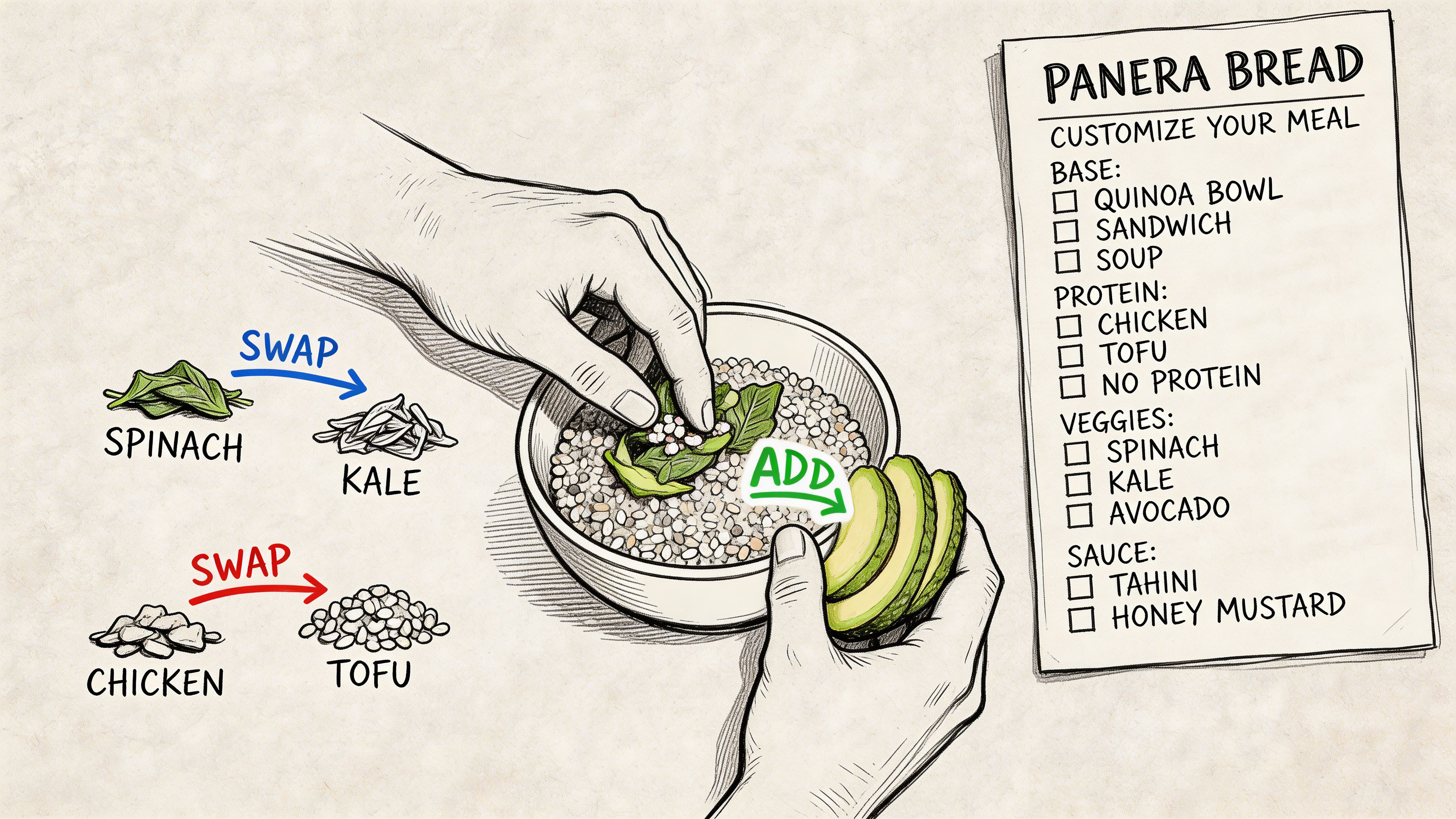
Swap side habits, not just main dishes
Many people focus only on the entree. But sides and extras can change how a meal feels.
- Swap bread for fruit when you want a lighter meal. This can make lunch feel fresher and less dense.
- Ask for dressing on the side if you want more control over flavor and heaviness.
- Choose a more complete breakfast sandwich over a pastry-only breakfast when you know you need staying power.
These are not “good person” choices. They are practical adjustments based on how you want to feel later.
Build around what the meal is missing
This is my favorite coaching question: what is missing from the meal?
If your order is mostly carbs, add protein. If it is protein-heavy but low in produce, add fruit or vegetables. If it seems light but not satisfying, think about whether healthy fat or fiber is missing.
A few useful patterns:
- A salad that seems too small may need more protein, not more bread.
- A sandwich that feels incomplete may pair better with fruit than with another refined-carb side.
- A vegetarian order may need extra attention to satiety, since many meatless options lean heavily on bread, cheese, or sauces.
The goal of customization is not restriction. It is balance. You are helping the meal do its job better.
Here is a quick visual guide if you want to think more strategically about swaps and mix-ins.
Simple requests that often help
You do not need a complicated order. Short, clear changes are enough.
- Dressing on the side helps when you like the salad but want more control.
- Keep the protein, lighten the extras if your main goal is satiety without excess heaviness.
- Choose whole-food add-ons like fruit or avocado when available, especially if your meal looks low in fiber.
Use your hunger level as a guide
Some days, a lighter Panera meal is exactly right. Other days, it sets you up to raid the snack drawer at 3 p.m.
Try this:
- Very hungry: choose a meal with clear protein and enough volume
- Moderately hungry: go lighter, but still keep some protein
- Not very hungry: choose something simple, then plan for a balanced snack later if needed
That approach is more realistic than forcing every lunch to look the same.
Navigating Hidden Traps on the Panera Menu
You walk into Panera planning to eat well. Then the menu starts making promises. Fresh. Natural. Warm. Wholesome. A meal can sound supportive of your goals and still miss on protein, fiber, fullness, or sodium.
That is the trap.
Panera often looks healthier than fast food, and sometimes it is. But the smarter skill is reading past the vibe of the menu and asking, “What is this meal made of, and how will it likely feel in my body two hours from now?” That question helps you choose with more confidence, whether your goal is steadier energy, better digestion, or a lunch that keeps you out of the snack drawer.
The comfort-food trap
A bowl, cup, or sandwich can seem lighter than it is because the portion looks tidy and the ingredients sound familiar. Bread bowls, creamy soups, cheese-heavy sandwiches, and bakery-style breakfasts often pack a lot of refined carbs and sodium into one order without giving you much fiber.
A simple way to evaluate comfort foods is to picture the meal like a stool with three legs. One leg is protein. One is fiber. One is volume from foods with more water and produce. If a meal is built mostly from bread, cheese, and cream, that stool gets wobbly fast. You may feel pleasantly full at first, then hungry or sluggish not long after.
That does not mean you need to avoid comfort foods. It means they work better when you see them clearly and decide on purpose.
Why You Pick Two can get confusing
You Pick Two sounds balanced because each piece is smaller. Smaller parts can still add up to one heavy meal.
The risk usually shows up when both choices come from the same category. For example, soup plus bread-based sandwich can become a refined-carb-and-sodium combo. A salad plus another low-protein side can look light but leave you underfueled.
A quick check helps:
- Where is the main protein?
- Where is the fiber?
- Are both items soft, creamy, or bread-heavy?
- Will this meal keep me steady, or just comfortable for an hour?
If those answers are unclear, simplify the order. One stronger item often works better than two mediocre ones.
Bakery items and sweet drinks can change the whole meal
The bakery case is where many balanced intentions drift off course. A pastry with coffee can feel like a small add-on, but it often shifts breakfast or lunch toward quick carbs without enough staying power. The same goes for sweet drinks that act more like dessert than hydration.
Here is the coaching lens I want you to use. Ask what job the item is doing.
Is it giving you pleasure? Comfort? Convenience? Energy? A treat? Any of those can be valid. But if you wanted a meal that supports satiety and focus, a muffin or sugary drink may not do that job very well on its own.
If you want a practical skill for nutrition choices beyond restaurants, learning how to read labels can sharpen your ability to spot sodium, sugar, and serving-size surprises.
Why “healthy sounding” isn’t enough
Words like whole grain, avocado, natural, and fresh can point you in a helpful direction. They are not proof that the whole order fits your goal.
A better method is to run the meal through three filters.
- Does it have enough protein or fiber to feel like a real meal?
- Are most of the calories coming from extras like bread, creamy sauces, cheese, or sweets?
- Does it match what you need right now, such as fullness, lighter digestion, or more stable energy?
That last filter matters more than people realize. A meal can be perfectly fine on paper and still be the wrong fit for your afternoon.
This section is where we build menu judgment, not menu fear. Every Panera order gives you a chance to practice seeing past the marketing language and identifying what supports your body. That is a useful skill at Panera, and it carries into every other menu you read.
Using Superbloom to Turn Your Order into Insight
A Panera order is not just a meal. It is feedback.
Many people stop at, “Was this healthy?” A more useful question is, “How did this meal work for me?” That one shift can teach you more than memorizing a list of approved foods.

Move beyond calorie judgment
A meal can fit your goals on paper and still not feel right in your body. Maybe you eat a salad and end up hungry too soon. Maybe a bread-heavy lunch leaves you sleepy. Maybe a higher-protein option keeps you calmer through the afternoon.
Those responses matter.
Instead of reducing the experience to “good” or “bad,” reflect on:
- Hunger before the meal
- Energy one to two hours later
- Cravings later in the day
- Digestion and comfort
- Mood and focus
That is where pattern recognition starts.
Use meals as personal data points
Let’s say you order the Green Goddess Chicken Cobb Salad one day and feel steady through the afternoon. Another day, you grab a pastry and coffee and feel shaky, distracted, or extra hungry later.
That comparison gives you a real-world clue about what supports you. It is not a moral lesson. It is information.
Try a few simple reflections after Panera meals:
- Did this keep me full long enough?
- Did I feel energized or sluggish?
- Was I ordering from hunger, stress, convenience, or comfort?
- Would I order this again on a busy workday?
These questions help you build judgment, not rules.
Watch for emotional patterns too
For many adults, Panera is not just food. It is a work break, a rushed errand meal, a stress reset, or a reward after a difficult morning.
That context changes what you choose.
If you notice you order sweet bakery items when you are overwhelmed, that is useful awareness. If you always choose the lightest meal when you are trying to “be good,” then end up overeating later, that is also useful awareness.
You are not trying to catch yourself doing something wrong. You are learning your cues.
Lasting nutrition change usually starts when you notice patterns without shaming yourself for having them.
Build a repeatable reflection habit
A simple habit works best. After your meal, jot down a few lines in your notes app, journal, or whatever system you already use.
You might track:
- What you ordered
- Why you chose it
- How hungry you were
- How you felt later
Over time, your healthiest food at Panera may become clearer than any internet ranking could tell you. For one person, that may be a high-protein salad. For another, it may be a breakfast sandwich that prevents late-morning vending machine decisions.
Think in experiments, not perfection
This is the mindset that changes everything.
Instead of saying, “I need to always order the healthiest thing,” try, “I’m learning what kind of Panera meal gives me the best afternoon.”
That approach is calmer. It is more sustainable. And it helps you build skills that travel with you far beyond one restaurant.
Frequently Asked Questions About Healthy Eating at Panera
Are soups healthy at Panera
Soups can work well, especially on days when you want something warm and easy to digest. The key is to treat soup as one part of the meal, not automatic proof that the order is balanced.
Cream-based soups, larger portions, and bread bowls can raise calories and sodium fast. Broth-based options paired with a protein-rich side or a half portion often give you a steadier result. If soup leaves you hungry an hour later, that is useful feedback. Your body may need more protein, more fiber, or both.
What is the healthiest breakfast food at Panera
A strong Panera breakfast usually includes protein first, then enough substance to keep you full through the morning. The Garden Avocado & Egg White Sandwich is often a solid example because it offers more staying power than a pastry or plain bagel.
That does not mean it is the only smart choice. The bigger lesson is what made it work. Eggs add protein, avocado adds richness, and the sandwich format feels like a real meal instead of a quick carb hit. If you use that pattern on the breakfast menu, you will make better choices even when seasonal items change.
Is a salad always the healthiest food at Panera
A salad works like a car with a strong engine and no fuel if it is mostly greens with very little protein or fiber. It may look impressive, but it does not always carry you very far.
Check what is in the bowl. Protein, beans, grains, vegetables, and a dressing amount that fits your goal matter more than the word "salad." Some salads support energy and fullness well. Others are light enough that you end up searching for a cookie by mid-afternoon.
What should I drink if I want a healthier Panera meal
Water, unsweetened tea, black coffee, or another low-sugar drink is usually the simplest choice. Drinks can shift the whole meal from balanced to sugar-heavy without adding much fullness.
A helpful question is, "Am I choosing this for hydration, energy, comfort, or taste?" All four are valid, but the answer helps you order with more awareness. That is part of the Superbloom approach. You learn what the drink is doing for you, not just whether it sounds healthy.
Can vegetarians eat healthy at Panera
Yes, and the same menu skills still apply. A vegetarian meal is more satisfying when it includes a real protein source, some fiber, and enough volume to feel like a meal.
Avocado, eggs, beans, greens, grains, and dairy can all play a role, but bread and cheese alone often leave the meal lopsided. If you eat vegetarian at Panera often, scan the menu the way a coach would. Ask what is carrying protein, what is adding fiber, and what will help you stay full for the next few hours.
Is Panera good for weight loss
Panera can fit into a weight loss plan if your order helps you manage hunger, energy, and consistency. That is usually more useful than chasing the lowest-calorie item on the screen.
A meal that is too small can backfire later. A meal with protein, fiber, and enough satisfaction is easier to repeat. That is why "healthiest" depends on your real goal. Weight loss, blood sugar stability, gut health, and staying full through meetings can point you toward slightly different choices. The skill you build at Panera is learning how to tell the difference.
Conclusion Your Panera Plan for Lasting Health
The healthiest food at Panera is not one universal order. It is the meal that fits your body, your goals, and your real day.
For some people, that means a high-protein salad. For others, it means a balanced breakfast sandwich that prevents a bakery spiral later. The skill that matters most is knowing how to scan for protein, fiber, sodium, portion size, and hidden extras without getting pulled into all-or-nothing thinking.
You do not need to fear Panera’s menu. You need a few dependable habits. Choose an anchor item with substance. Customize when something feels off balance. Stay aware of comfort-food traps and combo meals that look lighter than they are. Then pay attention to how your order works for you.
That is the bigger win. Not perfection. Not one “clean” lunch. Real awareness you can use again tomorrow.
If you want help turning meals like these into lasting habits, Superbloom can support that process. It helps you reflect on what you ate, notice patterns in hunger, cravings, stress, and energy, and make more confident choices without strict dieting or constant calorie counting.