
10 Healthy Alternatives to Bread for 2026
If bread is the problem, why do so many swaps still leave you tired, snacky, or oddly unsatisfied?
That’s the gap most “healthy alternatives to bread” lists miss. They focus on carbs, calories, or whether something is gluten-free, but they rarely ask a more useful question. Does this swap work in your real life? Does it keep you steady through a busy afternoon? Does it sit well in your gut? Does it calm cravings, or just delay them?
Bread can be comforting, convenient, and tied to routine. Toast in the morning. A sandwich at lunch. Something handheld when the day gets chaotic. Replacing it isn’t just a nutrition decision. It’s a habit decision. Sometimes it’s an emotional decision too.
That’s why the best substitute isn’t always the lowest-carb option or the trendiest one. The best choice is the one that helps you feel better and makes it easier to stay consistent. For one person, that might be a crisp lettuce wrap that feels light and energizing. For another, it might be a denser almond flour slice that keeps them full. Someone else may do better skipping the “bread replacement” idea altogether and building bowls instead.
This guide treats each option as more than a swap. Think of each one as a small experiment. Use it to notice what happens to your energy, digestion, appetite, and mood. If you use a tool like Superbloom, those observations become easier to connect over time. You can log meals, add a photo, note cravings or stress, and spot patterns that would otherwise get lost in a busy week.
Here are ten practical alternatives worth trying, with the trade-offs that matter in daily life.
1. Lettuce Wraps
Lettuce wraps are the fastest reset if bread has become more habit than hunger. They strip the meal down to the filling, which makes them useful when you want to see how much bread itself may be affecting your energy or digestion.
Large romaine leaves, butter lettuce, and even iceberg can work. Romaine gives structure. Butter lettuce is softer and easier to fold. Iceberg adds crunch but can crack if overfilled.
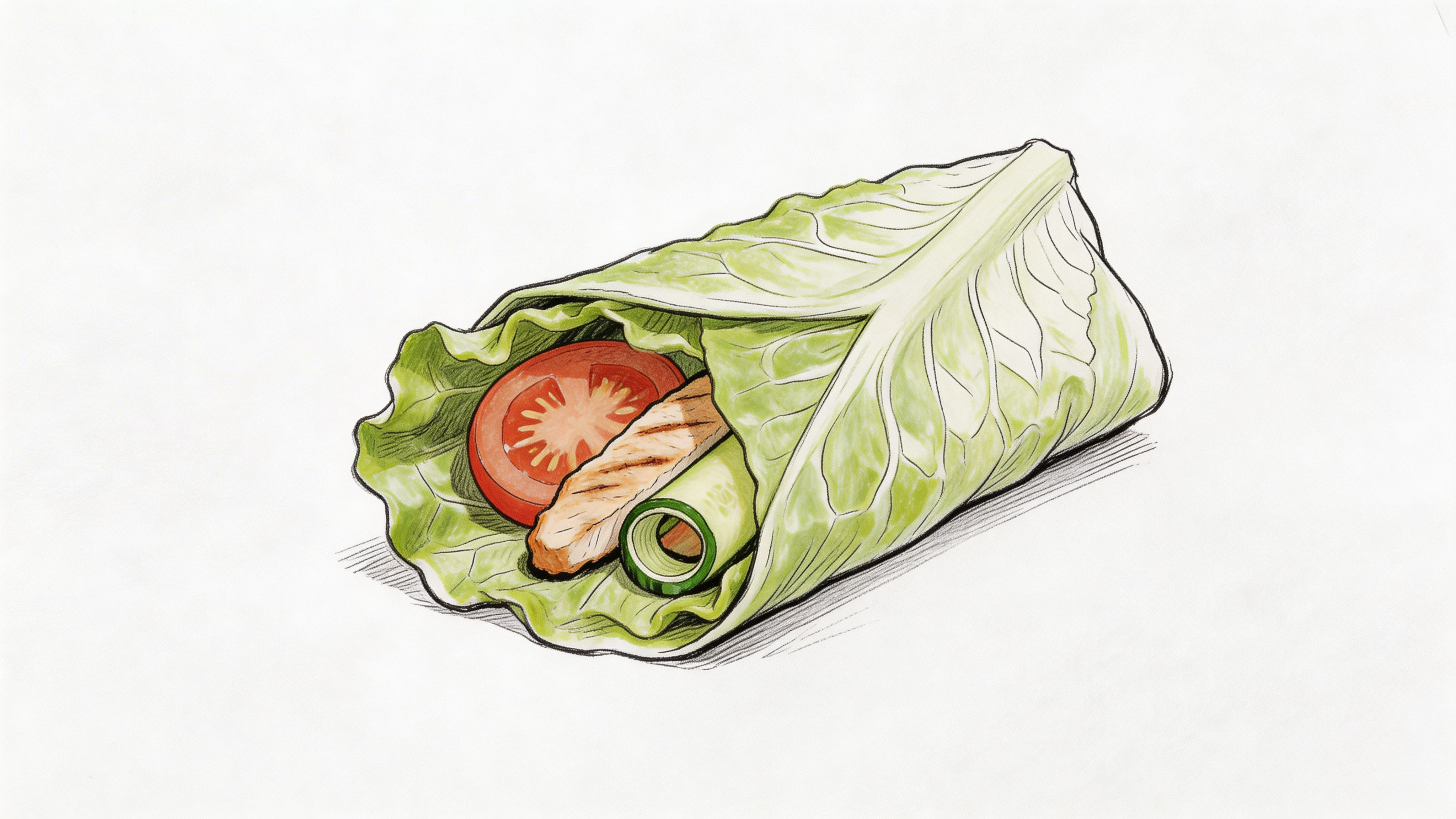
A deli-style lunch works well this way. Try turkey, mustard, tomato, and avocado wrapped in layered romaine leaves. Butter lettuce cups also work for taco fillings, and a Mediterranean version with cucumber, feta, olives, and grilled chicken feels more substantial than people expect.
What works best
Lettuce wraps succeed when the filling carries enough flavor, protein, and texture. If you just remove bread and change nothing else, the meal can feel thin.
A few practical fixes help:
- Choose sturdy leaves: Romaine hearts and butter lettuce usually hold fillings better than loose leaf varieties.
- Dry them well: Wet leaves lead to soggy wraps and frustration.
- Double-layer for support: Two leaves make a big difference with heavier fillings.
- Use crunch strategically: Cucumber, shredded carrot, or toasted seeds help replace some of the sensory satisfaction bread used to provide.
Practical rule: If a lettuce wrap leaves you prowling the kitchen an hour later, the issue usually isn’t the lettuce. It’s that the filling needed more staying power.
This is one of the easiest swaps to track in Superbloom because the variable is clear. Log a photo, note whether you felt light and focused or underfed, and pay attention to timing. Do you miss bread more on stressful workdays? Do lettuce wraps work better at lunch than at breakfast? Those patterns matter more than forcing yourself to love a swap that doesn’t fit the moment.
2. Cauliflower Bread
Cauliflower bread appeals to people who want something bread-like without going back to standard sliced bread. It keeps the sandwich format, which matters when routine is half the battle.
Early versions were often too wet and floppy. Better products and better home methods have improved that, but texture is still the main trade-off. Toasting helps a lot.
Here’s the visual idea before you try it in your own kitchen.
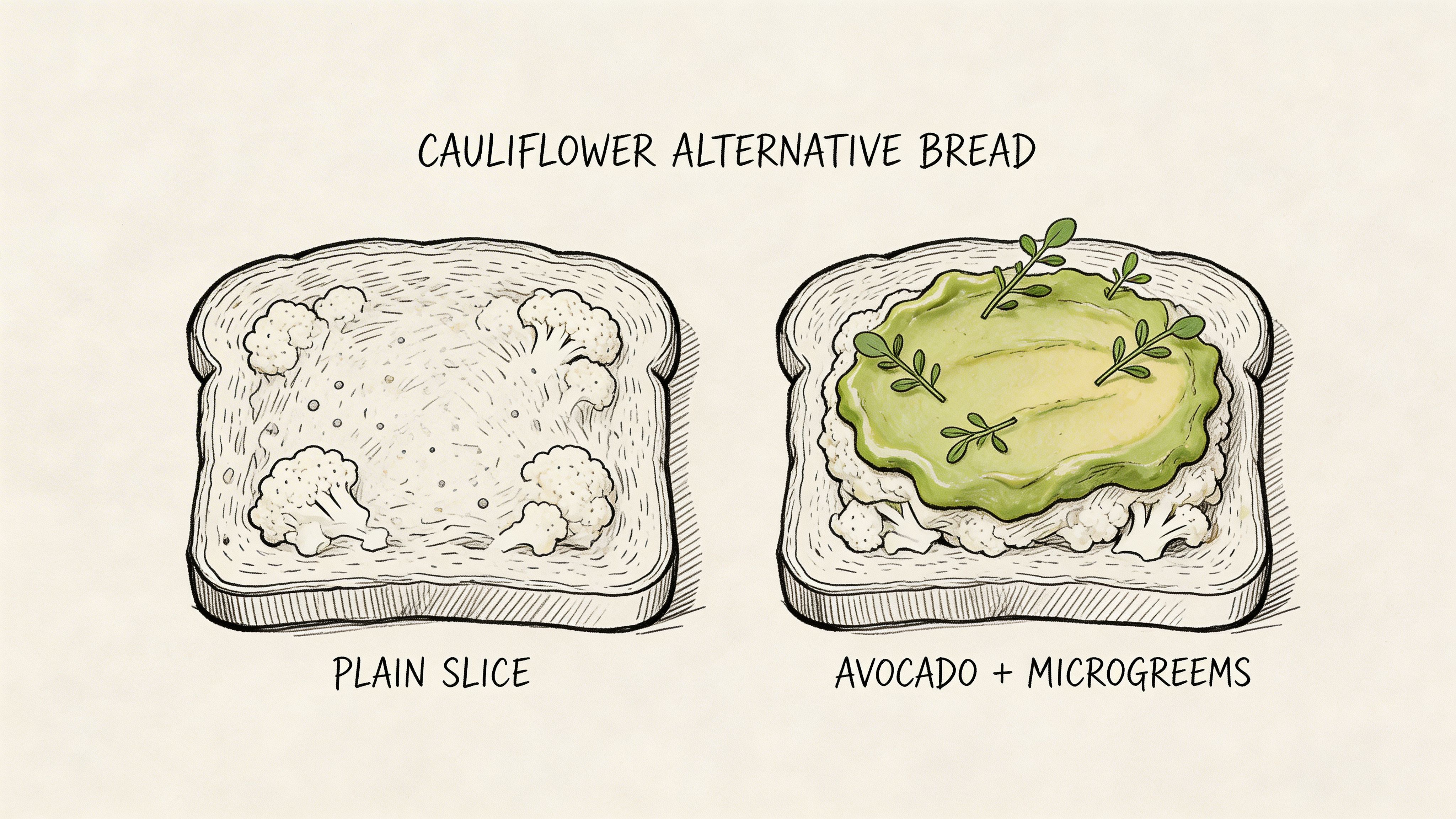
Store-bought options like Caulipower products or cauliflower-based mixes from Simple Mills can make this easier. Homemade versions usually rely on riced cauliflower, eggs, and cheese. A good food processor makes prep much less annoying, especially if you’re making batches. If you cook often, a KitchenAid food processor is the kind of tool that turns cauliflower prep from a chore into something realistic on a weeknight.
Where people get disappointed
Cauliflower bread doesn’t taste like bakery bread. If that’s your expectation, it will probably fall short.
It works better when you use it where toppings do most of the heavy lifting. Open-faced avocado toast, breakfast sandwiches, mini pizzas, or grilled cheese-style melts are better fits than towering deli sandwiches.
Start simple:
- Toast first: This improves structure and flavor.
- Keep toppings moderate: Too much moisture makes it collapse.
- Test one serving: Cruciferous vegetables sit well for some people and feel gassy for others.
- Check the ritual: If you love the act of toast in the morning, this may satisfy the ritual even when the texture differs.
A useful thing to track is the gap between expectation and actual satisfaction. Log the meal, then check in later. Did it help you stay steady through the next few hours, or did you feel like you’d eaten a substitute and your body knew it?
If you want a quick demo before trying a homemade version, this shows the general process.
3. Almond Flour Bread
Some bread alternatives feel light. Almond flour bread usually goes the other direction. It’s richer, denser, and often more satisfying for people who get hungry quickly after regular toast.
That makes it especially useful at breakfast or after exercise, when many people need a meal that does more than replace bread’s shape.
Why it can work so well
Almond flour breads and mixes, including products from brands like Simple Mills, often pair well with toppings that create a complete meal. Think avocado and eggs, almond flour toast with cottage cheese, or a small sandwich with chicken salad.
The benefit here is less about imitation and more about satiety. Nut-based breads tend to feel substantial. That can be a good thing if your main issue with bread is that it doesn’t hold you for long.
Some of the best bread substitutes aren’t the ones that mimic bread perfectly. They’re the ones that stop the “what else can I eat?” loop.
The trade-off is heaviness. If you’re used to airy supermarket bread, almond flour bread can feel dense or slightly cake-like. Toasting helps. Thin slices help more.
Best use cases
This option tends to work best when you:
- Keep portions modest: A small serving often goes further than expected.
- Use savory toppings: Sweet toppings can make it feel dessert-like.
- Notice fullness, not just taste: Its value lies in whether it improves the rest of your day.
- Compare apples to apples: Try your usual breakfast on wheat bread one day, then the same meal on almond flour bread another day and note the difference.
If you log this in Superbloom, watch for a few patterns. Does it reduce grazing between meals? Do you feel steady, or overly full? Does a nut-based option support calm eating, or does it not sit right with you? Those answers matter more than whether almond flour bread is popular.
4. Sprouted Grain Bread
Not everyone needs to leave bread behind completely. Sometimes the better move is upgrading the bread rather than replacing it with vegetables or grain-free baking.
Sprouted grain bread is often the most practical middle ground for people who still tolerate grains and want something closer to a familiar slice.
A better bridge for many people
Sprouted breads from brands like Ezekiel 4:9 or Food for Life work well for toast, sandwiches, and English muffins. They’re useful when the complete removal of bread makes meals feel harder to maintain.
This is also where real-world nutrition matters more than labels. Some people do better with a thoughtfully chosen bread than with a highly processed “free-from” product that technically avoids wheat but doesn’t improve how they feel.
Consumers are clearly looking for better options. A global bread trends report noted that 27% of people eating less bread say they’re doing so because there aren’t enough healthier options, and the low-calorie bread market was valued at $2.5 billion globally in 2023, with projected growth of 6.8% through the forecast period, faster than the overall bread market’s 3.6% CAGR according to Innova Market Insights on global bread market trends.
What to watch for
Sprouted grain bread isn’t automatically right for everyone. If gluten is a clear trigger for you, “sprouted” won’t solve that.
Still, it can be a strong option when you want:
- A familiar texture: Easier adherence matters.
- A direct comparison point: You can more clearly assess whether conventional bread was part of the problem.
- A practical lunch solution: Sandwiches remain easy for work and travel.
- Less food fuss: This often lowers the mental load of eating better.
Store it in the fridge or freezer because sprouted breads spoil faster. Toasting improves texture and flavor.
Use Superbloom to compare days with sprouted grain bread against days with your previous bread choice. Keep the rest of the meal similar. That makes it easier to notice whether the bread itself changes your digestion, energy, or appetite.
5. Portobello Mushroom Caps
Portobello caps aren’t a bread replacement in the classic sense. They’re a burger and sandwich base with a completely different personality. That’s exactly why they work.
When someone misses the savory satisfaction of a sandwich more than the bread itself, portobellos can be surprisingly effective.
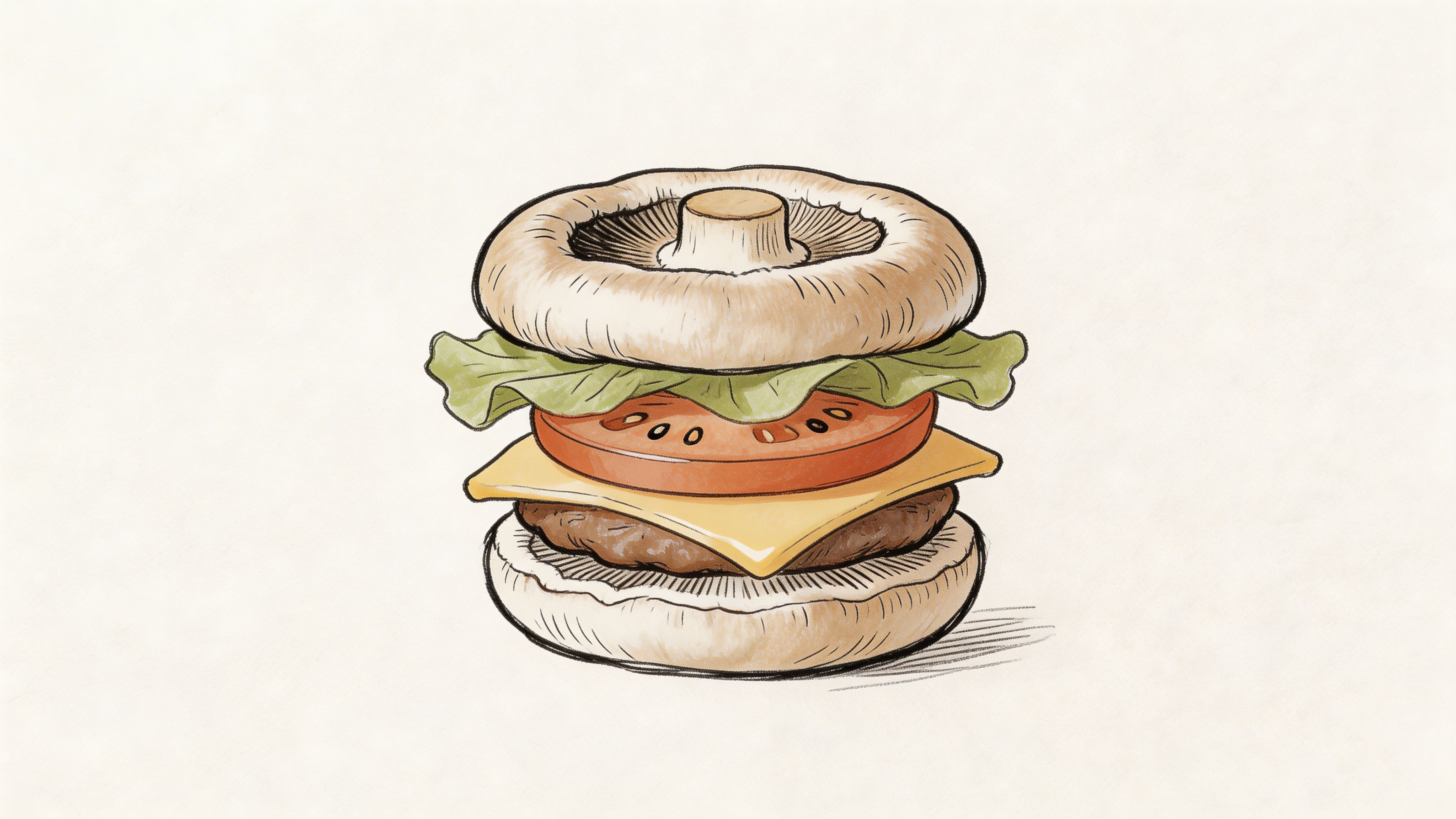
A grilled portobello burger with melted cheese, tomato, arugula, and pesto feels hearty in a way lettuce never will. Roasted caps also work as mini pizza bases or open-faced sandwich platforms.
Flavor can solve what macros can’t
This option highlights something important. Satisfaction isn’t only about protein, carbs, or fiber. Texture, warmth, chew, and umami matter. For people prone to cravings or emotional eating, that sensory side often determines whether a swap lasts.
If a meal feels flat, many people keep eating until something finally feels satisfying.
That’s why portobellos can outperform “healthier” but less compelling options. Their savory depth gives the meal more presence.
A few techniques make a big difference:
- Remove the gills: This cuts moisture and improves texture.
- Cook hot and fast: High heat helps them brown instead of steam.
- Marinate briefly: Olive oil, balsamic, garlic, and herbs deepen flavor.
- Serve right away: Letting them sit makes them soggier.
This is a great one to track from an emotional eating angle. After a portobello-based lunch, did you feel satisfied or just technically full? Did the richer flavor reduce the urge to snack later? Superbloom’s mood and craving check-ins can help you catch that distinction.
6. Coconut Bread
Coconut bread is one of the more polarizing healthy alternatives to bread. People either appreciate its fiber-rich density or decide quickly that it’s not for them.
That’s fine. It’s not supposed to be universal. It’s supposed to tell you something useful.
The real trade-off
Coconut flour behaves nothing like wheat flour. It absorbs a lot of liquid, which is why coconut breads often need extra eggs or moisture and can feel dry if they’re poorly made.
The upside is that this style of bread can feel very filling. The downside is that too much too soon can be a digestive shock if your current diet is low in fiber.
That’s why I’d treat coconut bread like a gradual experiment, not a full replacement on day one.
- Start with a small portion: Let your gut tell you how it handles it.
- Toast it well: This improves texture and makes it feel less damp.
- Pair with moist toppings: Egg salad, avocado, or nut butter usually work better than dry turkey slices.
- Avoid expecting a standard sandwich loaf: It’s its own thing.
Who often likes it
People who want grain-free options and don’t mind a more rustic texture often do well with coconut bread. It also fits nicely into meal prep because a homemade loaf can be sliced, frozen, and toasted as needed.
If you use a mix from a brand like Simple Mills or try a low-carb coconut flour recipe, pay attention to digestive response over a few tries instead of judging from one meal alone. Some high-fiber foods feel rough at first and become easier once your routine is more consistent.
A useful note in Superbloom would be simple: energy, fullness, bloating, and cravings later in the day. That small record usually tells you faster than ingredients lists ever could whether coconut bread belongs in your regular rotation.
7. Chickpea Pasta
This one isn’t bread, and that’s the point.
A lot of people don’t need a perfect bread substitute. They need a different starch base that makes meals more satisfying and less reactive. Chickpea pasta can do that well.
Brands like Banza, Barilla chickpea pasta, and Explore Cuisine have made this easy to test. If your default lunch is a sandwich because it’s fast and filling, a chickpea pasta bowl can play the same practical role with a different nutrition profile and a different kind of fullness.
Why it earns a place on this list
Bread often acts as the carrier and anchor of the meal. Chickpea pasta can do the same thing in bowl form. It gives structure to lunch or dinner without relying on slices, buns, or wraps.
It also helps broaden your options. If you’re tired of evaluating every bread replacement by how closely it mimics toast, switching categories altogether can be freeing.
Try it with marinara and turkey meatballs, pesto and roasted vegetables, or olive oil, lemon, chicken, and spinach. If you want to compare shapes and meal styles, looking at different pasta varieties can help you choose formats that work for cold lunches, warm bowls, or meal prep.

Make the transition easier
The common mistake is overcooking it. Chickpea pasta tends to hold best when cooked slightly less than you think it needs.
A few smart adjustments:
- Cook to just firm: It softens further after draining.
- Pair with vegetables and protein: This improves satisfaction and meal balance.
- Start mixed if needed: Combining some chickpea pasta with regular pasta can make the shift gentler.
- Assess your gut: Legumes work beautifully for some people and not for others.
This is a good option to log when you suspect your body does better with legumes than with bread-based meals. Note fullness, afternoon focus, and digestive comfort. You’re not looking for a perfect food. You’re looking for your best fit.
8. Zucchini Noodles Zoodles
Zoodles are useful, but only when you respect what they can and can’t do.
They add volume, freshness, and a lighter feel to meals. They usually do not provide the same built-in satisfaction as bread, pasta, or a dense grain-based base. That means the sauce and toppings matter a lot.
Best for lightness, not for denial
Zucchini noodles can be excellent in warm weather, at dinner, or when you want a meal that feels less heavy. Pesto zoodles with grilled shrimp, zucchini ribbons with bolognese, or a raw zucchini salad with olive oil and pine nuts all work.
Where people run into trouble is using zoodles as a “virtuous” replacement while secretly wanting something more substantial. That usually leads to later snacking.
Use them well by building around them:
- Dry them before cooking: This reduces the watery effect.
- Choose bold sauces: Pesto, bolognese, tahini-lemon, or parmesan-based sauces help.
- Add protein and fat: Zoodles alone rarely satisfy for long.
- Keep the serving realistic: Sometimes half zoodles and half another noodle works better than forcing an all-zucchini bowl.
A very revealing experiment
This swap tells you a lot about your relationship with fullness. Are you satisfied by volume and a fresh texture? Or do you need more density to feel calm after a meal?
That’s valuable information. For some people, zoodles are a genuine favorite. For others, they’re only useful in certain contexts.
In Superbloom, I’d track this with a short note after the meal and another later. “Felt light and good” is different from “still wanted something chewy and comforting.” That difference helps you decide whether zoodles are a regular tool, an occasional side, or not worth pretending to enjoy.
9. Seeded Crackers and Flatbreads
Seed-based crackers and flatbreads are one of the most practical healthy alternatives to bread for busy people. No prep. Easy storage. Good crunch. They work especially well when you miss the structure of toast or an open-faced lunch but don’t need a full sandwich loaf.
Brands like Mary’s Gone Crackers and Simple Mills make this category easy to test. Homemade versions with flax, sunflower, sesame, or pumpkin seeds can be excellent too.
Small format, strong payoff
These aren’t ideal for giant sandwiches. They shine with spreads, toppings, and snack-plate style meals.
Think seeded crackers with tuna salad and cucumber, hummus and smoked salmon, or a seeded flatbread topped with ricotta, tomato, and olive oil. If lunch tends to happen between meetings, this format is often easier to maintain than a homemade alternative bread that needs more planning.
There’s also a broader nutrition case for moving toward wholegrain and fiber-rich options. Oatcakes and wholegrain crackers can help people work toward the recommended daily 30g fiber intake, and regular wholegrain intake has been associated with lower risks of heart disease, diabetes, and obesity by up to 20 to 30% in large cohorts, as described in Nairn’s guide to healthy bread alternatives.
What to watch
Because these foods are crisp and compact, it’s easy to underestimate how much satisfaction they provide or, in some cases, overeat them mindlessly.
A few guardrails help:
- Use them with protein-rich toppings: This turns them into a meal, not just a crunchy vehicle.
- Plate them intentionally: Eating from the box makes it harder to notice fullness.
- Treat crunch as a feature: Sometimes the craving is for texture as much as bread itself.
- Notice the emotional fit: A cracker-based lunch may feel freeing to one person and snacky to another.
This is a great category for photo logging in Superbloom because combinations matter. The cracker alone rarely determines the outcome. The whole plate does.
10. Whole Food Grain Bowls
Sometimes the healthiest move is to stop trying to replace bread at all.
If every substitute feels like a compromise, bowls can be the answer. They shift the meal away from “what can stand in for bread?” and toward “what combination makes me feel good?”
The mindset shift that changes everything
A grain bowl can use quinoa, farro, millet, roasted sweet potato, or another base that suits your needs. Add vegetables, a protein, a fat source, and something bright or crunchy. Suddenly you’re not missing bread because the meal was designed for satisfaction from the start.
A Mediterranean bowl with quinoa, chicken, cucumber, tomato, feta, olives, and olive oil works. So does a roasted vegetable bowl with tahini, chickpeas, and herbs. If you tolerate grains well, bowls can be easier to sustain than constantly testing specialized bread products.
This is also where market behavior supports what many coaches see in practice. The global healthy foods market was valued at $1,063.3 billion in 2025 and is projected to reach $2,013.0 billion by 2033, with an 8.1% CAGR from 2026 to 2033, according to Grand View Research on the healthy foods market. That doesn’t tell you what to eat. It does show that more people are building meals around broader health goals instead of default staples.
How to make bowls stick
Bowls work best when they’re simple enough to repeat.
- Prep components, not full recipes: Cook a grain, roast vegetables, prepare a protein, and mix one sauce.
- Keep a repeatable formula: Base, protein, vegetables, fat, crunch, acid.
- Change one variable at a time: That helps you learn what improves the meal.
- Use visual logging: A photo quickly shows patterns in color, balance, and repetition.
“Am I full?” isn’t the only useful question. “Did that meal feel complete?” is often better.
Superbloom can be especially helpful in this situation. Photograph the bowl, note your energy and cravings later, and pay attention to what’s missing when the meal doesn’t land. It may be more warmth, more crunch, more protein, or more enjoyment.
Top 10 Healthy Bread Alternatives Comparison
| Substitute | 🔄 Implementation complexity | ⚡ Resources & prep | ⭐ Effectiveness / Satiety | 📊 Expected outcomes / Impact | 💡 Ideal use cases & tip |
|---|---|---|---|---|---|
| Lettuce Wraps | Low, minimal prep | Minimal, wash & dry leaves | ⭐⭐, low-calorie, crisp satisfaction | Quick digestive feedback; lowers carbs, may not sustain energy | For fast low‑carb meals; use sturdy romaine/butter leaves and pat dry |
| Cauliflower Bread | Medium, processing + baking | Requires food processor, eggs, cheese, oven | ⭐⭐⭐⭐, mimics bread structure well | Lower glycemic load; increases veggie intake; good for testing grain removal | Toast slices for texture; start with one slice to assess tolerance |
| Almond Flour Bread | Medium–High, recipe technique | Costly ingredient (almond flour), eggs, baking skill | ⭐⭐⭐⭐, high satiety and stable energy | Sustained fullness; higher calories per slice; good for reducing cravings | Use for breakfasts/post‑workout; start with small portions |
| Sprouted Grain Bread | Low–Medium, mostly buyable | Readily available brands but pricier | ⭐⭐⭐, familiar bread experience with better digestibility | Improved mineral bioavailability; easier digestion than regular bread; contains gluten | Store chilled to extend freshness; compare directly to whole grain bread |
| Portobello Mushroom Caps | Medium, cooking technique matters | Simple ingredients, grill or oven required | ⭐⭐⭐, meaty texture, high umami satisfaction | Reduces cravings for processed foods; very low calorie | Remove gills, grill at high heat; use immediately after cooking |
| Coconut Bread | High, different baking ratios | Coconut flour, more eggs/liquids; learning curve | ⭐⭐⭐, very high fiber, dense satiety (may be heavy) | Strong fiber impact, may cause initial bloating but supports gut health | Use extra liquid/eggs; toast slices; start with small portions |
| Chickpea Pasta | Low, cook like pasta | Store-bought or bulk chickpea pasta; different cooking time | ⭐⭐⭐⭐, high protein & fiber, good satiety | Improves fullness and blood sugar stability; may cause gas as gut adapts | Mix 25% with wheat initially; avoid overcooking |
| Zucchini Noodles (Zoodles) | Medium, spiralizer prep | Spiralizer tool or peeler; quick cook | ⭐⭐, high volume, low calories, limited sustained satiety | Reveals volume vs macronutrient satiety; may not prevent later snacking | Pat dry, pair with protein/fat-rich sauces for lasting fullness |
| Seeded Crackers & Flatbreads | Low–Medium, bake or buy | Seed mixes or store brands; moderate cost | ⭐⭐⭐, nutrient‑dense, crunchy satisfaction | Higher nutrient and fat content; strong satiety but crumbly | Use open‑faced, toast for structure; start with 1–2 pieces |
| Whole Food Grain Bowls | High, planning & prep | Multiple components (grains, veg, protein) | ⭐⭐⭐⭐, balanced macros, customizable satisfaction | Promotes mindful eating, sustained energy, improved nutrient intake | Prep components ahead; experiment systematically to find what satisfies |
Your Personalized Path Forward
Choosing healthy alternatives to bread works best when you stop treating the decision like a pass-fail nutrition test.
There isn’t one universally best option. There’s the option that fits your body, your schedule, your digestion, your stress level, and the kind of meals you’ll repeat. That’s why some people feel great swapping in lettuce wraps at lunch but hate them at dinner. It’s why one person thrives with almond flour toast while another feels much better keeping a high-quality sprouted grain bread in the mix. It’s also why sometimes the smartest move is to skip the whole “replacement” mindset and build a bowl instead.
The most useful question isn’t “Which bread alternative is healthiest?” It’s “Which one helps me feel steady, satisfied, and consistent?”
That’s where self-observation matters. One swap may improve digestion but leave you craving something chewy by midafternoon. Another may keep you full but feel too dense for your morning routine. A third might be nutritionally solid but unrealistic for your workweek. None of that means you failed. It means you learned something worth using.
There’s also a broader shift happening around bread itself. Some of the most nutrient-dense swaps, like supergreen wraps made from Swiss chard or collard greens, have been highlighted as exceptionally nutrient-rich. In one comparison, a Breadless Jerk Chicken & Mango wrap made with a supergreen alternative contained 280 calories, 28g protein, and 13g net carbs, while two slices of traditional bread were listed at 160 calories, 6g protein, and 28g net carbs in Breadless’ low-carb bread alternatives guide. That kind of comparison can be helpful, but it still doesn’t answer the most personal question of all, which is whether the swap works for you day after day.
That’s why I encourage people to think like investigators, not rule-followers.
Try one change at a time. Keep the rest of the meal similar when possible. Notice how your body responds in the next few hours. Notice what happens to cravings, focus, digestion, and emotional calm. If something looks good on paper but leads to rebound snacking, that matters. If something feels simple and satisfying and lowers the mental noise around food, that matters too.
Here, a tool like Superbloom can become more than a food log. You can snap a photo, note your energy, mark a craving, and start connecting food choices to real outcomes. Over time, those check-ins help surface patterns that are hard to see in the moment. Maybe seeded crackers work best on busy office days. Maybe portobello caps satisfy burger cravings better than lettuce wraps. Maybe your “bad bread habit” was an under-protein issue at lunch.
Awareness creates options. Options create consistency.
You don’t need to swear off bread forever. You don’t need to force yourself to eat substitutes you dislike. You just need a few practical alternatives, a willingness to experiment, and enough reflection to keep what works.
That’s how lasting nutrition change usually happens. Not through restriction, but through pattern recognition and small decisions that make you feel more like yourself.
If you want help figuring out which healthy alternatives to bread work for your energy, digestion, and cravings, Superbloom can guide that process. You can log meals with photos,...com) can guide that process. You can log meals with photos, track stress and hunger patterns, and get personalized feedback that helps you build habits without strict diets or calorie counting.