
8 Unmissable Healthy Eating Tips for Busy Professionals in 2026
In the whirlwind of deadlines, meetings, and relentless notifications, healthy eating often becomes the first casualty for busy professionals. The cycle is familiar: skipped breakfasts lead to mid-morning brain fog, rushed lunches result in afternoon energy crashes, and stress-fueled evenings give way to takeout and regret. This is not a failure of willpower; it is a failure of strategy.
Traditional diet advice, often restrictive and time-consuming, simply does not fit the dynamic reality of a modern career. This article offers a different approach. We are rounding up eight specific, research-backed healthy eating tips for busy professionals designed to integrate seamlessly into your existing workflow, not add more to your plate. For those constantly on the move, mastering how to eat healthy while traveling is an equally critical skill, and these principles apply there as well.
These are not broad platitudes but actionable micro-habits and systems. You will learn practical methods for meal prep, strategic snacking, and emotional awareness that help you build resilience, stabilize your energy, and reclaim control over your nutrition, one intentional choice at a time.
1. Meal Prep with Protein-Forward Components
The pressure of a demanding schedule often leads to last-minute, unhealthy food choices. A protein-forward, component-based meal prep strategy is a practical solution that moves beyond preparing entire, identical meals. Instead, you dedicate a few hours on a weekend to cook key building blocks-proteins, complex carbohydrates, and vegetables-separately. This approach provides the structure needed for healthy eating while allowing for daily variety, a key factor in long-term success.
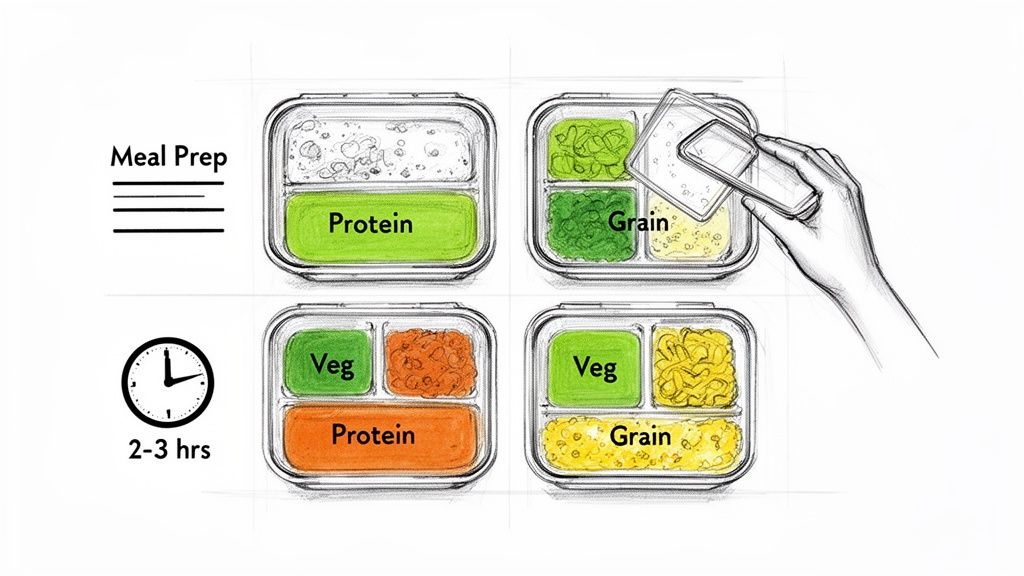
By focusing on a protein-forward base, you support stable energy levels and satiety throughout your workday, reducing the temptation of office snacks. This method, popularized by fitness creators like Fit Couple Cooks and integrated into corporate wellness programs, is one of the most effective healthy eating tips for busy professionals because it attacks the root problem: decision fatigue.
How to Implement Component Prepping
Start by selecting your components for the week. For example, you might bake several chicken breasts, pan-sear a pound of salmon, roast a large tray of broccoli and bell peppers, and cook a batch of quinoa. Store each component in its own container. Each day, you can assemble a new combination: a quinoa bowl with salmon and roasted vegetables on Monday, a chicken salad on Tuesday, and a chicken and veggie stir-fry on Wednesday, simply by mixing and matching your pre-cooked elements.
Actionable Tips for Success
- Maximize Your Time: Use multiple cooking methods at once. Have chicken baking in the oven, quinoa simmering on the stove, and ground turkey browning in a skillet to condense your prep time.
- Invest in Quality Containers: Choose glass containers with secure lids. They don't stain or retain odors, are safe for microwaving, and keep food fresher for longer.
- Keep Flavors Neutral: Cook proteins and vegetables with minimal seasoning, like salt, pepper, and olive oil. This allows you to add different sauces, herbs, or spices each day to prevent flavor boredom.
For a deeper look into a full week of meal prep, this video from Fit Couple Cooks provides a great visual guide:
2. Strategic Snacking with Nutrient-Dense Grab-and-Go Options
The afternoon slump often sends busy professionals straight to the vending machine for a quick, sugary fix. Strategic snacking is a powerful counter-measure that involves proactively placing nutrient-dense, grab-and-go options in your immediate environment. This approach prevents energy crashes and blood sugar spikes by ensuring a healthy choice is always the easiest choice, especially during high-stress moments when willpower is low.
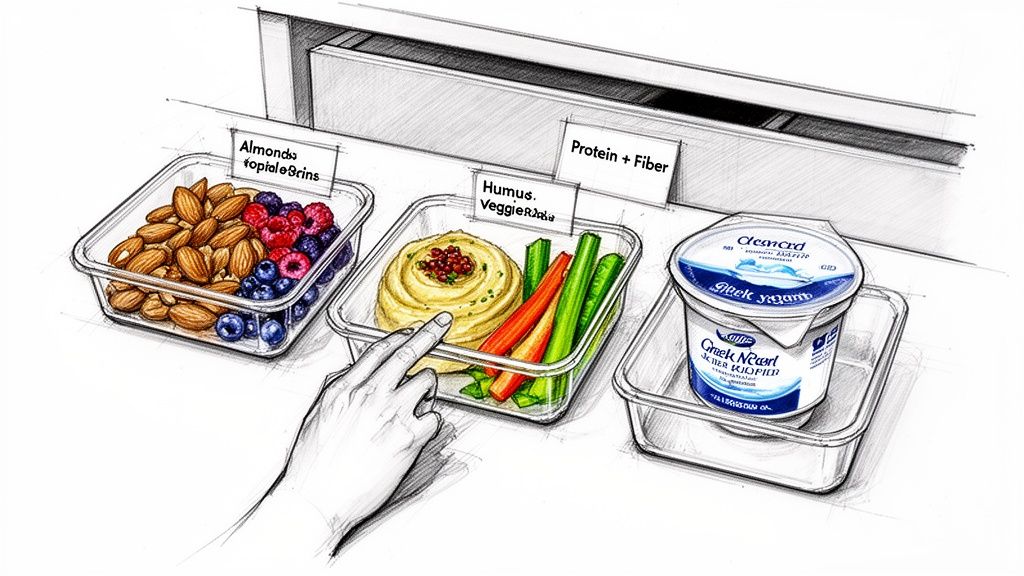
By stocking your desk drawer, car, and work bag with balanced snacks, you can sidestep decision fatigue and maintain focus throughout the day. This method is championed by corporate wellness dietitians and productivity coaches who recognize that stable energy is foundational to performance. It's one of the most practical healthy eating tips for busy professionals because it directly addresses the convenience trap that leads to poor food choices.
How to Implement Strategic Snacking
The key is preparation and placement. On Sunday, dedicate 30 minutes to portioning snacks for the week. For example, create small bags of almonds, dried blueberries, and dark chocolate chips. Pre-portion individual hummus containers with baby carrots and bell pepper strips. In your office mini-fridge, stock Greek yogurt cups and hard-boiled eggs for a protein boost when meetings run long. Keeping apple slices and cheese sticks on hand provides a balanced snack that can sustain energy through a long afternoon.
Actionable Tips for Success
- Follow the PFF Rule: For lasting satiety, ensure each snack combines Protein, healthy Fats, and Fiber. A classic example is an apple (fiber) with a handful of almonds (protein and fat).
- Practice Portion Control: Use small containers or pre-portioned bags (like 100-calorie packs) to prevent mindless overeating, particularly during meetings or while focused on a task.
- Make it Visible: Position healthy snacks at eye level in your pantry, fridge, and desk drawers. Out of sight is truly out of mind, so make your best options the most obvious ones.
3. Mindful Eating Checkpoints During Meals
Busy professionals often eat on autopilot, especially during stressful work lunches or while answering emails. Implementing mindful eating checkpoints involves creating brief, intentional pauses during a meal to check in with your body. This practice helps override mindless consumption, allowing you to reconnect with your hunger and satiety signals, which is a key challenge when balancing a demanding career and personal well-being.
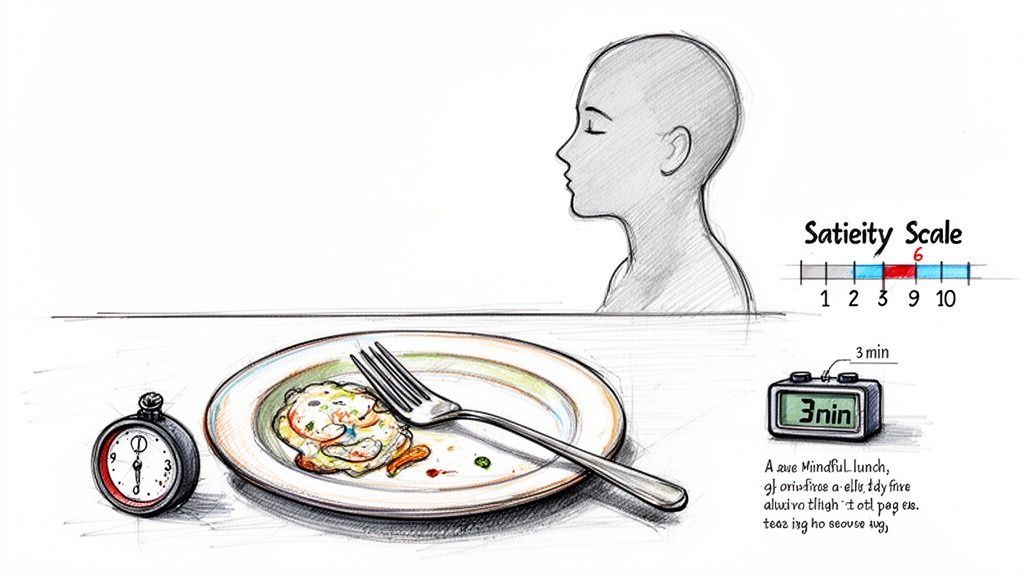
This method, supported by food psychology research from experts like Dr. Brian Wansink, is one of the most effective healthy eating tips for busy professionals because it directly targets the habit of distracted eating. Research indicates that this single intervention can increase meal satisfaction while reducing portion sizes and the common feeling of post-meal guilt. It shifts the focus from what you eat to how you eat, promoting a better relationship with food without strict rules.
How to Implement Mindful Checkpoints
Start by choosing one meal a day, like lunch, to practice. Before you begin eating, rate your hunger. A few bites into your meal, put your utensils down and take three deep breaths. Ask yourself, "How does this food taste?" and "Am I still hungry?" Repeat this checkpoint once or twice more during the meal. For example, during a team lunch, you can consciously place your fork down between bites while a colleague is speaking, creating a natural pause.
Actionable Tips for Success
- Use External Cues: Set a quiet timer on your phone for every 3-5 minutes as a reminder to pause, or simply make it a rule to sip water and set your fork down after every few bites.
- Create a Satiety Scale: Use a simple 1-10 scale where 1 is starving and 10 is uncomfortably full. Aim to stop eating when you reach a 6 or 7 (satisfied and no longer hungry), not when your plate is empty.
- Track Your Patterns: Notice the connection between your stress levels and your eating behaviors. High-stress days often reveal autopilot eating patterns. Logging these instances helps you build awareness and address the root cause, which is often emotional rather than physical hunger.
4. Hydration Strategy with Flavor Variation
Strategic hydration is often overlooked, yet it significantly impacts appetite, energy, and stress. Busy professionals frequently mistake thirst for hunger, leading to unnecessary snacking and energy slumps. Implementing a structured hydration plan with varied, sugar-free flavors makes consistent water intake appealing and sustainable. Proper hydration supports cognitive function and can even boost metabolic rate, making it one of the most foundational healthy eating tips for busy professionals.
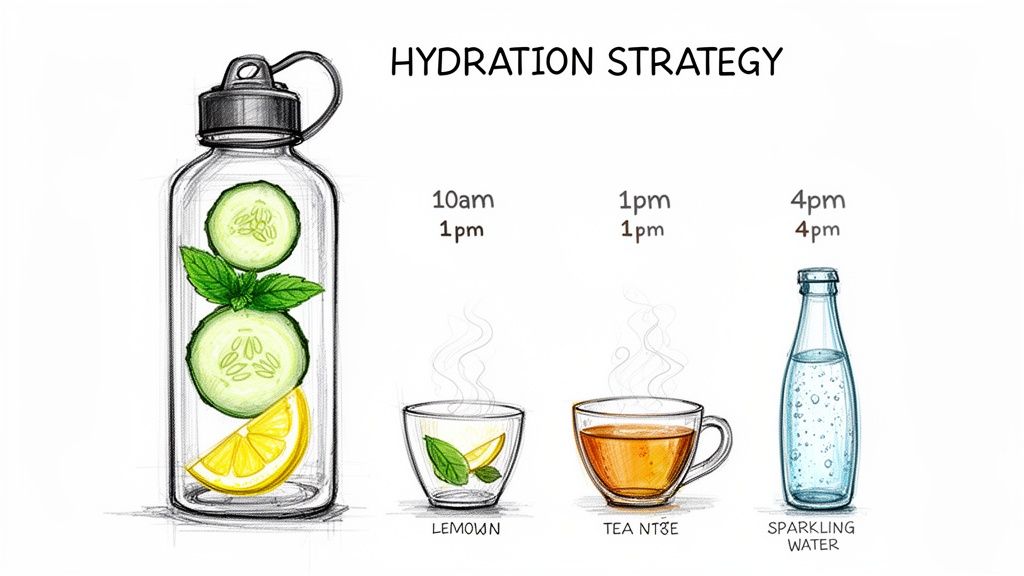
This approach, championed by sports nutritionists and integrated into corporate wellness programs, addresses the core issue of blandness that derails many hydration goals. By making water more enjoyable through infusions and alternatives, you create a positive habit loop that prevents dehydration-induced fatigue and false hunger cues, which are common culprits behind poor food choices during a hectic workday.
How to Implement a Hydration Strategy
The goal is to make drinking water a consistent, almost automatic behavior. Start by calculating your baseline needs, typically half your body weight in ounces, and adjust for activity levels. Then, build a routine around flavor and accessibility. For example, prepare a large pitcher of cucumber-mint infused water on Sunday to have ready for your desk. During afternoon meetings, opt for sparkling water with a squeeze of lemon to satisfy cravings for a carbonated drink without the sugar.
Actionable Tips for Success
- Establish Environmental Cues: Place a reusable water bottle in all your key locations: your desk, your car, and your gym bag. Seeing the bottle serves as a powerful visual reminder to drink.
- Vary Your Flavors: Prevent taste boredom by rotating your hydration sources. Alternate between plain water, herbal teas like chamomile or peppermint, and water infused with berries, lemon, or herbs.
- Set Digital Checkpoints: Use phone reminders or a dedicated app to create checkpoints throughout your day, such as at 10 am, 1 pm, and 4 pm. This structure helps build the habit until it becomes second nature.
5. Intentional Caffeine Management and Timing
For many busy professionals, caffeine is a reactive tool used to push through energy slumps. This often creates a volatile cycle of dependency, where a morning coffee is followed by an afternoon crash, leading to another coffee and disrupting sleep. Intentional caffeine management shifts this approach from reactive to strategic, helping you stabilize energy, reduce sugar-fueled snacking, and improve focus. The goal is not to eliminate caffeine, but to use it wisely so it works for you, not against you.
This method is one of the most effective healthy eating tips for busy professionals because it directly addresses the energy volatility that drives poor food choices. As highlighted by sleep researchers like Dr. Matthew Walker and productivity experts like Cal Newport, sustainable energy is a cornerstone of high performance. By managing caffeine intake, you can better identify the true causes of fatigue, such as dehydration or poor nutrition, rather than simply masking the symptoms.
How to Implement Intentional Caffeine Timing
Start by understanding your current habits and their effects. For one week, track your caffeine intake, noting the time, amount, and how you feel before and after. You might discover that your 2:00 PM energy crash is not from a lack of caffeine but from skipping lunch. Once you have a baseline, you can make targeted adjustments. For example, if you typically have coffee at 8:00 AM and 3:00 PM, try replacing the afternoon coffee with a 15-minute walk and a glass of water. The key is to pair your morning caffeine with a balanced breakfast containing protein, fat, and fiber to prevent a blood sugar crash and provide sustained energy.
Actionable Tips for Success
- Establish a Cut-Off Time: Most experts recommend stopping caffeine intake by 2:00 PM. Since caffeine has an average half-life of 4 to 6 hours (but can be longer for some), this helps prevent it from interfering with your sleep quality.
- Pair, Don't Isolate: Never drink coffee on an empty stomach. Always pair it with a balanced meal or snack, like eggs and whole-wheat toast or Greek yogurt with nuts, to slow absorption and stabilize energy.
- Find a Non-Caffeinated Ritual: Replace your afternoon caffeine habit with an alternative energy-boosting ritual. This could be five minutes of stretching, a short walk outside, or drinking a tall glass of cold water or herbal tea.
6. Strategic Restaurant and Takeout Ordering
Dining out or ordering takeout is a practical reality for many busy professionals, yet it's often viewed as a roadblock to healthy eating. Strategic ordering reframes this challenge into an opportunity. Instead of avoiding restaurants, you develop a set of clear strategies to make choices that align with your health goals, allowing you to maintain important social and professional connections without compromise. This approach supports sustainable habits by integrating realistic eating patterns rather than fighting against them.
This method, endorsed by registered dietitians and behavioral health coaches, is one of the most effective healthy eating tips for busy professionals because it tackles the "all-or-nothing" mindset. By pre-planning and knowing how to navigate a menu, you eliminate decision fatigue and prevent impulsive, less-healthy choices, making dining out a controlled and enjoyable part of your routine.
How to Implement Strategic Ordering
Start by identifying 3-4 go-to restaurants near your home or office with transparent menus or customizable options, such as Chipotle, Panera, or local sushi spots. Before a lunch meeting or a late night at the office, scan the menu online and decide on your order in advance. A reliable formula is to build your meal around a lean protein (grilled chicken, fish), add double vegetables, and choose a whole-grain or starchy vegetable base. For example, at a customizable bowl restaurant, you could order grilled steak, extra fajita veggies, brown rice, and ask for the sour cream or creamy dressing on the side.
Actionable Tips for Success
- Scout Menus in Advance: Use restaurant websites or apps to check nutritional information before you go. This removes the guesswork and pressure of making a quick decision on the spot.
- Request Modifications Confidently: Don't hesitate to ask for "dressing on the side," "sauce-free vegetables," or for a protein to be grilled instead of fried. Restaurants are accustomed to these standard requests.
- Manage Portion Sizes: Many restaurant entrees are large enough for two meals. Plan to share with a colleague or immediately set aside half of your portion to take home for later.
- Use a Consistent Formula: Stick to a simple ordering pattern: lean protein + lots of vegetables + a complex carb + sauce/dressing on the side. This framework makes it easy to build a balanced meal at almost any establishment.
7. Stress and Emotion Recognition Before Eating
Busy professionals often default to stress-eating without conscious awareness of what triggers the behavior. Implementing a simple pause before eating to check your stress level, emotional state, and physical hunger creates an interruption in this automatic pattern. This approach, grounded in behavioral psychology and Dialectical Behavior Therapy (DBT), doesn't restrict what you eat but instead builds intentionality and self-regulation skills, making it one of the most sustainable healthy eating tips for busy professionals.
The goal is not to judge or eliminate emotional eating, but to understand it. By recognizing that you are reaching for a snack because of frustration from a deadline (emotional hunger) rather than an empty stomach (physical hunger), you gain the power to choose a response that addresses the actual need. This practice, advocated by intuitive eating pioneers like Dr. Evelyn Tribole, empowers you to manage your well-being more effectively. For a deeper dive into how stress manifests, exploring resources on understanding common stress responses can provide valuable context.
How to Implement a Pre-Eating Pause
Before you eat, particularly when you suspect it’s not from true hunger, take 30 seconds to conduct a mental check-in. For example, before grabbing an afternoon cookie, you might note: stress (7/10), emotion (anxious about a looming presentation), and physical hunger (2/10). Realizing your physical hunger is low, you might choose a 5-minute walk to clear your head instead. Another scenario is recognizing that post-meeting cravings almost always correlate with anxiety. With this awareness, you can build in a 2-minute breathing practice after meetings to self-soothe.
Actionable Tips for Success
- Create a Simple Assessment: Before eating, rate three things on a 1-10 scale: physical hunger, stress level, and emotional intensity. If physical hunger is below a 4, pause and question the real trigger.
- Develop Alternative Strategies: Identify 3-4 non-food coping mechanisms for when you’re not physically hungry. Ideas include a short walk, journaling a few sentences, listening to a song, or messaging a friend.
- Log Your Triggers: Note down patterns of emotional eating. You might discover that conflicts with a colleague trigger a desire for sweets, or that back-to-back meeting days lead to evening overeating. This data reveals what you truly need to address.
8. Protein Prioritization and Strategic Timing
The notorious 3 p.m. energy crash that sends many professionals reaching for sugary snacks is often a direct result of a carbohydrate-heavy lunch. Prioritizing protein at each meal and distributing it strategically throughout the day is a powerful method for stabilizing blood sugar, managing hunger hormones, and maintaining focus. By ensuring you get enough protein, you naturally reduce cravings and overall calorie intake without feeling deprived.
This approach is one of the most effective healthy eating tips for busy professionals because it directly addresses the biological drivers of hunger and energy dips. Advanced by sports nutritionists like Layne Norton and supported by research from institutions like Tufts University, this protein-centric foundation is a cornerstone of sustainable nutrition and corporate wellness programs focused on employee performance and well-being.
How to Implement Protein Prioritization
Aim to consume 25-40 grams of protein at each of your main meals and include it in your snacks. Instead of a carb-only breakfast like a plain bagel, opt for three eggs with whole-grain toast (about 24g protein). For lunch, a 4-ounce grilled chicken breast over a salad with an olive oil dressing provides around 35g of protein, helping you power through the afternoon. An afternoon snack of Greek yogurt with almonds can add another 15-20g, keeping you full until dinner.
Actionable Tips for Success
- Use Visual Portion Guides: A simple way to estimate protein is to use your hand. A palm-sized portion of a lean protein source like chicken, fish, or beef is approximately 25-30 grams.
- Prioritize a Protein Breakfast: The single most impactful change for many professionals is adding significant protein to their first meal. This one shift can dramatically reduce cravings for the entire day.
- Combine for Satiety: Maximize fullness by pairing your protein with fiber (vegetables, whole grains) and healthy fats (avocado, olive oil, nuts) at every meal. This trifecta is key for long-lasting energy.
- Track Your Intake and Energy: Use a food logging app to monitor your protein intake and timing. Note your energy levels and cravings alongside your entries to see the direct correlation between adequate protein and stable afternoon focus.
8-Point Comparison: Healthy Eating for Busy Professionals
| Strategy | Implementation Complexity 🔄 | Resource Requirements ⚡ | Expected Effectiveness ⭐ / Impact 📊 | Ideal Use Cases 📊 | Key Advantages & Tips 💡 |
|---|---|---|---|---|---|
| Meal Prep with Protein-Forward Components | Medium–High 🔄 (2–3 hr weekly batch) | Kitchen time, quality containers, fridge/freezer space | ⭐⭐⭐⭐⭐ — consistent protein; ↓ impulse fast-food 40–60% | Weekly planners, fitness-focused professionals, busy weekdays | Flexible mix-and-match meals; tip: use glass containers, cook plain proteins |
| Strategic Snacking with Nutrient-Dense Grab-and-Go Options | Low–Medium 🔄 (portioning & rotation) | Portion packs, desk mini-fridge or non-perishables | ⭐⭐⭐⭐ — prevents crashes 50–70%; stabilizes blood sugar | Desk workers, travel days, long meetings | Accessibility reduces impulse buys; tip: combine protein+fiber+fat |
| Mindful Eating Checkpoints During Meals | Medium 🔄 (habit formation ~6–8 weeks) | Minimal equipment, time for pauses, mental focus | ⭐⭐⭐⭐ — ↓ intake 20–30%; ↑ meal satisfaction ~40% | Stressful lunches, desk meals, emotional eaters | Slower chewing improves digestion; tip: start with one mindful meal/day |
| Hydration Strategy with Flavor Variation | Low–Medium 🔄 (setup + reminders) | Reusable bottles, infusions, reminder system | ⭐⭐⭐⭐ — ↓ false hunger 35–40%; ↑ cognition up to 25% | All-day office workers, caffeine reducers, afternoon slump | Zero-calorie satiety aid; tip: aim for ~½ body weight (oz) and infuse flavors |
| Intentional Caffeine Management and Timing | Medium 🔄 (tracking + timing changes) | Logging tools, alternatives (tea, movement) | ⭐⭐⭐⭐ — ↑ focus 20–30%; improves sleep if timed | Those sensitive to caffeine, peak-focus windows, sleep improvement | Limits dependency and jitters; tip: establish ~2pm cut-off and pair with protein |
| Strategic Restaurant and Takeout Ordering | Low–Medium 🔄 (pre-planning & menu literacy) | Time to scout menus, possible slightly higher cost | ⭐⭐⭐ — maintains social life while improving choices | Business meals, travel, social dining | Preserves flexibility without deprivation; tip: order protein + veg + whole grain, sauce on side |
| Stress and Emotion Recognition Before Eating | Medium 🔄 (regular pre-eating checks) | Time for brief assessments, alternative coping tools | ⭐⭐⭐⭐ — reduces emotional eating; builds regulation over time | Emotional eaters, high-stress roles, habit-driven snacking | Interrupts automatic eating; tip: rate stress/hunger 1–10 and choose an alternative |
| Protein Prioritization and Strategic Timing | Medium 🔄 (meal planning & tracking) | Access to varied protein sources, possible cost increase | ⭐⭐⭐⭐⭐ — ↑ satiety 40–50%; ↓ cravings 35–50% | Those with 3pm crashes, weight management, performance goals | Aim 25–40g protein/meal; tip: prioritize protein at breakfast using palm-sized portions |
From Awareness to Action: Your Sustainable Eating Blueprint
Navigating the demands of a busy professional life doesn't mean your nutritional well-being has to take a backseat. The journey toward healthier eating is not about a radical overhaul or a pursuit of unattainable perfection. Instead, it’s about building a series of small, intelligent systems that work for you, not against you. The strategies we've explored, from protein-forward meal prep and strategic snacking to mindful eating checkpoints, are designed to be integrated into your existing routine, not to disrupt it.
The common thread weaving through these tips is awareness. Recognizing the connection between a 3 p.m. energy slump and your lunch choices, or identifying the emotional trigger behind a late-night craving, is the first and most critical step. This is where you move from being a passenger in your dietary habits to being the driver.
Turning Insights into Sustainable Habits
Mastering these concepts is valuable because they shift the focus from rigid, external rules to your own internal cues and needs. You’re not just following a diet; you’re building a personalized framework for nourishment that supports your cognitive performance, energy levels, and long-term health. Consider these key takeaways as your starting point:
- Systems Over Willpower: Relying on willpower alone is a recipe for failure, especially when you're stressed or tired. A system, like having pre-portioned protein snacks ready or a default healthy takeout order, automates good decisions.
- Small Hinges Swing Big Doors: Don't try to implement all eight tips at once. Start with one. Just one. Perhaps it's adding a glass of water before your morning coffee or pausing for three deep breaths before lunch. Consistent, small actions compound into significant results over time.
- Data, Not Drama: Treat your eating habits as data points, not moral failings. If you have an afternoon of mindless snacking, don't spiral into guilt. Get curious. What happened right before? Were you tired, bored, or stressed? This objective perspective is essential for making meaningful adjustments.
Ultimately, these healthy eating tips for busy professionals are about creating a supportive relationship with food. It’s about ensuring that what you eat fuels your ambition, sharpens your focus, and gives you the resilience to thrive in a high-stakes environment. You are creating a blueprint that is flexible, forgiving, and uniquely yours, allowing you to show up as your best self, both in and out of the office. The goal isn't to be perfect; it's to be consistently better, one intentional choice at a time.
Ready to move from awareness to action with personalized guidance? Superbloom uses simple daily check-ins to help you understand your unique eating patterns and build healthier habits without the stress of calorie counting. Discover the "why" behind your choices and get the support you need to thrive by visiting Superbloom today.