
How to Improve Gut Health Naturally with Simple Daily Habits

If you want to know how to improve your gut health naturally, it really comes down to four core habits: eating more fiber, adding probiotic-rich foods, drinking enough water, and getting a handle on your stress. Each one is important on its own, but they work best when you bring them all together.
Let’s break down exactly what to do and why it makes such a difference.
Your Quick Guide to Better Gut Health Naturally
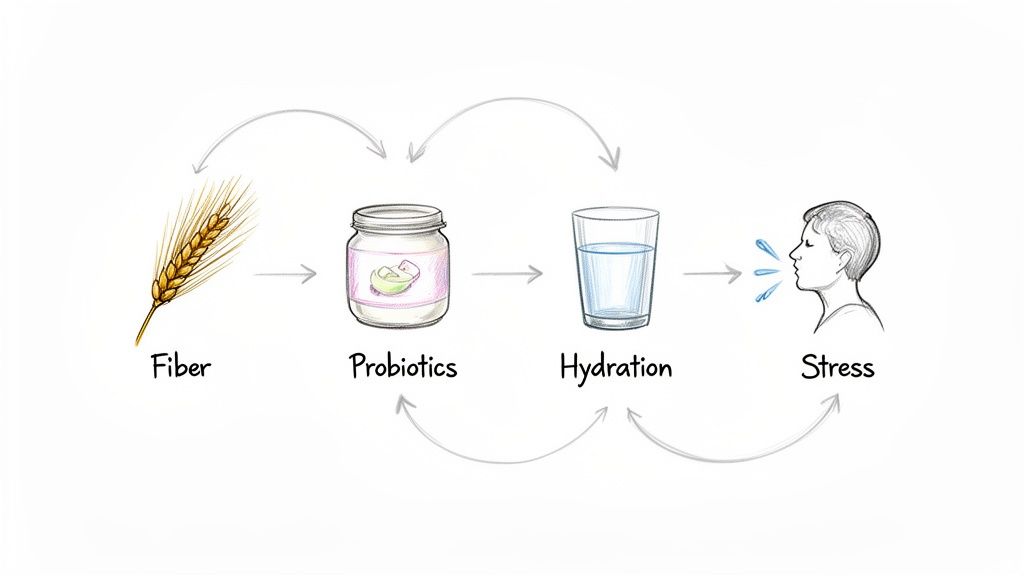
Feeling good often starts on the inside—specifically, inside your gut. That bustling community of trillions of microbes in your digestive tract, known as your gut microbiome, has a say in everything from how you absorb nutrients to how your immune system functions and even your mood.
When this internal ecosystem is balanced, you tend to feel more energetic and resilient. But when it's thrown off, you might notice things like bloating, fatigue, or just a general sense of being "off."
The good news? You have a huge amount of control over this balance through simple, everyday choices. You don't need a cabinet full of expensive supplements or an overly restrictive diet to feel a real change. It's more about creating a solid foundation where your good gut bacteria can thrive.
Think of it like tending a garden. If you provide the right nutrients, plenty of water, and a calm environment, everything flourishes.
Four Pillars of Natural Gut Wellness
Improving your gut health is all about small, consistent actions that build on each other. These four pillars aren't quick fixes; they're interconnected parts of a holistic approach to feeling your best.
This table provides a quick look at the core strategies, the simple habits you can start today, and the immediate benefits you can expect.
By weaving these habits into your daily routine, you're not just addressing symptoms—you're nurturing the root of your overall wellness.
A great example of a diet built on these principles can be seen in traditional food cultures. For instance, have you ever wondered Is Japanese food healthy? The answer often lies in its natural focus on fermented foods, fiber, and whole ingredients.
Why Your Gut Microbiome Matters
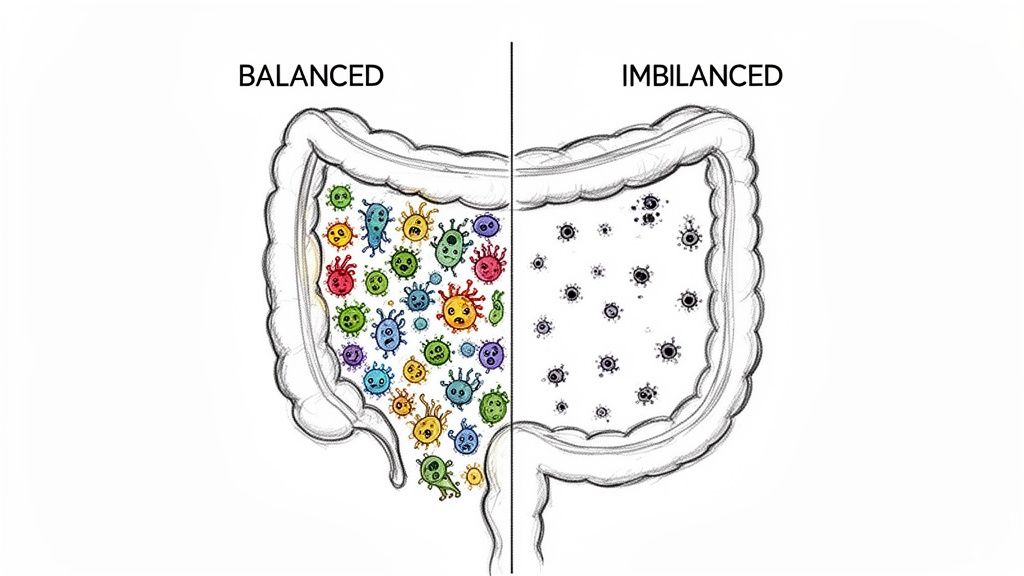
Before we dive into the "how," it’s crucial to understand the "why." Think of your digestive tract as a massive, bustling ecosystem. This internal world is home to trillions of microorganisms—bacteria, viruses, and fungi—all living together. This entire community is what we call the gut microbiome.
These tiny residents aren’t just hanging out. They're incredibly hard workers, influencing almost everything about your health. A well-balanced microbiome is a cornerstone of good health, helping you digest food, absorb vital nutrients, and even regulate your immune system. We're now seeing solid research connecting gut diversity to better brain health, lower inflammation, and a stronger defense against unwelcome pathogens.
When everything is running smoothly, your gut is in a state of symbiosis. The beneficial bacteria are in control, keeping the more disruptive ones from taking over. But that perfect harmony can be fragile.
When Your Gut Gets Out of Balance
Sometimes, things get thrown off. This imbalance, known as dysbiosis, happens when the less helpful microbes begin to outnumber the good guys. What causes this? It can be a number of things, from a diet heavy in processed foods and sugar to chronic stress or even just not getting enough sleep.
Here's a simple way to picture it: Processed foods and sugar are junk food for your gut. They fuel the troublemakers, helping them multiply and push out the beneficial bacteria that thrive on healthier, fiber-rich foods. This shift is often the root cause of those familiar digestive issues that tell you something isn’t right.
Key Takeaway: An imbalanced gut is more than a minor annoyance. It’s a foundational problem that can trigger bloating, zap your energy, and even affect your mood through the powerful gut-brain connection.
Many of us walk around with signs of an unhealthy gut without ever connecting the dots. Some of the most common red flags include:
- Frequent Bloating and Gas: This is often a sign of unwanted fermentation by the wrong kinds of bacteria.
- Constipation or Diarrhea: When your bowel movements are all over the place, it’s a good clue your microbial community is unsettled.
- Persistent Heartburn: A balanced gut is key for smooth digestion, so an imbalance can contribute to acid reflux.
- Unexplained Fatigue: Your gut microbes are involved in energy production. If they’re struggling, you’ll feel drained.
Simply noticing these signs is a huge first step. The goal isn't to sterilize your gut—diversity is key—but to create an environment where the beneficial microbes can flourish and lead the charge. By adopting a few natural habits, you can directly tip the scales back in your favor, giving those trillions of allies the support they need to keep you healthy. It’s the groundwork that makes everything else you do for your gut health that much more effective.
Building Daily Habits for a Resilient Gut

Let's be honest, improving your gut health isn’t about some dramatic, overnight overhaul. It's about building small, consistent daily actions until they become second nature. These simple routines, woven into the fabric of your real life, are what create a truly resilient gut—without adding more stress to your day.
Forget the drastic cleanses. Real, lasting change comes from the simple habits you can actually stick with, especially on your busiest days. It's all about finding what works for you.
Maybe you're a busy professional who can't imagine prepping intricate meals every day. That's fine. You can still start your morning with a large glass of water or swap that afternoon coffee for herbal tea. These tiny adjustments are powerful precisely because they're sustainable.
The Underrated Power of Hydration
One of the most foundational—and often overlooked—habits for a happy gut is simply drinking enough water. When you're properly hydrated, everything just moves more smoothly through your digestive tract.
Water is what helps your body pull nutrients from food and softens stool, making it a critical player in preventing constipation. Skimp on H2O, and your entire digestive system can slow down, which can easily disrupt your microbiome's delicate balance.
A Practical Tip: Start your day with a glass of water before you even think about coffee. Keep a reusable bottle on your desk as a constant visual reminder to sip throughout the day. This one small change can make a significant difference in how you feel.
Mindful Movement and Digestion
You don't need to crush intense workouts to support your gut. Gentle, mindful movement, especially after meals, can work wonders for your entire digestive process.
A short, five-minute walk after lunch or dinner does so much more than just clear your head. It actually stimulates your gut muscles, which aids motility and helps prevent that heavy, bloated feeling. This gentle activity helps move food through your system efficiently, paving the way for regular bowel movements and a healthier microbiome.
Focusing on hydration and stress-reducing practices like a short walk naturally fortifies your gut. In fact, studies show that aiming for 8–10 glasses of water daily can improve digestive motility by 15–20%. That simple walk after meals? It can genuinely boost microbial diversity over time. You can learn more about the growing focus on these habits in the global digestive health market report on GlobeNewswire.
How to Practice Mindful Eating
How you eat is just as important as what you eat. Mindful eating is the practice of paying full attention to your meal, and it can radically improve your digestion. When you eat slowly and ditch the distractions, you chew more thoroughly and give your brain the time it needs to register fullness.
This simple act sends signals to your digestive system to get ready for food, which in turn enhances the production of necessary enzymes.
Ready to give it a try? Start with these small steps:
- Put Your Fork Down Between Bites. This forces you to slow down and actually savor each mouthful.
- Avoid Screens During Meals. Turn off the TV. Put your phone away. Just for a few minutes, focus only on the textures and flavors of your food.
- Take a Few Deep Breaths. Before your first bite, take three slow, deep breaths. This helps calm your nervous system, which is directly connected to your gut.
This is where integrating habits becomes easier with tools like Superbloom's AI coach. The habit tracker can give you a nudge to take that post-meal walk, and logging your food helps you connect the dots between what you ate and how you feel. It’s all about turning these small actions into a consistent, gut-friendly lifestyle that feels effortless.
Fueling Your Gut with a Fiber-Rich Diet

If you're wondering how to improve your gut health naturally, fiber is the absolute best place to start. I always tell my clients to think of fiber as the preferred fuel for the trillions of good bacteria in their gut. When you feed them well, they thrive, creating a diverse and resilient microbiome.
Unfortunately, most of us aren't getting nearly enough. The great news? You don't need a complete diet overhaul to fix it. It's really about making small, consistent, and even enjoyable swaps that add up over time.
This goes way beyond just preventing constipation. We're talking about providing the essential nourishment that supports everything from your immune system to your mood and energy levels. A fiber-rich diet is truly a cornerstone of the entire gut health puzzle.
Making Fiber Effortless and Delicious
Increasing your fiber intake should feel like an upgrade, not a chore. The real key is to focus on adding delicious foods to your plate, not just taking things away. Instead of worrying about what to cut out, think about what colorful, satisfying foods you can bring in.
Here are a few incredibly simple swaps you can make today:
- Morning Boost: Stir a tablespoon of chia seeds or ground flaxseed into your morning yogurt, oatmeal, or smoothie. This tiny addition packs in an extra 3-5 grams of fiber without really changing the taste.
- Smarter Grains: Simply choose whole-grain bread for your sandwiches or toast instead of white. The same principle applies to pasta and rice—just opt for the whole-wheat or brown rice versions when you can.
- Snack Upgrade: Instead of grabbing chips, try a handful of almonds, an apple with the skin on, or some baby carrots with hummus. Easy.
A simple mindset shift can make all the difference. Just ask yourself, "Where can I add one more plant to this meal?" This could be a handful of spinach in your eggs, some lentils in your soup, or sliced avocado on your toast.
Boosting your dietary fiber from whole foods is a true game-changer. Aiming for 25–30 grams of daily fiber doesn't just cut constipation risk by 30%; it also helps stabilize your blood sugar, which is a huge win for managing energy and stress. You can dig deeper into the data in this gut health supplements market analysis on Data Bridge Market Research.
Sample Grocery List and Meal Ideas
Putting this into practice really begins at the grocery store. When your kitchen is stocked with fiber-rich staples, making healthy choices becomes the path of least resistance.
Your Gut-Friendly Grocery List:
- Legumes: Lentils (any kind!), chickpeas, black beans
- Whole Grains: Oats, quinoa, brown rice, whole-wheat bread
- Fruits: Berries (raspberries are a powerhouse!), apples, pears, avocados
- Vegetables: Broccoli, Brussels sprouts, leafy greens (spinach, kale), sweet potatoes
- Nuts & Seeds: Almonds, walnuts, chia seeds, flaxseeds
With these ingredients on hand, whipping up delicious, fiber-packed meals is simple. A hearty lentil soup for dinner, for instance, not only feels comforting but also delivers a huge chunk of your daily fiber. A vibrant salad for lunch topped with chickpeas and avocado is another fantastic and easy option.
This is where a tool like the Superbloom app can be a great ally. By logging a photo of your meal, the AI coach can give you instant feedback, maybe suggesting you add a handful of berries to your breakfast for that extra fiber boost. It helps you spot those simple opportunities you might have missed, turning good intentions into consistent, healthy habits.
Getting More Probiotic-Rich Foods on Your Plate
While fiber is fantastic for feeding the good gut bacteria you already have, probiotic foods act like reinforcements, bringing new, beneficial microbes to the party. Think of them as a way to replenish and diversify your gut's microbial team, which in turn helps strengthen your gut lining and improve how you absorb nutrients from everything else you eat.
You don't have to seek out strange or exotic ingredients. The trick is to find accessible, tasty options and simply weave them into the meals you're already making.
Simple Ways to Sneak in More Probiotics
Making probiotics a regular thing is much easier than it sounds. It’s all about small, smart additions—a dollop here, a splash there—that add up to make a huge difference over time.
For instance, just starting your day with a serving of kefir can deliver up to 10 billion live cultures. This simple swap can boost nutrient absorption by 20–30%. Better yet, research has shown that consistent intake can ease IBS symptoms in 60–70% of people, helping your gut feel more resilient and less reactive. You can dig into more of this data in the gut and digestive health ingredients market report from Strategic Market Research.
Here are a few of my go-to, real-world ideas:
- Yogurt: Grab a plain, unsweetened yogurt that says "live and active cultures" on the label. I love adding a big scoop to my morning smoothie, using it instead of sour cream on baked potatoes, or mixing it with fresh herbs for a quick veggie dip.
- Kefir: This fermented milk drink is tangier and thinner than yogurt, which makes it perfect for pouring over granola or just drinking straight.
- Sauerkraut: A forkful of real sauerkraut—the kind you find in the refrigerated section—is an amazing side for grilled meats or sausages. It adds a fantastic crunch and tangy kick.
- Kombucha: If you're craving something fizzy, this fermented tea is a great swap for soda. Just keep an eye on the sugar content, as some brands can be surprisingly high.
Expert Tip: Always buy your sauerkraut, kimchi, and other fermented veggies from the refrigerated case. The stuff on the shelf has been pasteurized, a process that kills off all the beneficial live bacteria you're trying to get.
Start Small, Stay Consistent
If you're new to the world of fermented foods, ease into it. Your gut needs a little time to adjust to the influx of new microbes. A tablespoon of sauerkraut or a small glass of kefir is a perfect place to start.
Remember, consistency beats quantity every single time. It's far more effective to have a small amount of probiotics daily than a huge portion once a week. This steady, consistent supply is what truly helps build and maintain a balanced, diverse gut microbiome—and that's the real goal.
Using Superbloom to Track Your Gut Health Journey
Deciding to change your diet is a huge first step. But how do you know if it’s actually working? Lasting success comes from understanding the impact of those changes, and that’s where tracking becomes your secret weapon. It turns your goals from a vague idea into hard data, letting you see exactly what works for your unique body.
Think of Superbloom’s AI coach as your personal gut health guide, designed to make this whole process easy. Forget about tedious manual data entry. With photo meal logging, you just snap a picture of your plate, and the app instantly gives you feedback on things like fiber content, keeping you on track.
It’s not just about collecting data, though—it’s about getting real insights. To really get a handle on your progress and figure out what foods trigger issues or make you feel great, it helps to find the best app to track food for your health goals.
Connecting the Dots for Better Gut Health
The real magic happens when you start seeing connections you would have otherwise missed. For example, I’ve seen so many people use Superbloom’s guided journaling and have an "aha!" moment when they realize their stress levels are directly tied to their digestive issues. They notice that on days packed with meetings, bloating flares up, no matter how perfectly they ate.
This is the kind of insight that’s truly empowering. You stop just following a set of rules and start listening to your body’s signals, responding to what it needs at that moment.
Superbloom’s habit tracker is built to help you nail the small, consistent actions that add up to big results. Maybe you want to drink more water, take a walk after dinner, or eat one fermented food a day. The app gives you a gentle nudge and celebrates your wins along the way.
Here’s how it helps you build that consistency:
- Set Your Gut Health Goals: Start with something small and achievable, like "add one high-fiber food" to lunch.
- Receive Gentle Nudges: Get reminders that fit into your day, making new habits feel natural, not forced.
- Visualize Your Progress: There's nothing more motivating than seeing a streak of successful days pile up.
When you bring meal insights, habit tracking, and even mood journaling together, you get a full, 360-degree view of your gut health. This clarity makes it so much easier to bounce back from a bad day and reinforces all the positive changes you're making.
Common Gut Health Questions Answered
Starting a gut health journey always kicks up a few questions. As you begin to change your habits, it's natural to wonder if what you're experiencing is normal. Let's walk through some of the most common things people ask, so you can move forward with confidence.
What If I Get Bloated After Eating More Fiber?
This is probably the number one concern I hear, and it's a great question. If you've suddenly upped your fiber and feel a bit... puffy, don't panic. This is completely normal.
Think of it this way: you've just given your gut microbiome a whole new kind of fuel. It needs a minute to adapt and build up the specific bacteria required to break down all that new goodness. A little initial bloating or gas is just a sign that your gut is adjusting.
The golden rule here is start low and go slow. You wouldn't go from the couch to running a marathon overnight, right? Same principle. Don't leap from eating 10 grams of fiber a day to 30. Instead, try adding just one new high-fiber food every few days. Maybe start with a tablespoon of chia seeds in your smoothie, not a quarter cup. And remember to drink plenty of water—it's crucial for helping that fiber move things along.
When Is the Best Time to Eat Probiotic Foods?
Honestly, the "perfect" time doesn't exist. Consistency is what really moves the needle. Don't get so hung up on timing that you skip it altogether.
That said, if you want to optimize, many experts (myself included) suggest having probiotic-rich foods like kefir or yogurt either with a meal or about 30 minutes before you eat.
Why? The food you eat acts as a protective buffer. It helps shield those beneficial live bacteria from the harsh environment of your stomach acid, giving more of them a fighting chance to make it to your intestines where they can get to work. Try a small glass of kombucha before lunch or add a forkful of kimchi to your dinner plate.
A Simple Strategy: Just focus on getting one serving of a probiotic food into your routine each day. Whenever it works for you is the best time. A consistent daily habit is infinitely more powerful for your gut than worrying about perfect timing.
Traveling can also throw your system for a loop. A few simple tricks can make a huge difference: pack some gut-friendly snacks like almonds, stay extra hydrated on the plane, and try to stick to your usual meal times as much as possible to keep your internal clock happy.
Ready to turn these insights into consistent action? Superbloom's AI coach can help you track your fiber intake, set reminders for probiotic foods, and connect the dots between your habits and how you feel. Start building a healthier gut with personalized guidance at https://superbloomapp.com.