
How to Lose 15 Pounds in 3 Months Without Restrictive Dieting
Losing 15 pounds in three months is a completely achievable and healthy goal. It boils down to a loss of just over one pound a week, which is the sweet spot for sustainable progress without resorting to crash diets or miserable workout routines.
The secret isn't some magic pill; it's about making small, intelligent shifts in your daily habits around food, exercise, and even how you manage stress.
Your Realistic Path to Losing 15 Pounds
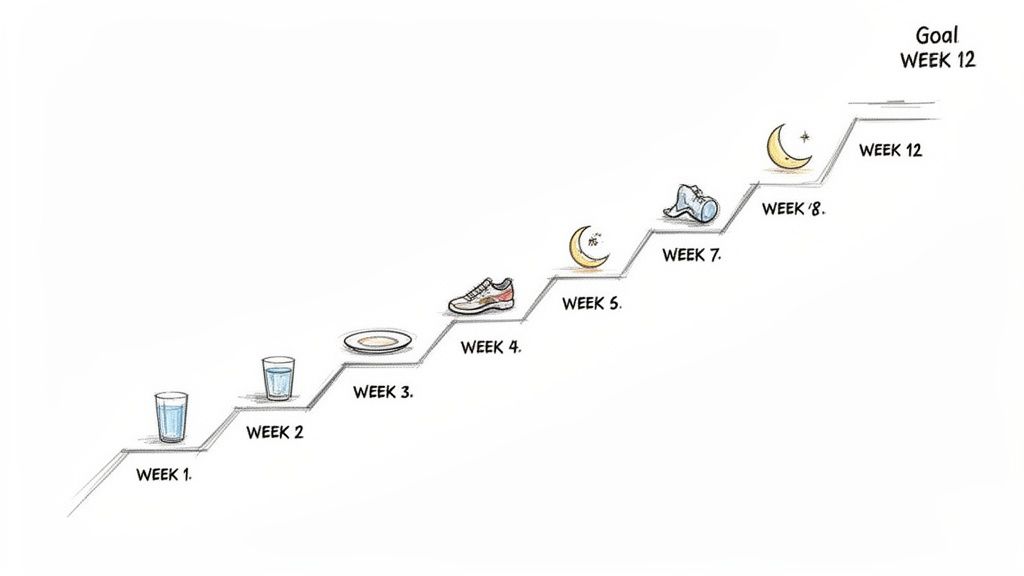
A 90-day timeline is perfect for making real, lasting changes. It gives you enough time to build solid habits that stick, yet it’s short enough that the finish line always feels within reach, keeping you motivated. This isn't just about dropping weight; it's about fundamentally improving your relationship with food and your body for the long haul.
Instead of another restrictive plan that tells you what you can't eat, this guide is all about building awareness. You’ll learn to pinpoint your personal eating triggers, make simple food swaps that actually taste good, and discover ways to move that you genuinely enjoy. It’s a plan built for real life—one that can handle a busy schedule or a weekend dinner out without throwing you off track.
Why This Approach Works
This entire method is grounded in a simple but powerful idea: small, consistent actions create massive results over time. You’re not going to overhaul your entire life overnight because, frankly, that never works. Instead, you'll make one small improvement at a time.
This strategy is so much more effective because it’s designed to fit into your life, not force you into a new one.
We'll be diving deep into a few core principles:
- Mindful Meal Patterns: Discover how to build satisfying, balanced plates and finally start listening to your body’s natural hunger and fullness signals.
- Enjoyable Movement: Find activities you actually look forward to, turning "working out" from a chore into a valued part of your day.
- Stress and Emotional Awareness: Unpack the deep connection between your moods and your eating habits, so you can build healthier ways to cope.
- Sustainable Habit Formation: Embrace consistency over perfection. One not-so-great day won't undo all your progress.
The big idea here is that you don't have to be perfect to see results. By focusing on self-awareness and sustainable actions, you're building a foundation for health that will serve you well beyond these next 90 days.
To give you a clearer picture, here’s a high-level look at how the next three months will unfold. Think of it as your roadmap.
Your 90-Day Sustainable Weight Loss Framework
.tbl-scroll{contain:inline-size;overflow-x:auto;-webkit-overflow-scrolling:touch}.tbl-scroll table{min-width:600px;width:100%;border-collapse:collapse;margin-bottom:20px}.tbl-scroll th{border:1px solid #ddd;padding:8px;text-align:left;background-color:#f2f2f2;white-space:nowrap}.tbl-scroll td{border:1px solid #ddd;padding:8px;text-align:left}MonthPrimary FocusKey ActionsExpected Outcome1Building Your FoundationTrack food without judgment, identify eating patterns, start with gentle movement (e.g., daily walks).Increased awareness of habits, stable energy levels, initial 4-6 lb loss.2Optimizing & Adding ChallengeIntroduce strength training, focus on protein/fiber, practice mindful eating techniques.Improved body composition, reduced cravings, consistent 1-1.5 lb/week loss.3Honing & Sustaining HabitsManage social events, develop stress-coping strategies, plan for long-term maintenance.Confidence in new habits, feeling stronger, reaching the 15-pound goal.
This framework provides structure without being rigid, allowing you to adapt it to your own pace and lifestyle.
A Goal With Global Impact
Your decision to get healthier is a personal one, but it's also part of a much bigger conversation. Obesity rates have been climbing for years; in 2022, roughly 1 in 8 people worldwide were living with obesity. It’s a serious global health challenge, and projections show the numbers continuing to rise.
Taking a step to improve your own health—even by losing 15 pounds—is a meaningful contribution to reversing this trend. If you're interested in the data, you can explore the full World Obesity Atlas 2025 findings to learn more.
Throughout this guide, we'll point out how a tool like the Superbloom app can act as your private coach, giving you personalized insights to support you every step of the way. Ready to begin?
Build Your Foundation with Mindful Meal Patterns
If you want to lose 15 pounds in 3 months and keep it off, forget about restriction. At least for this first month. Instead, we're going to focus on something much more powerful: awareness.
Right now, the goal isn't to count every last calorie. It's about tuning in to your body's signals and understanding your current habits. This is where you build the foundation for changes that feel natural, not forced. Think of it as shifting your mindset from what you can't eat to what you can add to feel more satisfied and energized.
Visualize Your Plate for Easy Wins
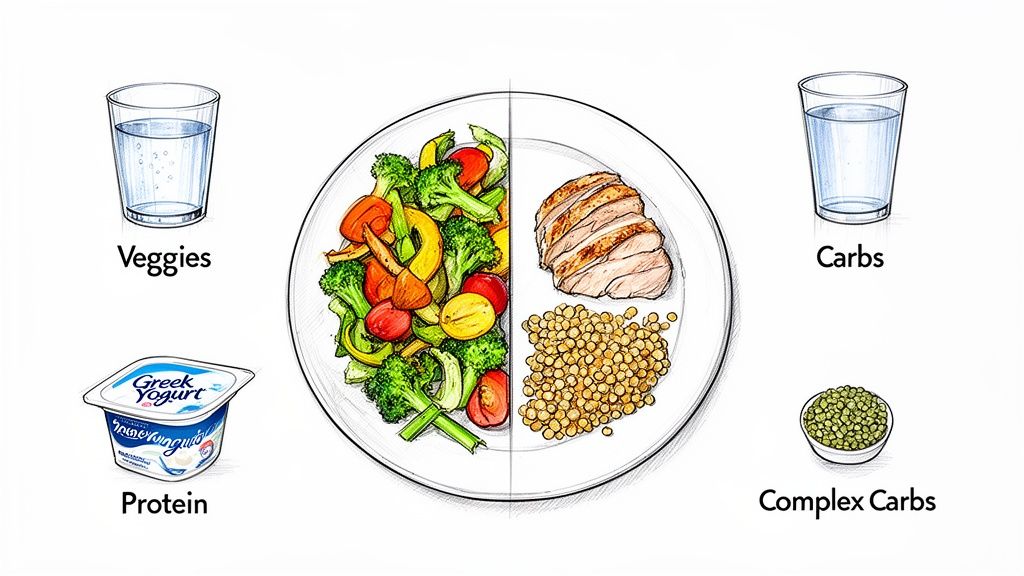
One of the most practical tools I've used with clients is the "Plate Method." It's a simple, visual way to build a balanced meal without getting bogged down in numbers. The best part? It works anywhere—at home, out to dinner, or even at a family cookout.
Here’s the basic idea for building your plate:
- Half Your Plate (Vegetables): Load this up with colorful, non-starchy veggies. I'm talking broccoli, bell peppers, spinach, cauliflower, or a big, leafy salad. They're high in fiber and nutrients but low in calories, so they fill you up without weighing you down.
- One Quarter (Lean Protein): Dedicate a corner of your plate to a solid protein source. Think grilled chicken, fish, tofu, or a scoop of beans or lentils. Protein is your best friend for satiety; it keeps you feeling full long after you've finished eating.
- One Quarter (Complex Carbs): Fill the last spot with a high-fiber carbohydrate. Quinoa, brown rice, sweet potatoes, and whole-wheat pasta are all great choices. They deliver steady energy, helping you avoid those afternoon slumps and cravings.
Following this simple guide naturally helps with portion control and ensures you're getting a healthy mix of macronutrients in every meal.
Listen to Your Body's Cues
Developing the skill to tell the difference between true, physical hunger and emotional eating is a game-changer. We've all been there—reaching for a snack out of boredom, stress, or habit.
Before you eat, just take a second to pause and ask yourself: "Am I actually hungry?"
Physical hunger tends to come on gradually and can be satisfied with a real meal. Emotional hunger often hits you like a ton of bricks and demands a very specific comfort food. Recognizing that difference is a huge step. And if you're active, knowing what to eat before running can also make a world of difference in your energy levels and how your body feels.
Key Insight: Learning to eat when you're hungry and stop when you're comfortably full—not stuffed—is one of the most sustainable ways to manage your weight. It allows your body’s internal cues to do the work for you.
Boost Satiety and Stay Hydrated
Small tweaks to make your meals more filling can have a surprisingly big impact. The idea is to feel satisfied for longer, which naturally helps reduce your overall calorie intake without feeling like you're on a diet.
Here are a few simple strategies to try:
- Add Fiber and Protein: Toss a tablespoon of chia seeds in your yogurt, add a half-cup of lentils to your soup, or pair an apple with a handful of almonds for a snack.
- Start with Soup or Salad: Beginning a meal with a broth-based soup or a simple green salad can curb your appetite, making you less likely to overdo it on the main course.
- Hydrate Smarter: It’s so easy to mistake thirst for hunger. Try drinking a full glass of water before each meal. If a craving strikes between meals, drink some water and wait 15 minutes. You might be surprised how often the "hunger" disappears.
By focusing on these mindful habits, you're not just dieting—you're building a new, sustainable lifestyle. The Superbloom app can be a great partner in this. You can log meals with a quick photo, and it might send a gentle nudge to add a protein source to your lunch, helping these new patterns become second nature.
Weave in Movement and Master Your Stress
Once you’re getting the hang of your new eating patterns, it’s the perfect time to bring in two other game-changers: movement and stress management. Think of them as two sides of the same coin. They work together and are absolutely critical if you want to lose 15 pounds in 3 months and actually keep it off for good.
This isn’t about forcing yourself into workouts you dread. The real secret is finding activity that actually feels good—something that gives you energy and slots neatly into your life. When exercise stops feeling like a chore and starts feeling like a form of self-care, you'll find yourself doing it without a second thought.
Find a Rhythm That Works for You
Let's ditch the "go hard or go home" mindset. It's a recipe for burnout. A simple, consistent plan that you can build on over time is what truly gets results.
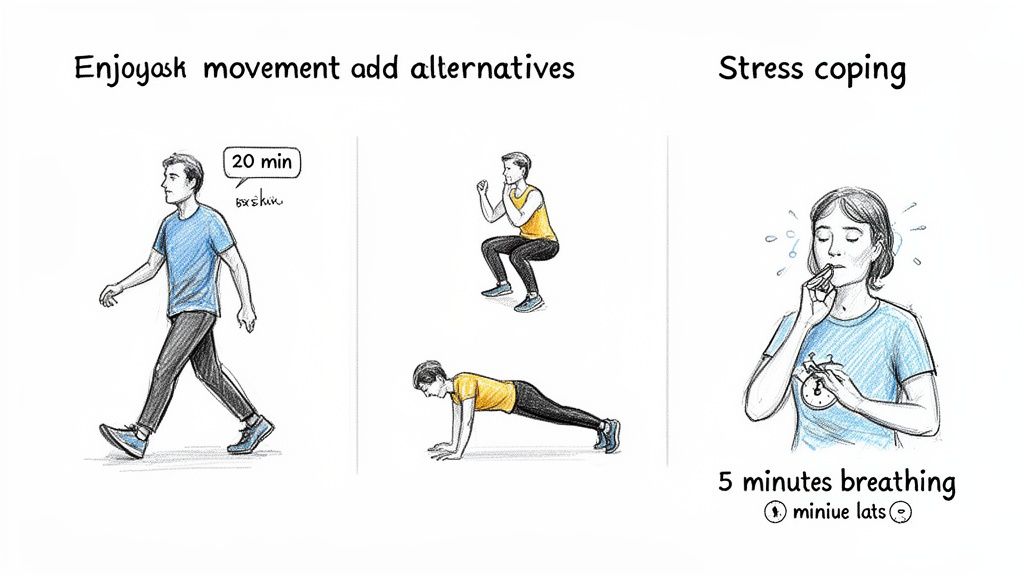
A great starting point is to weave in 20-30 minutes of brisk walking three or four times a week. This could be a lunchtime power walk, a post-dinner stroll to clear your head, or an early morning routine to start your day. The goal is just to get your heart pumping a bit and, most importantly, to be consistent.
After that feels like second nature, try adding a couple of days of simple bodyweight exercises. Building a little lean muscle is one of the best things you can do to fire up your metabolism.
- Squats: Aim for 2-3 sets of 10-12 reps. Really focus on your form—chest up, back straight.
- Planks: See if you can hold for 20-30 seconds, and do that 2-3 times. It's an amazing exercise for your entire core.
- Push-ups: Don't underestimate modified push-ups on your knees! They are incredibly effective. Do 2-3 sets of as many as you can manage with good form.
This simple mix of cardio and strength is a potent combination for fat loss and boosting your overall health.
My Favorite Trick: I always pair my walks with a can't-miss podcast or a call to a friend I haven't talked to in a while. When you link movement to something you already love, it just happens.
The Real Deal on Stress and Eating
Let's be honest: stress is one of the biggest roadblocks to any weight loss journey. When life gets overwhelming, your body pumps out cortisol, a stress hormone that can ramp up your appetite and make you crave high-fat, sugary foods. Before you know it, you're stuck in an emotional eating loop that feels impossible to escape.
The first step is simply learning to tell the difference between real, physical hunger and an emotional craving. Physical hunger tends to come on gradually. Emotional hunger often hits you like a ton of bricks and demands a very specific comfort food—now.
Take a minute to think about your own triggers. Do you head for the pantry after a tense meeting? Do you zone out with a bag of chips in front of the TV after a draining day? Just noticing when and why it happens is a massive win.
Build Your Go-To Stress Toolkit
Once you can spot your triggers, you can start building a set of go-to strategies for when stress hits—strategies that don't involve food. The idea is to create a little space between the feeling and the reaction.
Here are a few things that work wonders for me and my clients:
- The 5-Minute Reset: When you feel that wave of stress coming, just stop. Find a quiet corner, set a timer for five minutes, and do nothing but focus on your breathing. Slow inhale through the nose, long exhale through the mouth. That's it.
- Change Your View: Sometimes, all you need is a change of scenery. A quick walk around the block or just stepping outside for fresh air can completely shift your mindset and diffuse a craving.
- Wake Up Your Other Senses: Put on a song that makes you happy, light a candle with a scent you love, or make a warm cup of herbal tea. Giving your other senses something to focus on can satisfy that need for distraction you were looking for in food.
This kind of personalized approach is crucial because weight management challenges are universal, but how we experience them is unique. For example, the World Obesity Atlas 2025 projects a startling increase in severe obesity—over 300% between 2010 and 2030—in regions like Southeast Asia. This just underscores that one-size-fits-all diets don't work; we need sustainable strategies that address our individual triggers. You can dive deeper into these findings by reading about these global obesity trends.
By bringing enjoyable movement into your life and learning healthier ways to ride the waves of stress, you’re not just losing weight. You're building the skills to keep it off for life.
Fine-Tuning Your Approach and Breaking Through Plateaus
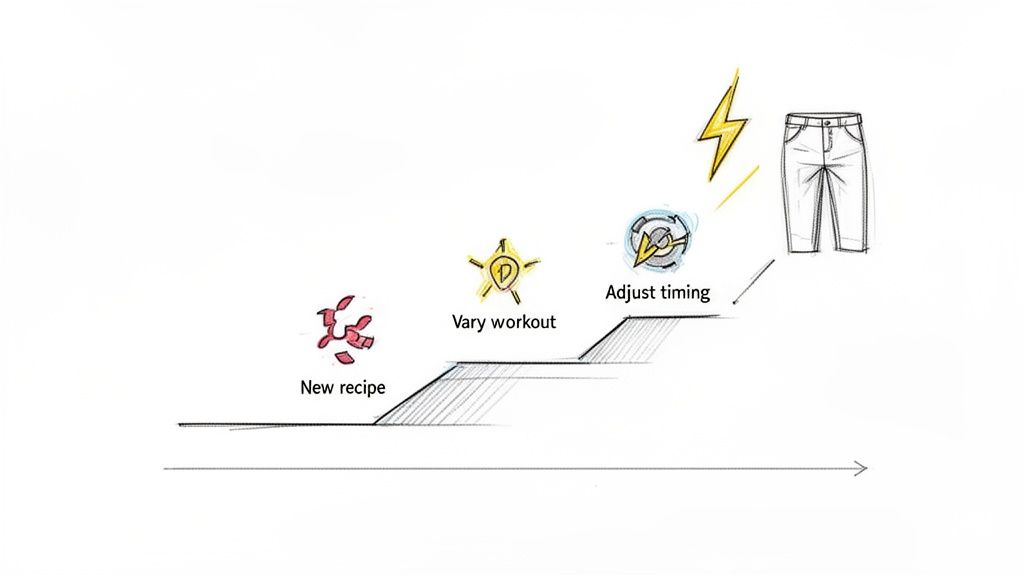
As you head into the home stretch of your 90-day plan, you'll be focused on cementing your new habits. This is also when you might run into one of the most common hurdles in any weight loss journey: the dreaded plateau.
It’s that frustrating moment when the scale just stops moving, even though you’re sure you’re still doing everything right. First things first: don't panic. This is a completely normal part of the process. Your body is incredibly smart and has started to adapt to your routine. Now is the time for small, strategic tweaks to get things moving again and finish strong.
Identifying Hidden Roadblocks
More often than not, stalled progress comes down to little habits that have crept back in without you even realizing it. Before you overhaul your entire plan, just take a moment to play detective. You don’t need to count every calorie, but a bit of honest reflection can often reveal the culprit.
Are you finding yourself mindlessly snacking while watching TV at night? Maybe you've started adding creamy dressings back onto your salads or an extra splash of creamer into your coffee. These "calorie creeps" are sneaky and can easily add up, slowing down your momentum.
Here are a few common areas to look at:
- Liquid Calories: Have sugary coffees, juices, or an extra glass of wine with dinner become a regular thing again?
- Portion Creep: Are your portion sizes slowly getting a bit larger than they were back in month one? It happens to the best of us.
- Hidden Sugars: Take a quick look at the labels on things like yogurt, sauces, and condiments. You might be surprised where sugar is hiding.
- Mindless Munching: Are you reaching for snacks out of boredom or stress instead of true hunger?
Just spotting one of these patterns is often enough to get the scale moving in the right direction. A quick check-in with a tool like the Superbloom app can help you see these trends without the tediousness of manual tracking.
Shake Things Up to Reignite Progress
When your body gets used to the same routine, it becomes more efficient, meaning it burns fewer calories doing the same activity. The best way to break through a plateau is to introduce a little variety. This challenges your body in a new way and, just as importantly, keeps things from getting boring.
Think of it as a gentle nudge, not a complete reinvention of the wheel.
Key Insight: You don’t need a brand-new plan; you just need to introduce a new stimulus. The idea is to keep your body guessing and your motivation high without adding a bunch of stress to your plate.
Try one of these simple "shake-ups" this week:
- Vary Your Workout: If you've been walking, try finding a route with a few hills or add in a few 30-second bursts of jogging. If you're doing bodyweight exercises, try a new move or push for a few more reps.
- Try a New Recipe: Experimenting with a new healthy meal can introduce different nutrients and break you out of a food rut.
- Adjust Meal Timing: If you always eat at the exact same times, try shifting your lunch or dinner by an hour. This tiny change can sometimes be enough to stimulate your metabolism differently.
Celebrate Non-Scale Victories
It's so easy to get fixated on the number on the scale, but it only tells a tiny part of your story. True progress is about so much more than what you weigh. Focusing on non-scale victories is one of the most powerful things you can do for your motivation, especially when the scale is being stubborn.
These are the real-life benefits of all your hard work. Take a moment to actually notice and appreciate them:
- Are your favorite jeans fitting better?
- Do you have more energy in the afternoons?
- Is walking up a flight of stairs less of a chore?
- Has your mood generally improved?
- Are you sleeping more soundly through the night?
These wins are potent reminders that your efforts are paying off in ways that truly improve your quality of life. I always recommend keeping a running list of them—it’s one of the best motivational tools you can possibly have.
The Overlooked Role of Sleep
Finally, whatever you do, don't underestimate the power of a good night's sleep. Study after study confirms that a lack of quality sleep can completely sabotage weight loss efforts. When you're sleep-deprived, your body produces more ghrelin (the "I'm hungry" hormone) and less leptin (the "I'm full" hormone).
This hormonal cocktail can lead to intense cravings for sugary, high-calorie foods and makes it infinitely harder to stick to your healthy habits.
Prioritizing 7-9 hours of quality sleep isn't a luxury; it's a non-negotiable part of a successful weight loss strategy. Try setting a consistent bedtime, putting screens away an hour before you turn in, and making your bedroom a cool, dark, and quiet oasis. This final piece of the puzzle helps regulate your appetite and ensures you finish your 90-day journey feeling rested, strong, and accomplished.
Build Your Toolkit for Lasting Success
Losing the weight is one thing. Keeping it off? That’s a whole different ballgame. As you approach the end of this 90-day plan, your focus needs to shift from active weight loss to something more permanent: maintenance. This is where you graduate from a project-based mindset to a lifestyle.
The whole point of the last three months wasn't to be "on a diet" forever. It was to build habits—like eating mindfully, finding movement you actually like, and managing stress—so they become second nature. This final phase is about learning to live with flexibility and trusting yourself around food again.
Get into a Maintenance Mindset
First things first, you have to ditch the "on track" versus "off track" mentality. Life is messy and wonderful. It's full of birthday parties, holidays, and spontaneous dinners with friends. A maintenance mindset doesn't see these events as threats; it sees them as part of a rich, full life.
When you can look at a piece of cake as a conscious choice instead of a "failure," everything changes. This small mental shift gets rid of the guilt that often sends people into an all-or-nothing spiral, where one treat accidentally turns into a week of old habits.
Put the 80/20 Rule to Work
One of the best tools for maintaining balance is the 80/20 rule. Don't get hung up on the math; it's more of a guideline. It simply means that about 80% of the time, you stick to the nutrient-rich, supportive food choices that got you here.
The other 20% of the time is for pure, intentional enjoyment. This is where you savor your favorite foods without a single ounce of guilt.
- Your 80%: This is your day-to-day. Meals are based on the Plate Method, you’re drinking plenty of water, and you’re in tune with your body’s hunger and fullness cues.
- Your 20%: This is grabbing a slice of pizza on a Friday night, having dessert at a wedding, or enjoying a glass of wine with your partner.
This approach is what prevents that feeling of deprivation that makes so many diets fail. It gives you permission to be human while still prioritizing your health.
Adopting the 80/20 rule can completely transform your relationship with food. It moves you from a place of restriction to one of intentional, balanced living—and that's the real secret to making your results stick.
How to Handle Restaurants and Social Events
Eating out can feel like navigating a minefield when you're trying to maintain your weight, but it really doesn't have to be. A few simple strategies can make all the difference.
Your Game Plan for Going Out
- Scope Out the Menu: Almost every restaurant has its menu online. Take two minutes to look it over before you go. You can spot a few solid options ahead of time so you aren't making a panicked decision at the table.
- Focus on the People: Seriously, remember why you're there. It’s to connect with friends or family. Put your main focus on the conversation, not just the food.
- Make Simple Swaps: Don't be afraid to ask for what you want! Simple requests like "sauce on the side," "steamed veggies instead of fries," or "can you grill the chicken instead of frying it?" are things most kitchens handle all the time.
- Pick Your "Worth It" Treat: If you know a place has a dessert that’s out of this world, plan for it. Decide beforehand that this will be your 20% indulgence for the day and then enjoy every single bite.
These little tricks put you back in the driver's seat, allowing you to have a great time without feeling like you’ve derailed your progress.
Making Movement a Lifelong Habit
Just like with food, your approach to exercise has to be something you can stick with for the long haul. The only way that happens is if you find activities you genuinely enjoy. A huge part of this is learning how to stay consistent working out so it becomes an automatic part of your routine.
Start celebrating how movement makes you feel—stronger, more energetic, less stressed—instead of just what it does on the scale. That intrinsic motivation is what will keep you going long after these initial 90 days. The habits you've built are now part of you, ensuring your journey to lose 15 pounds in 3 months is just the beginning of a healthier, more vibrant life.
Your Top Questions About Losing Weight, Answered
It's completely normal to have questions pop up as you start making changes. In fact, it's a great sign—it shows you're really thinking about how to make this work for you. Let’s tackle some of the most common ones I hear from people who are aiming to lose 15 pounds in 3 months.
Do I Really Have to Count Calories to Lose 15 Pounds?
Honestly, no. You don't need to get bogged down in counting every single calorie. The whole point of this approach is to step away from that obsessive mindset and build a healthier, more intuitive relationship with food. We're focusing on quality over pure numbers.
When you start building your meals around lean protein, fiber-rich carbs, and a ton of veggies, you naturally create a calorie deficit without even trying. This is so much more powerful for long-term success because you're learning lifelong skills, not just following rigid rules.
What if I Have a Bad Day and Go Completely Off-Plan?
First off, it's going to happen. Everyone has an "off" day, and it's a totally normal part of the process. The most important thing is to sidestep the "all-or-nothing" trap, where one indulgence makes you feel like you've ruined everything and might as well give up.
One meal that wasn't ideal or a skipped workout doesn't undo all your hard work. Just acknowledge it without judgment, maybe get curious about what led to it (Stress? A celebration?), and then get right back on track with your next meal or workout.
The real goal here is consistency, not perfection. Think of these moments as learning opportunities that actually make you stronger, not as failures.
What’s the Best Type of Exercise for This Goal?
The best exercise is always the one you don't hate doing! If you despise running, forcing yourself onto a treadmill is a surefire way to burn out. The key is finding movement that you genuinely enjoy and that fits into your real life.
That said, for losing 15 pounds in three months, a mix of cardio and strength training is a fantastic combination.
- Cardio: Try to get in 3-4 days a week of moderate-intensity stuff like brisk walking, cycling, or swimming for 30-45 minutes. This is amazing for burning calories and keeping your heart healthy.
- Strength Training: Squeeze in 2 days of simple strength work. You don't need a gym—bodyweight exercises like squats, push-ups (on your knees is a great place to start!), and planks are perfect for building lean muscle, which helps fire up your metabolism.
This one-two punch helps you lose fat while holding onto precious muscle, which is the secret to keeping your metabolism humming long after these 90 days are over.
Can I Still Eat My Favorite Foods and Lose Weight?
Yes! A thousand times, yes. In fact, any plan that tells you to completely give up your favorite foods is setting you up to fail. Deprivation almost always backfires, leading to massive cravings and feeling out of control later on.
We're working with more of an 80/20 mindset. About 80% of the time, you're making those nutrient-rich choices that fuel your body and your goals. The other 20% is for consciously enjoying the foods you truly love, without an ounce of guilt.
You'll probably find that learning to savor a smaller, mindful portion of that amazing dessert is way more satisfying than trying to pretend you don't want it at all. It’s all about finding a happy, healthy balance you can stick with for good.
Ready to stop guessing and start understanding your unique patterns? Superbloom is your personal AI nutrition coach, helping you build sustainable habits without the stress of calorie counting. Get personalized insights and real-time guidance to make lasting change feel effortless. Discover how Superbloom can support your journey today.