
How To Lose Weight With A Busy Schedule: Practical Tips

If you're trying to lose weight while juggling a demanding schedule, you've likely discovered a frustrating truth: the classic "eat less, move more" advice feels completely out of touch. The real key isn't finding more hours in the day—it's about getting smarter with the time you already have. This means ditching rigid, all-or-nothing diets and building a system of small, consistent habits that actually fit into your life.
Why Traditional Weight Loss Fails Busy People
Let’s face it, when your calendar is a solid block of meetings and deadlines, a weight loss plan that demands huge, disruptive changes is doomed from the start. Most traditional diets require hours of meal prep, long gym sessions, and strict eating windows that just don't work with the unpredictable nature of a busy career.
This high-effort approach immediately creates friction. You're essentially being asked to take on another massive project, and when you can’t stick to it perfectly, you feel like you’ve failed. The problem isn't a lack of desire; it's the lack of a system that works with your schedule, not against it.
The Problem With Rigid Rules
Rigid diet plans are designed for a perfect world that simply doesn't exist for busy professionals. One day of back-to-back calls can completely derail your "perfect" eating plan. A last-minute project can zap any motivation you had for that evening's workout. When the rules are impossible to follow, it’s all too easy to feel defeated and give up.
The goal isn't to force a diet into your life; it's to build a lifestyle that respects your schedule. This mindset shift is critical for long-term success.
This flow shows exactly what we're talking about—moving away from a high-friction, frustrating process to a smarter, more integrated system.

The takeaway here is simple: stop fighting your schedule and start working with it.
So many people get trapped in a cycle of trying popular but unsustainable tactics. Here’s a look at how to reframe those common "quick fixes" into genuinely sustainable wins that respect your time.
Quick Fixes vs Sustainable Wins for Busy Schedules
| Common Tactic (Quick Fix) | Sustainable Alternative (Long-Term Win) | Why It Works for Busy People |
|---|---|---|
| Drastic calorie cutting | Focus on nutrient density and high-volume foods (like vegetables and lean protein) | Keeps you full and energized without the mental drain of constant calorie counting. |
| Skipping meals to "save" calories | Plan simple, balanced meals and snacks | Prevents energy crashes and rebound binge-eating that can sabotage your focus and health. |
| Two-hour gym sessions | "Exercise snacks" – 10-15 minute walks, bodyweight circuits, or stretching breaks | Easy to fit between meetings, maintains energy levels, and builds consistency without demanding a huge time block. |
| Banning all "bad" foods | The 80/20 rule: focus on healthy choices 80% of the time, allowing for flexibility 20% of the time | Eliminates the guilt and "all-or-nothing" mindset, making the plan resilient to social events or cravings. |
By choosing the sustainable alternatives, you build a system that can withstand a bad day, a busy week, or an unexpected project, which is the only way to achieve lasting results.
A Smarter System for Sustainable Results
Instead of trying to overhaul your entire life overnight, the smarter approach is to make tiny, strategic adjustments that add up over time. It’s all about making the healthy choice the easy choice.
Here’s how this looks in the real world:
- Instead of complex meal prep: Think "meal assembly." Keep pre-cooked proteins (grilled chicken, hard-boiled eggs), pre-chopped veggies, and bags of frozen grains on hand to throw a healthy meal together in minutes.
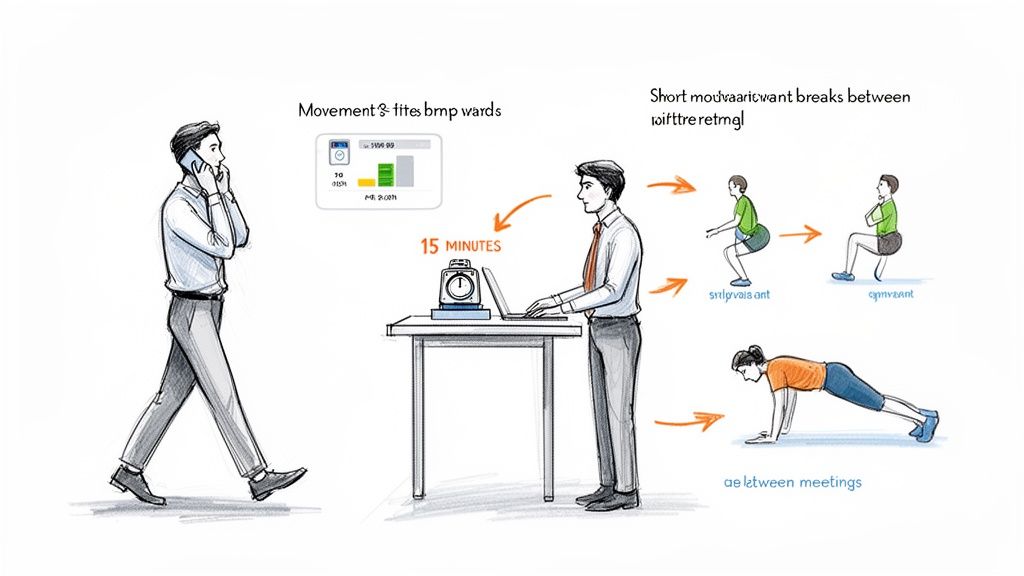
- Instead of long, grueling workouts: Integrate short "exercise snacks" into your day. A brisk 10-minute walk during a phone call or a quick bodyweight circuit while you wait for your coffee to brew are both powerful wins.
- Instead of relying on willpower: Redesign your environment. Keep a bowl of fruit on your desk and hide the office snacks in a drawer. You're more likely to grab what's visible and easy.
This approach acknowledges that you're human and your schedule is often out of your control. By building a system of tiny, manageable habits, you create momentum that makes healthy choices feel automatic rather than like another chore on your endless to-do list.
Smart Nutrition Without Hours of Meal Prep
Let's be realistic—the thought of spending your entire Sunday prepping meals is a total non-starter for most of us. If you're trying to lose weight while juggling a packed schedule, your nutrition plan has to be about quick assembly, not elaborate cooking. The trick is to build a "food toolkit" of simple, flexible ingredients you can throw together in minutes.
The secret isn't in complicated recipes, but in a simple, powerful formula for every meal: Protein + Fiber + Healthy Fat. I’ve seen this combination work time and time again because it keeps you feeling full and stabilizes your blood sugar. This prevents those nasty energy crashes and cravings that so often lead to grabbing the first unhealthy thing you see.
Build Your Food Toolkit
Making healthy choices feel automatic starts with having the right ingredients ready to go. When your pantry, fridge, and even your office drawer are strategically stocked, a satisfying meal is never more than a few moments away. For anyone serious about streamlining their eating habits, learning how to meal prep for the week efficiently can be a total game-changer, ensuring a nutritious option is always the easiest one.
Here are some staples I always recommend keeping in your toolkit:
- Quick Proteins: Rotisserie chicken, canned tuna or salmon, pre-cooked hard-boiled eggs, Greek yogurt, and a quality protein powder.
- Fast Fiber: Bagged salads, pre-washed spinach, frozen vegetables, microwaveable brown rice or quinoa pouches, and high-fiber tortillas.
- Healthy Fats: Avocados, nuts, seeds, and a good olive oil for drizzling.
With these on hand, a balanced dinner can be as simple as shredding some rotisserie chicken over a bagged salad kit and tossing on a handful of almonds. Zero cooking required.
Smart Strategies for Dining Out
Of course, even the best-laid plans run into work lunches and client dinners. This is where so many people get tripped up, but a tiny adjustment can make all the difference.
Consider this: the average restaurant meal packs over 1,100 calories, which can single-handedly undo a day of good choices. But there’s a simple hack. Research from Pennsylvania State University found that having a small pre-meal snack, like an apple or a broth-based soup, can reduce your total calorie intake by 20%. That small habit adds up to significant results over time. If you want to dig into the numbers, you can explore the data on healthy weight loss from the CDC.
Here's a pro tip for ordering out: Decide what you're eating before you're starving. Look at the menu online ahead of time and pick something that fits that 'Protein + Fiber + Healthy Fat' template. This stops you from making impulse decisions driven by pure hunger.
Making It Effortless
The real goal here isn't to develop more willpower; it's to build a system where the right choice is the path of least resistance. You want to remove as much friction as possible.
Keep healthy, non-perishable snacks like protein bars or single-serving nut packs in your car, your desk, and your bag. Think of it as creating a buffer against the unexpected—like when you're stuck in traffic or a meeting runs late and hunger strikes.
By shifting your mindset from "meal prep" to "meal assembly," you're creating an approach to nutrition that actually fits into a busy life and supports your goals without demanding all of your precious time.
Fitting in Movement You Will Actually Do

Does the thought of a one-hour gym session make you want to give up before you even start? If so, you’re in the right place. So many people believe that effective weight loss requires long, grueling workouts, but I’m here to tell you that’s one of the biggest myths out there.
For busy people, the secret isn't intensity; it's consistency. We’re going to ditch the all-or-nothing mindset and focus on two powerful, real-world strategies: boosting your daily background activity and using quick, targeted “exercise snacks.”
Boost Your Daily Movement (NEAT)
Most of the calories you burn don't come from a formal workout. They come from something called non-exercise activity thermogenesis, or NEAT. It’s a fancy term for all the movement you do throughout the day—pacing during a phone call, taking the stairs, even fidgeting at your desk.
Tapping into your NEAT is a game-changer when you’re short on time. It allows you to burn more calories without having to block out a dedicated “workout” slot.
The American College of Sports Medicine suggests that significant weight loss often requires at least 250 minutes of moderate activity per week. That number can feel overwhelming, but you can get there by simply moving more. A good benchmark is aiming for 7,000 to 10,000 steps a day, but don't discount a solid 5,000 to 7,000 steps—it still provides major health benefits.
Here’s how to effortlessly weave more movement into your day:
- Pace during calls. Instead of sitting, get up and walk around your office or home while you talk.
- Park strategically. Choose a spot at the far end of the parking lot on purpose. Those extra steps really add up.
- Embrace the stairs. Make it a personal rule: if your destination is five floors or less, you take the stairs. No exceptions.
- Set a stand-up reminder. Use your watch or phone to ping you every 30-60 minutes. Just standing up, stretching, and walking for a minute breaks up sedentary time.
The goal is to make movement a natural part of your existing routine, not another task to add to your to-do list. Every little bit counts and adds up significantly over time.
Master the "Exercise Snack"
Think of an "exercise snack" as a tiny, intentional burst of activity. We’re talking just 5 to 15 minutes squeezed into the small gaps of your day. These mini-sessions are surprisingly effective for kickstarting your metabolism, boosting your energy, and building momentum.
For anyone just getting started, a guide on how to start running for beginners can offer a great framework for building a simple cardio habit you can do in short bursts.
When you pair these quick workouts with your daily step goal, you create a powerful and realistic plan. Here’s what a week could look like—no equipment needed.
Sample Weekly Movement Plan
| Day | Activity | Time | Details |
|---|---|---|---|
| Monday | Bodyweight Circuit | 15 mins | 3 rounds of: 1 min Jumping Jacks, 1 min Squats, 1 min Push-ups, 1 min Plank, 1 min rest. |
| Tuesday | Active Recovery | 30 mins | Aim for your daily step goal. Focus on walking during breaks or calls. |
| Wednesday | HIIT Workout | 15 mins | 3 rounds of: 45s Burpees, 15s rest; 45s High Knees, 15s rest; 45s Lunges, 15s rest. |
| Thursday | Active Recovery | 30 mins | Focus on accumulating steps throughout the day. |
| Friday | Bodyweight Circuit | 15 mins | Repeat Monday's circuit or choose different bodyweight exercises you enjoy. |
| Sat/Sun | Active Rest | Varies | Go for a longer walk, a light jog, or engage in a recreational activity you enjoy. |
This approach proves you don't need to live in the gym to see real results. It’s about making fitness fit your life, not the other way around.
Design Your Environment for Effortless Health
Let's be honest: relying on willpower to lose weight is a losing game, especially when you're busy. After a long, draining day, your willpower is often the first thing to go. That's why the real secret isn't about having more discipline; it's about making healthy choices so easy they become automatic.
This whole idea is sometimes called choice architecture. It just means setting up your surroundings so the best choice is also the easiest one. You’re rigging the game in your favor.
It all begins in your kitchen. Think about it—if a bag of chips is the first thing you see when you open the pantry, your tired brain is going to grab it. We can change that.
Start by making the good stuff impossible to miss. Keep a big bowl of fresh fruit on the counter. When you get home from the store, spend ten minutes chopping up carrots, cucumbers, and bell peppers and put them in clear containers right at eye level in the fridge. As for the junk food? Move it. Put cookies or candy in an opaque container on a high shelf you can't easily reach. Out of sight, out of mind truly works.
I've seen it time and again with clients: we are wired to eat what's visible and convenient. Just by making fruit easier to grab than a cookie, you take willpower completely out of the equation. The healthy choice becomes the default.
Engineer Your Workspace for Success
Your office—whether at home or in a corporate building—is another danger zone. It's where stress and boredom can lead to mindless snacking on whatever is available.
Instead of falling victim to the communal candy bowl, build your own personal fuel station right at your desk.
- Get a large, reusable water bottle and keep it within arm's reach. Your goal should be to refill it a few times throughout the workday.
- Stock a drawer with smart, non-perishable snacks. Think raw almonds, high-quality protein bars, or single-serving packs of olives.
- If you have access to a fridge, stash some Greek yogurts or cheese sticks. They provide a quick hit of protein that can fend off afternoon hunger pangs.
Making these small adjustments creates a supportive environment that works for you, not against you, no matter how chaotic your day gets.
Navigating Social and Professional Events
Work dinners, client lunches, and happy hours can feel like you're walking through a minefield. The good news is that you can get through them without derailing your progress, and you don't have to sacrifice your social or professional life to do it.
The most powerful tool you have is planning. If you know you have a dinner meeting, look up the restaurant's menu online beforehand. Decide what you're going to order when you're calm and not feeling rushed or pressured. It makes a world of difference.
It also helps to have a simple, polite response ready for when people notice you're skipping the bread basket or ordering a salad. You don't owe anyone a long explanation. Something as simple as, "I'm just focusing on my health these days, and it's making me feel great," works perfectly. It’s confident, it sets a boundary, and it ends the conversation without any awkwardness.
Managing Stress and Emotional Eating

Let’s be honest: for most busy professionals, stress is the single biggest saboteur of any weight loss plan. After a marathon day of meetings and deadlines, it’s so easy to walk in the door, drop your bag, and make a beeline for the quickest, most comforting food you can find.
If that sounds familiar, you’re not alone. And it’s not a failure of willpower—it's biology. When we're stressed, our bodies pump out cortisol, a hormone that floods us with cravings for high-sugar, high-fat foods. This kicks off a vicious cycle: stress triggers emotional eating, which leads to guilt, which then piles on even more stress. The key to learning how to lose weight with a busy schedule is learning how to break that cycle for good.
It all starts with getting curious about why you’re reaching for that snack.
Physical vs. Emotional Hunger
Learning to tell the difference between physical and emotional hunger is a genuine skill. It takes practice, but it's a game-changer.
Physical hunger is pretty straightforward. It comes on gradually, makes your stomach rumble, and is usually satisfied once you've had a decent meal. Emotional hunger, on the other hand, ambushes you. It feels urgent, overwhelming, and laser-focused on one specific thing—like that pint of ice cream in the freezer or a bag of salty chips.
Think of it this way:
- Physical hunger feels like a slow-burning ember in your stomach. It can wait a bit, and pretty much any food will do the trick. You eat until you're satisfied, not stuffed.
- Emotional hunger is a sudden wildfire in your head. It demands a specific food right now and often doesn't go away even when you're full. This is what leads to eating until you feel uncomfortable.
Before you grab something to eat, just pause for a second. Ask yourself: "Am I actually hungry, or am I trying to soothe a different feeling?" This simple check-in can be incredibly powerful. Tracking these moments, maybe with a quick note in an app like Superbloom, helps you spot patterns you never knew were there.
Building Your Five-Minute Coping Toolkit
Once you recognize that it's your emotions, not your stomach, talking, you need a plan. The goal isn't to willpower your way through it, but to find a healthier way to handle the feeling. The best coping strategies are the ones that are fast, easy, and can be done almost anywhere.
You don't need a lot of time to short-circuit a stress-eating spiral. Having a pre-planned, non-food response ready is your most powerful defense against cortisol-driven cravings.
Here are a few five-minute ideas to have in your back pocket:
- Try Box Breathing: It sounds simple, but it works. Inhale for a count of four, hold for four, exhale for four, and hold for four. Repeating this for just a minute or two can have a noticeable calming effect on your nervous system.
- Take a Quick Walk: Just stepping outside or even doing a lap around your office floor can completely reset your headspace. The change of scenery and a little movement work wonders.
- Put on a Go-To Song: Music is an incredible mood-shifter. Cue up that one song that always makes you feel better and let it play.
This isn't just about feeling better in the moment. Chronic stress can actually trigger something called metabolic adaptation, where your metabolism slows down to conserve energy, making it progressively harder to lose weight.
A famous study on contestants from "The Biggest Loser" found that even six years later, their resting metabolic rates were significantly lower than expected, even after some had regained weight. It's a stark example of how our bodies can fight back against what they perceive as a threat—like prolonged, high-stress calorie restriction. You can read more on how your metabolism adapts to lifestyle changes and see why this matters.
Ultimately, managing your stress isn't a fluffy add-on to your weight loss plan. It’s a biological necessity for getting real, sustainable results.
Common Questions About Weight Loss for Busy People
When you're juggling a packed schedule, trying to lose weight can bring up a lot of very real, practical questions. You don't have time for vague advice—you need answers that work in the real world.
Let's cut through the noise and tackle some of the most common hurdles I see busy people face, starting with the one I hear most often: meals. It's rarely about a lack of desire; it's about a lack of time.
How Can I Lose Weight If I Have No Time to Cook?
The secret here is to stop thinking about "cooking" and start thinking about "assembling." You can put together a healthy, filling meal that helps you reach your goals without ever turning on the stove. This is all about how to lose weight with a busy schedule by having the right toolkit in your kitchen.
Focus on stocking these grab-and-go components:
- Ready-to-eat proteins: Think rotisserie chicken, canned tuna or salmon, pre-cooked lentils, cottage cheese, or Greek yogurt.
- Fast fiber sources: Bagged salad kits are a lifesaver. So are frozen steamable vegetables and pre-chopped fresh veggies from the produce aisle.
- Smart carbs and fats: I always have microwaveable quinoa pouches, whole-grain crackers, avocados, and a jar of nuts or seeds ready to go.
With these on hand, a balanced meal is literally minutes away. You could mix that rotisserie chicken with Greek yogurt and some chopped celery for a quick chicken salad, or throw some lentils and veggies over a pouch of quinoa. It’s delicious, satisfying, and takes less than five minutes.
What Is the Most Effective Exercise for a 15-Minute Window?
If you only have 15 minutes, you need to get the biggest bang for your buck. Hands down, the most efficient way to do that is with High-Intensity Interval Training (HIIT).
HIIT is all about short, explosive bursts of effort followed by quick recovery periods. A 15-minute session might look like 45 seconds of jump squats, followed by 15 seconds of rest, then repeating that pattern with exercises like burpees, mountain climbers, or high knees.
The real magic of HIIT comes from what’s known as the "afterburn effect," or excess post-exercise oxygen consumption (EPOC). This process keeps your metabolism revved up for hours after your workout ends, meaning you’re still burning extra calories long after you’ve hit the shower.
This makes HIIT an absolute game-changer for anyone short on time. You get incredible metabolic and heart-health benefits in a tiny fraction of the time it would take to go for a traditional jog.
How Do I Stay on Track While Traveling for Work?
Frequent travel can feel like it’s designed to sabotage your progress, but a little prep goes a long way. The key is aiming for consistency, not perfection.
First, always pack a travel survival kit. I never leave home without a few non-perishable snacks like protein bars, single-serving packs of almonds, or beef jerky. This simple step keeps you from falling victim to the candy aisle at the airport or gas station when you're suddenly starving.
Next, do a little recon before you go. Check if your hotel has a gym; if it does, block out 15 minutes for a quick workout. If not, you can do a bodyweight circuit right in your room. I also make it a habit to look up menus online for nearby restaurants. This lets me find a healthy option ahead of time, so I’m not making a last-minute, fatigue-fueled decision. These small bits of planning are what truly make the difference.
Are you tired of the guesswork and ready for a smarter, more personalized approach to nutrition? Superbloom uses AI-powered insights to help you understand your unique eating patterns and build healthier habits without the stress of calorie counting. Get started with your personalized plan today.