
How to Meal Plan for Your Real Life
If the mere mention of “meal planning” makes you want to close this tab, I get it. It’s a concept loaded with images of complicated spreadsheets, rigid calorie counts, and the same boring chicken and broccoli on repeat. Most people feel like it's just another chore on an already overflowing to-do list.
But what if we flipped that script entirely? What if meal planning wasn’t about restriction, but about freedom? The freedom from that daily 5 PM panic of figuring out what to eat.
The secret I’ve learned after years of doing this myself and helping others is to start with a single, meaningful goal. Before you touch a recipe or a grocery list, you have to know why you’re even bothering.
Find Your Personal “Why”
Your motivation is the fuel that keeps this habit going when life inevitably gets hectic. It doesn't have to be some grand, life-altering mission. In fact, the simpler and more honest, the better. This is your anchor.
So, what’s a real problem you’re trying to solve? Maybe it’s one of these:
- You're tired of decision fatigue. The mental energy it takes to answer "what's for dinner?" every single night is draining you.
- You want more energy. You know that eating more nourishing, home-cooked food would help you feel better, but takeout is just so easy.
- You're navigating gut health issues. You need to incorporate more fiber or figure out which foods make you feel incredible (and which ones definitely don’t).
- Your grocery bill is out of control. You want to put a stop to impulse buys at the store and all the money spent on last-minute restaurant meals.
- You hate throwing away food. The guilt of tossing wilted greens and forgotten leftovers is real, and you want to use what you buy.
Just pick one. Seriously, only one. That single focus becomes your North Star, guiding every small decision you make from here on out.
Your goal isn't to become a perfect planner overnight. It’s to solve a real problem in your life. If your problem is the 5 PM panic, your goal is simply to have an answer to "what's for dinner?" three nights a week. That's it.
Before we dive into building your plan, let's quickly review the core ideas that make this process stick. These aren't rules; they're principles that prevent meal planning from becoming just another Sunday-night chore you dread.
Core Principles of Sustainable Meal Planning
| Principle | What It Means | Why It Works |
|---|---|---|
| Start with a "Why" | Pinpoint a single, specific problem you want to solve (e.g., save money, reduce stress). | A clear goal provides motivation and makes the process feel meaningful, not arbitrary. |
| Simplicity Over Complexity | Use simple templates and themes instead of trying to find 7 new recipes every week. | It reduces decision-making and makes planning fast. Consistency beats complexity every time. |
| Flexibility is Key | Your plan is a guide, not a contract. It's okay to swap days or opt for takeout. | Life is unpredictable. A flexible plan adapts to your reality, preventing you from giving up entirely. |
| Work with Reality | Plan around your actual schedule, energy levels, and food preferences—not an idealized version of yourself. | An honest plan is a usable plan. If you know you're exhausted on Thursdays, plan for leftovers or a 15-minute meal. |
These principles are your foundation. They ensure the system you build actually serves you, not the other way around.
Create Structure with Simple Theme Nights
Okay, you’ve got your goal. Now what? The easiest way to build a supportive structure without getting overwhelmed is with theme nights. This is a game-changer for killing decision fatigue.
Forget the pressure to find seven completely different meals each week. That's a recipe for burnout. Instead, you create a loose framework that does the heavy mental lifting for you.
Think of it this way: a theme gives you a category, not a command. It just narrows the universe of infinite possibilities down to a manageable few. For example, "Taco Tuesday" doesn't mean you're locked into making ground beef tacos. It could be fish tacos one week, a loaded taco salad the next, or a deconstructed burrito bowl when you're feeling creative.
Here are a few classic themes to get your wheels turning:
- Meatless Monday: A fantastic way to front-load your week with veggies.
- Stir-Fry Friday: The perfect strategy for using up any leftover vegetables before the weekend hits.
- Pasta Night: Who doesn't love pasta? It's simple, comforting, and endlessly customizable.
- Soup and Sandwich Night: Especially great for cooler months, this is a cozy and incredibly easy meal.
By setting one clear goal and using simple themes to guide your weekly choices, you're building a system that can actually last. This whole approach is designed for a real, busy person—not a professional chef with a film crew and unlimited time. It’s the very first, and most important, step in making meal planning work for you.
Build a Flexible Meal Template That Actually Works
Let's be honest: rigid meal plans with 21 different, complicated recipes are designed to fail. The moment life gets busy, that beautiful spreadsheet becomes a source of guilt. A truly great meal plan isn't a chore; it's a flexible template that adapts to your life, turning weekly planning into a five-minute task instead of a two-hour ordeal.
Forget the cookbooks for a minute. The best place to start is by "shopping your kitchen." This one habit will immediately cut down on food waste and shrink your grocery bill. Before you write a single thing on your shopping list, do a quick scan.
What's hiding in the pantry? A half-used bag of quinoa or a stray can of chickpeas? What about the freezer—any forgotten chicken breasts or bags of veggies? The fridge holds the most urgent clues. That lonely bell pepper and nearly-empty yogurt container aren't clutter; they're the building blocks for your next meal. Starting with what you already have is the secret to making this whole process sustainable.
It all boils down to a simple, repeatable flow: you define a goal, pick a theme for the week, and build a habit around it.
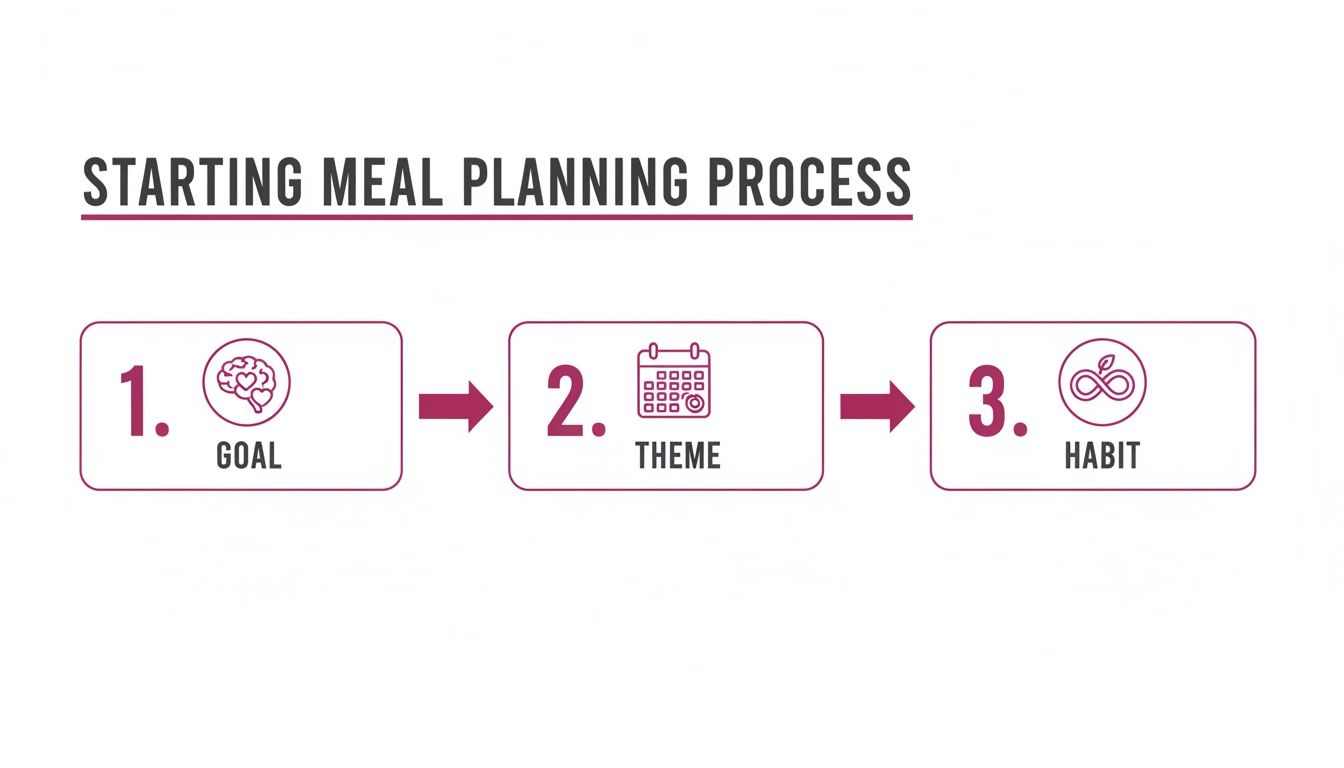
This framework is what keeps you on track when life gets unpredictable.
Adopt the Cook Once, Eat Thrice Strategy
With an inventory of your kitchen, you can move on to my favorite part: component prepping. This is where you'll see the biggest return on your time. Instead of cooking entire meals from scratch every night, you batch-prepare versatile ingredients that can be mixed and matched all week long.
I call this the "Cook Once, Eat Thrice" strategy. It’s simple: spend about an hour on Sunday prepping a few core items. For the rest of the week, you’re just assembling.
Here’s what this looks like in my own kitchen:
- Protein: A big batch of shredded chicken, made effortlessly in the slow cooker.
- Grain: A pot of quinoa or brown rice, cooked and ready to go.
- Veggies: A sheet pan of roasted broccoli, bell peppers, and onions.
These three simple preps are incredibly versatile. That single cooking session gives you the foundation for at least three completely different meals with almost no extra effort.
Turning Components Into Meals
Now, with your core ingredients prepped and waiting in the fridge, the nightly "what's for dinner?" panic is gone. Your job shifts from cooking to creating. This dramatically cuts down on daily prep and cleaning, which is a huge win on a busy weeknight.
Let's see how those prepped components—chicken, quinoa, and roasted veggies—can transform throughout the week:
- Monday Night: The Grain Bowl. I'll scoop some quinoa, chicken, and roasted veggies into a bowl. A drizzle of dressing, a crumble of feta, and some sunflower seeds for crunch, and dinner is on the table in five minutes flat.
- Wednesday Lunch: The Loaded Salad. Time for lunch? I'll just toss a handful of spinach with the leftover roasted veggies and shredded chicken, then add a simple vinaigrette. A nutrient-packed meal with zero cooking required.
- Friday Night: The Quick Tacos. To wind down the week, I'll reheat the shredded chicken with a spoonful of salsa and taco seasoning. Then I just warm up some tortillas and serve it all with the last of the roasted veggies and a dollop of Greek yogurt.
This method gives you structure without feeling restrictive. You have a plan, but you also have the freedom to combine the components based on what you're craving that day. It's the ultimate answer to meal planning when your life is anything but predictable.
To keep everything organized and easy to find, clear containers are a must. Using the best name labels for meal prep and snacks is another small trick that makes a big difference. When your prepped items are clearly marked, you remove that last bit of friction between you and a healthy, home-cooked meal.
Mastering the Smart and Strategic Grocery Run
Even the best-laid meal plan can completely fall apart at the grocery store. We’ve all been there. That carefully crafted plan goes out the window, and you end up with a cart full of impulse buys. Turning your weekly shop from a chaotic free-for-all into a targeted, efficient mission is the final piece of the meal planning puzzle.
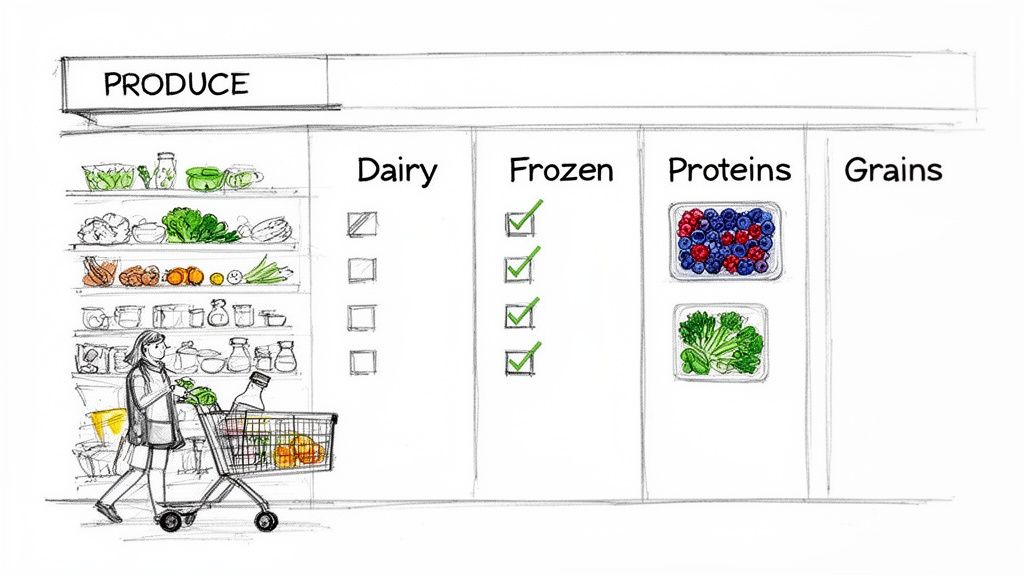
It all starts by turning your meal template into a concrete shopping list. After "shopping your kitchen" to see what you already have, write down every single item you need for the week. This simple act is your best defense against those random purchases that tank your budget and health goals.
But a simple list isn't quite enough. The real secret to an efficient trip is all in how you organize it.
Organize Your List by Store Section
Have you ever found yourself in the dairy section, only to realize you forgot a lemon and have to trek all the way back to produce? It’s frustrating and a huge waste of time. Organizing your grocery list by the store's layout is a game-changing hack.
Most grocery stores follow a similar floor plan, so you can group your list into a few standard categories:
- Produce: All your fresh fruits and veggies.
- Pantry/Dry Goods: Grains, canned items, spices, and oils.
- Protein: Meat, poultry, fish, and plant-based options like tofu or tempeh.
- Dairy & Eggs: Milk, cheese, yogurt, and, of course, eggs.
- Frozen Foods: Your secret weapon for busy nights.
This approach forces you to move through the store logically. You'll make one clean sweep, grabbing everything you need from each section without endlessly circling back. It keeps you focused and makes it much easier to avoid the siren call of the snack aisles.
Embrace the Power of the Freezer Aisle
So many of us think of the freezer aisle as just a place for ice cream and frozen pizza, but for a savvy meal planner, it's a goldmine. Frozen foods are a cornerstone of modern meal planning for a reason—they lock in nutrients right at their peak and are your best friend in the fight against food waste.
This isn't just a feeling; it's a major trend. Recent data shows that by 2026, a staggering 40% of American shoppers will buy frozen foods every few days or even daily. It points to a smarter way of cooking, with 77% of shoppers buying frozen items for a specific meal and 37% using them specifically to cut down on food waste. You can read the full report on how frozen foods are becoming a kitchen essential to see just how much things are changing.
Think of your freezer as your strategic backup.
Keeping a stash of frozen fruits for smoothies, vegetables for stir-fries, and proteins like shrimp or chicken breasts means you always have a Plan B. When life gets hectic and your fresh ingredients run out, your freezer ensures you can still pull together a nourishing meal in minutes.
The Strategic Shopper's Checklist
A smart grocery run isn't just about what you buy; it's about how you prepare. It’s about being intentional from the moment you walk through the doors. With your aisle-organized list in hand, you can turn a tedious chore into a swift, satisfying task.
Here are a few final pointers for a successful trip:
- Never Shop Hungry: It’s the oldest rule in the book because it’s true. A rumbling stomach leads to a cart full of things you don't need.
- Stick to the Perimeter: The outer ring of the store is where you'll find the whole foods—produce, fresh meat, and dairy. The inner aisles are where most of the processed stuff lives.
- Buy Versatile Staples: Always have flexible items like onions, garlic, eggs, and your go-to seasonings on hand. They are the flavor foundation for countless meals.
By taking this strategic approach, you'll leave the store with exactly what you need, and nothing you don't. You’ll feel more in control, save money, and head home with a kitchen fully stocked for a week of delicious, stress-free eating.
Fine-Tune Your Plan for Your Biggest Health Goals
Once you get the hang of a basic weekly meal plan, you can start using it as a serious tool to shape your health. This is where planning moves beyond just organizing your kitchen and becomes a powerful form of self-care.
It’s your chance to stop guessing and start customizing your food to meet your body's unique needs. Whether you’re trying to boost your energy, figure out digestive issues, or get a handle on emotional eating, your meal plan is the roadmap to get you there.
Want to Feel Fuller, Longer? Target Protein and Fiber
One of the most common goals I see—and one of the most effective—is to up your protein and fiber. These two are the champions of satiety. They help you feel full, satisfied, and energized, which is a game-changer for avoiding those mid-afternoon slumps and cravings.
You don't need a massive diet overhaul to make this happen. A good meal plan is all about making small, strategic swaps that add up big time over the week.
- Breakfast Boost: Stir a spoonful of chia seeds or ground flaxseed into your oatmeal or yogurt. It’s a simple way to add a ton of fiber and healthy fats without changing the taste.
- Smarter Carbs: Instead of regular white pasta, try a version made from chickpeas, lentils, or edamame. You get that same comforting pasta experience but with a major dose of protein and fiber.
- Snack Upgrade: Ditch the chips and plan for snacks that actually fuel you. Think apple slices with peanut butter, a small handful of almonds, or a cup of Greek yogurt.
This isn’t just a niche health trend; it’s a massive consumer movement. With the use of GLP-1 drugs projected to hit over 20 million users globally by mid-2026, the focus on satiety is exploding. Big retailers are already rolling out ready-meals with 30% more protein and fiber in smaller portions because they know that 45% of people trying to manage their weight are now focused on metabolic support. You can dig into these top food and nutrition trends from Kline to see where things are headed.
Calm Your Gut and Pinpoint Triggers
If you deal with gut sensitivities, meal planning isn't just a nice-to-have; it's absolutely essential. Without a plan, eating can feel like walking through a minefield, never knowing what might set off discomfort. A structured plan gives you back control.
It creates a controlled experiment where you can finally see how specific foods affect you. If you think dairy might be a problem, you can plan a week without it and just… observe. It’s so much more effective than random guesswork.
Planning gives you the consistency you need to connect the dots between what you eat and how you feel. When your meals are consistent, it’s suddenly much easier to spot the one ingredient that’s causing trouble. Confusion turns into clarity.
For example, you could plan a week of meals that are naturally gentle on the gut—things like simple soups, steamed veggies, and lean proteins. This creates a calm baseline. From there, you can reintroduce other foods one by one, turning your meal plan into your own personal diagnostic tool.
Break the Cycle of Emotional Eating
We all know the link between our feelings and our food choices is real. Stress, boredom, and exhaustion are major triggers for reaching for high-carb, low-nutrient comfort foods. A meal plan can't make your stress disappear, but it can act as a powerful circuit-breaker.
When you're exhausted after a long day, having a delicious, healthy meal already planned and waiting for you is often the only thing that stands between you and a delivery pizza. It removes the need for willpower when your reserves are at their lowest. Just knowing a satisfying dinner is ready can be a huge source of comfort and security.
This is not about being perfect; it's about being prepared. By planning for your physical and emotional needs, you build a support system that makes the healthy choice the easy choice.
Let’s face it: the hardest part of any new routine is just sticking with it. You can create the world's most perfect meal plan and stock your fridge with beautiful, healthy ingredients, but by Wednesday, life happens. The best-laid plans often fall apart.
This is where a little bit of tech can be your secret weapon. I’m not talking about adding more complexity to your life, but about finding a simple tool that acts as your support system, helping you turn good intentions into habits that actually last.
Create a Simple, Motivating Feedback Loop
The key to building any lasting habit is creating a positive feedback loop: you take an action, feel a small reward, and that reinforces the behavior. A good nutrition app can automate this whole process, making consistency feel less like a chore and more like a game you can actually win.
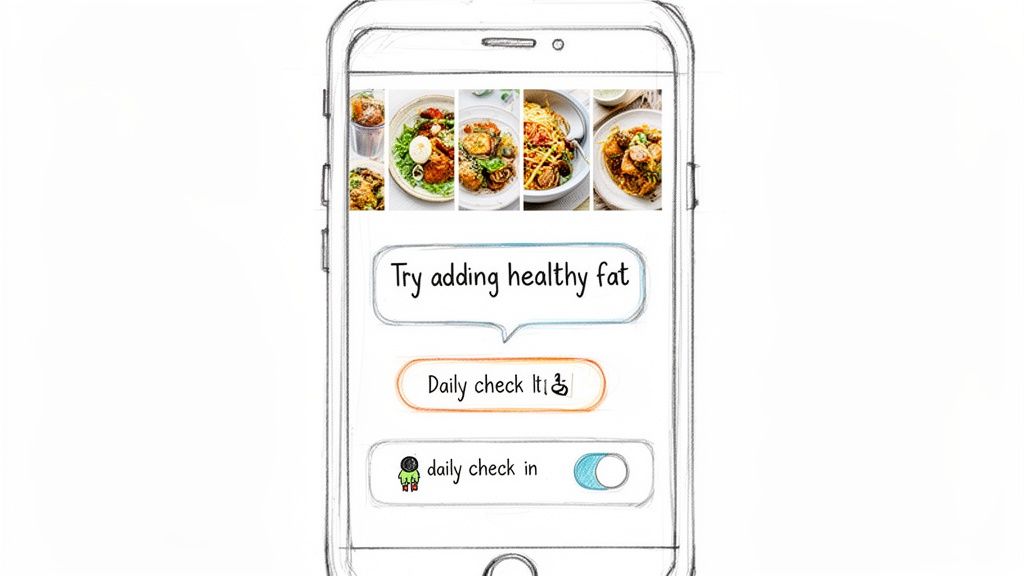
Take an app like Superbloom, which is built entirely around this idea. It’s not about obsessive calorie counting. Instead, it’s all about reflection and building awareness. The core habit is incredibly simple: check in daily and log your meals, often just by snapping a quick photo.
That tiny action creates a powerful moment of mindfulness. It forces a gentle pause in your day, giving you a chance to see what you're actually eating, without any judgment. Over time, that daily check-in becomes the bedrock of your new routine.
Turn Awareness Into Action with Personalized Insights
The real magic happens when technology gives you personalized feedback. When you consistently log your meals, you're creating a rich picture of your unique eating patterns—and an AI-powered tool can help you connect the dots.
Imagine you snap a photo of your lunch, a simple salad with grilled chicken. A little while later, you might get a gentle nudge from the app: "Great source of protein! For dinner, try adding a healthy fat like avocado or olive oil to help you feel fuller longer."
This isn't about being told you did something wrong; it's supportive, actionable guidance. It’s like having a friendly nutritionist in your pocket, offering small suggestions that steer you toward your goals.
This approach transforms meal planning from a rigid set of rules into an interactive, responsive conversation with your own body. You learn what you need in real time, which empowers you to make better choices on the fly.
This kind of personalized support is what bridges the gap between knowing what to do and actually doing it. It helps you see how small tweaks to your planned meals can make a huge impact on your energy and satiety. If you're looking for a tool to help you stay organized, check out some of the best nutrition tracking apps to find one that fits your style.
Understand Your Cravings and Routines
Beyond just the food itself, the right app can help you connect your eating habits to your emotional state. By also logging how you feel, you can start to uncover patterns you never knew existed.
- Do you always crave something sweet on stressful Tuesday afternoons?
- Do you find yourself skipping meals on your busiest workdays?
Seeing these patterns laid out visually is incredibly insightful. An app can highlight these connections for you, helping you finally understand the "why" behind your food choices. This self-awareness is the first step to breaking unhelpful cycles like stress-eating.
The convenience of having meals ready to go is also why the meal kit industry is projected to grow from $16.12 billion in 2022 to an astounding $88.97 billion by 2033. These services work because they simplify planning and can cut food waste by up to 50%. Even more, behavioral science shows that having pre-planned meals improves self-regulation by 28%, which is a huge help in reducing triggers for emotional eating.
Ultimately, weaving simple tech into your meal planning provides a supportive framework that makes the whole process feel less overwhelming and far more rewarding. Think of it as a digital companion helping you build a healthy habit that finally sticks.
Your Meal Planning Questions Answered
Even the best-laid plans can go sideways. It’s one thing to feel organized and confident on a Sunday afternoon, but it's another thing entirely when Wednesday evening rolls around and you're tired, hungry, and out of steam. This is where the real work of meal planning happens—in the messy middle of the week.
So, let's talk about the real-world hurdles that come up. You don't need a perfect, rigid system. What you need is a flexible framework that actually supports you when life gets chaotic. Here are the most common questions I hear, along with advice that truly works.
How Do I Meal Plan if My Schedule Is Unpredictable?
This is the big one. If your schedule is a moving target, a rigid plan for "Tuscan Salmon on Tuesday" is just setting yourself up for failure. When a late meeting pops up, the whole thing falls apart.
The secret isn't a more detailed plan; it's a more flexible one. The best defense against a chaotic week is to stop prepping full meals and start prepping versatile components.
Think of these as your building blocks for the week:
- A big batch of shredded chicken or ground turkey
- A pot of quinoa, brown rice, or lentils
- A sheet pan of roasted veggies like broccoli, bell peppers, and onions
With these basics waiting in your fridge, you can throw together a satisfying meal in minutes. That prepped chicken and quinoa can become a quick grain bowl, a loaded salad, or the filling for a wrap. You get the structure you need without the rigidity that dooms most plans.
The goal isn't to perfectly predict your week—it's to have delicious options ready for whatever comes your way. It’s also smart to keep a few high-quality frozen meals or a bag of frozen shrimp on hand for true emergencies. Flexibility is what creates consistency.
What Is the Easiest Way to Meal Plan for One Person?
Cooking for one can feel like a choice between two bad options: eating the same boring leftovers for days or wasting a ton of food and money. The trick is to get creative with a "cook once, eat twice (or thrice)" mindset.
Instead of planning a full week of dinners, just start with three. For each of those meals, intentionally make enough for leftovers—which become your lunch the next day. Right there, you've cut your active cooking time in half.
For instance, let’s say you make a big pot of chili on Monday night. Here’s how its life could play out:
- Monday Dinner: A classic bowl of chili with your favorite toppings.
- Tuesday Lunch: Leftover chili becomes a hearty topping for a baked potato.
- Thursday Dinner: Use the last of the chili to make loaded nachos.
By simply changing the format, the meal feels new again. This approach tackles the two biggest hurdles for solo cooks—food waste and flavor fatigue—head-on.
How Can I Meal Plan on a Tight Budget?
Meal planning is, without a doubt, one of the most powerful ways to get control of your grocery bill. The most important habit to build is simple: always "shop" your own kitchen first. Before you even dream of a grocery list, take a full inventory of your pantry, fridge, and freezer.
What needs to be used up? That half-bag of spinach, a lonely can of black beans, and that onion rolling around in the drawer? That's not clutter; that's the starting point for your next meal.
From there, build your plan around recipes that share ingredients. If you need a bunch of cilantro for tacos on Tuesday, find a soup or salad that can use the rest of it on Thursday. Focus your meals on budget-friendly proteins like beans, lentils, eggs, and tofu. And when you finally write your grocery list, be specific and stick to it. Resisting those impulse buys at the store can easily save you $50 or more on a single trip.
I Hate Cooking. How Can I Still Meal Plan?
If you'd rather do anything than spend an hour in the kitchen, don't worry—you can still have a great meal plan. "Meal planning" doesn't have to mean "cooking." For you, the focus should be on "assembly."
You can build an entire, nourishing plan around meals that you simply put together from ready-to-eat components.
Here are a few no-cook ideas to get you started:
- Breakfasts: Greek yogurt topped with berries and nuts, or a smoothie made with frozen fruit and a scoop of protein powder.
- Lunches: Big salads using pre-washed greens and pre-cooked chicken strips, or a simple wrap with hummus, veggies, and deli turkey.
- Dinners: A "snackle-box" or charcuterie-style plate with good cheese, whole-grain crackers, fruit, nuts, and sliced prosciutto or salami.
Don’t be afraid to lean on healthy convenience items. A rotisserie chicken, high-quality frozen meals, and pre-cut vegetables are your best friends. The goal is a plan to nourish your body, and that plan can absolutely be built around simplicity and ease.
Ready to turn these ideas into lasting habits with personalized support? Superbloom uses simple check-ins and AI-powered insights to help you build a meal plan that works for your real life, without the stress of calorie counting. Start understanding your patterns and making changes that stick.