
How to Overcome Food Cravings with Lasting Strategies
If you really want to get a handle on food cravings, the first step isn't about willpower—it's about understanding. You have to learn what's really driving that urge and figure out the difference between true, physical hunger and an emotional pull. Cravings are often just messengers for other needs, like dealing with stress, hormonal changes, or just plain old habit. Once you can pinpoint the root cause, you're not just fighting the craving; you're addressing the real issue.
Understanding What Drives Your Food Cravings
That sudden, overwhelming desire for a specific snack—a pint of ice cream, a salty bag of chips—rarely just appears out of thin air. Food cravings are complicated signals, and honestly, they often have very little to do with needing nutrients. To really manage them, you have to look past the surface and dig into the powerful forces at play.

If you struggle with this, you're not alone. These urges are a widespread, very human experience. Science actually shows that for many of us, these cravings can look a lot like addiction. Research using the Yale Food Addiction Scale (YFAS) has found these patterns in people all over the world, with some studies suggesting women and younger adults might be more susceptible.
The Science Behind the Urge
At its core, a craving is your brain and hormones having a conversation. When you're stressed out, your body pumps out cortisol, a hormone that cranks up your appetite and your drive to eat—especially for those high-fat, sugary "comfort foods."
When you eat those foods, your brain gets a hit of dopamine, the feel-good chemical linked to pleasure and reward. Your brain logs that feeling and forges a powerful connection: Tough Day = Donut = Ahhh, Relief. Before you know it, that becomes an automatic habit loop, making the craving feel completely irresistible.
Physical Hunger vs. Emotional Craving
One of the most valuable skills you can develop is telling the difference between physical hunger and an emotional craving. They feel completely different, and once you know the signs, you can choose how to respond instead of just reacting.
Here’s a quick guide to telling them apart:
- Physical Hunger: This comes on gradually. It’s patient and flexible—a healthy meal sounds just as good as a pizza. You feel it in your stomach (growling, emptiness). After you eat, you feel satisfied.
- Emotional Craving: This hits you like a ton of bricks—it's sudden and urgent. It demands a very specific food (chocolate, not an apple). You feel it "above the neck," like a thought you can't shake. Eating often leads to guilt.
An emotional craving is almost never about feeding your body. It's usually an attempt to quiet an uncomfortable feeling—boredom, stress, loneliness, or even just putting something off.
The next time a craving hits, just pause and ask yourself, "What am I really feeling right now?" This simple question is the key to breaking the cycle. It gives you a moment of space to choose a better response instead of running on autopilot. Maybe that's a healthy snack, a quick walk outside, or just five minutes of quiet time.
When you understand the "why" behind the urge, you gain the power to change the "what" you do about it.
Actionable Tactics for Managing Cravings in the Moment
When an intense craving hits, it feels like a tidal wave—sudden, powerful, and all-consuming. The secret isn't to fight it head-on. That's a battle of willpower you'll eventually lose. Instead, the goal is to learn how to ride the wave, understanding its energy without letting it drag you under.
The most powerful thing you can do is create a tiny bit of space between the urge and your reaction. This pause, even if it's just for a few seconds, is where you take back control. It’s the difference between mindlessly grabbing a cookie and consciously deciding what your body actually needs.
Pause and Figure Out What's Really Going On
Before you do anything else, just stop. Take one deep, slow breath and ask yourself a simple question: "What am I really feeling right now?"
So often, a craving is just a messenger for a different, deeper need. Are you bored? Stressed out from a looming deadline? Procrastinating on a task you dread? Maybe you're just lonely.
That 3 PM urge for a sugary coffee drink, for instance, might have nothing to do with hunger. It could be your brain screaming for a mental break from a spreadsheet. Once you identify the real need—in this case, a break—you open up a dozen other ways to solve it that don't involve a sugar crash.
This simple act of questioning short-circuits that automatic loop of cue, craving, and reward. It helps you see the craving as a message, not a command.
Use Distraction to Your Advantage
After you’ve paused, your next best friend is distraction. It might sound too simple, but research has shown that most cravings are surprisingly brief, often lasting only 3-5 minutes. Your mission is just to get through that short window by shifting your focus to something else entirely.
A good distraction fully engages your mind or body. You need something that pulls your attention away from the craving.
Here are a few proven ideas:
- Change Your Scenery: Get up and walk outside for five minutes. Even just moving to a different room can be enough to reset your brain.
- Engage Your Ears: Pop in your earbuds and listen to one song from your favorite high-energy playlist. A short, interesting podcast clip works great, too.
- Reach Out: Shoot a quick text to a friend you haven't talked to in a while or call a family member just to say hi. A moment of social connection can often fill the void that a food craving is trying to patch.
Pro-tip: Don't try to come up with these on the fly. Have a pre-made list of 3-5 go-to distractions. When the craving hits, you don't have to think—you just pick one and do it.
Interrupt the Cycle with Your Senses
Sometimes, a craving is so intense that a simple mental distraction won’t cut it. For those moments, you need to bring in the big guns: your other senses. These strategies work by giving your brain a stronger, competing signal to focus on.
Downing a big glass of ice-cold water is surprisingly effective. The feeling of fullness and the simple act of hydrating can often dial down the intensity. Another great trick is to smell something powerful and non-food-related, like peppermint essential oil or a strongly scented candle. The potent aroma acts as a pattern interrupt.
For particularly stubborn urges, especially for sweets, other tools might be helpful. Looking into the best supplement to curb sugar cravings, for example, can add another layer of support to your toolkit for navigating these challenging moments.
To make this even easier, here’s a quick-reference guide to help you match your craving with an immediate, effective response.
Your In-the-Moment Craving Response Toolkit
Having these smart swaps ready means you're prepared to respond to your body's signals with something that truly nourishes it, rather than just defaulting to the craving.
Building a Proactive, Craving-Resistant Lifestyle
Dealing with cravings in the heat of the moment is a great skill to have, but the real win is making those intense urges show up less often and with less power. This means shifting your approach from reactive to proactive. Instead of just battling cravings as they pop up, you can build a lifestyle that keeps them from getting a foothold in the first place.
Think of it as creating a stable foundation within your body through smart nutrition, solid sleep, and managing stress. When your internal world is balanced, your brain isn't constantly screaming for a quick hit of energy or comfort. You're in the driver's seat, not the cravings.
Fuel Your Body to Prevent Urges
One of the biggest culprits behind intense cravings is wonky blood sugar. When your blood sugar spikes and then plummets, your body sends out an SOS for more sugar to fix the problem. This creates a vicious cycle: crave, crash, crave again. The trick is to build meals that give you steady, stable energy.
A well-balanced plate is your best defense. I always tell my clients to focus on getting these three things in every meal:
- Lean Protein: Things like chicken, fish, eggs, tofu, and beans are fantastic. They slow down digestion and help you feel full and satisfied for hours.
- High-Fiber Carbs: We're talking whole grains, beans, fruits, and veggies. Fiber is a game-changer because it slows down how quickly sugar enters your bloodstream, preventing those dramatic energy spikes and dips.
- Healthy Fats: Avocado, nuts, seeds, and olive oil also play a huge role in satiety and keeping your blood sugar on an even keel.
So, instead of having a plain piece of toast for breakfast (which is practically a guarantee for a mid-morning crash), try topping it with some mashed avocado and a fried egg. That mix of fat, protein, and fiber will give you sustained energy, making that 10 a.m. donut much easier to ignore.
The Overlooked Pillars of Craving Control
Nutrition is crucial, but it’s not the whole story. Two other lifestyle habits have a massive impact on how susceptible you are to cravings: sleep and hydration. If you skimp on either, you can undermine even the most buttoned-up diet.
Poor sleep is a major trigger. When you're tired, your body pumps out more ghrelin, the "hunger hormone," and less leptin, the hormone that tells you you're full. This hormonal one-two punch leaves you feeling hungrier and less satisfied, especially for high-calorie, sugary junk. Making 7-9 hours of quality sleep a priority is one of the most powerful things you can do.
Dehydration is another sneaky one—it often masquerades as hunger. Before you grab a snack, try drinking a big glass of water and waiting 15 minutes. You might be surprised how often that "craving" was just your body telling you it was thirsty.
This decision tree gives you a simple, proactive way to handle a craving when it does strike.
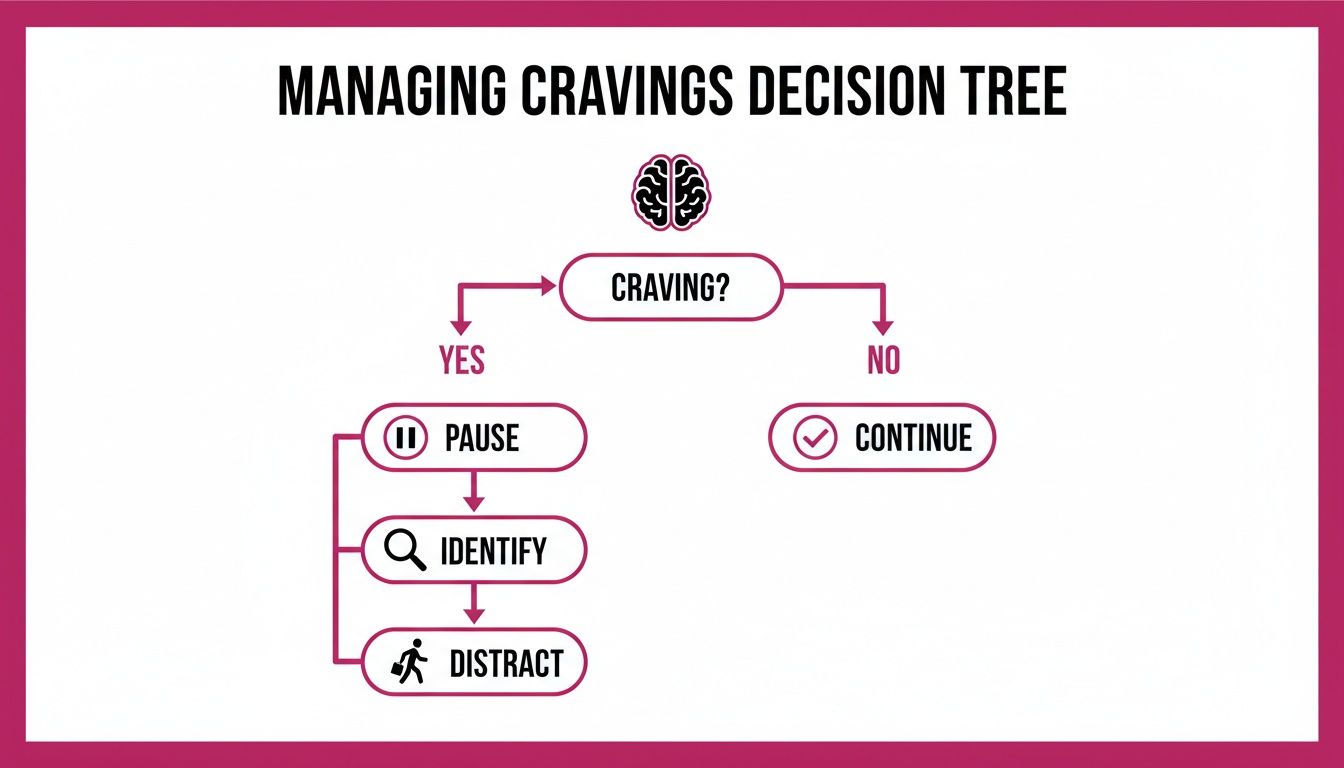
As the flowchart shows, just creating that initial pause is the most important step toward getting back in control.
Using Technology to Reinforce Your New Lifestyle
Building these new habits takes time and consistency, and some modern tools can really help. Take the Superbloom app, for instance. Its AI offers instant feedback drawn from behavioral science, like suggesting you 'boost fiber to stabilize blood sugar.' This helps you cut cravings by learning self-regulation, without getting bogged down in strict calorie counting.
In fact, the data shows that users report 50% better decision-making after seeing weekly visualizations of their own patterns. It’s amazing how seeing your habits laid out can turn an overwhelming urge into a conscious choice. You can learn more about the deep connection between food and behavioral health and see how this kind of awareness is key to lasting change.
A proactive lifestyle isn't about being perfect; it's about building a system that supports you. Every balanced meal, full night's sleep, and glass of water is a deposit into your well-being account, making you more resilient when cravings inevitably arise.
Get to Know Your Personal Craving Triggers
Food cravings rarely just appear out of the blue. They're not random bolts of lightning; they’re almost always a direct response to a specific cue in your environment or your emotional state. To really get a handle on them, you have to become a detective and figure out what sets them off.
These triggers are like invisible strings pulling you toward the pantry. Sometimes it’s emotional, like the wave of stress after a tough meeting. Other times, it's environmental, like the smell from your favorite bakery you walk past every day. Spotting them is the first step in taking back control.
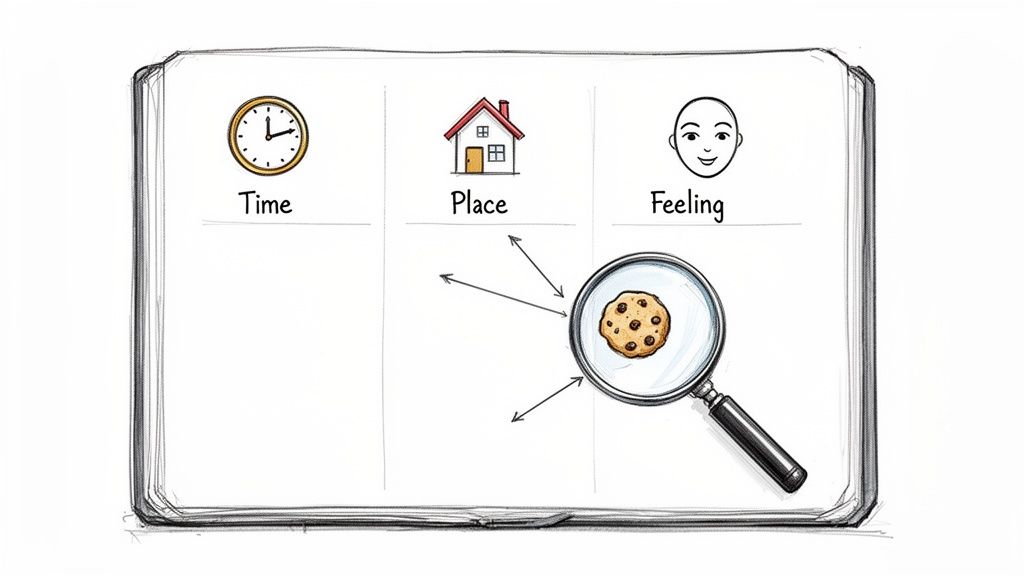
This awareness is everything. It shifts the battle from one of pure willpower to one of strategy. You start addressing the real reason you're craving something. That urge for a cookie isn't just about the cookie—it's about the feeling that came right before it.
Ask the Right Questions in the Moment
The next time a craving hits, don't just react. Take a breath and pause. This is your chance to gather some clues.
- What time is it? Do you always get a hankering for chips around 3:00 PM? That’s a classic sign of a mid-afternoon energy slump or just a deeply ingrained habit.
- Where am I? Are you on the couch watching your favorite show? In the car after a long commute? We often link certain locations with specific foods.
- Who am I with? Social settings can be a huge trigger. Maybe you only crave pizza with a certain group of friends or feel the need for dessert when visiting family.
- What was I just doing? Were you scrolling Instagram and saw a picture of a burger? Or maybe you just finished a really draining work task?
- How am I feeling? This one is the big one. Be honest. Are you bored? Stressed? Lonely? Maybe you're just procrastinating on something you don't want to do.
Answering these questions pulls you out of that autopilot mode. It shines a light on the connection between an event (like a stressful email) and your reaction (wanting a brownie)—a link you might not have even noticed before.
Use Journaling to Connect the Dots
A journal is one of the best tools for spotting these patterns. It doesn’t have to be a "dear diary" situation; think of it more like collecting data. When a craving hits, just take 60 seconds to jot down your answers to those questions.
This is where an app like Superbloom can make a real difference. It guides you through quick check-ins and lets you log cravings with a photo. Instead of needing a notebook, you can quickly snap a picture and add a note about how you're feeling. Over time, the app helps you see the patterns you might have otherwise missed.
You might suddenly realize your craving for chips isn't random at all—it shows up like clockwork on Tuesday afternoons, right after your weekly budget meeting. That’s not a coincidence; it’s a data point.
This kind of mindful tracking is backed by a lot of behavioral psychology. Research consistently shows that emotional states like stress and boredom are massive drivers for cravings. Learning to see how this plays out in your own life is what finally breaks the cycle. You can find more insights about food addiction and behavioral health that dig deeper into this connection.
From Seeing the Pattern to Taking Action
Once you start identifying your triggers, you can build a real plan.
If you know that scrolling social media at night makes you want ice cream, maybe you put your phone away and pick up a book instead. If you realize boredom is your biggest trigger, you can create a list of five-minute activities to do instead of raiding the kitchen.
This isn’t about restricting yourself; it’s about making a conscious choice. You’re no longer getting ambushed by your cravings. You can see them coming and have a plan ready to go. This is how you move from being a passenger to being the driver.
Replacing Unwanted Cravings with Healthier Habits
Okay, so you’ve identified your craving triggers. Think of that as finding the "X" on your personal treasure map. Now, it's time to use that map to chart a new course. Instead of gritting your teeth and relying on pure willpower, the smarter move is to strategically replace that old, unwanted habit with a new one that still gives you the satisfaction you're after.
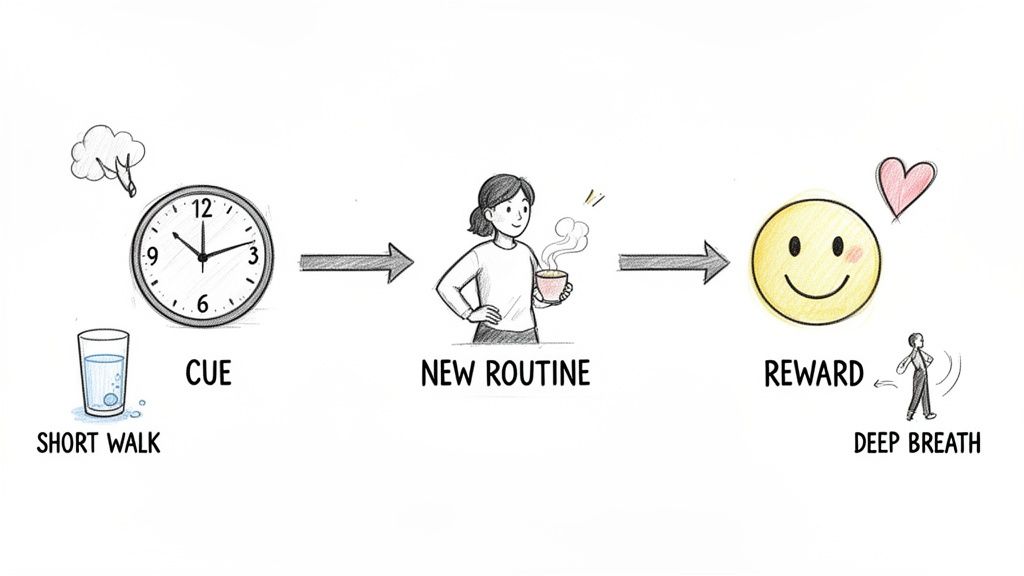
This whole idea is built on the science of how habits work. Every single habit—good or bad—runs on a simple, three-part loop: Cue, Routine, and Reward.
The cue is the trigger (like finishing a stressful meeting). The routine is your go-to action (grabbing a cookie). The reward is what you get out of it (a moment of comfort and a quick sugar hit).
The real secret to breaking free from cravings isn't about getting rid of the cue or the reward. It's all about swapping out the routine.
Master the Habit Swap Framework
To break the cycle, you have to consciously slot in a new routine that delivers a similar reward. Let's walk through a common scenario.
Imagine your cue is the classic 3 PM slump at work. You feel that wave of boredom and your energy just tanks. Your current routine is to wander over to the vending machine for a bag of chips. But what's the real reward you’re seeking? It’s probably not the chips themselves, but a mental break and a quick change of scenery.
Instead of fighting that urge head-on, you can design a new, better routine.
- New Routine Option 1: Get up, walk to the water cooler, do a few stretches for five minutes, and have a quick chat with a coworker. This gives you that mental break and adds a little social connection.
- New Routine Option 2: Brew a cup of flavorful herbal tea, like peppermint or cinnamon. Just the act of making it and enjoying the warm, aromatic experience can be a soothing ritual.
In both examples, you’ve answered the underlying need for a break—the reward—without falling back on the old habit. The cue is still there, but your response is entirely new.
Building Your Arsenal of Healthy Swaps
Having a list of replacement habits ready to go is absolutely critical. When a craving hits, the last thing you want is to be scrambling for a decision. You need a simple, pre-planned action you can take immediately.
Here are a few common triggers and some powerful swaps you can put into practice:
- If your trigger is stress: Instead of reaching for sugary or fatty comfort foods, try a five-minute guided meditation on an app, put on one of your favorite calming songs, or just do some slow, deep breathing exercises. The reward you’re actually chasing is relaxation, and these activities give it to you directly.
- If your trigger is fatigue: Before you grab that sugary coffee drink, try drinking a large glass of ice water and stepping outside for a few minutes of sunlight. The cold water and natural light are fantastic energy boosters, giving you the alertness you need without the inevitable crash later.
- If your trigger is a specific food: Sometimes, you just really want a certain taste or texture. When you’re looking for alternatives, picking satisfying options is key. Check out some healthy snacks that curb hunger to find swaps that give you that crunch, sweetness, or creaminess but with far better nutritional value.
A successful swap isn't about deprivation; it's about satisfaction. The new habit has to genuinely fulfill the need the old habit was trying to meet. If it feels like a punishment, it won't stick.
The Power of Journaling in Rewiring Your Brain
Consistently choosing a new routine takes a lot of self-awareness and a bit of reflection. This is where journaling can be a game-changer. By simply noting your emotions around your meals and cravings, you start to consciously rewire your brain's deep-seated dopamine responses.
This isn't just theory; it has a real, measurable impact. Think about it—one study found that therapeutic approaches helped reduce food addiction symptoms in 55% of participants. Journaling is a form of that same self-guided therapy.
It’s all about taking small, consistent steps. By logging your experiences just once a day, reflecting on what worked (or what didn't), and tweaking your plan, you'll start to see those intense cravings transform into manageable, nourishing routines.
Start small. Seriously. Don't try to overhaul everything at once. Pick one pesky craving and focus on replacing that single routine for a week. Success builds on success, giving you the momentum and confidence to tackle the next one. This micro-habit approach is what makes lasting change feel not just possible, but completely achievable.
Your Path Forward to Lasting Food Freedom
Let’s be clear: overcoming food cravings isn’t about winning a war with willpower. That’s an exhausting, and often losing, battle.
The real path to freedom is about developing self-awareness, being kinder to yourself, and fundamentally rebuilding your relationship with food. The goal is a relationship where you feel confident and in control, not one driven by guilt or knee-jerk reactions.
This whole journey starts with understanding what’s really going on behind your urges—from hormonal signals screaming for sugar to your brain’s powerful reward system. It gets stronger every time you manage to pause and ask, "Am I truly hungry, or is something else going on?"
Every single time you notice a trigger or try a new coping strategy, you're literally rewiring old, automatic patterns in your brain.
From Reaction to Intentional Choice
The point isn't to banish your favorite foods forever. It's to shift from mindless, automatic reactions to thoughtful, mindful decisions. You now have a complete toolkit to handle cravings when they strike, build a lifestyle that keeps them from showing up so often, and swap out unwanted habits for routines that actually make you feel good.
This process of recognizing your own patterns is where the magic happens. For instance, some users see a 35% drop in reactive eating after just two weeks of consistently reflecting on their choices.
This isn't just anecdotal, either. It lines up perfectly with studies showing that mindful awareness practices cut binge eating episodes by 24.3%. That’s a powerful tool, especially with eating disorders on the rise globally. If you want to dig deeper into the science, you can learn more about the impact of behavioral psychology on food addiction and see why this approach works.
Remember: Setbacks aren't failures. They're just data. Every craving is a chance to practice, learn something new about yourself, and tweak your game plan.
Your Tools for Lasting Change
You have everything you need to change how you respond to cravings for good. The secret ingredient is consistent, compassionate practice.
- Awareness: Keep asking yourself, "What am I really feeling right now?"
- Action: When a craving hits, pull out your distraction list or grab a healthy swap you've already planned for.
- Reflection: Use a tool like Superbloom to log what happened and start connecting the dots.
By focusing on these small, repeatable actions, you’re not just learning to manage cravings. You’re building a more intentional, satisfying life—one conscious choice at a time.
Your Top Questions About Food Cravings, Answered
When you start digging into food cravings, a lot of questions pop up. I’ve heard them all over the years. Here are some of the most common ones I get, along with some straight-to-the-point answers to help you feel more confident.
How Long Until My Food Cravings Go Away?
This is probably the number one question, and the honest answer is: there's no set timeline. Everyone's body and brain are wired differently.
That said, most people I've worked with start to feel a real difference in the intensity and frequency of their cravings within a few weeks. This isn't about being perfect; it's about being consistent with the strategies we've talked about.
Think of it as building a muscle. The more you practice recognizing your triggers and choosing a new response, the stronger that pathway becomes. This is where tracking your patterns can be a game-changer—it helps you see the progress you're making, even when it feels small.
Are My Cravings Just a Sign I'm Lacking a Nutrient?
It’s a popular theory, but for most of us, those intense cravings for chips, cookies, or pizza aren't your body's clever way of asking for more potassium or magnesium.
The reality is that modern food cravings are usually driven by a complex mix of brain chemistry, habit, and emotion. That overwhelming urge for chocolate? It's far more likely your brain chasing the dopamine rush from the sugar-and-fat combo than it is a sign of a true magnesium deficiency.
A well-balanced, nutrient-rich diet is still your best foundation. It keeps your blood sugar stable and your body nourished, which naturally reduces the background noise of random urges.
The goal here isn't to fight your cravings into submission. It's to understand them so you can move from feeling controlled by them to making a conscious choice. This is about empowerment, not restriction.
Does This Mean I Can Never Eat My Favorite Foods Again?
Absolutely not! This isn't about creating a massive list of "bad" foods you can never touch again. In fact, that approach usually backfires.
Once you get a handle on your triggers and build some new coping mechanisms, you're the one in the driver's seat. You can mindfully decide to have a brownie or a handful of chips because you genuinely want to enjoy it, not because an unstoppable craving ambushed you.
What’s really interesting is that many people find they enjoy these foods more when they eat them this way. A smaller portion often feels just as satisfying because the experience is intentional, free from the usual guilt that follows.
Ready to stop guessing and start building healthier habits that actually stick? Superbloom uses smart, AI-powered insights to help you connect the dots between your actions and your cravings. Get personalized guidance and find your path to food freedom at https://superbloomapp.com.