
How to Stop Overeating: A Practical Mindful Eating Guide
If you want to stop overeating for good, the most effective path isn't another restrictive diet—it's shifting your focus to mindful awareness. The process starts with learning to hear your body's real hunger signals, untangling emotional triggers, and creating a reliable eating routine that keeps you from getting overly hungry and making impulsive choices.
Your Path to Mindful Eating Starts Now
Overeating can feel like a constant battle of willpower, but it’s almost never about a lack of discipline. It’s usually a habit loop, one that’s deeply connected to stress, boredom, or simply being out of tune with what your body actually needs. This guide is designed to move you past the guilt and frustration that so often comes with dieting and instead focuses on psychology-backed strategies that build lasting change.
We're not here to talk about eliminating foods. We're here to build awareness.
The real goal is to reshape your relationship with food, moving it from a source of conflict to one of nourishment and intention. It’s a skill, really—learning to listen to what your body is truly asking for. And like any skill, it gets stronger with practice.
Understanding the Core Principles
Before we get into the "how-to," it helps to understand the big ideas that make this approach work. Think of these less as hard-and-fast rules and more as guiding principles for a more intentional way of eating.
- Ditch the Diet Mentality: We've all been there. Constant restriction is one of the biggest triggers for overeating. As soon as you label a food "bad" or "off-limits," its appeal skyrockets. This creates a predictable cycle: deprivation, followed by overindulgence.
- Identify Your Triggers: Overeating doesn't just happen randomly. It's often a direct response to specific emotions (like stress or loneliness), environments (the couch in front of the TV), or even certain times of day. Pinpointing these patterns is the first real step toward changing your response to them.
- Focus on Fullness, Not Emptiness: Many of us are great at noticing when we're hungry, but we pay far less attention to the signals of satisfaction and fullness. Shifting your focus here helps you learn to stop when you’ve had enough, not just when the food is gone.
A huge part of mindful eating is tuning into your body's signals to figure out, as one resource puts it, What Am I Really Hungry For?—because it's often something more than just physical hunger.
Mindful eating isn't about being perfect. It's about bringing more awareness to your choices, one meal at a time, and replacing judgment with curiosity.
This simple flowchart breaks down the three-step flow of mindful eating beautifully.
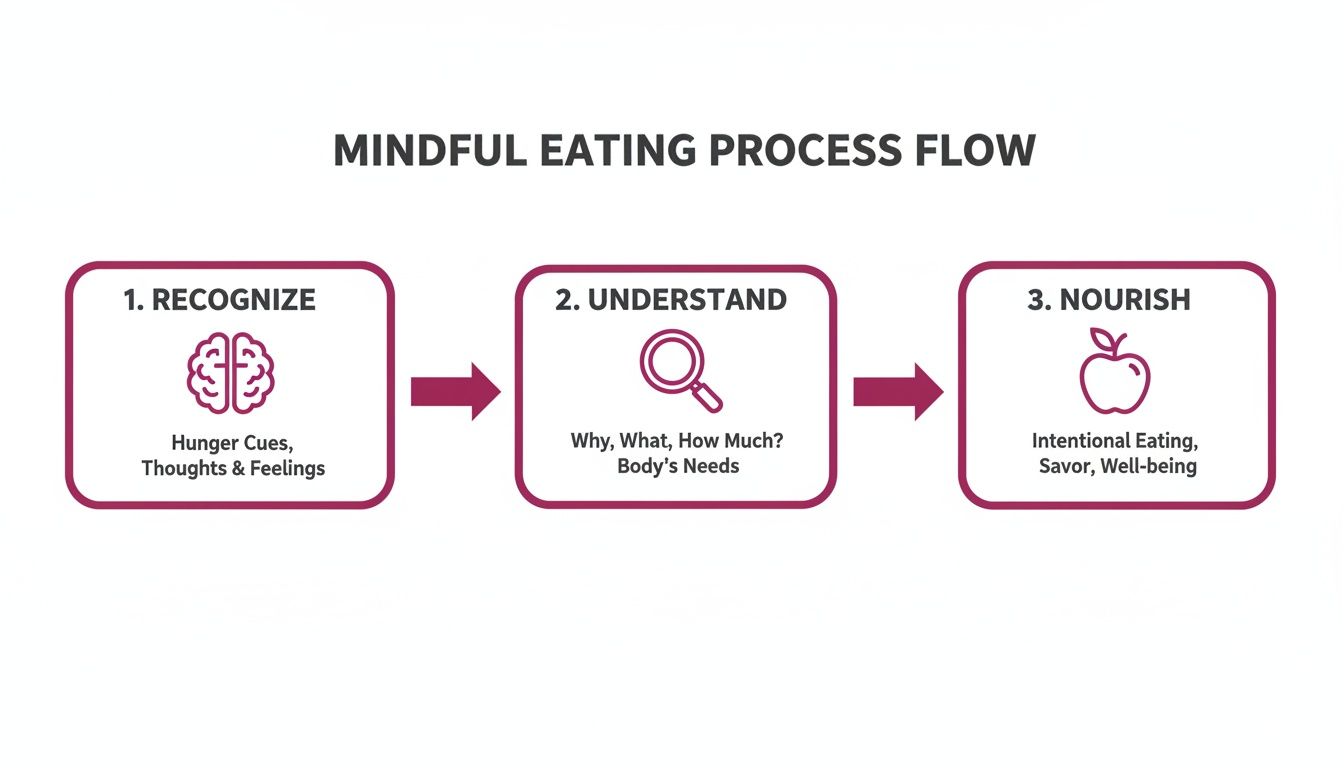
As you can see, sustainable change starts with recognizing your patterns. From there, you work on understanding what's driving them. Finally, you can make a conscious choice to nourish your body with intention. This framework is all about empowering you to make deliberate decisions instead of just reacting on autopilot.
Feeling overwhelmed? That's normal. Here’s a quick-start table with some simple, high-impact strategies you can put into practice today to get immediate traction.
Quick-Start Strategies to Stop Overeating Today
These aren't meant to be a complete solution, but they are powerful first steps. By picking just one or two to focus on, you can start building the awareness that's essential for long-term change.
Uncover Your Personal Overeating Triggers

If you want to change an ingrained habit, you first have to understand what makes it tick. Overeating almost never starts with a conscious choice. It’s usually an automatic reaction—a subconscious response to a specific trigger. Your first mission is to become a detective of your own behavior and pinpoint the exact cues that send you reaching for food when you aren't truly hungry.
These triggers are deeply personal, but they often fall into a few familiar buckets. For many of us, the culprit is emotional, like the wave of stress that hits after a tense work meeting. For others, it's environmental—something as simple as seeing a bowl of candy on a coworker's desk. Recognizing these moments is the first real step toward breaking the cycle.
Mapping Your Emotional and Situational Cues
The goal here is to get specific. We want to move from a vague feeling of, "Ugh, I ate too much again," to a crystal-clear understanding of, "When this happens, I almost always do that." This isn't about judging yourself; it's about pure, simple data collection. Think of yourself as a researcher, studying your own patterns with genuine curiosity.
The link between our feelings and our food choices is incredibly powerful. A key driver of overeating is tied to emotional triggers like stress, which now affects a staggering 2.33 billion people. But there's good news: research shows that simple awareness practices, like journaling about your emotions around food, can slash overeating episodes by 25% in just eight weeks. It proves just how effective pattern recognition can be.
To really get to the root of it, you have to learn how to overcome emotional eating. This means finding new ways to cope with your feelings that don't involve food, so you can respond with intention instead of impulse.
Start Your Trigger-Tracking Log
The single most effective way to see your patterns clearly is to log your eating for about a week. This doesn't have to be complicated. A simple notebook, a note on your phone, or an app like Superbloom (which is perfect for this kind of reflection) will do the trick.
Every time you eat—especially when you suspect it’s not from physical hunger—just jot down a few key details.
Your Trigger Log Checklist:
- Time of Day: What time is it? Are you noticing a 3 p.m. slump is a regular thing?
- Your Location: Where are you? At your desk, in the car, on the couch watching TV?
- Emotional State: How are you feeling right before you eat? Get specific: bored, anxious, lonely, tired, or even happy and celebratory.
- Hunger Level: On a scale of 1 to 10 (1 is starving, 10 is stuffed), where are you? Be honest.
- The Food Itself: What did you eat? Was it something you always crave when you're stressed, like something salty and crunchy or sweet and creamy?
After just a few days of this, patterns will start jumping out at you. You might realize your afternoon chip craving isn't random at all—it pops up right after a frustrating call with a certain client. Or maybe you'll see that late-night scrolling on social media almost always ends with a trip to the pantry.
This data is your roadmap. It turns the problem from a mysterious "lack of willpower" into a series of predictable, solvable challenges.
Common Triggers You Might Discover
As you track, you'll likely see your personal cues fall into one of four main categories. It can be incredibly validating to see your own experience reflected in these common patterns—it reminds you that you're not alone in this.
- Emotional Triggers: This is eating in response to feelings instead of hunger. We're talking stress, boredom, sadness, anxiety, or even procrastination. Food becomes a temporary comfort or distraction.
- Environmental Triggers: These are cues in your physical surroundings. Think walking past a bakery and smelling fresh bread, seeing snacks in the office breakroom, or watching food commercials on TV.
- Situational Triggers: Eating that's tied to specific events or routines. This is things like always getting popcorn at the movies, having dessert after every single dinner (hungry or not), or snacking while you drive.
- Social Triggers: This is all about the influence of other people. It could be pressure from friends to "just have one," family gatherings centered around a huge meal, or simply eating because everyone else around you is.
Once you have this map of your personal triggers, you’re no longer operating in the dark. You can finally anticipate these moments and prepare a different response, which is the true foundation for building new, healthier habits.
Design a Food Routine That Prevents Overeating
Understanding your triggers is a huge piece of the puzzle. But the other half is building a daily structure that makes mindful eating feel like second nature.
This isn’t about forcing yourself into a rigid, joyless meal plan. It's about engineering a supportive food routine that works with your life, not against it. A good routine helps you sidestep the extreme hunger and decision fatigue that so often send us spiraling into overeating.
Think of it as a set of gentle guardrails, guiding your choices without ever feeling restrictive. It helps your body find its natural rhythm of hunger and fullness, making intentional eating so much easier.
Build a Foundation with Consistent Meal Times
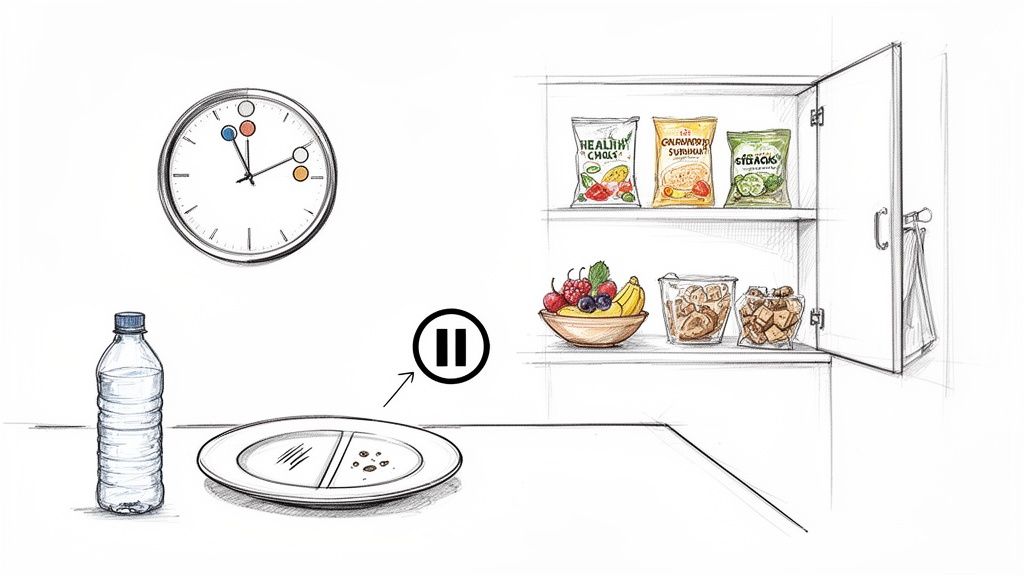
Your body absolutely thrives on predictability. When you eat at roughly the same times each day, your internal clock learns when to expect fuel, which helps keep hunger hormones like ghrelin in check. This one simple habit can prevent you from hitting that state of "primal hunger"—that ravenous, frantic feeling where all rational thought about food just evaporates.
Honestly, skipping meals is one of the biggest culprits behind overeating. You show up to your next meal from a place of intense deprivation, making it nearly impossible to eat slowly or even notice when you’re full.
- Aim for regular intervals: Try eating something every 3-5 hours. This usually looks like three main meals and one or two planned snacks.
- Plan for your busiest days: We all have them. If you know Wednesdays are swamped with meetings, have a go-to snack ready. This proactive step stops you from grabbing whatever is fast and easy when you're starving.
By establishing this rhythm, you dramatically reduce the chances of your hunger spiraling out of control. It's a cornerstone of learning how to stop overeating for good.
Engineer Your Environment for Success
Let's be real: your surroundings have a massive influence on your eating habits. Willpower is a finite resource, and if you're relying on it to get you through the day, you're fighting an uphill battle. A much smarter approach is to make small tweaks to your environment so the healthy choice becomes the easy choice.
This concept is often called choice architecture, and it’s all about setting up your space to support your goals on autopilot.
The most successful people don't have more willpower; they just build better systems. By making healthy foods more visible and accessible than tempting ones, you reduce the number of decisions you have to make each day.
Practical Environmental Shifts:
- Make Healthy Snacks Visible: Keep a bowl of fresh fruit on your counter. Put pre-cut veggies at eye level in the fridge. You're simply far more likely to grab what you see first.
- Create Friction for Treats: Move the cookies, chips, and other high-temptation snacks to a less convenient spot—a high shelf, the back of the pantry, the garage. Even a tiny barrier can give you that crucial moment to pause and reconsider.
- Plate Everything: This is a big one. Avoid eating directly from a bag or container. Putting your food on a plate or in a bowl forces you to see the portion size and shifts you into a more mindful state.
These small adjustments add up, lowering the mental effort needed to make good choices and creating an environment where success is the path of least resistance.
Master the Pre-Meal Pause
Before you take your first bite of any meal or snack, try this simple yet incredibly powerful technique: the pre-meal pause. It's just a brief, 30-second check-in with yourself to see where your hunger actually is.
It’s your chance to interrupt that automatic pilot mode we all fall into and bring a little intention back to the act of eating.
Ask Yourself These Questions:
- Am I physically hungry right now?
- On a scale of 1-10, how hungry am I?
- What does my body really need?
This simple habit helps you start distinguishing between true physical hunger and those emotional or habitual urges. Over time, it trains you to listen more accurately to your body’s signals. You can even use the journaling feature in an app like Superbloom to quickly log your hunger level before a meal, which is a great way to spot patterns.
Taming Portion Distortion
Let's face it, our perception of a "normal" serving size has been warped over the years. A major, often invisible, driver of overeating is portion distortion. A standard restaurant meal in the US has ballooned from around 500 calories in the 1950s to over 1,200 today. And since research shows most people tend to eat 92% of what they're served, it leads to a ton of unconscious overconsumption. The World Health Organization has a comprehensive report on these trends if you want to dive deeper.
Practical Ways to Right-Size Your Portions:
- Use smaller plates and bowls: This is a classic for a reason. Studies consistently show this simple switch can help you eat less without feeling deprived.
- Serve food from the kitchen: Instead of putting big serving dishes on the dining table (an open invitation for seconds), plate your food in the kitchen. This makes going back for more a conscious, deliberate choice.
- Split restaurant meals: When you're eating out, consider sharing an entrée with a friend. Or, ask for a to-go box right when your food arrives and immediately pack up half for later.
How to Handle Cravings When They Hit
It’s been a long day. You're finally home, and suddenly, a powerful craving washes over you. It feels urgent, almost like a command. In these critical moments, you’re at a crossroads: you can either fall back into an old pattern or start building a new, more intentional one.
Let’s be honest, generic advice like “just say no” doesn't work. In fact, trying to white-knuckle your way through a craving often makes it feel even more powerful. What you really need is a set of practical, go-to strategies that give you a real sense of control without demanding superhuman willpower.
The goal here is to interrupt the automatic cycle of trigger-crave-eat. All it takes is creating a small pause—just a few seconds of space between the feeling and your reaction—to make a conscious choice.
Surf the Urge Instead of Fighting It
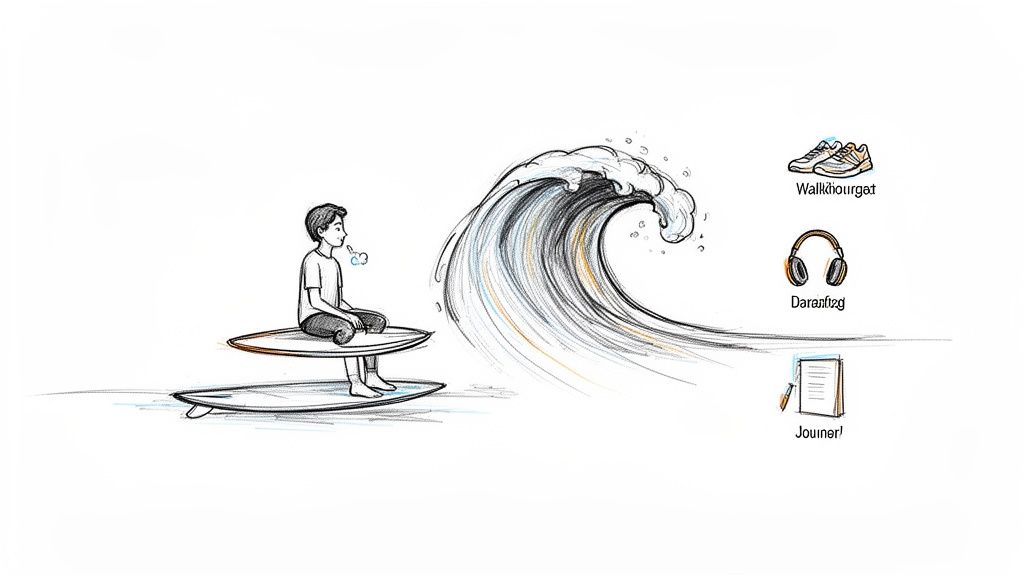
One of the most powerful mindfulness techniques I've seen work for clients is called urge surfing. The idea is simple but profound: instead of fighting the craving, you learn to observe it with curiosity. Picture it like a wave in the ocean. It builds, peaks, and eventually, it subsides all on its own.
An urge is just a mix of thoughts, feelings, and physical sensations. When you can notice it without judging it, you strip away its power.
Here’s how to practice urge surfing:
- Acknowledge the Craving: Simply say to yourself, "Ah, there's a craving for cookies." Just naming it creates a little bit of distance.
- Notice the Physical Sensations: Where do you feel it in your body? A knot in your stomach? A watering mouth? Get curious about these sensations without trying to fix them.
- Ride the Wave: Remind yourself that this feeling is temporary. Most cravings peak within a few minutes and will pass if you don't feed them.
This practice is all about retraining your brain. It teaches you that cravings are not commands. You can feel a strong urge and still choose not to act on it—a game-changing skill for anyone learning how to stop overeating.
Create Your Personalized Coping Menu
When you’re in the middle of a powerful craving, your brain isn't exactly primed for creative problem-solving. That's why having a pre-planned "Coping Menu"—your own personalized list of non-food activities—is so incredibly helpful.
This becomes your go-to resource when you feel triggered by stress, sadness, or just plain boredom. The connection between our emotions and eating habits is undeniable, and psychology-based tools are highly effective here. For example, simple education on portion control can reduce intake by 15-20%. For those who overeat due to stress, identifying triggers is key, as spikes in the stress hormone cortisol can lead to consuming an extra 300 calories a day. In fact, habit-tracking tools that offer emotional support have been shown to reduce binge episodes by 28% in just 12 weeks. You can learn more about the global impact of eating habits and nutrition from the World Health Organization.
Think of your Coping Menu as a first-aid kit for your emotions. When an urge hits, you don't have to think—you just consult your list and pick an action.
A great way to organize your menu is by the amount of time you have, so you can pick something realistic for any situation. Keeping this list in a notes app or a tool like Superbloom means you'll always have it when you need it most.
Here are a few ideas to get you started on your own list.
Your In-the-Moment Craving Response Menu
Having these tools ready means you can face cravings with confidence. Every single time you choose a response from your menu instead of automatically reaching for food, you're strengthening a new neural pathway. Over time, making that intentional choice becomes easier and much more natural.
Knowing When to Seek Professional Support
The strategies we've talked about are incredibly powerful for rebuilding your relationship with food, but sometimes, you just need an expert in your corner. Let's be clear: recognizing you might benefit from professional support isn't a sign of failure. It's actually a courageous and smart move toward genuine, lasting well-being.
Deciding to get help can feel like a huge step, I get it. But it often provides the exact structure and personalized insight needed to finally get past a roadblock. If you feel like you’re just spinning your wheels or if food is taking up way too much of your mental energy, it might be time to talk to a professional.
Signs It Might Be Time to Reach Out
It's not always obvious when you should shift from self-help strategies to professional guidance. There are, however, a few clear patterns that suggest a deeper issue might be at play—one that needs more specialized support than general advice can offer.
You should seriously consider reaching out if any of this sounds familiar:
- You frequently feel out of control. This often looks like eating much more than you intended in a short time and feeling like you just can't stop, even when you desperately want to.
- You find yourself eating in secret. If you feel shame or embarrassment around your eating habits, it can lead you to hide what or how much you're eating from friends and family.
- Guilt becomes overwhelming. Episodes of overeating are almost always followed by intense feelings of disgust, depression, or crippling guilt.
- Your thoughts are consumed by food. It feels like your day revolves around thinking about food, your body weight, and your eating patterns, getting in the way of work, relationships, and your happiness.
- You eat until you're physically sick. You regularly eat to the point of feeling uncomfortably full or even physically ill.
These signs can sometimes be linked to conditions like binge eating disorder (BED), which happens to be the most common eating disorder in the United States. A professional can give you a proper assessment and create a safe, effective plan just for you.
Seeking support is a form of self-care. It’s about giving yourself the best possible tools to build a healthy, peaceful relationship with food and your body.
Finding the Right Professional for You
Okay, so you've decided to get help. Now what? Navigating the world of health professionals can feel a bit confusing, but different experts offer unique kinds of support.
Here’s a quick breakdown of who can help with what:
- Registered Dietitian (RD): A dietitian is an expert in the science of nutrition. They can help you create a sustainable, non-restrictive eating plan that actually nourishes you. They're fantastic at helping you tune back into your body's hunger and fullness cues without putting you on another diet.
- Therapist or Counselor: A mental health professional is your go-to for digging into the why behind the overeating. Someone who specializes in eating disorders or cognitive-behavioral therapy (CBT) can help you identify and work through emotional triggers. They’ll equip you with new coping strategies for the stress, anxiety, or sadness that often leads to turning to food.
- Medical Doctor (MD): Don't forget your primary care doctor. They should be your first stop to rule out any underlying medical issues that could be contributing to your eating habits. From there, they can give you a trusted referral to the right specialist.
Taking that step to reach out is an act of strength. It opens the door to a structured, supportive space where you can finally figure this out and build a path forward that truly lasts.
Your Top Questions About Overeating, Answered
If you're trying to figure out how to stop overeating, you’ve probably got a lot of questions. That’s completely normal. This whole process can feel confusing, and it's easy to wonder if what you're doing is actually working. Let's clear up some of the most common concerns I hear, so you can move forward with a lot more confidence.
How Long Does This Actually Take?
This is usually the first thing people want to know, and the most honest answer is this: there is no magic timeline. Think of it less like reaching a finish line and more like learning a new skill. Overeating is a habit, often one that’s been around for years, and unraveling it takes time and patience.
Some people feel a real shift in just a few weeks, especially once they start spotting their triggers and bringing more structure to their days. For others, particularly if overeating is tangled up with deep emotional roots, it can be a longer journey of months or even years.
The key thing to remember is that progress isn't a straight line. You're going to have great days and you're going to have tough ones. The goal isn't perfection—it's just showing up for yourself consistently.
Is Overeating the Same Thing as Binge Eating Disorder?
This is a really important distinction, and it's one that causes a lot of confusion. While people sometimes use the terms interchangeably, they mean very different things from a clinical standpoint.
- Overeating is simply eating more food than your body needs in one sitting. Most of us have done it—think Thanksgiving dinner. It might leave you feeling stuffed, but it doesn't always come with a lot of emotional baggage.
- Binge Eating Disorder (BED), on the other hand, is a specific medical diagnosis. It involves regularly eating very large amounts of food in a short period, often to the point of pain. What truly defines it is a powerful feeling of being completely out of control during the episode, which is almost always followed by intense feelings of shame, guilt, and distress.
If you read the description of BED and it sounds frighteningly familiar—especially the loss of control part—I strongly encourage you to seek out a professional who can offer the right kind of support.
Do I Have to Give Up My Favorite Foods Forever?
No! And I can't stress this enough. Believing you have to swear off your favorite foods is one of the biggest myths about learning how to stop overeating. In my experience, that approach almost always backfires.
When you make a food completely forbidden, you give it immense power. Psychologists call it the "scarcity effect"—the more you tell yourself you can't have something, the more your brain obsesses over it. That craving builds and builds until your willpower snaps, and you end up eating far more of it than if you'd just had a reasonable portion to begin with.
The real goal is to shift from restriction to intentional inclusion. When you give yourself unconditional permission to enjoy the foods you love, they lose their forbidden allure. A cookie is just a cookie, not a forbidden prize you have to "earn" or feel guilty about. You can enjoy it, savor it, and move on without triggering that all-or-nothing cycle.
What If I Overeat Because I’m Just Always Hungry?
That constant, nagging hunger is a real problem, and it can definitely make you feel like your body is working against you. Before you chalk it up to a lack of willpower, let’s look at a few common reasons why you might feel hungry all the time.
Often, it comes down to what's on your plate. If your meals aren't built to keep you satisfied, your body is going to send out hunger signals pretty quickly.
The Fullness Factor: What Your Meals Need
- Protein: This is your best friend when it comes to satiety. Make sure every meal has a solid source—think chicken, fish, beans, tofu, or Greek yogurt. It makes a huge difference.
- Fiber: Found in fruits, veggies, and whole grains, fiber adds bulk and slows everything down, keeping you feeling full and your energy levels stable.
- Healthy Fats: Things like avocado, nuts, and olive oil aren't just good for you; they also signal to your brain that you're satisfied.
If you’re eating a lot of refined carbs (like white bread, pastries, or sugary cereals), you're basically on a blood sugar rollercoaster that leads to crashes and intense cravings. Also, don't forget water! It's incredibly common to mistake dehydration for hunger. Next time you feel peckish, try drinking a big glass of water and waiting 15-20 minutes. You might be surprised.
Can Stress Really Make Me Overeat?
Oh, absolutely. The connection between stress and eating is powerful and deeply rooted in our biology. When you’re stressed out, your body pumps out a hormone called cortisol. Cortisol can crank up your appetite and, more specifically, make you crave those high-fat, high-sugar foods we call "comfort foods."
Why? Because eating those foods gives your brain a quick hit of dopamine, the feel-good chemical. This temporarily numbs the stressful feelings and creates a potent feedback loop: you feel stressed, you eat, you feel a little better for a moment.
Your brain quickly learns this pattern, and soon, reaching for food becomes an automatic response to stress. This is exactly why finding non-food ways to decompress is a non-negotiable part of the process. A five-minute walk, some deep breathing, or calling a friend can give your brain a new, healthier coping tool to turn to instead.
Ready to build a more mindful relationship with food and get personalized support on your journey? Superbloom is an AI-powered nutrition coach that helps you understand your patterns and build sustainable habits without the stress of calorie counting. Get the guidance you need to finally feel in control. Learn more and start your journey with Superbloom today!