
How to Stop Stress Eating for Good
If you've ever found yourself standing in front of the fridge after a tough day, knowing you aren't truly hungry, you're not alone. The solution isn't about having more willpower. To truly stop stress eating, you have to replace the habit with a coping mechanism that actually works for you.
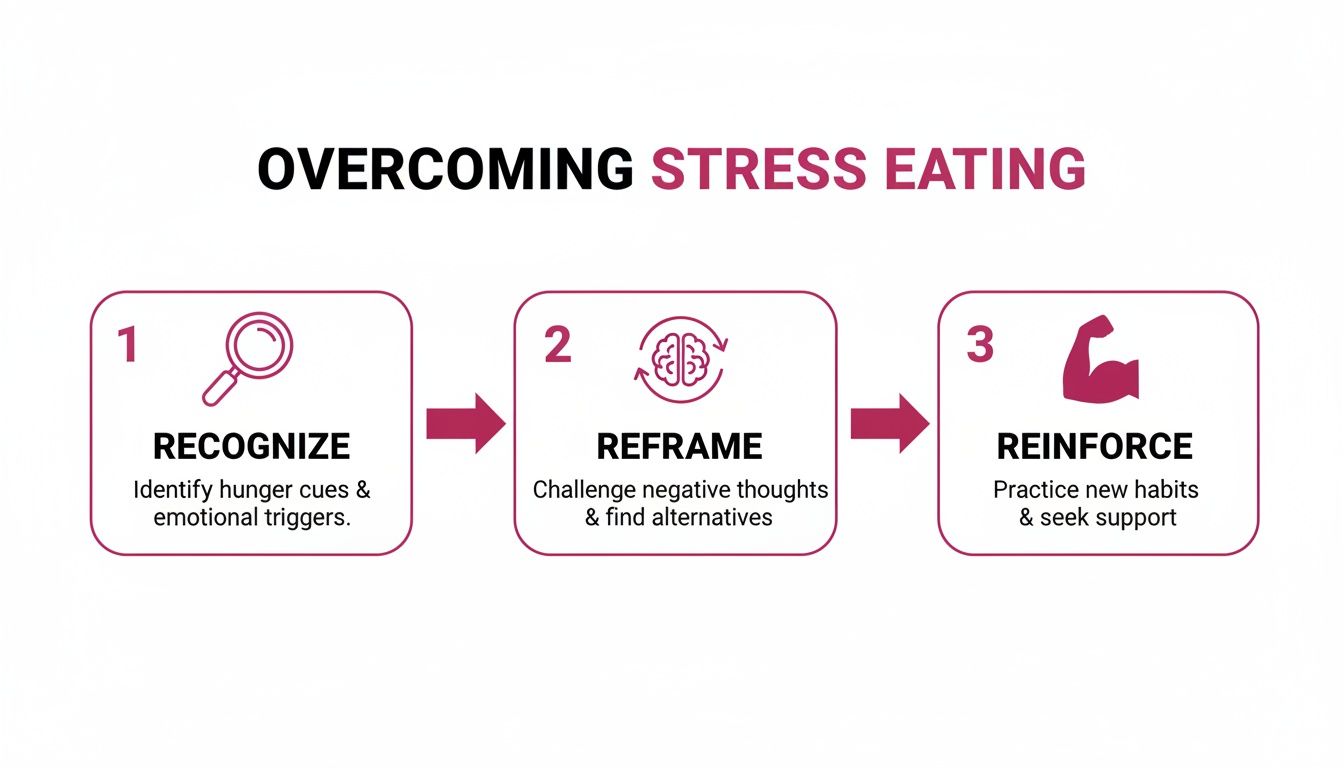
The key is a three-part process: first, recognize your emotional triggers, then reframe your immediate response to cravings, and finally, reinforce new, healthier behaviors until they become second nature. This is a practical approach focused on building a toolkit to manage life's pressures without turning to food.
The Real Reason You Stress Eat
Let's be real for a moment. Telling yourself to "just stop" stress eating is an exercise in futility. If it were that easy, you would have already done it. That powerful urge to eat when you're stressed, bored, or anxious isn't a character flaw—it's a deeply wired biological response that feels completely automatic.
Because, on a brain-chemistry level, it is.
Your Brain's Reward System
It all starts with your body’s natural reaction to a threat, whether it's a looming deadline or a difficult conversation. Your system gets a jolt of cortisol, the primary stress hormone, which does more than just put you on high alert. It also revs up your appetite, specifically driving you toward high-calorie, highly palatable foods.
When you eat that comfort food, your brain rewards you with a hit of dopamine. This feel-good chemical provides instant, though fleeting, relief. This cycle—stress, craving, eating, relief—creates a powerful feedback loop. The more you repeat it, the stronger the connection becomes.
Over time, your brain creates a strong association: stress = eat = feel better. Each time you repeat this pattern, the neural pathway gets stronger, turning what was once a conscious choice into an automatic habit.
This isn't just in your head. The repeated cycle can cause real changes in your brain's structure, making the impulse to stress eat feel more and more difficult to resist. You're not fighting a lack of willpower; you're up against a well-practiced biological program.
A Framework for Lasting Change
So, what's the answer? Instead of fighting your biology, you can work with it. The most effective path forward is a practical, three-part framework designed to rewire this automatic response.
- Recognize: You’ll become a detective of your own life, pinpointing the specific emotions, situations, and even times of day that trigger your cravings.
- Reframe: This is all about creating a deliberate pause between the urge and the action. That small window of time is where you regain your power to choose.
- Reinforce: You’ll proactively build and practice new, non-food habits that provide genuine stress relief, making them your new default response over time.
This simple but powerful process is all about shifting from mindless reaction to mindful action.
This isn't about restriction or labeling foods as "good" or "bad." It's about understanding what truly drives you, building a better toolkit of responses, and taking back control.
The table below breaks down this framework, giving you a clear roadmap for the journey ahead.
Your 3-Part Framework to Overcome Stress Eating
| Phase | Action | Goal |
|---|---|---|
| Recognize | Identify and log your personal emotional eating triggers. | Build genuine awareness of what makes you tick. |
| Reframe | Use short-term strategies to interrupt an active craving. | Create a crucial pause between the urge and the action. |
| Reinforce | Proactively build and practice non-food coping habits. | Develop a resilient, long-term support system. |
This framework gives you a structure for making real, sustainable changes.
Throughout this guide, we'll dive deep into each of these phases with actionable steps. We'll also explore how you can use tools like the AI-powered check-ins in Superbloom to spot these patterns more easily and get personalized support exactly when you need it.
Recognizing Your Personal Stress Triggers
Ever find yourself with an empty chip bag or cookie sleeve, wondering how you got there? It wasn't about hunger. It was about stress. But “stress” is just a vague, giant cloud. To get a handle on stress eating, we need to look closer at the specific chain of events that takes you from a difficult moment to an unplanned snack.
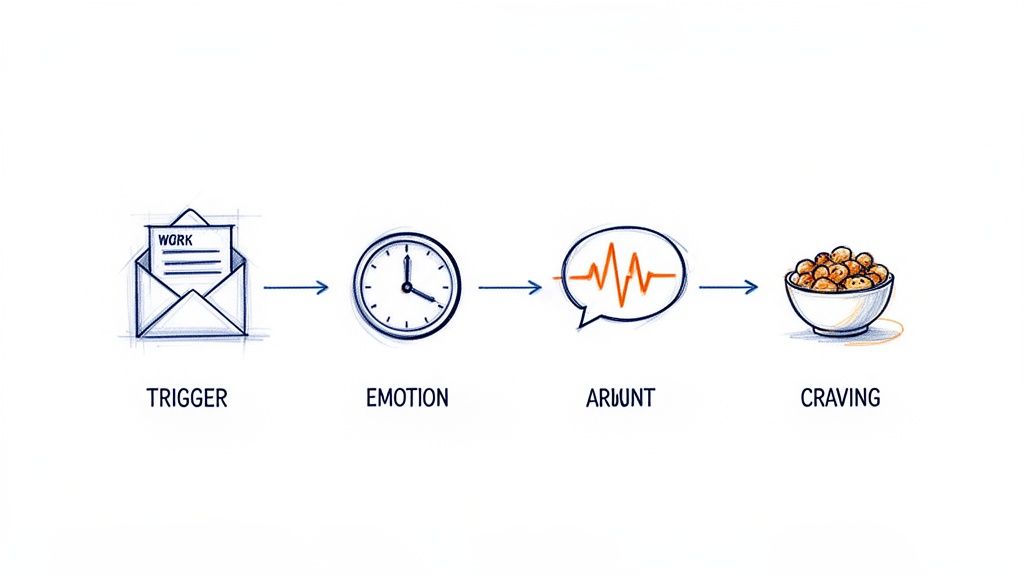
Think of it like a domino effect. It starts with a trigger—maybe a passive-aggressive email from your boss or a wave of boredom on a quiet afternoon. That trigger sets off an emotion, like anxiety or restlessness. This feeling is the real culprit; it’s what lights the fuse for a craving. Your brain isn’t asking for food because your stomach is empty. It’s looking for a quick way to soothe an uncomfortable feeling.
Become a Habit Detective
Before you can break the cycle, you have to see it clearly. This is where you put on your detective hat. For one week, your only job is to observe and document, without any judgment. Keep a small notebook handy or use a notes app on your phone.
Every time you reach for food when you’re not physically hungry, pause and jot down the details. You're gathering clues by answering a few simple questions:
- Who were you with? Were you alone? With your family? With coworkers? The social setting (or lack of one) is often a huge piece of the puzzle.
- What was happening? Get specific. Were you scrolling social media and feeling a pang of envy? Were you stuck in a tense meeting?
- When did it happen? Time of day is a big giveaway. That 3 p.m. slump isn’t just about energy; it’s a common time for stress to peak.
- Where were you? Your environment matters. Are you always snacking at your desk? In the car? Standing in front of the open pantry?
- Why did you eat? This is the most important clue. Dig deep and name the emotion. Was it stress, anxiety, boredom, frustration, or even just procrastination?
You aren't just logging food. You are decoding the emotional blueprint of your cravings. Each entry is a clue that helps you connect the dots between your feelings and your actions.
This simple act of observation pulls the behavior out of the shadows. It’s no longer an unconscious reaction; it’s a conscious event you can begin to understand and, eventually, change.
Uncovering Your Unique Patterns
After a few days of this, you’ll start to see patterns emerge from your notes. Maybe you’ll notice that your hand is in the candy jar after every single call with a difficult client. Or perhaps you realize that you only crave ice cream on Friday nights when you’re feeling lonely. These aren’t random—they are learned habits your brain has created.
If this sounds familiar, you're far from alone. Research from the American Psychological Association shows that about 39% of people overeat when they're stressed out. It's an incredibly common coping mechanism; in fact, 27% of adults admit they eat to manage stress, and 34% of those say it has become a full-blown habit. You can dig into these stress and eating statistics from the American Psychological Association to see just how widespread this is.
These patterns are deeply personal. For one person, a looming deadline triggers a craving for something sugary to get a quick rush of energy. For someone else, it might be an argument with their partner that leaves them reaching for classic, heavy comfort foods.
Using Modern Tools for Faster Insights
While a pen and paper work great, some newer tools can help you spot these patterns even faster. For instance, an app like Superbloom uses quick, AI-powered check-ins to help you log your moods and meals throughout the day.
The real magic happens when the app starts connecting the dots for you. It can surface insights you might not have pieced together on your own, like a notification that says, “We’ve noticed you tend to reach for salty snacks on days you log feeling ‘overwhelmed’ at work.” This kind of instant feedback can dramatically shorten the time it takes to figure out your personal trigger-craving loop.
By knowing exactly what flips the switch for your cravings, you’re no longer just reacting. You’re armed with the awareness you need to finally start changing your response.
Sidestepping the Craving in the Moment
You’ve done the hard work of figuring out why you stress eat. You know your triggers. But then, it happens—that familiar, urgent craving washes over you after a brutal meeting or a fight with your partner. This is the moment that matters.
Right here, in the small space between the urge and the action, is where you can change the script.
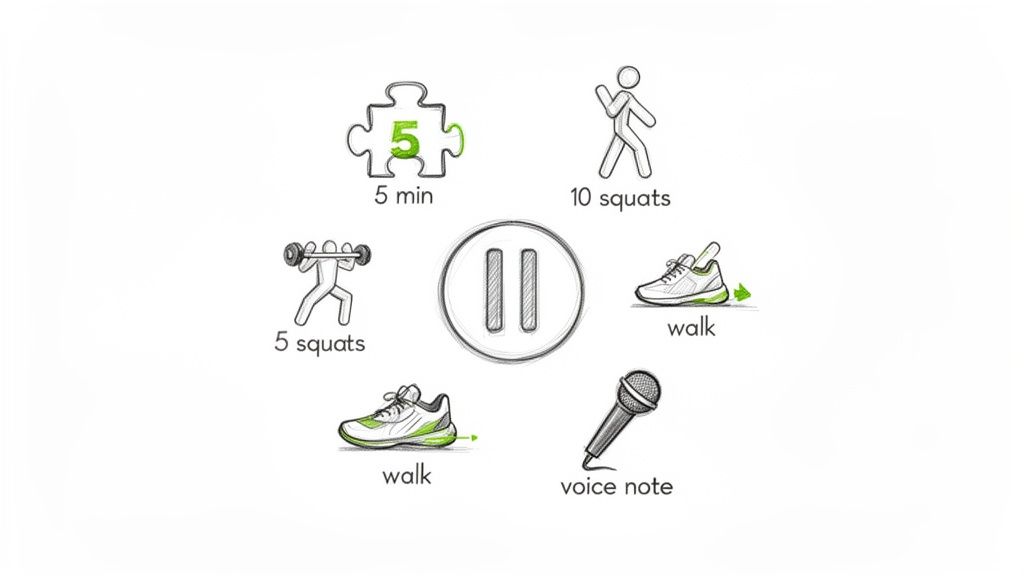
The trick isn’t to willpower your way through it. It's about creating a deliberate pause. Think of it as a "pattern interrupt"—a tiny action that breaks the automatic response your brain is screaming for.
Forget vague advice like “just distract yourself.” To really stop a craving in its tracks, you need a personalized menu of quick, practical things you can do right now. The goal is simple: buy yourself 15 minutes. Studies have shown that this short delay is often all it takes for the most intense part of a craving to subside, giving your rational mind a chance to catch up with your emotions.
Match the Tactic to Your Emotion
A one-size-fits-all approach just doesn't work here. The most effective pattern interrupts are the ones that actually address what you're feeling. Are you antsy and full of nervous energy, or are you overwhelmed and mentally fried? Each state needs a different kind of release.
Next time a craving hits, take a second to identify the feeling underneath and try one of these moves.
If you feel scattered, foggy, or overwhelmed:
- Engage your brain differently. Pull up a Sudoku or a word game on your phone for five minutes. A focused, logical task like this forces your brain to shift gears, pulling it out of the emotional spiral that’s driving the craving.
- Organize one small thing. You don't need to deep-clean the kitchen. Just tidy your desk, sort a small stack of mail, or line up the shoes by the door. Creating a little bit of external order can bring a surprising sense of internal calm.
If you feel antsy, restless, or full of pent-up energy:
- Get a quick burst of movement. Seriously, you don't need a full workout. Do 10 squats next to your chair. Walk up and down the stairs a few times. Put on one great song and just dance it out in the living room. It's about releasing that physical tension that your body might be misinterpreting as a food cue.
- Change your scenery. Just step outside for three minutes. The shift in light, temperature, and sounds provides a powerful mental and physical reset.
If you feel lonely or need an emotional outlet:
- Talk it out. Open the voice memo app on your phone and just vent. You don't ever have to listen to it again. The simple act of putting your feelings into words can take away so much of their power.
- Reach out. Send a quick text to a friend, not necessarily to talk about the problem, but just to connect. A quick "thinking of you!" can be a powerful reminder that you're not alone, which is a fantastic antidote to stress.
The point isn't to magically solve your stress in five minutes. It's to prove to yourself that you have other tools besides food to handle a tough feeling. Each time you choose a new action, you weaken the old habit's grip.
Your Pocket Coach for Real-Time Help
Knowing what you should do is one thing. Remembering to do it when a craving hijacks your brain is another beast entirely. This is where having a system in your corner can make a huge difference.
When you feel that pull toward the pantry, you can log it in an app like Superbloom. But instead of just tracking it, the app can act as your in-the-moment coach. Based on what it knows about your patterns, it can suggest a personalized pattern interrupt when you need it most.
For example, you might log a craving and note that you’re "overwhelmed." Superbloom could then send a prompt like: “It sounds like a lot is going on. Before reaching for a snack, how about a 3-minute breathing exercise?” This little external nudge can provide just enough structure to help you build a new response.
By having these specific, actionable alternatives at your fingertips, you create a buffer. That pause is your power. It’s your chance to sidestep the automatic reaction and choose a response that truly serves you, breaking the stress-eating cycle one moment at a time.
Building a Stress-Resilient Routine

Knowing how to handle a craving in the moment is a critical skill, but the real win is making those moments happen less often. This is where we shift from playing defense to playing offense. Instead of just reacting to cravings, you can build a daily routine that makes you naturally more resilient to stress in the first place.
This is all about creating a new baseline where you feel more stable and grounded. When you're operating from a place of calm, a tough meeting or a personal setback is less likely to send you spiraling. Let's dig into three practical areas you can focus on: your food, your habits, and your environment.
Fuel Your Body for Nutritional Resilience
The food you eat is information for your body, and it has a massive influence on your mood and ability to cope. If you’re riding a blood sugar rollercoaster—spiking high after a sugary snack and then crashing hard—your emotions are likely along for the ride. That crash can feel a lot like anxiety or exhaustion, making you crave another quick fix.
The antidote is to build your meals around protein, fiber, and healthy fats. These nutrients slow everything down, giving you a steady, even release of energy. Your blood sugar stays stable, and so does your mood.
A sugary pastry is like throwing kindling on a fire—you get a big burst of flame that dies out almost immediately. A balanced meal, on the other hand, is like a slow-burning log, providing consistent energy for hours.
The point isn't to get rid of your favorite comfort foods. It’s about building a nutritional foundation that keeps your body so well-fueled that stress no longer sends it into a panic for quick energy.
Making small, consistent food swaps is a powerful way to build this nutritional resilience without feeling deprived.
Smart Swaps for Nutritional Resilience
Here are a few simple exchanges you can make to help stabilize your blood sugar and reduce the odds of stress-induced cravings.
| Instead Of This Common Stress Food... | Try This Nutrient-Dense Alternative... | Why It Works |
|---|---|---|
| Sugary cereal or a morning pastry | Greek yogurt with berries and nuts | Protein and fiber stabilize blood sugar for hours, preventing a mid-morning energy crash. |
| Bag of chips or pretzels | A handful of almonds and an apple | Healthy fats, fiber, and protein provide sustained energy and a satisfying crunch. |
| A pint of ice cream for dessert | A small bowl of frozen cherries with a spoonful of peanut butter | Offers sweetness and creamy texture with far less sugar and more nutrients, preventing a late-night spike. |
These small upgrades really do add up. And if you’re looking for personalized pointers, tools like Superbloom can give you feedback on your meals, suggesting easy ways to add more protein or fiber to support your energy and mood all day.
Master the Art of Habit Stacking
Trying to force a new stress-management habit into a busy schedule often feels like one more thing to do. So, don't. Instead, "stack" the new habit onto something you already do without thinking. The existing action becomes the trigger for the new one. Truly Forming Habits That Stick is about making the process feel as automatic as possible.
This simple formula removes the need for motivation or willpower.
- After I pour my morning coffee, I will do two minutes of deep breathing.
- While the water for my tea is boiling, I will do five mindful stretches.
- When I shut my laptop for the day, I will immediately put on a podcast and walk around the block.
The secret is to start absurdly small. A two-minute habit is far more likely to stick than a 30-minute one. Once it feels totally automatic, you can then choose to expand on it.
Design an Environment for Success
Finally, let's talk about your physical surroundings. It's so much easier to make good choices when they're the most convenient ones. This isn't about testing your willpower—it's about setting up your environment to do the heavy lifting for you.
Take an honest look at your kitchen and workspace. Are the foods you tend to grab under stress sitting out in plain sight?
- Make healthy choices obvious. Keep a bowl of fresh fruit on the counter. Put pre-cut veggies and hummus in clear containers right at eye-level in the fridge.
- Make less-healthy choices inconvenient. Move the cookies, chips, or candy to a high shelf, in the back of a cabinet, or inside an opaque container. That tiny bit of friction—needing a stool or having to dig around for it—creates a powerful pause for you to rethink the choice.
By combining smarter nutrition, stacked habits, and a supportive environment, you're building a powerful defense system. You aren’t just learning how to stop stress eating—you're creating a life where the urge to do so doesn't show up nearly as often.
Using Emotional Support to Beat Stress Eating
Trying to figure out how to stop stress eating can feel like a lonely battle, fought entirely inside your own head. But what if one of the most powerful tools you have isn’t about more willpower, but about connection? This is not a journey you have to take by yourself.
When you try to tackle this habit in isolation, it often gets harder. The silence can make the stress feel even bigger, making that urge for comfort food almost impossible to ignore. The truth is, we’re wired for connection, especially when life gets tough.
Connection Is a Healthy Coping Skill
It might sound surprising, but genuine human connection can satisfy the same deep-seated need that comfort food does. Research shows that having emotionally supportive relationships makes dealing with stress much more manageable. This, in turn, makes you less likely to use food as your go-to coping response. You can discover more about how social connection impacts stress eating and see how it lights up similar reward pathways in the brain.
Essentially, real human interaction gives you a natural, healthy reward that can meet the very same emotional need that stress eating tries to fill.
Instead of reaching for a snack to numb a feeling, you can reach out to a person to feel truly heard and supported. That simple shift can change everything.
Practical Ways to Weave in Support
Building a support network doesn't mean you have to add massive new commitments to your already-full schedule. It’s about finding small, consistent ways to build and maintain those connections.
Here are a few realistic ideas to get started:
- Try "Micro-Dose" Connections: You don't need a two-hour lunch date. A quick 10-minute check-in call with a friend while you're walking the dog or on your commute can completely re-center your day.
- Join a Hobby Group: Find a local club or an online community for something you actually enjoy, whether it’s hiking, a book club, or gaming. Shared interests create easy, low-pressure ways to connect with people.
- Send a "Thinking of You" Text: A quick text that doesn't even need a reply can go a long way. Something as simple as, "Hey, I just drove past that cafe we like and thought of you!" keeps the connection warm without a big time investment.
The goal isn't to vent about every single stressor. It's to remind your brain that you are part of a community and that support is available. This feeling of belonging is a powerful antidote to the isolation that often fuels emotional eating.
For those times when you need a more structured and private space, exploring professional counselling support can give you dedicated strategies from a trained expert.
Your Private, Non-Judgmental Companion
While human connection is irreplaceable, there are times when you just aren't ready to talk to someone. Maybe it’s the middle of the night, or you just don't have the energy. This is where a modern tool can step in to offer that consistent, judgment-free support.
An AI-powered coach like Superbloom can act as your private companion on this journey. Because you're interacting with an app, the fear of being judged or misunderstood completely evaporates. You can be brutally honest about your struggles and your wins.
When you log a success—like choosing a walk instead of a snack—the app doesn't just record it; it celebrates it with you. That steady stream of positive reinforcement helps you build momentum, making the process feel encouraging instead of punishing. It's always there, ready with a supportive word or a helpful insight, so you never have to feel completely alone.
Common Questions About Stress Eating
As you start untangling the connection between stress and food, you’re bound to have questions. It’s totally normal. While this journey is deeply personal, many of the hurdles and "am I doing this right?" moments are things we all face. Getting some clear answers can give you the confidence to keep going.
Let's walk through some of the most common questions that come up when people are learning to manage stress eating.
How Can I Tell If I'm Actually Hungry or Just Stressed?
This is one of the first and biggest challenges: figuring out the difference between what your body is asking for and what your mind is craving. In the heat of the moment, they can feel almost identical, but there are some tell-tale signs.
Physical hunger tends to creep up on you. You might notice your stomach gently growling, your energy dipping, or feeling a bit foggy. It's patient. When you finally eat, you feel satisfied, and a variety of foods would hit the spot.
Emotional hunger, on the other hand, often feels like a sudden emergency. It's an intense, urgent need for a very specific food—nothing but that pint of ice cream or bag of chips will do. It comes from your head, not your stomach. The tricky part is that even after eating, you often don't feel true satisfaction, which can lead to eating well past the point of being full.
Take a moment and ask yourself: "Where am I feeling this hunger?" If the sensation is coming from the neck up—a craving in your mind or a feeling in your chest—it’s a good sign that it’s emotional. This simple check-in is your first step toward responding differently.
Spotting the difference is a skill you build over time. The more you practice pausing to ask that one simple question, the easier it becomes to know what you really need.
How Long Does This Actually Take?
It's the million-dollar question, isn't it? The honest answer is that it's different for everyone. There’s no set timeline because you're not just breaking a habit—you're building new, healthier ways of coping. This isn't about crossing a finish line; it's about making steady, consistent progress.
Some people feel a shift in their awareness within the first week of paying attention to their triggers. For others, it might take a month or two before choosing a walk over a snack feels more natural. The key isn't speed, but consistency.
Think of it like learning an instrument. At first, it's clunky and takes a ton of concentration. But with practice, it becomes more fluid. Every time you successfully navigate a craving without turning to food, you're carving out a new, healthier path for your brain.
Does This Mean I Can Never Eat My Favorite Foods Again?
Absolutely not. In fact, let’s be crystal clear about this: the goal is not to create a long list of "forbidden" foods or make you feel deprived. That strategy almost always backfires, creating a cycle of guilt and rebound eating.
The whole point is to break the link between food and its job as an emotional crutch. It's about getting to a place where you can eat a slice of cake because you truly want to enjoy the taste and experience, not because you need it to numb out after a tough meeting.
Real freedom is when you can mindfully enjoy your favorite foods without any guilt attached. When you eat it because it’s a celebration, a special occasion, or just because it's delicious—and not because you're trying to fix a problem that food can't solve—your entire relationship with that food changes. You're in charge, not the craving.
What Should I Do If I Mess Up and Have a Setback?
First, take a deep breath. A setback is not a failure. It’s a completely normal, expected part of the process. You're unlearning a coping mechanism that might have been with you for years, maybe even decades. Expecting a perfect, straight line to success is just not realistic.
When a setback happens, your job is to approach it with curiosity, not criticism.
Instead of beating yourself up, put your detective hat back on and ask some gentle questions:
- What was the trigger that led to this?
- What was I feeling right before I reached for food?
- Did I have another coping tool I could have used instead?
Think of it as valuable data. A setback just gave you a powerful clue about a trigger you might have underestimated or a situation where your plan needs a little more support. Use it as a chance to learn, reset, and start fresh with your very next choice.
Ready to turn these insights into action? Superbloom can be your private companion on this journey, helping you recognize triggers, get real-time support, and celebrate your progress without judgment. Learn how our AI-powered coach can provide the personalized guidance you need to build lasting habits at https://superbloomapp.com.