
A Practical Guide to how to stop stress eating at work
If you want to get a handle on stress eating at work, the first thing to realize is that it’s not about willpower. It’s about biology. The key is learning to spot the difference between real hunger and a stress-induced craving, then consciously choosing a new way to cope instead of reaching for the snack drawer on autopilot.
The Science Behind Desk-Side Snacking
It’s 3 PM. You’re on a tight deadline, a tense email just landed in your inbox, and suddenly you’re rummaging through your desk for something—anything—to eat. Sound familiar?
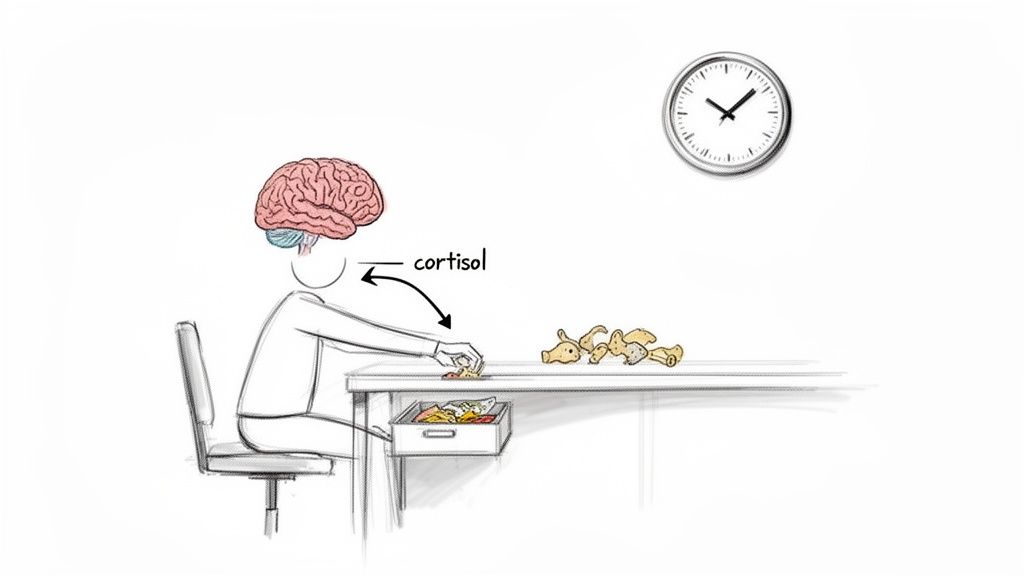
This isn’t a personal failing or a lack of self-control. It’s actually a sophisticated, hardwired survival mechanism. When your brain senses a threat (like that impossible deadline), it flips the "fight-or-flight" switch and floods your body with a hormone called cortisol.
Here's what happens next: cortisol tells your brain to find quick energy to deal with the perceived danger. Your body isn't asking for a kale salad; it's screaming for high-fat, sugary, or salty foods that provide a fast, dense source of fuel. This creates a powerful, often unconscious, link between how you feel and what you eat.
A Common Workplace Struggle
If you feel like you're the only one stuck in this cycle, you're not. This response is incredibly common. In fact, research from the American Psychological Association found that 38% of adults reported overeating or turning to unhealthy foods in the last month because of stress.
The data even shows a slight gender difference, with 43% of women and 32% of men engaging in this behavior. You can dive deeper into these findings in the full APA report on stress-related eating patterns.
Just understanding this science can be a huge relief. It helps you shift from self-criticism to self-awareness. The goal isn't to fight your biology, but to work with it by pausing to figure out what's really behind that urge to snack.
Key Insight: Stress eating is often less about the food and more about your brain seeking comfort and a quick energy source to cope with perceived threats.
Are You Stress Eating or Physically Hungry?
Being able to tell the difference between emotional hunger and true physical hunger is a game-changer. It’s a skill you can build with practice.
The next time a craving hits, take a second and run through this quick mental checklist. It will help you identify what your body is actually telling you.
Are You Stress Eating or Physically Hungry?
Learning to recognize these signals in the moment is the first real step toward breaking the cycle. Once you can identify that it's stress, not your stomach, talking, you can choose a different, more helpful response.
Get to Know Your Personal Stress Eating Triggers
That 3 PM trip to the office vending machine or the sudden, intense craving for the donuts in the breakroom rarely comes out of nowhere. Before you can change the habit, you have to understand it. Stress eating is almost always a reaction, not a random event.
It’s time to put on your detective hat. Think about when the urge to snack really hits. Is it right after a tense weekly meeting? Maybe it’s the midafternoon slump when boredom sets in. Or perhaps it’s the instant a demanding email lands in your inbox. These moments aren't just coincidences; they're valuable clues.
Start a Pattern Journal
One of the best tools I've seen for uncovering these clues is a Pattern Journal. This isn't about meticulously counting calories. The whole point is to connect what you’re doing with how you’re feeling. You can use a simple notebook, a notes app, or even a dedicated platform like Superbloom that's designed to help you track these connections.
For just a week, try jotting down a few notes whenever you feel a strong craving that doesn't feel like true hunger. You're just gathering your own personal data.
- What You Ate: A handful of chips from the breakroom.
- Time of Day: Around 2:30 PM.
- Your Mood: Anxious and overwhelmed.
- The Context: Just finished a stressful video call and have three new project deadlines.
After only a few days of this, you'll be surprised at how quickly your personal stress eating script starts to reveal itself.
By logging your food, mood, and context, you turn vague feelings into concrete patterns. This awareness is the foundation for creating a targeted action plan.
Turning Awareness into Action
Once a pattern emerges—like, "I always crave something sweet after my one-on-one with my boss"—you've found your starting point. You've done the hard part! Recognizing the trigger is more than half the battle. Now you know exactly when you're most vulnerable, which means you can finally get ahead of it.
This isn't about judging yourself for having the pattern; it's about understanding it so you can work with your brain, not against it. Every trigger you identify is an opportunity to plan a new, more helpful response. If boredom is your trigger, what's a five-minute activity you could do instead? If it's a tense meeting, what calming technique can you have ready to go? This detective work shifts you from feeling out of control to being an active problem-solver for your own well-being.
Master the Moment with Desk-Friendly Strategies
When you feel that familiar urge to stress eat, what you do in the next 60 seconds is everything. The key is to have a few quick, effective strategies you can use right at your desk to break that automatic habit loop before it even starts.
This isn't just a matter of willpower; it’s about having a plan for those high-pressure moments. Think about it: research on workplace eating habits found that a staggering 48.65% of employees reach for junk food when work gets stressful. Another 40.54% just eat more of everything, linking these patterns directly to hectic schedules and the need to cope. You can read the full study on work stress and eating behaviors for a deeper dive.
It often happens in a flash—a frustrating email lands in your inbox, your mood sinks, and suddenly you're reaching for a snack without a second thought.
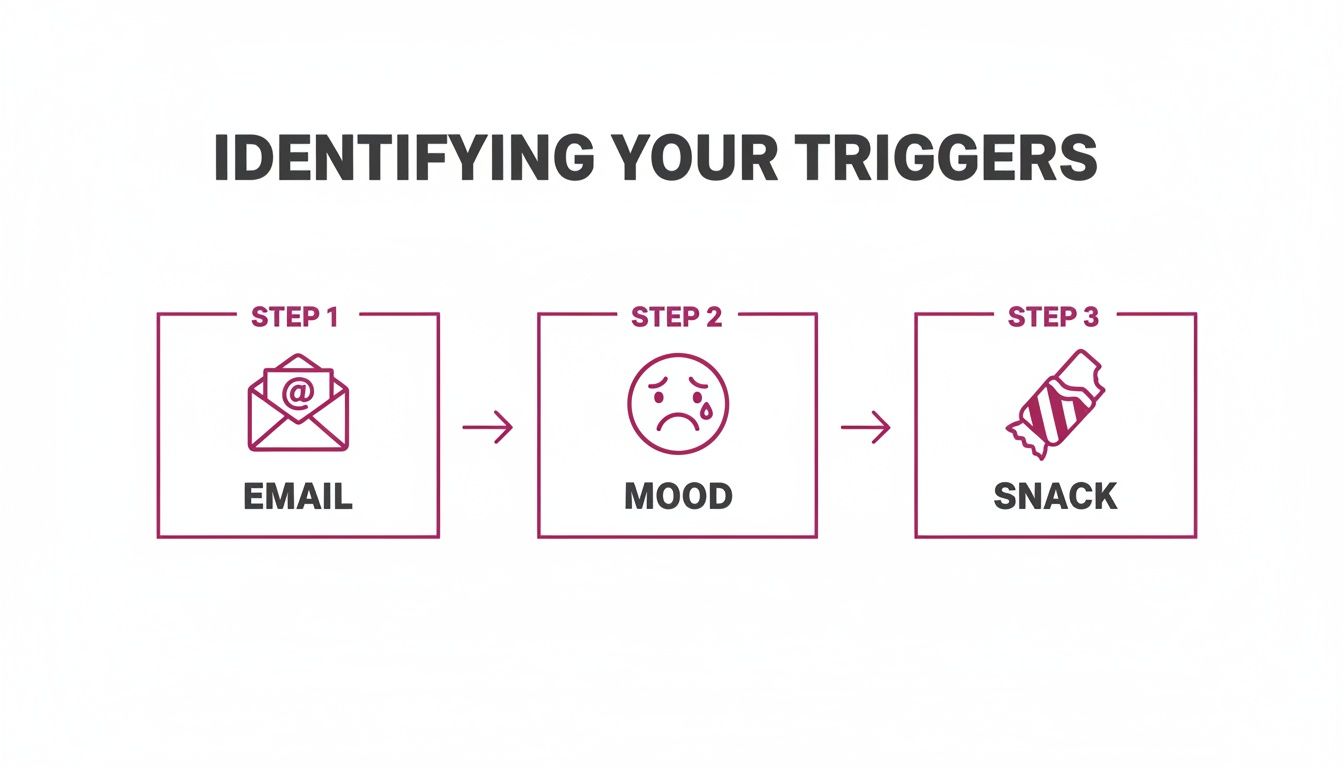
Once you see this chain reaction, you can find the perfect place to step in: right between the feeling and the food. All you need to do is introduce a new action to break that link.
Try Quick Grounding Exercises
When stress hits, your mind can feel like a whirlwind. Grounding exercises are designed to pull you out of that mental chaos and plant you firmly in the present moment. Best of all, you can do them without anyone around you even noticing.
- The 5-4-3-2-1 Method: This is a classic for a reason. Silently, name five things you can see, four things you can feel (the cool surface of your desk, the texture of your pants), three things you can hear, two things you can smell, and one thing you can taste. This simple sensory tour breaks the anxiety spiral.
- Box Breathing: A simple but powerful way to calm your nervous system. Just inhale for a count of four, hold your breath for four, exhale slowly for four, and hold again for four. A minute or two of this can make a world of difference.
These techniques work by shifting your focus away from the internal storm and onto your physical surroundings, giving you just enough breathing room to make a better choice.
Here's the secret: These exercises aren't about making stress vanish. They’re about creating a pause. That little gap between feeling the urge and acting on it is where you find the power to choose a new path.
Create a Desk-Side Stress Relief Kit
Instead of a drawer full of candy and chips, what if it held a first-aid kit for your mind? Having non-food coping tools within arm's reach makes it so much easier to build a new, healthier habit. Think of it as a physical reminder to try something different first.
Your personalized kit could include things like:
- A small stress ball or a fidget toy to keep your hands busy.
- A few calming herbal teas, like chamomile or peppermint.
- A little bottle of lavender or eucalyptus essential oil for a quick, calming scent on your wrists.
- Headphones to tune out the noise with a favorite song or a quick two-minute meditation.
When grabbing a stress ball is just as easy as grabbing a chocolate bar, you’re setting yourself up for success. This small act of preparation is a huge step in learning how to stop stress eating at work, turning a knee-jerk reaction into a mindful response.
Redesign Your Work Environment for Success
Let's be honest: relying on sheer willpower to avoid stress eating at your desk is a losing battle. It's like trying to hold your breath underwater—you can only do it for so long before you give in. A much smarter, and frankly easier, strategy is to become the architect of your own workspace. You want to set things up so that making the healthy choice is the path of least resistance.
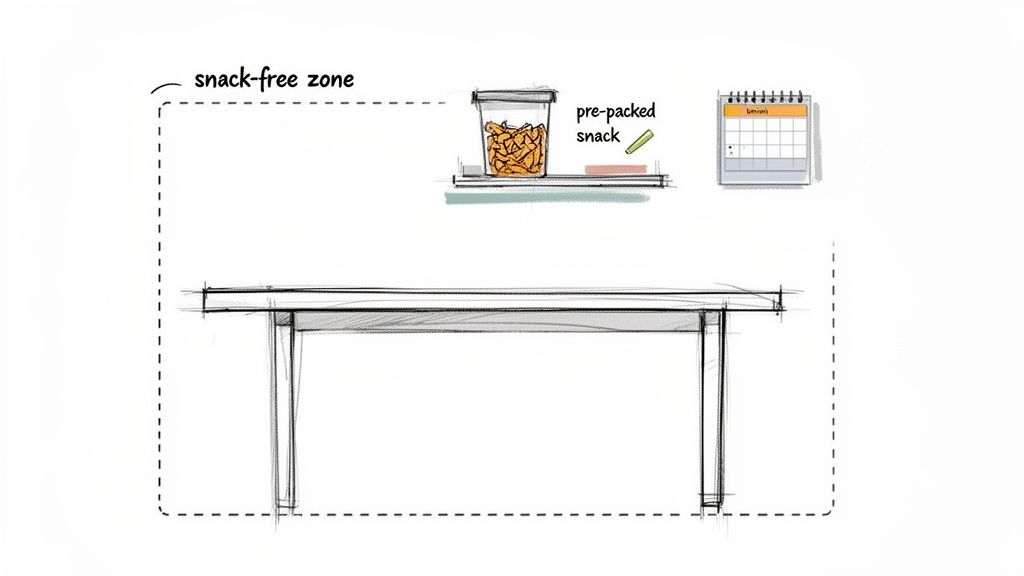
Start by creating a snack-free zone right around your desk. If that bag of chips or box of cookies isn't within arm's reach, you can't mindlessly grab from it while typing an email. This simple change removes dozens of tiny, draining decisions from your day and frees up a surprising amount of mental energy.
Of course, the office kitchen is a whole other beast. It's often a minefield of free donuts, leftover birthday cake, and snacks from the last all-hands meeting. While you can't control what your coworkers bring in, you can control how you navigate that space. A simple rule I've found incredibly effective is to only go into the kitchen with a clear purpose, like refilling your water or getting the lunch you brought from home. No lingering, no browsing.
Stock Your Personal Fuel Station
One of the most powerful things you can do is curate your own supply of genuinely satisfying, good-for-you options. This isn't about deprivation; it's all about preparation. When you have delicious snacks ready and waiting, the communal candy jar suddenly loses its appeal.
Think about what's really happening when you feel stressed—your body is often crying out for energy. The problem is, sugary snacks cause a quick blood sugar spike followed by a hard crash, which just leaves you feeling more stressed and exhausted than before.
The Goal: Make the healthy choice the easy choice. By stocking your personal "fuel station" with better options, you're not just fighting a craving; you're proactively managing your energy and mood.
The secret is to pre-pack snacks that combine protein, healthy fats, and fiber. This trio works together to provide steady, stable energy and keeps you feeling full. Ultimately, learning how to stop stress eating at work is about building a system that prepares you for those tough moments before they happen.
Smart Snack Swaps for the Office
Having a plan for what to eat instead of the usual office temptations is a game-changer. It takes the guesswork out of the equation when you're feeling stressed or hungry.
Here are a few simple swaps that can make a huge difference:
By making these simple swaps and planning ahead, you're not just resisting temptation. You’re actively creating a work environment that supports your well-being from the inside out.
Build Resilience with Habits Outside of Work
What happens between 9 and 5 is only half the story. The real work of preventing stress eating often starts long before you clock in and continues after you clock out. Think of it this way: if you show up to your workday already running on an empty tank, you’re practically inviting a raid on the office snack drawer.
It all starts with something as basic as sleep. When you're tired, your body’s hormone system gets thrown off balance. It starts pumping out more ghrelin (the "I'm hungry" hormone) and less leptin (the "I'm full" hormone). This double-whammy not only makes you crave high-calorie foods but also leaves you more emotionally volatile and less equipped to handle pressure.
This isn't just a hunch; it's a widespread problem. An occupational stress survey revealed a staggering 23.9% of workers graze all day long when stressed, and another 7.4% admitted to full-on binging. This kind of behavior often points back to a state of depletion before the workday even starts. It's a clear example of how emotional eating is connected to occupational stress.
Design a Stress-Resistant Morning
How you begin your morning can make or break your day. A frantic, rushed start that involves grabbing your keys and flying out the door is a direct path to a blood sugar crash and poor impulse control.
Instead of fighting with your snooze button, focus on building a simple routine that puts you in the driver's seat.
- Hydrate First: Before you even think about coffee, have a big glass of water. It's easy to mistake dehydration for hunger, and it can leave you feeling foggy and irritable from the get-go.
- Eat a Real Breakfast: Your first meal should be packed with protein, fiber, and healthy fats. This combo stabilizes your blood sugar and gives you the steady energy you need to fend off those desperate mid-morning cravings.
- Move for Five Minutes: No need for a grueling workout. A few minutes of stretching or a quick walk around the block can do wonders for clearing your head and boosting your mood before you dive into your inbox.
Key Takeaway: A solid morning routine isn't about adding more tasks to your to-do list. It's about making small, proactive deposits into your well-being account that build a buffer against the day's stress.
Reclaim Your Breaks and Evenings
The habits you keep during the workday and after you sign off are just as important. Shoveling down a sandwich at your desk while firing off emails isn't a break—it's just a different kind of work. Your brain needs a genuine chance to disconnect to process stress and digest food properly. Make a point to step away from your screen, even if it's only for 15 minutes.
Your evening routine is your chance to set yourself up for a better tomorrow. Mindless scrolling on your phone until you pass out is a recipe for poor sleep, which, as we know, sabotages your emotional regulation. Try creating a wind-down ritual instead. Read a book, listen to some chill music, or do some light stretching.
Building these habits outside of office hours creates a much stronger foundation, making you less susceptible to the daily rollercoaster of workplace stress. While your personal habits are a huge piece of the puzzle, remember that broader changes can also make a big impact—it’s worth exploring different strategies to reduce workplace stress. By taking control of your life outside the office, you’ll find you have much more power over how to stop stress eating at work.
Answering Your Questions About Stress Eating at Work
As you start putting these strategies into practice, you're bound to run into some common roadblocks. Let's tackle a few of the questions I hear most often so you feel prepared for those real-world challenges.
What If My Coworkers Are the Source of Temptation?
This is a big one. The breakroom birthday cake, the candy bowl that’s always full—it can feel like a minefield when you’re trying to make a change. The secret here isn’t about willpower alone; it’s about having a plan.
A simple, friendly refusal works wonders. You really don't need to give a big speech. Try a quick, "No thanks, I'm good for now!" or "That looks amazing, but I already have my snack." Most people won't press you. Keep your own healthy, satisfying snacks right at your desk to make them the easiest possible option.
Another great move? Gently shift the office culture. Instead of another trip to the vending machine, you could be the one to suggest a quick walk outside after lunch or a five-minute stretch break. You might be surprised who joins you.
My two cents: Think of it as setting a personal boundary, not passing judgment. A brief, confident "no thanks" is all it takes. You're simply taking care of yourself.
I Am Too Busy for a Proper Lunch Break—What Should I Do?
I get it. Some days are so packed that stepping away feels impossible. But skipping a real break is a guaranteed recipe for an afternoon energy crash and reaching for whatever sugar you can find.
The fix isn't about magically finding an extra hour. It's about changing what you consider a "break." Even 15 minutes completely disconnected from your work can be a game-changer. If you absolutely can't leave your desk, at least create a mental break. Turn your monitors off, silence your notifications, and just focus on eating your food. No emails, no scrolling.
This is exactly where a little prep work on Sunday afternoon becomes your saving grace. Having a delicious, healthy lunch already packed and waiting for you means you’re not making a desperation decision at 1 PM.
How Long Does It Take to Break the Habit of Stress Eating?
There's no magic number here, and honestly, fixating on a timeline can be counterproductive. The real focus should be on progress, not perfection.
What you're doing is literally rewiring your brain's response to stress. It's a process. Start small. The next time you feel that wave of stress, just try one new thing. Do a minute of deep breathing before you decide whether to eat.
When you do it, acknowledge it. That's a win! Each time you consciously choose a different action, you're strengthening that new neural pathway. After a few weeks of consistently practicing these new responses, you'll find they start to feel more natural. That’s the old habit loop starting to fade.
Ready to build a more intentional relationship with food? Superbloom is an AI-powered nutrition coach that helps you understand your patterns without calorie counting. Get personalized guidance and turn awareness into action. Discover how Superbloom can support you.