
Your Ultimate IBS Trigger Foods List: 10 Categories to Watch in 2026
If you live with Irritable Bowel Syndrome (IBS), you know the frustration of not knowing what to eat. One meal leaves you feeling fine, while the next triggers a cascade of discomfort like bloating, cramping, and unpredictable bathroom trips. It's a confusing cycle that can make you feel like your body is working against you. The good news is, you're not alone, and there is a path forward.
Understanding your personal trigger foods is the single most powerful step toward regaining control. This isn't about creating a restrictive 'never-eat' list; it's about building awareness. We will explore the science behind why certain foods cause problems, from the well-researched FODMAPs to less obvious culprits like fat, caffeine, and even some 'healthy' vegetables.
This complete IBS trigger foods list will serve as your roadmap. We'll break down the top 10 categories of common triggers, explain the mechanisms behind them, provide practical examples, and offer safer alternatives. While identifying trigger foods is a critical step, exploring broader natural ways to improve gut health can offer additional relief and long-term well-being.
More importantly, we will guide you on how to become a detective for your own gut. Using systematic tracking and mindful observation, tools like the Superbloom app can be invaluable here, helps you build a sustainable eating pattern that works for your body, not against it. Let's transform confusion into clarity and start your journey to a happier gut.
1. High-FODMAP Foods (Onions, Garlic, Wheat, Beans)
At the top of nearly every IBS trigger foods list, you'll find high-FODMAP items. FODMAP is an acronym for Fermentable Oligosaccharides, Disaccharides, Monosaccharides, and Polyols. These are specific types of short-chain carbohydrates that your small intestine struggles to absorb. As they travel to the large intestine, gut bacteria rapidly ferment them. This fermentation process produces gas, which can lead to the hallmark IBS symptoms of bloating, abdominal pain, cramping, and altered bowel habits.
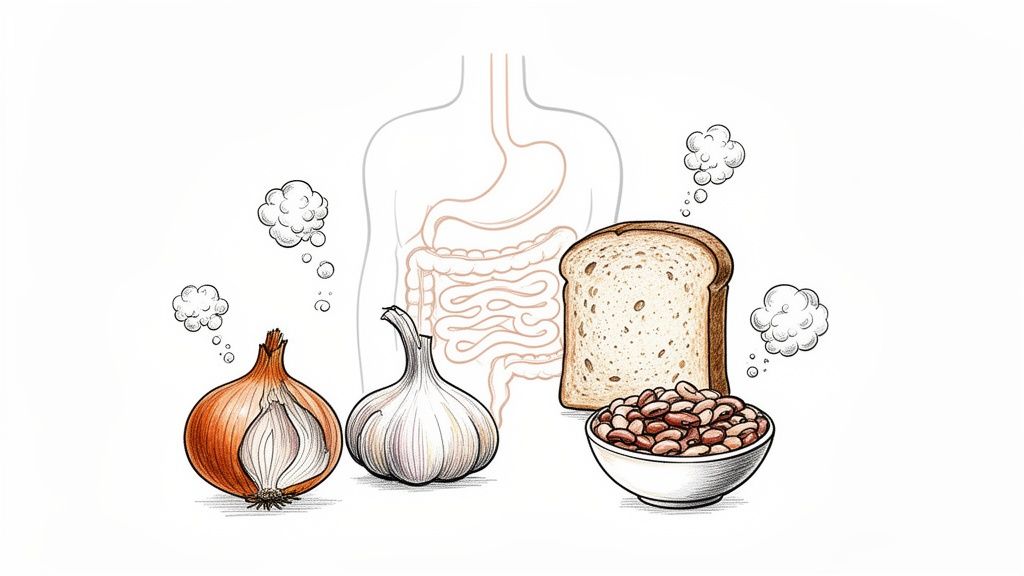
The low-FODMAP diet, developed and researched by Monash University, is a well-established dietary approach for managing IBS. It's not a forever diet but an investigative tool to pinpoint your specific triggers.
Why FODMAPs Trigger Symptoms
The primary issue with FODMAPs is two-fold. First, they draw extra water into your small intestine, which can contribute to diarrhea. Second, their fermentation by gut bacteria in the colon creates gas (hydrogen, methane, and carbon dioxide), leading to bloating, flatulence, and pain, especially for those with visceral hypersensitivity-a common feature of IBS where the gut is extra sensitive to stretching.
Common high-FODMAP foods include:
- Onions and Garlic: Even in small amounts, including powders.
- Wheat & Rye: Found in bread, pasta, and cereals.
- Legumes: Such as beans, lentils, and chickpeas.
- High-Fructose Fruits: Apples, pears, mangoes, and stone fruits.
- Certain Vegetables: Cauliflower, mushrooms, and artichokes.
- Dairy: Milk, soft cheeses, and yogurt (due to lactose, a disaccharide).
- Sweeteners: Honey and high-fructose corn syrup.
How to Approach FODMAPs
A strict, permanent avoidance of all FODMAPs is not the goal. A more practical approach involves a structured elimination and reintroduction process.
Key Insight: The goal isn't total avoidance but discovering your personal tolerance threshold. You might find you can handle a small amount of avocado but not a whole one, or that cooked onions are fine but raw onions are a definite trigger.
Start with a 2-4 week elimination phase, removing all high-FODMAP foods. During this time, use a tool like Superbloom to diligently track your meals and symptoms. The photo logging feature is especially useful for spotting hidden FODMAPs like garlic powder or onion extract in sauces, soups, and processed foods. After the elimination period, you systematically reintroduce one FODMAP group at a time, in small, controlled amounts, to see how your body reacts. This helps you build a personalized and sustainable diet instead of a restrictive one.
2. Spicy Foods and Hot Peppers
For many people with IBS, spicy foods can feel like a direct assault on their digestive system. The culprit is often capsaicin, the active compound in chili peppers that gives them their characteristic heat. Capsaicin can irritate the sensitive lining of your intestinal tract, triggering a cascade of symptoms like abdominal pain, a burning sensation, and a sudden need to use the restroom.
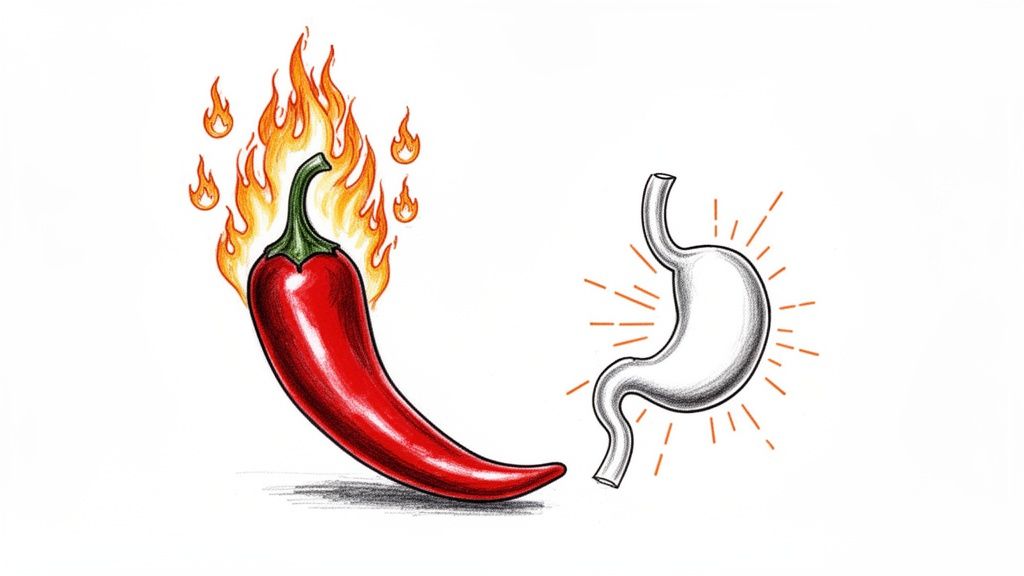
This reaction is not an allergy but a direct physical irritation. Capsaicin binds to pain receptors in the gut, which can speed up gut motility-the rate at which food moves through your system. This acceleration leaves less time for water to be absorbed, often resulting in diarrhea. This effect makes spicy items a notable entry on any IBS trigger foods list.
Why Spicy Foods Trigger Symptoms
When capsaicin interacts with receptors in your gut, it can cause the muscles of the colon to spasm, leading to cramping and pain. This is especially true for individuals with visceral hypersensitivity, where the gut nerves are already on high alert and perceive normal digestive processes as painful. The "burning" sensation is quite literal; your gut is experiencing a form of chemical irritation.
Common sources of spice that may cause issues include:
- Chili Peppers: Such as jalapeños, habaneros, and cayenne.
- Hot Sauces: Like sriracha, Tabasco, and other chili-based condiments.
- Spicy Cuisine: Including many curry dishes, spicy Mexican food, and hot wings.
- Pungent Condiments: Wasabi and horseradish can have a similar irritant effect.
- Black Pepper: In large quantities, it can also act as an irritant for some.
How to Approach Spicy Foods
You don't necessarily have to live a bland life. The key is to understand your personal spice threshold. For some, even a dash of black pepper is too much, while others might handle a mild curry but not a five-alarm chili.
Key Insight: The timing of your symptoms can reveal a lot. Immediate burning or discomfort suggests direct irritation, while delayed bloating or gas might point to a combination of ingredients, not just the spice itself.
Start by eliminating all spicy foods for a period and then carefully reintroduce them. Begin with a very mild spice, like paprika, before testing something with more heat. Using a meal and symptom journal is essential here. By logging your meals with photos and noting the spice level, you can connect the dots between what you ate and how you felt. This detailed tracking helps you identify not just if spice is a trigger, but exactly how much and what kind you can tolerate. You might even notice that cravings for spicy foods are linked to stress, providing another layer of insight into your gut-brain connection.
3. Dairy Products and Lactose
Dairy products are a frequent culprit on any IBS trigger foods list, primarily because of lactose. Lactose is a natural sugar found in milk and dairy. For it to be digested properly, your body needs an enzyme called lactase. Many people have reduced levels of lactase, a condition known as lactose intolerance, which can develop or worsen with age. When lactose isn't broken down, it travels to the large intestine where it ferments, causing gas, bloating, painful cramps, and diarrhea, all common IBS symptoms.
Even for those who aren't officially lactose intolerant, dairy can still be problematic. Milk proteins like casein and whey can sometimes provoke an immune or inflammatory response in the gut, leading to similar discomfort without the classic lactose malabsorption mechanism. This makes dairy a complex and highly personal trigger category for individuals with IBS.
Why Dairy Triggers Symptoms
The primary driver of dairy-related IBS flare-ups is osmotic diarrhea and gas production. Undigested lactose pulls excess water into the bowel, which speeds up transit time and leads to watery stools. Simultaneously, gut bacteria ferment the lactose, producing hydrogen, methane, and carbon dioxide gases. For a person with IBS and visceral hypersensitivity (a heightened sense of gut pain), this internal pressure from gas and fluid creates significant pain and bloating.
Common dairy products to be mindful of include:
- Milk: Cow, goat, and sheep milk are all high in lactose.
- Soft Cheeses: Such as cream cheese, cottage cheese, and ricotta.
- Yogurt & Ice Cream: Both standard and Greek yogurts, as well as ice cream and frozen yogurt.
- Cream-Based Items: Butter, heavy cream, sour cream, and sauces.
- Hidden Dairy: Found in milk chocolate, creamy soups, some salad dressings, and baked goods.
How to Approach Dairy
Completely eliminating dairy isn't always necessary and could mean missing out on key nutrients like calcium and vitamin D. The goal is to determine your personal threshold and find alternatives that work for you.
Key Insight: Your tolerance for dairy isn't always all-or-nothing. You might discover that aged cheeses like cheddar or parmesan (which are naturally low in lactose) are perfectly fine, while a glass of milk is a definite trigger. Fermented dairy like kefir can also be better tolerated by some.
A systematic approach is best. Consider removing all dairy for a couple of weeks while tracking your symptoms and meals. A photo-logging tool can be invaluable here for spotting hidden dairy in processed foods or restaurant meals. Afterwards, you can reintroduce specific dairy items one by one, starting with a small amount. Test lactose-free milk, then a small portion of Greek yogurt, then a slice of hard cheese on different days. This methodical process helps you identify exactly what your body can handle, building a diet that feels manageable rather than restrictive.
4. Caffeinated Drinks (Coffee, Tea, Soda)
Caffeine is a well-known stimulant that can have a significant and often immediate impact on the digestive system, making it a common culprit on any IBS trigger foods list. It acts as a gastrointestinal stimulant, increasing motility-the muscle contractions that move food through your digestive tract. For some, this can help with constipation, but for those with diarrhea-predominant IBS (IBS-D) or mixed-type IBS (IBS-M), this can accelerate gut transit time and worsen symptoms like urgency and loose stools.
This stimulant effect is why many people feel the need to use the bathroom shortly after their morning coffee. The acidity of coffee can also irritate the gut lining, leading to discomfort, heartburn, and abdominal pain, especially on an empty stomach. Furthermore, caffeine can increase the production of stress hormones like cortisol, which can heighten gut sensitivity and anxiety, a known factor in IBS flare-ups.
Why Caffeine Triggers Symptoms
The primary mechanism is caffeine's effect on gut motility. It directly stimulates the colonic muscles, leading to stronger and more frequent contractions. For individuals with visceral hypersensitivity, a common feature of IBS where the gut nerves are overly sensitive, this increased activity can be perceived as painful cramping. The effect isn't just limited to coffee; other sources can be just as problematic.
Common sources of caffeine include:
- Coffee: Brewed, espresso, and instant varieties.
- Tea: Black, green, and oolong teas all contain caffeine.
- Soda: Colas and many other carbonated soft drinks.
- Energy Drinks: These often contain very high levels of caffeine.
- Chocolate: Particularly dark chocolate, which contains more cocoa solids.
- Certain Medications: Some pain relievers and over-the-counter cold remedies.
How to Approach Caffeine
Completely eliminating caffeine might not be necessary. The key is to understand your personal tolerance level and the context of your consumption. For instance, the amount of caffeine and what you drink it with can make a huge difference.
Key Insight: Your reaction to caffeine isn't just about the caffeine itself, but also about the beverage it comes in. The acidity of coffee, the sugar in soda, or the milk in a latte can all be compounding triggers.
Start by reducing your intake or switching to lower-caffeine options, like green tea or half-caff coffee. Beyond coffee, other popular drinks like chai lattes also contain varying levels of caffeine, which can impact IBS symptoms; you can learn more about how much caffeine is in a chai latte to make more informed choices. Pay close attention to how you feel. Use a food and symptom journal to track your intake and any resulting symptoms. You might discover that one small coffee in the morning with food is fine, but a large black coffee on an empty stomach is a definite trigger. This careful, personalized approach helps you find a balance that works for your body.
5. Caffeine and Coffee
For many people, a morning cup of coffee is a non-negotiable ritual, but for those with IBS, it can be a significant trigger. Caffeine is a natural stimulant known for its effects on the central nervous system, but it also has a powerful impact on the gastrointestinal tract. It increases gut motility-the rate at which things move through your intestines-and stimulates the production of stomach acid. This dual action can lead to cramping, a sudden urge to use the bathroom, and diarrhea, particularly in individuals with IBS-D (diarrhea-predominant).
Why Caffeine Triggers Symptoms
The primary mechanism behind caffeine's effect is its stimulation of colonic motor activity. This can happen within minutes of consumption, accelerating transit time and reducing water absorption, leading to looser stools. Additionally, coffee itself, whether caffeinated or decaffeinated, is acidic and contains compounds that can irritate the gut lining. This means that even if you switch to decaf, you might still experience discomfort due to the acids and other oils present in the coffee bean.
Common sources of caffeine that can be problematic include:
- Coffee: Regular, decaffeinated, espresso, and coffee-based drinks like lattes.
- Tea: Particularly black and green teas.
- Soft Drinks & Energy Drinks: Many colas and specialized energy beverages contain high levels.
- Chocolate: Cocoa and dark chocolate have higher concentrations.
- Supplements: Caffeine pills and pre-workout formulas.
How to Approach Caffeine
Completely cutting out caffeine can be difficult, especially if your body is accustomed to it, and may lead to withdrawal symptoms like headaches and fatigue. A gradual reduction is often a more sustainable strategy.
Key Insight: The timing and amount of your caffeine intake matter just as much as the source. You might find a small morning coffee is fine, but an afternoon espresso on an empty stomach is a definite trigger.
Use a tracking tool to log not just if you had caffeine, but how much and when. Note the time you consumed it and when symptoms appeared. This detailed logging helps reveal your personal threshold. For instance, you may discover that 4 oz of coffee is tolerable, but 8 oz causes cramping. You can also explore low-caffeine alternatives like herbal teas (peppermint, ginger) or chicory root coffee, which can provide a similar ritual without the stimulating effects. Recognizing when you reach for caffeine due to stress versus habit can also help you find non-food-based coping mechanisms.
6. Artificial Sweeteners and Sugar Alcohols
Often found in "diet," "sugar-free," and "low-calorie" products, artificial sweeteners and sugar alcohols can be hidden culprits on your personal IBS trigger foods list. These sugar substitutes, such as aspartame, sucralose, sorbitol, and xylitol, are designed to provide sweetness without the calories of regular sugar. However, the human body struggles to absorb them in the small intestine, leading them to travel largely intact to the colon.
Once in the large intestine, gut bacteria ferment these compounds, a process that produces gas and can cause significant digestive distress. Additionally, sugar alcohols are osmotically active, meaning they draw water into the bowel. This combination of gas production and excess water can directly lead to cramping, bloating, painful gas, and osmotic diarrhea, especially for individuals with a sensitive gut.
Why They Trigger Symptoms
The mechanism behind sweetener-induced IBS symptoms is very similar to that of FODMAPs. Sugar alcohols, in particular (e.g., sorbitol, mannitol, xylitol), are the "P" in FODMAP (Polyols). They are poorly absorbed and readily fermented. This fermentation creates gas that stretches the intestinal wall, triggering pain in those with visceral hypersensitivity, a common characteristic of IBS. The osmotic effect of pulling water into the colon can quickly change stool consistency and urgency.
Common sources of these sweeteners include:
- Diet Sodas & Sugar-Free Drinks: A frequent source of aspartame and sucralose.
- Sugar-Free Candy & Gum: Often contain high amounts of sorbitol or xylitol.
- "Keto" or Sugar-Free Desserts: Baked goods and ice creams frequently use sugar alcohols.
- Protein Bars & Powders: Check labels for sucralose or sugar alcohols.
- Low-Calorie Yogurts: Flavored yogurts may use artificial sweeteners.
- Sugar-Free Jams & Condiments: Often used to reduce calorie counts.
How to Approach Sweeteners
Careful label reading is your best defense. Since these ingredients are in many processed foods, what seems like a small amount in one item can add up quickly throughout the day, pushing you over your personal tolerance threshold.
Key Insight: The problem isn't just the sweetener itself, but the cumulative dose. A stick of gum might be fine, but adding a diet soda and a sugar-free yogurt could be enough to trigger a symptom flare-up.
Start by becoming a detective with ingredient lists. Actively look for names ending in "-ol" (sorbitol, mannitol, xylitol) and other common sweeteners like aspartame, sucralose, and acesulfame potassium. Use a food and symptom journal to track your intake of these products against your symptoms. Photo logging can be a powerful tool here, allowing you to quickly review the ingredient lists of everything you ate on a day when symptoms flared. This practice helps you identify not just the triggers but also your unique sensitivity level, empowering you to make more informed choices.
7. Alcohol and Carbonated Beverages
Alcohol and carbonated drinks are common social staples, but for those with IBS, they can be significant troublemakers. Alcohol acts as a direct irritant to the lining of the digestive tract, which can increase gut motility and lead to diarrhea. It also disrupts the delicate balance of the gut microbiome and can increase stomach acid, triggering symptoms. Carbonated beverages, on the other hand, introduce gas directly into your stomach, which can cause immediate bloating, distension, and discomfort.
Combining these two factors, such as in beer or a mixed drink with soda, can create a perfect storm for IBS flare-ups. This makes them a critical category to investigate in any ibs trigger foods list.
Why Alcohol and Carbonation Trigger Symptoms
The mechanisms behind these triggers are straightforward. Alcohol can speed up or slow down digestion, depending on the person and the type of alcohol consumed, leading to either diarrhea or constipation. It's also often high in sugar or other FODMAPs (like in rum or certain wines), compounding its irritating effects.
Carbonation's impact is more physical. The carbon dioxide gas that creates the bubbles in drinks like seltzer, soft drinks, and champagne expands in your digestive system. For someone with visceral hypersensitivity-a common feature of IBS where the gut is extra sensitive-this stretching can feel intensely painful and cause significant bloating.
Common examples in this category include:
- Alcoholic Drinks: Beer, wine, liquor, and mixed drinks.
- Carbonated Soft Drinks: Including diet and regular sodas.
- Sparkling Waters: Seltzer, club soda, and flavored sparkling water.
- Energy Drinks: Many are carbonated and contain caffeine and sugar.
- Sparkling Juices & Champagne: Combine carbonation with high sugar content.
How to Approach Alcohol and Carbonation
Complete avoidance isn't always necessary, but careful observation is key. Many people find their tolerance varies greatly between different types and amounts of these beverages. For instance, a glass of low-FODMAP wine may be fine, while a single beer could trigger a reaction.
Key Insight: The context of consumption matters just as much as the drink itself. Pay attention to whether you are drinking on an empty stomach, under stress, or in a social setting that encourages faster consumption, as these factors can worsen symptoms.
Use a tracking tool like Superbloom to log not just what you drink but also the situation. Note if you were feeling anxious or stressed, which can independently trigger IBS. This helps distinguish if the trigger is the alcohol, the carbonation, the social anxiety, or a combination. Start by testing still versus sparkling water to isolate your tolerance for carbonation. If consuming alcohol, ensure you are well-hydrated with plain water and choose low-sugar mixers. Planning ahead for social events by bringing your own non-carbonated, low-sugar alternative can give you control and peace of mind.
8. High-Sugar Foods and Refined Carbohydrates
High-sugar foods and refined carbohydrates like white bread, pastries, and sugary drinks are common culprits on any IBS trigger foods list. These foods cause rapid spikes in blood glucose, which can disrupt the delicate balance of the gut microbiome and promote inflammation. The gut-brain axis is highly sensitive to these fluctuations, potentially worsening IBS symptoms like cramping and unpredictable bowel movements.
Unlike their whole-grain counterparts, refined carbohydrates are stripped of their fiber and nutrients during processing. This lack of fiber can disrupt bowel regularity, a key concern for anyone managing IBS. Furthermore, sugary items are often "compound triggers," meaning they also contain other potential irritants like high fat content (in pastries), lactose (in ice cream), or artificial sweeteners (in diet sodas), making it difficult to pinpoint the exact cause of a flare-up.
Why Sugar and Refined Carbs Trigger Symptoms
The main problem with these foods is their rapid absorption. Simple sugars can pull water into the intestines, potentially leading to diarrhea. They also feed less-desirable gut bacteria, contributing to dysbiosis and increased gas production. This cycle can also lead to energy crashes, which may trigger stress and further gut distress. This reactive eating pattern, where a sugar crash leads to more sugar cravings, can perpetuate a cycle of symptoms.
Common sources of high sugar and refined carbs include:
- Refined Grains: White bread, bagels, and pasta.
- Sugary Baked Goods: Pastries, donuts, cookies, and cakes.
- Candy and Chocolate: Especially milk chocolate with high sugar content.
- Sweetened Beverages: Soft drinks, fruit juices, and sweetened teas.
- Processed Snacks: Chips, crackers, and snack bars with added sugars.
- Breakfast Foods: Sugary cereals, granola bars, and flavored yogurts.
How to Approach Sugar and Refined Carbs
Complete avoidance isn't always necessary or sustainable. The focus should be on reduction, substitution, and mindful consumption to break the "crash and crave" cycle that worsens both gut symptoms and overall well-being.
Key Insight: The goal is to stabilize your blood sugar and reduce gut irritation, not to eliminate carbohydrates. Pairing any carbohydrate with protein and healthy fat can slow down sugar absorption, preventing sharp spikes and subsequent crashes that stress your system.
Start by identifying your main sources of added sugar and refined grains. Using a food and symptom journal can be incredibly revealing. You might notice that your afternoon energy slump and bloating are directly linked to a sugary lunch or snack. Once you see the patterns, you can gradually replace refined options with whole-grain alternatives (if tolerated) and reduce your intake of sugary drinks and snacks. Addressing the emotional drivers behind sugar cravings, like stress or fatigue, is also a critical piece of the puzzle for long-term management.
9. Red Meat and Processed Meats
For many individuals with IBS, certain types of meat, particularly red and processed varieties, can be a significant trigger. These meats are often high in fat and protein, a combination that demands more effort from the digestive system. The fat can slow down gastric emptying, leaving food in the stomach longer, while also potentially stimulating strong colon contractions, which can lead to cramping and urgency in those with IBS-D.
Processed meats like bacon, sausage, and deli meats present a double challenge. Beyond their high fat content, they contain additives such as nitrates, high levels of salt, and other preservatives. These compounds can irritate the sensitive gut lining, contributing to inflammation and worsening IBS symptoms. The complex nature of these foods makes them a common entry on any comprehensive IBS trigger foods list.
Why Red and Processed Meats Trigger Symptoms
The primary issue with red meat is its fat content, which can alter gut motility. For processed meats, the problem is compounded by additives. The processing methods themselves can introduce compounds that disrupt the delicate balance of the gut microbiome and irritate the intestinal wall. This combination of high fat and chemical additives can easily provoke symptoms like pain, bloating, and altered bowel movements in people with visceral hypersensitivity.
Common red and processed meats to be mindful of include:
- Fatty cuts of beef, lamb, and pork (e.g., steak, ribs)
- Bacon and breakfast sausage
- Deli meats and cold cuts
- Hot dogs and other processed sausage products
- High-fat ground beef and hamburgers
- Cured meats like corned beef or salami
How to Approach Red Meat
Complete avoidance isn't always necessary. The key is to understand how your body responds to different types, cuts, and quantities of meat. A systematic approach to tracking and testing is crucial for finding your personal balance.
Key Insight: The trigger might not be red meat itself, but the cut and processing. You may find that a small portion of lean ground beef is perfectly fine, while a fatty ribeye steak or a few slices of bacon cause an immediate flare-up.
Start by logging your intake and any subsequent symptoms. Note the specific type of meat, the preparation method (fried vs. grilled), and the portion size. This detailed tracking can help you distinguish whether your symptoms are caused by the fat content, a specific additive in a processed product, or the large portion size. Experiment by swapping fatty cuts for leaner alternatives like sirloin or by trying smaller portions to identify your personal tolerance threshold. This methodical process helps you enjoy a varied diet without unnecessary restrictions.
10. Cruciferous Vegetables and High-Fiber Raw Foods
While vegetables are celebrated for their health benefits, certain types can be a significant source of distress for those with IBS. Cruciferous vegetables like broccoli and cabbage, along with other high-fiber raw foods, can be particularly problematic. These foods contain fermentable compounds and a type of fiber that can be harsh on a sensitive digestive system, leading to uncomfortable symptoms.
This group of vegetables is known for producing excess gas during fermentation by gut bacteria. For someone with IBS, this process can trigger intense bloating, painful cramping, and gas. Additionally, the insoluble fiber, often called "roughage," found in many raw vegetables can be physically irritating to the gut lining, potentially worsening pain and altering bowel movements.
Why These Vegetables Trigger Symptoms
The issue with cruciferous and raw, high-fiber vegetables is twofold. First, cruciferous vegetables like broccoli and Brussels sprouts contain fructans (a FODMAP) and sulfur compounds called glucosinolates. When gut bacteria ferment these compounds, they produce significant amounts of gas, including hydrogen sulfide, which has a distinct rotten-egg smell and can contribute to bloating and discomfort. Second, the rigid, insoluble fiber in raw vegetables like carrots and celery can act like a scrub brush on an already sensitive gut, causing irritation and speeding up transit time, which may lead to diarrhea.
Common examples that might cause issues include:
- Cruciferous Vegetables: Broccoli, Brussels sprouts, cabbage, and cauliflower.
- Raw Root Vegetables: Radishes and large quantities of raw carrot sticks.
- Raw Leafy Greens: Large kale salads or big portions of raw spinach.
- Prepared Raw Dishes: Coleslaw and raw vegetable platters.
How to Approach These Vegetables
Completely eliminating these nutrient-dense foods isn't necessary for everyone. The key is to modify their preparation and monitor your personal tolerance.
Key Insight: The preparation method is critical. Cooking vegetables thoroughly breaks down tough fibers and some fermentable compounds, making them much easier to digest. You might find you can enjoy well-steamed broccoli but can't handle a raw broccoli salad.
A smart strategy is to reintroduce these foods carefully. Start with a very small portion of a single, well-cooked vegetable, like a few florets of steamed broccoli. Use a food and symptom journal to track how you feel, paying close attention to portion size and whether the vegetable was raw or cooked. This helps you identify which specific vegetables are problematic and at what quantity, allowing you to build a more varied and less restrictive diet.
10 IBS Trigger Foods Comparison
| Item | 🔄 Implementation complexity | ⚡ Resource requirements | 📊 Expected outcomes | 💡 Ideal use cases | ⭐ Key advantages |
|---|---|---|---|---|---|
| High-Fat Foods and Fried Items | Moderate — swap cooking methods and adjust portions | Low — basic kitchen changes (bake/grill) | High reduction in fat-related cramping/urgency for sensitive individuals | When flares follow rich or fried meals | Reduces motility triggers and improves symptom control |
| Spicy Foods and Hot Peppers | Low — reduce spice or test gradual tolerance | Low — milder spices or cooling sides | Moderate, often rapid improvement if capsaicin is the trigger | If burning sensations, urgency, or delayed reactions follow spicy meals | Preserves flavor with milder alternatives; some antioxidants in small amounts |
| Dairy Products and Lactose | Moderate — substitution and nutrient planning needed | Moderate — lactose-free/dairy alternatives or enzymes | High for lactose-intolerant people; variable if immune-mediated | When dairy consistently precedes bloating, gas, or diarrhea | Maintains calcium/protein when managed; clear symptom reduction when culprit |
| High-FODMAP Foods (Onions, Garlic, Wheat, Beans) | High — structured elimination and systematic reintroduction | Moderate–High — guidance, planning, specialty knowledge | High — evidence-backed symptom improvement when followed correctly | Persistent or unexplained IBS where individualized triggers are needed | Research-supported, individualized trigger identification (low-FODMAP protocol) |
| Caffeine and Coffee | Low — tapering or timing adjustments | Low — decaf/herbal swaps, hydration | Moderate — reduces urgency, cramping, and motility spikes for many | When symptoms follow stimulant intake or morning coffee | Simple changes yield quick symptom improvements; preserves alertness via alternatives |
| Artificial Sweeteners and Sugar Alcohols | Moderate — careful label reading and elimination | Low–Moderate — alternative sweeteners and habit change | Moderate–High — reduces cumulative gas, bloating, and osmotic diarrhea | Frequent consumers of “diet” or sugar-free products with unexplained bloating | Eliminates hidden, dose-dependent triggers that accumulate across the day |
| Alcohol and Carbonated Beverages | Low–Moderate — social adjustments and beverage choices | Low — non-carbonated or low-alcohol alternatives, hydration | Moderate — less irritation and bloating when reduced | Social settings or when carbonation/alcohol precede flares | Reduces mucosal irritation and bloating; supports microbiome recovery |
| High-Sugar Foods and Refined Carbohydrates | Moderate — swap refined carbs for tolerated whole-food options | Low–Moderate — planning, better-quality staples | Moderate — improves gut balance and reduces inflammatory/energy crashes | When reactive eating, blood sugar crashes, or inflammation relate to symptoms | Stabilizes energy and may lower inflammation and reactive eating cycles |
| Red Meat and Processed Meats | Low–Moderate — portion control, choose lean cuts or alternatives | Low — lean proteins or plant/seafood swaps | Moderate — less cramping if fat/additives were drivers | When heavy, fatty, or processed meals correlate with symptoms | Preserves protein needs while reducing fat/additive-related triggers |
| Cruciferous Vegetables and High-Fiber Raw Foods | Moderate — preparation changes (cook, portion, timing) | Low — cooking methods and portion planning | Moderate — reduced gas/bloating when cooked and portion-controlled | If raw/high-fiber vegetables consistently produce bloating or pain | Maintains nutrients via tolerated preparations; supports gradual tolerance building |
Beyond the List: Creating Your Personal Path to a Calmer Gut
Navigating the world of Irritable Bowel Syndrome can often feel like a frustrating guessing game, where every meal is a potential risk. This extensive IBS trigger foods list has provided a roadmap, highlighting common culprits from high-FODMAP giants like onions and garlic to sneaky irritants like artificial sweeteners and excessive caffeine. We have explored the "why" behind each category, whether it's the osmotic pull of certain sugars, the gut-stimulating effects of fat and caffeine, or the inflammatory potential of processed ingredients.
However, the most crucial takeaway is that this list is not a prison sentence of permanent restriction. Instead, view it as a powerful diagnostic tool, a starting point for a personal investigation. The ultimate goal is to move from a place of food fear to one of empowered, mindful eating. True, long-term relief from IBS symptoms doesn’t come from blindly following a generic list; it comes from deeply understanding your own body's unique responses.
From Awareness to Action: Your Three-Step Process
Mastering your digestive health involves a practical, multi-step approach. It's about turning the information from this article into tangible, real-world results. Your journey forward can be broken down into three core phases:
Systematic Testing: You cannot know what truly affects you without a structured test. This is the essence of an elimination diet, like the reintroduction phase of the low-FODMAP diet. After a brief "washout" period of eating only safe, gentle foods, you methodically reintroduce one food group at a time in small, controlled portions. Did adding a small amount of dairy cause bloating? Did a single cup of coffee trigger cramps? This process removes the guesswork and provides clear, direct feedback from your body.
Mindful, Detailed Tracking: This is where the real insights happen. Simply noting 'ate garlic, felt bad' is not enough. To truly understand your triggers, you must become a detective of your own daily life. A detailed journal allows you to connect the dots between what you eat and how you feel, but also considers other critical factors. For instance, you might notice that you can tolerate a small amount of wheat on a calm, well-rested day, but the same amount causes a severe flare-up during a stressful work week.
Key Insight: Your reaction to a food is not just about the food itself. It's a combination of the food, the portion size, your stress levels, sleep quality, and even your emotional state. Consistent tracking reveals these complex patterns that a simple food log would miss.
Building Alternative Habits: Awareness is only half the battle. Once you identify a pattern, the next step is to build a healthier response. For example, if you realize you crave high-fat, fried foods whenever you feel overwhelmed, the solution isn't just to avoid those foods. It's to find a better way to manage the feeling of being overwhelmed. This is about building a toolbox of non-food-related coping mechanisms, such as a five-minute breathing exercise, a short walk, or listening to a calming piece of music. By addressing the root cause of the craving (the stress), you reduce the power the trigger food has over you.
Your gut is incredibly resilient. By listening to its signals, methodically identifying and removing your biggest irritants, and addressing the behavioral patterns surrounding your eating habits, you can forge a new relationship with food. This new relationship is one built on confidence and enjoyment, not fear and anxiety. Start with one small change, be patient with the process, and acknowledge every step forward. You now have the map and the strategy to begin your journey toward a calmer, happier gut.
Ready to stop guessing and start understanding your unique triggers? The Superbloom app is designed to help you connect the dots between your meals, mood, stress, and symptoms, just as described. Move beyond a simple IBS trigger foods list and start building a personalized path to feeling better with Superbloom.