
Finding the Best Intuitive Eating App to Transform Your Life
So, what exactly is an intuitive eating app? Think of it as a digital coach designed to help you listen to your body's own hunger and fullness signals again, breaking free from the cycle of restrictive dieting. Instead of making you obsess over calories, these apps use mindfulness and behavioral science to guide you toward a healthier, more peaceful relationship with food.
Moving Beyond Calorie Counting with Intuitive Eating Apps
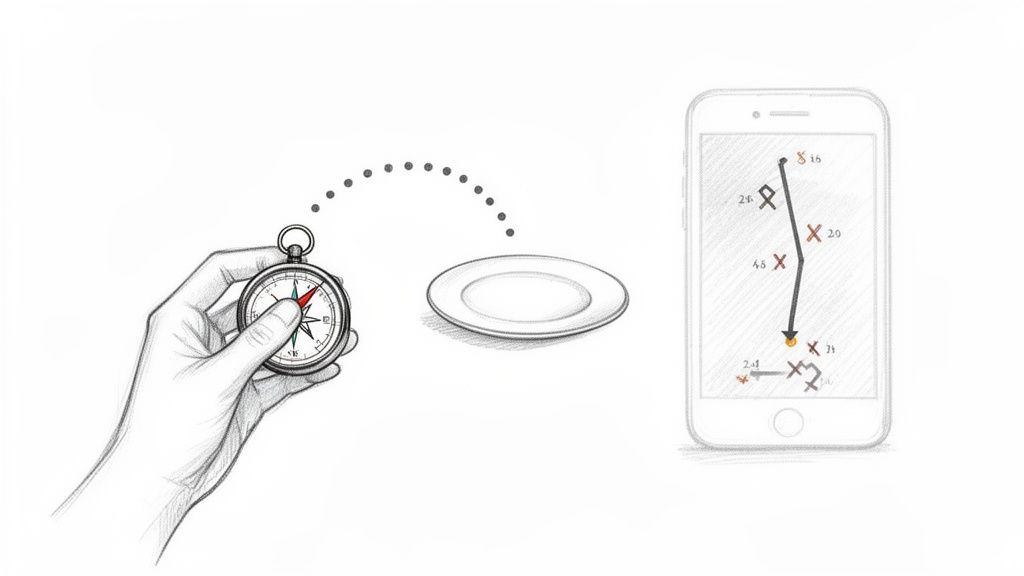
Let’s try an analogy. Imagine you're trying to find your way around a new city. A traditional diet app is like a rigid GPS, barking out turn-by-turn directions and shouting "recalculating!" every time you stray. It might get you to one destination, but you won't learn a thing about the city itself.
An intuitive eating app is more like a compass. It gives you a sense of direction but encourages you to look around, learn the landmarks, and eventually trust your own instincts to navigate. It's about building your internal map, not just following someone else's.
This is a huge departure from the numbers-driven world of calorie tracking. Rather than focusing on external rules—like macros, points systems, or endless lists of "bad" foods—these apps help you turn your attention inward. They're built to help you understand why you eat, not just what you eat.
A Focus on Internal Cues Not External Rules
The whole idea is built on a simple yet profound truth: your body already knows what it needs. Years of dieting can drown out those internal signals, but the right tools can help you tune back in. An intuitive eating app acts as your guide on this journey, zeroing in on the things most diet apps ignore:
- Hunger and Fullness: You'll learn to recognize the subtle whispers of physical hunger and the gentle cues of satisfaction, all without judgment.
- Emotional Awareness: It helps you connect the dots between your moods—like stress, boredom, or joy—and your eating habits.
- Food Freedom: The goal is to dismantle the "good" vs. "bad" food mentality and finally give yourself unconditional permission to eat.
- Mindful Enjoyment: You're encouraged to actually savor your meals—the taste, the texture, the aroma—which naturally increases your satisfaction.
This shift isn't about giving up on health; it’s about redefining it. Instead of chasing a number on a scale, you focus on building sustainable, positive behaviors that improve both your physical and psychological well-being.
At the end of the day, a great intuitive eating app doesn't hand you a meal plan; it gives you the skills to create your own. Through tools like guided journaling, non-judgmental food logging, and personalized insights, it empowers you to become the true expert on your own body. This guide will show you exactly how these apps work, what science makes them effective, and how you can use one to finally build a trusting, lifelong relationship with food.
The Science Behind a Healthier Relationship with Food
Let's be clear: intuitive eating isn't just another wellness fad. It’s a scientifically-backed framework designed to help you get off the exhausting roller coaster of chronic dieting for good. The whole idea is to shift your focus from external rules to your own internal wisdom, a change that research shows can dramatically improve both your mental and physical health.
When you start listening to your body, you begin to mend a relationship that years of dieting may have fractured. Study after study confirms that people who practice intuitive eating deal with less food-related anxiety and are far less likely to fall into disordered eating patterns. They also consistently report higher levels of self-esteem and a genuine appreciation for their bodies.
Think of an intuitive eating app as a helpful translator. It’s a tool that helps you learn your body's unique language again—deciphering what different hunger, fullness, and craving signals actually mean without the pressure of a pass-or-fail test.
The Real-World Benefits for Your Mind and Body
The positive changes go well beyond your mindset. When you truly tune into your body's natural hunger and fullness cues, you'll likely notice more stable energy levels throughout the day. Many people even find their digestion improves. It makes sense—when you give your body what it needs, when it needs it, you're creating a more balanced system from the inside out.
Here are some of the key benefits researchers have observed:
- Less Emotional Eating: Once you can spot your emotional triggers, you can find healthier ways to cope that don't involve food.
- A Better Body Image: Letting go of rigid food rules allows you to build trust and respect for your body just as it is.
- Lower Stress: Imagine reclaiming all the mental energy you currently spend counting calories, feeling guilty about food, and worrying about your weight. It’s freeing.
The big idea here is that self-trust—not restriction—is the foundation of lasting well-being. You create a positive feedback loop: making mindful choices helps you feel better, which in turn makes it easier to keep making those choices.
This is where modern technology can really give you a leg up. An intuitive eating app that uses AI coaching can offer personalized feedback right when you need it, reinforcing positive new habits as you build them. It helps you develop that crucial self-awareness without the judgment of a traditional diet plan, turning your phone into a genuinely supportive partner.
This move toward smarter, more compassionate health tools isn't happening in a vacuum. It's a direct response to massive consumer demand. The global market for diet and nutrition apps was already valued at over $5 billion by 2025 and is set to keep climbing. This isn't just a trend; it's a fundamental shift away from restrictive methods and toward technology that actually supports our well-being. You can explore more data on this market shift and its future projections.
Ultimately, the science backs up a simple truth: honoring your body’s built-in intelligence is the most sustainable path to a healthier, happier life. An intuitive eating app simply provides the structure and guidance to help you rediscover that connection.
What to Look For in a Genuinely Helpful Intuitive Eating App
Let's be clear: not all "non-diet" apps are the same. Many claim they can free you from the endless cycle of dieting, but only the best are built with specific, empowering features designed to help you actually listen to your body. It's so important to know what to look for, so you can pick a tool that truly supports your journey—not one that just repackages diet culture in a prettier wrapper.
A truly powerful intuitive eating app goes way beyond simple food logging. Its real job is to help you connect the dots between what you eat, what you feel, and how your body responds. This means the features should spark curiosity and self-reflection, not scoring and shaming.
This is exactly where so many apps miss the mark. They might get rid of calorie counts but then turn around and assign "health scores" to your meals, which is just dieting by another name. A supportive app, on the other hand, is all about curiosity.
Tools for Real Self-Discovery
To heal your relationship with food, you need tools that guide you back to your body's own wisdom, not just track what goes into it. The whole point is to rebuild your internal compass so you can navigate your needs with confidence, no app required.
Here are the non-negotiable features to look for:
- Guided Journaling: This is so much more than a blank notes field. The best apps use specific, gentle prompts to help you check in with your hunger before you eat, your satisfaction after, and any emotions that might be tangled up in your food choices.
- Photo-Based Meal Logging: Just snap a picture of your plate. It's a simple, judgment-free way to remember what you ate. This takes the focus off of numbers and portion sizes and shifts it toward things like color, variety, and how that meal actually made you feel.
- Emotion and Context Tracking: A great app makes it easy to tag your meals with how you were feeling (stressed, bored, happy) or the situation you were in (eating at your desk, out with friends). Over time, this data reveals incredibly powerful patterns about your personal triggers and habits.
The key difference here is the intention behind the tools. They're built for pattern recognition, not perfection. The goal isn't to log a "perfect" day of eating, but to understand yourself a little better with every single entry.
As you start to tune in, you'll see how interconnected everything is. The benefits of this approach—like feeling less anxious around food and improving your body image—all build on each other.
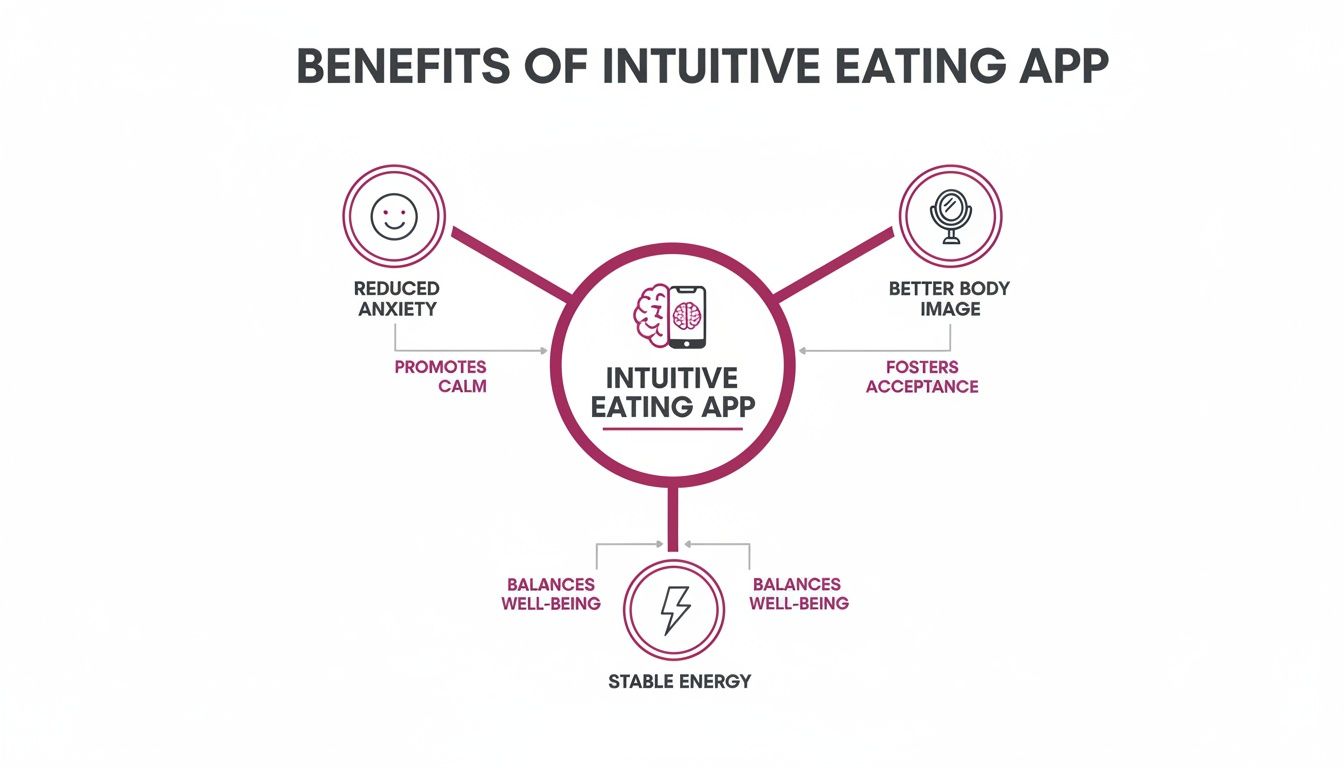
These core features work together to give you a complete picture of your well-being, one that goes far beyond just food.
The Power of Personalized Insights
The best intuitive eating apps don't just collect your data—they help you make sense of it. Instead of handing out generic advice, they offer personalized feedback that feels like a gentle nudge from a supportive friend, not a command from a drill sergeant.
This shift toward smarter, more personal guidance is a big deal. In fact, projections show that over 50% of diet and nutrition apps will use AI-driven features by 2025. You can find more statistics on diet and nutrition apps and see how technology is evolving.
This allows an app to spot your unique patterns and offer insights just for you. For example, it might notice that you tend to crave sweets on high-stress days and gently suggest a mindful check-in to see what you really need in that moment.
This personalized guidance is what separates a static food diary from a dynamic learning tool. It helps you see your own habits from a fresh perspective, making it so much easier to build new, healthier behaviors that actually stick.
To make this distinction even clearer, let's compare the two approaches side-by-side.
Intuitive Eating Apps vs. Traditional Diet Apps
Ultimately, choosing the right intuitive eating app comes down to finding one with these powerful, insight-driven features. It’s about finding a guide, not a guard.
How Superbloom Redefines Your Journey with Food
To see how these principles really work in practice, let’s take a look at Superbloom, an intuitive eating app that’s designed to be a partner in building a healthier relationship with food. Think of it less like a strict rulebook and more like a curious, supportive guide helping you uncover the "why" behind your habits, without any judgment.
Superbloom’s entire approach is built on gentle awareness, not rigid tracking. It doesn't ask you for calories or macros. Instead, it starts with a simple, photo-based log of what you eat. This simple shift immediately takes the focus off numbers and puts it on reflection, nudging you to notice the colors, textures, and the whole experience of your meal.
This visual diary is paired with simple check-ins. Before or after you eat, you can quickly note your hunger levels, your mood, and even who you ate with. Over time, this creates a rich, personal map of your eating patterns, revealing connections you might have never pieced together on your own.
Turning Awareness Into Action
What really makes Superbloom different is how it turns this personal data into gentle, actionable guidance. The app’s AI doesn't just spit out generic advice; it offers specific suggestions based on your unique patterns. It’s smart enough to learn what works for you and what doesn’t.
For example, after you log a meal, it might observe something like: "Great colors on your plate! Next time, adding a source of protein like beans or chicken could help you feel full longer." There’s no score, no red flag—just a genuinely helpful idea to consider for next time. This supportive feedback loop is at the heart of the experience.
This sketch shows how Superbloom provides gentle, non-judgmental feedback on a meal.
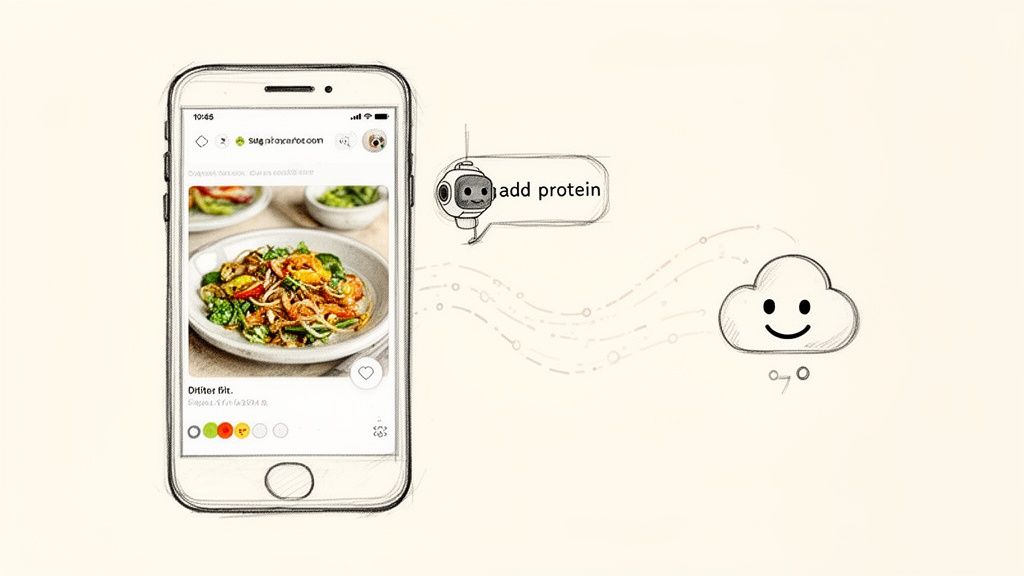
The app's interface focuses on positive reinforcement and helpful suggestions rather than criticism, making it a truly supportive tool.
Connecting Food and Feelings
Superbloom truly shines when it comes to untangling emotional eating. By consistently logging your mood alongside your meals, the app helps you spot key triggers. You might discover you always reach for sugary snacks when you’re stressed at work, or that skipping lunch on busy days leads to overeating in the evening.
It’s this pattern recognition that powers real change. The app isn't telling you what to do; it’s holding up a mirror so you can understand your own behaviors more clearly.
Superbloom brings together a few key elements to support you on this journey:
- AI-Powered Coaching: Get instant, personalized feedback that helps you make small, sustainable improvements.
- Journaling Prompts: Guided questions help you explore cravings, routines, and how you respond to stress.
- Habit Tracking: Focus on building positive behaviors, like adding more fiber or drinking more water, one small step at a time.
By weaving together behavioral psychology and smart technology, Superbloom offers a tangible example of how an intuitive eating app can help you rebuild trust in your body. It guides you away from the rigid rules of diet culture and toward a more mindful, compassionate, and sustainable way of eating. This approach doesn't just change what you eat; it changes how you think and feel about food for good.
Choosing the Right App for Long-Term Success
Picking an intuitive eating app is just the beginning. The real magic happens when it becomes a natural part of your daily routine—a helpful guide, not another source of stress. The right app should feel like a supportive friend in your pocket, with a design that makes you feel calm and curious, never judged.
But before you even hit "download," it’s worth taking a moment to think about what you actually need to make this work for you long-term. Finding an effective tool is about more than just a list of features. In many ways, the same principles apply as when you're choosing the best personalized workout plan app—you need coaching that adapts to you and guidance that feels personal.
So, start by asking a few simple questions about any app you're considering. Does it speak to you in a supportive way, or does it feel a bit shaming? Is the screen a peaceful space, or is it cluttered and chaotic? And a big one: what’s the deal with their data privacy? You’re sharing personal stuff here, so you need to know it’s safe and secure.
Getting Started The Right Way
Once you’ve found an app that feels right, how you start using it makes a huge difference. If you jump in expecting to fix everything at once, you’ll just get overwhelmed. A better approach is to treat it like a gentle exploration. Focus on building just one small habit at a time.
Here are a few practical tips to get you going:
- Set Realistic Expectations: You’re not going to unlearn years of dieting rules overnight. That's okay. Aim for consistency, not perfection, and give yourself plenty of grace along the way.
- Focus on One Habit: Start small. Maybe you just log one meal a day with a photo, or you decide to check in with your hunger cues right before lunch. Get comfortable with one thing before adding something new.
- Use It for Curiosity, Not Criticism: Every log and every entry is just information—nothing more, nothing less. If you notice you're eating when you're stressed, don't beat yourself up. Instead, get curious. What is that pattern telling you?
Remember, the app is a tool to help you listen to your body's wisdom, not to get a perfect score. The goal is to build trust with yourself, and that takes time, patience, and a whole lot of self-compassion.
Ensuring Accessibility and Support
Finally, think about the practical side of things. The wellness app market is huge, and there are big differences between what’s available on different phones. As of 2024, Android holds a massive 56.34% of the market share, simply because it’s on so many different smartphones around the world. This means a lot of apps are accessible to a wider audience, which is great for ensuring they get long-term updates and support.
You can discover more insights about the nutrition app market to see how these trends influence which apps get made. By picking a well-supported and thoughtfully designed intuitive eating app, you’re setting yourself up with a tool that can genuinely be there for you for the long haul.
Your Path to a More Mindful Relationship with Food
The path to intuitive eating is really a journey back to trusting your own body. It’s about tuning out the constant noise from diet culture and learning to listen to the wisdom you already have. The goal isn't to be perfect—it’s simply to make progress, one mindful choice at a time.
An intuitive eating app acts as a helpful guide on this journey, supporting you as you rebuild that essential mind-body connection. These tools help you shift your focus away from restriction and toward empowerment, using proven methods to help you understand your unique needs without any judgment. Think of it as your invitation to a more compassionate and lasting way of caring for yourself.
Remember, every meal is an opportunity to practice listening. Your body has been waiting to be heard.
Beyond apps designed specifically for intuitive eating, other simple tools can create a more supportive environment for your new habits. For example, using a good grocery list app can take the stress out of meal planning, making it that much easier to build a peaceful relationship with food.
Now that you're informed and ready, you have a clear path forward. Take that first step today and start becoming a more intuitive eater.
Got Questions About Intuitive Eating Apps? We've Got Answers.
Jumping into intuitive eating is a big step, and bringing an app into the mix can definitely spark some questions. Let's walk through some of the most common ones people have when they're getting started.
So, Can I Still Lose Weight Using One of These Apps?
This is easily the most asked question, and the answer isn't a simple yes or no. It's more about a change in focus. An intuitive eating app's main job isn't to help you drop pounds—it's to help you repair your relationship with food. The real goal is to tune into your body's signals, eat without guilt, and build habits that actually feel good.
For a lot of people, their weight naturally settles into a healthy place once they stop the diet-binge cycle. When you’re not restricting, you’re less likely to overeat out of deprivation. But it's really important to see weight change as a possible side effect, not the main event.
How Is This Different from Just Keeping a Food Diary?
Good question. They might seem similar because you're tracking what you eat, but their purpose is worlds apart. A typical food journal is all about the what: calories, macros, grams, and portion control. It’s a numbers game.
An intuitive eating app is about the why. It’s a tool for curiosity, not judgment.
Think of a standard food log as a receipt for your meal. An intuitive eating app is more like sitting down with a friend who asks, "So, how did that meal make you feel? What was going on in your day?"
These apps use photo-logging and emotion check-ins to help you connect the dots between your food choices and your mood, your stress levels, or even how you slept. It’s that deeper understanding that helps you make real, lasting changes.
But What If I Can't Even Tell When I'm Hungry?
Don't worry, you are not alone. After years of following strict diet rules that tell you when and what to eat, it’s completely normal to feel out of touch with your body's own hunger signals. Dieting basically trains us to ignore them.
A good intuitive eating app is designed for this exact situation. It doesn't expect you to be an expert right away. Instead, it guides you with gentle reminders and simple journaling prompts to check in with yourself. Think of it as practice. By taking these small moments to pause and listen, you'll slowly start to rebuild that connection and learn to trust what your body is telling you again.
Ready to stop counting and start listening? Superbloom uses AI-powered coaching to help you understand your patterns and build a healthier, more peaceful relationship with food. Start your journey today.