
Intuitive Eating for Weight Loss A Sustainable Non-Diet Approach
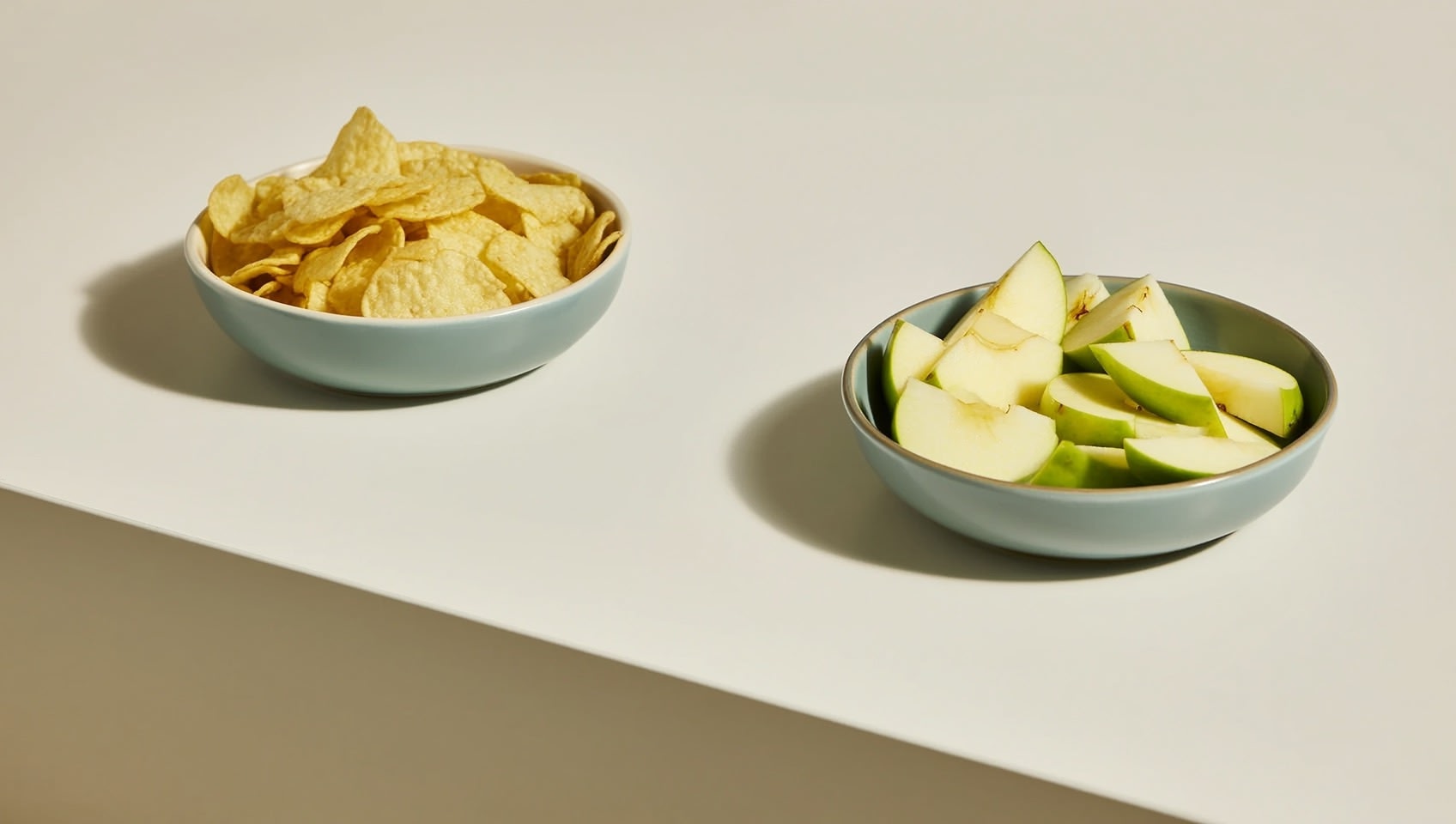
Let’s get one thing straight: Intuitive eating can lead to weight loss, but it's not a diet. Far from it. Instead of forcing your body into a restrictive box, this approach teaches you to trust its internal hunger and fullness signals. The happy side effect? Your weight often settles into a healthy, stable place naturally.
Rethinking Weight Loss with Intuitive Eating
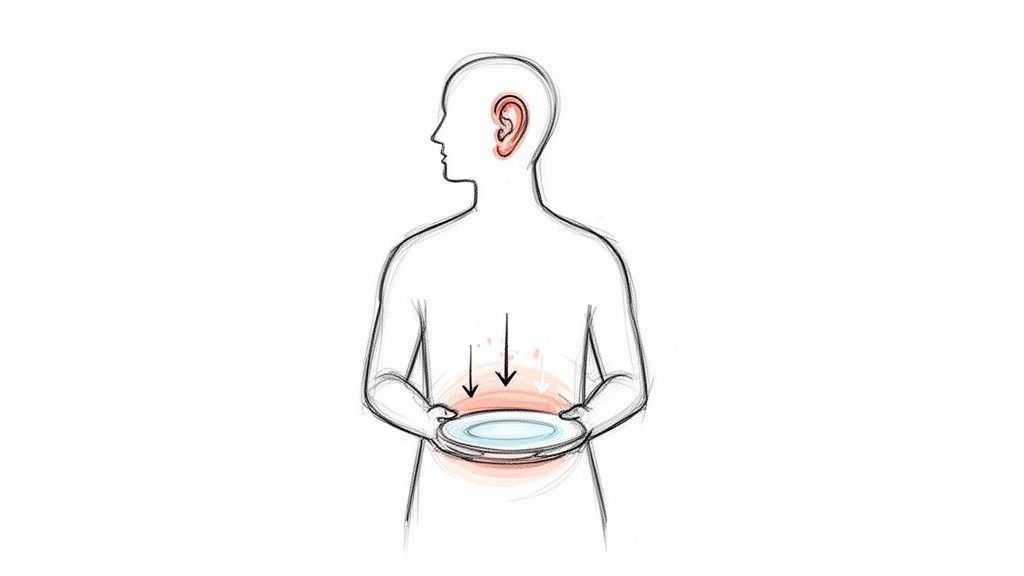
If you've ever been on a traditional diet, you know the drill. It's an exhausting battle against your own body—counting calories, cutting out entire food groups, and feeling immense guilt for every "slip-up." That constant fight is exactly why most diets fail long-term.
Intuitive eating offers a way out of that frustrating cycle. It flips the script entirely. Rather than following external rules from an app or a rigid meal plan, you learn to tune back into your body’s own wisdom.
Shifting from Rules to Attunement
The whole idea is to rebuild that broken connection between your mind and your body. This means learning to recognize, and actually honor, your internal signals. You start asking questions that diets completely ignore:
- Am I actually physically hungry, or am I just bored, stressed, or sad?
- What food sounds genuinely satisfying to me right now?
- How full am I? Am I comfortable, or am I pushing past that point?
This shift from external control to internal attunement is a game-changer. When you stop labeling foods as "good" or "bad" and finally give yourself permission to eat what you want, you strip away the power of deprivation that so often leads to binging. As you rethink your approach, a guide to healthy snacks for weight loss can offer great ideas that still honor this mindful philosophy.
To better understand this shift, let's compare the two approaches side-by-side.
Traditional Dieting vs Intuitive Eating
As you can see, the core philosophies couldn't be more different. One is based on control and restriction, while the other is built on trust and self-awareness.
The Science Behind a Gentler Approach
This isn't just a "feel-good" idea; there's real science backing it up. Studies consistently show that intuitive eating has a protective effect against weight gain. People who practice it tend to maintain a significantly lower body mass index (BMI) than those who follow restrictive diets.
For instance, one five-year study found that only 63.3% of intuitive eaters had a BMI of 25 or higher, compared to a whopping 73.9% of non-intuitive eaters.
Why does this happen? Intuitive eating breaks the vicious cycle of restriction and overcompensation. By honoring your hunger, you stop the primal urge to overeat later. By paying attention to fullness, you learn to stop when you’re satisfied, not stuffed.
Over time, your body finds its natural set point—a weight that is healthy and sustainable for you. Tools like the Superbloom app can be an incredible partner on this journey, giving you a space to track your body’s signals and build that trust from day one.
Breaking Free from the Diet Mentality
Before you can ever hope to truly listen to your body, you have to shut out all the noise from diet culture. Honestly, this is the hardest part for most people. We're talking about unlearning years—sometimes decades—of deeply ingrained beliefs about what you "should" and "shouldn't" eat, how much you "should" weigh, and what your body "should" look like. It's a fundamental shift away from a world built on rules and restriction.
The "diet mentality" is that nagging little voice inside your head. It’s the one that instinctively labels food as "good" or "bad." It's the one that mentally calculates calories or macros without you even trying, and then floods you with guilt after you enjoy a cookie. It's a con artist, promising that the next plan will be the one that finally gives you the "perfect" body. But we know how that story ends, don't we? It’s a draining cycle of restriction, intense cravings, and rebound eating that leaves you feeling defeated.
Ditching the Good Food vs. Bad Food Mindset
The very first, most practical step is to completely dismantle the idea that foods have moral value. They don't. A salad isn't "good," and a brownie isn't "bad." Food is just food. Different foods offer different nutrients, energy, and levels of satisfaction. That's it.
Start by becoming an observer of your own thoughts. When you catch yourself labeling a food, just pause for a second. Try to reframe it. Instead of, "I was so bad for eating that pizza," how about, "I was hungry, and that pizza was really satisfying." This small tweak seems simple, but it's a huge step in stripping away the emotional baggage we tie to our food choices.
This is where a tool like the journaling feature in Superbloom can be a game-changer. You can quickly jot down what you ate and, more importantly, the thought that popped up with it. Over time, you'll start to see your own patterns and can consciously work on shifting them toward a more neutral, compassionate voice.
And this isn't just a personal feeling; it's a massive global trend. People are getting tired of the old way. Interest in intuitive eating is surging, especially with younger generations who are fed up with dieting. While 42% to 45% of people globally try to lose weight each year, many are discovering that rigid diets just don't work long-term. This growing awareness is exactly why approaches that reject the diet mentality are finally getting the attention they deserve. You can learn more about how dieting motivation is changing in these recent research findings.
Curate Your Environment for Success
Think about it: your environment, both online and off, has a huge influence on your mindset. If your social media feed is a constant stream of "what I eat in a day" videos from diet influencers or endless before-and-after photos, you're making this process impossible for yourself. It’s like trying to quit smoking while living in a cigarette factory.
It’s time for a media detox. You need to actively curate your feeds to support this new way of thinking, not sabotage it.
- Unfollow with purpose: Ditch any accounts that promote dieting, obsessive exercise, or make you feel even a little bit bad about your body. Yes, this includes the fitness influencers focused only on aesthetics.
- Follow with intention: Seek out registered dietitians who specialize in intuitive eating, body-positive advocates, and creators who actually celebrate food and all it has to offer.
- Mute the noise: Hit mute or hide on any content that uses triggering language like "clean eating," "guilt-free," or "cheat meals."
Rejecting the diet mentality means letting go of the false hope that a new diet will be the one that finally works. It's about recognizing that the problem isn't your willpower; it's the diet itself.
This curation needs to happen offline, too. Get rid of the old diet books collecting dust on your shelf. Put away the food scale. And please, delete the calorie-tracking apps that force you to focus on external numbers instead of your own internal cues. Replacing these things with resources that actually support your intuitive eating journey creates a space where you can finally breathe and begin to thrive. This initial clean-out is a powerful way to declare that you're done with dieting for good. You're ready to start trusting yourself.
Learning to Honor Your Hunger and Fullness
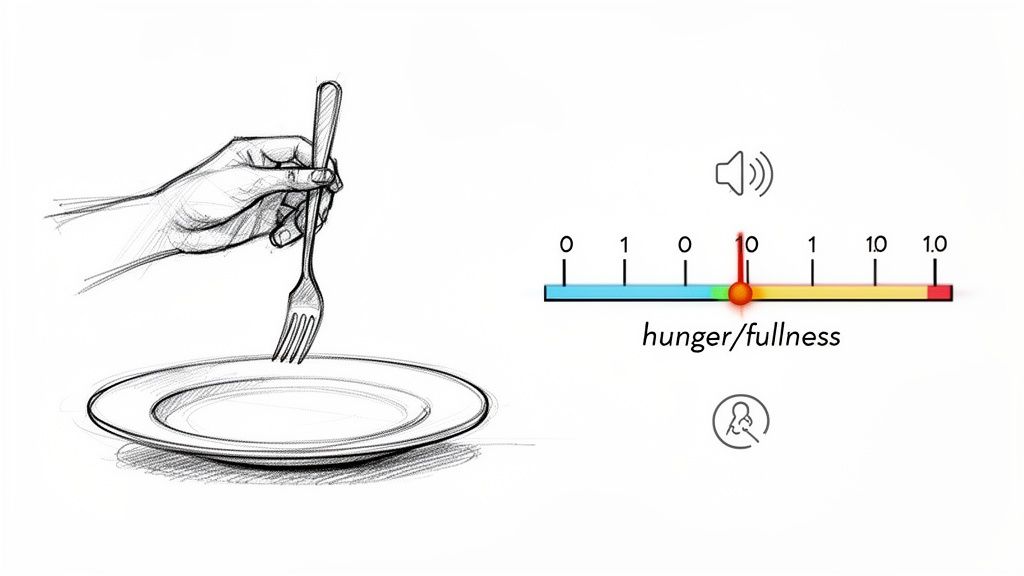
Once you've started to tune out the noise from diet culture, the real work begins: learning to listen to your body’s most basic signals. For many of us, a clock or a rigid meal plan has dictated our eating habits for years. It's time to hand the reins back over to your body’s internal wisdom.
This entire process boils down to two core concepts: hunger and fullness. Honoring these signals is the absolute foundation of intuitive eating. It sounds simple—eat when your body needs energy and stop when it's had enough—but dieting makes this incredibly complicated. We're going to uncomplicate it.
Introducing the Hunger and Fullness Scale
One of the most powerful tools I use with clients is the Hunger and Fullness Scale. Think of it as a simple 1-10 rating system to help you reconnect with your body’s physical sensations. It gives you a tangible way to measure something that might feel pretty abstract right now.
Here’s a common version of the scale:
- 1: Ravenous. You might feel weak, dizzy, or "hangry."
- 3-4: Gentle hunger pangs are kicking in. This is a great time to start thinking about what to eat.
- 5: You're neutral—not hungry, but not full either.
- 6-7: Pleasantly full and satisfied. This is the sweet spot.
- 10: Painfully stuffed. You might feel sick or deeply uncomfortable.
The goal isn't to hover at a perfect 5 all day. Instead, you want to aim to start eating around a 3 or 4 and stop when you hit a 6 or 7. This approach helps you avoid getting so famished that you overeat later and teaches you to recognize that comfortable point of satisfaction before it turns into discomfort.
Distinguishing Physical from Emotional Hunger
One of the biggest hurdles you’ll face is learning to tell the difference between true physical hunger and its convincing cousin, emotional hunger. Once you know what to look for, you’ll find they feel completely different.
Here's a real-world example: Imagine you just wrapped up a stressful meeting at 3 PM. Out of nowhere, you have an intense, immediate need for a cookie. That's a classic sign of emotional hunger.
Now, contrast that with this: You’ve been deep in a project for hours, and you slowly start noticing your stomach gurgling and your energy levels dipping. That’s your body sending clear signals that it needs fuel. That’s physical hunger.
The real power in this practice comes from pausing and asking, "What am I truly feeling right now?" This simple question can be the difference between a reactive choice and a mindful one.
Putting It Into Practice with Mindful Check-Ins
The key is to weave these check-ins into your daily routine until they become second nature. It’s all about creating small, consistent moments of pause and awareness around your meals.
Practical Tips for Daily Use:
- Check-In Before You Eat: Before you grab a meal or snack, take a second to ask, "Where am I on the hunger scale?" If you're at a 5 (neutral), maybe you can wait a little longer or just have a small snack for now.
- Pause Mid-Meal: This habit is a game-changer. Halfway through your meal, just put your fork down for a minute. Take a breath and check in again. Where are you on the scale now? You might be surprised to find you're already approaching a 6 or 7.
- Assess After Eating: About twenty minutes after you finish your meal, do one last check-in. How do you feel? This is crucial for learning what "pleasantly full" actually feels like for you and how different foods impact your sense of satisfaction.
This is where a tool like the Superbloom app can be incredibly helpful. You can log your meal with a quick photo and add a note about your hunger level before and after. Over time, the app helps you spot clear patterns, creating a powerful feedback loop between your body's signals and your food choices. It turns abstract feelings into concrete data you can use to become an expert on your body’s unique language—a skill that is essential for making intuitive eating a sustainable reality.
Navigating Emotional Eating with Self-Compassion
Emotional eating is one of the toughest—and most misunderstood—parts of building a healthier relationship with food. We've all been there. It’s that magnetic pull to the kitchen after a draining day at work, the sudden urge for a pint of ice cream when you feel a pang of loneliness, or the mindless munching that takes over when you're just plain bored.
Let's get one thing straight: this isn't a sign of weakness. It's a deeply human coping mechanism.
The first step is to get curious, not critical. Food is a quick, reliable, and powerful way to soothe uncomfortable feelings. It feels like a solution in the moment, but the relief is temporary. More often than not, it leaves you with a side of guilt or physical discomfort and does nothing to address what's really going on.
Identifying Your Triggers
To break this cycle, you have to become a bit of a detective and figure out what kicks it into gear. Emotional eating triggers are unique to each of us, but they usually fall into a few common buckets. Spotting your own patterns is the key to unlocking new, more helpful responses.
What usually sets it off?
- Stress: A demanding job, friction with family, or money worries can spike your cortisol levels, which in turn drives cravings for those high-fat, high-sugar "comfort" foods.
- Boredom or Procrastination: When you’re understimulated or putting off a task you dread, food offers an easy distraction and a quick little dopamine hit.
- Tough Emotions: Feelings like sadness, anxiety, loneliness, or anger are just plain uncomfortable. Eating can feel like a way to numb them out or push them down.
For many people, these patterns can become particularly strong in the evening. For anyone on this journey, understanding and managing night eating is a critical piece of the puzzle, as it's often directly tied to the unresolved stress and emotions of the day.
Creating a Toolkit of Coping Strategies
Once you recognize an emotional trigger bubbling up, the goal isn't to just grit your teeth and resist. You need a toolkit of real alternatives—things that can offer genuine comfort and address the feeling underneath. The best strategies are simple, accessible, and actually enjoyable for you.
Next time you feel an emotional craving, try one of these:
- The Five-Minute Walk: Just step outside. A change of scenery and a little gentle movement can be surprisingly effective at shifting your entire mental state.
- Deep Breathing: Take five slow, deep breaths. Focus on the feeling of the air moving in and out of your lungs. This simple act tells your nervous system it's okay to calm down.
- Quick Journaling: Grab a notebook (or the notes app on your phone) and scribble down what you're feeling for just a couple of minutes. Simply naming the emotion can take away a lot of its power.
Self-compassion is the secret ingredient. Instead of scolding yourself for wanting to eat, you're offering yourself a different form of care—one that truly addresses what you need in that moment.
This is where a tool like Superbloom’s AI coach can make a huge difference. By logging your moods and meals, the app starts to connect the dots for you. It might notice that you consistently reach for sweets on days filled with back-to-back meetings. Then, it can offer a gentle nudge to try a five-minute stretch instead, helping you carve out new, more supportive neural pathways over time.
The Power of Food Satisfaction
Working through emotional eating doesn’t mean you can never eat for comfort again. Not at all. It's about making those choices consciously. This brings us to a crucial idea: food satisfaction.
When you truly embrace intuitive eating, you learn to choose foods you genuinely enjoy that also make your body feel good. This is a world away from restrictive dieting. In fact, research consistently shows that intuitive eating leads to better psychological health, including improved body image and fewer depressive symptoms. This is huge, since so much of what we call "overeating" is driven by emotion, not physical hunger. You can explore more about these psychological benefits of intuitive eating.
Finding satisfaction means really tuning in—paying attention to the taste, texture, and aroma of your food. When you eat a meal that is both nourishing and deeply satisfying, you're far less likely to go searching for something else to fill an emotional void later. It’s about honoring both your body’s need for fuel and your very human desire for pleasure. That balance is the heart of a peaceful, sustainable relationship with food.
Your Daily Intuitive Eating Workflow
Let's be real: turning the big ideas of intuitive eating into a daily habit can feel like a lot, especially when life is already pulling you in a million directions. But the secret isn't about being perfect. It's about finding a gentle, mindful rhythm that actually fits your life.
Think of it less as a rigid schedule and more as a series of friendly check-ins with yourself. We're going to walk through what this can look like, transforming those abstract concepts into small, doable actions you can weave into your existing routine. It all comes down to pausing, listening, and responding to what your body is telling you.
Starting Your Day with Intention
How you begin your morning can really set the tone for the rest of the day. Instead of automatically reaching for what a diet plan once told you was the "right" breakfast, the goal here is to simply ask your body what it truly needs.
So, before you even open the fridge, just take a second. Check in with your hunger. Are you at a gentle 3 or 4 on the hunger scale? If so, it’s a great time to eat. Now, what actually sounds good? Maybe your body is asking for something warm and savory like eggs, or perhaps it's something lighter and refreshing like yogurt with berries.
A Practical Morning Example:
- The Situation: You wake up feeling moderately hungry (a 4 on the scale). Your old habit is to grab that "safe," low-calorie yogurt.
- The Intuitive Action: You pause. You ask yourself what would feel genuinely satisfying and keep you from thinking about food an hour later. You realize you want something more substantial to power you through a busy morning. You land on scrambled eggs with a slice of toast and some avocado.
- Superbloom in Action: After eating, you snap a quick picture in the app. You add a note: "Chose eggs over yogurt. Feeling way more satisfied and energized. Hunger now at a 7." This simple act helps reinforce the positive connection between listening to your body and feeling great.
Navigating Midday Decisions
Lunchtime can be tricky, especially at work. You've got catered meetings with limited options, coworkers all ordering from the same place, and the general rush of the day. This is where honoring your hunger becomes a powerful act of self-respect.
Even when your choices are limited, you can still be intuitive. Look at what's available and ask yourself what combination would feel best in your body right now. Maybe that means having a smaller portion of the pasta dish but loading up on the side salad for some crunch and fiber.
The goal is to make the best choice available that honors both your hunger and your desire for satisfaction, without judgment. It’s about flexibility, not failure.
Sometimes, the urge to eat isn't about hunger at all. It's an emotional trigger—stress from a meeting, boredom, or frustration. When that happens, you can use a simple framework to create some space between the feeling and the action.
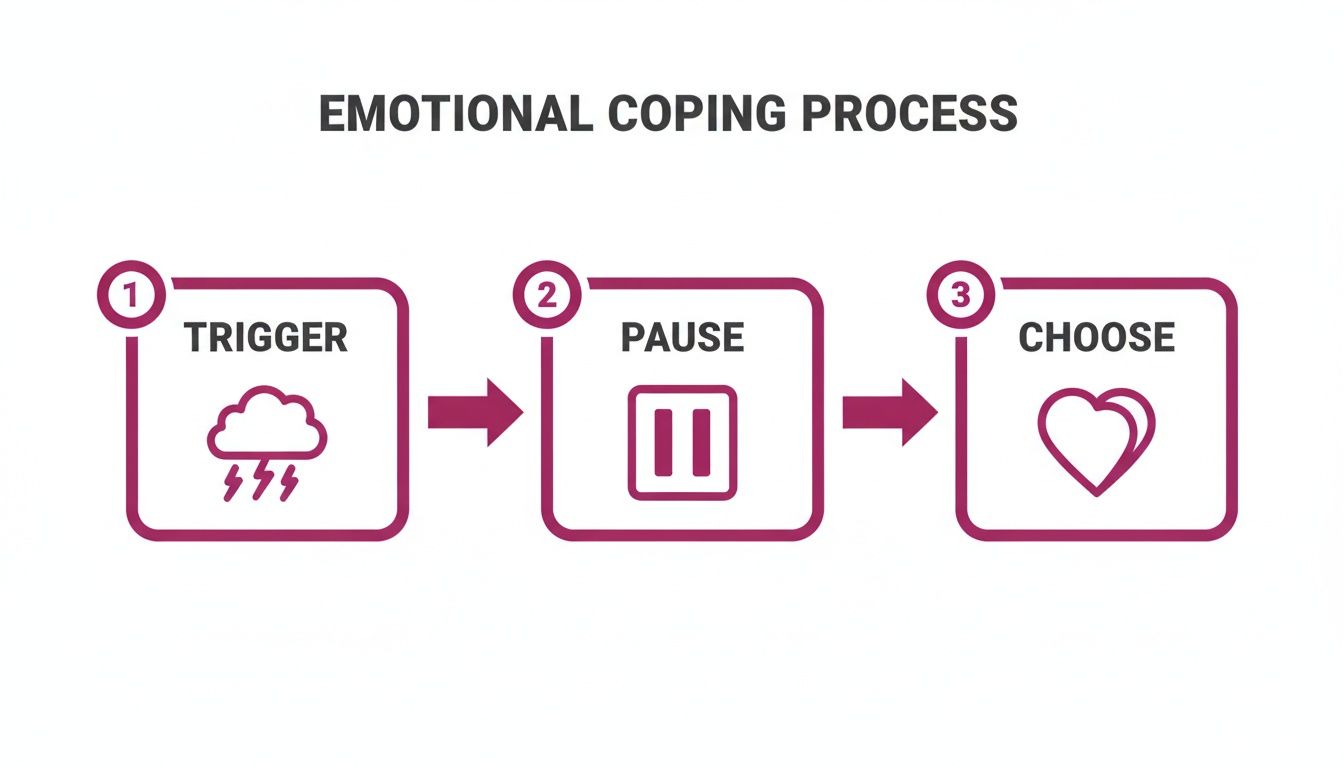
This visual is a great reminder that you always have a choice. You can pause and respond to what you truly need instead of just reacting.
Winding Down with a Mindful Evening
By the end of the day, you're tired. This is when it's easiest to slip back into old habits, like eating while scrolling on your phone or finishing a bag of chips without even noticing. It's a key moment to be gentle with yourself and check in.
As you start thinking about dinner, reflect on your day. How did your earlier meals make you feel? What does your body need now to feel nourished and satisfied for the night? This isn't just about the food itself, but the whole experience. Can you find a few minutes to sit down without distractions? Can you actually taste and enjoy each bite?
To help make these check-ins a consistent practice, you can use a simple, structured approach. Tools like Superbloom are designed for exactly this kind of mindful logging.
Sample Mindful Meal Check-In
Here’s a table outlining how you can structure these check-ins to build consistency and awareness around your meals.
Following a consistent workflow like this does more than just track what you eat. It helps you build a rich, personal understanding of your body’s unique patterns. You'll start to see the undeniable connections between food, mood, and energy. Over time, making choices that feel good in your body becomes less of a chore and more of a natural, intuitive response.
Common Questions About Intuitive Eating
It’s completely normal to have a ton of questions when you first start exploring intuitive eating. After years, maybe even decades, of being immersed in diet culture, the whole concept can feel a little strange and even a bit scary. Let's dig into some of the biggest concerns I hear from people, so you can move forward with confidence.
Can You Actually Lose Weight This Way?
The short answer is yes, many people do. But the key is to reframe how you think about it. Weight loss with intuitive eating is often a happy side effect, not the primary objective. The real goal is to heal your relationship with food and your body.
When you finally break free from the exhausting cycle of restricting and then inevitably overeating, your body can finally find its natural, healthy weight. Think about it: by learning to listen to your hunger and fullness signals, you naturally stop eating past the point of comfort—something that diet-induced deprivation often causes.
Research backs this up, too. Studies have consistently found that intuitive eaters tend to have lower BMIs over the long haul. This isn't magic; it's just what happens when you start choosing foods based on what your body genuinely needs and what will satisfy you, leading to a stable weight you can actually maintain without a fight.
What if All I Want to Eat is "Junk Food"?
First off, welcome to the club! This is not only normal, but it's an expected part of the process. I call it the "food honeymoon." For years, you’ve been told that certain foods are "bad" and off-limits, which gives them an almost magnetic pull. When you finally grant yourself unconditional permission to eat them, it can feel like the floodgates just burst open.
The most important thing you can do here is lean into it without judgment. Let yourself have the pizza. Enjoy the ice cream. Eat the chips. As you consistently allow these foods back into your life, something fascinating starts to happen: they lose their power. The novelty wears off. That "forbidden fruit" appeal fades away, and you can start paying attention to how these foods actually make you feel.
Over time, you'll find your cravings naturally start to balance out. You’ll begin wanting a wider variety of foods, including the ones that give you steady energy and just make you feel good.
Giving yourself permission is the only way to neutralize the power that forbidden foods hold over you. When nothing is off-limits, you can make choices from a place of want, not a place of rebellion against restriction.
How Long Until I See "Results"?
This is probably the biggest shift from traditional dieting. Intuitive eating is a lifelong practice, not a 30-day fix, so the timeline looks different for everyone. Many people tell me they feel an almost immediate sense of mental freedom—less guilt, less anxiety, less obsessive thinking about food—sometimes within just a few weeks. Honestly, that alone is a life-changing result.
As for the physical side, getting really in tune with your body’s hunger and fullness cues can take a few months of consistent, compassionate practice. If weight loss happens, it’s usually slow and steady, because it’s the result of deep, lasting habit changes, not a temporary diet.
Your journey won't be a perfect, straight line. There will be ups and downs. That’s why it’s so critical to celebrate the non-scale victories along the way.
- Are you having more stable energy throughout the day?
- Do you find yourself thinking about food less often?
- Can you enjoy a dinner out with friends without stressing over the menu?
- Have you noticed better digestion or just an overall sense of well-being?
Focusing on these tangible improvements makes it clear that the real work is happening on the inside. That internal shift is the foundation for any lasting physical change.
Ready to build a healthier relationship with food and see how these principles apply to your own life? The Superbloom app is designed to be your personal guide on this journey. It helps you track your body’s signals and understand your unique patterns without the pressure of calorie counting. Start your journey toward food freedom today.