
Is Celery Good for Weight Loss? A Science-Backed Guide
When you hear about celery for weight loss, it’s easy to be skeptical. Is it really a miracle food? The short answer is no—but it's an incredibly smart one. Celery isn't magic, but it’s a powerful tool in your weight management toolkit when you know how to use it as part of a balanced diet. Its secret lies in a simple but effective combination: an extremely low-calorie count, a ton of water, and a surprising amount of fiber. Together, these help you feel full and satisfied, making it much easier to reduce your overall calorie intake without that constant feeling of deprivation.
Decoding Celery for Weight Loss
So, how does this crunchy green stalk actually help? It’s not just one thing, but a powerful trio of nutritional properties working in your favor.
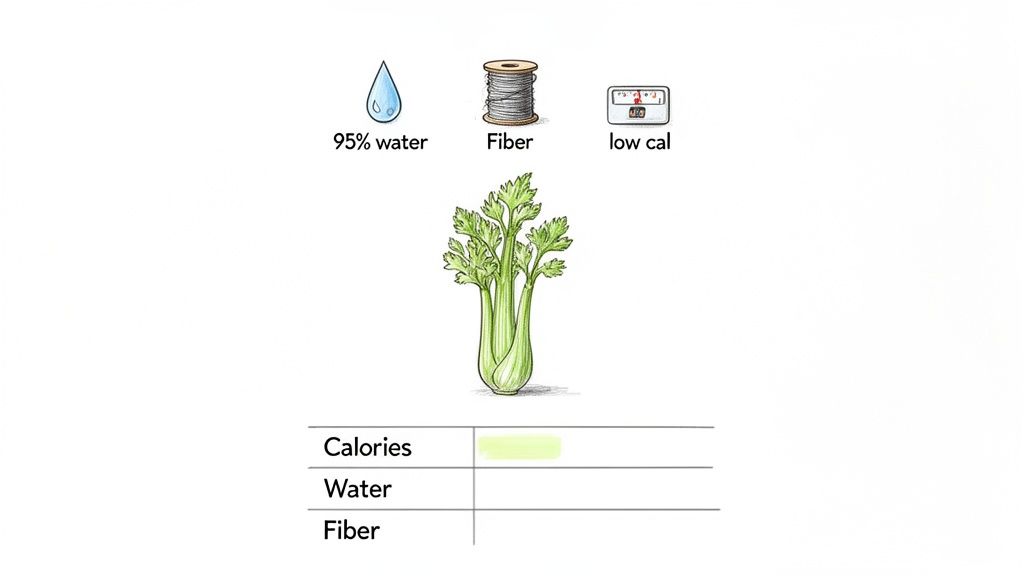
First off, celery is almost comically low in calories. We’re talking just 6–7 calories in a single medium stalk. This is a huge advantage. It means you can eat a lot of it, satisfying that physical need to chew and fill your stomach, without making a dent in your daily calorie budget. Think of it as a high-volume, low-impact food.
Then there’s its physical makeup. Celery is about 95% water, which is fantastic for hydration and also contributes to that feeling of fullness. The other 5% packs a punch with nearly a gram of dietary fiber per stalk. This water-fiber combination is a game-changer for satiety. It slows down digestion, helping you feel satisfied long after you’ve finished eating.
Celery acts as a natural appetite-management tool. Its low-calorie density allows you to fill your plate and your stomach, which helps you maintain a calorie deficit more comfortably and sustainably.
Finally, don’t underestimate the sensory experience. That satisfying crunch and fresh, mild flavor can make healthy eating more enjoyable. When you're craving a crunchy snack like chips or crackers, reaching for celery sticks can curb that craving without the extra calories, fat, and sodium. It makes sticking to your plan feel less like a sacrifice.
To put it all together, here’s a quick summary of how these features come together to support your weight management goals.
How Celery Contributes to Weight Management
This table breaks down the key ways celery can help you achieve and maintain a healthy weight.
| Feature | Impact on Weight Loss | Practical Benefit |
|---|---|---|
| Extremely Low Calories | Allows for high-volume eating without exceeding daily energy needs, making a calorie deficit easier to maintain. | You can snack on several stalks to satisfy hunger while consuming fewer than 20 calories. |
| High Water Content | Promotes hydration and adds to the physical feeling of fullness in the stomach. | Helps you feel satisfied and reduces the likelihood of mistaking thirst for hunger. |
| Dietary Fiber | Slows digestion and the release of sugar into the bloodstream, leading to prolonged satiety and stable energy. | Keeps you feeling fuller longer, reducing the urge to snack on less healthy options between meals. |
By understanding these mechanisms, you can see that celery isn't a fad—it's a food with solid nutritional science behind its benefits.
How Celery Helps You Feel Fuller Longer
While celery's low calorie count is what usually grabs headlines, its real power for weight management comes from something else entirely: its ability to promote satiety. This is the feeling of being comfortably full and satisfied long after you've finished eating.
It's not just a mind game; it’s biology in action. Celery is about 95% water, but the secret is in its tough, stringy skeleton of insoluble fiber.
The "Sponge" Effect in Your Stomach
Imagine this fiber as a tiny, natural sponge. When you eat celery, this fibrous material doesn't break down quickly. Instead, it soaks up the water within the celery itself, plus any other liquid in your stomach, and begins to swell.
This expansion physically takes up space, literally filling your stomach and creating a sense of fullness from the inside out.
Sending "I'm Full" Signals to Your Brain
This stretching does more than just make you feel physically full. As your stomach expands, it triggers special nerve receptors embedded in the stomach wall.
These receptors then send a direct message to your brain that says, "Alright, we're reaching capacity down here; it's probably time to stop eating." This brain-gut communication is a fundamental part of how your body naturally controls appetite.
By combining the sheer volume of water with the bulking action of fiber, celery delivers a one-two punch against hunger. It satisfies both your stomach's physical need to be filled and your brain's biological need for a "full" signal.
This process has another benefit: it slows down digestion. Because this fiber-and-water combination moves more slowly through your system, that feeling of fullness sticks around. A longer-lasting sense of satisfaction means you're less likely to get the urge to snack between meals—which is often where those extra, unplanned calories come from.
Think about the difference between eating a handful of celery sticks versus a bag of chips. Processed snacks digest quickly, leaving you hungry again in no time. Celery, on the other hand, gives you staying power. This turns hunger management from a constant battle of willpower into a much more sustainable, less stressful part of your journey.
The Truth About Negative Calories and Metabolism
We've all heard the rumor: celery is a "negative-calorie" food. The story goes that you burn more calories chewing and digesting it than the celery itself contains. So, is it true?
Not exactly. But the reality is almost as impressive, which is why celery is such a powerhouse for anyone focused on weight management.
The magic is in a process called Diet-Induced Thermogenesis (DIT). Think of DIT as the energy fee your body charges to process food. Every time you eat, your body spends a few calories to break down, absorb, and store the nutrients. It's the cost of doing business, digestively speaking.
With most foods, this energy fee is pretty small. But celery is built differently. It's incredibly low in calories to begin with, and its calories are locked inside a tough, fibrous structure that your body has to work overtime to break apart.
The Real Energy Cost of Eating Celery
Because of that fibrous build, the energy "fee" for digesting celery is unusually high compared to the calories it provides. Imagine you found a $10 bill, but it was inside a locked box that cost you $8 to open. You're still ahead, but just barely. That's celery.
Just how high is that digestive cost? A fascinating 2026 study dug into this very question. Researchers found that digesting 100g of celery—which contains only about 16 calories—required the body to burn nearly 14 of those calories in the process.
That’s an 86% energy expenditure. The full study, which you can find on Cambridge.org, shows just how little is left over.
What this means in the real world is that celery contributes almost nothing to your daily calorie count. It isn't technically "negative," but it's as close as any food gets. This makes it a fantastic tool for creating a calorie deficit without the hunger pangs.
This simple chart shows you exactly why celery is such a digestive workout.
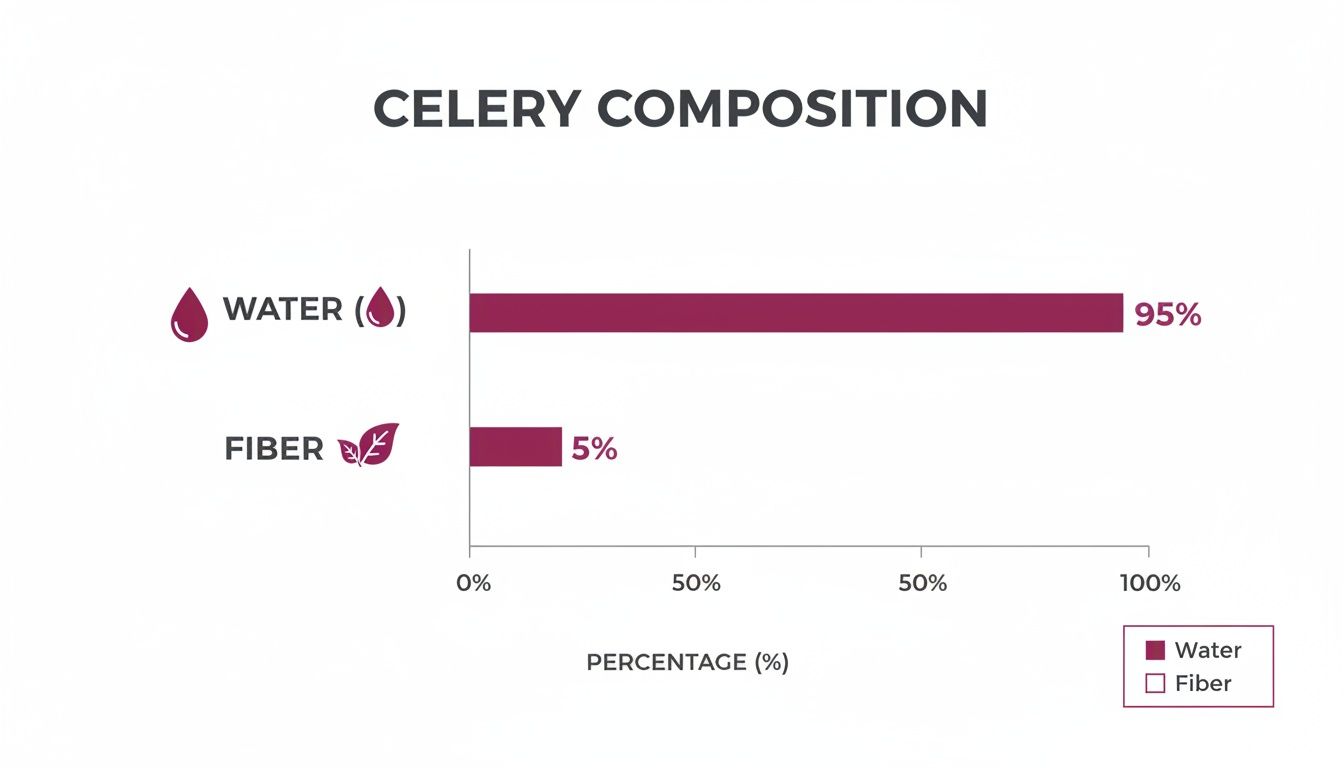
It’s mostly water, but that 5% fiber is tough stuff. Your body has to put in serious effort to get to the few calories hidden inside.
Celery vs. Common Snacks
Let's put this into practice. Picture your go-to afternoon snack.
- A 100-calorie pack of crackers: Your body might spend 5-10 calories on digestion, leaving you with a net gain of 90-95 calories.
- Celery: To even get to 100 calories, you'd have to eat a mountain of it—well over 60 large stalks! And your body would burn off most of those calories just dealing with them.
By simply swapping one processed snack for a handful of celery sticks each day, you create a significant calorie gap over time. It's a small, sustainable habit that supports your goals without making you feel like you're on a restrictive diet.
New Research on Celery and Body Fat Reduction
When you start a diet, it's easy to get obsessed with the number on the scale. But experienced dieters and health professionals know the real goal isn't just weight loss—it's reducing body fat while keeping your hard-earned muscle.
Improving your body composition is what truly changes how you look and feel. And this is where the conversation around celery gets really interesting. New findings suggest celery might do more than just act as a low-calorie snack. It could play an active role in helping your body target fat.
Beyond Weight Loss to Fat Loss
Losing "weight" is a vague term. It can mean losing water, muscle, or fat. For lasting health and a more sculpted physique, fat loss is what you should be aiming for. Why? Because muscle is your metabolic engine; it burns more calories at rest than fat does. Losing it can sabotage your metabolism in the long run.
So, does celery help you lose weight in a way that specifically targets fat? A fascinating clinical trial from 2026 points toward "yes." This study is starting to shift our view of celery from a simple diet filler to a food with real metabolic potential.
The key takeaway is this: strategic food choices can influence what kind of weight your body loses. Focusing on foods that encourage fat reduction—which may include celery—leads to far better results than just indiscriminately cutting calories.
What the Study Revealed
A 2026 pilot study published in Food Science & Nutrition looked into how celery powder affected a group of patients with type 2 diabetes. While the study was small and focused on a specific group, the results were eye-opening for anyone interested in body composition.
Researchers discovered that the participants taking celery saw a statistically significant drop in their body fat percentage (p = 0.021). This wasn't just general weight loss; it was measurable fat loss. For a closer look at the methodology and data, you can dive into the full celery-related research.
Of course, we need more research to see if these effects hold true for everyone. But these initial findings are compelling. They hint that certain compounds in celery might actually influence how our bodies process and store fat. This fits perfectly with the modern understanding that food isn't just a source of calories, but a set of instructions for your body.
This evidence suggests celery could be a powerful partner in your health journey. It’s not just a crunchy vehicle for dip; it’s a food that may help steer your body toward the specific goal of reducing fat, making it a smart addition to any effective eating plan.
Practical and Creative Ways to Eat More Celery
Alright, so we know celery is a fantastic tool for weight loss. But knowing that and actually making it a regular, enjoyable part of your diet are two different things. The real trick is to move beyond sad-looking celery sticks and dip. Let's get into some genuinely tasty and easy ways to work more of this crunchy veggie into your meals without it ever feeling like a chore.

The key is to start seeing celery not just as a low-calorie snack, but as a versatile ingredient that brings texture, flavor, and satisfying bulk to your plate. A little bit of efficient vegetable preparation over the weekend can make it incredibly easy to grab and add to meals all week long.
Upgrade Your Meals with Crunch and Flavor
Celery has a mild, slightly salty taste and an unbeatable crunch, which makes it a simple addition to so many dishes. It’s a great way to bulk up a meal, adding that satisfying texture without adding significant calories.
Elevate Salads and Slaws: Finely slice some celery and toss it into your standard green salad, or add it to chicken or tuna salad for a refreshing snap. You can also make a fantastic modern slaw by shredding celery with apples and carrots and dressing it all in a light vinaigrette.
Build a Flavorful Foundation: Don't underestimate the power of cooked celery! It's a cornerstone of mirepoix—the classic French trio of onions, carrots, and celery that starts countless soups, stews, and sauces. It melts down to add a deep, savory flavor that makes any dish taste richer, all while keeping the meal light.
Think of celery as an edible, zero-waste spoon. A sturdy celery stalk is the perfect vehicle for scooping up hummus, chicken salad, or a black bean dip, eliminating the need for high-calorie crackers or chips.
Think Beyond the Savory
While celery is a hero in savory dishes, it can be a surprising star in your morning routine, too. Because it’s mostly water, it blends beautifully.
Boost Your Green Smoothies: Add a stalk or two into your favorite green smoothie recipe. It has a mild flavor that pairs surprisingly well with fruits like green apple, pear, and pineapple, adding extra hydration and nutrients. Plus, you get all the fiber that gets lost when you juice.
Create Refreshing Juices: If you’re a fan of juicing, celery makes an amazing base. Try combining it with cucumber, lemon, and a bit of fresh ginger for an invigorating drink that can help keep those morning hunger pangs at bay.
By getting a little creative, you can weave celery into your meals all day long. This simple, consistent habit is a powerful way to support your weight loss goals by helping you feel full and satisfied on fewer calories.
Frequently Asked Questions About Celery and Weight Loss
So, the science makes sense, but how does this all play out in the real world? You probably still have a few questions. Let's clear up some of the most common ones I hear from clients.
Is Celery Juice Better Than Eating Whole Celery?
This is a big one. While you'll see celery juice everywhere, it's missing the single most important thing for weight management: the fiber. Juicing strips away all that beneficial fiber, which is the very thing that helps you feel full and keeps your digestive system running smoothly.
For managing your appetite and getting that lasting feeling of satiety, eating whole celery is always the better choice. Think of the juice as a quick hit of vitamins, but the whole stalk is the real workhorse for weight loss.
Can You Actually Eat Too Much Celery?
Honestly, it would be pretty tough. You'd likely get tired of chewing long before you ran into any real trouble! That said, if you suddenly start eating massive amounts, the high fiber content could cause some temporary bloating or gas while your system adjusts.
It's also worth noting that celery has a bit more sodium than other veggies, with about 35mg per stalk. This isn't a problem for most people, but if you're on a strictly monitored low-sodium diet, it's something to be aware of. The key, as always, is balance.
Does Cooking Celery Ruin Its Benefits?
Not at all. While some water-soluble vitamins (like Vitamin C) can degrade a bit with heat, the most important benefit for weight loss—the fiber—remains completely intact.
Adding cooked celery to soups, stews, or stir-fries is a fantastic way to bulk up your meals with very few calories. Whether you prefer it raw with a bit of hummus or cooked in your favorite dish, both are excellent options for supporting your goals.
Of course, diet is just one piece of the puzzle; pairing it with physical activity is what truly makes a difference. To keep your workouts on track and tailored to your progress, a good online fitness app can be an invaluable tool.
If you're ready to build sustainable healthy habits around foods like celery, Superbloom is here to help. Our AI coach offers personalized guidance to help you understand your eating patterns and make small, powerful changes—all without the stress of constant calorie counting. Learn how Superbloom can support your journey.