
Is Honey as Bad as Sugar A Deep Dive into the Sweet Truth
So, the big question: is honey actually better for you than sugar? The short answer isn't a simple yes or no. While both are sweeteners and should be enjoyed in moderation, honey does have a slight edge thanks to some unique properties. Ultimately, deciding which one is "better" really comes down to your personal health goals and how you plan to use it.
The Sweet Debate: Honey vs. Sugar
It’s easy to get lost in the details when comparing honey and sugar. They both make things sweet and give us a quick energy boost, but how they get to your pantry—and what they do once they're in your body—is where things get interesting.
Table sugar is pure sucrose, a simple molecule made of 50% glucose and 50% fructose. It’s extracted from sugarcane or sugar beets through a heavy refining process that strips away everything else. What’s left are often called "empty calories" because there are no other nutrients to speak of.
Honey, on the other hand, is a far more complex natural sweetener. While it's also made up of fructose and glucose, the exact ratios can vary. Crucially, it hangs onto small amounts of enzymes, amino acids, B vitamins, minerals like potassium, and antioxidants. These compounds, even in trace amounts, give honey its unique character and potential health perks that you just don’t get from refined sugar.
This infographic lays out the core differences at a glance.
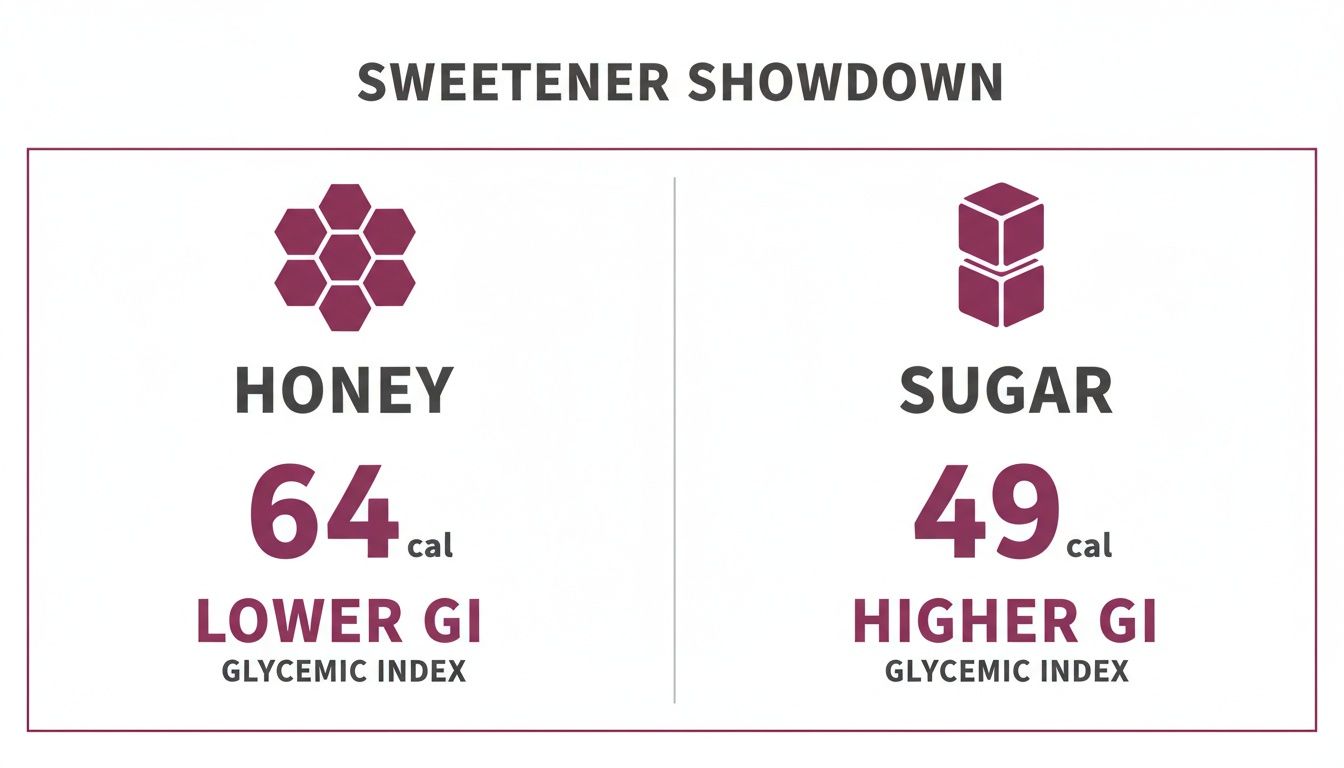
You’ll notice honey is a bit more calorie-dense per tablespoon. But the key difference lies in its lower glycemic index, which means it tends to raise your blood sugar more gradually. This is a fundamental point to grasp when figuring out which sweetener best fits your wellness journey.
To make things even clearer, let's put them side-by-side.
Honey vs Sugar At a Glance
Here’s a quick summary comparing the key differences between one tablespoon of honey and one tablespoon of table sugar.
As you can see, while sugar has fewer calories and grams of sugar per tablespoon, honey offers a more complex profile with a gentler effect on blood sugar. Neither is a "health food," but these differences matter.
How Your Body Processes Honey vs. Sugar
To really get to the bottom of the honey versus sugar debate, we have to look past the taste and see what’s happening on a biochemical level. They might seem like similar sweet substances, but their chemical makeup means your body handles them in surprisingly different ways. Understanding this is the key to managing your energy levels and finally ditching those afternoon slumps.
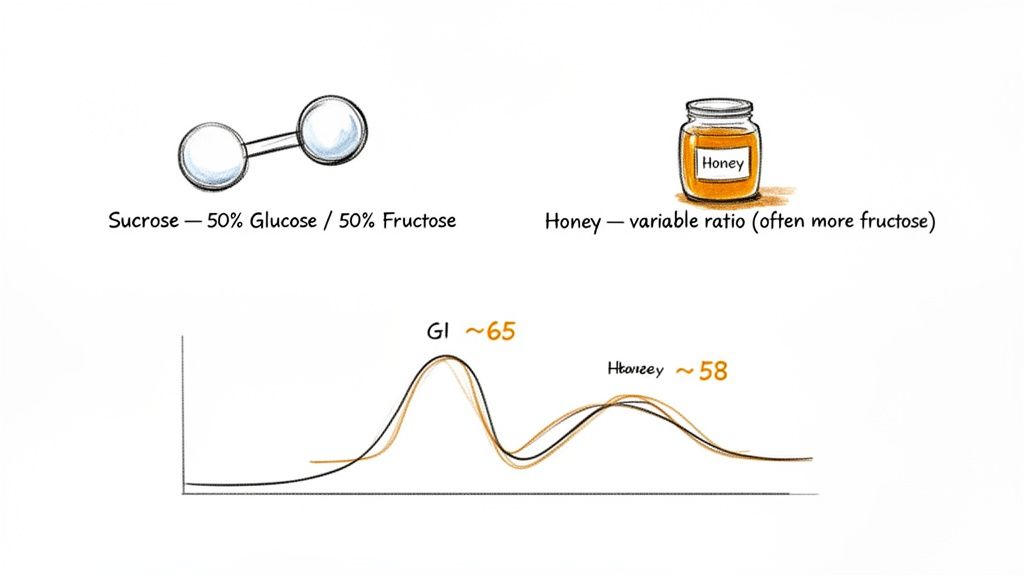
Table sugar, which you probably know as sucrose, has a very neat and tidy structure. It's a perfect 50/50 split of two simpler sugars, glucose and fructose, which are chemically locked together. When you eat anything with table sugar, your digestive system has to work to break that bond before it can even start to use the individual sugars for fuel.
Honey is a different beast altogether. It’s a more complex, natural concoction. While it also has glucose and fructose, they're mostly floating around as separate, individual molecules. The ratio isn't fixed either; most honey varieties have a bit more fructose than glucose. This might sound like a tiny detail, but it makes a world of difference in how your body digests it and how your blood sugar responds.
The Glycemic Index: A Critical Comparison
This is where things get really interesting. The most crucial metric here is the Glycemic Index (GI), a 0-to-100 scale that tells us how fast a food spikes your blood sugar. High-GI foods are digested in a flash, sending your blood glucose on a rocket ship ride up, only to have it crash back down just as quickly. That crash is what leaves you feeling drained and hunting for your next sugar hit.
Refined white sugar is notorious for its high GI, and it's what puts you on that energy rollercoaster. Here’s where honey has a clear edge. Thanks to its unique composition and higher fructose ratio, your body processes it more gradually.
Your body’s reaction to honey is much gentler. Instead of a sudden jolt, honey offers a more sustained energy release, helping you sidestep the sharp peaks and valleys that come with refined sugar. It’s simply a smarter choice for keeping your energy stable all day long.
This slower, steadier absorption is a game-changer. Research consistently shows that honey has a lower glycemic index than white sugar. While white sugar clocks in with a GI of around 65, most types of raw honey land somewhere between 35 and 55. This difference is mostly because of its higher fructose content, which on its own has a super low GI of just 19. In fact, clinical trials have demonstrated that honey causes significantly lower blood glucose spikes in diabetic patients compared to other sugars. You can explore more about how sweeteners affect blood sugar to dig deeper into these differences.
What This Means for Your Energy
So, what does this actually look like in your day-to-day life? Swapping sugar for honey can genuinely help you manage your energy more effectively.
Think of your energy like a campfire. Tossing gasoline on it (sugar) gives you a huge, impressive flame that burns out almost immediately, leaving you cold. Using a slow-burning log (honey), on the other hand, provides a steady, consistent warmth that lasts for hours.
That steady release of energy helps you avoid the fatigue and irritability that so often follow a sugar high. By choosing a lower-GI sweetener like honey, you're supporting more balanced energy and helping to break the craving cycle that blood sugar instability creates. It's a small change, but it's a foundational step toward building more mindful and sustainable eating habits.
Comparing Calories and Nutritional Benefits
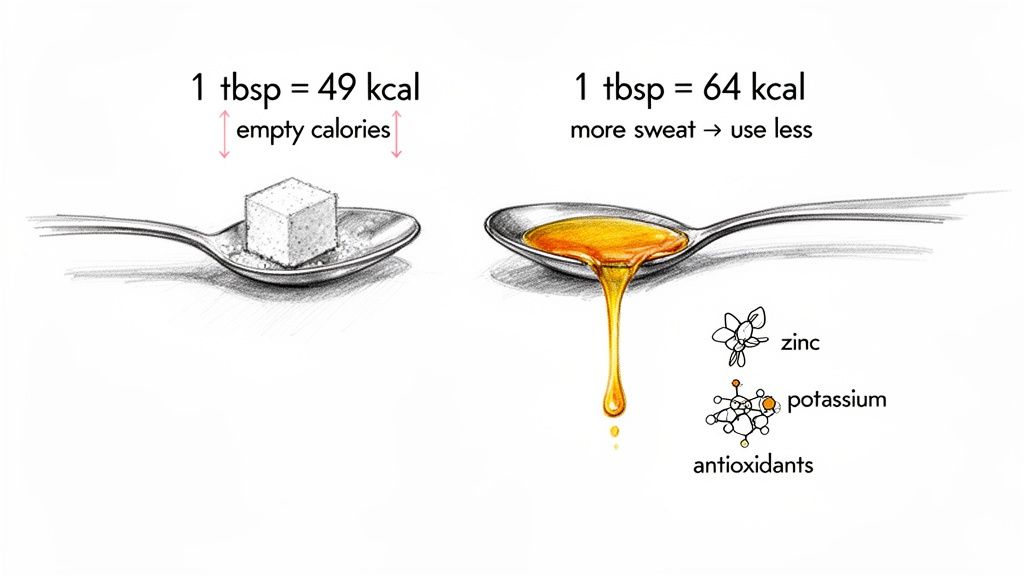
If you just look at the numbers, sugar seems to have the edge. A tablespoon of table sugar clocks in at about 49 calories, while the same amount of honey has around 64 calories. But that simple comparison doesn't tell the whole story.
The key difference is in the experience of sweetness. Honey is naturally sweeter and has a much richer flavor profile than sugar because of its higher fructose content. What does this mean in practice? You can often use less honey to get the same sweet kick.
Think about your morning tea or oatmeal. If you normally add a full teaspoon of sugar, you might find that just half a teaspoon of honey is perfectly satisfying. That small change actually ends up saving you calories.
This is a great example of mindful eating in action—paying attention to flavor and satisfaction instead of just counting numbers. It's a similar principle when you look into the calorie count and health benefits of instant coffee; you have to consider the entire picture, not just a single metric.
Beyond Empty Calories
Here’s where honey really pulls ahead. Refined sugar is the classic example of "empty calories." It's been processed so heavily that all the beneficial compounds from the original sugarcane or sugar beet are completely stripped away, leaving nothing but pure sucrose.
Honey, on the other hand, especially the raw, unfiltered kind, tells a very different story. It’s a natural substance that retains trace amounts of micronutrients that can support your body.
While not a replacement for a balanced diet, honey’s nutritional profile gives it a clear advantage over sugar. Choosing honey means you’re getting more than just sweetness; you’re also getting a complex food with potential health-supporting properties.
Honey’s nutritional makeup gives it a definite edge. It contains small amounts of calcium, zinc, various B vitamins, and even pollen, which all together make up about 2% of its composition. Research suggests that these compounds might contribute to better metabolic health by lowering oxidative stress and helping to raise "good" HDL cholesterol levels.
This is a stark contrast to refined sugar, which offers zero nutritional benefits. When we ask, "is honey as bad as sugar," the nutritional context makes the answer pretty clear. Both are sweeteners that should be used in moderation, but honey brings a little something extra to the table.
The Impact on Gut Health and Inflammation
When we look past calories and blood sugar, the honey versus sugar debate takes us deep into our digestive system. The sweetener you choose can make a real difference to your gut health and inflammation levels—two pillars of your overall well-being that influence everything from your energy and mood to how well your immune system functions.
Refined sugar’s effect on the gut can be pretty disruptive. A diet heavy in processed sugars tends to feed the less helpful bacteria and yeast in your gut microbiome. This imbalance, a condition called dysbiosis, can trigger a host of digestive troubles and contribute to a state of low-grade, chronic inflammation across your entire body.
Think of this persistent inflammation as a quiet, constant stressor on your system. Over time, it can wear you down, leaving you feeling sluggish and generally unwell without any obvious reason.
Honey's Role in a Healthy Gut
This is where honey, especially the raw, unfiltered kind, really starts to look like a compelling alternative. Unlike sugar, which does nothing for your gut bacteria, honey contains compounds that can actively help create a healthier microbial environment.
Raw honey is a natural source of oligosaccharides, a type of prebiotic. You can think of prebiotics as fertilizer for the good bacteria in your gut, such as Bifidobacteria and Lactobacilli. By providing food for these helpful microbes, honey encourages them to thrive, which helps promote a more balanced and resilient gut ecosystem. A flourishing microbiome is crucial for good digestion, absorbing nutrients, and maintaining a strong immune system.
The difference is clear: while refined sugar can disrupt your gut's delicate balance, raw honey contains prebiotics that actively nourish it. This shift from a potentially harmful sweetener to one with beneficial properties is a powerful step toward supporting long-term digestive wellness.
Natural Compounds That Fight Inflammation
Honey also has natural antibacterial and antioxidant properties, which explains its long history in traditional medicine. The flavonoids and phenolic acids found in honey are powerful compounds that help fight oxidative stress, a primary driver of inflammation.
These antioxidants work by neutralizing harmful free radicals, protecting your cells from damage. This anti-inflammatory action can have a calming effect on your entire system.
Let's break down the key differences:
- Refined Sugar: Can promote gut imbalance (dysbiosis), feeds unwanted bacteria, and contributes to chronic inflammation.
- Raw Honey: Contains prebiotics that nourish beneficial gut bacteria, has natural antibacterial properties, and provides antioxidants that help reduce inflammation.
Ultimately, while both are sugars that you should use in moderation, their effects on your internal environment are worlds apart. Choosing honey over sugar isn't just about taste or calories; it's a deliberate choice that can support the complex, interconnected systems that manage your health from the inside out.
Making Mindful Sweetener Choices in Your Daily Life
Knowing the difference between honey and sugar is great, but putting that knowledge into practice is what really matters. This isn't about creating a long list of rigid "do-not-eat" rules; it's about being more mindful and intentional with your choices to support your energy levels, mood, and long-term health.
The goal is to move from theory to reality with small, consistent actions. You start by noticing your current habits, spotting opportunities for smarter swaps, and paying attention to how your body actually feels. You don’t have to get rid of sweetness, but you can choose sweeteners that bring a little more to the table than just empty calories.

Practical Swaps and Portion Guidance
Making smarter choices begins right in your kitchen. Before automatically reaching for the sugar bowl, pause and consider if a touch of honey might work just as well—or even better. Since honey is generally sweeter than table sugar, you'll often find you need less of it to get the same sweet taste, which is a simple way to cut back on your overall sugar intake without even trying.
Here are a few easy swaps to get you started:
- In Your Drinks: Instead of multiple spoonfuls of sugar, try a small drizzle of raw honey in your tea or coffee. It adds a more complex flavor and has a gentler effect on your blood sugar.
- At Breakfast: Ditch the pre-sweetened, flavored yogurts and oatmeals. Start with a plain base and swirl in a little honey yourself. This puts you in full control of the sweetness level.
- For Dressings and Sauces: A surprising number of store-bought sauces and dressings are packed with hidden sugars. Whip up a quick, tasty vinaigrette with olive oil, vinegar, and just a hint of honey for a far healthier alternative.
As you start making these mindful choices, you might also want to explore other simple food swaps for weight loss to build on your momentum.
The most effective strategy isn't about total elimination. It's about consciously replacing sugar with a more beneficial option in the moments that matter most. This builds a healthier habit without making you feel deprived.
Now, let's talk portions. Even with its benefits, honey is still a form of sugar. The American Heart Association advises limiting all added sugars to no more than 6 teaspoons (25 grams) for women and 9 teaspoons (36 grams) for men each day. That total includes everything, so using honey should be a deliberate and measured choice. Think in teaspoons, not tablespoons.
Identifying Triggers and Building Awareness
Let’s be honest—our sugar cravings often have little to do with actual hunger. They're more frequently tied to emotional triggers like stress, boredom, or exhaustion. So, the question "is honey as bad as sugar?" becomes a lot more personal when you ask why you're reaching for something sweet in the first place.
Building this self-awareness is the key to breaking mindless cycles. For one week, try keeping a simple journal. Just jot down when you crave sweets and what was going on in that moment.
- Were you feeling drained after a tough meeting?
- Stressed about an upcoming deadline?
- Simply looking for a little comfort or distraction?
Recognizing your personal patterns is incredibly empowering. Once you connect a feeling to a craving, you can address the root issue instead of just the symptom. Maybe a five-minute walk, a glass of water, or a few deep breaths is what your body truly needs, not the sugar. This isn’t about restriction; it's about giving yourself what you really need.
Common Questions About Honey and Sugar
Even when you know the basic differences, practical questions always pop up when choosing between honey and sugar. Let's dig into some of the most common ones to help you make choices that feel right for you and your health.
We’ll talk about moderation, why honey quality is so important, and some crucial things to keep in mind for certain health conditions and for little ones.
If Honey Is Healthier, Can I Eat as Much as I Want?
Not quite. Even with its slight nutritional edge, honey needs to be enjoyed in moderation. It has a lower glycemic index and a few extra nutrients, but at the end of the day, your body still processes its fructose and glucose as sugar. It’s also a concentrated source of calories.
The American Heart Association gives a clear guideline for all added sugars: no more than 6 teaspoons (25 grams) a day for women and 9 teaspoons (36 grams) for men. That limit includes everything, honey included.
The goal is to use it mindfully, maybe swapping it in for refined sugar, not just adding it on top of what you already eat.
Does the Type of Honey I Use Really Matter?
Absolutely. The kind of honey you choose can make a big difference. Raw, unprocessed honey is your best bet because it hasn't been heated or heavily filtered, meaning it holds onto more of its natural enzymes, antioxidants, and pollen.
As a general rule, darker honeys like Manuka or buckwheat usually pack a bigger antioxidant punch than their lighter-colored cousins.
A lot of the honey you see on supermarket shelves is pasteurized, which involves heating it to extend its shelf life. Unfortunately, this process can destroy some of the very nutrients you’re looking for. To get the good stuff, always check the label for words like "raw" or "unfiltered."
Is Honey Safe for People with Diabetes?
For someone managing diabetes, honey can be a slightly better choice than table sugar, but it requires serious caution. Because it has a lower glycemic index, it might not send your blood sugar soaring quite as fast.
But make no mistake, it will still raise your blood glucose levels. If you have diabetes, you must count honey as a carbohydrate, keep portions very small, and carefully monitor your levels afterward.
It's absolutely essential to talk with your doctor or a registered dietitian before changing how you use sweeteners, especially when managing a condition like diabetes.
Why Is Honey Unsafe for Infants Under One Year Old?
This is a critical one: never give honey to a baby under 12 months old. The reason is that honey can carry spores of a bacteria called Clostridium botulinum.
A baby’s digestive system isn’t mature enough yet to fight off these spores, which can then grow and release toxins. This can lead to a rare but life-threatening illness called infant botulism.
Older children and adults have developed enough to handle these spores without a problem. So, to be safe, avoid all honey—even in baked goods—for any child under the age of one.
If you're tired of guessing and want to understand how your food choices truly affect your body and mood, Superbloom can help. Our AI-powered coach provides personalized insights to help you build healthier habits without the stress of calorie counting. Start your journey toward mindful eating with Superbloom today.