
8 Deliciously Simple Low Calorie Quick Meals for 2026
In a world that demands constant productivity, finding time for nourishing meals can feel like another item on an endless to-do list. The common solution, strict diets and meticulous calorie counting, often adds more stress than it relieves, leading to burnout and a return to old habits. But what if you could achieve your wellness goals by focusing on satisfaction and simplicity, not restriction?
This guide shifts the perspective from numbers to nourishment. We're not just sharing recipes; we're offering foundational meal templates for low calorie quick meals that build confidence and consistency. Each idea is designed to be fast, flexible, and flavorful, helping you understand what truly keeps you full and energized.
We'll explore the behavioral science behind why these simple systems work, helping you build sustainable habits that fit seamlessly into your busy life. For those looking to deepen this understanding, tools like an AI-powered nutrition coach can provide personalized insights. They help connect your meal choices to your energy levels, cravings, and emotional triggers, turning every meal into a learning opportunity instead of just another task to complete.
1. Sheet Pan Protein & Veggie Meals
Sheet pan meals are the busy professional's answer to getting a home-cooked, low-calorie quick meal on the table with almost no cleanup. The concept is simple: combine a lean protein source with a variety of non-starchy vegetables, season generously, and roast everything together on a single parchment-lined baking sheet. This method minimizes added fats and maximizes flavor through roasting, which caramelizes the vegetables and locks in moisture.
The beauty of this approach is its "set it and forget it" nature. Once in the oven, it requires no active cooking, freeing you up for 25-30 minutes. This makes it an ideal weeknight dinner solution that naturally encourages balanced portions without the need for meticulous calorie counting.
How to Build Your Perfect Sheet Pan Meal
A successful sheet pan meal balances cooking times and flavors. Start with a lean protein and pair it with vegetables that cook in a similar amount of time.
- Lemon Herb Chicken: Combine chicken breast pieces with dense Brussels sprouts and bell peppers.
- Garlic Salmon & Asparagus: Pair quick-cooking salmon fillets with asparagus spears and cherry tomatoes.
- Ginger-Soy Tofu: Use extra-firm tofu with broccoli florets and snap peas for a plant-based option.
- Turkey Meatballs: Arrange pre-made or homemade turkey meatballs with sliced zucchini and mushrooms.
Key Insight: The visual ratio of protein to vegetables on the pan is a powerful tool for mindful eating. Aim for at least half of your pan to be covered in colorful vegetables to boost fiber and nutrient intake, which are crucial for satiety.
Actionable Tips for Success
To make this a go-to meal, focus on efficiency and flavor.
- Maximize Flavor, Not Calories: Don't be shy with dried herbs, spices, garlic powder, onion powder, and smoked paprika. These add immense flavor without contributing to the calorie count, making the meal more satisfying.
- Use Parchment Paper: This is non-negotiable for easy cleanup. It also reduces the need for excess oil, as it prevents food from sticking to the pan.
- Batch Cook Smart: Double the recipe and cook it on two separate sheet pans. This provides ready-to-eat lunches or dinners for the next day without forcing you to eat the same thing for a week straight.
2. Buddha Bowls with Balanced Macros
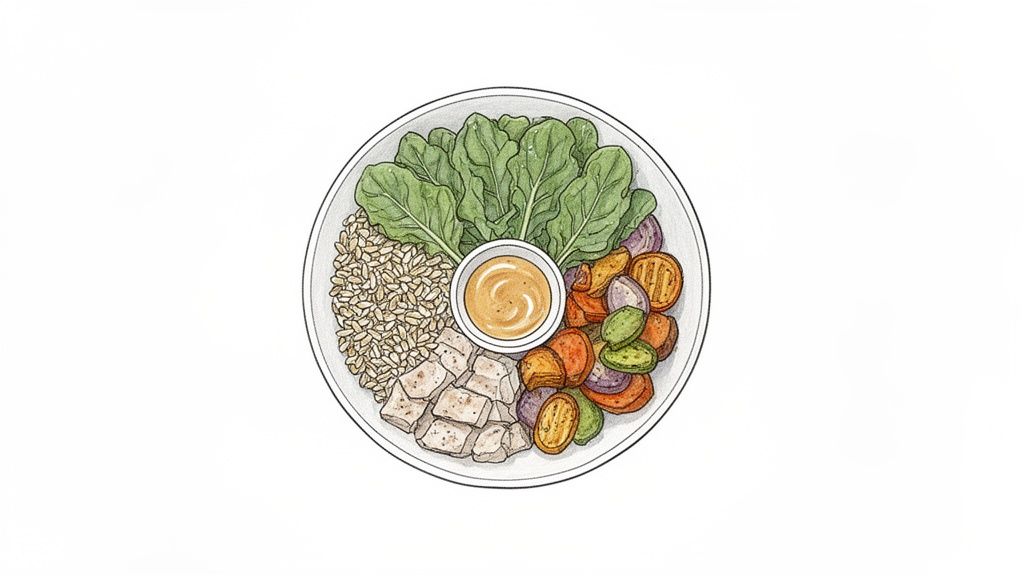
Buddha bowls are a visually engaging approach to building low calorie quick meals that prioritize macronutrient balance. The concept involves assembling a bowl with a base of whole grains or leafy greens, then topping it with lean protein, colorful vegetables, a healthy fat source, and a flavorful dressing. This method shifts the focus from counting calories to creating a satisfying and nutrient-dense meal.
The visual appeal of a colorful bowl encourages mindful eating and makes balanced portions intuitive. By seeing each component clearly, you can easily adjust the ratios of protein, carbs, and fats to fit your hunger and energy needs, making it a powerful tool for building sustainable eating habits without tedious tracking.
How to Build Your Perfect Buddha Bowl
A well-constructed Buddha bowl provides a complete meal with varied textures and flavors. You can mix and match components based on what you have available, which prevents food waste and keeps meals interesting.
- Quinoa & Chickpea: Start with a quinoa base, then add roasted chickpeas, sweet potato cubes, and kale, all drizzled with a tahini dressing.
- Chicken & Avocado: Use brown rice as a base, topped with grilled chicken strips, steamed broccoli, and a slice of avocado with a soy-ginger sauce.
- Tofu & Edamame: For a plant-based option, build on a bed of spinach with baked tofu, edamame, cucumber ribbons, and a sesame-lime dressing.
- Bean & Feta: Combine a farro base with white beans, roasted carrots, and crumbled feta, finished with a simple lemon-herb vinaigrette.
Key Insight: Preparing components separately allows for maximum flexibility. Cook a batch of grains, roast a tray of vegetables, and prep a protein source. This turns daily meal assembly into a quick 5-minute task.
Actionable Tips for Success
To make Buddha bowls a reliable part of your routine, concentrate on preparation strategies and mindful consumption.
- Reduce Decision Fatigue: Settle on 3-4 trusted bowl combinations that you enjoy. Having a few go-to recipes eliminates the mental effort of deciding what to eat each day.
- Keep Dressing Separate: Store your dressing in a different container and add it just before eating. This keeps greens crisp and helps you consciously portion out higher-calorie sauces.
- Prep Components, Not Meals: Instead of assembling five identical bowls for the week, store each ingredient in its own container. This allows you to create different combinations daily, preventing meal boredom.
3. High-Protein Egg-Based Breakfasts
Starting your day with a high-protein breakfast is a powerful strategy for managing hunger and maintaining energy levels, and eggs are an exceptionally efficient way to do it. Nutrient-dense, affordable, and incredibly quick to prepare, egg-based meals provide a solid foundation of protein and healthy fats. This combination helps stabilize blood sugar and promotes satiety, reducing the likelihood of mid-morning cravings for high-calorie snacks.
A protein-forward breakfast sets a mindful tone for the rest of the day. By front-loading your protein intake, you support muscle maintenance and metabolic function, making it a simple yet effective component of any low-calorie meal plan.

How to Build Your Perfect Egg-Based Meal
The versatility of eggs allows for endless combinations that keep breakfast interesting and packed with nutrients. Focus on pairing eggs with vegetables and a source of fiber.
- Veggie-Packed Frittata: Combine eggs with spinach, mushrooms, and feta for a meal you can batch-cook and slice for several days.
- Morning Scramble: A quick scramble with diced tomatoes, bell peppers, and fresh herbs is ready in under 10 minutes.
- Grab-and-Go Egg Muffins: Bake a dozen muffins with broccoli, cheddar, and diced turkey sausage for a portable option.
- Flavorful Shakshuka: Poach eggs directly in a spiced tomato and chickpea sauce for a hearty, fiber-rich breakfast.
Key Insight: A protein-heavy breakfast can significantly influence your eating patterns for the entire day. Journaling if a high-protein breakfast reduces your afternoon cravings or stress-eating tendencies can reveal a powerful connection between your morning meal and your overall daily food choices.
Actionable Tips for Success
To integrate egg-based breakfasts into your routine, prioritize convenience and nutrient density.
- Batch-Cook for the Week: Prepare a batch of egg muffins or a large frittata on Sunday. This eliminates morning decision-making and ensures you have a healthy, grab-and-go option that prevents you from skipping meals.
- Add Dark Leafy Greens: Stir a handful of spinach or chopped kale into your scrambles or frittatas. This is an easy way to boost vitamin and mineral content without adding noticeable calories, increasing the meal's overall nutrient density.
- Pair with Whole Grains: Serve your eggs with a slice of whole-grain toast or a side of oatmeal. The added fiber works with the protein to extend satiety, keeping you full and focused until your next meal.
4. Slow Cooker & Instant Pot Lean Stews
Slow cooker and Instant Pot stews are the ultimate solution for hands-off cooking, delivering a deeply flavorful, low-calorie quick meal with minimal effort. The method involves combining lean proteins, vegetables, and a flavorful broth in a single pot and letting the appliance do all the work. This slow, low-heat cooking or rapid pressure cooking breaks down ingredients beautifully, creating a rich taste without the need for added oils or fats.
This approach is perfect for those with packed schedules, as it requires only about 10-15 minutes of active prep time. Once the ingredients are in the pot, you are free for hours. Beyond convenience, the simmering aromas create an anticipatory satisfaction throughout the day, which can support more mindful eating habits by the time you sit down for your meal.
How to Build Your Perfect Lean Stew
A great stew focuses on a balance of protein, fiber, and aromatic spices. Start with a lean protein and build layers of flavor with vegetables and seasonings.
- Tuscan White Bean & Kale: Combine chicken breast, cannellini beans, chopped kale, and carrots in a savory chicken broth with rosemary.
- Vietnamese-Inspired Pho: Use lean beef strips with star anise, cinnamon, and ginger in a beef broth, serving with fresh herbs.
- Lentil & Vegetable Stew: A plant-based powerhouse with brown lentils, sweet potatoes, and spinach seasoned with cumin and turmeric.
- Thai Coconut Curry: Pair shrimp with bell peppers and bamboo shoots in a light coconut milk and red curry paste base.
Key Insight: The broth in these stews is a powerful tool for satiety. Liquid-based meals increase volume and help you feel full on fewer calories. The aromatic spices also heighten sensory satisfaction, making the meal feel more indulgent and complete.
Actionable Tips for Success
To make this a reliable part of your routine, prioritize prep and flavor.
- Prep the Night Before: Chop your vegetables and measure out your spices the evening prior. This eliminates morning decision fatigue and reduces your total prep time to just a few minutes before you start your day.
- Embrace Aromatic Spices: Use ingredients like ginger, garlic, cumin, coriander, and bay leaves generously. These add complex flavor and a satisfying aroma without contributing any significant calories.
- Use Your Freezer: Double the recipe and freeze half in individual portions. Stews and soups freeze exceptionally well, giving you an instant, healthy meal for a future busy day.
5. Overnight Oats with Protein Add-ins
Overnight oats are the ultimate no-cook breakfast solution, providing a nutrient-dense, low-calorie quick meal that's ready when you wake up. The concept involves soaking rolled oats in a liquid base overnight, allowing them to soften into a creamy, pudding-like consistency. By preparing it in advance, you eliminate morning decision-making and ensure you start the day with a balanced meal that supports stable energy levels.
This method is ideal for busy mornings, as it requires just five minutes of prep the night before. The combination of soluble fiber from oats and added protein creates a powerful duo for satiety, keeping you full and focused until your next meal and reducing the likelihood of mid-morning cravings.
How to Build Your Perfect Overnight Oats
A great jar of overnight oats balances flavor, texture, and nutrition. Start with a base of rolled oats and a liquid, then layer in protein and flavorings.
- Chocolate Peanut Butter: Mix oats with milk, chocolate protein powder, a spoonful of peanut butter powder, and top with sliced banana in the morning.
- Berry Coconut: Combine oats with Greek yogurt, coconut milk, chia seeds, and a handful of mixed berries.
- Apple Cinnamon: Stir together oats, almond milk, vanilla protein powder, diced apple, a dash of cinnamon, and chopped walnuts.
- Tropical Mango: Use unsweetened coconut milk, vanilla or plain protein powder, diced mango, and a sprinkle of shredded coconut.
Key Insight: The ratio of liquid to oats is crucial for texture. Start with a 1:1 ratio (e.g., 1/2 cup oats to 1/2 cup liquid) and adjust based on your preference. Using Greek yogurt as part of your liquid base is a simple way to increase protein and creaminess.
Actionable Tips for Success
To make this a consistent part of your routine, focus on preparation and personalization.
- Prepare Jars in Batches: Make 3-4 jars at once on Sunday night. This front-loads the effort and removes the daily task of meal prep, making it easier to stick with the habit.
- Add Protein Strategically: A scoop of protein powder is an easy way to boost the meal's staying power. To enhance the nutritional profile of your overnight oats, understanding when to integrate protein can be beneficial. Find out more about optimizing your protein intake.
- Use Frozen Fruit: Frozen fruit is cost-effective and releases liquid as it thaws overnight, adding natural sweetness and flavor to the oats without extra sugar.
6. Lettuce Wrap Meals with Flavorful Fillings
Lettuce wraps swap carb-heavy tortillas or bread for crisp, refreshing lettuce leaves, creating a handheld meal that is both light and satisfying. This approach naturally lowers the calorie density of your meal while increasing your intake of hydrating vegetables. The focus shifts from the wrapper to a flavorful, protein-rich filling, making it an excellent strategy for a low-calorie quick meal that doesn't feel like a sacrifice.
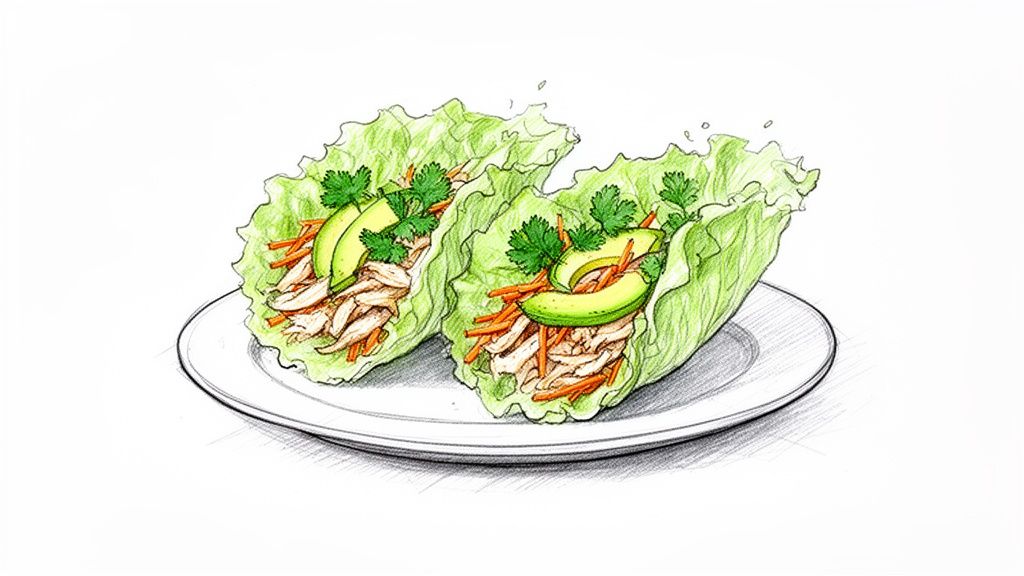
The tactile experience of building and eating these wraps encourages slower, more mindful eating. Fillings can be prepared in just 15-20 minutes, making this a perfect option for busy weeknights when you crave something fresh and crunchy. It’s a simple way to manage portions visually without needing to measure everything meticulously.
How to Build Your Perfect Lettuce Wrap Meal
A great lettuce wrap relies on a sturdy leaf and a well-seasoned filling. Use butter lettuce for its cup-like shape or the inner hearts of romaine for a sturdy, crunchy boat.
- Vietnamese-Style Turkey: Sauté ground turkey with fish sauce, lime juice, and mint, then top with shredded carrots.
- Mediterranean Chickpea: Combine mashed chickpeas with chopped cucumber, feta, lemon juice, and a dollop of hummus.
- Asian-Inspired Chicken: Use shredded rotisserie chicken tossed with a simple ginger, soy, and sesame dressing.
- Taco Seasoned Beef: Fill wraps with seasoned ground beef, salsa, and a slice of avocado for a healthier taco night.
Key Insight: The hands-on, assembly-required nature of lettuce wraps can curb mindless overeating. The physical act of filling and wrapping each bite slows you down, giving your brain more time to register fullness signals.
Actionable Tips for Success
To make this meal a regular part of your routine, focus on preparation and satiety.
- Prep Fillings in Advance: Cook your protein and chop your vegetables ahead of time. Store them in separate containers so you can assemble your wraps in minutes when hunger strikes.
- Use Sturdy Leaves: Choose butter, iceberg, or romaine lettuce hearts. These varieties hold their shape and provide a satisfying crunch without falling apart.
- Add Healthy Fats for Satiety: Incorporate a small amount of avocado, tahini-based dressing, or chopped nuts into your filling. These fats increase satisfaction and help keep you full longer, preventing post-meal cravings.
7. Mediterranean Grain Salads with Legumes
Mediterranean grain salads are a powerhouse of nutrition, offering a satisfying, low-calorie quick meal that requires no cooking at assembly time. The core idea is to combine a chewy whole grain with a plant-based protein like legumes, then add crunchy vegetables and a vibrant herb-based vinaigrette. This approach creates a meal high in both fiber and protein, which are essential for long-lasting satiety and stable energy levels.
The convenience of these salads is exceptional for meal prepping. By preparing the components ahead of time, you can assemble a fresh, flavorful meal in minutes. This makes it a perfect solution for packed lunches or fast weeknight dinners, helping you avoid less healthy convenience foods without sacrificing taste or texture.
How to Build Your Perfect Grain Salad
A well-constructed grain salad balances texture, flavor, and nutrients. The key is to use a simple formula: grain + legume + vegetables + dressing.
- Farro & Chickpea Delight: Mix cooked farro with chickpeas, cucumber, tomato, red onion, and a zesty lemon-herb dressing.
- Quinoa Tabbouleh Twist: Combine quinoa with finely chopped parsley, mint, pomegranate seeds, and walnuts for a modern take on the classic.
- Barley & Roasted Beet Salad: Pair earthy barley with roasted beets, white beans, crumbled goat cheese, and a light balsamic vinaigrette.
- Greek Chickpea & Grain Bowl: Use any grain base with chickpeas, feta, Kalamata olives, and a simple oregano dressing.
Key Insight: Store the dressing separately from the salad components until you're ready to eat. This prevents the greens and grains from becoming soggy and allows you to control the amount of dressing used, which is a simple way to manage calorie intake without measuring.
Actionable Tips for Success
To make this a reliable meal option, focus on smart preparation and flavor combinations.
- Prep Grains and Legumes in Batches: Cook a large batch of your chosen grain (like quinoa or farro) and legumes (like lentils or chickpeas) at the beginning of the week. Store them in the fridge for instant salad assembly.
- Vary Seasonal Vegetables: Keep the meal interesting by rotating the vegetables based on what's in season. This not only adds novelty but also maximizes the diversity of vitamins and minerals you consume.
- Master the Vinaigrette: A simple mix of olive oil, lemon juice or vinegar, and dried herbs is all you need. Experiment with the ratio of acid to oil to find a balance that provides great flavor without excess fat.
8. Quick Stir-Fry Bowls with Cauliflower Rice
Stir-fry bowls are a fantastic solution for a satisfying, low calorie quick meal that comes together in under 20 minutes. The method involves quickly cooking lean proteins and colorful vegetables in a wok or large skillet over high heat with a flavorful sauce. Using cauliflower rice instead of traditional rice boosts the vegetable content and lowers the overall calorie and carbohydrate load, creating a high-volume meal that fills you up without weighing you down.
This approach is perfect for busy weeknights when decision fatigue is high. The formulaic nature of a stir-fry (protein + veggies + sauce) reduces mental stress, while the rapid cooking process delivers a delicious, nutrient-dense meal almost instantly. It’s an effective way to pack in nutrients while keeping prep time to a minimum.
How to Build Your Perfect Stir-Fry Bowl
A great stir-fry depends on a good combination of textures and flavors. Choose a quick-cooking protein and pair it with crisp-tender vegetables.
- Shrimp & Broccoli: Combine shrimp with broccoli florets and a simple ginger-garlic sauce.
- Chicken & Snap Pea: Use thinly sliced chicken with crisp snap peas, shredded carrots, and a sesame-soy sauce.
- Spicy Tofu: Pan-fry cubes of extra-firm tofu with bok choy, mushrooms, and a spicy chile-garlic sauce.
- Ground Turkey: Brown ground turkey with sliced bell peppers and onions, finishing with coconut aminos for a soy-free option.
Key Insight: The secret to a non-soggy, flavorful stir-fry is high heat and constant motion. This sears the ingredients, developing deep flavor and keeping vegetables crisp. Don't crowd the pan, as this will steam the food instead of searing it.
Actionable Tips for Success
To make stir-fries a reliable weeknight staple, focus on preparation and aromatic elements.
- Prep First, Cook Second: A stir-fry cooks incredibly fast. Have all your vegetables chopped, protein ready, and sauce mixed before you turn on the heat. This "mise en place" technique is crucial for a stress-free experience.
- Boost Aromatics: Start by stir-frying aromatics like minced garlic, grated ginger, and sliced scallions for 30 seconds before adding other ingredients. This simple step creates a powerful flavor base that makes the meal feel more satisfying.
- Make Extra for Lunch: Intentionally make 1.5 times the amount you need for dinner. A stir-fry bowl makes an excellent next-day lunch, saving you time and preventing less healthy, last-minute food choices.
8 Quick Low‑Calorie Meal Options Comparison
From Ideas to Action: Building Your Sustainable Eating System
The true measure of a successful eating strategy is not its perfection, but its consistency and adaptability. The low calorie quick meals outlined in this guide are more than just recipes; they are flexible frameworks designed to reduce friction in your busy life and build positive momentum. From the simplicity of a Sheet Pan Protein & Veggie bake to the satisfying balance of a Mediterranean Grain Salad, each idea is a starting point, not a rigid rule.
The goal is to move beyond simply following instructions and begin building a system that feels uniquely yours. This process starts with curiosity and self-awareness.
Turning Concepts into Sustainable Habits
True change happens when new actions become second nature. Instead of attempting to overhaul your entire diet at once, focus on small, strategic integrations that deliver immediate benefits.
- Start Small, Win Big: Choose just one or two meal templates that genuinely appeal to you and feel achievable this week. Don't pick what you think you should eat; pick what you want to eat from this list.
- Notice the Non-Scale Victories: Pay attention to how these meals make you feel. Does having Overnight Oats ready to go reduce your morning stress? Does a quick Stir-Fry Bowl prevent you from ordering takeout after a long day? These small wins are the real currency of lasting change.
- Systematize Your Success: Once a meal template works for you, find ways to make it even easier. To efficiently integrate these low-calorie quick meal concepts into your weekly routine, exploring macro-focused healthy meal prep ideas can be incredibly effective. Pre-chopping vegetables, batch-cooking grains, or mixing a large container of a go-to sauce can turn a 20-minute meal into a 5-minute assembly job.
Key Takeaway: The most effective "diet" is the one you can stick with because it simplifies your life, rather than complicating it. These meal systems are designed to give you back time and mental energy.
Ultimately, mastering quick, nourishing meals is about more than just managing calories. It's about creating a life where feeling good is the default. It's about having the energy to be present with your family, the focus to excel at your work, and the confidence that comes from taking excellent care of yourself. The path to healthier eating is not about restriction; it's about building an environment where the best choices become the easiest ones.
Ready to connect the dots between your food, mood, and energy levels? Superbloom acts as your personal AI nutrition coach, helping you turn these meal ideas into a powerful, data-driven system for your well-being. Start logging your meals to receive personalized insights that guide you toward your goals without the guesswork. Discover your unique path to wellness with Superbloom today.