
Mounjaro Side Effects: Your Complete 2026 Guide

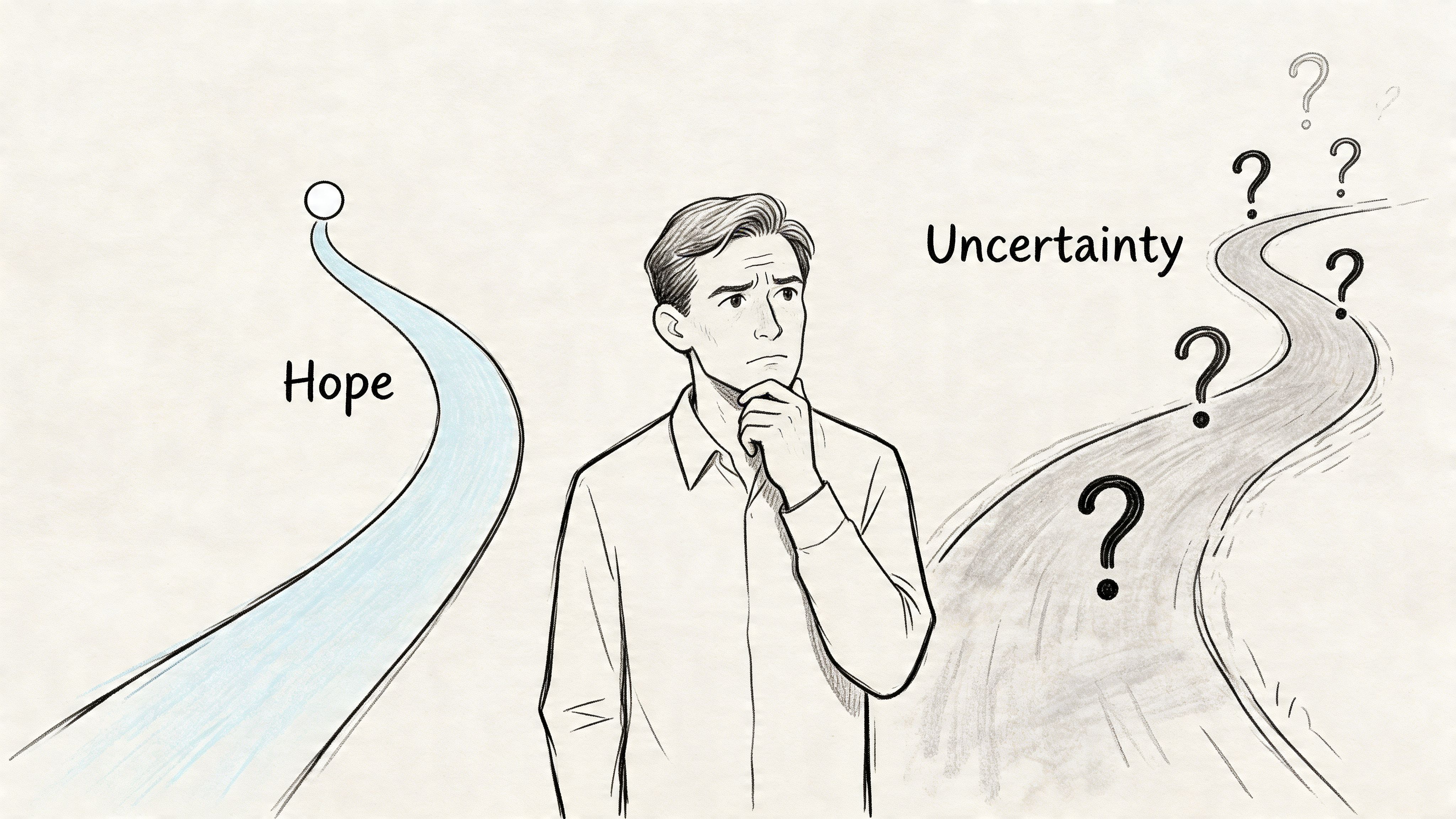
You may be sitting with two tabs open right now. One has success stories about better blood sugar control or weight loss. The other has search results for mounjaro side effects. That mix of hope and hesitation is completely reasonable.
Readers don't want a sugar-coated answer. They want the honest version. What might happen? What feels normal? What deserves a call to the doctor? And for people who already use food to cope with stress, what happens when a medication changes appetite, cravings, and even the emotional pull of eating?
Considering Mounjaro A Guide to What to Expect
Maria is a common example. She has type 2 diabetes, a demanding job, and a pattern she knows well. Stress builds, meals get rushed, and late at night she wants comfort more than nutrition. Her doctor mentions Mounjaro. She feels interested, but also uneasy. She wonders whether the medicine will make her nauseated, whether she’ll be able to work normally, and whether changing her appetite will feel relieving or strangely unsettling.
That tension matters. Mounjaro can help many people, but every medication asks for a tradeoff. The more clearly you understand that tradeoff, the better your decision will be.
What people often get wrong
Some readers assume side effects mean the drug is “bad” for them. Others assume discomfort is just something they have to tough out. Neither view is very helpful.
A better approach is to sort symptoms into three buckets:
Expected and manageable
Mild nausea, appetite changes, indigestion, or constipation can happen as your body adjusts.Disruptive but not necessarily dangerous
Ongoing vomiting, trouble eating enough, or worsening fatigue may mean the dose or timing needs attention.Red flags
Severe abdominal pain, signs of dehydration, allergic symptoms, or major mood changes deserve prompt medical guidance.
Mounjaro isn't just a weight or diabetes medication experience. It's also an adjustment experience.
If you're considering it, the goal isn't to predict every symptom perfectly. It's to know what patterns are common, what patterns are serious, and what questions to bring to your clinician. That turns a vague fear into a practical conversation.
Why Mounjaro Causes Side Effects A Simple Explanation
Mounjaro acts on GLP-1 and GIP receptors, which changes how your body handles food, fullness, and blood sugar. That is the benefit people are looking for. It is also the reason side effects can happen.
One of the biggest changes involves delayed gastric emptying. That term sounds technical, but the idea is simple. Food leaves the stomach more slowly than it did before. When your stomach empties at a slower pace, you may feel full sooner, stay full longer, and lose interest in eating as much.
That same slowdown can also create symptoms that feel uncomfortable, especially early on or after a dose increase. A stomach that is processing food more slowly can feel heavy, unsettled, or overly full. That helps explain why some people notice:
- Nausea
- Indigestion or burping
- Vomiting
- Constipation or diarrhea
A useful way to understand this is to picture your digestive system as adjusting to a new tempo. Meals, hunger signals, and bathroom patterns may all shift at once. During that adjustment, the body can send mixed messages. You may feel physically full but emotionally unsure about what your appetite is doing, especially if stress or emotional eating was part of your routine before starting the medication.
Why side effects often show up early
Side effects often appear when treatment begins or when the dose goes up because your body is being asked to adapt again. That adjustment period can be a little like switching to a slower conveyor belt in a busy kitchen. Food is still moving through. It is just moving at a different speed, and your stomach, intestines, and brain all need time to recalibrate.
According to GoodRx’s explanation of common Mounjaro effects, Mounjaro’s gastrointestinal side effects are largely related to its dual GLP-1 and GIP action and delayed gastric emptying, with symptoms often peaking during dose escalation and easing over time as the body adapts.
Practical rule: A “behind” or overly full feeling after a dose increase often means your digestive system is adjusting to a slower pace. If that feeling becomes intense, persistent, or makes it hard to eat or drink, contact your clinician.
There is another layer many people do not expect. These body changes can affect mood and coping habits. If food has been one of your main stress relievers, a sudden drop in appetite can feel emotionally strange, not just physically different. Some people describe this as feeling disconnected from their usual comfort routine. Others feel irritable, flat, or anxious because their normal eating cues have changed. That does not mean the medication is harming your mental health, but it does mean your emotional adjustment deserves attention too.
Why hydration matters so much
Hydration matters because slower digestion, smaller meals, nausea, vomiting, or diarrhea can all reduce how much fluid you take in. Dehydration can sneak up quickly, especially if you are eating less and assuming that is the whole story. In more serious cases, poor fluid intake can put extra strain on the kidneys.
This is why clinicians often start low and raise the dose gradually. It gives your body more time to adapt. It also gives you time to notice patterns early, such as whether symptoms flare after large meals, whether stress makes nausea feel worse, or whether you are skipping fluids without realizing it.
For many people, the goal is not to force their way through side effects. The goal is to read the signals clearly and respond early with smaller meals, steady fluids, slower eating, and a check-in with the prescriber if symptoms start to interfere with daily life.
Common Mounjaro Side Effects You Might Experience
You start Mounjaro, eat a meal that would usually feel normal, and an hour later your stomach feels unsettled, your appetite is oddly quiet, or you realize food is no longer giving the same comfort it used to. That experience can be confusing. It is also common.
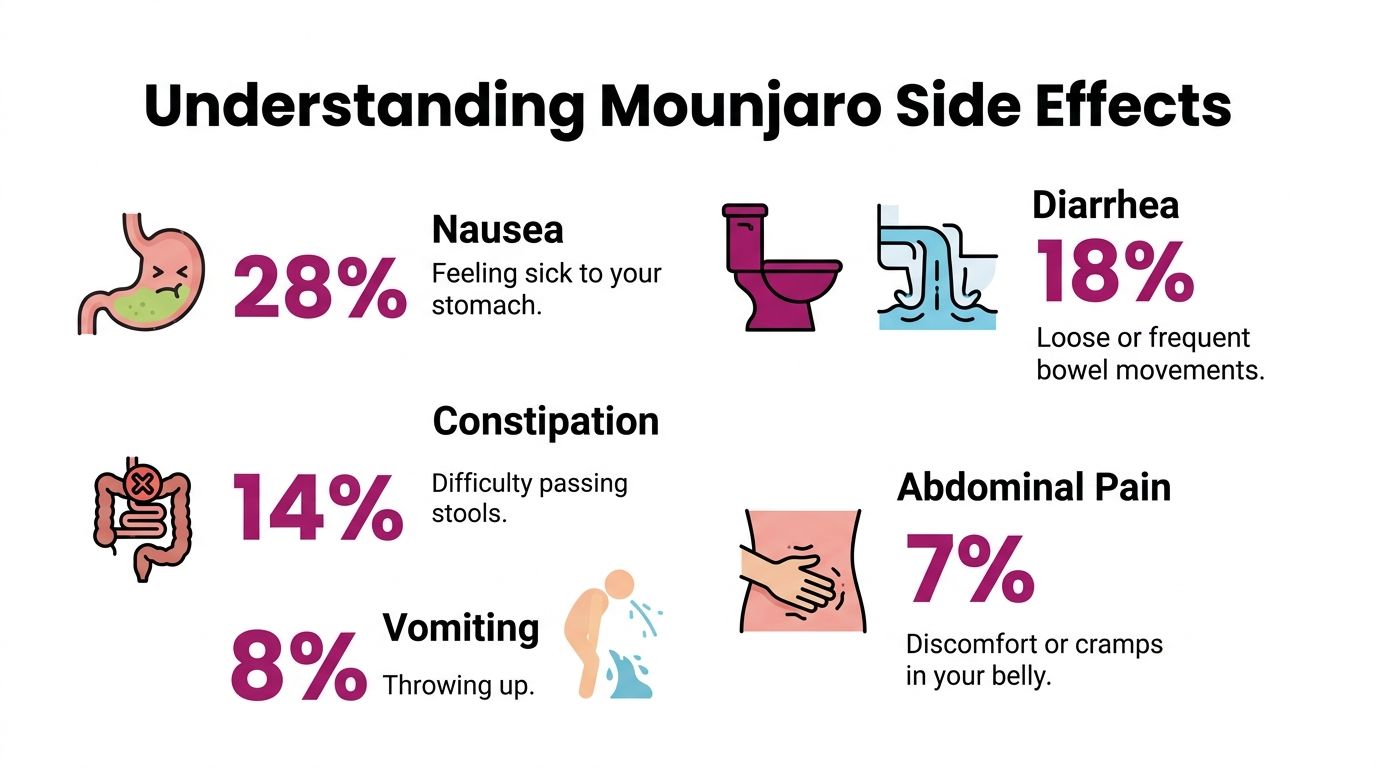
The side effects people notice most often are gastrointestinal, meaning they affect the stomach and intestines. In clinical trials, nausea, diarrhea, decreased appetite, vomiting, constipation, indigestion, and abdominal pain were reported more often than with placebo, and they tended to become more common at higher doses. These symptoms were generally described as mild to moderate and were more likely when starting treatment or increasing the dose, according to the FDA Mounjaro trial snapshot data.
How these symptoms often feel in real life
Medical terms can sound tidy. Real life usually does not.
Nausea
This often feels like a lingering queasy fullness, especially after eating too much or eating quickly. Some people feel turned off by foods they normally enjoy.Diarrhea
Loose stools can be unpredictable. That can make errands, workdays, or meals away from home feel stressful.Constipation
Slower digestion can mean fewer bowel movements, harder stools, bloating, or a heavy, backed-up feeling.Decreased appetite
Eating less may seem helpful at first, but it can also lead to low energy, lightheadedness, or skipped meals that set off stress eating later in the day.Vomiting or indigestion
These symptoms can interrupt sleep, make hydration harder, and leave you feeling wiped out.
A simple comparison helps here. Your digestive system is working more like a slower conveyor belt. If too much food arrives at once, especially rich or greasy food, symptoms are more likely to show up.
What timing usually looks like
For many patients, side effects are strongest during the first few weeks or soon after a dose increase. Then they ease as the body adjusts. The pattern matters as much as the symptom itself.
Try tracking three things for a few days. When the symptom happens, what you ate before it, and whether stress was high that day. People who struggle with emotional eating often notice that physical appetite goes down before the urge to eat for comfort does. That mismatch can feel frustrating or even emotionally unsettling.
If you want a practical starting point, focus on gentler meals, slower eating, and habits that improve digestion naturally. Then bring your notes to your prescriber. A clear pattern, such as symptoms fading, staying steady, or getting worse, gives your doctor much more to work with than a simple “I don’t feel great.”
Managing Side Effects with Diet and Habit Changes
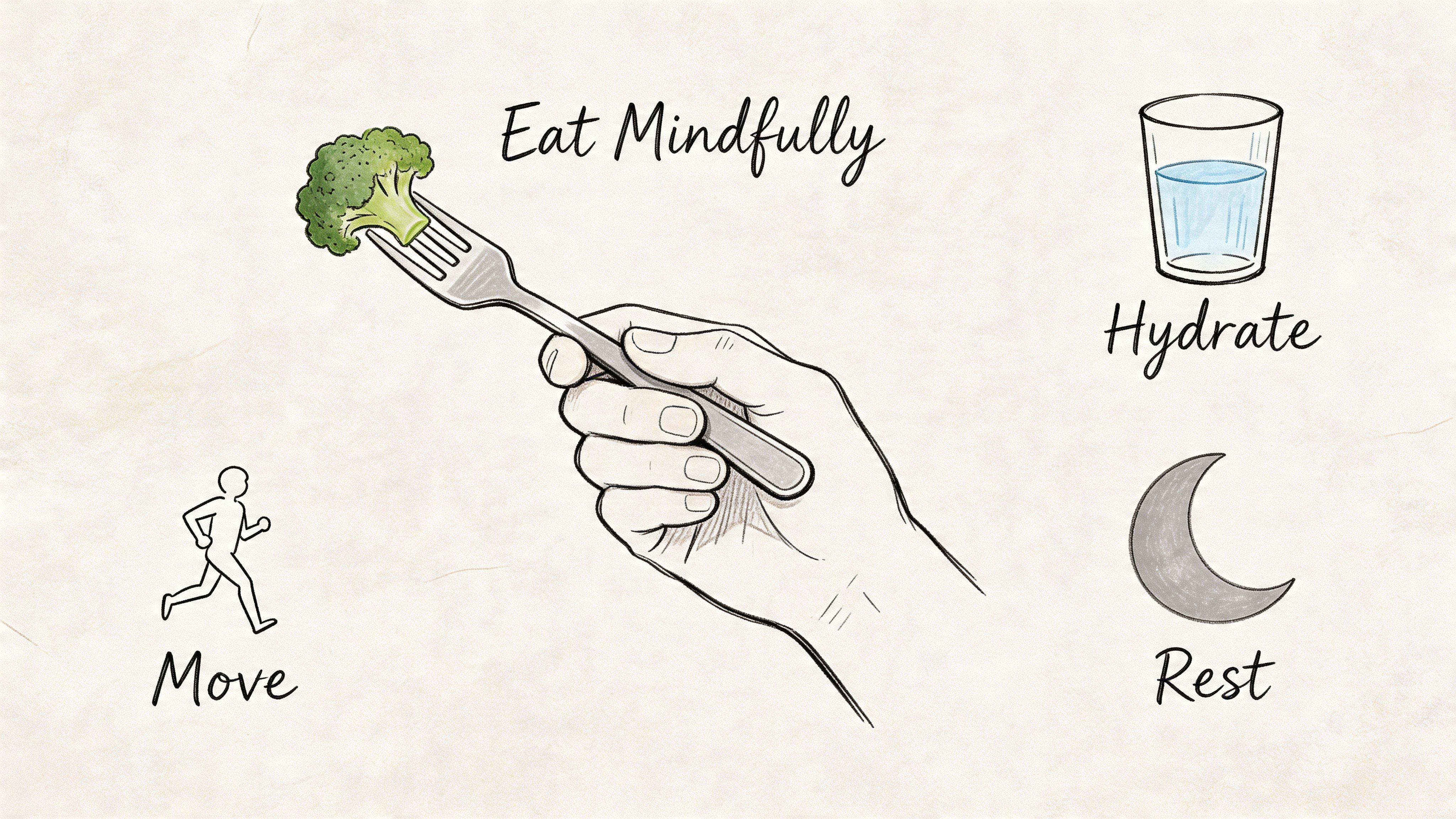
Small habits matter more than heroic willpower. If digestion is moving more slowly, your routine has to become a little gentler and more deliberate.
Start by shrinking the load on your stomach
A large, rich meal can feel fine before Mounjaro and miserable after it. Think of your stomach like a sink draining more slowly than usual. If you dump in too much at once, it backs up.
Try these adjustments:
Use smaller meals
Smaller portions usually sit more comfortably than one or two heavy meals.Eat slowly
When you eat fast, you often notice fullness too late.Go lighter on high-fat meals
Greasy or heavy foods can feel especially unpleasant when digestion is already slowed.Keep meals simple during rough days
If nausea flares, choose foods that feel easier to tolerate rather than forcing a “perfect” meal.
Use habit tracking, not guesswork
A short food and symptom log can be more useful than memory. Write down what you ate, when you ate, how quickly you ate, and what symptoms followed. Patterns often show up fast. Maybe coffee on an empty stomach triggers nausea. Maybe large dinners lead to overnight reflux or morning queasiness.
For readers who want more non-medication strategies to improve digestion naturally, that guide can help you think through basics like meal rhythm, food choices, and digestion-supportive habits.
Try protein first
If appetite drops, many people end up eating too little overall or reaching for whatever seems easiest. Starting meals with protein can help make smaller meals more nutritionally useful and may reduce the up-and-down feeling that comes from eating mostly quick carbohydrates.
If your appetite is low, don't aim for a “normal” meal. Aim for a manageable one that still covers the basics.
Examples include eggs, Greek yogurt, cottage cheese, tofu, fish, chicken, or a simple protein-forward snack when a full meal feels unappealing.
Build a side-effect support routine
A routine works better than random fixes. One simple version looks like this:
Morning check-in
Ask: Am I thirsty, nauseated, constipated, or avoiding food?Hydration first
Sip fluids steadily through the day instead of trying to catch up all at once.Short walks
Gentle movement can help digestion and may ease constipation.Evening review
Note what meals sat well and what seemed to trigger symptoms.
This can be especially helpful for people who respond to stress by eating quickly, skipping meals, or grazing at night. Tools such as journaling apps, a paper notebook, or one structured option like Superbloom can support that reflection by helping you log meals, cravings, and emotional triggers without calorie counting.
A quick visual overview can also help if you're trying to explain your symptoms to a family member or clinician:
Serious Side Effects and Important Medical Warnings
Most side effects people notice are digestive and manageable. A smaller group of risks is more serious. These aren't the symptoms to “wait out” on your own.
The boxed warning about thyroid C-cell tumors
Mounjaro carries a boxed warning for thyroid C-cell tumors based on rodent studies. The relevance to humans is still unconfirmed, but it requires caution, as described in this Healthgrades overview of Mounjaro side effects.
People with a personal or family history of medullary thyroid carcinoma or multiple endocrine neoplasia syndrome type 2 need a careful discussion with their clinician before using it.
Other serious risks to recognize
The same Healthgrades review notes pancreatitis at 0.2% versus 0.1% with placebo, and gallbladder-related events such as cholelithiasis at 1.8% versus 0.8% on placebo in clinical trials.
Here are the symptoms that matter most:
Pancreatitis warning signs
Severe, persistent abdominal pain, especially if it doesn't let up or seems intense enough to stop normal activityGallbladder warning signs
Pain in the upper right abdomen, fever, jaundice, or a sudden severe digestive episode during rapid weight lossKidney strain warning signs
Trouble keeping fluids down, signs of dehydration, or markedly reduced urination after vomiting or diarrheaAllergic reaction warning signs
Swelling, rash, trouble breathing, or symptoms that feel urgent and unfamiliar
When to call and when to seek urgent care
A good rule is to treat intensity and persistence seriously. Mild nausea after a dose increase is one thing. Severe pain, repeated vomiting, or symptoms that escalate quickly are different.
Don't judge your symptoms only by whether you've “heard they happen.” Judge them by how severe they are and whether you can safely hydrate, function, and recover.
If you're unsure how to think through what to do if medications are making things worse, that resource offers a practical framework for when to contact a clinician, what details to document, and how to describe what changed.
The Overlooked Emotional and Psychological Side Effects
This is the part many guides barely mention. A medication can change not only how hungry you feel, but also how you relate to food emotionally. For some people, that's freeing. For others, it's disorienting.
When food noise changes
Many people use the phrase food noise to describe repetitive thoughts about eating, cravings, planning meals, or feeling mentally pulled toward food. When that quiets down, the silence can feel unfamiliar.
If food has long been your stress relief, reward, break, or comfort, losing some of that pull may leave a temporary emotional gap. You may think, “I’m not as interested in eating, but now I’m noticing the stress I used to cover up with food.”
That isn't failure. It's exposure. The coping tool changed, so the feelings underneath become easier to notice.
Mood shifts deserve attention too
Clinical trials mostly focus on physical symptoms. Real-world reports suggest some people notice anxiety, mood swings, or other psychological changes. According to WebMD’s discussion of Mounjaro side effects, emerging post-marketing reporting and user experiences suggest mood-related issues may lead 5% to 8% of non-diabetic users to discontinue treatment, and the interaction between Mounjaro and emotional eating remains under-addressed.
That doesn't mean the medication will cause mood problems for you. It does mean emotional changes shouldn't be brushed aside as irrelevant.
Practical ways to support yourself
For people who stress-eat or emotionally eat, these tools can make the transition easier:
Name the trigger before the behavior
Ask, “Am I hungry, bored, lonely, overstimulated, or exhausted?”Journal the moment, not just the meal
Write down what happened right before a craving. The meeting. The argument. The lonely evening. That's often where the useful information is.Create a replacement ritual
If eating used to mark the end of a hard day, choose something else to fill that role. Tea, a walk, a shower, stretching, music, or calling a friend.Watch for rebound thinking
If appetite is lower during part of the week and then returns strongly, notice whether that triggers urgency or fear around food.
A quieter appetite can be helpful. It can also reveal how much emotional work food was doing for you.
If you notice rising anxiety, low mood, agitation, or intrusive thoughts, bring that up directly with your prescriber. Emotional side effects deserve the same seriousness as physical ones.
Frequently Asked Questions About Mounjaro
You take your weekly shot, then pause a few hours later and wonder, “Is this normal, or should I call someone?” That moment is common. Good questions make Mounjaro safer and easier to handle, especially because some of the biggest problems are simple ones like using the wrong dose or misreading timing instructions.
A published FAERS analysis on tirzepatide safety found that incorrect dose administered was the most commonly reported event in FDA adverse event reports from the second quarter of 2022 through the first quarter of 2024. The practical takeaway is straightforward. A written routine, a reminder on your phone, and clear instructions from your prescriber can prevent avoidable problems.
Mounjaro side effects at a glance
| Side Effect Category | Examples | Typical Onset | What to Know |
|---|---|---|---|
| Digestive | Nausea, diarrhea, constipation, vomiting, indigestion | Often when starting or after dose increases | These symptoms are common early on and often ease as your body adjusts |
| Appetite related | Decreased appetite, early fullness | Early in treatment or with dose changes | Appetite may drop before your meal planning catches up, which can leave you under-fueled |
| Injection or dosing related | Injection-site discomfort, dosing mistakes | Around injection day | Good technique and a consistent schedule reduce preventable issues |
| Serious warning symptoms | Severe abdominal pain, dehydration, allergic symptoms, jaundice | Can happen at any point | These symptoms need prompt medical attention |
| Emotional or psychological | Anxiety, irritability, low mood, changed relationship with food | Variable | A quieter appetite can also stir up stress, frustration, or sadness, especially if food used to be a coping tool |
What drug interactions should I ask about?
Bring a full list of everything you take. Include prescriptions, over-the-counter medicines, vitamins, supplements, and anything you use only once in a while.
Mounjaro slows stomach emptying, so some oral medicines may not be absorbed in the same way or at the same pace. Your clinician or pharmacist can tell you whether timing matters for your other medications.
What should I do if I miss a dose?
Use the instructions your prescriber or pharmacist gave you for missed doses. If you are unsure, stop and ask before taking the next step.
Do not take an extra dose to catch up. Treat it like a recipe with a powerful ingredient. More is not better, and guessing can create side effects you did not need to have.
Can I drink alcohol while taking it?
Ask your clinician based on your health history and how you are tolerating the medication so far. Alcohol can add to nausea, heartburn, dehydration, and poor food intake.
It can also make self-checks harder. If you are already trying to tell the difference between low blood sugar, anxiety, and not eating enough, alcohol can blur the picture.
What should I track and share with my doctor?
Simple notes are enough. You do not need a perfect spreadsheet.
Track:
- Your dose and injection day
- Any side effects and when they started
- What you were able to eat and drink
- Bowel changes
- Mood, anxiety, irritability, or loss of interest in food beyond normal appetite reduction
- Cravings or stress-eating urges that feel stronger, stranger, or emotionally loaded
- Any missed or mistaken doses
That last group matters more than many people expect. If food used to help you regulate stress, appetite changes can uncover emotions that feel louder for a while.
When should I call my doctor instead of waiting?
Call sooner if symptoms are getting worse instead of better, if you cannot keep fluids down, if you have severe stomach pain, signs of dehydration, yellowing of the skin or eyes, or symptoms of an allergic reaction.
Call about emotional changes too. New anxiety, agitation, low mood, intrusive thoughts, or a sudden shift in your relationship with food deserve medical attention, especially if they affect sleep, work, or daily functioning.
If you're trying to understand your eating patterns while handling appetite changes, stress eating, or food noise, Superbloom can be a practical support tool alongside medical care. It helps you log meals, cravings, and emotional triggers through simple check-ins so you can spot patterns, build steadier habits, and bring clearer information into conversations with your doctor.