
Net Carbs vs Total Carbs The Ultimate Nutrition Guide
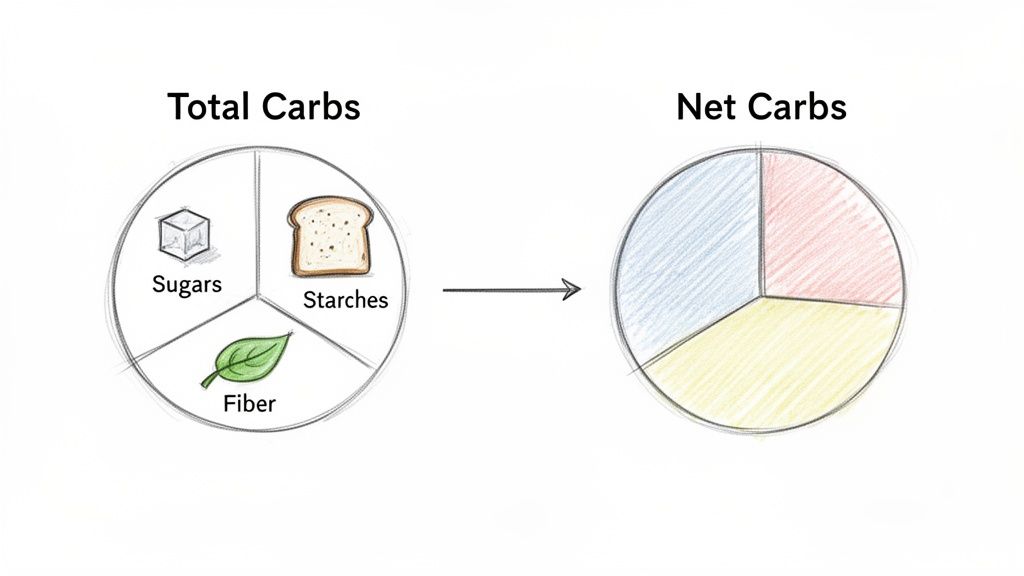
At its core, the difference is simple. Total carbohydrates count every single carb in your food—sugars, starches, and fiber all included. Net carbs, on the other hand, is a more focused calculation. It only includes the carbs your body actually digests and converts into energy, giving you a better idea of a food's direct impact on your blood sugar.
What's the Real Story with Carb Counting?
Getting a handle on the net carbs vs. total carbs debate is a game-changer if you're trying to manage your nutrition, whether for weight loss, blood sugar stability, or just eating more consciously. This isn't some new fad; the concept gained serious momentum alongside the low-carb diet craze.
Remember the early 2000s when diets like Atkins and Keto went mainstream? They completely changed how people thought about food tracking. In fact, a 2004 survey found that a staggering 17.2% of American households had someone actively following a low-carb plan. This shift prompted food companies to start marketing net carbs—calculated by subtracting fiber and certain sugar alcohols from the total—to position their products as diet-friendly. You can read more about how this dietary trend influenced modern food labeling practices.
The Core Difference
While you'll hear both terms used, they serve very different functions. Total carbs is the official number you see on a nutrition label, regulated by the FDA. It gives you the full picture. Net carbs, however, is more of a practical tool that estimates which of those carbs will actually be metabolized for energy.
Think of it this way: not all carbs are created equal in how they affect your body. Fiber and some sugar alcohols largely pass through your system without causing a significant spike in blood glucose, which is why they get subtracted to calculate the "net" impact.
To make this crystal clear, the table below breaks down the key distinctions at a glance.
Net Carbs vs Total Carbs At a Glance
This table provides a quick, side-by-side summary of the fundamental differences between total and net carbohydrates for easy reference.
| Attribute | Total Carbs | Net Carbs |
|---|---|---|
| Official Recognition | An official, FDA-regulated metric found on every nutrition label. | An unofficial, marketing-derived term with no legal definition. |
| What It Includes | All carbohydrates: sugars, starches, and fiber. | Only digestible carbohydrates that impact blood sugar. |
| Primary Use Case | General health, meeting official dietary guidelines, and balanced nutrition. | Specific diets like keto or for closely managing blood sugar response. |
| Impact on Fullness | More accurately reflects satiety because it includes all dietary fiber. | Doesn't directly account for the filling effects of fiber. |
This side-by-side view gives you a foundational understanding. Now, we can dig into the specific calculations and see how these differences play out inside your body.
The Real Math Behind Calculating Carbs
Alright, now for the practical part. Knowing the difference between net and total carbs is one thing, but actually applying it means doing a little math. Don't worry, it's simple.
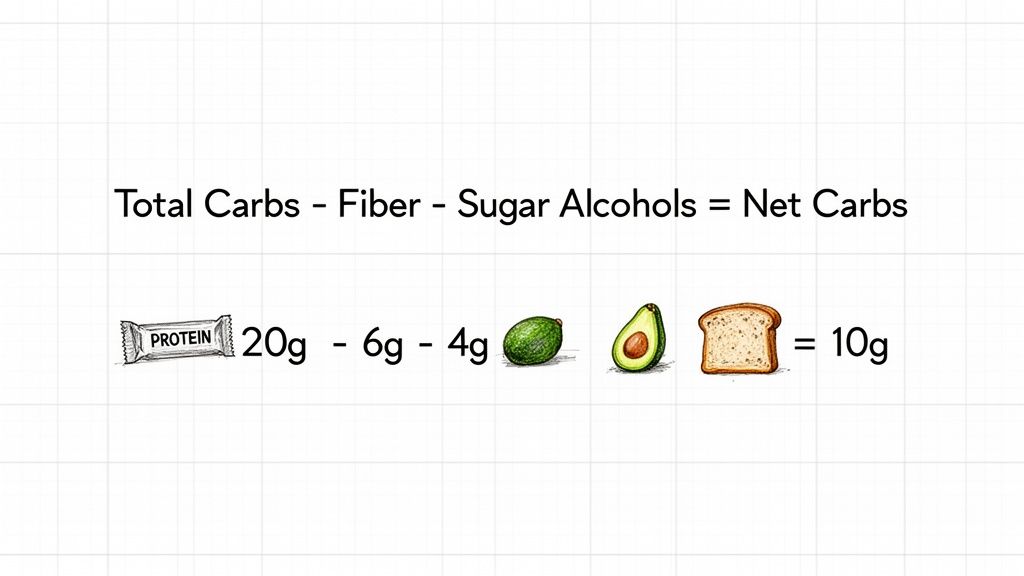
The basic formula is your key to decoding almost any food label.
Total Carbohydrates - Dietary Fiber - Sugar Alcohols = Net Carbs
This calculation gives you a solid estimate of the carbs your body will actually digest and use for energy. Let's look at why we subtract those specific components.
Why Fiber Is Subtracted
Dietary fiber is technically a carbohydrate, but it's one our bodies can't break down. We don't have the right enzymes, so it passes through our digestive system mostly untouched.
Because it isn’t absorbed and turned into glucose, fiber doesn't cause a meaningful spike in blood sugar. That's why we can confidently subtract its full gram count from the total carbs.
The Nuances of Sugar Alcohols
This is where the math gets a bit more interesting. Sugar alcohols—sweeteners like erythritol, xylitol, and maltitol—are structured like a hybrid of sugar and alcohol, but our bodies metabolize them quite differently.
Their effect on blood sugar can vary a lot:
- Erythritol: This one has a glycemic index of almost zero. Your body absorbs most of it but then excretes it unchanged. It's a favorite in keto-friendly foods for this reason, and you can generally subtract all the grams of erythritol.
- Xylitol, Maltitol, and Sorbitol: These are only partially absorbed. Because a portion is digested, they can have a mild effect on blood sugar. A good rule of thumb is to subtract only half of their grams from the total carb count to get a more accurate net carb figure.
Calculating net carbs seems straightforward—total carbs minus fiber and sugar alcohols. But in the real world, the numbers can be dramatic. A low-carb tortilla with 20g of total carbs might end up with only 5g of net carbs after you subtract fiber and erythritol. Still, as the American Diabetes Association points out, it's not a perfect science, since some fibers and sugar alcohols are partially digested.
Let's Calculate Net Carbs With Real Examples
To really get the hang of this, you have to get comfortable with food packaging and know how to read nutrition labels. Let’s walk through a few common foods.
Example 1: A Protein Bar
You grab a protein bar and check the label. Here's what you see:
- Total Carbohydrates: 21g
- Dietary Fiber: 14g
- Sugar Alcohols: 3g (let's say it's erythritol)
Here’s how the math works out:
21g (Total) - 14g (Fiber) - 3g (Erythritol) = 4g Net Carbs
Example 2: A Medium Avocado
Avocados are a perfect whole-food example.
- Total Carbohydrates: 12g
- Dietary Fiber: 9g
- Sugar Alcohols: 0g
The calculation is very simple:
12g (Total) - 9g (Fiber) = 3g Net Carbs
Example 3: A Slice of Keto Bread
This is a classic case where you see a huge difference between total and net carbs.
- Total Carbohydrates: 9g
- Dietary Fiber: 8g
- Sugar Alcohols: 0g
The formula shows just how little impact it has:
9g (Total) - 8g (Fiber) = 1g Net Carb
These examples show how a food's net carb count can be drastically lower than its total. By understanding this formula and the slight trickiness of sugar alcohols, you can see past the marketing claims and know how a food is likely to affect your body.
How Your Body Responds to Different Carbs
Okay, so you’ve got the math down. But the real story of net carbs vs. total carbs isn't just about what's on the nutrition label—it's about the chain reaction that starts the moment you take a bite.
When you eat carbs, your body’s job is to break them down into glucose (sugar) for energy. As glucose enters your bloodstream, your pancreas releases insulin to help shuttle that sugar into your cells. The key difference lies in how fast and furious this process is, and that all comes down to the type of carb you ate.
Blood Sugar and Insulin Impact
The whole reason net carbs became so popular is because they help predict a food’s immediate hit on your blood sugar. The carbs that make up the "net" number—mostly simple sugars and starches—are digested fast. This causes a quick, high spike in blood glucose and a rush of insulin to match. For anyone on a keto diet or managing diabetes, keeping these spikes under control is priority number one.
Think of net carbs as a snapshot of a food's glycemic effect. It zeroes in on the carbohydrates that your body will turn into sugar almost immediately.
On the other hand, looking at total carbs gives you the full story. This number includes dietary fiber, which is a game-changer for blood sugar management. Fiber slows everything down, meaning the sugar from your meal is absorbed much more gradually. The result is a gentle, rolling wave of blood sugar instead of a sharp spike and crash, leading to more stable, sustained energy.
The Role of Fiber in Gut Health and Satiety
Don’t let the subtraction in the net carb formula fool you: fiber's contribution to your health is huge. Because your body doesn't digest it, fiber makes its way to your large intestine, where it acts as a feast for your beneficial gut bacteria.
A thriving gut microbiome is tied to some pretty incredible health perks, including:
- Keeping your digestion smooth and regular.
- Calming inflammation throughout your body.
- Supporting a strong immune system.
- Even influencing your mood through the gut-brain connection.
If you only focus on keeping net carbs low, you might accidentally miss out on one of fiber's best qualities: keeping you full. High-fiber foods add physical bulk to your meals and slow down how quickly your stomach empties. This sends powerful signals to your brain that you're satisfied, a massive advantage if you're trying to manage your weight.
The Downside of Sugar Alcohols
Sugar alcohols are the other wild card in the net carb calculation, and they aren't exactly a "free pass." While they have less of an impact on blood sugar than regular sugar, they can come with some baggage, especially when it comes to digestion.
For a lot of people, eating foods high in sugar alcohols can lead to some uncomfortable side effects. The most common complaints are:
- Bloating and a "heavy" feeling
- Uncomfortable gas
- Diarrhea or an unexpected laxative effect
This happens because, much like fiber, sugar alcohols aren't fully absorbed. When they arrive in your large intestine, they draw water in and get fermented by your gut bacteria—a perfect recipe for digestive distress. It's a crucial reminder that a low net carb count doesn't automatically mean a food will be gentle on your gut.
To help you visualize these trade-offs, here’s a breakdown of how focusing on each carb-counting method can affect your body and health goals.
Impact on Your Body: Net vs Total Carbs
| Health Aspect | Focus on Total Carbs | Focus on Net Carbs |
|---|---|---|
| Blood Sugar | Promotes a slow, steady glucose release. Better for long-term stable energy and metabolic health. | Aims to minimize immediate blood sugar spikes. Critical for keto and strict diabetes management. |
| Weight Loss | Encourages high-fiber foods that increase satiety, helping you feel fuller for longer and naturally reduce calorie intake. | Can lead to rapid initial weight loss by limiting insulin, but may overlook the satiety benefits of fiber. |
| Gut Health | Naturally prioritizes fiber, which is essential for feeding beneficial gut bacteria and ensuring digestive regularity. | Can lead to low fiber intake if not careful. Over-reliance on processed "low-carb" foods may introduce gut irritants. |
| Nutrient Density | Guides you toward whole foods like vegetables, legumes, and whole grains that are rich in vitamins, minerals, and fiber. | Can inadvertently restrict nutrient-dense, high-fiber fruits and vegetables. May encourage processed foods with sugar alcohols. |
The debate really heated up with the keto and low-carb movements, but many health experts still lean on total carbs for a more complete nutritional picture. For example, a major review of 23 different studies showed that while low-carb diets (which are almost always net-carb focused) did result in slightly more weight loss at first, that advantage often disappeared by the one-year mark. You can dive into the full findings on carb strategies and weight management to see the long-term data.
This really highlights the core takeaway: net carbs are an incredibly useful tool for very specific goals, but total carbs offer a more holistic and reliable view of a food's overall impact on your health.
Which Carb Count Is Right for Your Goals
So, after all that theory, which number should you actually be tracking? The truth is, there's no single "right" answer. The choice between tracking net carbs versus total carbs comes down entirely to what you're trying to accomplish with your health.
Choosing the wrong metric can make your diet feel overly restrictive or, worse, keep you from hitting your goals. To help you decide, let's walk through how to approach this based on what you want to achieve.
For Strict Ketogenic Diets
If you're going all-in on a strict ketogenic diet, your focus should almost always be on net carbs. The entire point of keto is to shift your body from burning glucose to burning ketones for fuel, and that requires keeping your carb intake extremely low.
Net carbs give you the most accurate picture of the carbohydrates that will actually raise your blood sugar and insulin, which is what can knock you out of ketosis. Sticking to a daily limit of 20–30 grams of net carbs is the standard for maintaining a deep state of ketosis. If you only counted total carbs, you’d likely have to cut out high-fiber vegetables and other keto-friendly foods, making the diet much harder to sustain.
Think of it this way: ketosis is all about keeping your insulin response to a minimum. Since fiber and certain sugar alcohols don’t trigger a significant insulin spike, subtracting them gives you a much more practical number for managing your metabolic state.
For Managing Diabetes
For anyone managing diabetes, the best strategy is often a hybrid one. Tracking net carbs is incredibly helpful for calculating mealtime insulin doses because it more closely predicts a food's immediate effect on your blood sugar. This can lead to much better glucose control after eating.
However, you can't ignore total carbs completely. Many processed "low-carb" products are packed with sugar alcohols that can still impact blood glucose (just more slowly) and often cause digestive upset. Keeping an eye on total carbs helps you maintain overall meal quality, get enough beneficial fiber, and stay mindful of your body's total carbohydrate load.
This decision tree offers a great visual for choosing a strategy that fits your main health focus.
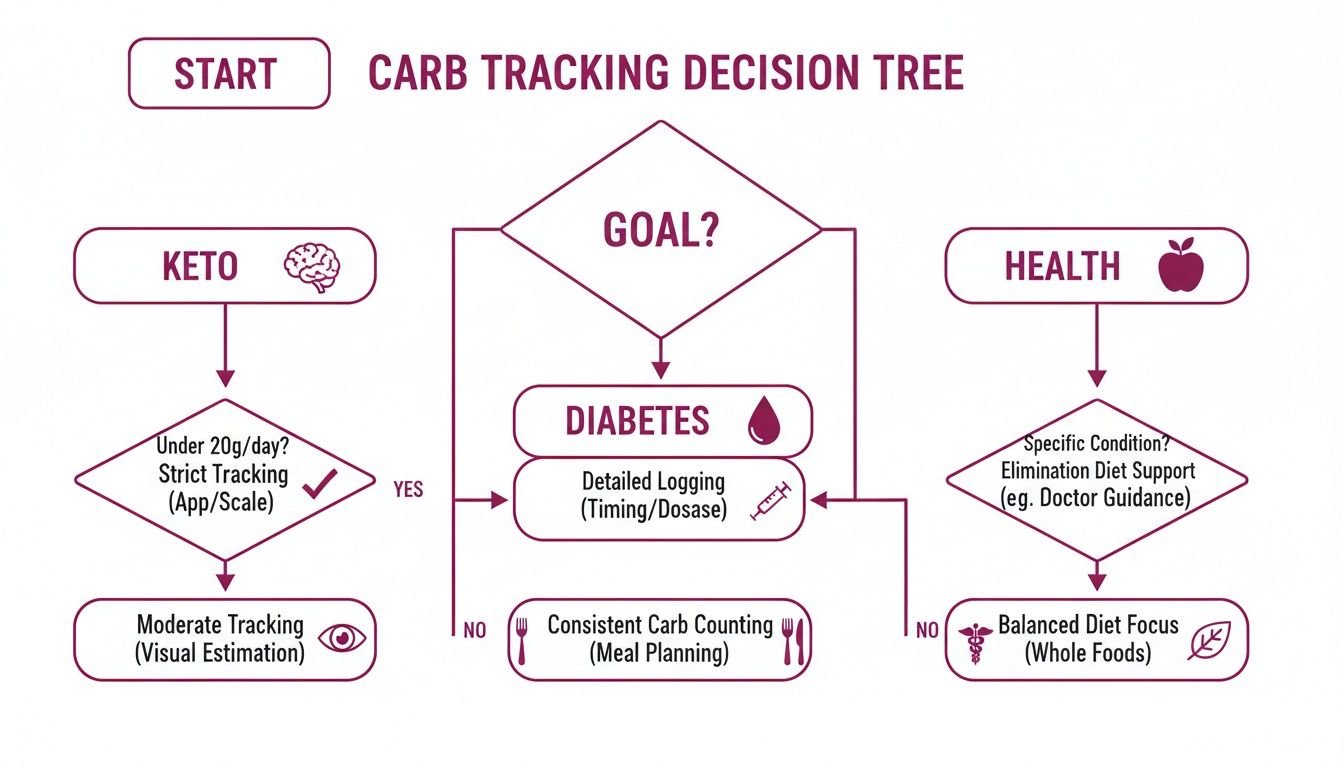
As you can see, while a keto diet leans heavily on net carbs, other goals like diabetes management or general wellness benefit from a more balanced approach.
For General Health and Sustainable Weight Loss
If your goal is simply to lose weight in a sustainable way or build healthier habits without a rigid diet, focusing on total carbs from whole foods is usually the best path. This approach naturally steers you toward nutrient-dense foods that are good for you anyway, like vegetables, legumes, and whole grains.
By tracking total carbs, you’re less likely to cut out foods that are rich in fiber. Fiber is a game-changer for weight management—it helps you feel full and satisfied, which means you eat fewer calories without feeling deprived. It also fuels a healthy gut. While you can absolutely lose weight tracking net carbs, focusing on total carbs encourages a well-rounded diet that's far easier to stick with for the long haul.
How Superbloom Can Personalize Your Approach
Trying to apply all this to your daily meals can feel overwhelming. That’s where a tool like Superbloom can bring some much-needed clarity. As you log your meals, the app provides instant, personalized feedback based on your specific goals, whether that's boosting your fiber intake or managing carbs for metabolic health.
Superbloom helps you see the patterns in your eating, understand how different foods affect your body, and make smart adjustments without the headache of constant counting. It turns these complex nutritional ideas into simple, actionable habits you can actually live with.
Real-World Foods: A Carb Comparison
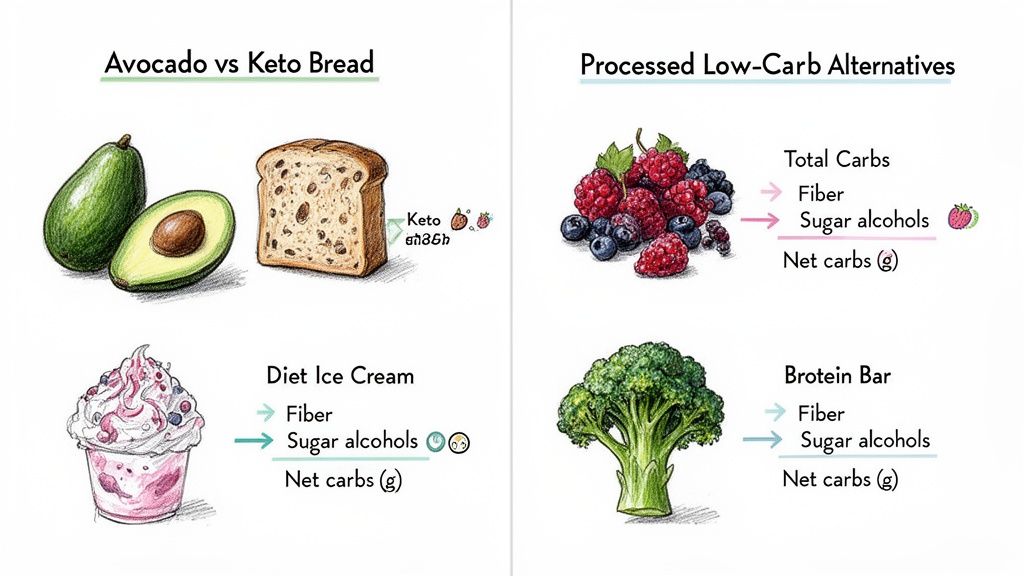
The theory behind net and total carbs is one thing, but seeing how it plays out on your plate is where it all clicks. When you compare whole, unprocessed foods to their engineered "low-carb" counterparts, you quickly realize that the quality of a carbohydrate is just as meaningful as the quantity.
Let's dig into the numbers on some foods you'd actually buy. This is how you start to understand not just what you're eating, but how your body is likely to process it.
The Natural Carb Profile of Whole Foods
Whole foods give us a great baseline. Their carbohydrate counts are straightforward, with naturally occurring fiber doing the heavy lifting to lower the net carb value.
A medium avocado is a perfect example:
- Total Carbs: 12 grams
- Dietary Fiber: 9 grams
- Net Carbs: 3 grams
An incredible 75% of an avocado's carbs come from fiber. This means you get very few digestible carbs that impact blood sugar, but you do get major benefits for feeling full and supporting your gut health. The carb reduction is an inherent, beneficial part of the food.
The same goes for a cup of raspberries:
- Total Carbs: 15 grams
- Dietary Fiber: 8 grams
- Net Carbs: 7 grams
Here again, more than half the carbs are fiber. This is why berries are a go-to for anyone on a carb-conscious diet who still wants something sweet without the blood sugar rollercoaster.
The Engineered Carb Profile of Processed Foods
Now, let's look at the other side of the coin: processed "keto-friendly" products. These items are specifically designed to boast a low net carb count, often by creating a huge gap between the total and net carb numbers. They achieve this by packing in added fibers and sugar alcohols.
Consider a typical keto protein bar:
- Total Carbs: 22 grams
- Dietary Fiber: 13 grams
- Sugar Alcohols: 5 grams
- Net Carbs: 4 grams
The jump from 22g total to just 4g net is definitely eye-catching, but it's manufactured. The high fiber count usually comes from additives like soluble corn fiber or inulin, which can sometimes cause digestive upset.
The real story is the source of the carb reduction. In whole foods, it's from natural, nutrient-adding fiber. In processed foods, it's often from isolated fibers and sugar alcohols added specifically to game the net carb calculation on the label.
When you're thinking about different carb sources, it’s also useful to consider how a common dietary staple like white rice fits into your health goals. A food like rice has almost no fiber, so its total and net carbs are virtually the same. This places it in an entirely different category from both high-fiber whole foods and engineered low-carb products.
Side-by-Side Comparison
Putting a whole food and a processed item head-to-head makes the difference crystal clear.
Broccoli vs. Keto Bread (per serving)
| Nutrient | 1 Cup Broccoli | 1 Slice Keto Bread |
|---|---|---|
| Total Carbs | 6 grams | 9 grams |
| Dietary Fiber | 2.4 grams | 8 grams |
| Sugar Alcohols | 0 grams | 0 grams |
| Net Carbs | 3.6 grams | 1 gram |
While the keto bread wins on the net carb front, it gets there by using a high concentration of added fiber. The broccoli, on the other hand, offers a naturally balanced profile of fiber, vitamins, and minerals. Understanding this distinction is key to looking past the label and making choices that truly support your long-term health.
Frequently Asked Questions About Carbs
Let's tackle some of the most common questions that pop up when you start digging into the carb conversation. These are the practical, real-world issues people run into, and the answers will help you apply everything with a bit more confidence.
Should I Only Track Net Carbs for Weight Loss?
Focusing on net carbs can feel like a clever shortcut for weight loss, especially if you're keto-curious. But for most people, it's not the most reliable path. It's easy to fall into the trap of choosing highly processed "diet" foods just because they have a low net carb count, potentially missing out on the nutrients found in whole foods.
For sustainable weight management, sticking with total carbs often works better. It naturally steers you toward foods high in fiber, a powerhouse for making you feel full and satisfied. When you feel full, you're less likely to overeat, which helps create a calorie deficit without the constant battle against hunger.
While a low net carb number on a snack bar looks appealing, remember that the satiety from the natural fiber in an apple or a bowl of lentils is often a more powerful and sustained tool for managing hunger and supporting your weight loss goals.
Why Isn't "Net Carbs" on the Official FDA Nutrition Label?
You’ll see "Total Carbohydrates," "Dietary Fiber," and "Total Sugars" on every nutrition label in the U.S., but you won't find an official line for "net carbs." There's a simple reason for this: the FDA doesn't recognize the term. "Net carbs" is a marketing concept, not a legally defined one.
The FDA's job is to ensure food labels are consistent and based on verifiable science. Because companies can calculate net carbs differently—especially when it comes to how various sugar alcohols are subtracted—there's no single standard. To avoid confusion, the FDA sticks to the facts:
- Total Carbohydrates: The complete count of all carbs.
- Dietary Fiber: The indigestible portion.
- Total Sugars: Includes both naturally occurring and added sugars.
This consistency ensures you can make a fair and accurate comparison between any two products on the shelf.
Do Sugar Alcohols Kick You Out of Ketosis?
This is a huge point of confusion, and the honest answer is: it depends entirely on the type and how much you consume. Not all sugar alcohols behave the same way in your body.
Erythritol is the most keto-friendly of the bunch. It has a glycemic index of nearly zero and is mostly excreted from your body untouched, so it's highly unlikely to disrupt ketosis.
On the other hand, sugar alcohols like maltitol, sorbitol, and xylitol are a different story. They are partially absorbed and can cause a small but real spike in blood sugar and insulin. If you eat them in large enough amounts, they absolutely have the potential to knock you out of ketosis.
Can You Eat Too Much Fiber?
Yes, you definitely can. While fiber is fantastic for your gut, blood sugar, and keeping you full, your digestive system needs time to get used to it.
If you suddenly ramp up your fiber intake, you might overwhelm your gut bacteria. This can lead to some pretty uncomfortable side effects like gas, bloating, stomach cramps, and general digestive distress. The smartest strategy is to increase your fiber intake slowly over a few weeks. This gives your microbiome time to adapt, so you can get all the benefits without the discomfort.
Ready to stop guessing and start understanding how your food choices truly affect you? Superbloom uses AI-powered insights to provide personalized feedback on your meals, helping you build sustainable habits without the stress of strict dieting. Discover patterns, get actionable guidance, and finally make peace with your food. Start your journey with Superbloom today!