
A Visual Guide to Plate Proportions for Weight Loss
Let’s be honest: counting every single calorie is exhausting. For many of us, it turns eating—something that should be enjoyable and nourishing—into a stressful math problem. If you're tired of tracking apps and feeling bogged down by numbers, I want to introduce you to a much more intuitive and sustainable approach: the plate proportion method.
The idea is simple yet powerful. You use your plate as a visual guide to build a balanced meal, which naturally helps manage your portions and calorie intake without the need for constant calculation.
The Power of Your Plate for Sustainable Weight Loss
This isn't just about tricking yourself into eating less. It's about shifting your focus from restriction to balance. Instead of obsessing over what to cut out, you learn to prioritize what to put on your plate. This small change in perspective makes healthy eating feel less like a diet and more like a natural choice.
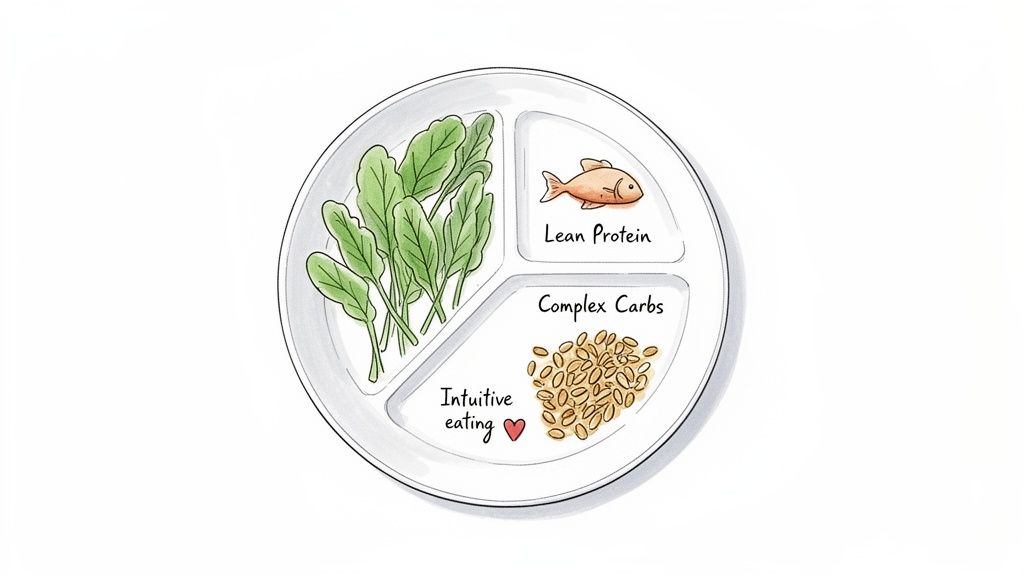
So, how does it work? You simply divide your plate into three main sections, each dedicated to a specific food group.
Your Balanced Plate Blueprint
Think of your plate as your personal blueprint for a healthy, satisfying meal. Each section has a specific job to do, working together to provide energy, keep you full, and nourish your body.
Here’s a quick visual reference to help you get started.
Your Balanced Plate Blueprint
By filling half your plate with non-starchy vegetables, you're loading up on fiber and nutrients for very few calories. This is the secret to feeling full and satisfied after a meal. The other half is split between lean protein to build and repair tissue and keep hunger at bay, and complex carbs for slow-release energy that won't leave you crashing.
This isn't just a wellness trend; it's backed by solid evidence. A 2016 systematic review found that using plates with visual portion guides led to significant weight loss. In one study from that review, participants lost nearly five times more weight than those in control groups. Why? Because the plate method is a practical tool that educates and empowers you at every single meal. If you're interested in the science, you can explore the research on portion control plates and their impressive impact.
The most powerful part of this method is the mental shift. You start focusing on adding more good stuff (like veggies and protein) instead of just taking things away. It's about nourishment over deprivation, which is the key to building a healthy relationship with food that actually lasts.
Building Your Plate: A Simple Visual Guide

Alright, theory is great, but let's get practical. This is where the magic really happens—at the end of your fork. I’m going to walk you through how to build your plate, section by section. Think of this not as a set of rigid rules, but as a flexible blueprint you can use for breakfast, lunch, and dinner.
At first, you’ll be consciously thinking about these portions. But I promise, with a little practice, it becomes an automatic habit. Soon you'll be eyeing the buffet at a wedding or ordering at a restaurant and intuitively knowing how to build a balanced meal.
First, Load Up on Veggies
Your first move is always the same: fill half of your plate with non-starchy vegetables. This is the non-negotiable cornerstone of the entire method. Why? Because veggies are packed with fiber and water, which create volume and tell your brain you're eating a satisfying meal, all for very few calories.
I like to call this part of your plate "satiety insurance." When you load up on greens, broccoli, or bell peppers first, you're guaranteeing a filling meal without having to rely on less nutritious foods to feel full.
Here are some of my go-to choices:
- Leafy Greens: Spinach, kale, arugula, and mixed greens are the perfect, easy base.
- Cruciferous Veggies: I love the crunch and fiber from broccoli, cauliflower, and Brussels sprouts.
- Colorful Add-ins: Bell peppers, tomatoes, zucchini, asparagus, and green beans add a huge variety of vitamins.
Next, Add Your Protein
Now, dedicate one-quarter of your plate to a high-quality lean protein source. Protein is your best friend when it comes to managing hunger. It digests slowly, keeping you feeling full and satisfied long after you've finished eating. Plus, it’s crucial for holding onto your muscle mass as you lose weight, which keeps your metabolism fired up.
A classic mistake I see all the time is skimping on protein. This almost always leads to nagging hunger an hour or two after a meal. A good visual cue is to aim for a portion about the size of the palm of your hand.
Here’s a pro tip: Protein isn't just chicken and fish. Plant-based sources like lentils, tofu, and edamame are fantastic. Just make sure you're choosing foods that are primarily protein, not mostly carbs or fat.
For some fantastic real-world examples of how to put this all together, check out these dietitian-approved balanced and colorful lunch ideas.
Finish with Smart Energy Sources
The last one-quarter of your plate is for complex carbs and healthy fats. Carbs have gotten a bad rap over the years, but your body and brain run on them. The trick is simply choosing the right kind.
We're talking about complex carbohydrates—things like quinoa, sweet potatoes, and oats. They're full of fiber, so they break down slowly and give you steady, reliable energy. No more dramatic blood sugar spikes followed by a crash. Healthy fats, like avocado or a drizzle of olive oil, also play a huge role in feeling full and are essential for your hormones and absorbing certain vitamins.
Smart choices for this section include:
- Complex Carbs: Quinoa, brown rice, oats, sweet potatoes, whole-wheat pasta, and beans.
- Healthy Fats: Avocado, nuts, seeds, and olive oil (which is often used for cooking or as a dressing).
By building your meals in this order—veggies first, then protein, then carbs—you naturally create a balanced, nutrient-dense plate every single time. This simple visual habit is one of the most powerful tools for losing weight for good, all without ever having to count a single calorie.
Rethinking the Smaller Plate Strategy
We’ve all heard it, right? "Just use a smaller plate." It’s been passed around as a go-to weight loss tip for years, a simple trick to fool your brain into eating less. The idea is based on a visual illusion—a full small plate feels more satisfying than a half-empty large one.
But here’s the reality I’ve seen time and again with clients: relying on this trick alone rarely leads to lasting change. It's a temporary fix, an external cue that does nothing to build the internal skills you actually need for sustainable weight loss.
When the Illusion Fails
The effectiveness of this little trick is surprisingly shaky. In fact, research shows it often fails the very people who are hoping it will work. One fascinating study found that while smaller plates might help normal-weight individuals eat a bit less, the same effect didn't hold true for those who were overweight.
This suggests that for many of us, the brain's deep-seated idea of a "satisfying" portion isn't so easily fooled. You can dig into the specifics by reading the full research about how plate size affects consumption.
What this tells us is crucial: real progress comes from recalibrating our own internal compass, not just rearranging the furniture on our dinner table.
Shifting from Tricks to Tools
This is exactly why the plate proportion method is so different. It’s not a mind game; it's a training tool. Instead of just making your meal look smaller, this method teaches you to fundamentally rebuild it from the ground up.
By focusing on the proportions of your food—half your plate with veggies, a quarter with protein, and a quarter with carbs—you’re not trying to fool yourself. You are actively learning what a nourishing, filling, and properly portioned meal actually looks and feels like.
This approach builds your internal awareness and stops you from being dependent on external cues like what size plate you happen to grab.
Think of it this way:
- The Smaller Plate Strategy is passive. You change your environment and just hope your habits follow along.
- The Plate Proportion Method is active. It engages your brain and turns every single meal into a practical lesson.
You start to intuitively understand how to load up on fiber-rich vegetables and satisfying protein, which naturally helps you feel full and manage your overall intake without obsessive counting. This is infinitely more powerful than just eating a smaller version of an unbalanced meal.
You’re learning to trust your body’s signals again. Over time, you won’t even have to think about the proportions; it becomes second nature. You'll just know how to build a meal that supports your goals, whether you’re at home, at a restaurant, or staring down a giant dinner plate at a friend's house. That’s the difference between a temporary fix and a lifelong skill.
Customizing Your Plate for Real-Life Scenarios
The basic balanced plate is a solid foundation, but let's be honest—life isn't that neat and tidy. Some days you're chained to your desk, and other days you're training for a 10k. Your body's needs change, and the real magic of the plate method is learning how to adapt it on the fly.
This is where you graduate from following a rule to developing a skill. Think of your plate as a dial you can turn up or down based on what your body is telling you.
Matching Your Fuel to Your Day
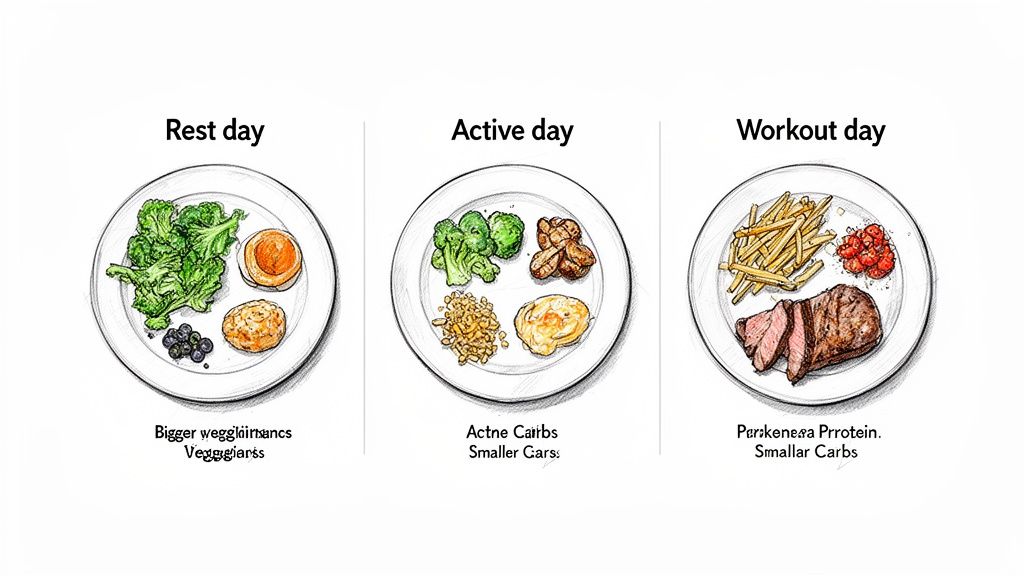
The most common and impactful adjustment you'll make is based on your activity level. Fueling a body for a Netflix marathon is very different from fueling it for an hour-long spin class. This is something elite athletes do instinctively, and you can borrow their strategy.
Here’s how to think about it:
- Rest or Light Activity Day: If you're mostly sedentary, your energy needs are lower. Stick to the classic plate: fill 50% with non-starchy veggies, 25% with lean protein, and 25% with quality carbs.
- Moderate Workout Day: After a good gym session or a brisk run, your body needs more carbohydrates to refuel. A simple shift to a plate of one-third veggies, one-third protein, and one-third carbs does the trick.
- Intense Training Day: For those really tough workouts—think long-distance runs or two-a-days—carbs become your best friend for performance and recovery. Adjust your plate to be 50% carbs, 25% protein, and 25% veggies.
This isn't about perfection. It’s about giving your body the right fuel for the job, so you have energy when you need it and aren't over-fueling when you don't.
"But What If I'm Still Hungry?"
This is a question I hear all the time. You’ve built your perfect plate, finished every bite, and your stomach is still rumbling. The answer is not to ignore it. The answer is to eat more.
First, give it about 15-20 minutes. Sometimes it just takes a moment for your stomach’s "full" signal to reach your brain. If you’re still genuinely hungry after that pause, then it’s time for a second helping—but be smart about it.
Before you reach for more rice or potatoes, go for more veggies or protein first. These foods are packed with fiber and nutrients that create a strong sense of fullness. An extra serving of roasted broccoli or a few more forkfuls of chicken will almost always satisfy that lingering hunger without overloading on energy.
It's a simple strategy that helps you listen to your body’s hunger cues without accidentally sabotaging your efforts.
A Quick Word on Fats and Dressings
Even though we're not counting calories, it pays to be mindful of where the sneakiest ones hide: in oils, sauces, and dressings. A heavy-handed pour of olive oil or ranch dressing can easily add hundreds of calories to an otherwise balanced meal.
A great habit is to treat healthy fats like a finishing touch. A little drizzle of oil, a sprinkle of nuts, or a few slices of avocado are fantastic additions. When eating out, always ask for dressings on the side. You're not eliminating them; you're just putting yourself in control.
Interestingly, this kind of mindful eating is far more powerful than just buying smaller plates. A major Cochrane review found no solid evidence that using smaller dinnerware actually helps people eat less. It turns out that people with larger plates often just left more food uneaten. This tells us that changing our internal habits is what truly matters, not the size of our dish. You can read more about these plate size findings and see why mastering portion awareness is the more valuable skill.
Navigating Common Hurdles and Tracking Your Progress

So, you've started using the plate proportion method. That's a fantastic first step toward building a healthier, more intuitive relationship with food. But the big question I always get is, "How do I know it's working if I'm not supposed to obsess over the scale?"
That’s the beauty of this approach. True progress isn't just about the number on the scale going down; it's about how you feel day-to-day. We’re swapping the scale’s judgment for a much more valuable tool: your own internal feedback.
Shifting How You Measure Success
Tracking progress with plate proportions for weight loss is all about tuning into your body, not just tallying numbers. Instead of a rigid journal, think of it as a quick, daily check-in with yourself. A simple mental scan is all it takes to see how your body is responding.
Pay close attention to these key areas. They tell you more than a scale ever could:
- Energy Levels: Are you still hitting that 3 PM slump? Or do you feel a more steady, consistent energy carrying you through the day?
- Satiety and Fullness: Are your meals actually keeping you satisfied? Are you less distracted by nagging hunger or random cravings between meals?
- Digestion and Mood: Have you noticed your digestion feeling a bit smoother? Is your mood more stable, with fewer ups and downs?
These small shifts are powerful signs that you’re giving your body what it truly needs. Some people find it helpful to jot down quick notes, and some of the best food tracking apps are great for this, allowing you to log your plate and add a comment on how you felt afterward.
The goal is self-awareness, not perfection. You're learning to listen to your body's signals, and that's a skill that will last a lifetime. Every meal is a new opportunity to practice.
Overcoming Common Roadblocks
Of course, life isn’t lived on a perfectly portioned plate. You’ll have work dinners, stressful days, and sudden cravings for things that aren’t on the plan. This is completely normal and expected. The key isn't avoiding these situations, but having a game plan for when they pop up.
Instead of reacting on autopilot, you can learn to respond with intention. Here are some of the most common challenges I see and how to navigate them without getting derailed.
Common Hurdles and Mindful Solutions
These strategies aren’t about restriction; they’re about creating a small pause between a trigger and your reaction. In that moment of space, you get to choose what happens next—and that’s where you take your power back.
Ultimately, progress is just the sum of making these mindful choices more often than not.
Tackling Your Plate Method Questions
Whenever you start a new way of eating, questions are going to pop up. That’s a great sign! It means you're really thinking about how to make this work for you. Let's walk through some of the most common questions I hear from people just starting with the plate proportion method.
"So, Can I Still Eat Snacks?"
Yes, absolutely! The plate method is all about building balanced main meals, but that doesn't mean you have to white-knuckle it between breakfast, lunch, and dinner. Smart snacking is your secret weapon for managing hunger and keeping your energy stable.
The trick is to think of a snack as a "mini-meal," not just empty calories. Instead of grabbing chips, try a handful of almonds (protein/fat), an apple with a spoonful of peanut butter (carbs/fat/fiber), or a small container of Greek yogurt (protein). These kinds of snacks actually give you nutrients and help you feel full, so you don't show up to your next meal starving and ready to eat everything in sight.
"Does This Mean I Have to Give Up Dessert Forever?"
Not at all. A healthy lifestyle that you can actually stick with long-term never involves completely banning the foods you love. The real goal is mindfulness, not perfection.
This is where the 80/20 rule comes in handy. Focus on building your plates with those balanced proportions 80% of the time. The other 20% is your built-in flexibility for a slice of birthday cake, a scoop of ice cream on a hot day, or other foods you enjoy just for fun. This balance is what keeps you from falling into that all-or-nothing trap that leads to burnout.
Don't let perfect be the enemy of good. One "off-plan" meal or dessert doesn't undo all your progress. Just get back to your balanced plate at the next meal.
"What About Soups, Stews, and Casseroles?"
This one trips people up, but it's simpler than it looks. For one-pot meals, the same principles apply—you just have to mentally "deconstruct" the dish. As you're cooking or scooping a portion, just check for the main components.
- Veggies: Is it packed with non-starchy vegetables like onions, peppers, zucchini, or greens?
- Protein: Have you included a solid source of protein like chicken, beans, or lentils?
- Carbs: Are there some quality carbs in there, like potatoes, barley, or whole-wheat pasta?
If you notice something is missing, it's an easy fix. Let's say you made a thick lentil soup that's heavy on protein and carbs but light on veggies. No problem—just serve it with a big side salad to round out your plate.
Turning these ideas into automatic habits is the final piece of the puzzle. If you're looking for support in that area, Superbloom is a fantastic tool. It acts as a personal nutrition coach, using simple daily check-ins to help you spot your patterns and make mindful choices without the headache of calorie counting. Start building sustainable habits with Superbloom today.