
10 Sustainable Portion Control Tips for 2026 That Actually Work
Tired of the endless cycle of measuring, weighing, and counting? Effective portion control isn't about rigid rules or deprivation; it's about building awareness and changing your environment to make balanced eating feel natural. The old 'eat less, move more' mantra is often ineffective because it ignores the complex psychology behind our eating habits. This article cuts through the noise with 10 practical, evidence-backed portion control tips designed for real life and busy schedules.
Forget the food scale and strict calorie apps. We'll explore visual cues, mindful practices, and simple behavioral shifts that help you regulate intake without feeling restricted. To effectively rethink portion control, understanding appropriate quantities is key; for example, you can find detailed guidance on managing aspects like how much beef per person for a meal.
Each strategy is designed to be sustainable, empowering you to understand your body's signals and build a healthier relationship with food. We'll also show you how an AI nutrition coach like Superbloom can help you apply these tips, track your unique patterns, and turn small, consistent actions into lasting change. Get ready to discover a more intuitive approach to nutrition.
1. The Plate Method (Half-Plate Rule)
Forget the tedious work of measuring cups and food scales. The Plate Method is one of the most effective visual portion control tips because it uses your dinner plate as a built-in guide. Endorsed by organizations like the American Diabetes Association, this simple technique helps you create balanced meals without strict calculations, making it perfect for busy schedules and public dining.
How It Works
Imagine your plate is divided into three sections. You will fill each section with specific food groups to ensure a balanced intake of nutrients.
- Half Your Plate (50%): Fill this largest section with non-starchy vegetables and fruits. Think leafy greens, broccoli, peppers, berries, or melon. These foods are high in fiber and water, which helps you feel full and satisfied on fewer calories.
- One Quarter (25%): Dedicate this portion to lean protein sources. Examples include grilled chicken, salmon, tofu, beans, or lentils. Protein is crucial for muscle repair and satiety.
- One Quarter (25%): The final section is for whole grains or starchy foods. Choose options like quinoa, brown rice, whole-wheat bread, or sweet potatoes to provide sustained energy.
Key Insight: This method automatically prioritizes nutrient-dense, lower-calorie foods (vegetables) while moderating higher-calorie items (carbohydrates and fats), supporting weight management without feeling restrictive.
Putting It Into Practice
Start by applying this rule to one meal a day, like dinner. Always fill the vegetable half of your plate first. This physical act reinforces the habit and leaves less room for over-serving other food groups. For a practical example, a well-portioned dinner could be a piece of salmon (protein), a scoop of quinoa (grain), and a generous serving of roasted asparagus and cherry tomatoes that covers half the plate.
2. Mindful Eating and Eating Speed Awareness
This portion control tip focuses on how you eat, not just what you eat. Mindful eating involves deliberately slowing down your pace to give your brain time to recognize satiety signals from your stomach, a process that takes about 20 minutes. By becoming more aware of your body's cues, you can naturally reduce your intake and improve digestion without feeling deprived. Research shows this simple behavioral change can decrease calorie consumption by 10-20% per meal.
How It Works
Instead of rushing, you create an intentional pause between your brain's desire to eat and your stomach's actual need for food. Slowing down allows the hormone leptin, which signals fullness, to reach your brain before you've overeaten. This method shifts the focus from external rules to internal awareness.
- Sense Engagement: Pay close attention to the taste, texture, and aroma of your food. This enhances satisfaction and makes the meal feel more fulfilling.
- Physical Pacing: Simple actions like putting your fork down between bites or chewing food thoroughly (20-30 times) create natural breaks.
- Time-Based Goal: Aim to make your meal last at least 20 minutes. This provides a concrete target to work toward as you build the habit.
Key Insight: Eating slowly is one of the most effective portion control tips because it aligns your consumption with your body's true biological feedback loop. You stop eating when you are genuinely full, not just when your plate is empty.
Putting It Into Practice
Begin by targeting one meal a day where you feel least rushed, like breakfast or a quiet dinner. Set a timer for 20 minutes and try to make your meal last the entire duration. A simple starting point is to pause for one minute halfway through your plate to check in with your hunger levels. A practical application is using smaller utensils, like a teaspoon instead of a tablespoon for a rice bowl, which naturally forces you to take smaller bites and extend your mealtime.
3. Hand-Based Portion Sizing
Leave your measuring tools in the drawer. Hand-based portion sizing turns your own hand into a portable, personalized measuring tool that is always with you. Popularized by nutrition experts like Dr. John Berardi and the Precision Nutrition program, this technique is based on the idea that your hand size correlates with your body size and metabolic needs, making it an inherently customized and practical guide.
How It Works
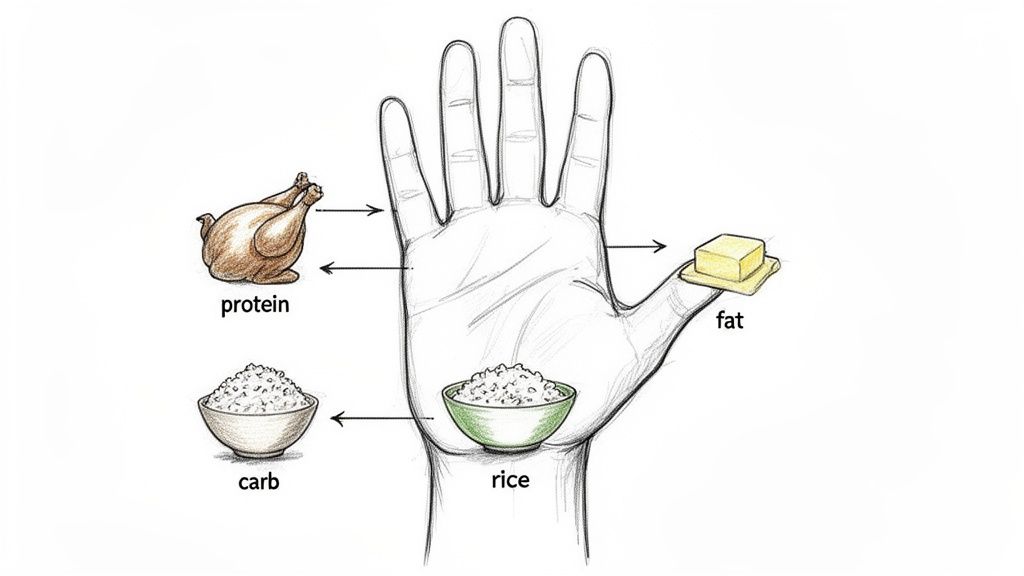
This simple visual guide helps you estimate appropriate serving sizes for different food groups directly at mealtime, whether you're at home or eating out.
- Protein: A portion of lean protein like chicken, fish, or tofu should be about the size and thickness of your palm.
- Vegetables & Fruits: A serving of non-starchy vegetables like broccoli or a piece of fruit should match the size of your clenched fist.
- Carbohydrates: A serving of starchy carbs like rice, pasta, or potatoes should fit within your cupped hand.
- Fats: A portion of dense fats like oils, butter, or nuts should be about the size of your thumb.
Key Insight: Because this portion control tip uses your own body as a reference, it automatically adjusts to your individual frame and energy requirements. Bigger people with bigger hands naturally get larger portions, while smaller individuals get smaller ones.
Putting It Into Practice
To get started, try calibrating your hand-guides at home once. Measure a standard serving of rice (e.g., half a cup) and see how it looks in your cupped hand. This helps train your eye. Then, commit to using this method for every meal for two weeks until it becomes second nature. A balanced meal might look like a palm-sized chicken breast, a fist-sized serving of roasted broccoli, and a cupped handful of quinoa, with a thumb of olive oil used for cooking.
4. Pre-Portioning and Meal Prep Strategies
One of the most powerful portion control tips is to make decisions before hunger strikes. Pre-portioning involves dividing food into single-serving containers right after cooking or shopping. This removes in-the-moment guesswork and creates environmental cues that reinforce appropriate portions, making it easier to stick to your goals without relying solely on willpower.
How It Works
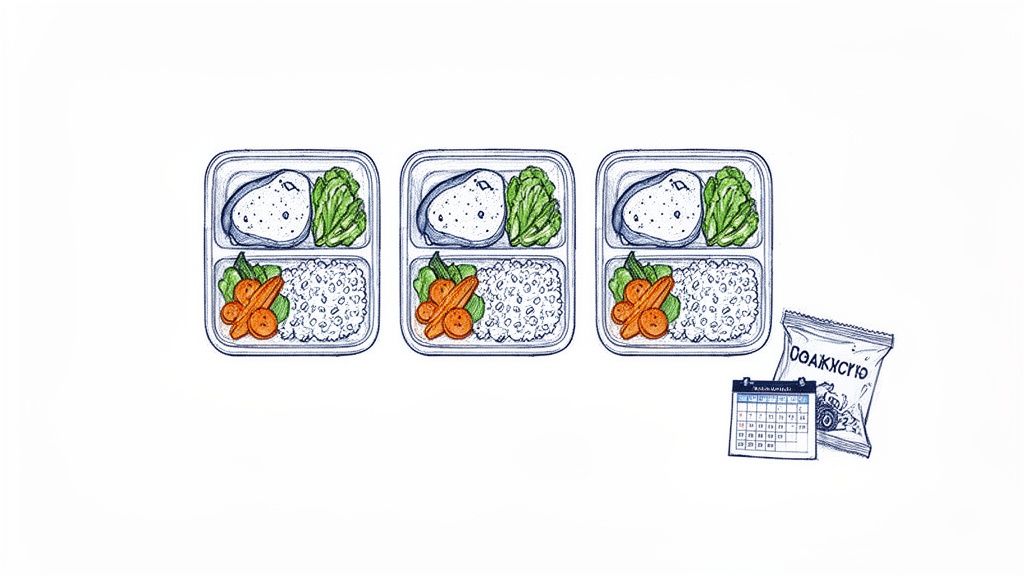
The core idea is to create ready-to-eat meals and snacks that are already portioned for your needs. By doing the work upfront, you make the healthy choice the easy choice. Research in behavioral economics confirms that pre-portioned options significantly reduce the likelihood of overeating.
- Bulk Cooking: Cook larger batches of versatile ingredients like grilled chicken, roasted vegetables, and quinoa. Immediately divide them into individual meal containers.
- Snack Preparation: Instead of grabbing from a large bag, portion out snacks like nuts, seeds, or cheese into small reusable bags or containers for the week.
- Freezer Portions: Make big batches of soups, chilis, or stews and freeze them in single-serving portions for quick, perfectly-sized future meals.
Key Insight: Pre-portioning automates portion control by turning a future decision into a past action. When you're tired and hungry, the right-sized meal is already waiting, requiring no extra thought or measurement.
Putting It Into Practice
An effective way to manage portions consistently is by adopting smart Healthy Meal Prep for Delicious Weekday Meals. Start by dedicating a couple of hours on a Sunday to prepare for the week. For example, you could cook a batch of ground turkey, steam some broccoli, and make brown rice. Then, assemble four to five lunch containers, each with a measured scoop of each component. You can also create ready-to-go breakfasts like overnight oats in individual jars, streamlining your morning routine and ensuring a balanced start to your day.
5. Hunger-Fullness Scale Check-Ins
Instead of letting the clock or your habits dictate when and how much you eat, the Hunger-Fullness Scale teaches you to listen to your body’s own internal cues. This mindful technique involves rating your hunger and fullness on a simple 1-to-10 scale, which helps you develop interoceptive awareness, the ability to sense your body's signals. This practice is one of the most effective portion control tips for breaking cycles of emotional or habitual eating.
How It Works
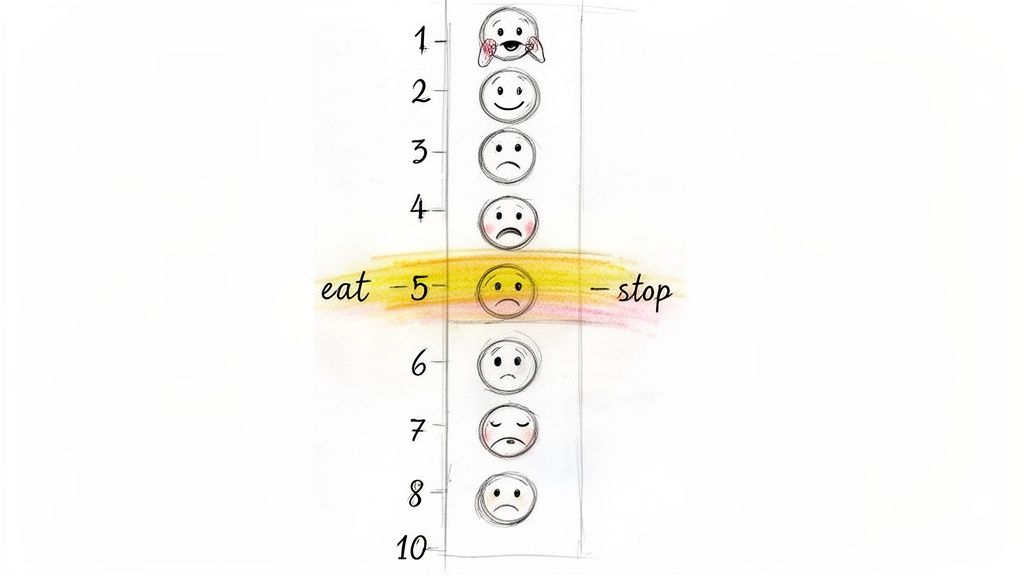
The scale runs from 1 (ravenous, uncomfortably hungry) to 10 (uncomfortably stuffed). The goal is to start eating when you are moderately hungry and stop when you are comfortably satisfied, avoiding the extremes.
- Start Eating (Hunger 3-4): This is the sweet spot where physical hunger signals, like a gentle stomach growl, begin. You are hungry enough to need fuel but not so ravenous that you are likely to overeat.
- Stop Eating (Fullness 6-7): This point represents comfortable satisfaction. You are no longer hungry, and you feel content and energized, not sluggish or overly full.
- The Extremes (1-2 and 8-10): Levels 1-2 indicate intense hunger that can lead to poor food choices, while levels 8-10 represent uncomfortable fullness, bloating, and fatigue. Regularly checking in helps you stay within the ideal 3-7 range.
Key Insight: This method shifts the focus from external rules (like calorie counts) to internal wisdom. By learning to distinguish physical hunger from emotional triggers like boredom or stress, you can make more intentional food choices and naturally regulate your portions.
Putting It Into Practice
Begin by pausing before each meal to rate your hunger. If you are at a 5 (neutral) or 6 (satisfied), you might realize a small snack will suffice instead of a full meal. Another powerful technique is to pause halfway through your meal and assess your fullness level. You may discover you've already reached a 7 and can comfortably stop eating, saving the rest for later. For instance, you might notice a consistent urge to snack at 3 p.m. is driven by habit (a 5 on the scale), not actual hunger (a 3), and opt for a short walk or a cup of tea instead.
6. Eating Whole Foods and Nutrient-Dense Foods
One of the most effective portion control tips involves shifting your focus from how much you eat to what you eat. Prioritizing whole, unprocessed foods naturally regulates your intake because these foods are packed with fiber, protein, and water, which signal fullness to your brain more effectively. This approach makes portion control an automatic side effect of improved food quality, not a conscious effort.
How It Works
Whole foods, like fruits, vegetables, and lean proteins, are less calorie-dense than their highly processed counterparts. This means you can eat a larger, more satisfying volume of food for the same or fewer calories. For example, 200 calories of almonds and an apple provides sustained energy and fullness, while 200 calories of processed crackers can leave you hungry and wanting more shortly after.
- Promotes Satiety: Fiber and protein slow down digestion, keeping you feeling full longer and reducing the urge to overeat or snack between meals.
- Reduces Cravings: Processed foods, often high in refined sugar and fat, can trigger a cycle of cravings. Whole foods stabilize blood sugar, helping to curb these urges.
- Nutrient Density: Your body receives more vitamins, minerals, and antioxidants per calorie, supporting overall health and energy levels.
Key Insight: This method works by improving your body's natural hunger and satiety cues. By choosing foods that are inherently satisfying, you can achieve portion control without the mental burden of measuring or counting.
Putting It Into Practice
Start small by replacing one processed item in your daily diet with a whole-food alternative. For instance, swap a sugary granola bar for an apple with almond butter or trade a frozen fish stick meal for baked salmon with quinoa and steamed broccoli. Build your meals around a whole protein source like eggs, beans, or chicken, and make a habit of filling half your plate with vegetables. This simple change crowds out less nutritious options and naturally moderates your portions.
7. Drinking Water Before and During Meals
One of the simplest yet most effective portion control tips involves something you already do every day: drinking water. The strategy is to consume water strategically before and during your meals to promote fullness and naturally reduce your overall food intake. Water provides zero calories while occupying physical space in your stomach, helping to activate satiety signals sooner.
How It Works
This technique is based on simple physiology. The stomach can hold approximately one liter (about four cups), and pre-filling a portion of that volume with water leaves less room for food. This not only helps reduce the amount you eat but also extends the duration of your meal.
- Before the Meal: Drinking water 15-30 minutes before you eat gives your brain time to register the feeling of fullness. This can help curb initial ravenous hunger, preventing you from serving yourself an overly large portion.
- During the Meal: Sipping water between bites encourages you to eat more slowly. This slower pace gives your stomach-to-brain satiety signals (which take about 20 minutes) time to catch up, helping you recognize when you are comfortably full rather than stuffed.
Key Insight: This method uses hydration to work with your body's natural hunger and fullness cues. By distinguishing thirst from hunger, you can often prevent unnecessary calorie consumption and support better portion management without any restrictive rules.
Putting It Into Practice
To start, aim to drink about 16 oz (two cups) of water 20 to 30 minutes before one of your main meals, like lunch. Keep a glass or bottle of water on the table during your meal and make a conscious effort to take sips between bites. If plain water feels unappealing, try infusing it with lemon, cucumber, or berries for flavor without adding calories. You can also experiment with unsweetened iced tea or herbal tea to achieve the same effect.
8. Eating with Others and Social Awareness
Dining with friends and family is a joyful part of life, but it can also be a hidden cause of overeating. Research shows that people tend to eat significantly more, sometimes up to 50% more, when in social settings. This tip is about building awareness of this social influence and using subtle strategies to manage portions without sacrificing the experience. It's one of the most practical portion control tips for navigating real-world scenarios like parties, family dinners, and restaurant outings.
How It Works
Social eating often leads to mindless consumption due to distractions, conversation, and mirroring the habits of others. By consciously acknowledging this context, you can implement simple behavioral adjustments to stay in control. The goal isn't to be antisocial but to separate your eating decisions from the group's momentum.
- Pacing: Intentionally slow your eating speed. One effective method is to pace yourself with the slowest eater at the table.
- Engagement: Focus more on the conversation than the food. Talking naturally slows you down and reduces the amount you consume.
- Environment Control: Position yourself strategically. Sit farther away from the buffet or communal snack bowls to make mindless grazing more difficult.
Key Insight: Overeating in groups is often a subconscious behavior, not a lack of willpower. By making conscious, small changes to your environment and actions, you can counteract the social pressure to over-consume while still enjoying the company.
Putting It Into Practice
Before heading to a social meal, decide on your general portion goals. A simple plan might be to fill your plate only once. When at a family-style dinner, serve your own plate from the counter instead of placing large serving dishes directly on the table. This adds a physical barrier to getting seconds. For a buffet, start with protein and vegetables first to fill up on satisfying foods before you get to the higher-calorie starches and desserts. This approach helps you feel full and in control, making social dining a positive and healthy experience.
9. Separate Eating from Distractions (Mindful Environment)
One of the most effective portion control tips has nothing to do with your plate and everything to do with your surroundings. Creating a distraction-free eating environment helps you tune into your body’s natural hunger and fullness signals. Research shows that when our attention is divided by screens, work, or reading, we can eat up to 40% more food without feeling any more satisfied because our brains don't fully register the experience.
How It Works
Distracted eating is a form of multitasking where your brain prioritizes the non-eating activity, like scrolling on your phone or answering an email. This disrupts the mind-body connection that signals satiety. By dedicating a space and time solely for eating, you shift from autopilot consumption to conscious decision-making.
- Activate Deliberate Choices: When you are present with your food, you notice its taste, texture, and aroma. This sensory engagement allows you to recognize when you are comfortably full, preventing automatic overeating.
- Improve Satiety Signals: A focused environment gives your brain the bandwidth to properly receive and process hormonal signals from your gut that say, "I'm full." Distractions delay or weaken this crucial feedback loop.
- Increase Satisfaction: Paying full attention to a meal makes it more enjoyable and memorable. This increased satisfaction can reduce the desire to seek more food shortly after finishing.
Key Insight: Mindful eating isn't about restriction; it's about awareness. By eliminating distractions, you allow your body's innate portion control system to function as intended, leading to naturally smaller portions and greater meal satisfaction.
Putting It Into Practice
Start by making one meal a day a no-distraction zone. Breakfast is often the easiest, as it’s typically shorter and involves fewer external demands. Create a designated eating spot, even if it's just a specific chair, and remove all phones, laptops, and reading materials from the area. For example, instead of eating your morning oatmeal while checking emails, sit at a table with just your bowl and a glass of water, focusing only on the meal. This small ritual elevates the experience and reinforces the habit.
10. Structured Eating Schedule and Regular Meal Timing
Controlling what you eat is only half the battle; when you eat is a powerful, often-overlooked tool for portion control. Establishing a consistent meal schedule trains your body’s internal clock, stabilizing the hormones that drive hunger and cravings. This structured approach helps prevent the extreme hunger that almost guarantees overeating and reduces the likelihood of making impulsive, stress-driven food choices.
How It Works
Your body thrives on routine. When you eat at predictable intervals, your hunger hormones, particularly ghrelin, become regulated. Instead of experiencing sudden, ravenous hunger pangs, your appetite signals become more gentle and manageable, making it easier to stick to appropriate portion sizes.
- Hormonal Stability: Eating every 3-5 hours prevents ghrelin from spiking to extreme levels, which is a primary trigger for losing control over portions.
- Reduced Decision Fatigue: A set schedule eliminates the constant "what and when should I eat?" mental debate. This frees up willpower and makes you less susceptible to grabbing unhealthy, oversized convenience foods when stressed or tired.
- Mindful Awareness: Regular meal times create a designated moment to pause and eat, preventing the mindless grazing that often occurs during busy workdays.
Key Insight: This portion control tip shifts the focus from restriction to rhythm. By managing your hunger proactively with a schedule, you are less likely to be ambushed by cravings that lead to overconsumption.
Putting It Into Practice
Begin by setting anchors for your day: three main meals. Aim to eat breakfast within an hour of waking to help regulate cortisol and set a stable foundation. For example, you might eat at 8 a.m., 1 p.m., and 6 p.m. If you find yourself getting excessively hungry between these meals, add a planned, protein-rich snack. A practical approach is to schedule your meals and snacks in your calendar, just like appointments, until the habit becomes second nature.
10-Point Portion Control Comparison
| Strategy | Implementation Complexity 🔄 | Resource Requirements ⚡ | Expected Outcomes 📊 | Ideal Use Cases 💡 | Key Advantages ⭐ |
|---|---|---|---|---|---|
| The Plate Method (Half-Plate Rule) | Low — simple visual rule, quick to adopt | Minimal — just a plate, no apps | 📊 Better macronutrient balance; more vegetables; moderate portion control | 💡 Everyday meals, diabetes-friendly guidance, mindful eaters | ⭐ Intuitive, sustainable, works with any cuisine |
| Mindful Eating & Eating Speed Awareness | Medium — requires habit practice and attention | Minimal — time, possibly a timer or journaling | 📊 Reduced intake ~10–20%; improved digestion and satisfaction | 💡 Fast eaters, stress-related overeating, improving meal enjoyment | ⭐ Increases satiety signals and reduces mindless eating |
| Hand-Based Portion Sizing | Low–Medium — learn calibration to your hand size | Minimal — no tools, personal calibration recommended | 📊 Personalized portions; practical accuracy for most meals | 💡 Eating out, travel, social settings where measuring is impractical | ⭐ Portable, scales with body size, easy to remember |
| Pre-Portioning & Meal Prep Strategies | Medium — upfront planning and weekly prep time | Moderate–High — time, containers, storage space | 📊 Strong reduction in overeating; time savings on busy days | 💡 Busy schedules, weight management, batch cooking | ⭐ Environmental control prevents decision fatigue and overeating |
| Hunger–Fullness Scale Check-Ins | Medium — builds interoceptive awareness over weeks | Minimal — requires logging or pausing to check in | 📊 Reduces emotional overeating; better stop/start decisions | 💡 Intuitive eating learners, emotional eaters, habit change work | ⭐ Targets root cause of unnecessary eating; flexible across meals |
| Eating Whole Foods & Nutrient-Dense Foods | Medium — meal planning and cooking skills helpful | Moderate — ingredient cost and prep time | 📊 Greater satiety per calorie; improved energy and health markers | 💡 Long-term health focus, reducing cravings, managing weight | ⭐ Nutrient-dense approach that naturally limits portions |
| Drinking Water Before & During Meals | Low — simple behavioral habit to adopt | Minimal — water bottle or cup | 📊 Lower calorie intake per meal; improved hydration | 💡 Quick, low-cost portion control; distinguishing thirst vs hunger | ⭐ Very low cost, easy to implement, slows eating pace |
| Eating with Others & Social Awareness | Medium — requires social strategies and awareness | Low — planning and communication | 📊 Reduces group-related overeating; preserves enjoyment | 💡 Family dinners, restaurants, group events | ⭐ Maintains social connection while managing portions |
| Separate Eating from Distractions (Mindful Environment) | Medium — environmental change and habit formation | Low–Moderate — dedicated space/time, remove devices | 📊 Large reductions in overeating (studies show ~40% effect) and higher satisfaction | 💡 Desk eaters, binge-prone individuals, people who multitask | ⭐ Strong effect on mindful intake and meal satisfaction |
| Structured Eating Schedule & Regular Meal Timing | Medium — requires planning and consistent routine | Moderate — planning, reminders, food availability | 📊 Stabilized hunger hormones; fewer impulsive binges | 💡 Irregular schedules, stress eaters, those needing routine | ⭐ Predictability reduces extreme hunger and impulse eating |
From Tips to Habits: Your Path to Lasting Change
Mastering portion control isn't about memorizing a long list of rigid rules. It's about building a deeper connection with your body and its signals. The true power of the portion control tips we've explored lies not in their isolated application, but in how they work together to foster self-awareness and create a sustainable approach to eating that feels good for you. You've been given a toolkit; now it's time to select the right tools for your specific needs.
From Information to Action
The journey from reading tips to seeing real change starts with a single, manageable step. Overhauling your entire eating routine overnight is a recipe for burnout. Instead, focus on intentional, gradual integration.
- Pick Your Starting Point: Did the visual simplicity of the Plate Method resonate with you? Or perhaps the intuitive nature of the Hand-Based Sizing felt more practical for your busy schedule? Maybe the idea of tuning into your body with the Hunger-Fullness Scale was the breakthrough you needed. Choose just one strategy that feels accessible and commit to practicing it.
- Focus on Consistency, Not Perfection: The goal is not to execute these portion control tips flawlessly at every meal. The goal is to build a new habit. Aim to apply your chosen tip for most of your meals over the next two weeks. Observe how it feels. Does it reduce post-meal bloating? Does it help you feel more satisfied with less food? This personal data is invaluable.
- Layer Your Habits: Once one practice feels automatic, consider adding another. For instance, you could start with pre-portioning your snacks for the week. Once that becomes second nature, you can begin to incorporate a glass of water before each meal. This "habit stacking" makes change feel less overwhelming and more achievable.
The Real Goal: Awareness Over Restriction
Ultimately, these strategies are designed to shift your focus from restriction to awareness. When you eat from a smaller plate or pause mid-meal to check your fullness level, you are not dieting. You are engaging in a mindful practice, gathering information about what your body truly needs in that moment.
This awareness is the foundation of a healthy, long-term relationship with food. It empowers you to make conscious choices that align with your health goals without the mental burden of calorie counting or forbidden food lists. By understanding your personal hunger cues, recognizing environmental triggers, and appreciating the satisfaction that comes from nutrient-dense foods, you move beyond the cycle of deprivation and overeating. You begin to trust your body, and food becomes a source of nourishment and enjoyment rather than a source of stress. The most important of all portion control tips is simply this: pay attention.
Ready to turn these insights into lasting habits? Superbloom uses AI to analyze your meal photos and logs, providing personalized feedback to help you master portion control without the guesswork. Discover your unique patterns and get the support you need by trying Superbloom today.