
Protein Bars Nutrition Facts Made Simple
Ever feel a little overwhelmed staring at the wall of protein bars at the grocery store? You're definitely not alone. Most bars advertise somewhere between 15-25g of protein, 20-40g of carbs, and 5-15g of fat, but those numbers only tell part of the story. The real secret is understanding where those nutrients come from.
Choosing the right bar isn’t just about picking the one with the most protein; it’s about finding one that fits your body and your goals.
Decoding the Protein Bar Nutrition Label
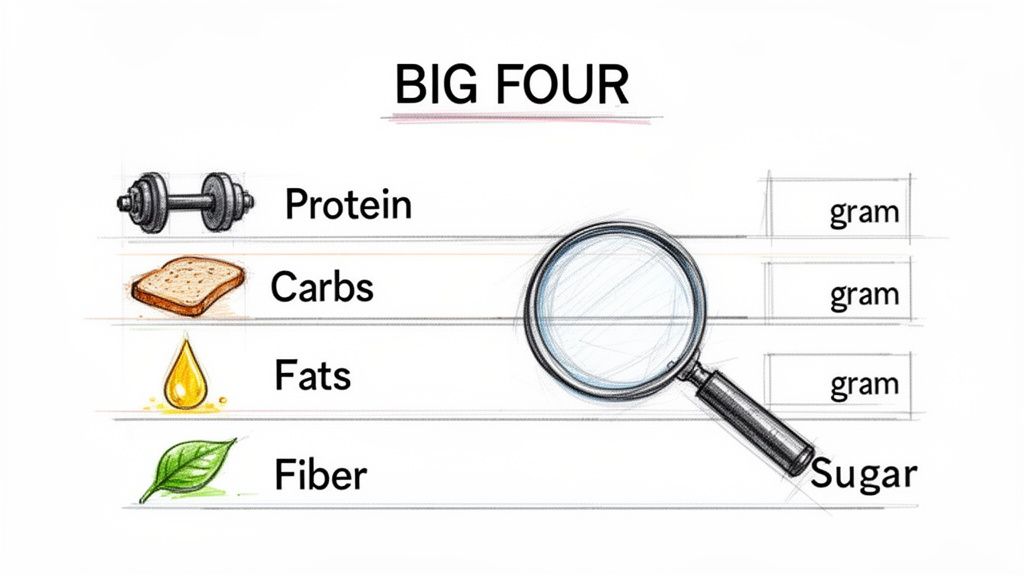
Think of a nutrition label as a bar's resume. It gives you the highlights, but to truly understand what it can do for you, you need to look beyond the flashy claims on the front of the wrapper. The best place to start is with what I call the 'Big Four.'
These are the foundational nutrients that really dictate how a bar will affect your energy levels, satiety, and muscle recovery.
The 'Big Four' Nutrients to Check
Protein: This is the star of the show, of course. It’s absolutely essential for repairing and building muscle tissue, but it’s also a powerhouse for keeping you feeling full and satisfied. As a general rule, look for bars with at least 15 grams.
Carbohydrates: Carbs are your body's go-to fuel source. The trick here is to look at the type of carbs. You want to see a good amount of fiber and minimal added sugars.
Fats: Don't fear the fat! Healthy fats are crucial for hormone production and absorbing key vitamins. The best bars get their fats from whole-food sources like nuts and seeds, not cheap oils.
Fiber: This is the unsung hero of protein bars. As a type of carbohydrate your body can't digest, fiber helps manage blood sugar, supports gut health, and is a game-changer for satiety. Aim for a bar with at least 5 grams to help stave off hunger.
A bar’s real value isn’t just in its protein count. It’s in the synergy between these four elements. A well-balanced bar works with your body to achieve a specific goal, whether that’s refueling after a tough workout or just getting you through a busy afternoon without a crash.
To help you quickly assess a bar, here's a table summarizing what to look for at a glance.
Protein Bar Nutrition At a Glance
This table provides a quick summary of key nutritional targets to look for in a quality protein bar, helping you make informed choices.
| Nutrient | Ideal Range for General Health | Why It Matters for You |
|---|---|---|
| Protein | 15-25g | Crucial for muscle repair, growth, and keeping you full. |
| Fiber | 5g or more | Promotes satiety, aids digestion, and helps stabilize blood sugar. |
| Sugar | Under 10g | Minimizes energy crashes and empty calories. |
| Fat | 5-15g (from whole foods) | Provides sustained energy and supports hormone function. |
Ultimately, a quality protein bar should offer a balanced profile that aligns with your health needs, not just a high number in one category.
The demand for convenient, functional nutrition is skyrocketing, with the global sports nutritional bar market projected to hit USD 20.05 billion by 2030. This makes sense, especially when you consider that only about 27% of adults manage to meet their daily protein requirements consistently. You can dive deeper into the market trends in this comprehensive analysis of the protein bar industry.
This guide is designed to give you a simple, effective framework to cut through the marketing noise. You'll soon be able to scan any label and instantly know if a bar is a good fit for you.
Understanding Protein Carbs and Fats
When you pick up a protein bar, you're essentially looking at a condensed meal. The three core components—protein, carbs, and fats—are what really matter, and the way they're balanced dictates how your body will use that bar. Getting a handle on these macronutrients is the first real step to reading protein bars nutrition facts like a pro and finding the right fit for your goals.
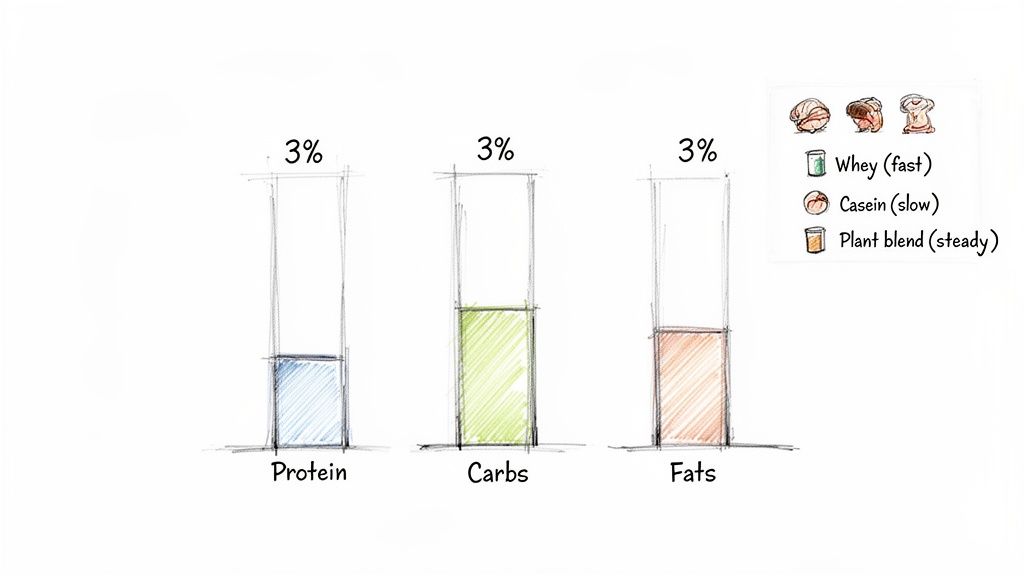
Protein might get top billing, but where that protein comes from is just as important as how much is packed in there. Different protein sources act differently in the body because they're absorbed at different speeds.
Decoding the Protein Source
The type of protein used in a bar is a dead giveaway for its intended purpose. A bar built for an athlete's post-workout recovery will have a completely different protein profile than one designed to keep you feeling full between lunch and dinner.
Fast-Absorbing Protein (Whey, Hydrolyzed Whey): Think of these as the first responders for your muscles. Whey protein digests very quickly, rushing essential amino acids to your muscle tissues right when they're screaming for repair after a tough workout. It’s the go-to for immediate recovery.
Slow-Absorbing Protein (Casein, Plant Blends): Casein and plant-based proteins (like pea, soy, or brown rice) are the marathon runners. They form a gel-like substance in your stomach, providing a slow, steady release of amino acids over several hours. This makes them fantastic for crushing hunger and keeping you satisfied for longer.
Of course, the amount of protein counts, too. While there's always some debate in the nutrition world, a good benchmark for active people wanting to build or maintain muscle is somewhere between 1.2 to 1.6 grams of protein per kilogram of body weight daily. For someone who weighs 150 pounds, that works out to roughly 82-109 grams per day.
Analyzing Carbs and Fats
Protein handles the building and repairing, but carbs and fats are the fuel that powers the whole operation. And when it comes to these two, quality is everything.
Carbs are your body's preferred energy source, but it's crucial to look at the breakdown. The "Total Carbohydrates" you see on the label is a combination of dietary fiber and sugars. A bar with a good amount of fiber (look for over 5 grams) will slow down digestion, helping to stabilize blood sugar and keep you full. On the flip side, a bar loaded with added sugar is just setting you up for a classic energy spike and the inevitable crash that follows.
A bar’s effectiveness hinges on the quality of its macros. A bar with 20 grams of protein is less beneficial if it’s also packed with 25 grams of sugar and unhealthy fats. It's the full picture that counts.
Healthy fats, usually from whole-food sources like nuts, seeds, and their butters, are your friend. They provide long-lasting, sustained energy and play a key role in hormone production. Don't be scared off by the calories; they're doing important work. Just keep an eye out for partially hydrogenated oils—those are code for unhealthy trans fats and are a definite red flag. A quick scan for ingredients you recognize, like almonds or sunflower seeds, is always a smart move.
Once you know what to look for, you can see past the flashy marketing claims and interpret the protein bars nutrition facts for what they truly are: a blueprint for how that bar will fuel your body.
Reading Beyond the Nutrition Facts Panel
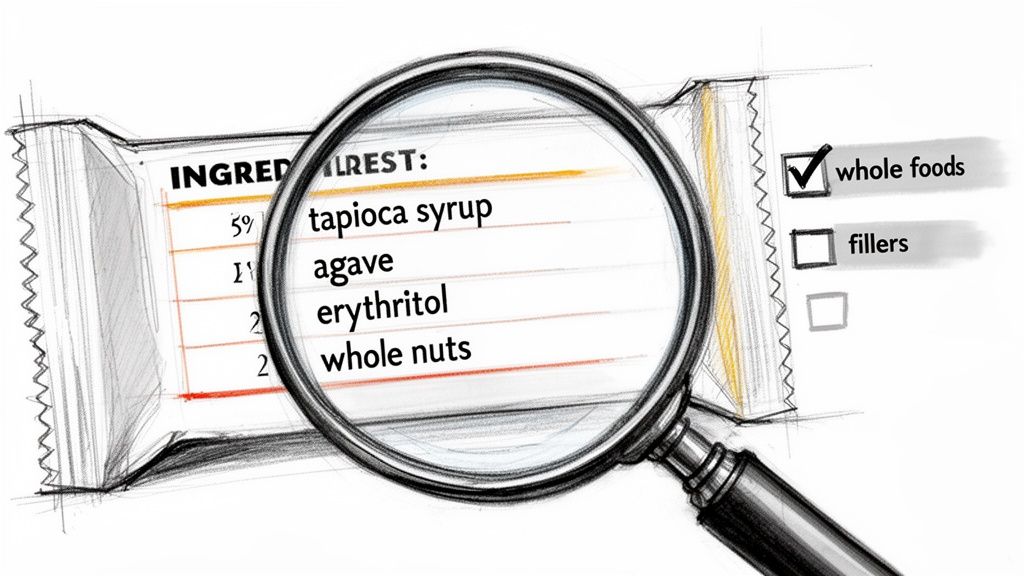
The nutrition facts tell a great story, but it's only half of it. To get the full picture, you have to flip the bar over and read the ingredient list. This is where you can really see what you're eating, moving past the macros to judge the actual quality of the bar.
Think of it this way: a long list of ingredients you can't pronounce is usually a red flag. It’s a sign that the bar is likely packed with chemical fillers, binders, and preservatives. These don’t add much nutritional value, but they do help the bar sit on a shelf for months without going bad. When you're looking at protein bars nutrition facts, the real goal is to find one with a short, simple list of ingredients you actually recognize as food.
Unmasking Hidden Sugars
One of the sneakiest tricks in the food industry is hiding sugar. Manufacturers often use several different types of sweeteners so that "sugar" doesn't show up as the top ingredient. It's a clever way to make a product seem healthier than it is.
Keep an eye out for these other names for sugar:
- Tapioca syrup
- Brown rice syrup
- Agave nectar
- Cane juice
- Fructose or high-fructose corn syrup
They all do the same thing: spike your blood sugar and lead to that inevitable energy crash. A truly good protein bar gets its sweetness from whole-food sources like dates or a natural, zero-calorie sweetener like monk fruit, keeping added sugars to a minimum.
Luckily, as consumers get smarter, the market is responding. By 2026, North America is set to become a powerhouse in the protein bar market, largely because we all want convenient, healthy options. This consumer pressure is pushing companies to create bars with under 10g of sugar, 5g or more of fiber, and way fewer additives. It’s a trend that’s forcing the industry to clean up its act, as you can see in these breakdowns of market trends and consumer demands.
The Deal with Sugar Alcohols and Artificial Sweeteners
So how do some bars taste so sweet with almost no sugar? The answer is often sugar alcohols or artificial sweeteners. Sugar alcohols are a type of carbohydrate that your body doesn't fully digest, which is why they contribute fewer calories. You'll recognize them by the "-ol" at the end of their name.
Common Sugar Alcohols:
- Erythritol
- Sorbitol
- Maltitol
- Xylitol
While they keep the sugar count low, these ingredients can cause a world of digestive trouble for some people—think bloating, gas, and an upset stomach. That’s because as they move through your digestive system, they pull water into your intestines.
If a bar seems too good to be true—super sweet with only a gram or two of sugar—scan the ingredient list. You’ll almost certainly find sugar alcohols or artificial sweeteners like sucralose and aspartame. Everyone's tolerance is different, so figuring out how your body reacts is crucial to finding a bar that not only meets your macros but also makes you feel great.
Choosing the Right Bar for Your Goal
Let’s get one thing straight: there’s no single "best" protein bar. The right one is simply the one that actually helps you with what you’re trying to do.
Think of it like fuel for your car. You wouldn't put standard unleaded in a high-performance race car, right? The bar you grab to stay full during a busy workday is going to be completely different from the one you eat to refuel after a brutal leg day. Once you understand this, reading protein bars nutrition facts stops being a chore and becomes your secret weapon.
Bars for Sustained Energy and Satiety
Are you trying to kill those 3 p.m. hunger pangs? Or maybe you just need something to tide you over between lunch and a late dinner. If staying full is the name of the game, you need to look for two key players: protein and fiber.
This duo is the ultimate tag team for satiety—that satisfying feeling of fullness that keeps you from mindlessly snacking.
Here's what to look for:
- At least 15g of protein: This is a solid amount to take the edge off your hunger.
- More than 5g of fiber: Fiber is the slow-burner. It slows down digestion, which keeps your blood sugar stable and makes that full feeling last much longer.
A bar with this combination basically acts like a time-release energy capsule, helping you dodge that afternoon slump and stick to your eating plan without feeling like you're starving.
Bars for Muscle Repair and Recovery
When you’ve just finished a tough workout, your needs change completely. Your muscles are screaming for repair, and they need amino acids (the building blocks of protein) delivered fast. This is where a bar with a hefty dose of protein and some smart carbs comes in.
If you're serious about your training, digging into some good post-workout recovery tips can really help you dial in your nutrition, including picking the right bar.
For post-workout, zero in on these numbers:
- 20-30g of protein: Research shows this is the sweet spot for kickstarting muscle protein synthesis.
- Fast-absorbing protein: Whey protein is the gold standard here because it gets to your muscles quickly.
- A 2:1 or 3:1 carb-to-protein ratio: Carbs aren’t the enemy here! They are crucial for restocking the glycogen you just burned, which is essential for a speedy recovery.
Think of this type of bar as a recovery crew for your muscles. It delivers the essential materials right when and where they're needed most, helping you repair tissue, reduce soreness, and build strength more effectively.
Bars as a Meal Replacement
Now, let’s talk about the "meal replacement" bar. This term gets thrown around a lot, but honestly, most bars don't qualify. For a bar to truly take the place of a meal, it has to do more than just pack in protein. It needs to bring a balanced nutritional profile to the table.
A real meal replacement should have at least 300 calories and a solid mix of protein, healthy fats, and complex carbs. Many bars with this label are just overgrown snacks. Always flip it over and check the nutrition panel. If it doesn't have the substance to carry you for a few hours, it's not replacing a meal—it's just delaying your hunger for a little while.
Analyzing Three Common Protein Bars
Knowing how to read a label is a great first step, but the real confidence comes when you can apply that skill in the grocery store aisle. To make all this theory stick, let's break down the protein bars nutrition facts for three common types of bars you'll find just about anywhere.
Each one is built for a different purpose and a different person. Seeing them side-by-side really highlights how a few tweaks to the ingredient list can create a completely different nutritional experience.
Protein Bar Type Comparison
Let's put these three archetypes next to each other to see how they stack up. This table gives you a quick snapshot of what to expect from each category, making it easier to spot the right bar for your needs.
| Feature | Workout Bar Example | Plant-Based Bar Example | Low-Carb Bar Example |
|---|---|---|---|
| Primary Goal | Muscle Recovery & Repair | Clean Snacking & Meal Bridge | Low-Carb Diet Compliance |
| Protein Range | 20-30g | 12-18g | 10-15g |
| Protein Source | Whey, Milk Isolate, Casein | Pea, Brown Rice, Hemp, Nuts | Whey, Collagen, Nuts |
| Carb Profile | Moderate (20-30g) for glycogen | Higher, from whole foods like dates | Very low (<5g net) |
| Ingredient Focus | Protein blends, sugar alcohols | Whole foods, nuts, seeds, fruit | High-fat sources, fiber, sweeteners |
| Best For... | Post-intense workout recovery | A nutrient-dense snack, dairy-free needs | Keto/low-carb dieters, blood sugar control |
As you can see, the "best" bar is all about context. The powerhouse workout bar is perfect after lifting weights, but it's probably overkill for a desk snack.
The High-Protein Workout Bar
This is your classic muscle-builder, the one designed specifically for post-exercise recovery. Think of it as the powerhouse of the protein bar world, built to kickstart muscle repair as quickly as possible.
Typical Profile: You'll see a hefty 20-30g of protein, usually from fast-absorbing sources like whey or milk protein isolate. Carbs are also fairly high, around 20-30g, to help restock the energy (glycogen) you just burned.
Who It's For: This bar is made for athletes, gym-goers, and anyone who's just finished a tough workout. That immediate protein hit is exactly what your muscles need to begin the recovery process.
The Plant-Based Whole Food Bar
This type of bar caters to the health-conscious person who cares more about clean, recognizable ingredients than hitting a massive protein number. The philosophy here is "food first."
Typical Profile: The protein is more moderate, usually in the 12-18g range, coming from sources like pea protein, brown rice protein, or nuts and seeds. These bars are often higher in fiber and healthy fats, thanks to ingredients like dates, almonds, and chia seeds.
Who It's For: It’s a great fit for vegans, people with dairy sensitivities, or anyone who just wants a satisfying, nutrient-dense snack without a long list of additives and artificial ingredients.
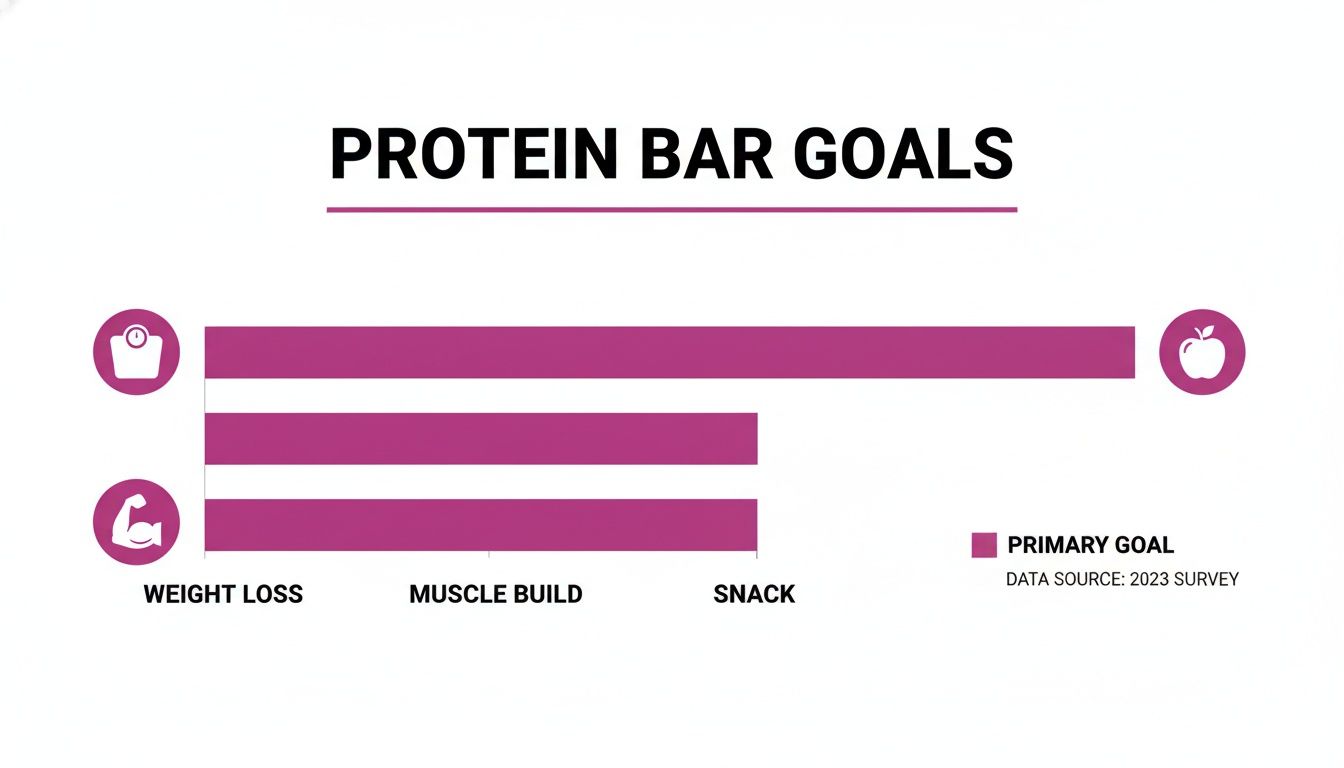
What this chart really drives home is that there’s no single "best" bar. It all comes down to your main goal, which is why matching the label to your personal needs is so important.
The Low-Carb Keto-Friendly Bar
Built from the ground up for followers of ketogenic or low-carb diets, this bar’s main job is to keep net carbs to an absolute minimum while delivering on fat and moderate protein.
Typical Profile: These bars pack a punch with high fat (15-20g) from things like coconut oil or nuts, moderate protein (10-15g), and incredibly low net carbs, often under 5g.
Who It's For: Anyone on a strict low-carb plan will reach for this. However, be warned: they heavily rely on sugar alcohols and fibers like soluble corn fiber to taste sweet, which can cause digestive issues for many people.
Choosing a bar isn't about finding a "good" or "bad" one—it's about finding the right one for the job. A workout bar is great for recovery but might be overkill for an office snack, while a whole-food bar might not provide enough protein for an athlete's needs.
Once you understand these three basic types, you can walk down any snack aisle and quickly figure out which bar is going to work for you and which ones to leave on the shelf.
Answering Your Top Protein Bar Questions
Alright, you've learned how to decode the nutrition label, but let's be real—that often leads to even more questions. Let's tackle some of the most common ones I hear all the time, so you can feel confident about how (and when) to use protein bars.
Can I Eat a Protein Bar Every Day?
You sure can, but it’s all about perspective. Think of a protein bar as a handy tool in your nutritional toolkit, not the entire toolbox. A high-quality bar packed with whole ingredients, fiber, and not a lot of sugar is a lifesaver on those chaotic days when a proper meal just isn't in the cards.
The catch? If you lean on them too much, you'll miss out on the incredible spectrum of vitamins, minerals, and other good stuff you only get from a varied diet of fresh fruits, veggies, and whole-food proteins. My advice is to use a bar to fill the gaps, not to replace the foundation of your diet.
Are Protein Bars Actually Good for Weight Loss?
They definitely can be, but you have to be a smart shopper. A bar that’s high in protein (aim for 15g or more) and fiber (at least 5g) can be a game-changer for managing your weight. That protein-fiber one-two punch is scientifically proven to keep you feeling full and satisfied, which helps curb cravings and makes it easier to eat fewer calories overall.
But here’s where you need to be careful. A lot of bars are just candy bars with a health halo, loaded with enough sugar and junky fats to completely derail your efforts. For weight loss, stick to a simple guideline: look for bars with fewer than 250 calories and less than 10g of sugar.
A protein bar isn't a magic bullet for weight loss. Its real power is in helping you manage hunger and make better choices throughout the day as part of a balanced, calorie-aware eating plan.
What’s the Real Difference Between Whey and Plant-Based Protein?
The main differences come down to where they're from and how your body uses them.
Whey protein, which comes from dairy, is what we call a "fast-acting" protein. It digests very quickly, flooding your muscles with the amino acids they need to repair and grow. This makes it a fantastic choice for right after a workout.
Plant-based proteins—which usually come from peas, soy, brown rice, or a mix of a few—are "slower-acting." They release amino acids more gradually, giving you a steady supply of energy and helping you feel full for longer. Today's plant-based bars are expertly formulated with multiple sources to provide all the essential amino acids, making them a solid choice for anyone, not just vegans or people who are lactose intolerant.
Trying to keep all this straight can feel like a full-time job. But what if you had a personal guide? Superbloom acts as your personal AI nutrition coach, helping you connect the dots between the foods you eat—including protein bars—and how you feel. By logging your meals, you’ll get personalized insights and start seeing the patterns that lead to healthier habits, all without the stress of counting every last calorie. Start your journey with Superbloom today!