
Protein Shakes for GLP 1 Your Guide to Better Results

You start a GLP-1 hoping food decisions will get easier. In one sense, they do. Hunger gets quieter. Portions shrink without much effort. The scale may even move quickly.
Then the confusing part hits. You open the fridge and nothing sounds good. A few bites fill you up. Some days you feel mildly nauseated. Other days you realize it’s late afternoon and you’ve had coffee, half a yogurt, and not much else. You’re losing weight, but you don’t feel as strong or steady as you expected.
That’s where protein shakes for glp 1 can help. Not because you need a “diet product,” and not because every meal should come from a bottle. They help because they’re simple, gentle on a low appetite, and easier to finish than chicken, eggs, or a full plate when your stomach feels off. The right shake can also do something many people overlook. It can support your gut, reduce the friction of eating, and help you notice which ingredients leave you feeling calm versus bloated.
Starting a GLP-1 and Feeling Lost at Mealtime
Maria starts her day with good intentions. She’s on a GLP-1, she isn’t snacking the way she used to, and she’s proud of that. By breakfast, though, one scrambled egg feels like too much. Lunch comes and goes because she’s busy and not hungry. At dinner, she’s suddenly tired, slightly queasy, and wondering why “eating less” feels harder than expected.
That experience is common. Many people expect appetite loss to feel clean and simple. Instead, it can feel awkward. Your body still needs nourishment, but your usual signals aren’t helping much. Hunger used to remind you to eat. Now it’s turned down, so you have to eat more intentionally.
A protein shake can be the bridge between “I know I should eat” and “I can tolerate this.” It’s portable, predictable, and often easier to manage than a full meal. When appetite is low, drinking something cool and smooth can feel much more doable than chewing dense food.
When meals suddenly feel like work
If this sounds familiar, you’re not failing. Your body is responding to a medication that changes appetite and digestion. That means your old routine may not fit anymore.
A few real-life moments where shakes can help:
- Morning aversion: Breakfast feels heavy, but a chilled shake goes down more easily.
- Busy workdays: You forget to eat until you’re drained. A ready-to-drink option can keep the day from unraveling.
- Nausea windows: Solid food sounds impossible, but slow sipping feels manageable.
- Travel or commute days: A shaker bottle is easier than building a full balanced meal on the go.
Protein shakes aren’t a shortcut. They’re a support tool when your appetite, schedule, or stomach make regular meals harder.
If you’re trying to create more consistency around eating, simple routines matter. A basic system for shopping, prepping, and storing easy foods can reduce decision fatigue, especially when appetite is unpredictable. This beginner-friendly guide on how to meal prep can help you set up that kind of low-stress structure.
Why Your Body Needs More Protein on GLP-1s
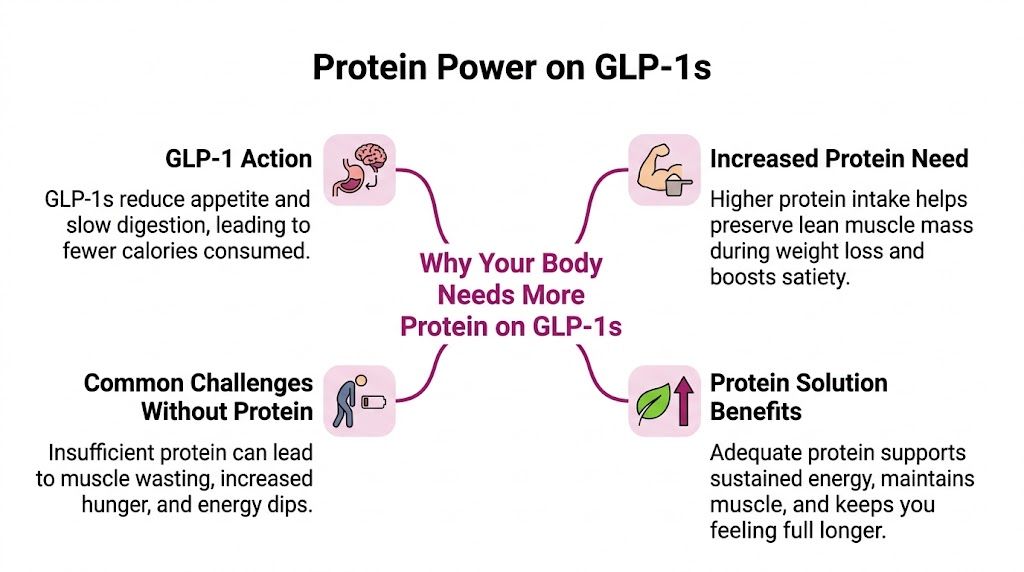
GLP-1 medications change more than hunger. They also change the pace of digestion, the size of meals that feel comfortable, and sometimes how your stomach reacts to food in the first place. That combination can inadvertently push protein intake down, even in people who are trying hard to eat well.
Your body still has the same daily jobs to do. It has to maintain muscle, support recovery, keep your immune system working, and repair tissues. So while appetite may shrink, your protein needs do not shrink in the same way.
The part of weight loss people don’t talk about enough
Weight loss is not only about fat. Some lean tissue can be lost too, and that includes muscle. Muscle is your body’s working equipment. It helps you get up from a chair, carry groceries, climb stairs, and stay steady and active as the number on the scale changes.
A helpful comparison is packing for a trip. Losing body fat is like taking unnecessary items out of the suitcase. Losing muscle is closer to removing the wheels and handle. The bag may be lighter, but it becomes harder to move through daily life.
That is why nutrition professionals worry about eating too little protein during GLP-1 treatment. The goal is not merely to eat less. The goal is to lose weight while keeping as much strength and function as possible.
Why protein matters so much
Protein gives your body amino acids, the building blocks it uses to maintain muscle and repair tissue. On GLP-1s, that is especially important because appetite is lower and meals are often smaller than they used to be.
There is also a comfort piece that often gets missed. The right protein choice can be easier on digestion than random small meals or sugary snack foods eaten just to get something down. For some people, a simple shake with a tolerable protein source becomes easier to digest, less bloating-triggering, and more predictable than forcing down a full plate of food.
That connection between nutrition and symptoms matters. If a food plan looks good on paper but leaves you nauseated, overly full, or gassy, it becomes hard to repeat. A protein shake can help close that gap by giving you a simpler option that supports your body while being easier to live with.
A few patterns show up often:
- Smaller meals have to carry more nutritional weight: If you are eating less volume, each meal or snack needs to do more work.
- Protein foods can feel harder to finish: Chicken, eggs, yogurt, beans, or tofu may sound fine in theory but feel heavy, dry, or unappealing during nausea or fullness.
- Low protein can show up as low energy: People often notice more weakness, poorer recovery, or less interest in movement.
- Digestive side effects can shape food choices: Bloating, constipation, and stomach discomfort may lead people to avoid foods altogether instead of finding forms they tolerate better.
If you use plant-based options, the form matters too. Some blends are smoother, lighter, and easier on the stomach than others. This overview of vegan protein powder benefits can help you understand why certain plant proteins work well for people who want protein support without a heavy feeling.
Practical rule: On a GLP-1, judge a small meal by what it gives your body, not just by how little you managed to eat.
Protein shakes solve a very specific problem
Protein shakes help because they reduce friction. You do not need a large appetite, much chewing, or a full cooking setup to get a meaningful amount of nutrition. That can make the difference between getting enough protein consistently and falling short for days at a time.
They can also support a calmer eating pattern. A shake that sits well in your stomach is often more useful than a “perfect” meal you avoid because it feels too rich or leaves you bloated. That is one reason protein shakes for glp 1 can be such a practical tool. They support muscle, but they also help many people feel better while they are adjusting to a very different eating rhythm.
How to Choose the Right Protein Shake
The protein aisle gets crowded fast. Some products are built like dessert. Some are fine for athletes with strong appetites but too rich for someone on a GLP-1. Others look “clean” but barely contain enough protein to matter.
A good shake for this stage usually comes down to three questions. How much protein is in it? What kind of protein is it? What else is packed in the bottle or powder?
Start with the protein amount
Guidelines recommend 1.2 to 1.5 g protein per kg of body weight per day, spread across meals, and shakes with 20 to 30 g of high-quality protein per serving are a practical way to help meet that target, according to this overview of protein guidance for GLP-1 users.
That range matters because too little protein won’t do much to support muscle, while an extra-large shake may feel heavy when your stomach is already sensitive.
If you’re scanning a label, 20 to 30 grams per serving is a strong starting point. If you’re using the shake as a meal replacement, don’t settle for a token amount.
Then choose the protein type
Different proteins feel different in the body. The “best” one is often the one you can tolerate consistently.
| Protein Type | Key Benefit | Best For | Considerations |
|---|---|---|---|
| Whey | Fast-digesting and rich in amino acids | People who want a classic, efficient option | Some people with dairy sensitivity may not tolerate it well |
| Casein | Slower release | People who prefer a more sustained, filling shake | Can feel thicker and heavier |
| Pea or soy | Plant-based options with strong protein quality | People who avoid dairy or want a vegan choice | Texture and flavor vary a lot by brand |
If dairy tends to bother your stomach, a plant-based shake may feel gentler. If you want to understand the broader tradeoffs, this guide to vegan protein powder benefits is a useful primer on what plant-based options can offer.
Don’t ignore the supporting ingredients
A label can look high-protein and still be a poor fit for GLP-1 side effects. Extra sugar, heavy fats, and lots of added extras can turn a helpful shake into something that sits badly.
When comparing products, look for these features:
- High enough protein: Aim for a serving that lands in the practical range discussed above.
- Lower sugar: A lower-sugar product is often easier to fit into the day without becoming overly sweet or cloying.
- Moderate fat: Very rich shakes can feel harder to tolerate when digestion is slowed.
- Simple ingredient profile: Fewer moving parts can make it easier to identify what agrees with you.
- Optional added fiber: This can help some people, especially if constipation is part of the picture.
Gut comfort matters as much as muscle support
Many shake guides fall short because they stop at protein grams and never ask how the shake feels in your body.
For GLP-1 users, that’s a mistake. The right shake isn’t just the one with good macros. It’s the one that leaves you feeling stable after drinking it. Some people feel best with whey isolate. Others notice less bloating on pea protein. Some do well with added fiber, while others need a simpler formula first and then add fiber gradually.
A “healthy” shake that leaves you bloated all afternoon isn’t the right shake for you.
That’s why I often tell patients to choose one base product, try it consistently for a few days, and pay attention to fullness, bloating, bowel changes, and energy. Your body usually gives clearer feedback than marketing does.
Your Daily Protein Shake Strategy for GLP-1s
A good strategy is often more important than the perfect recipe. Many people buy a protein powder, use it once, feel a little off, and assume shakes aren’t for them. Usually the issue is timing, texture, or how quickly they drank it.
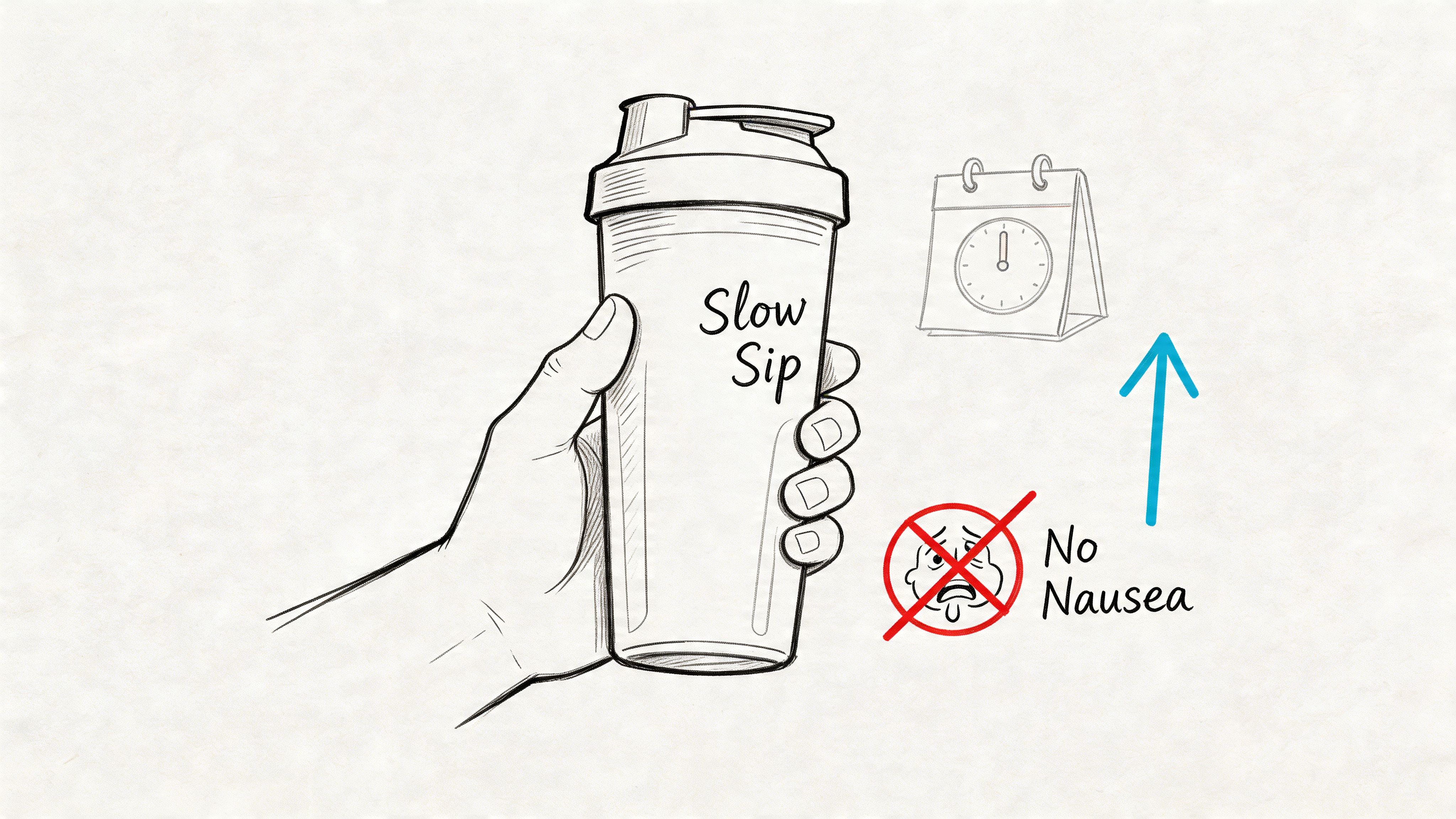
Protein shakes with 20 to 30 g of high-DIAAS protein can support satiety and blood sugar stability, and for better tolerance with delayed gastric emptying, it helps to choose protein isolates or hydrolysates and avoid high-fat additions, which can increase nausea risk by 15%, based on this guide to protein shakes during GLP-1 treatment.
Use the shake before you feel depleted
A shake works best when it’s planned, not when you’re already running on empty. If mornings are your easiest eating window, use one then. If afternoons are when appetite drops off, place it there before the slump hits.
Three practical patterns tend to work well:
Breakfast anchor
A protein shake in the morning gives you a reliable start when breakfast foods feel unappealing. This can also reduce the “I forgot to eat all day” problem.Bridge between small meals
If lunch is tiny and dinner is late, a shake can keep your intake from becoming too sparse.Side-effect backup plan
Keep a ready-to-drink option for nausea days. When your normal routine breaks, you’ll still have something manageable.
Sip slowly when your stomach is sensitive
One of the most useful tricks is also the simplest. Don’t force a shake down quickly. Sip it over time, especially if nausea is present. A cold or cool drink often feels easier than something thick and warm.
You may also prefer a lighter style:
- Clear whey isolate can feel more like juice than a milkshake.
- Hydrolyzed protein may sit better for some people.
- Minimal fat add-ins often improve tolerance.
- Smaller portions can be easier than one large serving at once.
If a shake feels too rich, don’t give up on shakes. Change the format before you change the goal.
A quick visual can help if you want ideas for building a routine around easy, tolerable options.
Keep preparation boring enough to repeat
The best protein habit is usually not the most creative one. It’s the one you’ll consistently do on a busy Tuesday when your appetite is low and your patience is lower.
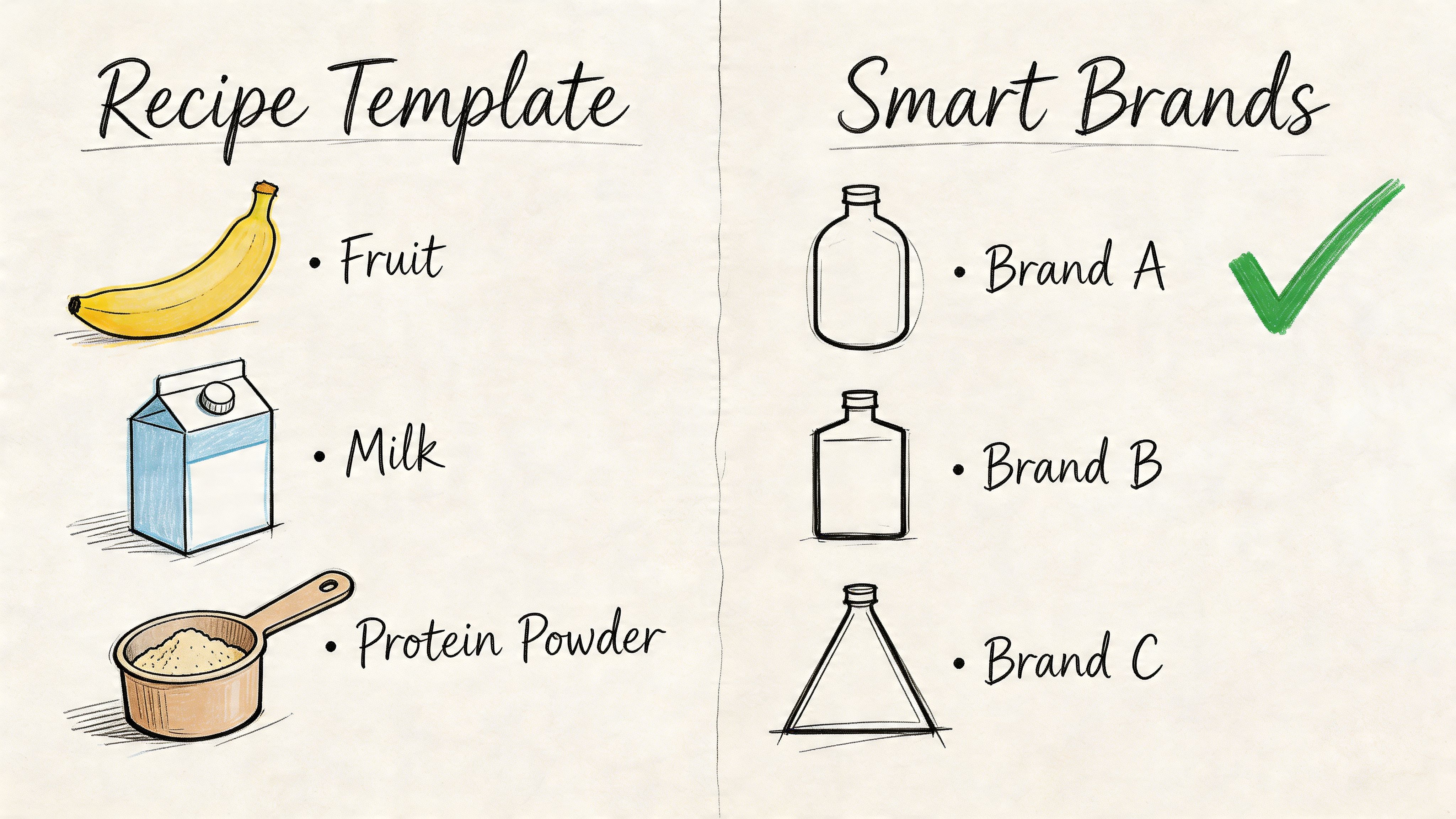
Try this template:
- Choose one base: water, milk, or a plant milk you tolerate well
- Add one protein source: powder or ready-to-drink shake
- Keep flavor simple: vanilla, chocolate, or unflavored
- Avoid overloading it: too many ingredients can make it heavier and harder to troubleshoot
Consistency makes it easier to notice what helps. Complexity makes everything murky.
Simple Recipes and Smart Brand Choices
A good protein shake on a GLP-1 should do two jobs at once. It should help you meet protein needs, and it should feel manageable in your stomach. That second part matters more than people expect. A shake that looks perfect on the label but leaves you bloated, heavy, or turned off food for hours is not a good fit for your body.
Store-bought options can help because they remove decision fatigue. If you want a ready-made bottle, start by looking for brands such as Core Power, Premier, and Ensure Max. A practical target is 20 g of protein or more per serving, with ingredients and sweetness levels you tend to tolerate well. Then let your body break the tie. One product may taste fine but feel too thick. Another may go down easily and leave you steady for the next few hours.
Three easy shake ideas
Use these like starter templates, not rules. The goal is to find a few combinations that are easy to repeat and easy to digest.
Nausea-soothing shake
Start with a plain protein that has worked for you before. Mix it with cold water or a milk you tolerate well, then add a small amount of ginger if that usually feels settling.
This works well on days when rich flavors or heavy textures make your stomach push back.
Gut-friendly fiber shake
Use a simple protein base, then add one gentle fiber source in a small amount. That might be half a banana, a spoonful of oats, or a small amount of chia if chia sits well for you. Fiber works like a dial, not a switch. Too little may leave you constipated. Too much too fast can increase bloating.
The useful question is not “Is this healthy?” The useful question is “How does my digestion respond to this version?”
Creamy meal replacement
Choose a protein powder or bottled shake that gives enough protein to anchor a light meal. Blend it with milk or plant milk, then add one small extra, such as peanut butter, cinnamon, or a few berries.
Keep it simple enough that you can still tell what helped and what did not.
Smart swaps that make life easier
Protein shakes often work best as replacements for the moments that usually fall apart.
- Breakfast becomes more stable: a shake can replace coffee alone and give your body something to work with early in the day.
- A chaotic lunch gets a backup plan: keeping a bottle at work can prevent the long stretch from “not hungry” to “suddenly starving.”
- A sweet drink becomes more filling: you still get convenience, but with more protein and a steadier energy curve.
- A rough nausea window includes some nutrition: even a partial shake can be easier to handle than a full meal.
These swaps help with more than muscle maintenance. They can improve how the day feels in your body. Less empty-stomach nausea, less late-day rebound hunger, and fewer random food choices made when you are already worn down.
How to shop without overthinking it
The shelf can feel noisy. Use a short filter.
- Look at protein first: choose an option with enough protein to matter.
- Check the ingredient list next: if sugar alcohols, added fibers, or dairy usually upset your stomach, pick another option.
- Match the texture to your tolerance: some people do better with thin bottled shakes, while others prefer a blended powder they can adjust.
- Buy one at a time: testing a single product makes it much easier to spot patterns in bloating, fullness, and bowel changes.
Many GLP-1 users do well with two types on hand. One shelf-stable shake for busy or low-appetite days. One simple powder at home for more control over ingredients. That setup gives you flexibility without turning protein into another stressful food decision.
Personalize Your Plan and Track What Works
The best protein strategy on GLP-1s is personal. Two people can drink the same shake and have completely different experiences. One feels pleasantly full and energized. The other feels bloated, constipated, or turned off by the texture for the rest of the day.
That’s why pattern recognition matters. GLP-1 users often run into digestive issues, and a personalized approach can help. Tracking how different protein sources, such as whey versus plant-based, and different fiber types affect bloating and digestion can help identify triggers and support beneficial gut bacteria, which is linked to emotional well-being and reduced inflammation, according to this dietitian-guided article on protein shakes and GLP-1 digestion.
What to track
You don’t need a complicated spreadsheet. A few notes are enough if you keep them consistent.
Try logging:
- What you drank: brand, flavor, or protein type
- When you had it: morning, midday, post-walk, nausea window
- How you felt after: full, calm, bloated, gassy, hungry again quickly
- What happened later: energy level, bowel changes, cravings, ease of dinner
Turn symptoms into useful feedback
A tool can provide valuable help. Superbloom lets you log meals with a photo, add quick reflections, and notice patterns over time. For someone using protein shakes for glp 1, that can make it easier to see whether whey, pea protein, extra fiber, or a certain timing pattern consistently works better for your body.
The goal isn’t to find a perfect shake on day one. The goal is to gather enough feedback that your routine starts feeling easier, steadier, and more predictable.
If emotional eating has been part of your history, this kind of tracking can also help separate physical discomfort from emotional urgency. Sometimes what feels like “I need something now” is often low intake earlier in the day. Sometimes it’s bloating from an ingredient that didn’t agree with you. Once you can name the pattern, you can change it.
Small observations lead to better choices. Better choices lead to a routine that feels supportive instead of restrictive.
If you want help noticing which shakes leave you feeling full, calm, and less bloated, Superbloom can support that process. You can log a shake with a photo, track symptoms like nausea or bloating, and use daily check-ins to spot patterns in protein, fiber, appetite, and emotional eating so your plan fits your body, not just general advice.