
10 Quick Healthy Lunch Ideas for Work That Actually Save You Time
The midday slump is real, and it often starts with a lackluster lunch. You grab something fast, not necessarily healthy, and by 2 PM, your energy and focus are gone. This cycle of skipped meals, expensive takeout, and repetitive salads can leave you feeling uninspired while derailing your health goals. But what if your workday meal could become a source of sustained energy, mental clarity, and genuine satisfaction? This isn’t about finding more time you don’t have; it's about adopting a more strategic approach to your midday meal.
We're moving beyond generic advice to provide a curated roundup of 10 quick healthy lunch ideas for work, each designed for busy professionals. Every idea is built on principles of nutritional balance, meal prep efficiency, and the kind of mindful eating that fosters lasting habits. We’ll explore how small shifts in your lunch routine can help you recognize patterns in your energy and mood, turning your midday meal into a powerful tool for well-being. To jumpstart your journey, consider diving into delicious and easy-to-prepare options like a perfect fish stir fry, which combines protein and vegetables in one simple dish.
This guide is designed to be actionable. You will find specific details on how to assemble grain bowls, strategically layer mason jar salads, and create satisfying bento boxes. We'll also cover smart swaps, portion guidance, and dietary adaptations to help you personalize your lunch break. Get ready to transform your lunch from a daily chore into a daily win, one delicious and energizing meal at a time.
1. Grain Bowls with Protein & Vegetables
A grain bowl is a complete, satisfying meal built in layers, making it one of the most versatile and quick healthy lunch ideas for work. The concept is simple: start with a base of nutrient-rich whole grains, add a lean protein source, and top with a generous serving of colorful vegetables and a flavorful dressing. This assembly-line approach to lunch is not only efficient but also highly customizable, allowing you to build a meal that perfectly suits your tastes and nutritional needs.
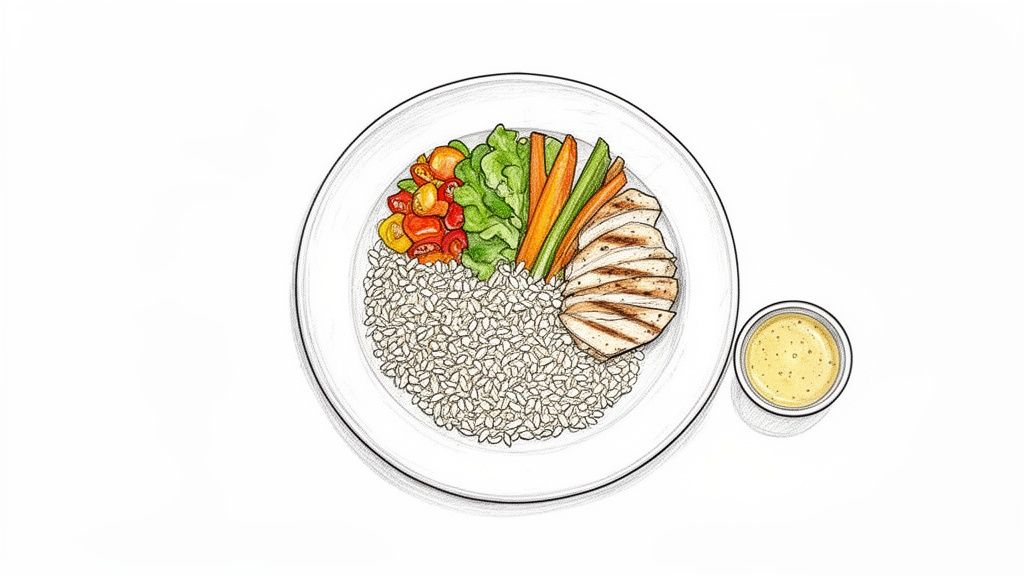
Grain bowls are an ideal solution for busy professionals because the components can be prepared in advance. Cook a large batch of grains, grill some chicken or tofu, and chop your vegetables over the weekend. Come lunchtime, all you have to do is assemble.
Why It Works for Mindful Eating
Grain bowls offer a fantastic opportunity to practice mindful eating and observe how different foods affect your body. By mixing and matching components, you can directly connect specific combinations to your afternoon energy levels, focus, and digestion. This practice aligns perfectly with Superbloom’s coaching philosophy, which encourages self-awareness over strict rules.
Superbloom Insight: Pay attention to how a quinoa-based bowl with chicken makes you feel compared to a brown rice bowl with beans. Does one keep you feeling full longer? Does another give you a more sustained energy boost? Use these observations to personalize your future meals.
How to Build a Better Grain Bowl
- Mediterranean Power Bowl: Combine quinoa, grilled chicken strips, cherry tomatoes, cucumber, Kalamata olives, and a light lemon-tahini dressing.
- Southwestern Veggie Bowl: Use cilantro-lime brown rice as your base, then add black beans, roasted sweet potato chunks, corn salsa, and a dollop of Greek yogurt or avocado.
- Asian-Inspired Tofu Bowl: Layer farro with baked tofu, shredded carrots, edamame, and sliced red bell peppers. Drizzle with a sesame-ginger vinaigrette just before eating.
Practical Tips for Success
- Layer Strategically: To prevent a soggy lunch, layer your ingredients correctly. Start with grains at the bottom, followed by proteins, then hard vegetables (like carrots or peppers), and finally leafy greens on top.
- Pack Dressing Separately: Always carry your dressing in a small, leak-proof container. This is the single most important step to ensure your vegetables stay crisp.
- Use Glass Containers: Opt for glass containers with secure lids. They are durable, non-porous (so they won't absorb odors), and make it easy to reheat your meal if desired. They are also great for snapping a quick photo for your Superbloom food log.
2. Mediterranean Salads with Legumes
Mediterranean salads built around hearty legumes offer a refreshing, plant-forward take on quick healthy lunch ideas for work. This approach moves beyond simple leafy greens by using chickpeas, lentils, or white beans as a substantial base. These ingredients provide plant-based protein and high fiber, which are known to support sustained energy and digestive health. Combined with crisp vegetables, fresh herbs, and healthy fats from olive oil, this type of salad is both satisfying and incredibly nutritious.
Inspired by one of the world's most researched dietary patterns, these salads are simple to assemble. You can prepare a large batch of legumes and chop your vegetables ahead of time, making lunchtime assembly a quick, five-minute task.
Why It Works for Mindful Eating
Incorporating legume-based salads is an excellent way to explore how different plant-based proteins affect your body. Many people find that plant proteins feel lighter and are easier to digest than some animal proteins, leading to a more energetic afternoon. This self-discovery process is central to the Superbloom coaching method, which focuses on learning your body's unique signals.
Superbloom Insight: Track how you feel after a chickpea salad versus a lentil salad. Do you notice any differences in digestion, bloating, or energy levels? Use your food log to identify which legumes make you feel your best and incorporate them more often.
How to Build a Better Mediterranean Salad
- Classic Greek Chickpea Salad: Combine mixed greens, chickpeas, cherry tomatoes, cucumber, red onion, and Kalamata olives. Top with a sprinkle of feta cheese and a simple lemon-olive oil dressing.
- Hearty Lentil & Beet Salad: Mix cooked brown or green lentils with arugula, roasted beets, crumbled goat cheese, and toasted walnuts. A sharp Dijon vinaigrette cuts through the earthy flavors perfectly.
- Tuscan White Bean & Herb Salad: Toss cannellini beans with roasted red peppers, artichoke hearts, fresh parsley, and dill. A bright lemon and garlic dressing brings it all together.
Practical Tips for Success
- Prep Legumes in Bulk: Cook a large batch of your favorite legumes over the weekend and store them in the fridge. Canned beans are also a great time-saving option; just be sure to rinse them well.
- Keep Components Separate: To maintain freshness and crunch, pack your dressing, leafy greens, and any nuts or seeds in separate containers. Combine everything right before you eat.
- Hydrate Accordingly: If you are new to high-fiber meals, remember to drink plenty of water throughout the day. This helps your digestive system process the extra fiber smoothly.
3. Protein-Packed Wraps & Sandwiches on Whole Grain Bread
The classic sandwich or wrap gets a powerful nutritional upgrade, making it one of the most reliable and quick healthy lunch ideas for work. By building your meal on a foundation of whole grain, sprouted, or sourdough bread and focusing on lean proteins, you create a perfectly portioned, portable, and satisfying lunch. This approach is ideal for busy professionals who need a grab-and-go option without compromising on health.
Wraps and sandwiches are incredibly efficient. You can assemble a week's worth on a Sunday or put one together in minutes before heading out the door. The key is choosing high-quality ingredients that provide sustained energy through a balance of fiber, protein, and healthy fats.
Why It Works for Mindful Eating
Sandwiches and wraps offer a direct way to observe how different types of carbohydrates and proteins impact your afternoon. The self-contained nature of a sandwich allows you to easily track how specific combinations influence your satiety, energy levels, and digestive comfort. This personal experimentation is central to Superbloom's coaching, which prioritizes understanding your body's unique signals.
Superbloom Insight: Track how a turkey and avocado sandwich on sourdough makes you feel versus a hummus and veggie wrap on a sprouted grain tortilla. Does one prevent the 3 p.m. slump better? Does another feel lighter on your digestion? Use these observations to build your perfect energy-sustaining lunch.
How to Build a Better Wrap or Sandwich
- Turkey & Avocado Club: Use two slices of whole wheat or sourdough bread, layered with sliced turkey breast, mashed avocado, spinach, and tomato. A light spread of mustard adds flavor without extra calories.
- Hummus & Roasted Veggie Wrap: Take a sprouted grain tortilla and spread a generous layer of hummus. Top with leftover roasted vegetables (like bell peppers and zucchini), fresh cucumber slices, and a handful of mixed greens.
- Upgraded Egg Salad: Mash two hard-boiled eggs with Greek yogurt instead of mayo. Mix in chopped celery, fresh dill, and a pinch of salt and pepper. Serve on toasted whole grain bread with a layer of lettuce.
Practical Tips for Success
- Create a Moisture Barrier: To prevent a soggy sandwich, spread a thin layer of hummus, cream cheese, or mashed avocado directly onto the bread. This creates a barrier between the bread and wetter ingredients like tomatoes.
- Choose Hearty Breads: Opt for sturdy breads like sourdough, sprouted grain, or dense whole wheat. These varieties hold up better to moisture and travel than delicate white bread.
- Pair with a Crunch: Serve your wrap or sandwich with a side of crunchy vegetables like carrot sticks, cucumber slices, or snap peas. The added texture and fiber increase satisfaction and satiety signals.
4. Mason Jar Salads with Strategic Layering
A mason jar salad is a brilliant meal-prep solution that keeps your greens crisp and your ingredients fresh until you’re ready to eat. By using a specific layering technique, this method prevents the dreaded soggy lunch salad, making it one of the most reliable and visually appealing quick healthy lunch ideas for work. The core idea is to build your salad upside down, with the dressing at the very bottom and the most delicate ingredients at the top.
This prep-ahead strategy is perfect for busy professionals. You can assemble five jars over the weekend, and each day you have a grab-and-go meal that’s ready in seconds. When lunchtime arrives, just shake the jar vigorously to distribute the dressing, and either pour it into a bowl or eat it straight from the jar.
Why It Works for Mindful Eating
The structured nature of mason jar salads encourages intentional meal design. The act of carefully layering ingredients is a mindful practice in itself, forcing you to think about texture, flavor, and nutrition. This method reflects Superbloom's philosophy of building meals with purpose rather than following restrictive rules. It allows you to observe how different ingredient combinations affect your well-being.
Superbloom Insight: Track how different mason jar salad combinations influence your afternoon productivity. Does a salad with beans and quinoa keep you more energized than one with chicken? Does adding avocado help you feel satisfied longer? Use these observations to refine your meal-prep routine for optimal results.
How to Build a Better Mason Jar Salad
- Italian-Inspired Salad: Start with balsamic vinaigrette, then add roasted vegetables, white beans, small mozzarella balls, sun-dried tomatoes, and top with fresh spinach and basil.
- Southwestern Salad: Layer a lime-cilantro dressing, black beans, corn, chopped bell peppers, red onion, avocado, quinoa, and finish with a bed of arugula.
- Asian-Style Salad: Use a sesame-ginger dressing as your base, followed by shredded carrots, snap peas, edamame, brown rice, shredded cabbage, and sliced green onions.
Practical Tips for Success
- Follow the Layering Order: This is crucial. Always layer in this sequence: dressing first, then hard/sturdy vegetables (carrots, peppers), followed by grains and proteins, and finally delicate greens and nuts/seeds on top.
- Use Wide-Mouth Jars: Invest in 32-ounce wide-mouth mason jars. They make it much easier to add ingredients and, more importantly, to eat your salad without making a mess.
- Choose the Right Dressing: Thicker, oil-based vinaigrettes work best as they stay separated at the bottom. Creamy dressings can also work well, but thinner ones may seep upwards.
5. Overnight Oats & Chia Puddings
Who says breakfast foods are only for the morning? Overnight oats and chia puddings are a brilliant breakfast-for-lunch solution, offering a cool, creamy, and incredibly satisfying midday meal. This no-cook method involves soaking rolled oats or chia seeds in your choice of milk overnight, allowing them to soften into a pudding-like consistency. The result is a quick healthy lunch idea for work that requires zero morning prep and provides sustained energy from fiber, complex carbs, and protein.
These jarred wonders are perfect for busy professionals who need a grab-and-go meal that supports satiety and stable blood sugar levels. Because they are prepared the night before, your lunch is ready as you walk out the door, eliminating any temptation for less healthy, last-minute options.
Why It Works for Mindful Eating
Overnight oats and chia puddings are an excellent canvas for exploring how different food combinations affect your afternoon. By systematically changing your base liquid, protein source, and toppings, you can gather direct feedback on your energy, focus, and even your cravings later in the day. This aligns perfectly with Superbloom’s philosophy of using self-observation to build a personalized nutrition strategy.
Superbloom Insight: Try a jar with Greek yogurt and berries one day and a plant-based version with almond milk and nut butter the next. Does one version keep you full longer? Do you notice a difference in afternoon slumps? Use your Superbloom log to track these subtle but important differences.
How to Build a Better Jar
- Berry Protein Power: In a jar, mix rolled oats, almond milk, vanilla protein powder, and a spoonful of Greek yogurt. Stir well, then top with fresh blueberries and a drizzle of almond butter just before eating.
- Chocolate Banana Bliss: Combine rolled oats, your choice of milk, chocolate protein powder, and mashed banana. In the morning, top with cacao nibs and walnuts for a satisfying crunch.
- Tropical Chia Pudding: Whisk chia seeds with coconut milk and a hint of vanilla extract. Let it set overnight. Before serving, top with diced mango, toasted coconut flakes, and macadamia nuts.
Practical Tips for Success
- Prep for the Week: Dedicate a small amount of time on Sunday evening to prepare 4-5 jars. This batch-prepping strategy ensures you have a healthy lunch ready for every day of the workweek.
- Perfect Your Ratios: A good starting point for overnight oats is a 1:1 ratio of oats to liquid. For chia pudding, try 3-4 tablespoons of seeds per cup of liquid. Adjust to find the consistency you love.
- Keep Toppings Separate: To maintain the best texture, pack crunchy toppings like nuts, seeds, or granola in a small, separate container. Add them right before you dig in.
6. Bento Boxes with Variety & Portion Control
A bento box is a Japanese-inspired, compartmentalized lunch container that brilliantly organizes a complete meal into separate sections. This format offers a visually appealing way to pack diverse, portion-controlled foods, preventing meal boredom and naturally encouraging macronutrient balance. As one of the best quick healthy lunch ideas for work, it turns your midday meal into an experience of variety, texture, and mindful satisfaction.
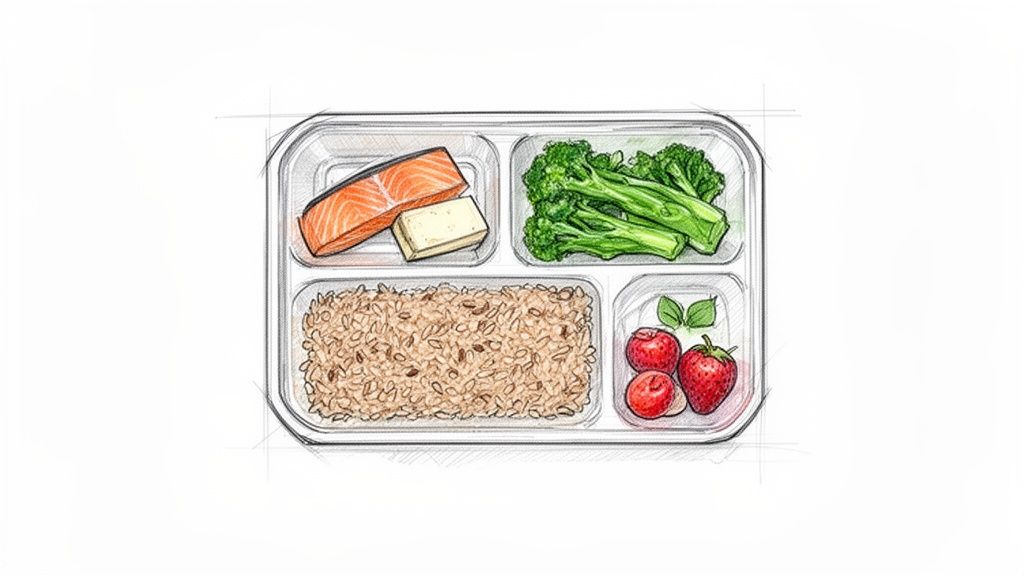
The bento concept simplifies meal prep by providing a clear blueprint. You simply fill each compartment with a different food group: protein, grains, vegetables, and healthy fats. This structure makes assembling a balanced, satisfying lunch nearly foolproof, even on a busy schedule.
Why It Works for Mindful Eating
Bento boxes are a superb tool for exploring how different food combinations impact your well-being. The compartmentalized nature allows you to observe the effects of various proteins, carbs, and fats within a single meal on your digestion, energy, and overall satisfaction. This approach supports Superbloom’s philosophy of building self-awareness around your unique nutritional responses.
Superbloom Insight: Does a lunch with salmon, quinoa, and broccoli leave you feeling more focused than one with tofu, rice, and edamame? Use the bento format to run these small, daily experiments. Photographing your box for your food log can help you track visual appeal and its connection to your meal satisfaction.
How to Build a Better Bento Box
- Asian-Inspired Box: Fill compartments with grilled salmon, steamed broccoli, brown rice, and a small section for edamame or pickled ginger.
- Mediterranean Power Box: Combine rotisserie chicken pieces, roasted bell peppers and zucchini, a scoop of hummus with whole-grain crackers, and a handful of olives or berries.
- Vegetarian Harvest Box: Arrange marinated tofu cubes, roasted sweet potato wedges, blanched green beans, a serving of quinoa, and a small section for mixed nuts.
Practical Tips for Success
- Invest in Quality Containers: Choose a durable, leak-proof bento box with secure dividers. Brands like Bentgo or Goodful offer appealing designs that make packing lunch more enjoyable.
- Mind the Moisture: Place wet ingredients like sauces, dressings, or pickled items in the smallest, most secure compartment to prevent other foods from becoming soggy.
- Vary Textures: To make your meal more satisfying, intentionally pack foods with different textures. Combine something crunchy (nuts, raw veggies), something creamy (hummus, avocado), and something chewy (grains, dried fruit).
7. Soup & Stew Prep in Thermal Containers
A hearty, warm soup or stew is a comforting and deeply nourishing meal, making it an excellent quick healthy lunch idea for work. The approach is straightforward: prepare a large batch of your favorite soup or stew over the weekend, portion it out, and transport it in a quality insulated thermal container. This method keeps your lunch hot for hours without needing a microwave, providing a satisfying and warm meal that feels special.
Soups and stews are ideal for busy professionals because they can pack a huge nutritional punch in one simple container. They are a fantastic way to load up on vegetables, lean proteins, and complex carbohydrates. The bulk-prep nature means your lunch is ready to grab and go all week long.
Why It Works for Mindful Eating
A warm, hydrating meal can have a significant impact on your afternoon well-being. Soups and stews offer a prime opportunity to observe how temperature and texture influence your digestion, mood, and focus. This kind of self-observation is a core tenet of Superbloom's coaching, which prioritizes understanding your body's unique responses.
Superbloom Insight: Track how you feel on days you have a warm lentil soup versus a cold salad. Do you notice a difference in your energy levels or digestive comfort? Does a warm meal help you feel more grounded and less prone to afternoon snacking? Use these notes in your Superbloom log to inform your meal planning.
How to Build a Better Soup
- Lentil & Spinach Soup: Simmer red lentils, chopped tomatoes, onion, garlic, and cumin in vegetable broth. Wilt in a generous amount of fresh spinach just before finishing for a boost of iron and vitamins.
- Turkey & Barley Stew: Brown lean ground turkey and combine it with pearl barley, diced carrots, celery, and low-sodium broth. Season with thyme and bay leaves for a rustic, filling meal.
- Bone Broth Vegetable Soup: Use a rich, homemade bone broth as your base. Add chopped carrots, celery, mushrooms, and kale. A sprinkle of Parmesan cheese before sealing adds a savory finish.
Practical Tips for Success
- Invest in Quality Thermals: A good thermal container is crucial. Look for a brand known for heat retention (4-6 hours) to ensure your soup is still hot at lunchtime. For those who enjoy hot soups and stews, finding the right durable and leak-proof takeaway soup containers is essential to keep your meal warm and spill-free until lunchtime.
- Preheat Your Container: For maximum heat retention, fill your thermal flask with boiling water, seal it, and let it sit for 5-10 minutes. Pour out the water just before adding your hot soup.
- Avoid Overfilling: Leave a small gap at the top of your container. This prevents pressure buildup and makes it easier to open, reducing the risk of spills. Also, let boiling-hot soup cool slightly before sealing to prevent a vacuum lock.
8. Buddha Bowls with Roasted Vegetables & Tahini Base
A Buddha bowl is a vibrant, plant-forward meal centered around a colorful assortment of roasted and raw vegetables. Unlike grain bowls where grains are the foundation, a Buddha bowl often puts vegetables first, using them to create volume and nutrient density. The bowl is then balanced with smaller portions of whole grains, legumes, and a creamy tahini-based dressing, creating a complete and visually appealing meal.
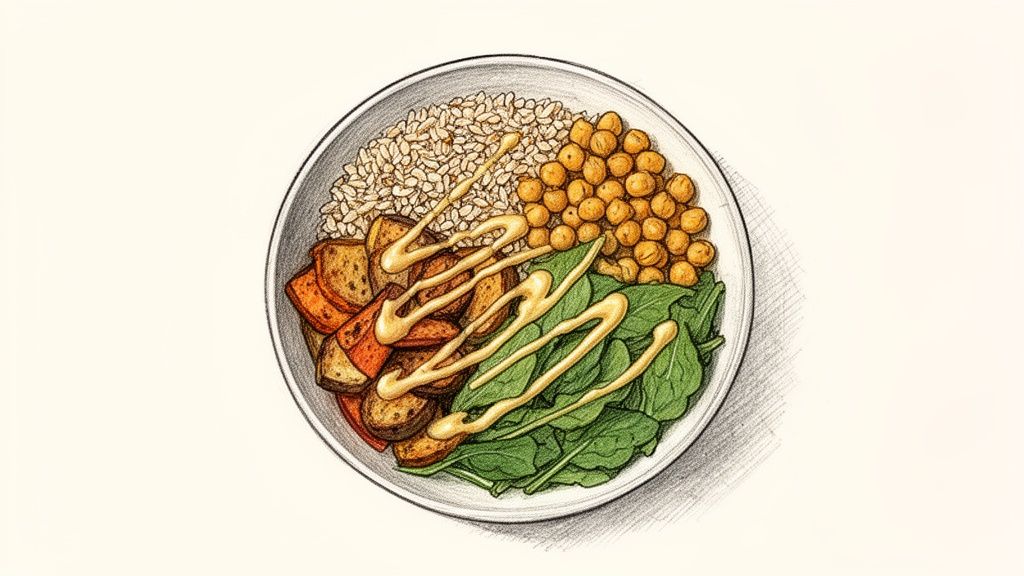
This approach is perfect for professionals looking to increase their vegetable intake and explore plant-based eating. By combining components like legumes and grains, you can easily create a complete protein source. The emphasis on whole foods makes this one of the top quick healthy lunch ideas for work, especially for those focused on gut health and reducing inflammation.
Why It Works for Mindful Eating
Buddha bowls are an excellent tool for understanding how vegetable diversity impacts your body. Because the ingredients are distinct rather than mixed together in a stew, you can more easily notice how you feel after eating certain combinations. This practice of observation is central to building a personalized nutrition strategy that works for you.
Superbloom Insight: Track how different roasted vegetables affect your afternoon energy. Do roasted sweet potatoes provide a steady boost, while roasted broccoli feels lighter and aids digestion? Use your Superbloom log to identify these patterns and build bowls that help you feel your best.
How to Build a Better Buddha Bowl
- Roasted Root Bowl: Start with a bed of spinach. Top with roasted sweet potato, beets, and Brussels sprouts. Add a scoop of quinoa, a handful of chickpeas, a sprinkle of pumpkin seeds, and a generous drizzle of classic tahini dressing.
- Green Goddess Bowl: Combine blanched broccoli florets, fresh kale, cucumber ribbons, and avocado. Add white beans for protein, then finish with a green tahini sauce and a few toasted sunflower seeds.
- Turmeric & Cauliflower Bowl: Layer farro with turmeric-roasted cauliflower. Mix in cooked lentils, dried cranberries for sweetness, and sliced almonds for crunch. A simple lemon-tahini dressing brings it all together.
Practical Tips for Success
- Batch Roast Vegetables: On Sunday, toss chopped vegetables like broccoli, sweet potato, and cauliflower with a little olive oil and seasoning. Roast at 425°F for 20-25 minutes until tender and slightly browned.
- Make Dressing in Bulk: Whisk together tahini, lemon juice, minced garlic, and water to your desired consistency. Store it in a jar in the fridge for easy access all week.
- Layer for Texture: Combine warm roasted vegetables with cool grains and crisp raw greens. This textural contrast makes the meal more satisfying and interesting to eat. Add nuts or seeds right before serving to maintain their crunch.
9. Protein-Enhanced Smoothie Bowls with Granola Toppings
A smoothie bowl transforms a standard drinkable smoothie into a substantial, satisfying meal. By creating a thick, protein-rich base and serving it in a bowl with crunchy toppings, you get the convenience of blended nutrition without sacrificing the satisfaction of a traditional meal. This makes it an outstanding choice among quick healthy lunch ideas for work, especially for extremely busy days. The bowl format encourages you to slow down and eat with a spoon, which aids satiety and mindful consumption.
This lunch is perfect for professionals who need a rapid, nutrient-dense option. The base can be prepped the night before, and the entire meal comes together in minutes, offering a powerful combination of protein, fiber, and micronutrients to power you through the afternoon.
Why It Works for Mindful Eating
Smoothie bowls provide a unique opportunity to observe how your body processes blended versus whole foods. Because the ingredients are broken down before consumption, digestion can be different. Tracking your response helps you understand your unique digestive patterns and energy fluctuations, a core tenet of Superbloom's personalized coaching.
Superbloom Insight: After eating a smoothie bowl, log how you feel in your Superbloom app. Do you notice a difference in your afternoon cravings or energy levels compared to when you eat a salad with the same ingredients? This data helps you tailor meals to your body's specific needs.
How to Build a Better Smoothie Bowl
- Protein Vanilla Berry: Blend Greek yogurt, vanilla protein powder, a frozen banana, and a splash of almond milk. Top with granola, fresh berries, and sliced almonds.
- Tropical Green Machine: Combine spinach, Greek yogurt, mango chunks, pineapple, a frozen banana, and protein powder. Finish with toasted coconut flakes, macadamia nuts, and kiwi slices.
- Chocolate-Berry Bliss: Mix unsweetened cocoa powder, Greek yogurt, frozen blueberries, half a banana, and plant-based milk. Garnish with dark chocolate chips, granola, and a sprinkle of chia seeds.
Practical Tips for Success
- Prep the Base: To save time, add all your smoothie base ingredients (except protein powder, which can sometimes clump overnight) to your blender pitcher the evening before and store it in the fridge. In the morning, just add the powder, blend, and go.
- Use Frozen Fruit: Opt for frozen fruit over fresh. It’s often cheaper, lasts longer, and creates a thick, creamy texture without needing to add ice, which can water down the flavor.
- Choose Smart Granola: Read the nutrition label on your granola. Look for options with less than 5 grams of sugar per 1/4-cup serving to avoid a midday sugar crash.
10. Deconstructed Sushi Bowls with Raw & Cooked Elements
A deconstructed sushi bowl captures all the vibrant flavors and nutritional benefits of sushi without the time-consuming rolling process. This makes it an outstanding choice for a quick healthy lunch for work. The idea is to combine a base of cooled sushi rice or a low-carb alternative with a mix of raw and cooked elements like fish, tofu, fresh vegetables, and savory seasonings. It’s a convenient, fork-friendly way to enjoy a balanced, Japanese-inspired meal.
These bowls are perfect for meal prepping. You can prepare the rice and protein ahead of time, then simply assemble the fresh components right before leaving for work or at your desk. This approach keeps everything fresh and delicious.
Why It Works for Mindful Eating
Deconstructed sushi bowls are a fantastic tool for exploring how different food combinations influence your body. The mix of omega-3-rich proteins with raw and cooked vegetables allows you to observe direct effects on your afternoon focus, digestion, and energy. This self-discovery is central to Superbloom’s coaching, helping you build a diet that works for your unique physiology.
Superbloom Insight: Track how you feel after a lunch with cooked salmon versus one with raw, sushi-grade tuna. Does the omega-3 boost from either protein source sharpen your afternoon concentration? Use these observations to fine-tune your meals for peak mental performance.
How to Build a Better Sushi Bowl
- Classic Salmon & Avocado: Layer cooled sushi rice with cooked or sushi-grade raw salmon, sliced avocado, cucumber ribbons, and pickled ginger. Top with sesame seeds and serve with low-sodium tamari.
- Spicy Shrimp Bowl: Combine sushi rice with cooked shrimp, shredded carrots, thinly sliced radishes, and edamame. Drizzle with a spicy wasabi-infused mayonnaise for a kick.
- Vegan Tofu & Veggie Bowl: Use cauliflower rice as a base and top with marinated baked tofu, pickled vegetables, avocado, cucumber, and crumbled nori sheets. A sesame-ginger dressing ties it all together.
Practical Tips for Success
- Prioritize Food Safety: If using raw fish, only purchase sushi-grade products from a reputable fishmonger. Follow FDA guidelines for freezing if preparing at home to ensure it's safe to eat.
- Cool Rice Completely: Let your cooked rice cool to room temperature before packing. This prevents condensation from making other ingredients soggy and inhibits bacterial growth.
- Pack Smart: Keep wet or delicate ingredients like avocado, dressing, and pickled ginger in separate small containers. Add them just before you eat to maintain texture and freshness.
10 Quick Healthy Work Lunches Comparison
| Item | Implementation Complexity 🔄 | Resource Requirements ⚡ | Expected Outcomes 📊 | Ideal Use Cases 💡 | Key Advantages ⭐ |
|---|---|---|---|---|---|
| Grain Bowls with Protein & Vegetables | Medium — batch-cook grains/proteins; assemble | Moderate — whole grains, proteins, veg, glass containers; 1–3h weekly prep | Sustained energy, balanced macros, easy tracking | Weekday meal-prep; tracking protein effects on satiety | Balanced macros, customizable, reheatable |
| Mediterranean Salads with Legumes | Low–Medium — cook legumes in bulk | Low — legumes, greens, olive oil; minimal equipment | High fiber and satiety; stable blood sugar (initial adaptation possible) | Plant-based protein exploration; affordable prep | Fiber-rich, plant protein, low saturated fat |
| Protein-Packed Wraps & Sandwiches on Whole Grain Bread | Low — quick assembly (5–10 min) | Low — bread/wraps, lean protein, minimal containers | Good satiety and portability; potential carb variability with refined bread | Grab-and-go lunches; busy schedules | Fast assembly, portable, portion-controlled |
| Mason Jar Salads with Strategic Layering | Medium — learn layering; single weekly prep session | Moderate — mason jars, fresh produce; precise layering | Longer freshness (up to 5 days); consistent veg intake | Weekly prep for office lunches; visual meal logging | Maximum freshness, prep efficiency, mindful ritual |
| Overnight Oats & Chia Puddings | Low — assemble night before (5 min) | Low — oats/chia, milk, jars; minimal tools | High soluble fiber; sustained satiety; stable mornings/afternoons | Breakfast-for-lunch; reduce decision fatigue | Very convenient, satiating, low-effort |
| Bento Boxes with Variety & Portion Control | Medium — compartment planning; 15–20 min assembly | Moderate — divided containers, diverse ingredients | Balanced macros with visual appeal; reduces boredom | Variety seekers; portion control; social sharing | Visual variety, built-in portion control, high novelty |
| Soup & Stew Prep in Thermal Containers | Low — one-pot batch cooking; longer simmer time | Moderate — large pot/slow cooker, quality thermal containers | High satiety, hydration, comfort; warm-meal satisfaction | Cold weather, comfort lunches, hydration focus | Satisfying, batch-cook efficient, hydrating |
| Buddha Bowls with Roasted Vegetables & Tahini Base | Medium — roast veg and assemble bowls | Moderate — oven, grains/legumes, tahini, seeds | Very high micronutrient density; plant-forward satiety | Plant-forward diets; reducing inflammation focus | High nutrient density, diverse vegetables, environmental alignment |
| Protein-Enhanced Smoothie Bowls with Granola Toppings | Low — blender prep (2–5 min) | Low — blender, frozen fruit, yogurt/protein powder, toppings | Fast satiety when protein-enhanced; blended digestion differs from whole foods | Extremely busy professionals needing quick, substantial meals | Fast, high-protein option, slows intake vs. drinkable smoothies |
| Deconstructed Sushi Bowls with Raw & Cooked Elements | Medium — cook rice, source proteins, assemble | Moderate — rice, seafood/tofu, seaweed; possible sushi-grade sourcing | Good satiety; omega-3 intake supports cognitive function | Omega-3 focus, pescatarian options, flavor variety | Omega-3 rich, balanced macros, sushi flavors without rolling |
From Ideas to Action: Building Your Sustainable Lunch Habit
You have now explored ten distinct blueprints for crafting quick healthy lunch ideas for work. From vibrant Grain Bowls and layered Mason Jar Salads to hearty soups and deconstructed Sushi Bowls, this collection is designed to move you beyond the monotonous cycle of uninspired midday meals. The goal was never for you to adopt all ten ideas at once. Instead, view this as a menu of possibilities, each offering a unique combination of flavor, nutrition, and convenience.
The true path to a sustainable lunch routine is paved with consistency and self-awareness, not perfection. Think of each lunch as a small experiment, a personal data point in understanding your own body.
Key Insight: Your goal isn't just to eat a "healthy" lunch. It's to discover which healthy lunch makes you feel focused, energized, and satisfied throughout your workday.
This shift in perspective is crucial. It turns the chore of packing a lunch into an act of self-care and a powerful tool for optimizing your professional and personal well-being.
Your Actionable Next Steps
Feeling inspired is a great start, but action is what creates lasting change. Don't let this list become just another saved article. Here’s how to put these quick healthy lunch ideas for work into practice this week:
- Step 1: Choose One Idea. Scan the list again. Which one genuinely excites you or seems most manageable for your current schedule? Is it the grab-and-go simplicity of a Protein-Packed Wrap or the comforting warmth of a pre-prepped soup?
- Step 2: Schedule a Small Prep Session. You don't need to spend your entire Sunday in the kitchen. Block out just 30-45 minutes. You can cook a batch of quinoa, chop vegetables for two Buddha Bowls, or assemble a couple of Mason Jar Salads.
- Did your lunch keep you full until your next meal?
- Did you experience an energy slump around 2 PM, or did you feel clear-headed?
- Did you genuinely enjoy what you ate?
Building the Habit Loop
This simple "Choose, Prep, Observe" cycle is the foundation of a powerful habit loop. By consciously connecting your food choices to their outcomes (your energy, mood, and focus), you create a feedback system that naturally guides you toward better decisions. You start to understand that the five minutes spent layering a salad jar in the evening buys you 20 minutes of calm during a hectic lunch break. You learn that a lunch rich in protein and fiber prevents the desperate search for sugary snacks in the late afternoon.
This process transforms the abstract goal of ‘eating healthier’ into a concrete, personalized practice. You are no longer just following a list of quick healthy lunch ideas for work; you are actively building a system that supports your unique body and lifestyle. Each week, you can try a new recipe or refine an old favorite, slowly but surely creating a repertoire of lunches that work for you. This small, consistent effort is the most reliable way to create a positive, lasting impact on your overall health and daily performance.
Ready to stop guessing and start understanding what your body needs to thrive? The Superbloom AI nutrition coach helps you connect your food choices to your energy, mood, and physical symptoms, turning your daily meals into powerful insights. Start your journey toward a more energized you with Superbloom.