
8 Unsuspected Reasons for Craving Salt: A 2026 Health Guide

That sudden, intense desire for something salty, be it chips, pretzels, or an extra sprinkle over your meal, is more than just a passing whim. These cravings are complex biological signals, messengers from your body trying to communicate a specific need. While often dismissed as a bad habit, understanding the root reasons for craving salt can unlock crucial insights into your health, from hydration status and stress levels to hormonal balance and hidden nutrient deficiencies.
This guide moves beyond surface-level explanations to explore eight of the most significant reasons your body might be asking for more sodium. We will examine the physiological mechanisms at play, identify potential red flags, and provide practical steps to address the underlying cause of your cravings. You'll learn not just why you're reaching for the salt shaker, but what to do about it.
By connecting these patterns to your daily habits, you can begin to make more intentional, health-promoting choices. Learning to interpret these signals is the first step in transforming reactive cravings into lasting, positive change.
1. Dehydration and Fluid Imbalance
One of the most common physiological reasons for craving salt is surprisingly simple: you might just be thirsty. When your body loses more fluids than it takes in, it enters a state of dehydration. This triggers a powerful craving for sodium as a biological survival mechanism. Sodium is a critical electrolyte that helps your body regulate fluid balance and blood pressure. Craving salt is your body's way of encouraging you to consume something that will make you retain water, ultimately pushing you to drink more and restore hydration.
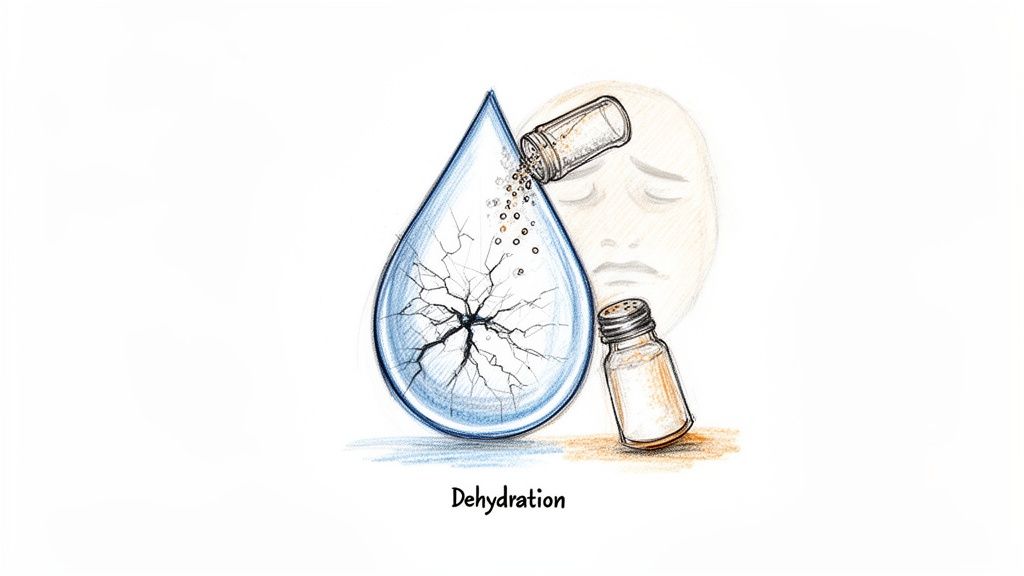
This response is often seen in specific situations. Athletes frequently experience intense salt cravings after a long workout, especially if they haven't rehydrated properly. Likewise, an office worker sipping coffee all day without drinking enough water might feel an overwhelming urge for a salty afternoon snack. Even living in a hot climate or at a high altitude can increase fluid loss through sweat and respiration, leading to the same effect.
Actionable Steps to Address Dehydration-Related Cravings
Before reaching for the salt shaker, try addressing your fluid intake first. To ensure you're adequately hydrated and to address fluid imbalances, you might find a tool like a Daily Water Intake Calculator helpful for setting a personal goal.
Here are some practical strategies to try:
- Track Your Intake: When you log your meals, make a note of your water consumption. Seeing the two side-by-side can reveal a clear pattern between low fluid intake and high salt cravings.
- Monitor Your Body's Signals: Pay attention to the color of your urine. A pale, straw-like yellow indicates you are well-hydrated, while darker yellow or amber is a sign you need to drink more water.
- Connect Cravings to Your Day: Use Superbloom's daily check-ins to note when a salt craving hits. Are you at your desk after several hours of focused work? Did you just finish a workout? Connecting the craving to an activity helps identify dehydration as the root cause.
- Establish Hydration Nudges: Set reminders on your phone or use a dedicated app to prompt you to drink water, especially during busy periods when you're most likely to forget.
2. Adrenal Insufficiency and Cortisol Dysregulation
Your adrenal glands, which sit atop your kidneys, play a vital role in managing stress and balancing electrolytes. They produce cortisol and aldosterone, hormones that regulate blood pressure and sodium levels. When these glands are under stress, whether from a medical condition like Addison's disease or chronic lifestyle pressure, their ability to produce these hormones can be compromised. This disruption is one of the more serious physiological reasons for craving salt. The craving is a direct signal from your body trying to get the sodium it needs to maintain blood pressure and fluid balance without proper hormonal help.
This connection between stress and salt is frequently seen in high-pressure environments. A busy professional juggling deadlines might find themselves reaching for salty snacks without thinking, a behavior driven by their body's attempt to compensate for dysregulated cortisol. Similarly, shift workers with disrupted sleep-wake cycles often report intense salt cravings, as their natural cortisol rhythm is thrown off balance. This isn't just a habit; it's a physiological response to stress impacting your body's core functions.
Actionable Steps to Address Adrenal and Stress-Related Cravings
If you suspect chronic stress is driving your salt intake, focusing on your stress response can be more effective than simply trying to ignore the craving. Understanding the connection between your emotional state and physical desires is key.
Here are some practical strategies to try:
- Correlate Stress and Cravings: Use Superbloom's emotional trigger tracking to log moments of high stress. When a salt craving appears, check your log. You might discover that cravings consistently follow stressful meetings or demanding tasks.
- Monitor Daily Stress Patterns: Log your daily stress levels alongside your food choices. This can reveal a clear pattern, such as higher salt consumption on days when your perceived stress is a 7 out of 10 versus days when it's a 3.
- Practice Mindful Pauses: Before giving in to a craving, try a 5-minute stress-reduction technique like deep breathing or a short meditation. Notice if the intensity of the craving diminishes. This helps differentiate a physiological need from a stress-induced habit.
- Prioritize Restorative Sleep: Sleep deprivation is a major contributor to cortisol dysregulation. Aim for consistent, quality sleep and note any changes in your cravings for salty foods on days after a good night's rest.
3. Mineral Deficiencies (Beyond Just Sodium)
Your intense craving for a salty snack might not be about sodium at all. Instead, it can be your body's complex way of signaling a shortfall in other essential minerals like potassium, magnesium, calcium, or zinc. These micronutrients work in concert with sodium to manage critical bodily functions, including nerve signaling, muscle contractions, and overall electrolyte balance. When one of these minerals is low, the body may trigger a broad-spectrum salt craving as an indirect call for the mineral-rich whole foods it needs.
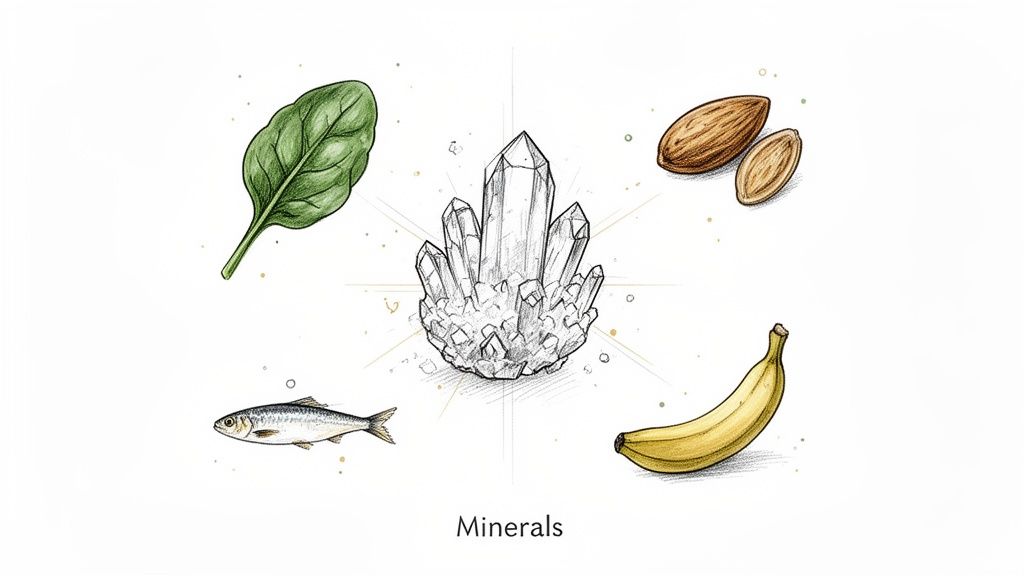
This phenomenon is common in several scenarios. Magnesium deficiency, for instance, is widespread and can be exacerbated by chronic stress or high caffeine intake, often leading to a noticeable desire for salty foods. Similarly, individuals following low-carb diets may experience an initial loss of water and electrolytes, prompting strong salt cravings. Athletes also lose a spectrum of minerals through sweat, not just sodium, making them reach for salty snacks to replenish their stores.
Actionable Steps to Address Mineral-Related Cravings
Rather than simply adding more salt, focus on increasing the mineral density of your diet. A well-rounded intake of various minerals can often resolve these specific cravings.
Here are some practical strategies to try:
- Broaden Your Food Log: When logging meals, don't just focus on macros. Pay attention to sources of potassium (bananas, sweet potatoes), magnesium (leafy greens, nuts, seeds), and calcium (dairy, fortified foods, legumes).
- Identify Mineral-Rich Foods: Use Superbloom's meal photo analysis to spot mineral-dense ingredients in your diet. Seeing a colorful plate full of leafy greens, nuts, and legumes can confirm you’re on the right track.
- Connect Cravings to Other Symptoms: In your daily check-ins, note if salt cravings coincide with other potential signs of mineral deficiency, such as muscle cramps (magnesium), fatigue, or low energy. This helps build a more complete picture.
- Experiment with Swaps: Intentionally add a magnesium-rich food like a handful of pumpkin seeds or a side of spinach to your afternoon meal instead of a salty, processed snack. Journal in Superbloom whether this swap curbed your craving later in the day.
4. Blood Sugar Dysregulation and Metabolic Stress
One of the less obvious physiological reasons for craving salt is rooted in how your body manages energy. Unstable blood sugar levels can trigger a strong urge for salty foods as your body tries to stabilize itself. When blood sugar drops too low (hypoglycemia) or swings dramatically, it places stress on your system, prompting the release of hormones like cortisol and adrenaline. These stress hormones, in turn, can increase the secretion of aldosterone, a hormone that tells your kidneys to retain sodium, thereby creating a craving for salt.
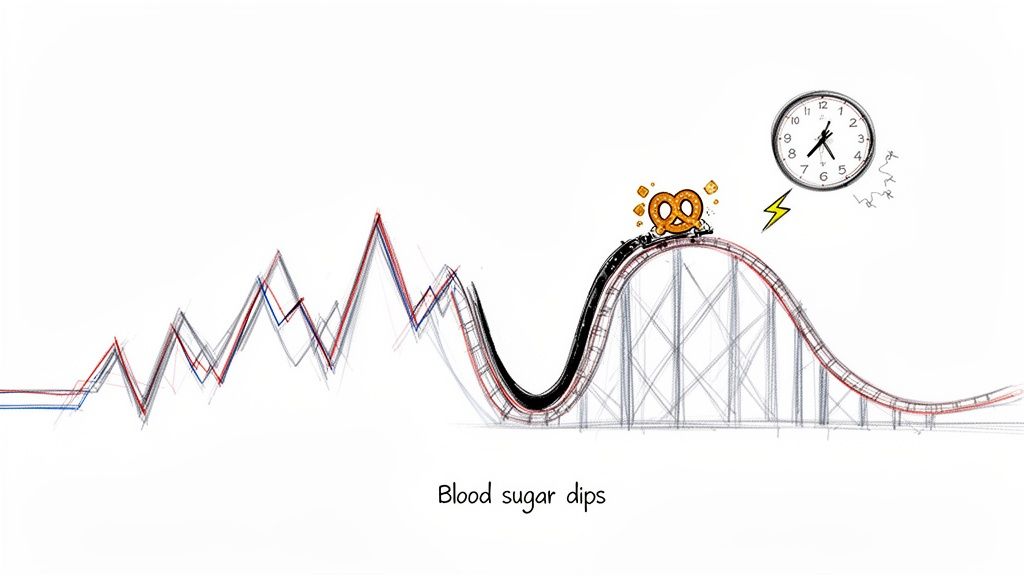
This pattern is especially common for those who consume lots of refined carbohydrates, skip meals, or live with chronic stress. You might notice this as an intense craving for chips or pretzels during a 2-3 p.m. energy crash at the office, or feeling a desperate need for something salty mid-morning after skipping breakfast. Shift workers with irregular eating schedules also frequently report these erratic cravings as their metabolic rhythm is disrupted.
Actionable Steps to Address Blood Sugar-Related Cravings
Balancing your blood sugar is a proactive way to manage these specific salt cravings. For individuals experiencing blood sugar fluctuations, a strategic way of eating that supports your brain by stabilizing blood sugar can play a crucial role in managing cravings.
Here are some practical strategies to try:
- Log Meal Composition: When you log your meals in Superbloom, note the balance of macronutrients. Pay attention to how meals high in refined carbs versus those balanced with protein and fat affect your cravings later.
- Track Your Energy: Use daily check-ins to track your energy levels and craving intensity, especially 2-3 hours after eating. This helps you connect specific meals to subsequent energy dips and salt cravings.
- Prioritize Protein: Make it a goal to include a source of protein and healthy fat with every meal and snack. Pairing carbohydrates with protein slows down sugar absorption, preventing sharp spikes and crashes.
- Maintain Consistent Meal Timing: Avoid long gaps between meals, which can cause blood sugar to drop. Aim for consistent timing to help regulate your body's energy and reduce the hormonal stress response that drives salt cravings.
5. Menstrual Cycle Hormonal Fluctuations
For many women, one of the most predictable reasons for craving salt is tied directly to the hormonal shifts of the menstrual cycle. These cyclical cravings are a natural, physiological response that often goes unrecognized, leading to confusion about eating patterns. The primary drivers are the hormones estrogen and progesterone, whose levels ebb and flow throughout the month, influencing everything from mood to appetite.
These cravings are most pronounced during the luteal phase, the one to two weeks leading up to menstruation. In this phase, rising progesterone levels can affect aldosterone, a hormone that helps regulate fluid and sodium balance. This can lead to increased sodium retention and bloating, yet simultaneously drive a desire for more salt. At the same time, levels of the mood-regulating neurotransmitter serotonin can dip, triggering cravings for salty, carby "comfort foods" like chips or pretzels. These predictable changes in appetite and food preference are not a sign of weakness, but a biological signal.
Actionable Steps to Address Cyclical Cravings
Instead of fighting these hormonal signals, you can work with your body's natural rhythm. Understanding the "why" behind your cravings empowers you to respond with intention rather than confusion.
Here are some practical strategies to try:
- Track Your Cycle: Use Superbloom to log your menstrual cycle start and end dates. When a salt craving appears, check where you are in your cycle. Seeing the craving consistently appear in the luteal phase validates the pattern and removes self-judgment.
- Plan for the Luteal Phase: Knowing that cravings will likely increase, plan ahead. Incorporate slightly more nutrient-dense foods and healthy fats. Focus on magnesium-rich foods like dark leafy greens, nuts, and dark chocolate to help manage PMS symptoms.
- Distinguish Hormonal Hunger: In your daily check-ins, note whether your craving feels like a deep hunger or a more specific, almost emotional, desire for salt. This helps distinguish true hunger from a hormonal urge for comfort.
- Validate, Don't Vilify: Treat cravings during your luteal phase as a normal physiological event, not a personal failure. Allowing yourself a mindful portion of a salty snack can satisfy the craving without derailing your goals.
6. Sodium Loss from Digestive Issues or Medications
Salt cravings aren't always about taste preference or simple dehydration; sometimes they are your body’s direct response to an underlying medical condition or medication. Gastrointestinal issues such as Irritable Bowel Syndrome (IBS), Crohn's disease, or even a simple bout of diarrhea can lead to significant fluid and sodium loss. When your digestive system is in distress, it struggles to absorb nutrients and electrolytes properly, and the body’s alarm system triggers a craving for salt to help restore balance.
This same effect can occur as a side effect of certain medications. Diuretics, often prescribed for high blood pressure, work by flushing excess sodium and water from the body. While this is the intended effect, it can sometimes go too far, leading to an intense desire for salty foods. Similarly, some antidepressants and laxatives can alter your body's electrolyte balance, prompting a craving for sodium as your system tries to compensate for the loss.
Recognizing this connection is one of the key reasons for craving salt that often goes overlooked. An individual with undiagnosed celiac disease might mistake their persistent desire for salty crackers as a personal preference, not realizing it's a signal of nutrient malabsorption. Likewise, someone on a new diuretic might not connect their sudden craving for pickles with their medication, attributing it instead to stress or habit.
Actionable Steps to Address Medically-Induced Cravings
If you suspect your salt cravings are linked to your gut health or a medication, it's crucial to investigate the pattern and consult a professional.
Here are some practical strategies to try:
- Log Symptoms and Cravings Together: Use a tool like Superbloom to track your digestive symptoms (e.g., bloating, diarrhea, pain) alongside your food cravings. Note the timing: do your salt cravings intensify during a flare-up or after taking a specific medication?
- Review Your Medications: If you've started a new medication and noticed a change in your appetite, read the side effects or discuss it with your doctor or pharmacist. Never stop a prescribed medication without medical advice, but understanding its effects empowers you to manage them.
- Connect the Dots with Daily Check-ins: When a strong salt craving hits, use a journaling prompt to ask, "How is my digestion feeling today?" or "What medications did I take?" Creating this mindful pause helps you see beyond the craving itself and identify the potential root cause.
- Discuss with Your Healthcare Provider: If you have persistent digestive issues or your cravings coincide with starting a new prescription, bring your tracking data to your doctor. It provides concrete evidence that can help them understand the full picture and adjust your treatment plan if necessary.
7. Pregnancy and Postpartum Hormonal Changes
The significant hormonal and physiological shifts during pregnancy and postpartum are major reasons for craving salt. During pregnancy, a person's blood volume expands by as much as 40-50%. This massive increase requires more sodium to maintain the correct fluid balance and support both the parent's and the baby's circulatory systems. The body's demand for electrolytes intensifies, and craving salt is a direct physiological signal to meet this need.
Higher levels of the hormone progesterone can also influence sodium retention, further contributing to these cravings, which often appear in the second trimester. You might suddenly find yourself reaching for pickles, olives, or salted nuts when you never did before. This isn't just a quirky symptom; it's your body's instinctual drive to acquire the minerals necessary for a healthy pregnancy. Postpartum, as hormone levels like progesterone and estrogen drop and the body readjusts, these cravings can change again, especially if you are breastfeeding and your mineral needs remain high.
Actionable Steps to Address Pregnancy-Related Cravings
While these cravings are biologically normal, it's wise to manage them with nutrient-dense choices and in consultation with your healthcare provider, especially if you have concerns about blood pressure.
Here are some practical strategies to try:
- Log Your Life Stage: Note your pregnancy or postpartum status within your health tracker. Superbloom can offer more personalized guidance when it understands this important context for your body's needs.
- Choose Nutrient-Dense Salty Foods: When a craving hits, opt for foods that offer more than just sodium. Olives, salted nuts, seeds, and even a sprinkle of iodized salt on a baked potato can satisfy the urge while providing healthy fats, fiber, and crucial iodine for thyroid support.
- Track Cravings and Hydration: Use daily check-ins to monitor how your cravings change throughout pregnancy and postpartum. Are they stronger in the morning or after physical activity? Also, track your fluid intake, as pregnancy significantly increases hydration needs.
- Consult Your OB/GYN: Always discuss significant changes in cravings or your dietary approach with your doctor. They can provide specific recommendations on sodium intake based on your individual health profile and blood pressure readings.
8. Habitual, Sensory, and Emotional Eating Patterns
Beyond direct physiological needs, many of the most powerful reasons for craving salt are rooted in our psychology and learned behaviors. The highly palatable combination of salty and crunchy textures activates reward centers in the brain, creating a strong sense of pleasure. Over time, we build powerful associations, linking these salty foods with comfort, stress relief, or social activities. This repetition reinforces neural pathways, making the craving feel automatic and intense even when there is no underlying physical requirement for sodium.
This pattern shows up in many familiar ways. Someone might automatically reach for a bag of chips when facing a stressful work deadline, while another person associates salted popcorn with the relaxation of a movie night. These cravings often have deep roots, connecting back to childhood comfort foods or cultural traditions. The key is recognizing that these urges are driven by a cue (stress, boredom) and a desire for a reward (comfort, distraction), not necessarily a need for salt.
Actionable Steps to Address Habitual and Emotional Cravings
Untangling these learned behaviors requires building awareness and creating new, healthier responses. Instead of judging the craving, get curious about what's really driving it.
Here are some practical strategies to try:
- Identify Your Triggers: Use Superbloom's daily check-ins to note exactly when a salt craving strikes. Log the time, your emotional state (stressed, bored, tired), and the situation. Over time, you'll see a clear connection between a specific feeling and the urge for a salty snack.
- Pause and Differentiate: Before you eat, ask yourself: "Am I physically hungry, or am I trying to change how I feel?" This simple question helps distinguish between true hunger and an emotional or habitual urge.
- Practice Urge Surfing: When a craving hits, try to observe it without immediately acting. Notice the physical sensations and thoughts associated with the urge, and watch as it naturally rises and falls like a wave. This creates space between the trigger and your response.
- Build an Alternative Toolkit: Once you identify a trigger like stress, brainstorm non-food-related activities that provide a similar reward. This could be a five-minute walk, listening to a favorite song, or deep breathing exercises. Have this list ready for when the craving appears.
Comparison of 8 Reasons for Salt Cravings
| Item | 🔄 Implementation complexity | Resource requirements | ⚡ Speed / Efficiency | 📊 Expected outcomes (⭐) | 💡 Ideal use cases & key advantages |
|---|---|---|---|---|---|
| Dehydration and Fluid Imbalance | Low — behavioral fixes (hydration reminders) | Low — water, app tracking, urine monitoring | ⚡ Fast — hours to days | Reduced cravings, improved energy — ⭐⭐⭐⭐ | Busy professionals/athletes; quick, low-cost relief and clear signal of physiological need |
| Adrenal Insufficiency and Cortisol Dysregulation | High — requires medical evaluation and endocrine care | High — lab tests, clinician follow-up, possible medication | ⚡ Slow — weeks to months for treatment effects | Symptom improvement when treated appropriately — ⭐⭐⭐ | Chronic stress or suspected adrenal disorders; addresses hormonal root causes |
| Mineral Deficiencies (Beyond Just Sodium) | Medium — dietary assessment and targeted repletion | Medium — nutrient-dense foods, possible supplements, tracking | ⚡ Moderate — weeks to restore levels | Better muscle/nerve function, fewer cravings — ⭐⭐⭐⭐ | Restrictive diets, athletes; broad health benefits and sustainable nutrition fixes |
| Blood Sugar Dysregulation and Metabolic Stress | Medium — consistent meal timing and composition changes | Medium — meal planning, logging, optional glucose monitoring | ⚡ Moderate — days to weeks for stability | Improved energy, mood, and fewer cravings — ⭐⭐⭐⭐ | High-carb eaters, those skipping meals; resolves multiple symptoms concurrently |
| Menstrual Cycle Hormonal Fluctuations | Low–Medium — cycle tracking and phase-specific tweaks | Low — menstrual tracking, targeted nutrition (magnesium, carbs) | ⚡ Cyclical — predictable each cycle | Normalized patterns, reduced shame, better planning — ⭐⭐⭐ | People tracking cycles/PMS; enables compassionate, phase-appropriate strategies |
| Sodium Loss from Digestive Issues or Medications | High — medical investigation often required | High — GI evaluation, medication review, electrolyte replacement | ⚡ Variable — acute relief possible, chronic treatment slower | Symptom control after addressing underlying cause — ⭐⭐⭐ | Individuals with GI disease or on diuretics; prevents ongoing depletion and guides medical care |
| Pregnancy and Postpartum Hormonal Changes | Medium — tailored clinical and nutritional guidance | Medium — prenatal care, BP monitoring, adjusted diet/supplements | ⚡ Gradual/ongoing — follows pregnancy/postpartum timeline | Supports maternal/fetal health when balanced — ⭐⭐⭐⭐ | Pregnant or breastfeeding people; physiologically appropriate guidance with careful monitoring |
| Habitual, Sensory, and Emotional Eating Patterns | Medium — behavior change and habit work | Low–Medium — coaching, journaling, alternative strategies | ⚡ Slow to moderate — depends on habit formation | Reduced reactive cravings, improved coping — ⭐⭐⭐⭐ | Emotional eaters or social/habit-driven cravings; non-medical, sustainable behavioral benefits |
Turn Cravings into Conversations: Your Path to Lasting Change
Your persistent cravings for salty foods are not random failures of willpower. As we've explored, these urges are sophisticated signals from your body, attempts to communicate specific needs. Understanding the most common reasons for craving salt is the first step in turning these confusing demands into productive conversations.
From simple dehydration and electrolyte imbalances after a workout to the more complex hormonal shifts of your menstrual cycle or pregnancy, each craving carries a message. It might be your adrenal glands signaling stress, your body flagging a potential mineral deficiency, or even a deeply ingrained emotional eating pattern seeking comfort. The key is to stop judging the craving and start investigating its origin with curiosity.
From Signal to Solution: Your Actionable Next Steps
The journey from confusion to clarity begins with mindful observation. You now have a map of potential causes. Your task is to identify which routes resonate most with your personal experience and start gathering data.
- Connect the Dots: Don't view your salt cravings in isolation. Consider the full context. Did the craving hit after a stressful meeting? Following a day where you barely drank any water? Or perhaps a few days before your period is due? This context is crucial data.
- Start with One Small Change: Instead of trying to fix everything at once, choose one potential cause from this article that feels most relevant. If you suspect dehydration, focus solely on increasing your fluid and electrolyte intake for a week. If you think it's stress, prioritize a five-minute mindfulness exercise each afternoon.
- Track Your Progress: Consistency is more important than perfection. Tracking these small experiments helps you see what's working. Note how your energy, mood, and cravings change in response to your efforts. This feedback loop is where real, sustainable change is built.
Ultimately, mastering your cravings is about building a stronger relationship with your body. It's about listening to its signals, responding with informed care, and trusting the process. By decoding these messages, you move from being a passenger to being the driver of your own health.
Key Takeaway: Your body is not working against you; it's trying to guide you. A salt craving is a starting point for inquiry, not a sign of failure. The goal is to learn your body’s unique language and respond with intention.
If your cravings are severe, sudden, or accompanied by other worrying symptoms like extreme fatigue, dizziness, or unusual thirst, it's vital to consult a healthcare professional. They can help rule out underlying medical conditions like Addison's disease or other adrenal issues and provide a proper diagnosis. Your self-awareness, combined with professional guidance, creates the most powerful path to well-being.
Ready to turn these insights into action? Superbloom helps you connect the dots between your diet, lifestyle, and how you feel with AI-powered coaching and daily check-ins. Use it to track your salt cravings, identify patterns, and receive personalized guidance to build healthier habits that last. Start your journey to understanding your body's signals today at Superbloom.