
A Guide to Sustainable Weight Loss Habits That Last

Sustainable weight loss habits are those small, consistent actions you can actually weave into your daily life. It’s all about focusing on your long-term health, not just a quick fix on the scale. This means prioritizing balance and consistency over restriction and perfection, which is the only way to get results you can actually maintain. You're essentially ditching the all-or-nothing mindset for good.
Why Traditional Diets Fail and What to Do Instead

Let's be real for a second: the cycle of dieting, losing some weight, and then gaining it all back is mentally and physically draining. We've all been there. Research consistently shows that a massive number of people who diet regain the weight they lose, sometimes ending up even heavier.
This isn't a personal failure of willpower. It's a fundamental flaw in the diet-centric system itself.
Traditional diets often set us up for this frustrating loop by revolving around rigid rules and deprivation. They hand you a long list of things you can't eat, which, psychologically, just makes you want them more. This restrictive mentality simply doesn't hold up in the real world of office parties, stressful days, and unpredictable schedules.
The Problem with Short-Term Fixes
The biggest issue with most diets is that they’re designed to be temporary. They're a quick fix with an end date, but they don't teach you a single thing about how to manage your health once the diet is "over."
Here’s a breakdown of why this approach so often backfires:
- Metabolic Slowdown: Slashing calories too aggressively can signal to your body that it's starving, causing it to slow your metabolism to conserve energy. This makes it incredibly easy to regain weight once you start eating normally again.
- Mental Burnout: Constantly fighting off cravings and feeling deprived leads to serious decision fatigue. Eventually, you just run out of the mental gas needed to stick to the plan.
- Loss of Muscle Mass: When you lose weight too quickly, a good chunk of it is often muscle, not just fat. Losing muscle is bad news because it further slows down your metabolism.
- Unhealthy Food Relationships: Labeling foods as "good" and "bad" is a recipe for guilt and shame. It creates a complicated, often unhealthy, relationship with the very thing that’s meant to nourish you.
The goal isn't just to drop pounds; it's to build a lifestyle where a healthy weight is the natural result of your everyday routines. Think of it as shifting from a temporary project to a permanent practice.
Adopting a Habit-Based Approach
So, what's the alternative? Instead of jumping on the next restrictive diet, the real key to lasting change is building sustainable weight loss habits. This is all about focusing on small, positive behaviors that you can slowly integrate into your life, one at a time.
Imagine it like upgrading your body's internal operating system instead of just installing a temporary app that's bound to crash.
This approach is fundamentally different. It's not about what you cut out, but what you add in. For example, instead of a blanket "no more sugar" rule, you might start with a simple goal: "I will add a source of protein to my breakfast every day."
That small win creates momentum and builds confidence. You start to learn your own patterns, triggers, and preferences, which allows you to build a personalized system that truly works for you—not against you.
Setting the Stage for Real, Lasting Change
Before we even talk about what to eat, we need to get real about why you eat the way you do right now. Building habits that actually stick isn't about diving headfirst into another restrictive diet. It's about building a solid mental and emotional foundation first. This is all about shifting your mindset from quick fixes to a sustainable system for feeling your best.
And this has never been more critical. The global obesity crisis is ballooning, with experts predicting that over 1.13 billion adults will be living with obesity by 2030. That’s a staggering 115% jump in just two decades. These aren't just numbers; they’re a clear sign that creating healthy, lasting habits is essential. You can see the full picture from the World Obesity Federation's data.
Ditch the Outcome, Focus on the Process
One of the biggest mistakes I see people make is setting vague, outcome-based goals like "lose 10 pounds." The intention is great, but a goal like that gives you zero direction for how to get there. It can also be incredibly discouraging when the scale doesn't cooperate.
Instead, let's get you focused on process goals. These are the small, repeatable actions that, when done consistently, lead to the bigger outcome you’re looking for.
Here’s what that reframing looks like in the real world:
Instead of: "I want to eat healthier."
Try: "I will add one colorful vegetable to my lunch every weekday."
Instead of: "I need to stop snacking so much."
Try: "I will drink a full glass of water when I feel a craving between meals."
See the difference? These small, specific actions are far less intimidating and give you a concrete win every single day. As you build this foundation, understanding a practical guide on how to stay consistent with exercise is another key piece of the puzzle for long-term success.
Link Your Habits to What Truly Matters
Let's be honest: motivation that comes from feeling like you "should" or "have to" do something just doesn't last. Real, sustainable change is fueled by a deep, personal "why." So, take a moment and ask yourself what you truly want to gain from this journey—something more meaningful than a number on the scale.
Is it about...
- Having enough energy to chase your kids or grandkids around the park?
- Feeling confident and genuinely comfortable in your own skin?
- Taking care of your health so you can be there for your family for years to come?
- Waking up feeling refreshed and clear-headed instead of sluggish and foggy?
When you connect a new habit to a core value, it stops feeling like a chore and becomes an act of self-care. It transforms "I have to go for a walk" into "I'm walking because I value my mental clarity."
Do a Quick and Honest Habit Audit
You can't change your patterns if you don't know what they are. A habit audit is simply a non-judgmental look at your current routines to spot the cues that trigger certain behaviors. For the next few days, just be an observer of your own life.
Pay attention to what happens right before you reach for that unplanned snack or find yourself overeating at dinner.
- Time of Day: Is it always that 3 PM slump at work?
- Emotional State: Are you feeling stressed, bored, anxious, or lonely?
- Location: Does just walking into the kitchen trigger an automatic hunt for food?
- Social Setting: Do you eat differently when you’re out with certain friends or family?
This isn't about beating yourself up; it’s about gathering intelligence. Once you understand your triggers, you can start to intentionally design new, more helpful responses. This is where meaningful change really begins.
Your Practical Toolkit for Building Better Habits
Knowing what to do is one thing; actually doing it is another beast entirely. This is where most people get stuck. They try to rely on willpower to force change, but willpower is a muscle—it gets tired.
Instead, we're going to use a few simple behavioral science tricks to make healthy choices feel less like a chore and more like second nature. The goal isn't to overhaul your entire life overnight. It’s about weaving small, almost effortless changes into the fabric of your existing day.
Start Small with Micro Steps
If I told you to "eat healthier," what does that even mean? It's a massive, vague goal that's easy to fail because it’s not actionable. This is where micro-steps are a game-changer. You simply break that big, intimidating goal down into a laughably small action.
Think of it as focusing on the single next step in front of you, not the entire mountain you have to climb.
Let’s get practical. Here’s how you turn a fuzzy goal into a clear micro-step:
Vague Goal: "I want to eat more vegetables."
Actionable Micro-Step: "I will add a handful of spinach to my eggs this morning."
Vague Goal: "I need to drink more water."
Actionable Micro-Step: "I will put a full water bottle on my desk before I start work."
These actions are so tiny they feel almost silly, but that's their secret weapon. They give you a win. They build momentum. And they prove to your brain, day after day, that you are the kind of person who makes healthy choices.
Leverage Existing Routines with Habit Stacking
One of the most powerful ways I've seen people build new habits is by piggybacking them onto things they already do automatically. This is called habit stacking. You use the momentum from an established routine to pull the new habit along with it.
Think about it—your day is already packed with ingrained habits: making coffee, brushing your teeth, locking the door. Each of these is a perfect anchor point.
The formula is as simple as it gets: "After [Current Habit], I will [New Habit]." This creates an instant, automatic trigger in your brain, so you don't have to think about it or muster up motivation.
The key is making sure the pairing feels logical and flows naturally with your day.
Here are a few examples I often suggest to clients:
- After I pour my morning coffee, I will drink a full glass of water. (Ties hydration to a rock-solid morning ritual.)
- After I finish lunch, I will walk around the block for five minutes. (Connects a short burst of movement to a natural break in the day.)
- After I put my dinner plate in the sink, I will lay out my workout clothes for tomorrow. (Uses your evening cleanup routine to set your future self up for success.)
Building these kinds of habits effectively starts with a quick look at your current life and what you really want to achieve.
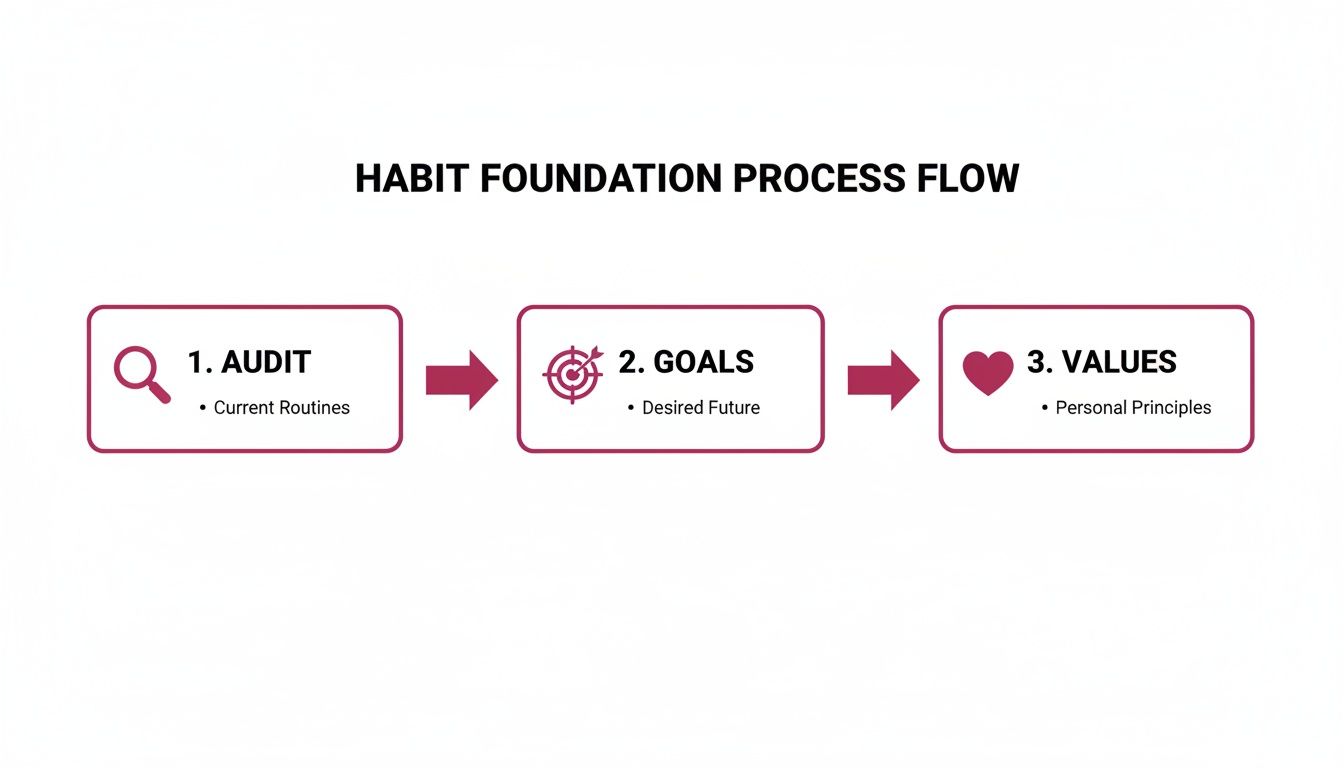
As you can see, a solid foundation comes from auditing what you're already doing, getting crystal clear on your goals, and making sure those goals align with what truly matters to you. When you combine this clarity with micro-steps and habit stacking, you build a system that makes consistency feel manageable, not monumental.
Building Meals That Keep You Full and Satisfied
The secret to sustainable weight loss isn't about deprivation or complex calorie math. It’s about building meals that work with your body, not against it. The goal is to feel full and energized so you aren't constantly fighting off cravings. This means we need to stop focusing on what to cut out and start thinking about what to put in.
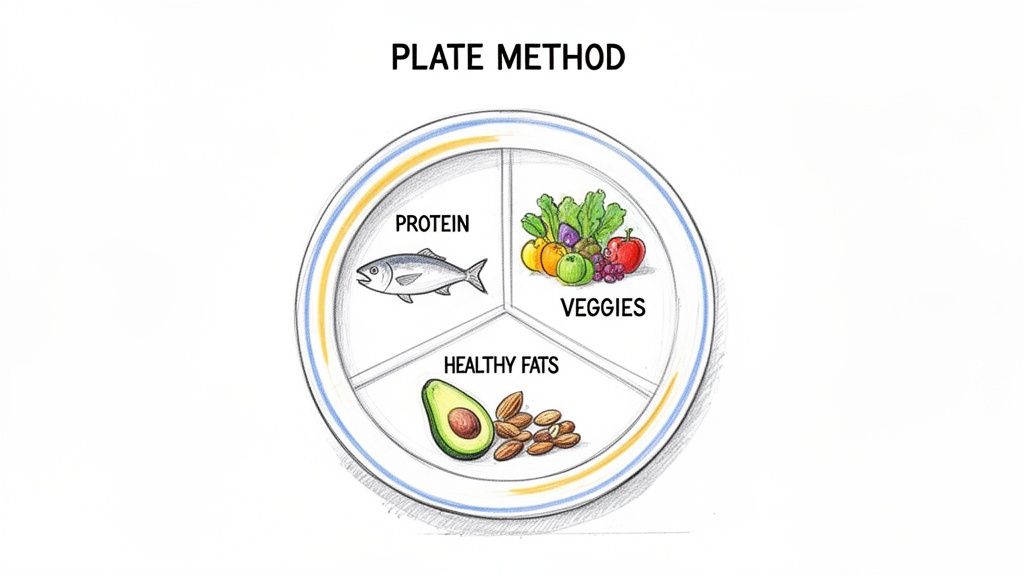
Instead of getting bogged down in numbers, let’s use a simple visual guide. The "Plate Method" is a game-changer for building balanced meals without the stress. Think of it less as a strict rule and more as a helpful mental checklist.
The magic happens when you include three key elements in every meal: protein for satiety, fiber for fullness, and healthy fats for flavor and satisfaction. These nutrients work as a team to slow down digestion and keep your blood sugar stable, which prevents those energy crashes that send you running for the snack drawer.
The Power Trio: Protein, Fiber, and Fat
Think of these three as your meal-building superheroes.
Protein is absolutely vital. It helps you hold on to muscle while you lose fat and is incredibly satiating, meaning it keeps you feeling fuller for much longer.
Fiber—found in all those wonderful vegetables, fruits, and whole grains—adds bulk to your meals, fills you up, and keeps your digestive system happy.
Finally, healthy fats are essential for your hormones and, just as importantly, they make food taste delicious. Enjoying what you eat is non-negotiable for long-term success.
As you build your plate, just ask yourself these quick questions:
- Do I have a palm-sized portion of lean protein?
- Is at least half my plate filled with colorful, non-starchy veggies?
- Did I add a thumb-sized serving of healthy fats?
This simple framework empowers you to make great choices anywhere, whether you're at home or eating out. Even the gear you use can play a role; for example, using quality PFOA and PTFE free cookware ensures that you're not adding unwanted chemicals to your thoughtfully planned meals.
Building a satisfying meal isn't about perfection; it's about proportion. Getting the balance of protein, fiber, and fat right most of the time is what creates consistency and makes healthy eating feel effortless.
Keep It Simple, Keep It Intuitive
This shift away from restriction and toward abundance is why so many people are finally finding success. The global weight loss and obesity management market is expected to reach an incredible $295.09 billion by 2032, showing a massive collective move toward sustainable health practices over quick fixes.
To make building these balanced plates feel second nature, here is a quick reference guide. Aim to include an option from each column in your main meals.
Simple Meal Building Blocks for Satiety and Energy
This quick reference guide helps you build balanced, satisfying meals without needing to count calories. Aim to include an option from each column in your main meals.
This isn't an exhaustive list, but it's a fantastic starting point. Mixing and matching from these columns will help you create a plate that keeps you full, energized, and satisfied for hours.
Navigating Emotional Eating and Setbacks
Let's be real: even with the best intentions, life will throw you a curveball. A stressful day at work, a frustrating conversation, or just plain old boredom can make you want to dive headfirst into a bag of chips. That's emotional eating, and it's one of the most common hurdles people face when trying to build healthier habits.
The key isn't to pretend these feelings don't exist. It's to learn how to feel them without letting food become your only coping mechanism. This is less about willpower and more about building emotional muscle right alongside your new physical routines.
This connection between our lifestyle and health is more important than ever. In fact, research shows that conditions linked to overweight and obesity are responsible for 1.6 million premature deaths each year. These issues often stem from how we live our lives, especially how we handle stress. You can dive deeper into the full research on lifestyle behaviors to see the broader picture.
The Power of "The Pause"
When a powerful craving strikes, it feels urgent. Your immediate instinct is to satisfy it. But the most effective tool you have in that moment is simple: The Pause.
Before you reach for anything, just stop. Take one deep breath. Create a few seconds of space between the trigger (the feeling) and your automatic response (the food).
In that moment, gently ask yourself: "Am I actually hungry, or am I trying to fix a feeling?"
This quick check-in is incredibly powerful. It helps you figure out if you need fuel or if you really need comfort, a distraction, or a break from stress. Once you know the real problem, you can find a real solution—one that doesn't come in a wrapper.
A setback isn't a failure. It's just data. It’s your body’s way of showing you where you might need a little more support.
Build Your Non-Food "Coping Menu"
Your brain is wired to seek rewards. When you’re feeling down or stressed, it looks for a quick hit of dopamine, and for many of us, food has become the go-to source. The trick is to give your brain other appealing options.
Think of it as creating a "coping menu" filled with non-food activities that can shift your mood.
Here are a few ideas to get you started:
- Feeling Stressed or Anxious? Step outside for five minutes—the fresh air alone can work wonders. Put on a song that always calms you down. Or just stand up and do a few big stretches.
- Feeling Bored or Restless? Tackle one tiny task, like organizing a single drawer. Call a friend just to say hi. Put on a podcast that grabs your attention.
- Feeling Sad or Lonely? Write down what you’re feeling in a journal. Flip through old photos that bring back happy memories. Make a cup of herbal tea and wrap yourself in a cozy blanket.
Most importantly, learn to reframe setbacks. If you have an off-plan meal or an entire off day, resist the urge to throw in the towel. Acknowledge what happened, figure out what triggered it, and get right back on track with your very next meal. Every time you do this, you're not just getting back to your plan—you're building resilience for the long haul.
Common Questions About Sustainable Weight Loss
When you decide to stop dieting and start building real, lasting habits, a few questions always pop up. It’s a total mindset shift, so it's completely normal to wonder how long this all takes, what you can actually eat, and what to do when things don't go perfectly. Let's get into it.
This whole process is about creating change that sticks, not chasing a quick fix. Because of that, the first things you'll probably notice have nothing to do with the scale. You’ll feel it first. More energy, sleeping like a rock, your clothes fitting a little better—these "non-scale victories" usually show up within the first few weeks.
As for the number on the scale? It’s a much slower, steadier game. A healthy and sustainable pace is somewhere around 0.5 to 2 pounds per week. The goal isn’t just hitting a number; it's about building a foundation of habits that keeps you feeling good for the long haul.
Can I Still Eat My Favorite Foods?
Yes! And honestly, you have to. A lifestyle you can stick with for years has to include the foods you actually enjoy eating. We're getting away from that "all-or-nothing" diet mentality and learning how to practice mindful moderation.
Think of it as addition, not subtraction. When you focus on filling your plate with satisfying, nutrient-packed foods 80-90% of the time, you naturally make room for the treats you love. This way, you can enjoy them without a side of guilt or that awful feeling that you've ruined everything.
The moment you realize no single food or meal can wreck your progress is a game-changer. It’s the sum of your choices over weeks and months that truly counts.
This balanced approach is what breaks the classic diet cycle of deprivation followed by a binge. It puts you back in the driver's seat, letting you make conscious choices and actually enjoy your food.
What if I Have a Bad Day?
First off, welcome to the club. Everyone has off days. The key is what you do next. Instead of beating yourself up, try a little self-compassion. One meal that wasn't "perfect" or a day you didn't move as much doesn’t cancel out all the good work you’ve put in.
Don't fall into the perfectionist trap. A setback isn't a failure; it's feedback. Get curious and ask yourself what was going on. Were you stressed out? Exhausted? Did you just get caught unprepared? Figuring out the "why" without judging yourself is how you learn to navigate it better next time. The goal is to just get right back on track with your next meal or your next workout.
Consistency over perfection—that's the real secret.
Ready to build habits that last, with a coach that actually gets you? Superbloom uses AI to offer personalized guidance based on your meals, goals, and even your emotional triggers. It’s time to stop dieting and find a smarter path to health. Start your journey at https://superbloomapp.com.