
A Guide to Weight Loss Without Dieting That Actually Lasts
If you're tired of the endless cycle of diets that promise everything but leave you feeling drained and defeated, you’re not alone. The secret to losing weight for good isn't found in a restrictive meal plan or a complicated calorie-counting app. It’s about building small, consistent habits that actually fit into your life and create a healthier, more intuitive relationship with food.
This is a shift away from quick fixes and toward sustainable lifestyle changes. It’s about making it work for you, not the other way around.
Why Traditional Diets Fail (and What to Do Instead)
That feeling of failure after a diet doesn't stick? It’s not a personal flaw. The entire diet industry is practically designed for short-term results and long-term frustration. It's a system built on deprivation, strict rules, and an all-or-nothing mindset that’s both psychologically exhausting and impossible to maintain.
This leads to what experts call the restriction-binge cycle. You cut out entire food groups, your cravings go into overdrive, and eventually, you "give in." What follows is usually a period of overeating, a wave of guilt, and then a promise to be even more restrictive next time. It's a draining loop, and it's time to get off the ride.
The Global Shift Away from Dieting
People all over the world are catching on to this. A huge global survey revealed that while 45% of people are actively trying to lose weight, how they're doing it is changing dramatically. They're ditching the old, rigid rules.
For instance, about two-thirds of people in countries like Mexico and the Netherlands said they'd much rather focus on eating healthier without a formal diet plan. It’s a massive trend, and you can see more of the data on how global attitudes are shifting at Ipsos.com.
This infographic really nails the core problems with the old-school dieting model.
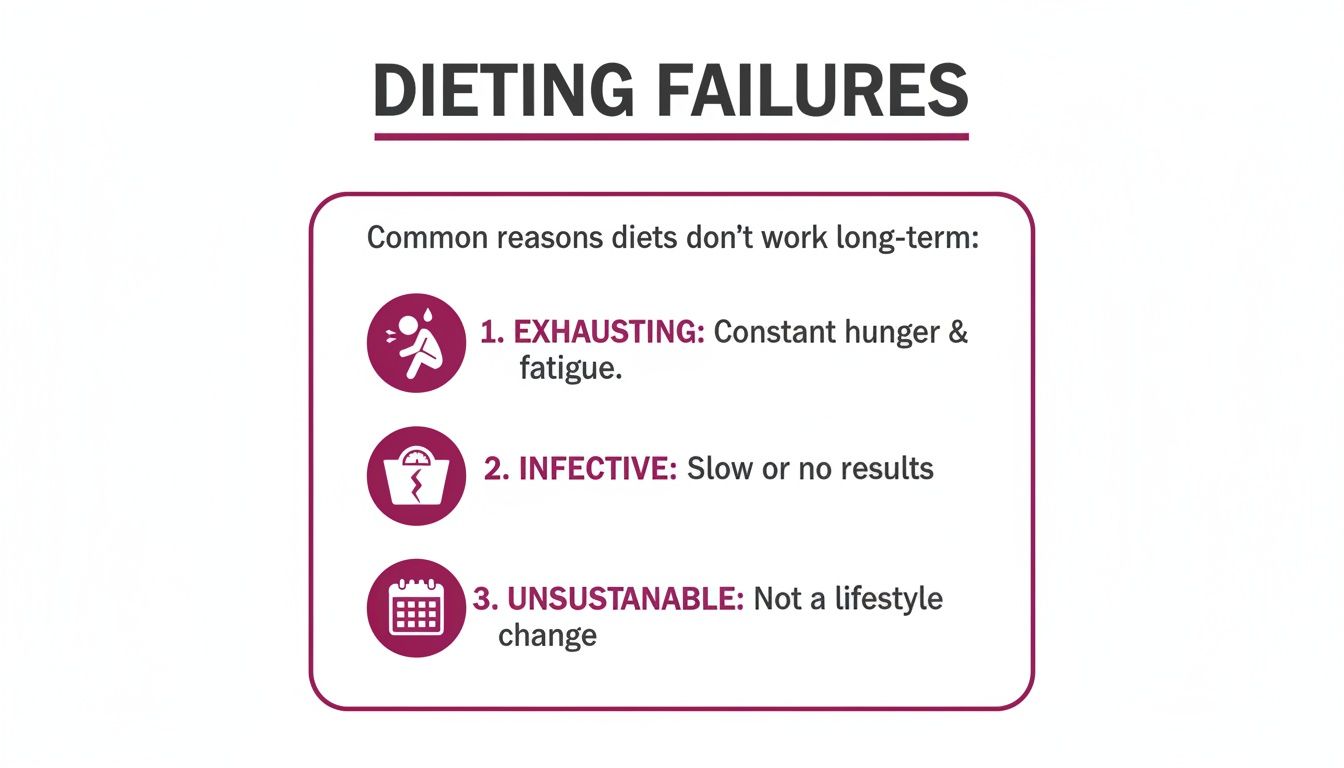
As it shows, the combination of mental burnout and a simple lack of long-term results makes traditional dieting a flawed strategy for anyone seeking lasting health.
The Non-Diet Alternative: A Better Path Forward
So, what’s the alternative? A non-diet approach isn't about rules; it’s about building sustainable behaviors. This means learning to tune into your body's natural hunger and fullness cues, nourishing yourself with whole foods you actually enjoy, and getting curious about the emotional triggers behind why you eat.
Instead of asking, "What can't I eat?" this approach encourages you to ask, "What can I add to my plate to feel more satisfied and energized?"
This simple shift in perspective is the foundation for real, lasting change. You move from a mindset of deprivation to one of empowerment.
To help you see the difference clearly, here's a quick comparison of the two philosophies.
Dieting vs Non-Diet Approach: A Quick Comparison
This table contrasts the core principles of traditional dieting with the sustainable, non-diet method to help you quickly grasp the fundamental differences.
| Aspect | Traditional Dieting | Non-Diet Approach |
|---|---|---|
| Focus | Restriction, rules, and weight on the scale. | Habits, self-awareness, and overall well-being. |
| Food Mentality | Labels foods as "good" or "bad." | All foods can fit; focuses on balance and moderation. |
| Success Metric | Pounds lost. | More energy, better sleep, clothes fitting better. |
| Process | Follows a strict, often temporary plan. | Builds flexible, lifelong healthy habits. |
| Body Signals | Ignores or overrides hunger and fullness cues. | Encourages listening to and trusting your body. |
This table shows it's not just about what you eat, but how you think about food and your body. The non-diet approach is a partnership with yourself, not a battle against your cravings.
Here’s what this looks like in practice:
- You focus on adding, not subtracting. Instead of banning dessert, you might add a source of fiber and protein to every meal to stay full longer. Or you might focus on drinking one more glass of water today than you did yesterday.
- You prioritize non-scale victories. You start celebrating things like having the energy for an evening walk, sleeping through the night, or noticing your jeans feel a little looser—all wins that have nothing to do with a number.
- You build self-awareness. Using a supportive tool like the Superbloom app can help you spot patterns. For example, you might realize you always crave sugar in the afternoon when you're stressed. Once you know that, you can find a different way to cope, like a five-minute stretch or a quick walk outside.
By letting go of the rigid diet mentality, you create the mental space to build habits that truly support your health for good.
Building a Mindset for Sustainable Change
If you want to make changes that actually stick, the work begins in your head, not on your plate. We've all been there: you follow a plan perfectly for a few days, then one "bad" meal makes you feel like a failure, and you throw in the towel.
That all-or-nothing mindset is the biggest hurdle to long-term success. The real secret isn't perfection; it's consistency. It’s about embracing small, steady steps forward and realizing that one off-day doesn't have to derail everything.
This starts by shifting your focus away from things you can't really control—like the number on the scale—to the actions you can take every single day.
Setting Goals That Actually Work
Let's talk about goals. Most of us set outcome-based goals, like "lose 5 pounds this week." The problem? They often lead to frustration when life gets in the way. Instead, try setting behavior-focused goals. These are small, specific actions that are completely within your control.
This simple switch helps build momentum and makes the whole process feel less overwhelming.
Instead of: "I will lose 10 pounds this month."
Try: "I will go for a 20-minute walk after dinner on weekdays."
Instead of: "I'm cutting out all sugar."
Try: "I will add a serving of vegetables to my lunch every day."
Each time you check off one of these small actions, you’re not just building a habit; you’re reinforcing a new identity. You’re becoming someone who prioritizes their well-being. This kind of shift is the core of learning how to develop a growth mindset, where you see challenges as opportunities to learn rather than as tests you can fail.
The Power of Your Personal Why
Motivation comes and goes. What gets you through the tough days is a deep, personal reason for making a change in the first place. So, take a minute and ask yourself: why do I really want this?
Your answer needs to be more than just a number on the scale.
Your 'why' is your anchor. It’s the reason you'll choose a walk over the couch after a long day or add a salad to your pizza order. It’s what makes the healthy choice feel like an act of self-care, not a punishment.
Maybe you want more energy to keep up with your kids. Or the confidence to finally take that hiking trip. Whatever your reasons are, write them down. Put them somewhere you can see them. When your initial excitement fades, that "why" is what will pull you forward.
Practicing Self-Compassion on Your Journey
Let's be real: you’re going to have days where you overeat, skip a workout, or feel like you’ve gone backward. That’s not failure—that's just being human. What truly matters is how you respond in those moments.
Instead of beating yourself up, try practicing a little self-compassion. Acknowledge what happened without judgment and simply focus on making your very next choice a healthy one. Guilt is a terrible motivator; it just feeds that all-or-nothing thinking that got you stuck in the first place.
A simple journaling practice can be a game-changer here. At the end of the day, just ask yourself:
- What went well today?
- What felt challenging?
- How did my mood affect my choices?
This isn’t about counting calories; it’s about building self-awareness. When you start to see the connections between your emotions and your actions, you can develop better ways to cope. The Superbloom app, for example, helps you see these patterns with simple check-ins, connecting your mood to your eating habits. It turns that self-reflection into a powerful tool, helping you build the mental resilience to ensure one slip-up never turns into a setback.
How to Build a Satisfying and Energizing Plate
Alright, let's talk about food. But not in the way you're used to. Forget the measuring cups, the food scales, and the obsessive calorie tracking. This is about building meals that actually keep you full, stabilize your energy, and naturally guide your body toward its happy weight.
We're ditching the whole "good" versus "bad" food mentality. Instead, let's look at your plate as a simple, visual roadmap to feeling fantastic. When you focus on getting the right combination of nutrients, you give your body everything it needs to thrive, without ever feeling like you're missing out.
Your Plate Is Your Guide—Not a Rulebook
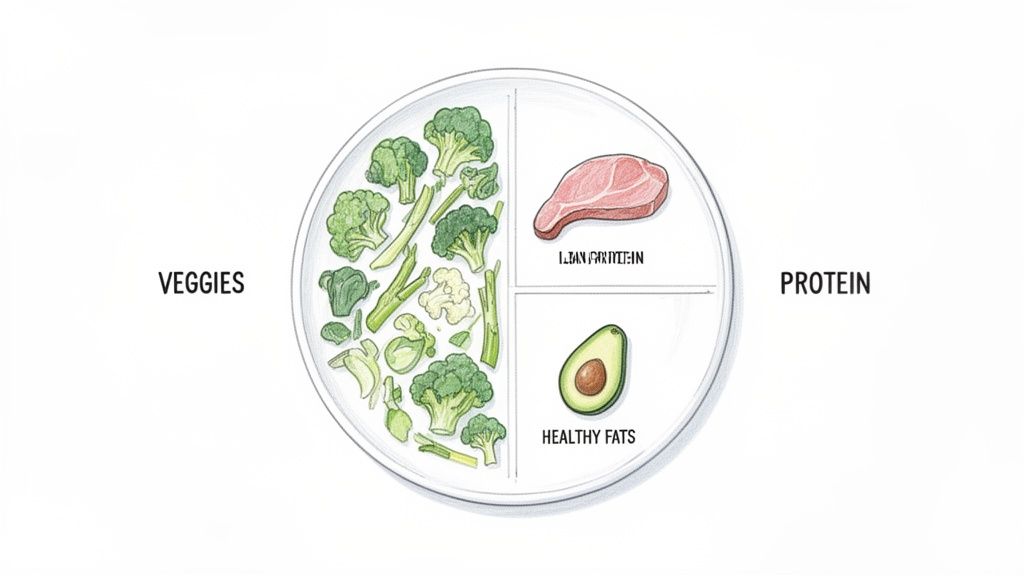
One of the simplest, most effective tools I know of is the Plate Method. It's brilliant because it's visual. There's no math involved, just a simple way to eyeball your portions and build a balanced meal.
Think of your dinner plate and divide it up like this:
- Half the plate: Non-starchy vegetables. This is your foundation. We're talking leafy greens, broccoli, bell peppers, asparagus, cauliflower—anything colorful and packed with nutrients. They give you volume and fiber, which are key to feeling full on fewer calories.
- A quarter of the plate: Lean protein. Protein is your satiety superstar. It keeps you feeling full longer, helps maintain muscle, and supports your metabolism. Think chicken breast, fish, tofu, beans, or lentils.
- The last quarter: Fiber-rich carbs. This is your fuel. Opt for complex carbs that give you sustained energy, like quinoa, brown rice, sweet potatoes, or whole-wheat pasta.
Now, this isn't a rigid law. Some meals, like a hearty stew or a giant salad, won't fit neatly into these boxes, and that’s perfectly fine. The principle is what matters: load up on veggies, get your protein in, and round it out with some quality carbs.
Front-Load Your Fiber for Lasting Fullness
Here’s a trick that can completely change your relationship with hunger: start your meals with fiber. Fiber slows down digestion, which helps keep your blood sugar stable and makes you feel satisfied for hours. It’s your secret weapon against those afternoon energy slumps and nagging cravings.
The easiest way to do this? Kick off your meal with a simple green salad dressed in a light vinaigrette. The fiber from the greens starts to fill you up before you even touch the main course, making it so much easier to eat a sensible amount without feeling deprived.
The goal isn't just to eat less, but to feel more satisfied with what you do eat. By prioritizing fiber and protein, you’re sending your body powerful signals of fullness that calorie-dense, nutrient-poor foods simply can't match.
This is where tracking how you feel—not just what you eat—can be a game-changer. An app like Superbloom lets you log a meal and quickly note your energy and fullness levels afterward. Over time, you’ll see a clear pattern: a fiber-rich plate directly connects to feeling great for hours.
Simple Swaps That Don't Feel Like a Sacrifice
Building a better plate is all about small, easy upgrades that you barely even notice. You don't need to overhaul your entire kitchen. These simple swaps can dramatically boost the nutritional value of your meals without sacrificing the flavors you love.
Easy Food Swap Ideas
| Instead of This... | Try This... | Why It Works Better |
|---|---|---|
| White Rice | Quinoa or Brown Rice | Boosts fiber and protein for better satiety. |
| Sugary Cereal | Plain Oats with Berries | Provides sustained energy without the sugar crash. |
| Creamy Salad Dressing | Olive Oil & Vinegar | Adds healthy fats without the extra sugar and preservatives. |
| Fruit Juice | A Whole Piece of Fruit | Gives you the same flavor with added fiber to slow sugar absorption. |
These little changes really do add up. They gradually retrain your taste buds and help new, healthier habits feel completely natural.
While we all know exercise is important, research consistently shows that what you put on your plate has a much bigger impact on weight management. One fascinating study found that people in developed nations burn a similar number of calories as those in highly active, rural populations.
This suggests the obesity epidemic is driven more by what and how much we eat than by a lack of movement. If you're interested, you can dig into the full PNAS study on energy expenditure. It all comes back to this: mastering what’s on your plate is the true cornerstone of sustainable weight loss without dieting.
Navigating Cravings and Emotional Eating
Let's be honest: cravings and emotional eating can completely derail your best intentions. One moment you're on track, and the next you're wrist-deep in a bag of chips, not because you were hungry, but because you were stressed, bored, or just falling into an old habit.
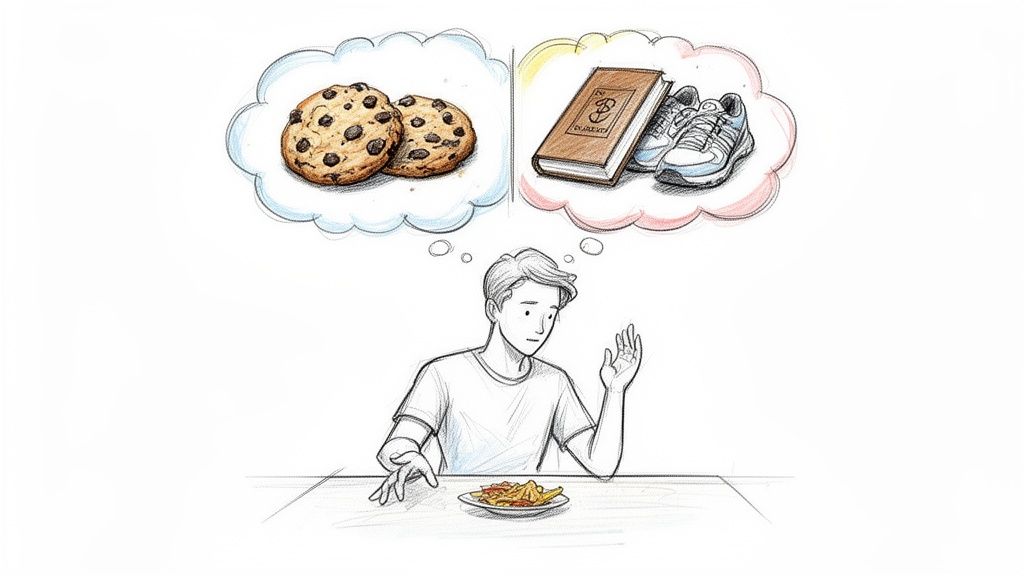
Getting a handle on these urges isn't about white-knuckling it with willpower. It’s about understanding them. The first step is to simply pause and ask yourself, “Am I actually hungry?” This one small question can be a game-changer. It helps you see the difference between true, physical hunger that comes on gradually and can be satisfied with a real meal, versus that sudden, intense emotional hunger that screams for one specific thing.
Unpacking Your Food Triggers
Reaching for food when you're feeling down isn’t a personal failing—it’s a coping mechanism many of us learned a long time ago. Food can feel like comfort, celebration, and relief all rolled into one. The trick is to figure out what your personal triggers are so you can find healthier ways to manage those feelings.
Think about it. Maybe you have a tough day at work, and the second you walk through the door, you're making a beeline for the pantry. The trigger here is clearly stress. Once you know that, you can start building a new routine that doesn't involve salty snacks.
Your craving isn't the problem. It's a signal. Your job is to get curious about what that signal is trying to tell you about your emotional state.
This is where logging your moods and cravings in an app like Superbloom can be incredibly insightful. You might start to notice clear patterns—like you only crave sweets on days you feel exhausted or overwhelmed. That's not just data; that's a roadmap for what to work on.
Building Your Non-Food Toolbox
Once you've identified your triggers, you can create a go-to list of things to do instead of eat. The idea is to have a few simple, enjoyable activities ready to go, so you're not trying to come up with a plan in the middle of a stress-fueled craving.
Here are a few ideas to get you started:
- Feeling Stressed? Try a five-minute guided meditation, step outside for some fresh air, or just put on a song that always calms you down.
- Feeling Bored? Grab a book, work on a puzzle, or call a friend for a quick catch-up.
- Feeling Tired? Instead of reaching for sugar, make a cup of herbal tea or even allow yourself a 15-minute power nap.
The most important thing is that you pick things you actually enjoy. If it feels like a chore, you'll never stick with it. The new activity has to give you a similar sense of comfort or distraction that food used to.
Strategies for Common Craving Scenarios
So, what do you do in the heat of the moment, when a craving feels like it's taking over? For many of us, the biggest battle is with sugar.
It's no surprise that a global survey found that 62% of people trying to lose weight cut back on sugar before anything else. It's a clear signal that people know where the biggest challenges often lie. You can dig into more of these global diet trends from Ipsos to see you're not alone.
To get ahead of this, it's really helpful to learn how to stop sugar cravings naturally and feel in control again. One powerful method is called "urge surfing." Instead of fighting the craving, you just acknowledge it and ride it out like a wave. Notice how it builds, peaks, and then, eventually, fades away on its own.
Another fantastic trick is the delay tactic. The next time you're eyeing the office donuts, just tell yourself you can have one, but you have to wait 15 minutes. Go drink a big glass of water and do something else. More often than not, by the time the 15 minutes are up, the intense urge will have passed, and you'll realize you didn't really want it after all. These small pauses are what break the cycle, putting you back in charge and proving that sustainable weight loss without dieting is absolutely possible.
Movement and Sleep: The Overlooked Keys to Weight Management
When we think about managing our weight, our minds usually jump straight to food. But what you do outside the kitchen is just as important. Two of your most powerful—and most frequently ignored—allies are movement and sleep.
Getting these two things right can make all the difference. They work behind the scenes to regulate your metabolism, balance your hormones, and lift your mood, making healthy choices feel natural instead of forced.
The moment you stop thinking of exercise as a way to "burn off" a meal, everything changes. Movement can become a celebration of what your body is capable of, not a punishment for what you ate.
Rethink Your Relationship with Exercise
For too long, we've been sold the idea that weight loss requires punishing, hour-long workouts. The reality? The best kind of movement is simply the one you enjoy enough to do consistently. The goal isn't to suffer through a workout; it's to find activities that get you moving without feeling like a chore.
This could be anything from dancing around your living room to your favorite playlist, taking a brisk walk while catching up on a podcast, or even just spending time in the garden. When movement is fun, it becomes a source of energy and a mood booster, which naturally helps regulate appetite and curb stress eating.
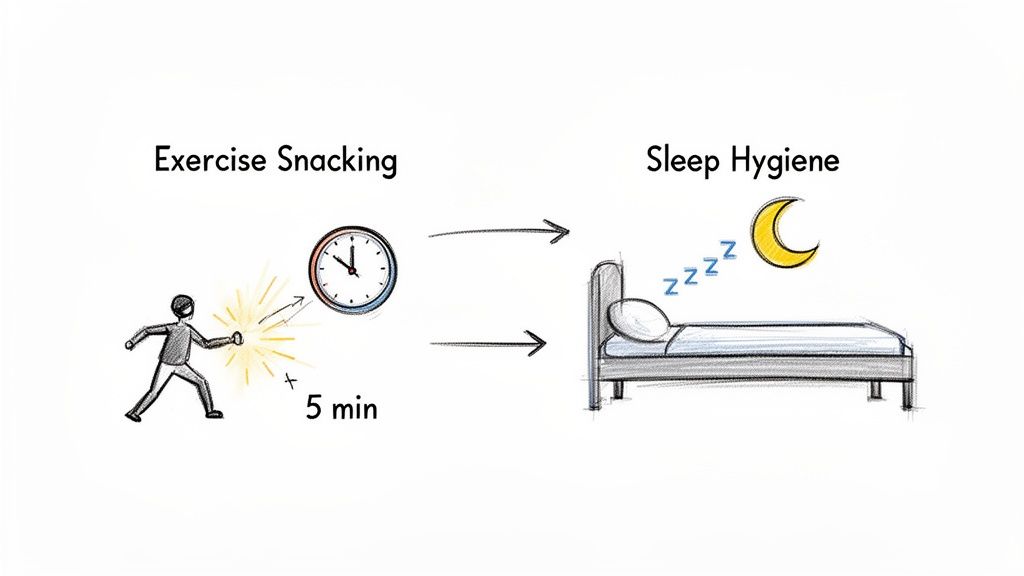
A fantastic and practical strategy I often recommend is "exercise snacking." Instead of trying to block out a huge chunk of your day, you sprinkle short bursts of activity throughout it.
- Start your day with 10 minutes of stretching.
- Squeeze in a quick 15-minute walk on your lunch break.
- Do a few sets of bodyweight squats or lunges while dinner is in the oven.
These little bits of movement really do add up. They keep your metabolism humming without ever feeling overwhelming, and you’ll be surprised how easily they fit into your current routine.
Why Sleep Is Your Non-Negotiable Ally
If movement is the work, sleep is where the magic happens. It’s when your body repairs, resets, and regulates itself. When you consistently shortchange yourself on sleep, you throw your hormones into chaos, actively working against your own goals.
Poor sleep causes your cortisol (the stress hormone) levels to skyrocket. This not only increases your appetite but also triggers cravings for sugary, fatty foods and tells your body to store fat, especially around your belly. It also messes with ghrelin and leptin, the two hormones that act as your body's "I'm hungry" and "I'm full" signals. The result is a perfect storm: you feel hungrier all the time and less satisfied when you do eat.
Getting enough quality sleep is one of the most powerful things you can do for sustainable weight management. It helps reset your hormonal balance, reduces cravings, and gives you the mental clarity to make mindful choices the next day.
Interestingly, research shows a direct link between cutting calories and sleep problems, especially for women. One study found that calorie restriction led to waking up more often and getting less restful sleep. This is a crucial insight: drastic dieting can backfire by wrecking your sleep, which in turn makes it even harder to manage your appetite.
Actionable Steps for Better Sleep Tonight
Improving your sleep doesn't mean you have to overhaul your entire life. It’s all about making small, consistent tweaks to your evening routine—what experts call good "sleep hygiene."
Here are a few simple things you can try tonight:
- Create a consistent schedule. Going to bed and waking up around the same time every day (yes, even on weekends!) helps set your body's internal clock.
- Build a wind-down ritual. For the last 30-60 minutes before bed, put the screens away. Try reading a real book, taking a warm bath, or listening to calming music.
- Optimize your bedroom. Your room should be a cave: cool, dark, and quiet. Even tiny amounts of light from a charger or a streetlamp can disrupt your sleep cycle.
By making joyful movement and restorative sleep priorities, you're building a strong foundation for health. You’re working with your body's natural rhythms, not fighting against them, allowing it to find its ideal weight in a much more compassionate and effective way.
Your Questions on Non-Diet Weight Loss Answered
Jumping into a new way of thinking about your health can bring up a lot of questions. It's totally normal to feel a mix of excitement and maybe a little doubt, especially when you’re leaving behind the old, familiar rules of dieting.
Let’s walk through some of the most common questions I hear about this non-diet approach. My goal is to help you feel completely confident as you get started. This isn't about learning another set of rigid instructions; it’s about finally building a trusting, intuitive relationship with your body.
How Quickly Can I Expect Results Without Dieting?
This is always one of the first questions people ask. With a non-diet approach, we're aiming for sustainable fat loss, which usually looks like a steady 0.5 to 2 pounds a week. This is a huge shift from crash diets, which often cause rapid water and muscle loss, setting you up for that frustrating rebound.
Honestly, the first "results" you'll probably notice won't even be on the scale. They show up as what we call non-scale victories—suddenly having more energy in the afternoon, feeling your mood stabilize, or noticing your clothes fit a little better. This pace is not just healthier; it's what makes the changes permanent because you're building a new lifestyle, not just temporarily starving yourself.
The goal is progress, not perfection. A slower, more consistent pace of change is what leads to results that actually stick for life.
Is It Really Possible to Lose Weight Without Counting Calories?
Absolutely. Calorie counting is just one tool in the toolbox, and it's far from the only—or best—one for many people. Your body has incredibly smart internal cues for hunger and fullness. Learning to listen to them is the real secret to weight loss without dieting.
When you start prioritizing nutrient-dense foods packed with protein and fiber, you naturally feel fuller and more satisfied. This automatically helps manage your overall intake without the mental gymnastics of tracking every single bite. The focus shifts from abstract numbers to the actual quality of your food, which, frankly, is a much more enjoyable and sustainable way to live.
How Does This Approach Handle Special Dietary Needs?
Because this approach is built on principles instead of rigid rules, it's incredibly flexible. It works whether you have food allergies, are managing a condition like PCOS or IBS, or follow a specific eating pattern like vegetarianism or veganism. The core ideas stay the same.
- Focus on balance: No matter your restrictions, you can still aim for a solid mix of protein, fiber, and healthy fats in every meal.
- Listen to your body: This is even more important when you have sensitivities. Pay close attention to how different foods make you feel to pinpoint any potential triggers.
- Prioritize nutrient density: Always aim for the most nourishing options available to you within your specific dietary framework.
This adaptability makes it a truly personal path. You get to honor your body's unique needs while still working toward your overall health goals.
What if I Have a Setback and Revert to Old Habits?
First, let's reframe this. Setbacks aren't just possible; they're an expected part of the journey. I tell my clients to see them as data, not disasters. This is a critical mindset shift that moves you away from the all-or-nothing thinking of traditional diets.
When you have an off day or an off meal, resist the urge to spiral into guilt. Instead, get curious. Ask yourself, "What can I learn here?" Maybe it was a crazy-stressful day at work, or you didn't get enough sleep the night before. One meal doesn't erase weeks of progress.
Acknowledge what happened, show yourself some compassion, and get right back to your healthy habits with your very next choice. That simple act of moving forward is what finally breaks the cycle of "falling off the wagon" for good.
Ready to stop guessing and start building habits that last? The Superbloom app acts as your personal AI nutrition coach, helping you understand your unique patterns without the stress of calorie counting. It provides real-time guidance to turn your daily choices into sustainable lifestyle changes. Start your journey toward a healthier you by visiting https://superbloomapp.com.