
Why am i always hungry: Science-backed tips to curb appetite
If you're constantly battling the urge to eat, you’ve probably asked yourself, "Why am I always hungry?" more times than you can count. The answer usually isn't one simple thing but a combination of four main culprits: what you're eating (or not eating), chronic stress, poor sleep, and a sneaky one—mistaking thirst for hunger.
Your Constant Hunger Question, Answered Fast
Think of your appetite as a sensitive dashboard in your car. When a warning light flashes—in this case, a hunger pang—it’s trying to tell you something specific. The problem is, it's incredibly easy to misread those signals. This often leads to a frustrating cycle of constant snacking and wondering why you never feel truly satisfied.
The most common reasons you feel like a bottomless pit are usually tied to your lifestyle, and they all feed into each other. For example, a diet that's low on the nutrients that keep you full can leave you feeling empty, while a bad night's sleep throws the very hormones that control your appetite completely out of whack.
The Main Drivers of Constant Hunger
Ever finish a big meal, only to find yourself rummaging through the pantry an hour later? A major reason for this is a lack of protein and fiber. These are the two workhorses of satiety. Without enough of them, your body just doesn't get the signal that you're full for very long.
In fact, studies have shown that people who don't hit the recommended 25-30 grams of fiber per day report feeling up to 50% more hunger pangs. Fiber is crucial because it slows down digestion and helps keep your blood sugar from going on a rollercoaster ride. You can learn more about the broader context of food and nutrition from the World Food Programme's global reports.
This flowchart gives a great visual breakdown of what’s really going on behind the scenes.
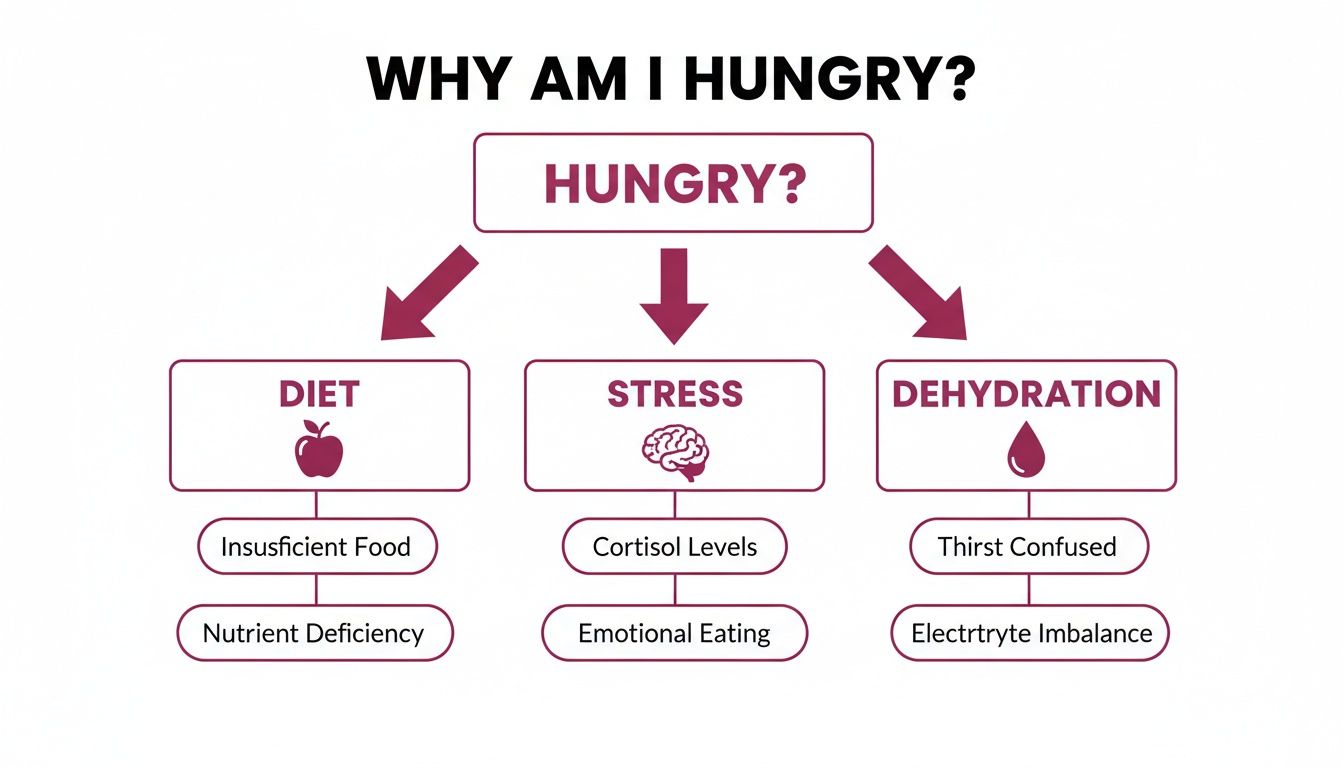
As you can see, what you eat, how you feel, and whether you're hydrated are the foundational pillars of appetite control. When one of them is off-balance, it can set off a chain reaction that leaves you feeling hungry even when your body doesn’t need more food.
To put it all together, this table summarizes how these common issues can trick your body into feeling hungry around the clock.
Common Reasons You Feel Hungry All The Time
| Cause | How It Triggers Hunger | Quick Fix |
|---|---|---|
| Low-Satiety Diet | Meals lacking protein and fiber cause rapid blood sugar spikes and crashes, leading to frequent cravings. | Prioritize protein, fiber, and healthy fats at every meal. |
| Chronic Stress | Stress increases cortisol and ghrelin (the "hunger hormone"), making you crave high-calorie comfort foods. | Practice mindfulness or take short walks to de-stress. |
| Poor Sleep | Lack of sleep decreases leptin (the "fullness hormone") and increases ghrelin, creating a hormonal imbalance. | Aim for 7-9 hours of consistent, quality sleep per night. |
| Dehydration | Your brain's hypothalamus can confuse thirst signals with hunger signals, prompting you to eat instead of drink. | Drink a glass of water and wait 15 minutes before reaching for a snack. |
Seeing it laid out like this makes it clear how interconnected these factors are. Addressing one area, like improving your sleep, can have a positive domino effect on your hunger hormones and stress levels, too.
How Your Diet Can Create Never-Ending Hunger
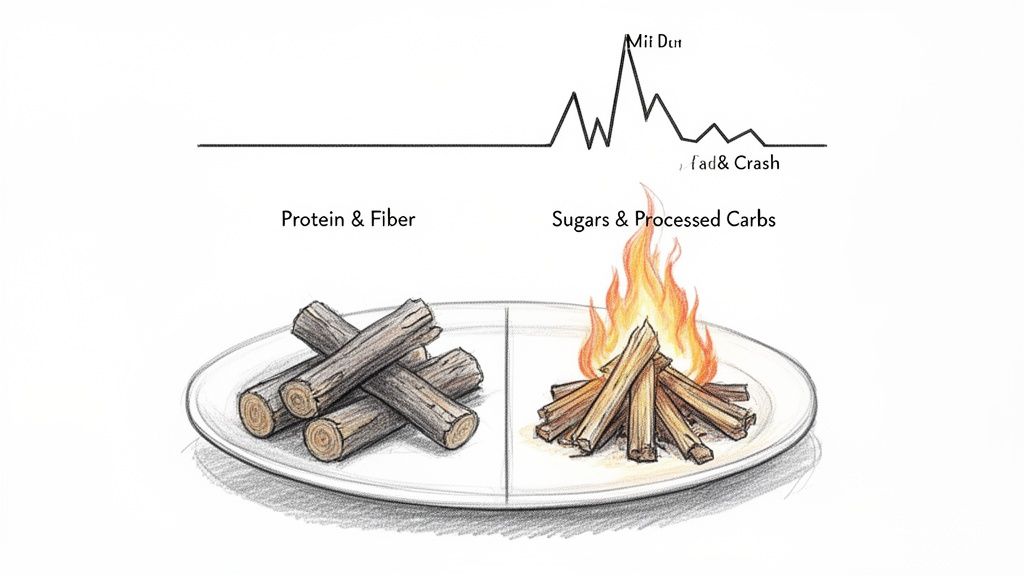
If that "always hungry" feeling sounds familiar, the first place to look is your plate. The food you eat acts as fuel for your body, and the type of fuel you choose makes all the difference.
Think of it like building a fire. Foods high in protein, fiber, and healthy fats are like dense, slow-burning logs. They digest gradually, releasing a steady stream of energy over hours and signaling to your brain that you're full and satisfied. That lasting feeling of fullness has a name: satiety.
On the flip side, processed foods are like tossing a handful of kindling onto the flames. Things like white bread, sugary snacks, and pastries burn up in a flash. You get a huge, immediate spike in energy, but it fizzles out just as quickly, leaving you hungry again only an hour or two later.
The Blood Sugar Rollercoaster and Your Hunger
This is the classic "crash and crave" cycle, and it's a huge driver of constant hunger. When you eat refined carbs, they turn into sugar almost instantly, flooding your bloodstream. Your body scrambles to manage this sugar rush by releasing a surge of insulin to get the sugar out of your blood and into your cells.
The problem is, this insulin response is often an overreaction. It clears too much sugar from your blood, causing your blood sugar levels to plummet. Your brain reads this sudden drop as an emergency—a sign that you're running out of fuel—and triggers powerful cravings for more quick energy. And just like that, you're caught in a vicious cycle.
In short, a diet centered on processed carbs trains your body to run on quick-hit energy. When the inevitable crash comes, your brain screams for another fix, locking you into a pattern of feeling hungry all the time.
To get off this rollercoaster, you need to change your fuel source. It's time to start building your fire with more logs and less kindling.
Building Satiety with Macronutrients
The secret to feeling full for longer comes down to balancing your macronutrients—protein, fat, and carbohydrates. Each one has a specific job when it comes to managing your appetite.
Protein: The Fullness Factor. Hands down, protein is the most satisfying macronutrient. It takes a long time to digest and also helps suppress ghrelin (often called the "hunger hormone"), keeping you feeling full for hours.
Fiber: The Volume Builder. Fiber is a unique carb that your body can't digest. It adds physical bulk to your meals without adding calories, literally filling up your stomach. It also slows down how quickly sugar enters your bloodstream, preventing those dramatic energy spikes and crashes.
Healthy Fats: The Slow Burner. Just like protein, fats put the brakes on digestion. This provides a sustained energy release that keeps you satisfied and prevents you from feeling hungry again minutes after you've eaten.
You don't need a total diet overhaul to see a difference. Simple swaps can dramatically increase how satisfying your meals are. For example, add some avocado to your toast for healthy fat and fiber, or stir a can of lentils into your soup for a major protein and fiber boost. These small adjustments help you build meals that provide steady, lasting energy, keeping hunger at bay for hours, not minutes.
The Hidden Link Between Stress, Sleep, and Your Appetite
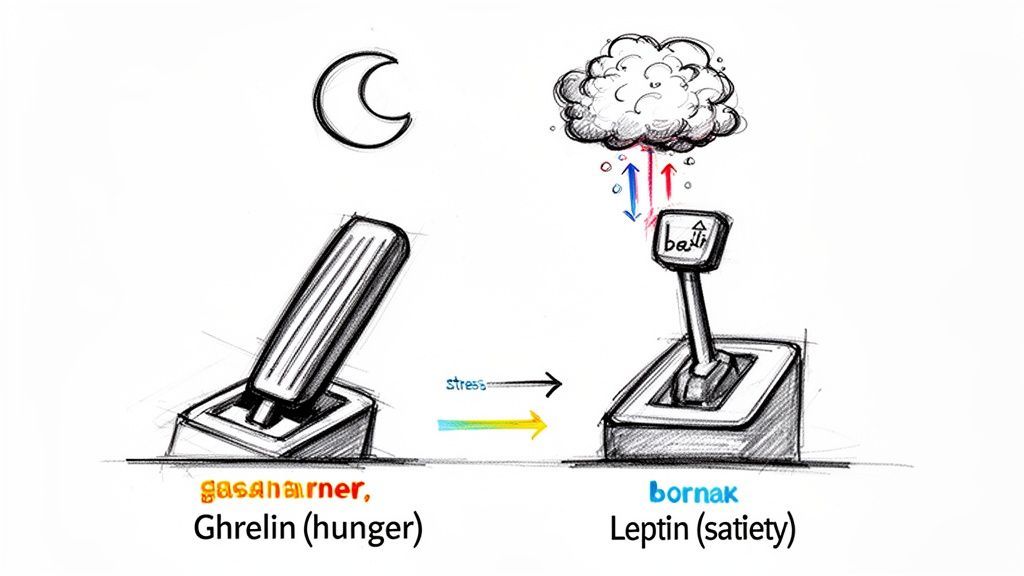
It’s not always what’s on your plate that drives constant hunger. Often, the real culprits are stress and poor sleep, which can completely hijack your body's appetite signals.
Think of your hunger as being managed by a hormonal seesaw. On one end, you have ghrelin, the "gas pedal" that tells your brain, "Time to eat!" On the other, you have leptin, the "brake" that signals, "I'm full, you can stop now."
When things are going well, this system works beautifully. But chronic stress and sleepless nights are like bullies who come and jump on the ghrelin side of the seesaw, sending your hunger cues soaring while keeping your fullness signals pinned to the ground. This biological chaos is a major reason you might find yourself constantly foraging for food, especially during a tough week.
How Stress Fuels Your Cravings
When you’re stressed, your body shifts into "fight or flight" mode and floods your system with cortisol. This is an ancient survival response designed to get you ready for immediate danger by screaming for quick-energy fuel. Your body doesn't know the difference between being chased by a tiger and staring down a stressful project deadline.
That cortisol surge is what triggers intense cravings for high-sugar, high-calorie foods. Your brain thinks it needs the fastest possible fuel source to survive the "threat." This can quickly become a pattern known as emotional eating, where food is used as a temporary escape from the pressure you're feeling.
That nagging hunger might stem from stress and emotional triggers, which can spike ghrelin—the 'hunger hormone'—by up to 30% during high-stress periods. In the US alone, 77% of people report emotional eating weekly. Discover more insights about the global impact of food accessibility on Rise Against Hunger.
Just knowing that your stress is the one pulling the strings is a huge first step. Once you can spot the trigger, you can start finding other ways to cope that don't involve the pantry, breaking that cycle of stress-induced hunger.
The Sleep Deprivation and Hunger Connection
Sleep is your body’s nightly reset button, and that includes recalibrating your appetite hormones. If you aren't getting enough quality rest—ideally 7-9 hours for most adults—that entire maintenance process starts to fall apart.
Even one night of bad sleep is enough to throw your system out of whack. Research shows that when you're sleep-deprived, your ghrelin levels climb while your leptin levels fall. You’re left with a perfect storm: a ravenous appetite and a muted sense of fullness.
It’s a hormonal double-whammy. You feel physically hungrier than you actually are, and the meals you do eat don't satisfy you the way they should. This is why learning how to recover from sleep deprivation is so crucial for getting your appetite back to its natural rhythm.
By making a conscious effort to manage stress and protect your sleep, you empower your body to rebalance its own hunger signals. This makes it so much easier to listen to what your body truly needs.
Lifestyle Habits That Trick Your Brain Into Hunger
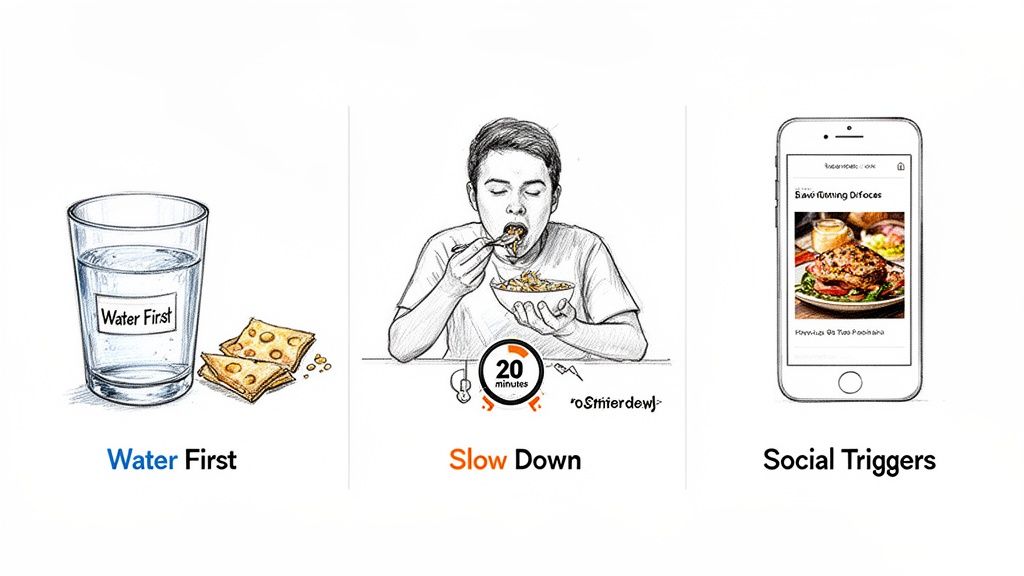
Ever feel hungry right after you’ve finished a meal? It’s a frustrating feeling, but a lot of the time, the answer to "why am I always hungry?" has nothing to do with a real need for food. Our daily routines and subconscious behaviors can send powerful, yet totally false, hunger signals straight to the brain.
The key is learning to tell the difference between true physical hunger and these clever imposters. Let's start with a big one: hydration.
Your brain’s command center for both appetite and thirst is a region called the hypothalamus. It’s incredibly easy for this area to get its wires crossed, and this mix-up is a major driver of unnecessary snacking. Dehydration often shows up feeling a lot like hunger, and the numbers are staggering: research suggests that as many as 75% of adults mistake their body’s cues for thirst as a need to eat.
Even a slight dip in your hydration levels can crank up the hormones that trigger hunger pangs. While our focus is on individual hydration, understanding the broader context of nutrition is vital, and you can learn how global health organizations view these interconnected factors to see the bigger picture.
The Perils of Eating Too Fast
Another habit that manufactures a false sense of hunger is simply eating too quickly. Think about it: it takes roughly 20 minutes for your stomach to send the "I'm full" message all the way up to your brain.
When you scarf down a meal in five minutes flat, you’re literally outrunning your body’s natural appetite control system. Your stomach might be completely full, but your brain hasn’t gotten the memo yet. This delay is what leaves you feeling unsatisfied, reaching for seconds or a dessert you don't actually need. Slowing down is one of the simplest and most powerful changes you can make.
Think of your fullness signals like a package being delivered. Eating too fast is like leaving for a trip before the package arrives—you miss the message completely. By eating slowly, you ensure you're home to receive it.
Your Social Feed and Psychological Cravings
In our highly visual world, hunger isn't just a physical feeling; it can be a psychological one, too. Have you ever been scrolling through Instagram, only to be hit with a sudden, intense craving? That's what we call visual hunger.
Seeing an endless stream of vibrant, perfectly styled "food porn" can trigger powerful cravings, even if you just ate. This isn't a failure of willpower. These images activate the reward centers in your brain, releasing dopamine and creating a powerful desire to eat that has nothing to do with your body's actual energy needs.
To start pushing back against these sneaky hunger traps, try building a few new, mindful habits:
The Water First Rule: The next time a hunger pang hits between meals, drink a full glass of water and just wait 15 minutes. This simple pause is often all your brain needs to sort out whether it was thirst or actual hunger.
Mindful Mouthful Technique: Make a conscious effort to put your fork down between bites. It’s a small action, but it forces you to slow down, actually taste your food, and give those all-important satiety signals a chance to catch up.
When Constant Hunger Signals a Deeper Issue
A rumbling stomach is one thing; we all know that feeling. But what if your hunger is a constant, nagging presence that never seems to go away, no matter how much you eat? If your appetite feels insatiable, it might be more than just a need for a bigger lunch. Sometimes, it’s your body’s way of waving a red flag about an underlying medical issue.
This kind of relentless hunger, especially if it comes with other new symptoms, shouldn't be brushed aside. The point isn't to diagnose yourself, but to gather the right information so you can have a productive conversation with your doctor.
Medical Conditions and Medications That Increase Hunger
Several health conditions can throw the complex system of hormones and metabolic signals that regulate your appetite completely out of whack, leaving you feeling ravenous.
For instance, an overactive thyroid (hyperthyroidism) can kick your metabolism into such a high gear that it burns through energy at an incredible rate. You feel perpetually hungry and may even lose weight despite eating more.
Type 2 diabetes is another common culprit. This condition often involves insulin resistance, meaning your cells can't properly absorb sugar from your blood for fuel. Your body, sensing a fuel crisis at the cellular level, cranks up hunger signals to get more energy, even though there's plenty of sugar already in your system. This is also a major factor in related conditions like PCOS and insulin resistance, which shows just how deeply hormonal and metabolic health are connected.
It’s not just medical conditions, either. Certain prescription drugs are famous for ramping up appetite. Corticosteroids like prednisone, for example, are well-known for causing a significant increase in hunger as a side effect. If you’ve recently started a new medication and your appetite has gone through the roof, it’s a conversation worth having with your doctor.
When to See a Doctor
Figuring out "why am I always hungry?" sometimes requires a professional's help. If your constant hunger is showing up alongside any of the following symptoms, it's a clear signal to book a medical evaluation:
- Unexplained weight loss, even though you're eating more
- Extreme thirst and having to urinate frequently
- Constant fatigue or feeling weak and shaky
- Noticeable mood swings, irritability, or new anxiety
- Sweating more than you normally would or feeling hot all the time
When you present these issues to a doctor, you're not just saying "I'm hungry"—you're providing a complete picture that helps them pinpoint the real root cause and get you the right diagnosis and care.
Your Questions About Constant Hunger Answered
Even with all this information, a few common questions always seem to pop up. Let's get those sorted out so you can feel confident in your next steps.
Can Eating More Frequently Help?
This is a classic "it depends" situation. The short answer is yes, sometimes. Eating smaller, balanced mini-meals every 3-4 hours can be a great strategy for keeping your blood sugar stable and preventing those desperate, ravenous feelings.
But here’s the catch: the real key isn't how often you eat, but what you're eating in those moments. Those mini-meals absolutely must contain a mix of protein, fiber, and healthy fats. Just grabbing a handful of crackers or a sugary snack will send your blood sugar on another rollercoaster and make your hunger even worse.
How Long Until My Hunger Cues Reset?
Everyone wants to know how long it takes to feel "normal" again. While there's no official switch to flip, most people start to notice a real difference in their hunger cues within 2-4 weeks of making consistent changes.
By focusing on nutrient-dense food, getting quality sleep, and managing your stress, you’re giving your body the chance to recalibrate its hunger hormones, ghrelin and leptin. The most important thing you can do is stick with it.
Think of it like training a muscle. The first few workouts are always the hardest. But with regular practice, your body’s appetite signaling gets stronger and more reliable, and the whole process starts to feel second nature.
Will I Feel Hungrier if I Start Exercising?
You bet, and that’s a good thing! When you start moving your body more, your energy needs go up, and your appetite naturally follows suit. This is your body telling you exactly what it needs to perform and recover.
The solution isn’t to fight this hunger but to honor it with high-quality fuel. A post-workout meal packed with protein and complex carbs is the perfect way to replenish your energy stores and repair muscle. Do that, and you'll find it leads to much better, more lasting satisfaction.
Ready to stop guessing what’s driving your appetite? Superbloom is an AI nutrition coach that acts as your personal food detective, helping you connect the dots between your meals, your mood, and your hunger—all without the stress of a rigid diet. Get the personalized insights you need to build healthier habits for good, with a supportive guide right in your pocket. Learn more at https://superbloomapp.com.