
Why Do I Overeat at Night and How Can I Regain Control

It’s a story many of us know all too well. You stick to your health goals all day long, only to find yourself fighting off intense cravings the moment the sun goes down. If you’ve ever wondered, "Why do I overeat at night?"—know that it has very little to do with a sudden lack of willpower.
Instead, it's usually a perfect storm of your biology, psychology, and daily habits all coming together to work against your best intentions.
The 9 Main Reasons You Overeat At Night
Finding yourself wandering into the kitchen for "just one more snack" after dinner is an incredibly common experience. It’s not a personal failure. More often than not, this pattern is driven by a powerful mix of internal and external forces that have been building up all day.
Let's break down the nine most common culprits behind nighttime overeating, so you can start to identify which ones might be at play for you.
1. Your Hormones Are Working Against You
Our bodies have two key hormones that manage hunger and fullness. Ghrelin is the "go" hormone that tells you you're hungry, while leptin is the "stop" hormone that signals you're full.
Research shows that ghrelin levels naturally tend to rise in the evening, increasing your appetite just when you're trying to wind down. It's a physiological setup for late-night cravings.
2. Your Internal Clock Is Out of Sync
Think of your body as running on a 24-hour internal clock, known as your circadian rhythm. This rhythm governs everything from your sleep-wake cycle to your metabolism.
According to your body’s natural clock, your metabolism is primed for action during the day and slows down at night. When we eat late, we're asking our bodies to process food at a time when they’re biologically programmed to be resting and repairing.
3. Your Blood Sugar Is on a Rollercoaster
What you eat during the day has a massive impact on your cravings at night. Meals high in refined carbs and sugar can send your blood sugar soaring, only for it to crash a few hours later.
That post-dinner slump can trigger a powerful craving for a quick energy hit, and your brain knows that sugary or starchy foods are the fastest way to get it. It’s a vicious cycle that leaves you hunting for snacks.
4. You’re Stressed or Eating Your Emotions
After a tough day, reaching for food can feel like a much-needed reward or a way to numb out. Stress, boredom, loneliness, and fatigue are all powerful emotional triggers for eating.
Willpower is a finite resource, and by the end of the day, it's often running on empty. In those moments, high-calorie comfort foods can feel like the only solution to soothe a frazzled mind. This is a classic pattern of emotional eating.
5. It’s Just a Habit
Sometimes, we eat at night simply because… well, we always have. That bowl of ice cream while watching your favorite show or the bag of chips you munch on while scrolling through your phone can become a deeply ingrained habit.
These routines often become so automatic that we don't even realize we're doing them. The association between "watching TV" and "snacking" becomes a powerful, unconscious trigger.
6. Your Environment Is Full of Cues
Our surroundings have a huge influence on our eating behaviors. If your kitchen counters are covered in cookies and your pantry is stocked with your favorite salty snacks, you’re creating an environment that makes overeating almost inevitable.
Simply seeing a tempting food can be enough to trigger a craving, even when you aren't physically hungry. This is known as cue-induced eating.
7. You’re Not Eating Enough During the Day
It might sound counterintuitive, but one of the biggest drivers of nighttime overeating is daytime restriction. When you severely limit your calories all day, your body enters a primal state of hunger.
By the time evening arrives, your biological drive to refuel becomes overwhelming. This isn't a lack of discipline; it's your body's survival mechanism kicking in, often leading to a binge that undoes all your earlier efforts.
Nighttime eating is surprisingly widespread, particularly among those trying to manage their weight. In one major health survey, the prevalence of night eating was found to be almost double in obese individuals compared to their normal-weight counterparts.
For example, large-scale national health data reveals that while about 3-4% of the general population struggles with night eating, that figure jumps to nearly 8% for people with obesity. You can read more about these findings from the NHANES study which highlights a strong link between weight and eating patterns.
8. You're Not Getting Enough Sleep
Poor sleep is a triple threat when it comes to nighttime eating. First, sleep deprivation messes with your hunger hormones, causing ghrelin to spike and leptin to fall.
Second, being tired weakens your prefrontal cortex—the part of your brain responsible for decision-making and impulse control. Finally, being awake for more hours simply gives you more time to eat.
9. Alcohol or Medications Are Influencing You
A glass of wine with dinner can lower your inhibitions, making it easier to say "yes" to that extra slice of cake. Alcohol is well-known for increasing appetite and impairing judgment around food choices.
Similarly, certain medications (like some antidepressants or steroids) can have increased appetite as a side effect, which can make managing nighttime eating even more challenging.
To help you put it all together, here is a quick summary of the main triggers we just covered.
Quick Guide to Nighttime Overeating Triggers
This table breaks down the key biological, psychological, and lifestyle factors that can lead to overeating after dark.
Understanding this interplay between your body, your mind, and your daily life is the first real step toward reclaiming your evenings from unwanted cravings.
Your Body's Clock and the Hormonal Hunger Games
If you find yourself asking, "Why am I so hungry at night?" the answer often starts with your body's built-in programming. Your entire system runs on a 24-hour internal clock, your circadian rhythm. It’s a lot like the traffic flow in a city: your metabolism has a bustling 'rush hour' during the day and quiets down for a 'late-night shutdown' in the evening.
This internal clock primes your body to use energy far more effectively when the sun is up. So, when you eat late, you’re sending a flood of calories into your system right as it's winding down. Your body is less prepared to burn that energy, making it much more likely to be stored as fat.
Meet Your Hunger Hormones: Ghrelin and Leptin
On top of this metabolic slowdown, your hormones do a little dance every evening. Two key players are running the show when it comes to your appetite:
- Ghrelin: Think of this as the "go" hormone. It signals your brain that it’s time to eat.
- Leptin: This is your "stop" hormone. It tells your brain you're full and satisfied.
As evening sets in, your body’s natural rhythm causes ghrelin levels to climb while leptin levels often take a dip. This hormonal cocktail creates a powerful, biological urge to eat, making you feel much hungrier right when your metabolism is at its slowest. It's a physiological setup for intense cravings that has almost nothing to do with willpower.
The impulse to eat late at night is a very real, scientifically observable phenomenon. In fact, research shows that eating later in the day can significantly increase hunger levels by 20-25%, slow down your calorie burn, and even alter the expression of genes related to fat storage.
This concept map helps visualize the primary forces that contribute to nighttime eating—from your biology and psychology to the habits you’ve formed over time.
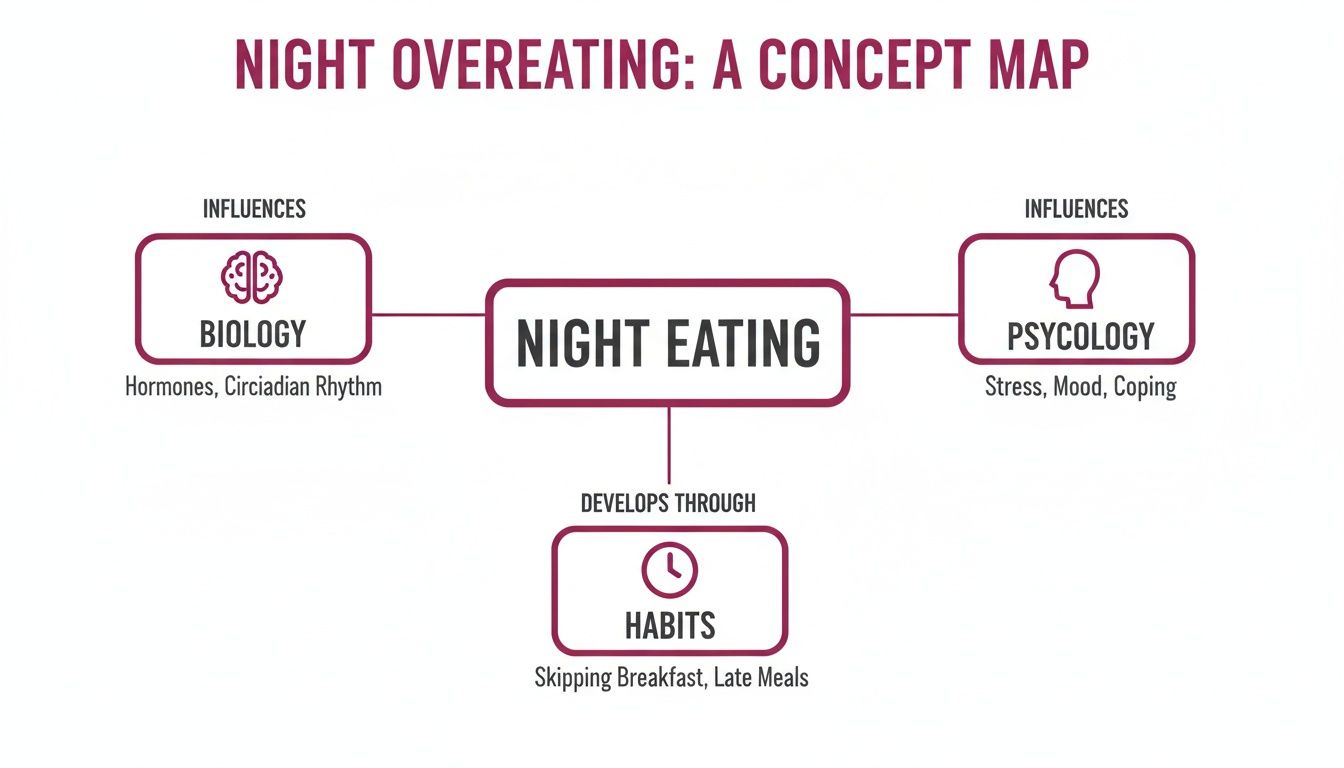
As you can see, your internal biology creates a strong foundation for cravings. These are then amplified by your emotional state and cemented by your daily routines.
The Science Behind Late-Night Snacking
This biological pull is incredibly common. Studies have found that 42% of people frequently snack in the late evening, and another 8% even wake up from sleep just to eat. This isn't just a quirky habit; it's a powerful drive rooted in our physiology. You can read the full research about these late-eating findings for a deeper dive.
When you understand that this hunger is a real biological response—not a personal failing—you can start to approach it with compassion and smart strategies.
Recognizing these hormonal and circadian patterns is the first step. By using tools like Superbloom to reflect on your daily energy and hunger levels, you can begin to connect the dots between your internal clock and your cravings. This awareness is what helps you shift from simply reacting to your hunger to proactively managing it.
4. Stress and the All-Too-Familiar Pull of the Pantry
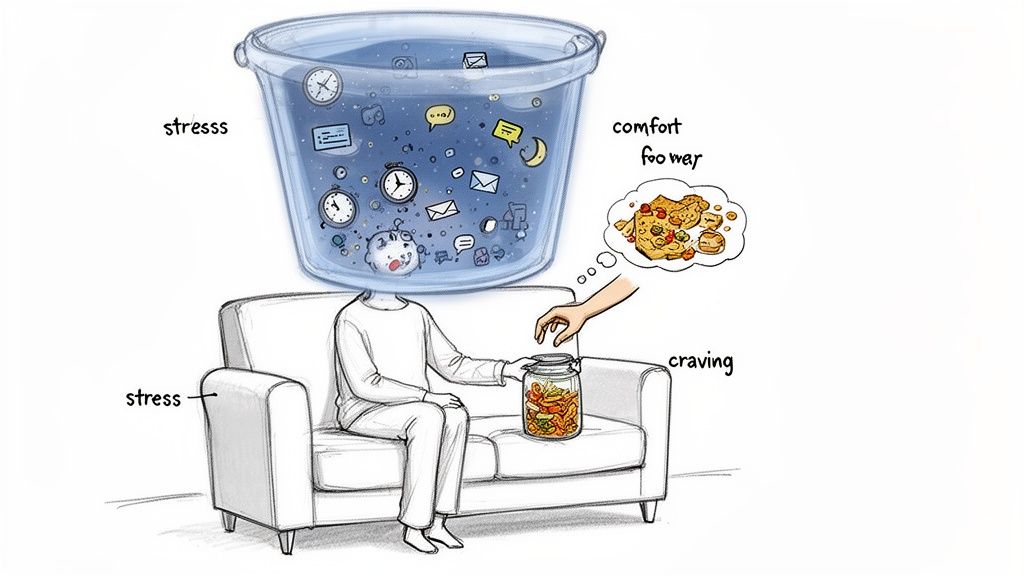
While our biology might prime us for late-night eating, our emotions are often what push us over the edge. It helps to think of your emotional state like a “stress bucket.” Throughout the day, it fills up drip by drip with work deadlines, tense conversations, traffic jams, and all the tiny decisions you have to make. By the time evening rolls around, that bucket is often threatening to overflow.
And for so many of us, food feels like the easiest, fastest way to bail some of that stress out. This isn't a sign of weakness; it's a deeply ingrained coping mechanism. This is emotional eating in a nutshell—we turn to food not because our stomach is rumbling, but to soothe, numb, distract, or reward ourselves. It’s a huge reason why you might find yourself overeating at night even when you know you’re not physically hungry.
What Triggers Your Nighttime Snacking?
At the end of a long day, our defenses are down. The willpower that felt so strong at 9 a.m. is now running on empty. This is when we’re most vulnerable to the emotional cues that send us straight to the kitchen.
Figuring out your personal triggers is the first real step toward changing the pattern. Here are some of the most common feelings that can lead to nighttime eating:
- Stress and Anxiety: When you’ve been “on” all day, your stress hormone, cortisol, can stay elevated. Food, particularly the high-fat, high-sugar kind, delivers a quick hit of pleasure that temporarily takes the edge off.
- Boredom or Loneliness: The evenings can be quiet. For some, that quiet amplifies a sense of emptiness or lack of stimulation, and eating becomes an activity—something to do.
- The "I Deserve It" Reward: After a tough day or a big accomplishment, it's natural to feel like you’ve earned a treat. Food often becomes the default reward we use to pat ourselves on the back.
- Procrastination Snacking: Sometimes, a trip to the pantry is really just a way to avoid doing something else, like tackling that pile of laundry or prepping for tomorrow’s meeting.
Emotional eating is a powerful cycle because it works—at least for a moment. It provides immediate, though temporary, relief. The secret is learning to create a small pause between the feeling and the food. In that moment of awareness, you can choose a different path.
This is precisely where a tool like Superbloom can make a world of difference. When you start logging your moods alongside what you eat, you begin to connect the dots in a way you couldn't before. Maybe you’ll notice that every stressful Tuesday ends with ice cream, or that you only crave chips when you feel lonely.
The personalized coaching helps you see these patterns clearly, so you can stop guessing and start building healthier ways to cope. Uncovering these emotional links is the key to finding more fulfilling ways to unwind that don't always involve the refrigerator.
How Your Daytime Habits Secretly Fuel Nighttime Cravings

If you find yourself battling the urge to overeat at night, you might be surprised to learn that the real fight isn't won or lost in the evening. It's actually decided by the small choices you make all day long. The answer to "why do I overeat at night?" often points back to daytime habits that unknowingly set you up for a struggle after the sun goes down.
Think of it this way: your body's energy is like the fuel in your car. If you spend the whole day driving on an empty tank, by the time you finally pull over, you'll be desperate enough to fill up with whatever's fastest—not what’s best for the engine. That’s exactly what happens when certain daytime patterns take over.
Let's dig into three of the most common culprits that create this frustrating cycle: restrictive dieting, unbalanced meals, and poor sleep. These aren't just isolated missteps. They're interconnected habits that stack the deck against you, long before your evening cravings even whisper your name.
To make this connection crystal clear, let's look at a simple table that shows the cause-and-effect relationship between what you do during the day and how you feel—and eat—at night.
The Daytime Habit and Nighttime Consequence Connection
As you can see, the patterns are predictable. Your nights are a direct reflection of your days. Now, let’s explore each of these drivers in more detail.
The Restriction-Binge Pendulum
One of the single biggest triggers for nighttime overeating is daytime restriction. This could be an intentional diet, skipping meals because you're busy, or just not eating enough to truly fuel your body throughout the day.
When you don't give your body the energy it needs, it flips into a state of deprivation. By evening, your biological drive for fuel becomes so powerful that it can easily steamroll your best intentions. It’s not about willpower. It’s biology.
This predictable pattern is often called the "restriction-binge cycle." It's not a failure of willpower; it's a primal survival response. Your body thinks it's starving and will send powerful signals to get calories in, fast, especially when your defenses are down at night.
The first step is simply seeing the pattern. Reflecting on your meals with an app like Superbloom can bring to light subtle patterns of restriction you might not even notice, helping you break the cycle before it even starts.
The Blood Sugar Rollercoaster
It's not just about how much you eat during the day—it's also about what you eat. A lunch that’s heavy on refined carbs and sugar but light on protein and fiber is a recipe for a blood sugar rollercoaster.
You get that quick spike in energy, which feels great for a moment, but it’s always followed by a steep crash a couple of hours later. That crash sends a panic signal to your brain, triggering intense cravings for another quick fix—usually more sugar or simple carbs. This up-and-down cycle is exhausting and often leads to raiding the pantry after dinner for a final, desperate energy hit.
To get off this ride, focus on building balanced plates for breakfast and lunch. Including these key components helps stabilize your blood sugar, keeping you feeling full and satisfied for hours:
- Lean Protein: Think chicken, fish, beans, or tofu.
- Healthy Fats: Avocado, nuts, and olive oil are fantastic choices.
- High-Fiber Carbs: Load up on whole grains, vegetables, and fruits.
The Sleep-Deprivation Domino Effect
Finally, never underestimate the power of a bad night's sleep. Skimping on sleep sets off a cascade of problems the very next day.
Sleep deprivation directly messes with the hormones that regulate your appetite. It causes a surge in ghrelin (the "I'm hungry" hormone) and a dip in leptin (the "I'm full" hormone). This hormonal one-two punch leaves you feeling hungrier and less satisfied all day long.
On top of that, a lack of sleep impairs the prefrontal cortex—the part of your brain responsible for sound judgment and decision-making. This makes you more impulsive and far more likely to grab high-calorie comfort foods. Tackling chronic stressors, perhaps by learning how to maintain work-life balance, is crucial for improving your sleep and, in turn, breaking this cycle.
Practical Strategies to Reclaim Your Nights
Knowing the biological and emotional drivers behind your nighttime eating is a massive first step. But understanding the why only gets you so far. Now, let’s pivot to the how—the practical, real-world strategies you can use to break the cycle for good. This isn't about white-knuckling it through cravings; it's about building smarter, more sustainable habits that work with your body, not against it.
The stakes are higher than you might realize. A recent analysis of over 41,000 adults revealed a sobering link between late-night eating and long-term health. For example, eating between 11:00 PM and midnight was associated with a higher risk of all-cause mortality. For people with diabetes, the numbers were even more stark, with the risk more than doubling to a hazard ratio of 2.31. You can explore the full mortality findings on PMC to get a clearer picture of the research.
With that in mind, let’s dive into a few powerful methods to help you regain control over your evenings and safeguard your health.
Front-Load Your Day with Protein
One of the single most effective ways to curb nighttime eating is to make sure you’re properly fueled during the day. This means no more skipping breakfast or having a sad, skimpy lunch. The goal is to "front-load" your nutrition, with a special focus on protein.
Protein is your best friend when it comes to satiety. Getting a solid source into every meal—think eggs, Greek yogurt, chicken, or lentils—works wonders to stabilize your blood sugar and keep you feeling full and satisfied for hours. This simple shift helps you sidestep the ravenous, primal hunger that so often ambushes you in the evening after a day of undereating.
Think of your daily food intake like a pyramid. Instead of a tiny breakfast and a massive dinner, try flipping it upside down. A substantial breakfast and lunch, followed by a lighter evening meal, can completely transform your nighttime craving patterns.
Create a "Kitchen Is Closed" Ritual
Our habits are powerful cues. If your nightly routine is to graze while watching TV, your brain has forged a strong connection between the couch and the pantry. To break that automatic association, you need to create a new, unmistakable signal that your eating window for the day is over.
This is where a "kitchen is closed" ritual can be a game-changer. It’s a simple, non-food-related activity you do every night right after your last planned meal or snack.
- Brush your teeth: That fresh, minty feeling makes other foods and drinks taste off, acting as a great deterrent.
- Brew a cup of herbal tea: A warm, soothing drink like chamomile or peppermint can satisfy the hand-to-mouth habit without the calories.
- Light a candle or use an essential oil diffuser: Engaging your sense of smell with a relaxing scent like lavender can signal to your brain that it's time to wind down.
This ritual creates a psychological boundary. Over time, it trains your brain to recognize that the kitchen is officially off-limits until the morning, making it much easier to resist that mindless wander to the fridge.
Practice the 10-Minute Pause
When a powerful craving hits, it can feel incredibly urgent, almost demanding immediate action. The secret is to create just a small buffer of time between the impulse and the action. This is the 10-minute pause.
The next time you feel an intense urge to snack, stop and set a timer for ten minutes. During that brief window, do a quick check-in. Are you actually feeling the pangs of physical hunger? Or are you bored, stressed, lonely, or just procrastinating? More often than not, by the time the timer dings, the craving’s intensity will have dialed down, and you can make a much more conscious choice.
Building a Healthier Relationship with Food and Yourself
Let's get one thing straight: understanding why you overeat at night is the first step toward freedom, not another reason to feel guilty. It's so easy to fall into that trap of self-criticism, but real, lasting change always starts with self-compassion. This journey is about progress, not perfection. It’s about building a positive, sustainable relationship with food and learning to trust your body again.
The goal here is to move from being reactive to your cravings to being intentional with your choices. When you realize your habits are shaped by a complex mix of hormones, stress, and your daily routines, you gain the power to make small, meaningful adjustments. This isn't a test of willpower; it’s about having the right tools in your corner.
From Reaction to Intention
So, what does building a healthier relationship with food actually look like? It means treating yourself with kindness, especially after a setback. Instead of seeing a late-night snack as a failure, what if you saw it as a learning opportunity? Ask yourself: what biological, emotional, or habitual driver was at play in that moment?
Acknowledging the pattern without judgment is where your power lies. Every time you notice a trigger, you’re gaining an insight that helps you prepare for the next time. This is how lasting change happens—one compassionate choice at a time.
Ultimately, this path is about more than just breaking one habit. Addressing nighttime overeating often involves taking a more holistic look at your well-being and exploring a guide to safe and sustainable weight management.
Using a tool like Superbloom can help you start seeing these patterns with real clarity. The app’s personalized reflections guide you to connect your meals with your mood and energy levels. This is how you shift from simply reacting to your body's signals to intentionally caring for them. It’s a journey toward reclaiming your nights and, more importantly, trusting yourself again.
A Few More Questions About Nighttime Overeating
We’ve dug into the biology, emotions, and habits behind why so many of us struggle with overeating at night. But you might still have a few lingering questions. Let’s tackle some of the most common ones that come up.
Is It Ever Okay to Eat at Night?
Absolutely. Let's be clear: the problem isn't eating at night, it's overeating—especially when it involves foods that don't make you feel good. If you're genuinely hungry, a small, thoughtful snack is completely fine. In fact, it can even be beneficial.
Think about something with a good mix of protein or fiber, like a handful of almonds or a small bowl of Greek yogurt. These foods help stabilize blood sugar and can even support a better night's sleep. The real goal is to learn to listen to your body's true hunger signals, rather than reaching for food out of boredom, stress, or pure habit.
How Long Does It Take to Stop Overeating at Night?
This is the million-dollar question, and the honest answer is: it varies for everyone. There’s no magic timeline because the process depends entirely on your specific triggers and the habits you've formed over time. Think of it like carving a new path in a forest—it takes consistency, not speed.
Some people feel a shift in just a few weeks, while for others, it might be a few months. It's all about building new neural pathways, one small choice at a time.
The secret is to focus on small, consistent wins. Celebrate the evening you successfully surfed a craving or finally put a name to an emotional trigger. It’s about progress, not perfection.
Can Certain Drinks Make Nighttime Overeating Worse?
Yes, without a doubt. Alcohol is a big one. It has a knack for lowering your inhibitions and messing with your judgment, which makes it incredibly easy to give in to cravings you'd otherwise manage.
Sugary drinks like sodas and some juices can also set you up for failure. They send your blood sugar on a rollercoaster—a sharp spike followed by a crash that leaves you feeling hungry and craving even more. Sticking with water, sparkling water, or a calming herbal tea in the evening is a much smarter move.
Ready to move from simply reacting to your cravings to truly understanding them? Superbloom uses AI-powered coaching to help you recognize your unique eating patterns and build healthier habits without the stress of dieting. Start your journey to more intentional eating by visiting Superbloom's website.